Desk time, Face time, Ho‘o time
What else might be involved in your Winter Readiness as a manager (or as someone learning to ‘live, work, manage and lead with Aloha’)?
In looking back to Hō‘imi forward, it might be a useful exercise to reflect and analyze your average day at work, i.e. as it’s been in 2014, and as you prefer in 2015. What shifts toward better would you like to make?
“The idea of tiny changes cumulated over many steps is an immensely powerful idea, capable of explaining an enormous range of things that would otherwise be inexplicable.”
— Richard Dawkins (via What’s Out There)
We often hear those urgings to “MBWA! Manage by walking around!” or “Get away from your desk!” and most recently in favor, “Look up from those screens!” and we’re expected to just figure it out: Promptings don’t necessarily follow, with good coaching on how to get those things done.
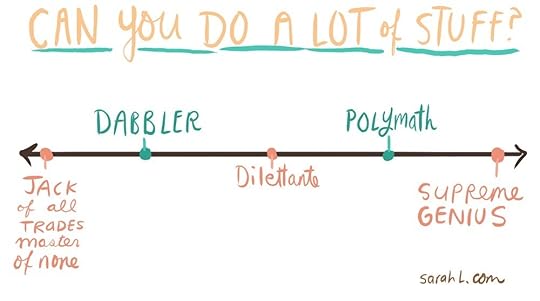
Sarah asks, Can You Do a Lot of Stuff?
or will you just end up scattered and not very good at anything?
Here is a framework we introduced to the SLC coaching laboratory this past year, finding it was quite useful to several of our clients. If you consider an average work day, how would this trifecta look for you?
1. Desk time: Engage your brain
_____% Included here, are intellectual verbs like
Planning, Organizing, Thinking, Writing to Learn
2. Face time: Open up, and Be a Good Receiver
_____% Included here, are social verbs like
Watching and Noticing, Listening, Conversing
3. Ho‘o time: Act and Do. Ho‘o means make it happen
_____% Included here, are movement verbs like
Doing, Taking Action, Hands-on Working (verb-specific to the type of work you do)
Many of the managers we begin to work with, will guess it’s been something like this for them:
50% Desk Time
20% Face Time
30% Ho‘o Time
Then we ask them to sit down at the end of every day in the coming week, to log what actually happened. With few exceptions, those percentages will change, and Why wasn’t it what I thought it was? becomes a question well worth investigating.
A good part of our coaching, will then be to help them set the targets they want to achieve, based on their other Ho‘ohana objectives.
Source: LisaCongdon.com
There is no right answer here. 30%DT – 35%FT – 35%HT may be good for me, while 40%-30%-30% might be better for you. Specifics help. Be clear on what you want, and why. For example, managers who are required to attend a lot of meetings will often have high Face Time percentages, which might seem like great engagement, but they don’t feel it’s been quality time, (communicating isn’t necessarily conversing), and we take that into consideration, suggesting various issue-solvers for them.
And consider this: You will find that every single value you proactively choose for your ethos alignment (to values, relationships, and intentional work) can be broken down into those three verbings (i.e. to value-verbing). For example, you can work on Ha‘aha‘a, the value of humility, in desk time, in face time, and in ho‘o time, giving you a more complete framework of alignment.
We say it over and over again: Values drive behavior. So when you consider your wants (those connected to your Hō‘imi forward behaviors), which values became targets for you in that exercise?
3. VALUE VERBING
Puts the process of VALUE MAPPING into the everyday language of workplace culture. We put value mapping intentions into executable actions with highly active, next-action verbs.
[Value-verbing tagged for learning.]
Compare to our vocabulary with 1. value alignment, 2. value-mapping, 4. value immersion, and 5. value-steering here: Curating Value Alignment.
Need more verb suggestions? Take a look at this slideshare from David Zinger:
Engage is a Verb: 37 Verbs of Employee Engagement from David Zinger