Research and the Camel Conundrum
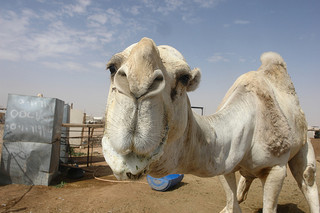
So it’s come to this. I have to learn about camels.
Perhaps it’s not too surprising because my clients, er, characters spend time in the Middle East, but I hadn’t seen this ripple in the story when I laid it out.
I saw references to camels while I did my research and I posted a couple photos on the Pinterest pages just because they were interesting.
When I recently reworked the synopsis, I saw an opportunity to use a unique porter to shed new light on my heroine.
Hence the camels.
I don’t know a lot about camels. It seems to me they’re tall.
They’ve got bony knees, long noses and they like to spit. That’s about it.

My former naval officer father didn’t care for the ships of the desert
I could probably gather up some adorable children and take them to the zoo, but do I really need to go to that much trouble for one chapter in my book?
What do you think?
My family has some history with camels and I’ve been hunting through the photo albums. Unfortunately, I can’t find the classic photo, but these blurry shots tell the story of my parents and grandmother visiting the pyramids in 1976 Cairo.

Grammy taking one out for a spin!
Grammy loved the entire outing, even donning the hat! My mother wrinkled her nose and my father was blunt: “never again.”
The smell, the enormous size of their feet, the shouting herders, and the decidedly cranky temperament made them less than enthusiastic about their rides, though the view was splendid!
But don’t we all live with the image of Lawrence of Arabia racing his desert ship across the sands to Aqaba?
Haven’t we heard stories about their prodigious capacity to go without water for long stretches of time?
By the way, how come some have two humps and others only one?
Wikipedia explains:
A camel is an even-toed ungulate . . . bearing distinctive fatty deposits known as “humps” on its back. The two surviving species are the dromedary or one humped camel, which inhabits the Middle East and the Horn of Africa, and the Bactrian, or two-humped camel which inhabits Central Asia. Both species have been domesticated; they provide milk, meat, hair and are working animals with tasks ranging from human transport to bearing loads.
So, if for some reason you got lost, you could guess at your locale based on the numbers of humps on the camels . . .
By the way, water is NOT stored in the hump. Click to Tweet
Other odd facts about the cud-chewing creatures:
*They have a third eyelid that moves horizontally across the lens, basically acting as a windshield wiper to clear the sand.

Mom was always a good sport
*They’re not spitting at you–a waste of water according to the link–they’re vomiting on you.
*They don’t waste water on their dung either–and it can be used while fresh for a fire.
*They can live to fifty years, usually retiring at 25.
*They can cover 25 miles a day across the desert as porters, and generally carry no more than 450 pounds, though they can go as high as 900. (Your mileage may vary)
*A riding camel can cover 80-100 miles in a single day (see Lawrence of Arabia).
For my story, however, I need other information, particularly with how my heroine will respond and react to these creatures, who play a significant emotional role. So, give us some sensory descriptions.
What does a camel sound like?
You can find anything on Youtube! (This video also lets you observe their behavior, like, how they fold up their legs!) Growling, moaning, chewing, sniffing.
What does their hide–which is used by many for a variety of projects–feel like?
(Wait, don’t I own a camel hair coat?)
Camel hair, as used in coats, is made from the Bactrian camel fur and is blended to a smooth, warm, finish. It’s even mentioned in the Bible–John the Baptist (Matthew 3:4) wears clothing made from camel’s hair.
Their hide is tough and wool-like and has many uses. It seems to be soft to the touch, but that’s not clear yet. It would be warm under the desert sun and it lightens in the summer time.
What does camel’s milk taste like?
Tasting slightly more salty than cows’ milk, but with three times the vitamin C and up to 10 times the iron content, camel’s milk is touted as a powerful tonic against many diseases and as an aphrodisiac.
I haven’t tried it yet . . .
What does a camel smell like?
My friend Linda found this information:
It’s.. well… it depends on the handler of the camel. If he washes the camel then it will smell like a bit of urine/manure/sun.If he doesn’t (which is the most case here), it smells so bad that any Asian, American and European nose will be so assaulted, you’ll be running away for your olfactory life. Seriously, it a mixture of manure, urine, and an odd pungent smell that we can’t identify.
That confirms it, who needs to go to the zoo?

Oswald, Biddy and Kathleen Chambers ca 1917
How far do you go to research? Click to Tweet
How did the camel get his hump and other research joy? Click to Tweet

The post Research and the Camel Conundrum appeared first on Michelle Ule, Author.