
The 6502
The 6502 was a microprocessor chip created by MOS Technology in 1975 to compete with Motorola’s 6800 microprocessor that was introduced one year earlier. What made the 6502 so successful was two-fold. First, it cost less than 20% of its competitors and secondly, it had “indirect mode” and true indexing.
The first microcomputers I worked with were the PDP-8 (although some might call it a mini-computer) and the Altair 8800:

But my first true love was the 6502-based KIM-1 micro-computer:
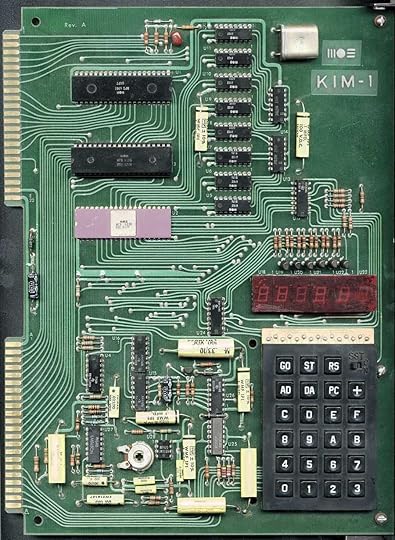
KIM stands for Keyboard Input Monitor and came with the huge total of 1K bytes of RAM. That’s 1024 bytes. However the first 256 bytes, called Page 1, were reserved for the special addressing mode and the next 256 bytes were reserved for the stack so you really only had 512 bytes to play with. Think about that. I just bought a 2 TB external hard drive for $99 and the KIM-1 had 1K!
Even though it was just a technology demonstrator, the KIM-1 could play games like Wumpus, Lunar Lander, Blackjack and even Chess! But it was the 6502 that was the star. I memorized the entire instruction set (all 56 op codes) and started my career. The chip itself was a fabulous success and not just because of its low price. Its address space allowed for a whole 64K of RAM. Take a look at the computers and devices that were based upon this chip:
Rockwell AIM-65
Atari 2600 Game Console
Commodore VIC-20 and Commodore 64
The Apple II computer (and the late, lamented Apple III)
The Nintendo Entertainment System (NES) and Super Nintendo
Many video arcade games
The 6502 and its variants (e.g. CMOS, 16-bit, etc.) are still in production today (that’s nearly 30 years for those of you counting) with widespread use, especially in the telecommunications industry.
Why do I bring this up? A better question is, what’s it got to do with Rome’s Revolution? The answer is quite simple but you will have to wait until tomorrow to find out.
The first microcomputers I worked with were the PDP-8 (although some might call it a mini-computer) and the Altair 8800:
But my first true love was the 6502-based KIM-1 micro-computer:
KIM stands for Keyboard Input Monitor and came with the huge total of 1K bytes of RAM. That’s 1024 bytes. However the first 256 bytes, called Page 1, were reserved for the special addressing mode and the next 256 bytes were reserved for the stack so you really only had 512 bytes to play with. Think about that. I just bought a 2 TB external hard drive for $99 and the KIM-1 had 1K!
Even though it was just a technology demonstrator, the KIM-1 could play games like Wumpus, Lunar Lander, Blackjack and even Chess! But it was the 6502 that was the star. I memorized the entire instruction set (all 56 op codes) and started my career. The chip itself was a fabulous success and not just because of its low price. Its address space allowed for a whole 64K of RAM. Take a look at the computers and devices that were based upon this chip:
Rockwell AIM-65
Atari 2600 Game Console
Commodore VIC-20 and Commodore 64
The Apple II computer (and the late, lamented Apple III)
The Nintendo Entertainment System (NES) and Super Nintendo
Many video arcade games
The 6502 and its variants (e.g. CMOS, 16-bit, etc.) are still in production today (that’s nearly 30 years for those of you counting) with widespread use, especially in the telecommunications industry.
Why do I bring this up? A better question is, what’s it got to do with Rome’s Revolution? The answer is quite simple but you will have to wait until tomorrow to find out.


No comments have been added yet.
Tales of the Vuduri

Tidbits and insights into the 35th century world of the Vuduri.
- Michael Brachman's profile
- 21 followers

