
The One Thing You Have to Get Right To Sell Your Book
 A NEWBIE’S GUIDE: NOVEL MARKETING FOR DUMMIES PART 2
A man sits down on an airplane beside a stunningly beautiful young woman and knows instantly they were made for each other.
“So tell me,” he asks, “what kind of men do you like?”
“I’m very attracted to native American men,” the bombshell gushes, “with those big eyes and high cheekbones.” She pauses. “Oh, but I think Jewish men are sexy, too. They’re so intense and determined.” She pauses again. “And southern men–I just love the sweet drawl when they talk.”
She flashes him a breath-taking smile and asks coyly, “…and what did you say your name was?”
“Geronimo Bernstein,” he replies. “But my friends call me Bubba.”
My point with this lame joke, and I do have a point, is that if you believe your book is a perfect fit for your target audience, then you must make it Geronimo Bernstein with a side order of Bubba. You must package your book in a way that’s so appealing to readers they’ll be willing to give it a try.
We’ve been talking the past couple of weeks about marketing devised by dummies to be implemented by dummies. At the beginning of 2014, I knew waaaay less than nothing about how to market a book and after three intense months of study I have now progressed to the point that I know nothing at all. And from that lofty perspective, I developed Driftwood Marketing.
 Let me announce in a claxon cry one more time for the record: None of these marketing ideas are mine; I didn’t come up with any of this stuff. My lone contribution is organization. Think of the warehouse where Indiana Jones’s Ark of the Covenant was stored and imagine that all those boxes are filled with information about how to market a book. (And I would submit that those boxes wouldn’t hold it all.) Driftwood Marketing is a method of sorting those boxes into four categories: Product, Store, Promotion and Sales.
Today, we’ll talk about Product.
Clearly this is a forehead-slapper, but I’ll say it anyway: the one thing you have to get right to sell your book is write a great book! Your single most important consideration in book marketing must be content. The best sales techniques in the world won’t sell a lousy book. (Ok, there are a few notable exceptions.) Writing a spectular book requires hiring an editor—a real one, not the guy in your bowling league who took a college English course once. And a proof-reader—so Loyal Reader doesn’t bump his head on a single grammar mistake, missing quotation mark or typo anywhere between “it was a dark and stormy night” and “the last zombie on earth starved to death.”
Which brings us back to our friend Geronimo Bernstein.
Fortunately, you don’t have to figure out for yourself what readers are seeking in a book they’re willing to pay for. There is a wealth of information on what transforms a browser into a buyer. And the echo I heard bouncing off the walls of all my research was this: Almost all buying decisions are based on the cover, title and book description. And … if you get lucky… a sample.
Folks, buyers don’t READ, they SCAN. Their eyes are flitting over images and words like water spiders on a still pond. Your job is to grab their attention, to stop them with a catchy title and a dynamite cover design so they’ll pause long enough to read the book description.
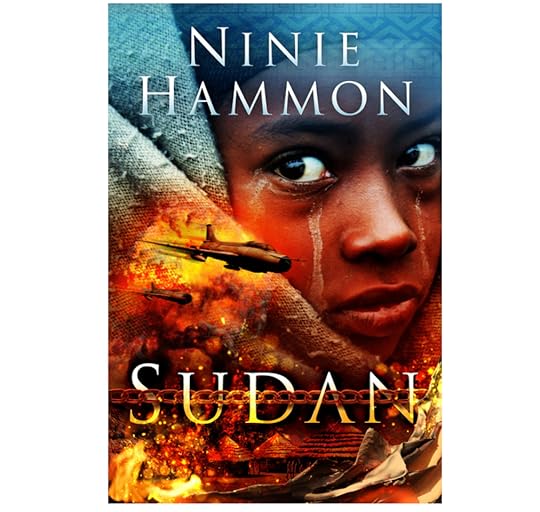 COVER
COVER
Buyers equate quality with expertise. Duh. If your cover is lame, why would the content be any better? A good cover must:
*Be appropriate to the genre. Bare-chested hunks with grizzled chins, chiseled grins and abs with more lumps than bad gravy are the exclusive purview of bodice-ripper romance novels—not cozy mysteries or zombie haiku.
*Have clear, striking images—no jumbled Find-Waldo-On-The-Beach.
*Pop when it’s the size of a postage stamp.
TITLE
What is a good book title? Marketing books don’t tell you that because they can’t. A great title is the one that perfectly fits your book and either nails exactly what the book’s about or makes the mystery of what it might be about so enticing the reader is willing to check further to find out.
How you come up with a title is its own art form. I found some great suggestions in Michael Alvear’s Making a Killing on Kindle. (This is not an endorsement of that book; some of his marketing techniques are clearly unethical.) Actually, I didn’t do any research on titles because all seven of my books already have one, but if yours is still in a bassinet labeled Baby Boy Book, you have some serious work to do.
BOOK DESCRIPTION
This is probably the most important 200 words you’ll ever write. Spend all day on it. All week! It must be so intriguing, punchy and gripping that the reader is compelled to find out more.
 FIRST CHAPTER
A browser will become a buyer if—and ONLY if—the sample of your writing he reads sings. No, it has to do more than sing. It has to bust out in a Napoleon Dynamite dance routine and whistle Dixie with a mouthful of crackers. Your first chapter has to be the best possible example of your writing skill. Make it a cliff-hanger so the reader must buy the took to find out what happens next and you will hear that magical cha-ching.
MAKING THE NEXT SALE
Loyal Reader has just turned the last page of your book and his eyes linger dreamily on the two three-letter words centered there. Ahhh. He liked the book, enjoyed the story. Might like to read something else by this author.
Stop right there!
There is NO time that you are more likely to sell your next book than seconds after the reader just finished your last one. Don’t miss that opportunity. EBook writers, don’t make Loyal Reader dig through the bowels of Amazon looking for your author page—maybe miss a couple of times because he spelled your name wrong and then the water heater springs a leak and he forgets all about you and your books and the sale is lost.
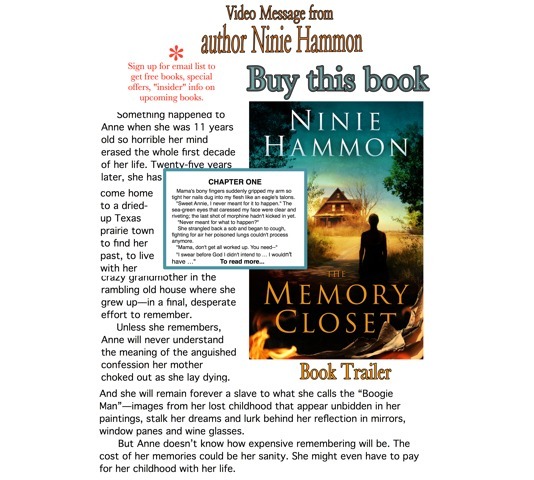 Make it easy. Put clickable links in the back of your book. Print authors, put Amazon links in huge type and customize them (with Bit.ly or some other service) so the reader has no trouble typing them in.
Those pages after “The End” are golden, your one-time shot at a reader who’s still glowing from the remembered images of the world you created. I have placed in my eBooks an approximation of what you see here, a page for each of my six books in the back of the seventh that offers the reader a wealth of choices—from a three-minute video of me discussing each book to an email list sign-up form and a (gentle) plea for a review.
Is having this much information—about six different books—too much for the reader to wade through at the end of a book? You got me, I couldn’t tell you. I’ll let you know as soon as I upload my books and get some reader feedback.
So this is all you need to know about “product”–right? Riiiight … and Lassie was a poodle. What I’ve given you here is the little I could jam into a single blog post.
Hang in there, it gets worse. Next week, we’ll talk about “Store,” where there’s even more information to compress.


 newest »



If writers really just want to target those who would have a real interest in their particular writing style or subject, and not become just another screaming ad for readers to tune out, it seems to me that we should find ways to use metadata/tags effectively with the right words and phrases. And we as readers need to use them just as often when we rate and review, if the site we're reviewing on allows it. (That's what the advanced options are on a GR review page right? Why does it take extra clicks to get there, I wonder?)
Everything you say above rings true, especially (for me anyway) having a good description and sample. Reviews are helpful for a subjective sense, though I take them with grains of salt since readers have different tastes. But if the key is to get readers ready access to works to choose from that meet at least some criteria of books they're interested in, it might help everyone. Unfortunately, built-in tagging seem to be based around genre. That works for many, but within genres, or across them, there ought to be a better way for a reader to hone in on compatible listings. What do you think?