The Ultimate Chest Workout: Chest Exercises for Awesome Pecs
“Help, my chest is too small!”
I receive those words, or something similar, at least 10 times per week. It’s by far the most common complaint among the guys that email and message me asking for help.
And I understand. Building a big, strong chest can be quite tough if you’re focusing on the wrong chest exercises and rep ranges (and if your nutrition is off, of course).
In this article, I’m going to share with you the chest exercises that have not only helped me build a full, strong chest, but have helped many of my readers and followers do the same.
You Don’t Just Want to Build a “Big Chest”–You Want a Full, Proportionate Chest
The first thing I want to address is the goal. Simply having a “big chest” shouldn’t be the goal, because just adding size willy-nilly won’t necessarily give you the look you want.
The most common mistake we want to avoid is building a big lower chest and small upper chest. Here’s an example of this:

Now, he doesn’t have a bad physique, and has clearly been working hard for at least a couple of years. But take a closer look at his chest. All his mass is on the lower, outer portions of he pecs, with little-to-none in the upper, inner portions.
Compare that now to a picture of Greg Plitt’s chest:
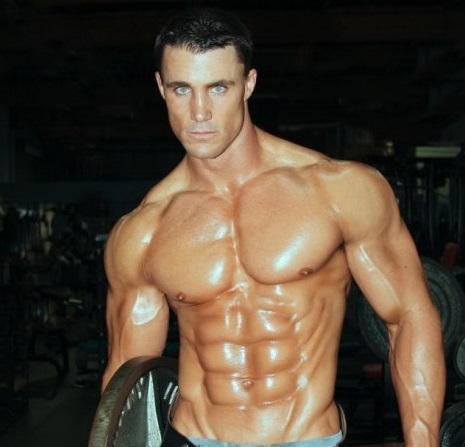
While the overall physiques aren’t remotely comparable, again look to the chest It’s actually not THAT much larger than the first, but it’s much better developed. But what’s the major difference here? The upper and inner portions of the chest.
“But wait a minute,” you might be thinking. “Isn’t the whole ‘upper’ and ‘lower’ chest thing a myth?”
Well, let’s take a moment to address that.
The Truth About the “Upper Chest” and “Lower Chest”
The “upper chest” debate has been going on for a long time.
Do you need to do chest exercises specifically for the upper chest? Or do all chest exercises stimulate all available muscle fibers? And even more to the point, is there even such a thing as the “upper chest?”
Well, I’ll keep this short and sweet.
First, yes, there is a muscle that forms what we call the “upper chest.” It’s known as the clavicular pectoralis. Here’s what it looks like:
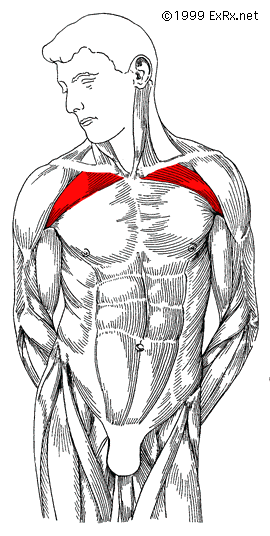
clavicular pectoralis for upper chest
Despite what people might tell you, this muscle is not a part of the big chest muscle, the pectoralis major. While part of the pectoralis major shares nerves with the clavicular pectoralis, the angle of the muscle fibers varies greatly. Thus, certain movements can emphasize the pectoralis major, whereas others can emphasize the clavicular pectoralis.
Notice that I say emphasize, not isolate. That’s because all movements that emphasize one of the two do, to some degree, involve the other. But the bottom line is proper chest development requires a lot of emphasis on the clavicular pectoralis for two simple reasons:
It’s a small, stubborn muscle that takes its sweet time to grow.
The movements that are best for developing it also happen to be great for growing the pectoralis major as well.
Curious how this plays out in the real world? Well, let’s look to my own body as an example. First, check out the following picture of me, taken about 2 years ago:

I looked decent, but look at the upper portion of my left pec (the right looks bigger than it is because of how I’m holding the phone). As you can see, I had a very bottom-heavy chest with not much to show for upstairs.
I started addressing this by following the chest workouts I’m going to share you with later in this article, and this was the result:
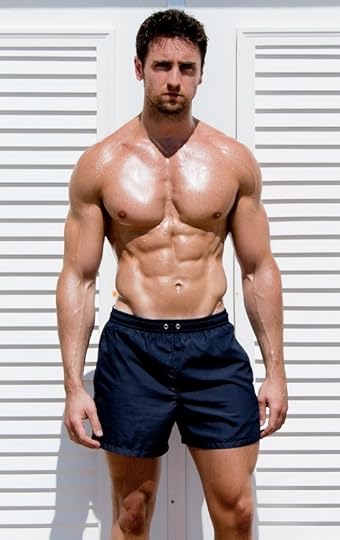
See how much of a difference a full upper chest makes? And yes, that transformation was accomplished by doing exactly what I’m going to share with you here, and nothing else.
So, let’s get right to it then…
The Ultimate Chest Workout:
The Chest Exercises That Build Outstanding Pecs
I go over the science of this full on my article on muscle hypertrophy (muscle growth), but here’s the first thing you need to know:
If you want to build a big, strong chest, the majority of your reps should be performed with 80 – 85% of your one-rep max (1RM). This is the 4 – 6 or 5 – 7 rep range.
Pump away in the 10+ rep range all you want, and you’ll never have a great chest. I guarantee it. That’s why you’re going to see a lot of heavy weightlifting in my routine.
The Best Chest Exercises
The best chest exercises are few, and accomplish a very simple task: they maximally recruit muscle fibers, and allow for heavy, progressive overload without dramatically increasing the risk of injury. These exercises are…
Barbell Bench Press (Incline and Flat, free weight not Smith Machine)
Dumbbell Bench Press (Incline and Flat)
Dips (, weighted if possible)
These are the exercises you must master if you want to build an impressive chest. Period. Forget cable work, dumbbell flys, push-up variations, machines, and every other type of chest exercise out there. They are not nearly as effective as the above three core, foundation-building lifts.
Why no Smith Machine, you ask? Simply because research has proven it inferior to free weight exercises in terms of muscle recruitment.
And why no decline pressing? Because the decline press not only reduces the range of motion of the exercise, thus reducing the amount of work your muscles have to do, it places maximum emphasis on the pectoralis major and minimum emphasis on the clavicular pectoralis, which simply isn’t ideal (if you want to build a really droopy, bottom-heavy chest, do a ton of flat and decline pressing and no incline pressing).
Now, many people are surprised to hear this advice of mine, and are even more surprised when they see my pictures and hear that was accomplished by doing nothing but the exercises listed above. That’s right–not a single fly, cable crossover, or machine rep was done.
Is building an awesome chest really that simple? Yep, it is.
(That said, I do think dumbbell flys and cable work has a place in the routine of an advanced weightlifter that has already built a big, strong chest, but we’ll save that for another article. In order to get to that point, it only requires the above.)
The key isn’t just doing the above exercises, however. It’s progressing on them. That is, increasing the amount of weight you can push over time. If you don’t get stronger, you won’t get bigger.
Now, a few tips in performing these exercises:
Barbell Bench Press
Many people worry that the Barbell Bench Press puts your shoulders at a high risk of injury. This is true only if your form is improper.
Here are the two major points of form that protect your shoulders when you’re performing the Barbell Bench Press:
1. Keep your elbows at a 20 – 30 degree angle relative to your torso. The most common mistake people make is they flare their elbows out, sometimes approaching 90 degrees relative to their torsos. This dramatically increases the stress on your shoulders.
In case you’re not sure what the angles look like, here’s a picture from my book Bigger Leaner Stronger:
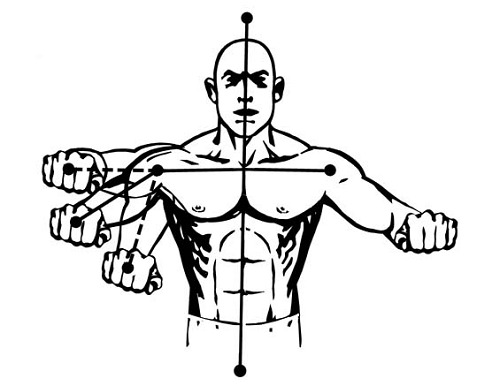
The position where the hands are closest to the torso puts the arms at about 20 degrees relative to the torso. The next position out is about 45 degrees. And the furthermost position is 90 degrees.
2. Keep your shoulder blades pinched and your back slightly arched. You don’t want to flatten your chest out at the bottom of the lift, rolling your shoulders. Instead, your shoulder blades should always remain tightly pinched, which pushes your chest up, and you should always have enough arch in your lower back to fit a fist in the pocket between it and the bench.
The final point of form that you should know is the bar must touch your chest every rep. Stopping short reduces the range of motion, which as you know, means less gains.
Dumbbell Bench Press
One of the big advantages of the Dumbbell Bench Press is that it allows you to increase the range of motion beyond the barbell press. Here’s how I like to perform the Dumbbell Bench Press (this is incline, of course, but you get the idea):
Technically my butt shouldn’t be moving–I was trying to move up in weight here and got a little overzealous–but what I wanted to show you was how I rotate my hands at the bottom of the rep and bring the dumbbells low. This increases the range of motion without increasing the risk of injury, and I’ve found this very helpful in progressing with the weight and developing my chest.
A Simple But Powerful Chest Workout
While I go over everything you need to program your own workouts in Bigger Leaner Stronger (and provide you with an entire year’s worth of workouts that can, when combined with proper nutrition, help you put on 20 – 25 pounds of muscle in your first year of weightlifting), I wanted to leave you with a chest workout that will prove the effectiveness of what I’ve discussed in this article.
What I want you to do over the next 8 weeks is perform the following chest workout once every 5 – 7 days:
Incline Barbell Bench Press: Warm up and 3 sets of 4 – 6 reps
Incline Dumbbell Bench Press: 3 sets of 4 – 6 reps
Flat Barbell Bench Press: 3 sets of 4 – 6 reps
That’s it–just 9 heavy sets for your entire workout. If you’re an advanced lifter, or you feel you have more in you at the end of the workout, you can add 3 more sets (one more exercise, in this case, Dips), but don’t do more than that or you will likely wind up overtrained at some point.
Once you hit the top of your rep range for one set, you move up in weight. For instance, if you get on the incline bench and push out 6 reps on your first set, you add 5 pounds to each side of the bar for your next set and work with that weight until you can press it for 6 reps, and so forth.
I guarantee you that if you combine that chest workout with a proper clean bulk nutrition plan, you will be very happy with how your chest responds. This type of training is the core of my Bigger Leaner Stronger program, and I’ve had hundreds and hundreds of guys email me, ecstatic that they were finally breaking through 1+ year plateaus with ease, gaining strength and size every week.
What do you think of my choices for chest exercises? What are your favorite chest workouts? Let me know in the comments below!
How to get lean and build serious muscle and strength, faster than you ever thought possible…
Depending on how you eat, train, and rest, building muscle and losing fat can be incredibly easy or incredibly hard. Unfortunately, most people make many different mistakes that leave them stuck in a rut. And that’s why I wrote Bigger Leaner Stronger for men, and Thinner Leaner Stronger for women: they lay out EVERYTHING you need to know about diet and training to build muscle and lose fat effectively…
Click to Learn More
Buy now
AmazonAmazon UKAmazon AUAmazon CAAudible AudiobookBNiBooksiBooks AudiobookKobo
Buy now
AmazonAmazon UKAmazon AUAmazon CAAudible AudiobookBNiBooksiBooks AudiobookKobo