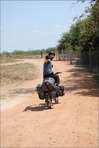
Things I wish someone told me before setting off on a World Tour
Things I wish someone told me before setting off on a World Tour
Posted on: Saturday, September 28th, 2013 at 3:04pm
I’ve had a lot of time to think over the past few years, cycling solo and making do with what life throws at me, hopefully prepared with the massive amount of gear that gets hauled along for the journey, up the hills, down the hills, packed and repacked daily. In fact, I didn’t really know what to expect about world travel before I actually set out and did it. All the times that I was waiting for it to occur my mind was creating vivid fairy-tales and assumptions when certain scenarios occurred. It turns out I was dead wrong. I wish someone took me aside and told me these things before setting out on a long term bicycle journey. I feel it’s my duty to share what I’ve picked up along the way -
1. Water FiltrationI’ve been hauling this damn MSR Miniworks EX Filter with me for 4 years now. First, My mentality was that I should get used to the extra space and weight it has when I was in “safe” areas, and then when I came to what were known as “unsafe” areas, I still didn’t use it. This thing has been patiently sitting in my trunk bag adding 1lb onto my daily gear. Even worse, I even bought the annual maintenance kit for it thinking It would need servicing! Leave the filter for people who are trekking in the worlds and canoeing.
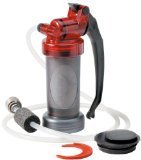
Price: $78.45
 (140 customer reviews)
My reasoning: Water is everywhere. It’s the key of life. Everyone’s drinking it, and if they aren’t, they are dead. It doesn’t matter if it’s in a 1st world, 2nd world, 3rd world country – it’s there. You might have to look harder for it, but trust me, if there is life, there is water. Bottled water is absolutely everywhere, and can be found in huge 5 litre containers or more at places where there are stores. Most locals have access to boreholes, underground manual water pumps, and streams with decent water. If you are really that far away from civilization that you have no access to water for more than a day, I think you need to get out of that area entirely and stop torturing yourself. If you are unsure of the water, boil it. Even better, if the water in the area is really bad, you’ll find drops in the shops for the water anyways! Sure, if you don’t you run a risk of a waterborne illness, and if you don’t filter it, it may be cloudy and sediment, but how Is that different from you already farting in your shorts all day long and not following proper hygiene in the first place?
My solution: Carry as much as you can, ask the locals where the water source is, and press when they say they are only drinking bottled water. You’ll eventually find out where it’s coming from and be able to judge accordingly what you want to do to treat it. Invest in some larger water bottle cages on your bike that hold 1.5 litre bottles like these BBB Fuel Tank XL ones. Topeak also offers similar products, but don’t seem to have the same quality latching mechanism, and I don’t support Topeak due to their snarky customer service, anyways.
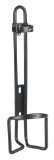
BBB bike bottle holder water bottle cage Fueltank XL matt black
Price: $21.17
 (0 customer reviews)
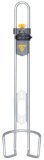
Topeak Modula Cage XL Waterbottle Cage
Price: $12.09
 (11 customer reviews)
Finally, if that’s not enough, invest in a large water carrying device, like the MSR Dromedary. It comes in 2,4,6,10 litre sizes – is tough (4 years and I’ve yet to pop the damn thing) and is easy to clean. I have owned the 10 litre in the past, and found it to be too large (and heavy! full is 20lb) for my needs and have since scaled down to the 6 litre unit which has gotten me through Canada’s Arctic, Namibia’s Deserts, and long times without seeing civilization There’s even an attachment where you can use it as a shower to wash yourself off at the end of the day. I put it on my rear rack, and let the other gear sit ontop of it. Works fine.
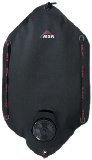
MSR Dromedary Bag with Fill Handle, 4 Liter (Black)
Price: $32.57
(74 customer reviews)
And if all else fails, you could drink your own pee.
2. Power Adapters All of my components are suitable for running either at 5V 500mA (USB, to be charged from a computer or for a battery), or capable of of running wall AC Voltages from 110-240, meaning they will work around the world without exploding. The problem is, the plugs don’t work in every socket around the world! Heaven forbid you get to the other side of the world and not be able to use your components.
My reasoning: Well, first off, you aren’t the only one travelling to this remote place. Second of all, people do import products from other parts of the world for usage in these areas. So that $20 “Travel Adapter” to let you plug your components into the wall properly? Forget about it. It’s too heavy, likely to fall out of the crappy wall socket you are to plug it into, and horribly overpriced.
My solution: Walk into any store and show them your plug. Then point at the wall. You don’t even need to know the language. The locals buy the same adapter for half of a dollar. Even better – They come with 3 outlets, so you can plug more stuff into!. If that’s not enough, you can even find power bars with 4-6-10 outlets that will take any plug as well! All for less than what you paid for that silly adapter.
3. International Warranties for Products
I spent a huge amount of money on a tent, advertised to be guaranteed ‘for life’. I also bought a set of parts that were meant to last for up to 3 years before replacement. Also, adding onto that, I bought an electronic device that offered a global warranty, no questions asked. For a world traveller, a warranty is important. After all, you are likely to be unemployed, wanting to get as much value for your purchase, and wanting to invest in quality components. Even the best go wrong sometimes. I’m not rethinking just exactly what I buy, after being accepted for service for my failed parts, only to find out that shipping the products at my expense and back from the manufacturer is often half or 3/4 of the parts.
My reasoning: Parts fail, but usually after a certain period of time. Your manufacturer is going to solve the problem and get it back to you, while you are still stuck with the same unit which is likely to develop further problems as it ages, goes through wear and tear, or just decides to flat out break. These things happen. You can keep sending it back to the manufacturer at extended cost, be without your parts for who knows, and then jump through the rigmarole of dealing with import duties and customs (“Honest, it’s a warranty replacement!” – I dare you to try it in an area where no one understands you). Just to be back on your feet.
My Solution: I don’t really have one. Sometimes you need these parts, and the components that you buy in your remote location are often inferior, too heavy, not suitable for the conditions, or just don’t work well whatsoever. To put it bluntly, in my experience to get replacements I’ve had to settle with cheap run off crap from China. Sure, all products come from China right? Well, this stuff must come from the nether regions where they’ve been saving it for the right time to dump it on a society. Often, the parts are so horribly overpriced anyways, It’s maybe easier to just suck it up, deal with the shipping costs, or find alternate solutions.
4. Spare Parts3 chains, 3 spare tires, 10 tubes, 5 puncture repair kits, 3 brake cables, nearly 500mL of lubrication, 50 screws/washers/nuts, extra cycling shorts, shirts, socks, pants – You know everything I need as a spare when something breaks, I can continue moving at the same quality and style I’ve been accustomed to in the past, all at the expense of more hassle, heavier weight, not to mention. Is it necessary? Well, like above, sometimes it is necessary to have spares when faced with disaster. But is it really necessary?
My reasoning: Again, you haven’t been dropped in a barren wasteland, where satellites have snapped photos of the geography. Everything in this world has been explored, and you are certainly not breaking ground here. If you are, it’s likely a foolish move and you are going to get pissed off, hate yourself for trying it, and likely run out of water, and have to drink your own pee.
My Solution: You’ll get by, but having to take some sacrifices along the way while waiting for replacement parts to come from other parts of the world. But instead of paying for the high prices of shipping, look to see if there are travellers/business people coming over into your region. Most of the time these people are more than happy to help an intrepid adventurer like yourself, you gain a friend, and the parts make it past the duty and import restrictions if you were to pay for shipping! Services Like Couchsurfing are for the backpackers/wanderers/travellers, Facebook usually has groups setup for the location you are heading to (Hint: Try Searching for “Expats” and the Country name, and then there are also services like Internations, And Expat Blog. Which may help. Or you can send an email to all your friends and find out if they know someone in the area. Finally, you can cry out for help on your blog, like I do sometimes. Anyways, it’s not the end of the world. You aren’t “stranded”. Just take it how it comes and get creative with what’s available locally.
5. Staying in TouchHeading away on a long term journey shouldn’t mean disappearing from the world – right? After all, you are likely blogging about it, posting photos on sites, and even knee deep in Social Media. But you should really call your Mom. Your Dad too! It’s pretty important to have a lifeline on this globe even if you wish to be nomadic and pretend that you were magically transplanted as is onto this earth with no prior teachings by humans. You should have a device for communication.
My reasoning: For the first few years, it was exactly that – No phone, and any communication was done on a computer, via email, or voice applications over the internet. That’s fine, but eventually you are also going to meet other people. You are also going to have to call someone eventually. Payphones? A relic of the past. Sure, in some villages they exist, but not in the way that one would expect, and walking up to a stranger to ask them to use their phone is just weird. Going to an Internet Café is frustrating, virus laden, and often slower than molasses as you sweat it out with a dozen other people all frantically mashing the reload key in hopes of it displaying that one more line of data. Even if you’ve got a laptop and plug in, you are tied to this one location, and that kind of stinks.
Buy a Phone: They are everywhere. And Unlike the USA and Canada where phones are locked to a certain provider so you are tied to their subpar service for 3 years at a time, these phones will work on any network around the world. You can even get one for $10. OK, that’s going to do basic calling and frustrate you trying to send a short message to another person, but if you throw another $20 or $30 dollars at it you can get yourself a smartphone that will get you to make calls, and get you onto the internet, and most usually – even let you use it’s internet connection for your laptop or other devices! Cellular services are cheap in other parts of the world that haven’t been gobbled up by Western Mentality. Developing nations where there is no traditional line and central office termination points often are years ahead in technology at a fraction of the cost. Go walk into a shop, pick up a phone, buy a SIM Card, and add some credit to the phone, you are ready to go! A note however – If you are going to just go and buy a bundle of a predetermined amount of data, you are likely going to not get that good of a deal. Lesser privileged people than you who don’t have the same amount of money also need to get on the internet right? They also need to make calls and send text messages right? Find the combination packages from the provider that usually offers a wealth of minutes, messages, and a large amount of internet good for a day or a week at a time. You’ll find it’s usually 1/5th of the cost of the data plan alone, and if for some reason you hit the limit before it expires, just go and buy another SIM Card. In this day and age, SMSing is being replaced by data messaging services which, after the initial setup is independent of what SIM Card/number it is using. I bet your Mom or Dad even has Skype/WhatsApp too to avoid the high cost of International calling.
6. Currency
Wondering how I was going to going to deal with the differences in currency I always made sure I had backup spare US Dollars with me at any given moment. Hiding them in the handlebars or in a bag just heightens your risk, and you always fear that someone is going to find your hiding spot. Emergency US currency will get you nowhere in a village or small town when the locals have no idea how to deal with the bill in question. If they do, get ready for 20% of it to be used as “exchange fee”. Travellers Cheques are impossible to cash – There are better ways.
My Solution: Y ou can’t get away from Foreign Exchange fees, but you can find ways to combat it. I’m a big fan of using my credit card while travelling. Not only is it accepted for payment at shops and restaurants (in small underdeveloped countries and villages not so much), but it’s a must for withdrawing funds out of an ATM. Try to use your Bank issued Debit card to withdraw funds, and find that it won’t work, or if it does, you get hit with a huge withdrawal fee, and other charges. I’ve found that in my scenario, if I preload my Visa Card with funds so that I have a Surplus, I can withdraw those funds directly from an ATM while not being charged withdrawal, cash advance, or any other fees but currency exchange. This by far is the cheapest most suitable option if visiting many countries at once. Take a bit extra out if you know you are heading to a country, most of the time you are not going to get that bad of a deal from the currency exchange houses close to the new border, and even from the shady sellers even closer to the border who want to exchange money for you. You might even luck out and be able to swap some of those USD that you are still carrying with you because you don’t agree with my solution. Problem solved, you have a small amount of currency for the new country, until being able to source out an ATM. There’s a bonus to using a card – Your family if need be can find out where you last looked for money if you’ve still decided to go off the deep end and not make any contact with anyone for long periods of time. You can even trade some of your things to the locals in exchange for phone service, food, lodging. The locals don’t have the access to the cool stuff that you carry around, and are more than happy to trade something so that they can be a new owner of your goods. I make sure I carry a couple trinkets with me at any time and successfully trade them when the time is right, with no currency exchanged at all. You are likely to get more value from this approach, and both parties are going to go away happy.
7. Transit Visas
Sometimes you arrive at a border, and there is no problem with entry – No fee, just a stamp in your passport and maybe a check of your immunizations, and off you go. Other times, it involves an entry visa, accompanied with a currency exchange, giving you access to visit the country for a period of time, say 90 days. But what if you are only visiting for 7 days? Still, that 90 days is what they give you. And most of the time it means that if you leave the country, you need to pay the high fee just to come back in, unless of course you purchase the much more expensive “Multiple Entry” visa. Crazy right?
 My Solution: If you are on a journey, and you know you aren’t going to get lazy and stay in a country until the very last day (it happens, trust me) you are allowed to be in it for, you can always find out and see if the country offers such things as a “Transit” Visa. For Example – in the coming weeks I need to cross into Burundi, on my way to Tanzania. I’ve already been to Burundi, have mixed reviews on it, and am really only passing through because I know the road in Tanzania getting to my destination is poor and will drive me crazy. Burundi charges me $80 USD to enter their country for 30 days, and $30 USD for 3 days, as I am just passing through. The transit time is shorter, but I will have no problem getting into Tanzania, where again I’ll purchase a transit visa for the cost of $30, which is valid for 2 weeks, as opposed to the 90 day visa at $50. I have no intentions of staying any longer in either of the countries, as I am passing through on my way to Zambia. Time it properly and you can save considerable amounts of money on your visas if you are hell-bent on getting to a destination, and don’t feel like deviating from your plan and exploring the countries for longer than anticipated.
8. Drugs
Watch out for this, watch out for that, if you don’t take this your whole body is going to turn to liquefied puss! So they say, and fine, some drugs are necessary. It’s up to you if you want to take drugs for Malaria, it’s up to you if you want to take drugs for worms, but when the time comes, you are going to need them when some superbug comes along and demobilizes you. Should I get them all at home before going somewhere else first?
My Reasoning: Buy the drugs where you are. If you are in the west, I can guarantee you that you are getting ripped of. Case in point I at one point wanted to make sure I had Anti Malarial Pills (Doxycyclene). The Doctor, for 90 days wanted to charge me $70 for the unit. Then I also wanted to carry enough for 4 cycles of Ciprofloxacin for those extra crazy moments, to the cost of $130. I held off as I thought the cost itself was insane, and bough everything I needed, along with a couple other goodies to be used when things got a little bit hairy for under $8. You don’t need prescriptions – just do your research and know what you are putting in your body. If you’ve been sitting on the saddle to long, you can even pick up a 4 pack of Viagra for under $2 if that’s your thing. Don’t wear spandex for 12 hours, k?
Hopefully these little tidbits of info I’ve picked up along the way can set your mind at ease. Do you have any more Gotchas that you’ve picked up along the way on a long term journey?
 [image error]You're reading the RSS feed for Tired of I.T! Did you know that the website contains much more information such as articles, gear list, daily statistics, videos and photos and more! You can also get real time micro-updates by following on Twitter and Facebook!
  Now Available, Tired of I.T! - How I learnd to stop worrying and love the Bicycle - detailing just how far one has to go to embark on a long term bicycle journey, stories not found on the website, and a few lifes lessons thrown in there. Available in Digital and Paperback copes at http://www.tiredofit.ca/book/ and Amazon.
The post Things I wish someone told me before setting off on a World Tour appeared first on Tired of I.T!.
Possibly Related..
$tatus check

Currencies Around the World
Thanks