
Uncovering More Crystal Fakes
So today I bring to you another post about the crystal fakes + frauds out there in Crystal-land. After the last post on the subject I got lots of questions about others so here are a few more popular ones for you to be aware of, Jelly Bean.
Amber/Copal
Amber (not technically a mineral or crystal since it has organic origins) is supposed to be super-duper expensive, right? So why all this cheap stuffs on the market?
Well, that cheap stuffs is most likely plastic or copal, pronounced “coh-PAHL”. Copal is often sold as “amber”, but it’s not. Amber is the fossilized (40-60 million years old), hardened resin from a now extinct pine tree.

Land of the Forgotten: An ancient (56 – 34 million years old) scene in a Baltic forest. Resin from extinct pine trapping a praying mantis. This is the stuffs that true amber is made of.
Copal, on the other hand, is hardened immature recent resin (only 1000- 1 million years old). Copal is technically almost the same thing, just not as old & the names are often used interchangeably.
BUT, “almost” is not the same & the slight variation makes a huge difference! A reputable seller will make sure to note that copal is not true amber.
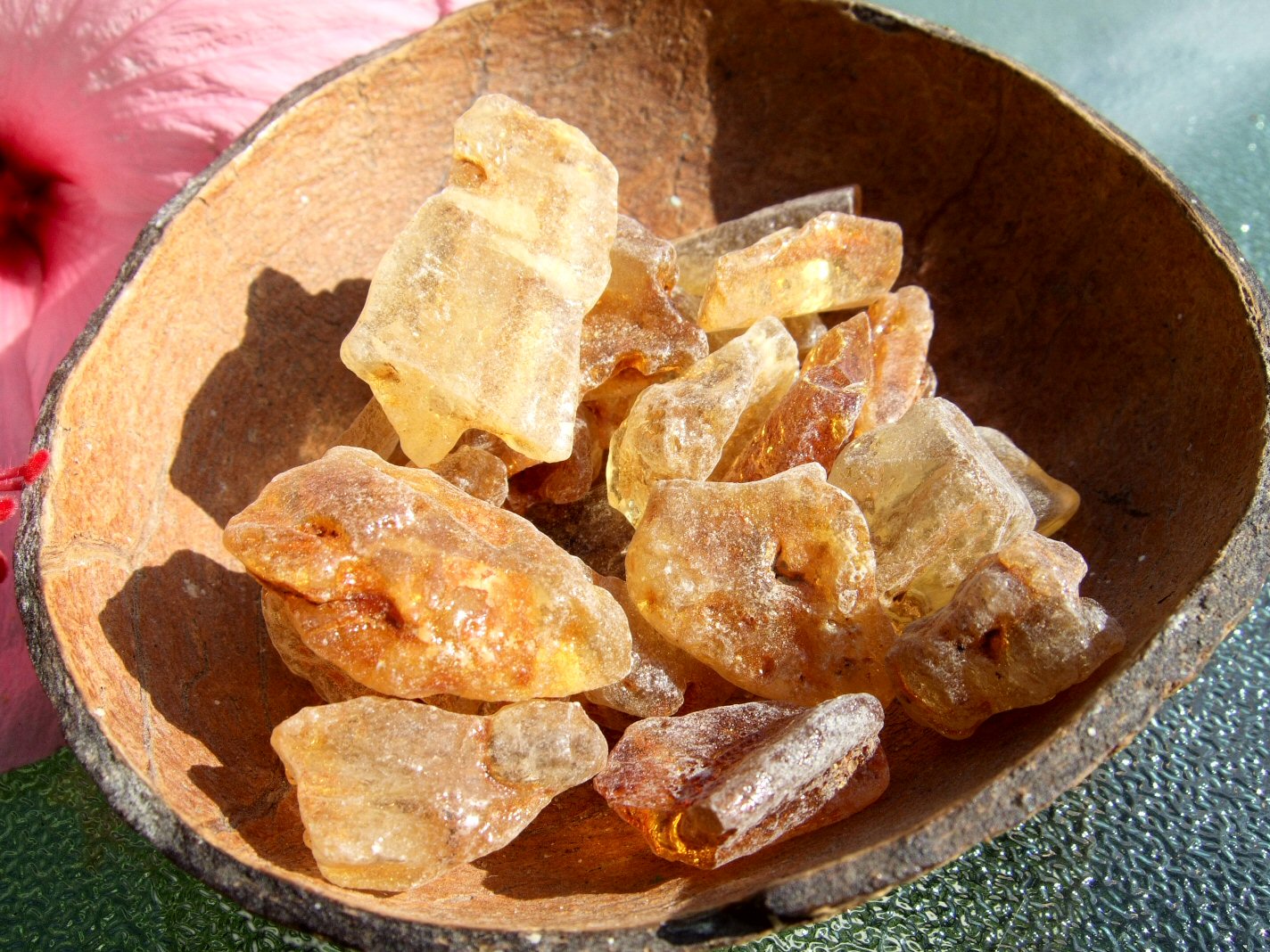
This is actually rough copal often sold as “amber”.
Sometimes what you think is amber may not even be copal but may be glass, synthetic resins or plastic!
Why is amber so expensive?
Well that, My Sweets, depends on several things: how rare it is, its age, color & whether is has any included insects (remember that Mosquito in amber from Jurassic park that they got the dino DNA from? ….which is totally impossible BTW!).

Fossil insect in amber. You just can’t get good DNA from it! Baltic amber. Credit: PASIEKA/SCIENCE PHOTO LIBRARY
The value of amber is related to its scarcity, age, inclusions of extinct species & durability.
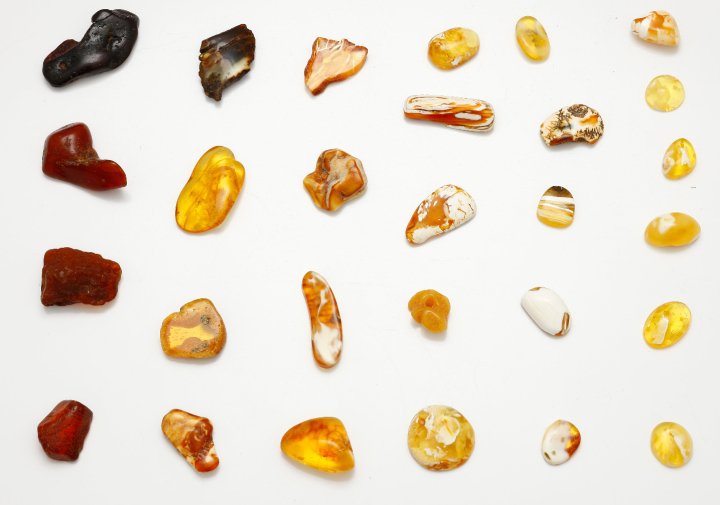
Various shades of polished Baltic Amber
Here are some tests you can do to see if you have copal or the real deal:
Smell test – real amber has a distinct pine scent after heating. Copal will have a “sweet” resin smell but its not pine.
Solvent test – Copal & plastic fakes won’t pass this test but it will damage your piece. Drip a few drops of fingernail polish remover or alcohol on your piece…if it gets tacky or sticky & the solvent takes on the color of the piece, Congrats!…you’ve got yourself a fake! Real amber won’t bat an eyelash over this.
Melt test – Real amber doesn’t melt, it burns. Copal & plastics will melt at a relatively low temperature (lower than 150 C/300F ). Yes, this is the same copal many use as incense due to the sweet scent it emits when burned. If it plastic, acccck!! The smell will be horrible!
Hot needle test- the tip of a hot needle will burn real amber, but copal or the fakes will melt, so best to try this on an area that no one will see as this will damage your piece too.
Float test – Amber will float in salt water. That’s why it’s so easy to harvest amber along the beach of the Baltic Sea. for locals on the Baltic Coast to find it washed up on beaches, especially after storm events. The amber gets stirred up from a layer known as blue earth, which is beneath layers of silt and clay on the ocean floor. To do this test, mix about 1 part salt to 2 parts water and dissolve the salt completely. Drop your piece into the mixture. Plastic and copal will drop out, while amber floats.
Amber also has some cool electrical properties that I wrote about a while back too. Amber & copal will get a negative electric charge while glass will be positively charged.
Plastics will also be charged negatively like amber. Soooo…I don’t recommend using this property to test.
Irradiated Crystals
Irradiation of mineral specimens is a pretty common thing. You may not realize it but many gemstones on the market are irradiated to get a more vibrant or deeper color. Is it dangerous? Yeah, I’d try to steer clear of them. (You can listen to me get on my soapbox about this topic here on this interview I did a while back):
deeply pigmented topaz
artificially dark (almost black) smokey quartz
very deep pink or red tourmaline
colored diamonds
deeply colored kunzite
some cultured pearls
vibrant yellow heliodor (irradiated pal aquamarine)
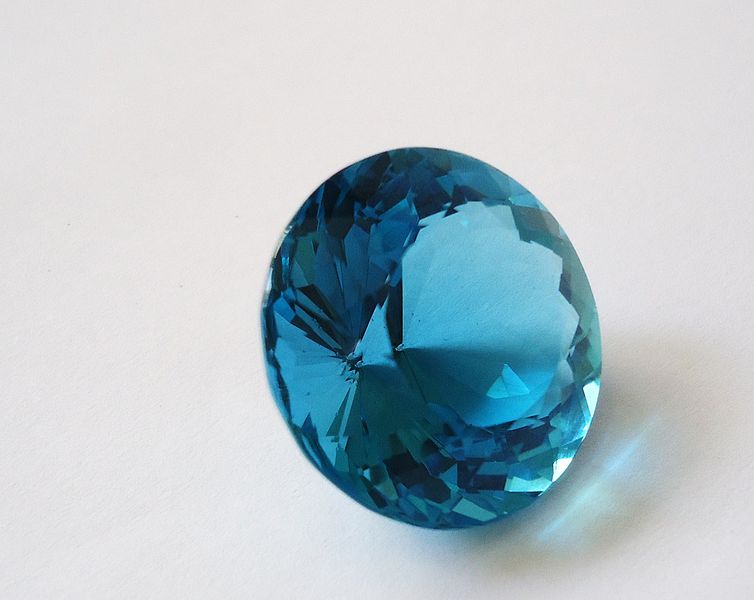
Irradiated blue topaz, peeps! Photo credit: Mauro Cateb
Some sellers choose to take milky quartz & subject it to gamma ray radiation normally used to clean germs from medical equipment & food (oh yeah…that’s gamma ray RADIATION on your food….sheesh!).
Anyway, back on topic.
So, when they radiate the milky quartz with the gamma rays you get a deeply pigmented, almost smoky quartz that’s almost entirely opaque like the 1 I show here while I was shopping in Tucson last year (2012). BTW, Ron Coleman’s Mine openly tells you (if you ask) that their smokey’s are irradiated. I really love the Coleman’s & recommend them as a reputable place to buy from:
Size Does Matter in Crystal Healing – Tucson 2012!
BTW, quartz colored by natural radiation from Mama Earth is not radioactive & is safe to carry. Yes, Mother Earth NATURALLY irradiates quartz that’s included with some aluminum to create smokey quartz but this is a slower, more gentler process. I explain more about that here:
Crystal Healing with Smokey Quartz
1 telltale sign of an artificially irradiated smokey is that the color fades FAST when exposed to sunlight whereas a natural smokey will retain its color longer.
If the seller tells you its from Arkansas, raise your eyebrows way up high b/c smokeys usually don’t occur there & they certainly won’t be very dark like I explain in the vid above.
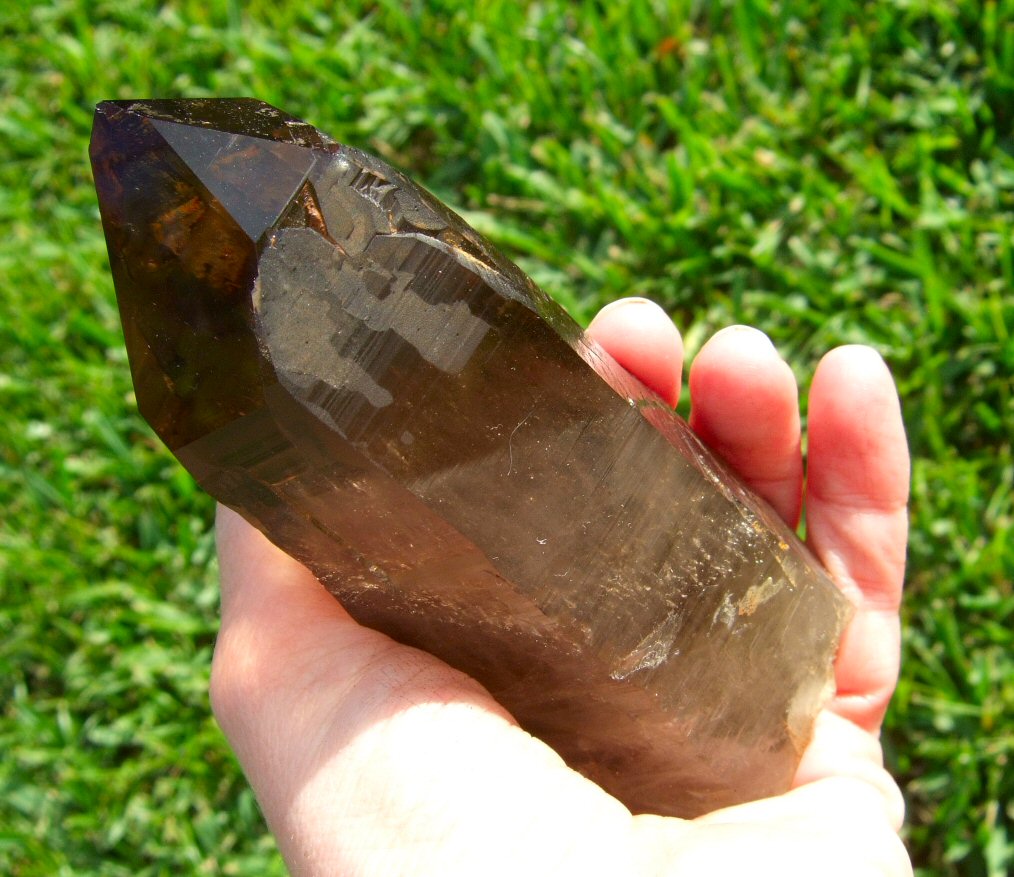
This smokey quartz is all natural – the real deal from Namibia
Now don’t confuse irradiated quartz with Morion quartz.
This dreamy stuff just recently came on the scene. Its deeply colored, black quartz only occurs in & around volcanic rocks. These babies are RARE & formed by natural radiation caused by nearby uranium deposits from South Africa. Natural Morion quartz retains some translucence when held up to the light as you can see in my pic below.
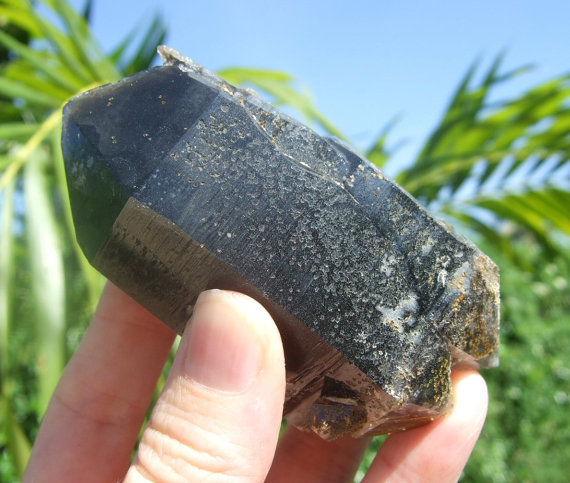
Morion quartz – OMGEEEZ…look at that phantom on the tip! Its hard to see but its there.
Rainbow Cal-Silica
Rainbow Cal-Silica is bogus.
Turns out its calcite ground up & mixed in with car paint, plastic & resin!! YEAH! YUCKO!!
Some sellers will insist that its a naturally occurring stone but there’s very little evidence to back it up. With some digging I turned up this juicy document by the Swiss Gemological Institute that states its a fake.
So that’s THAT!
Too bad b/c that would sure make a purty agate, huh?
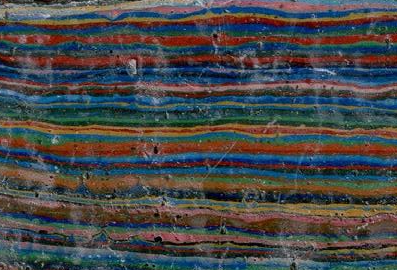
A close-up of the gorgeous colors in Rainbow Cal-Silica
OK, so I hope that’s helpful to some of you out there. Remember, Buyer Beware .
Who are you buying from? Are they reputable & do they know what they’re talking about? Be informed & cautious.
Do you have any fake-out stories to tell? Please post below to help us all out!
Happy Crystal Buying. 

See more like Uncovering More Crystal Fakes at Hibiscus Moon Crystal Academy | Crystal Healing | Crystal Healer | Crystal Therapy | Crystal Grids | Crystal Healing Course


