
A Journey through Archetypes-Another Way to View Mythic Structure
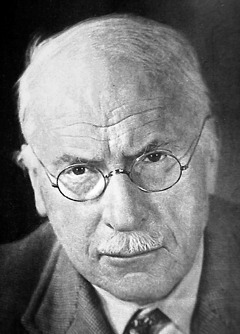
A few days ago, I put up a post about Jungian archetypes. Today I want to delve a little more closely into this esoteric realm of psychology that spills very nicely over into the craft of writing and focus on seven Jungian archetypes in particular.
These seven are:
The Uninitiated
The Apprentice
The Nonbeliever
The Athelete
The Warrior
The Mother
The Spirit
The best way to approach this discussion is to just give a description of each of these archetypes in order.
The Uninitiated
The uninitiated is what the Taoists would call “the uncarved block.” He is ignorant. Not by choice, but by circumstance. He simply has no idea about the rest of the world or his potential within it. He only knows what he knows and all he has known up to this point in his life. He may have secrets lying deep within him waiting to be tapped that he is completely oblivious to, but he doesn’t care about those.
In fact, he is happy in his ignorance. Blissfully happy. Blissfully ignorant.
The Apprentice
By nature, an apprentice is someone with a mentor. He is in the process of being trained in methods he may not fully understand, but he is being trained nonetheless. In the case of the Apprentice archetype, the mentor training him doesn’t necessarily have to be a real person. It can be the memory of a dead father haunting him and forcing him to learn new ways that his father had always told him he would need to learn in order to survive.
These new ways are usually in order to tackle a new world with new rules that he will soon encounter that he probably doesn’t yet fully understand or even have a proper concept of. What drives the Apprentice is the mentor, not the need to survive. In the process, he happens to attains skills he doesn’t realize he even manages to attain.
The Nonbeliever
The Nonbeliever archetype is usually an archetype that has shifted masks from an Apprentice archetype and believes he has done so too early. He either begins to encounter this new world he’s been warned about and feels he’s inadequately prepared and still doesn’t fully understand everything about it or the new rules he must learn to follow, or he might not even be convinced a new world even exists and questions whether he wasted his time wearing the mask of the Apprentice archetype.
Whatever it is, the nonbeliever has a crisis in faith. He questions his progress. He begins rethinking all his archetype shifts and wonders if things might have been better before, back when he wore the mask of the Uninitiated archetype.
The Athlete
When a character puts on the mask of the Athlete archetype, his focus becomes entirely on his physical body and achieving physical goals. All of his emphasis is put on how he looks and how he performs. He believes there is nothing he can’t overcome and no training he cannot complete through pure physical activities. In essence, he attempts to become a superhero.
The Warrior
I’m doing these archetypes in order for a reason. I want you to assume this is one character wearing all these different archetypal masks in order and, as the Athlete archetype takes off one mask and exchanges it for the mask of the Warrior, his focus once again shifts. Now he wants to compete and defeat every opportunity he gets. He lives to collect prizes and rewards. Life becomes a game of non-stop competitions that he must win at all costs.
It is during this archetypal phase that leadership qualities will stand out. Whatever drive the character has will be very pronounced and relentless. He is the Warrior.
The Mother
The Mother archetype emphasizes fulfilling the desire of others. Characters wearing this mask nurture others, asking them, “How may I serve you?” He will care dearly for the people close to him and the people that need him. Instinctively, he will protect those around him.
This archetype also longs to see others excel within themselves. They try to build self-esteem and self-confidence and show the innate potential everyone has available to them.
The Spirit
When a character slips on the mask of the Spirit archetype, the realization of the difference between being “in” this world and “of” this world becomes obvious. This archetype is the God archetype. His actions will be nearly inseparable from the divine. Given the right circumstances, Spirit archetypes will give their lives for the betterment of mankind without question.
Characters who have achieved this archetype understand the Circle of Life (to coin a corny phrase) in its totality. They have the wisdom of the sages. And once they’ve come this far, there is no going back. They may shift masks to other archetypes, but they will always know that, underneath, they truly are the God archetype and nothing else.
Relating this to the Hero’s Journey
The astute of you have probably already figured this out.
These seven archetypes I just listed, in order, are exactly the Hero’s Journey. They describe precisely what your protagonist goes through–on an archetypal level–throughout your story. So, this shows you the power of archetypes. It also shows you the flexibility of mythic structure. It also shows you something else.
And that is this: what I just showed you (along with the Hero’s Journey) is a complete metaphor for life.
There’s a reason why this stuff is embedded into our psyches. Writers didn’t make it up. It’s stuff we’re born with. We dream in three act structures and Jungian archetypes. We automatically write in it. It’s the way the universe works. The day consists of a morning, an afternoon, and an evening. Stars are born, they burn for a while, and they die. So do humans. Everything happens in three acts. And everything starts off uninitiated, goes through a stage of questions, of struggles, and finally (if all goes well), successfully reaches the ultimate stage.
The Hero’s Journey is man’s quest to become God. The story of Jesus is pure mythic structure. Most religions are. That’s why there’s so much similarity between them. That’s why they all ring so true for us. They’re primal.
You want to write primal stories that ring true for your readers. You want to use archetypes. You want to use these techniques I’ve been talking about over the past few months.
You want to write myths that will move your readers beyond anything they’ve ever read before.
Michael out.


Michael Hiebert's Blog

- Michael Hiebert's profile
- 99 followers

