Your Chronotype: The Secret Plot Twist Behind Your Writing Chaos
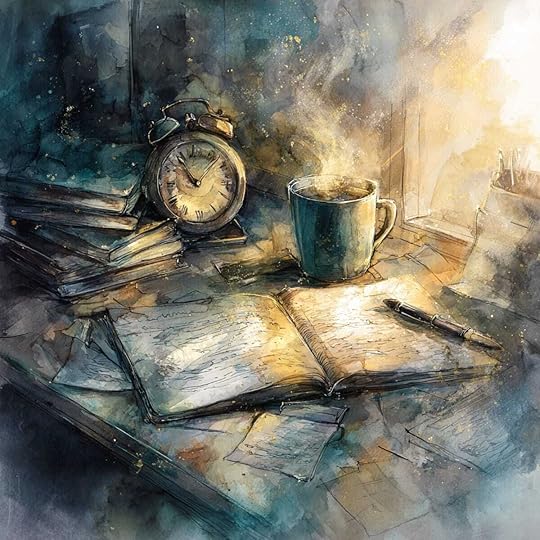
Some days you write like a creative superhero. Other days you stare at your keyboard wondering if words ever existed in the first place. The problem isn’t motivation. It isn’t discipline. And it definitely isn’t a personal failing.
It’s your chronotype—your biological schedule that decides when your brain wants to be brilliant and when it wants to lie face-down on a pillow.
There are three chronotypes.
Larks peak early.
Third Birds peak mid-day.
Wolves peak in the evening, long after society has decided “productive hours” should end.
Here’s the twist: your most creative ideas don’t arrive when you’re fresh. They show up when you’re tired. When your brain relaxes its grip on logic and lets your imagination run around unsupervised. That’s when the unexpected connections happen. That’s when your best lines appear out of nowhere, usually right before bed or midway through your third cup of coffee.
Night owls, in particular, are often more creative and better at problem-solving, but the world forces them into early schedules that completely ignore their biology. It isn’t a lack of ability. It’s a mismatch between the person and the clock.
So what do you do with this information?
Firstly, save your high-focus work for the hours when you naturally feel sharp. Editing, outlining, and solving plot puzzles belong there.
Secondly, use your lower-energy hours for creative drafting, brainstorming, and building new ideas. Your imagination thrives when your brain is a little unraveled.
You don’t need heroic discipline to be productive. You just need to stop arguing with your internal clock and start working alongside it. When you honor your natural rhythm, your writing finally clicks into place—not because you forced it, but because you stopped fighting yourself.


No comments have been added yet.