The Polymath Spy
In the chillDecember of 1776, as ice floes were forming on the Delaware River, the USS Reprisal docked at Auray, a port town shrouded in Atlantic mist. Benjamin Franklin, akey historical figure in my novel, The Reluctant Spy, stepped onto whatwould prove to be a decisive, if not kinetic, field of battle.
 Sailing to France
Doctor in theHouse?
At the then veryripe age of seventy, the polymath from Philadelphia—printer, inventor,philosopher—arrived not as a conqueror but as a supplicant spy, his fur cap andspectacles deliberately signaling rustic American virtue. Dispatched byCongress, Franklin's mission was to persuade the French King Louis XVI to join the war againstBritain and secure more loans, arms, and ships to shift the balance inAmerica's favor. To achieve this, he would walk a tightrope among the mostskilled practitioners of the dark arts in history.
 King Louis XVI
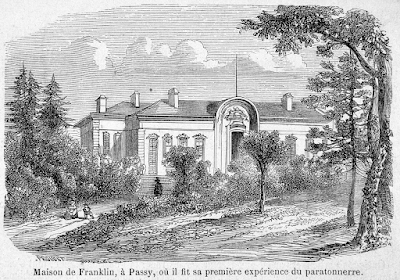 Franklin's Home Away from Home: Hotel Le Valentinois
Chief among hispatrons and adversaries was Charles Gravier, Comte de Vergennes, the foreign ministerwhose gaze fixed on Britain's North American jewel. Vergennes, acalculating aristocrat scarred by the Seven Years' War's humiliations, saw therebels as a tool for French revenge.
.jpg) Charles Gravier, comte de Vergennes
Charles Gravier, comte de VergennesFranklin knew asmuch and outwitted him masterfully, hosting salons where philosophes likeRaynal and d'Alembert debated liberty over claret, subtly steering discoursetoward Franco-American solidarity. "We must make them believe the cause istheirs," Franklin confided to Deane, his early ally—a Connecticut merchantwhose prior secret shipments of powder had already greased the wheels.
Working the “Street”Yet alliances were fragile blooms ina thorned garden. Franklin's network extended into the underworld — a tangledweb of booksellers, couriers, and informants who smuggled secrets amid salonsand at French ports, where informants tracked British naval dispatches. He evenenlisted the Marquis de Lafayette's circle, funneling funds to the youngnobleman's expeditionary force.
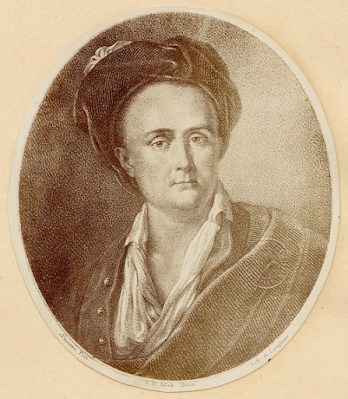 Charles-Joseph Panckoucke
A key ally was Charles-JosephPanckoucke, the powerhouse Parisian bookseller and publisher whose Palais-Royal shop was a revolutionary printing hub. He openly collaborated with Franklin,churning out pro-American pamphlets such as the Affaires de l'Angleterreet de l'Amérique series in 1776–1777 to sway French public opinion andelites toward an alliance.
By 1777, more French gunpowder andmuskets flowed covertly to Washington's ragged Continentals, sustaining ValleyForge's winter quarters.Sultan ofSophistication
Franklin'sespionage was no cloak-and-dagger affair so much as a symphony of subtlety. Hecultivated British expatriates in Paris, posing as a harmless savant whileextracting tidbits on troop movements from loose-lipped officers at the iconic theater and social venue, Comédie-Française.
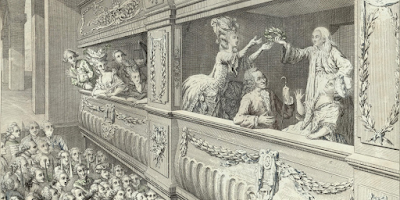 Comédie-Française
One such ploynetted details of Burgoyne's Saratoga campaign, intelligence relayed ininvisible ink to Congress. The stunning American victory at Saratoga thatOctober sealed the deal: bolstering American morale and tipping Vergennestoward an open alliance. In February 1778, France formalized the Treaty ofAmity and Commerce and the Treaty of Alliance in a blaze of mutualpledges—commerce, defense, and the dream of a transatlantic republic. A formaldeclaration of war came the following month.
 Signing the TreatiesSpies Among Us
Adversarieslurked in every corner of the city. The British embassy, a hive of spies underPaul Wentworth and Edward Bancroft—a turncoat American chemist in Franklin'sown employ—plotted ceaseless sabotage. Bancroft, double-dipping for Londonwhile transcribing Franklin's dispatches in lemon juice, fed Whitehall a streamof half-truths, nearly unraveling the mission when forged letters in 1778accused Deane of profiteering.

Edward Bancroft
Then there wasArthur Lee, Franklin's fellow commissioner, a Virginia lawyer whose paranoiafestered into outright enmity. Lee, sidelined by his own prickly demeanor,accused Franklin of embezzlement and senility, caballing with British agents todiscredit him. "Lee is a wretch," Franklin later quipped, but thebarbs stung, fracturing the American delegation and inviting French skepticism.
Beyond, GeorgeIII's envoys like William Eden prowled the salons, dangling peace overtures topeel France away. At the same time, Prussian and Spanish diplomats—wary ofBourbon overreach—whispered doubts in Vergennes's ear.
ObstaclesChallenges mounted.Secrecy was paramount. A single leak could summon British frigates to Brest.Franklin countered using a cipher system blending Polybius squares andhomophonic substitutions, smuggling letters in wine bottles or hollowed canes.
 Crafting Secret Letters
Financial straitsgnawed deeper—Congress's credit evaporated amid war's voracity, forcingFranklin to beg loans from French bankers like the Neufvilles, who demandedruinous interest. "I am become the diplomatic beggar of Europe," helamented in a dispatch.
 Chick Magnet
Yet he respondedwith unflagging bonhomie, charming Versailles courtiers with bifocaldemonstrations and anti-slavery tracts that aligned American ideals with Frenchhumanism. Franklin used his avuncular image to woo the French noblewomen. A trait that his other commissioners foundoff-putting, but yielded no small conquests.
Twists and BarbsWhen Britishspies torched American supply ships in the summer of 1779, cripplingreinforcements bound for the Carolinas, Franklin retaliated not with rage but witha mock obituary for the "late" General Howe (who returned to Britain in disgrace in 1778), circulated in privateletters, humiliated London, and eroded morale. To the French, he spun the arsonas proof of British desperation, urging Vergennes to dispatch Admirald'Estaing's fleet anew, even as d'Estaing's stalled Savannah siege that autumntested the alliance's mettle.
 The "Late" General Howe
Meanwhile, Bancroft'sbetrayals went unnoticed, but Lee's slanders echoed through Congress, andBritain's steadfast resolve suggested a tough struggle ahead. Franklin, alwaysthe optimistic strategist amid chaos, wrote to Washington: "Persevere, andthe sun will break through."
Deception’sTwilightBy the close of1778, Franklin sat by Passy's hearth, spectacles fogged by pipe smoke, studyinga chessboard tilted in delicate advantage. The alliance thrived—French ships filled with cannon slicing through Atlantic waves, Vergennes's coffers opening for yet another loan, and soon French soldiers would fight side by side with the hard-pressed Americans.
 The French Army - Crucial to Victory
The old scholarhad woven a web of cleverness and charm, outsmarting empires with a smile and asecret. His first year in Paris marked a tour de force of realpolitik amid therising storm. He would need to keep playing his game, as the stakes would be higher as the long-warring nations struggled to reach peace.