Business Automation with AI: The Complete Guide to Scaling Your Operations Without Losing Your Sanity
Picture this: You’re working 60-hour weeks, drowning in repetitive tasks. Your competitors seem to effortlessly scale their operations.
The secret isn’t bigger teams or unlimited budgets. They’ve discovered business automation with AI.
The most successful entrepreneurs aren’t working harder—they’re working smarter. They let artificial intelligence handle the routine while they focus on strategy, relationships, and growth.
Why Business Automation with AI Matters More Than EverThe business landscape has fundamentally shifted. Organizations that embrace business automation with AI are scaling faster and reducing costs more dramatically.
Recent McKinsey research reveals that 78% of organizations now use AI in at least one business operation.
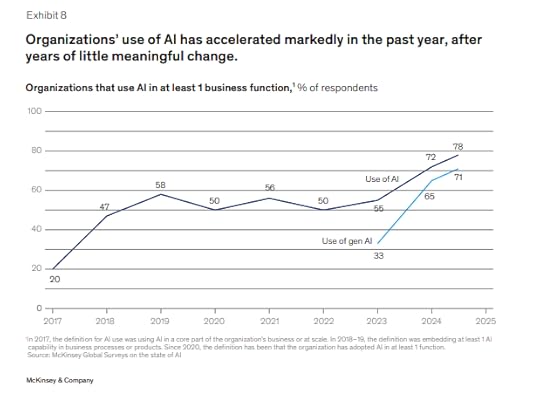
The businesses thriving in this new economy aren’t adopting AI tools randomly. They’re systematically automating their operations to create sustainable competitive advantages.
When you implement business automation with AI correctly, you’re not just connecting apps or scheduling posts. You’re creating an intelligent business ecosystem that learns from every interaction.
The difference between successful and struggling businesses increasingly comes down to operational efficiency. While your competitors burn out managing repetitive tasks, you’ll be orchestrating intelligent workflows.
Modern AI automation goes far beyond simple trigger-action sequences. These platforms understand context, handle exceptions, and make sophisticated decisions based on real-time data.
Understanding the Benefits of Business Automation with AIImplementing business automation with AI transforms every aspect of your operations. The benefits create compounding value that grows more valuable over time.
The most immediate impact comes from speed. Automated systems respond to leads, process orders, and handle customer inquiries in seconds rather than hours.
Time savings represent the most obvious benefit, but the deeper value lies in consistency. Human teams have good days and bad days, but AI automation delivers perfect performance every single time.
The financial impact extends beyond labor savings. Automated systems dramatically reduce errors that cost businesses thousands in refunds and corrections.
Business automation with AI also creates scalability that was previously impossible for small businesses. A single automated workflow can handle ten customers or ten thousand customers with identical precision.
Here’s how AI can dramatically help small businesses scale and boost revenue:
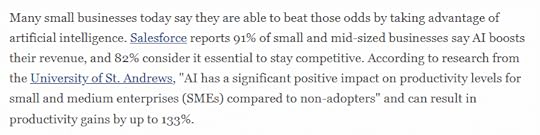
Perhaps most importantly, automation frees your team to focus on high-value activities. Instead of spending hours on data entry, your sales team can build relationships.
Identifying Where Business Automation with AI Fits Your OperationsSuccessfully implementing business automation with AI starts with understanding your current operational ecosystem. You need to identify the highest-impact opportunities for intelligent automation.
Your business operates through two distinct but interconnected environments. Front-of-house tools directly interact with customers, while back-office systems manage data and workflows.
Front-of-house tools include your CRM, email platforms, social media accounts, and website chat systems. These platforms contain valuable data about customer behavior that can trigger automated responses.
Back-office systems encompass your automation platforms, databases, analytics tools, and accounting software. These tools process information and execute workflows behind the scenes.
The magic happens when business automation with AI bridges these environments. A new lead captured on your website can automatically trigger personalized email sequences and update your CRM.
Start by mapping your customer journey from initial contact through purchase. Identify every touchpoint where manual processes create delays or inconsistencies.
Creating Your Business Automation with AI StrategyEffective business automation with AI requires systematic planning rather than random tool adoption. The most successful implementations begin with documented standard operating procedures.
Use AI tools like ChatGPT to help draft comprehensive SOPs for your most time-consuming repetitive tasks. These documents become the blueprint for your automated workflows.
Your SOP should detail every action, decision point, and exception in your current manual process. Include trigger events, required data, communication templates, and follow-up actions.
Once you have clear SOPs, translate them into visual workflow maps using automation platforms. Each step in your documented process becomes a node in your automated workflow.
Business automation with AI works best when you start small and scale systematically. Choose one repetitive task that annoys your team daily, automate it completely, then measure the results.
Consider the technical complexity required for each automation opportunity. Simple data transfers between existing applications require minimal setup, while custom AI decision-making needs more advanced configuration.
Essential Tools for Business Automation with AIThe automation tool landscape offers powerful platforms designed for different business needs and technical capabilities. Here are the most effective tools for implementing business automation with AI:
Make . Visual workflow builder with sophisticated conditional logic serving over 350,000 customers with 2,500+ app integrations.BuildShip. Transforms complex backend automation into manageable visual workflows using natural language prompts for over 100,000 builders worldwide.Zapier. Gold standard for reliable business automation, connecting over 5,000 applications through simple trigger-action workflows with AI-powered suggestions.Microsoft Copilot. Enterprise-grade automation embedded directly into Word, Excel, PowerPoint, Outlook, and Teams with security-first implementation.n8n. Open-source platform offering enterprise-level capabilities with visual workflow builder and unlimited customization for complete infrastructure control.Abacus.AI. Comprehensive AI super assistant offering automation that performs actual tasks and makes decisions beyond simple app connections.Implementing Your First Business Automation with AI WorkflowBegin your automation journey by selecting one high-frequency, low-creativity task. Lead follow-up, email management, or data entry typically offer the best return on initial investment.
Create a detailed map of your chosen process in your automation platform. Each step from your SOP becomes a node in your automated workflow.
Start with simple trigger events like new form submissions or email receipts. These clear starting points make it easy to test your workflow and verify if each step functions correctly.
Test your workflow thoroughly with real data rather than hypothetical scenarios. Run multiple test cases that represent different customer types and potential exceptions.
Business automation with AI works best when it includes human oversight at critical decision points. Build review steps where team members can approve significant actions or handle exceptions.
Monitor your automated workflows closely during the first weeks of operation. Track completion rates, error frequencies, and the quality of automated actions.
Document your successful automation workflows thoroughly. This documentation makes it easier to train new staff and expand automation to additional processes.
Measuring Success and Scaling Your Business Automation with AISuccessful business automation with AI requires ongoing measurement and optimization. Track time savings, error reduction, and cost savings to demonstrate clear ROI.
Calculate the total time your automated workflows save weekly. Compare manual process duration against automated completion time, then multiply by hourly labor costs.
Monitor the quality and consistency of automated outputs compared to manual work. Well-designed automation typically produces more consistent results with fewer errors than manual processes.
Analyze customer satisfaction metrics for processes you’ve automated. Faster response times and consistent communication typically improve customer experience significantly.
As your team becomes comfortable with initial automation workflows, gradually expand to more complex processes. The confidence gained from simple automation success makes it easier to tackle sophisticated workflows.
Scale your business automation with AI systematically by identifying processes that share similar patterns. Workflows with similar structures can often be templated and quickly adapted for different use cases.
6 Steps to Business Automation with AIHere’s a summary of everything we’ve talked about in this blog:
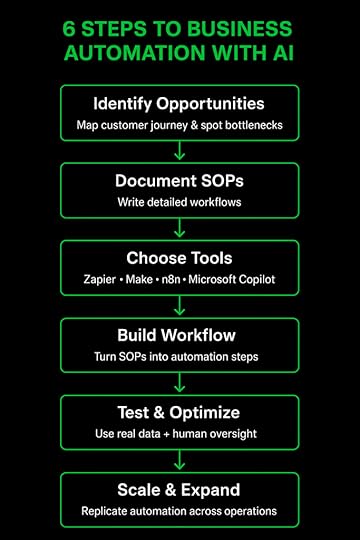 Transform Your Business Operations Starting Today
Business automation with AI isn’t just about efficiency—it’s about creating the operational foundation for sustainable growth. While competitors struggle with manual processes, you’ll have intelligent systems working continuously.
The businesses that implement smart automation strategies today will dominate their markets tomorrow. They’ll deliver superior customer experiences and operate with dramatically lower costs.
Choose one repetitive process that frustrates your team weekly. Commit to automating it completely within the next thirty days.
Focus on proving the concept with measurable results before expanding. Your automated business future starts with a single workflow.
The time you invest learning business automation with AI will compound into thousands of hours saved. The question isn’t whether you can afford to automate—it’s whether you can afford not to.
Frequently Asked QuestionsHow much does it cost to implement business automation with AI in my company?
The costs vary significantly depending on your business size and automation complexity. Simple automation platforms are affordable and perfect for small businesses automating tasks like scheduling or customer follow-ups, typically starting at $20-100 per month. More sophisticated platforms range from $24-200+ monthly. Most businesses see ROI within 30-60 days through time savings alone. Factor in potential training costs and integration setup, but remember that automation can reduce costs by saving employee time spent on repetitive tasks and since AI can operate 24/7, business processes can run continuously without overtime costs.
Will AI automation replace my employees or make jobs obsolete?
Rather than replacing humans entirely, AI automation frees up employees to focus on more strategic work that drives business growth and success. AI takes over repetitive tasks such as data entry, scheduling, and compliance tracking, while humans focus on creative problem-solving, relationship building, and strategic decision-making that requires emotional intelligence and complex reasoning. The future workplace will see humans and AI working together, with automation handling routine tasks and people managing higher-value activities.
What types of business processes are best suited for AI automation?
Look for tasks that follow the same steps every time, like sending welcome emails to new hires or processing standard purchase orders. These are ideal because AI thrives on consistency. The best candidates are processes that are repetitive, happen frequently, take significant time, and involve clear data inputs and outputs. Many workers spend at least a quarter of their work week on manual, repetitive tasks like email, data collection, and data entry. Examples include customer service inquiries, lead qualification, invoice processing, appointment scheduling, and social media posting.
How do I know if my business is ready for AI automation implementation?
A process is ready if it’s repetitive, happens frequently, takes a lot of time, involves data, has clear goals, and works with your current tech systems. Start by identifying your most time-consuming manual processes and documenting them thoroughly. Your business is ready when you have clear standard operating procedures, existing digital tools that can integrate with automation platforms, and team buy-in for change. Start with high-impact, low-effort processes for the best results. You don’t need technical expertise to begin – focus on one repetitive task that annoys your team daily and automate that completely before expanding to more complex workflows.
Ready to Master Business Automation with AI? Join First Movers R&D AI LabsImplementing business automation with AI successfully requires more than just access to tools—it demands strategic guidance, proven frameworks, and a community of entrepreneurs who’ve already transformed their operations.
That’s where First Movers R&D AI Labs becomes your competitive advantage. This isn’t another online course filled with theory—it’s your direct path to automation mastery.
Get personalized guidance from Dr. McCoy (my digital twin) on choosing the right processes to automate first. Access battle-tested automation workflows and templates that members are already using to save 20+ hours per week.
Connect with successful business owners who’ve scaled their operations through intelligent automation. Learn implementation strategies that work while avoiding costly mistakes that derail automation projects.
The entrepreneurs joining First Movers today are building the automated businesses of tomorrow. While others struggle with manual processes and wonder where to start, you’ll have proven systems and expert support accelerating your growth.
Your automated future starts with the right guidance and community. Join First Movers R&D AI Labs and turn business automation with AI into your operational superpower.