AI Tools for Automation: 6 Game-Changing Platforms That Work While You Sleep
AI tools for automation are fundamentally changing how businesses operate, turning time-consuming manual processes into intelligent workflows that run 24/7. The entrepreneurs who master these platforms today are building sustainable competitive advantages while their competitors burn out managing repetitive tasks.
The automation revolution isn’t just about saving time—it’s about scaling human intelligence. These platforms don’t just follow pre-programmed rules; they adapt, learn, and make decisions based on real-time data and context. A single person equipped with the right AI tools for automation can orchestrate operations that previously required entire teams.
What separates today’s automation tools from yesterday’s simple schedulers is their ability to understand nuance, handle exceptions, and integrate seamlessly across multiple platforms. They’re not just connecting apps—they’re creating intelligent business ecosystems that grow smarter with every interaction.
The AI tools for automation we’re covering represent the cutting edge of business intelligence, each designed to eliminate different types of operational friction while amplifying your strategic capabilities.
AI Tools for Automation: How to Choose the Right Platform for Your BusinessThe automation tool market is flooded with options promising to revolutionize your workflow, but most business owners make the same costly error: they automate the wrong processes first. The result? Complex systems that create more problems than they solve and automation fatigue that kills momentum.
The most successful automation implementations start with a clear understanding of your operational pain points and growth bottlenecks, not feature comparisons or flashy demos.
Identify Your Highest-Impact Repetitive Tasks
Before exploring any AI tools for automation, conduct a brutal audit of where your team spends time on tasks a computer could handle better. Are you manually moving leads between systems, spending hours on data entry, or constantly checking multiple platforms for updates? These high-frequency, low-creativity tasks offer the best return on automation investment.
The businesses seeing 10x productivity improvements aren’t automating everything—they’re strategically targeting the 20% of tasks that consume 80% of their time. A sales team drowning in lead qualification will benefit more from intelligent lead scoring than complex email sequences. A content team buried in social media posting needs scheduling automation before advanced analytics.
Match Automation Complexity to Your Technical Comfort Zone
Not every business needs enterprise-grade automation workflows. If you’re running a solo operation or small team, prioritize platforms with visual builders and pre-made templates over those requiring technical configuration. Growing teams might need more sophisticated conditional logic and custom integrations.
Here’s a practical framework for choosing AI tools for automation:
Solopreneur/Small team: Focus on plug-and-play solutions like Zapier or Buffer that connect your existing apps without complex setup.Growing business: Consider platforms like Make or BuildShip that offer visual workflow builders with advanced logic capabilities.Enterprise operations: Evaluate comprehensive solutions like Microsoft Copilot or Abacus.AI that integrate across entire business ecosystems.Technical teams: Explore open-source options like n8n that provide maximum customization and self-hosting capabilities.Evaluate Integration Capabilities With Your Current Stack
The best AI tools for automation work seamlessly with the apps and platforms you already use daily. Before committing to any solution, verify it connects with your CRM, project management tools, communication platforms, and data sources. Automation that requires you to change successful workflows defeats the purpose.
Look for platforms offering native integrations rather than workarounds. A tool that connects directly to your email marketing platform will be more reliable than one requiring third-party bridges or manual data exports.
Consider Scalability and Total Cost of Ownership
Many automation platforms look affordable until you factor in the true cost of implementation and scaling. Evaluate pricing models carefully—some charge per automation, others per task execution, and many have hidden costs for advanced features or higher usage volumes.
Ask these critical questions:
What happens to costs as my business grows and automation usage increases?Are there setup fees, training costs, or consulting requirements?Can I export my workflows if I need to change platforms later?What level of ongoing maintenance and optimization will these systems require?Start Small and Scale Systematically
The most successful automation implementations begin with simple, high-impact workflows before expanding into complex multi-step processes. Choose one repetitive task that annoys your team daily, automate it completely, measure the results, then gradually add more sophisticated workflows.
This approach builds confidence, demonstrates ROI to stakeholders, and helps you understand each platform’s capabilities before making larger commitments. It also prevents the common mistake of creating overly complex systems that break frequently and require constant maintenance.
6 Essential AI Tools for Automation1. Make
Make revolutionizes business process automation through visual workflows that scale intelligently with your growing operations. With over 350,000 customers and 2,500+ app integrations, this platform transforms complex business processes into manageable visual maps you can understand at a glance.
The platform’s strength lies in its sophisticated conditional logic capabilities combined with an intuitive drag-and-drop interface. You can create automation workflows that handle multiple decision points, data transformations, and exception handling without writing code or managing servers.
What sets Make apart is its agentic automation approach—AI agents that adapt and make decisions based on real-time business conditions. Companies like GoJob have achieved 50% increases in yearly revenue by using Make’s automation platform to eliminate bottlenecks and streamline operations across their entire business ecosystem.
2. BuildShip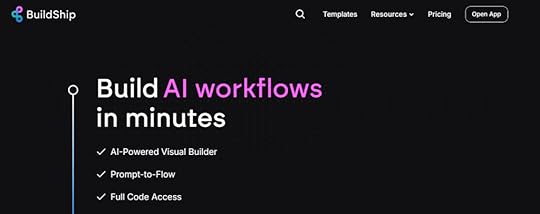
BuildShip transforms backend automation from a developer nightmare into a visual workflow that anyone can master. Over 100,000 builders worldwide use this platform to create sophisticated automation systems using natural language prompts that generate custom workflows in seconds.
The “Prompt Flow” system lets you combine any AI model, tool, or business logic into production-ready automation without technical expertise. BuildShip’s extensive library of pre-built nodes handles common automation tasks while their AI generates custom solutions for unique business requirements.
The platform includes everything needed for enterprise automation: built-in databases, unlimited cloud storage, secure API key management, and access to over 1 million NPM packages. This comprehensive approach eliminates the complexity of managing multiple services while providing unlimited scalability without surprise costs.
3. Zapier
Zapier remains the gold standard for business automation, connecting over 5,000 applications through simple trigger-action workflows called “Zaps.” The platform’s strength lies in its reliability and extensive integration ecosystem, making it the go-to choice for businesses that need automation to work consistently without technical oversight.
The AI-powered automation suggestions analyze your connected apps and recommend workflows that save significant time once implemented. These intelligent recommendations often reveal automation opportunities that business owners never considered, frequently identifying processes that consume hours of manual work weekly.
Zapier’s multi-step workflows handle complex business processes involving multiple applications and conditional logic. The platform’s filtering and formatting capabilities ensure data moves cleanly between systems, eliminating the data quality issues that plague many automation attempts.
4. Microsoft Copilot
Microsoft Copilot brings enterprise-grade automation directly into the productivity tools millions of businesses use daily. Instead of learning new platforms, you get intelligent automation capabilities embedded in Word, Excel, PowerPoint, Outlook, and Teams.
The AI understands business context and relationships across your entire Microsoft ecosystem. It can automatically summarize email threads, extract action items from meetings, generate reports from spreadsheet data, and suggest document improvements based on your organization’s communication patterns.
What makes Copilot particularly valuable for automation is its security-first approach. Your sensitive business data remains protected while you access cutting-edge AI capabilities that would have required specialized software and extensive security reviews in the past.
5. n8n
n8n appeals to businesses that want complete control over their automation infrastructure without vendor lock-in concerns. This open-source platform provides enterprise-level automation capabilities while allowing self-hosting and unlimited customization possibilities.
The visual workflow builder rivals expensive enterprise tools while offering advanced capabilities like conditional statements, loops, and complex data processing that goes beyond simple trigger-action automation. With over 200 built-in integrations and the ability to create custom nodes, n8n handles virtually any automation scenario.
The self-hosting option provides complete data control and eliminates ongoing subscription costs, making it attractive for businesses with strict security requirements or those wanting to avoid recurring automation expenses as they scale.
6. Abacus.AI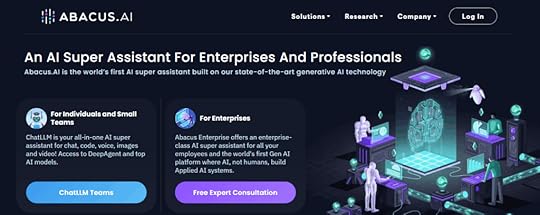
Abacus.AI positions itself as the world’s first AI super assistant, offering enterprise automation that goes far beyond connecting apps. Their “AI Engineer” feature creates custom AI solutions for specific business needs without human intervention, representing the next evolution of business automation.
The platform’s ChatLLM Operator performs actual tasks on computers rather than just processing data, enabling automation scenarios that were impossible with traditional tools. Real-time data visualization and response verification ensure accuracy in mission-critical business processes.
Enterprise features include custom knowledge base integration, complete AI workflow automation, and plug-and-play code snippets that connect multiple data sources seamlessly. For businesses serious about transforming operations through AI, Abacus.AI provides a complete automation operating system rather than just connectivity tools.
Can’t Figure Out How to Implement AI Tools for Automation in Your Business?Successful automation isn’t just about having access to powerful platforms—it’s about strategic implementation, avoiding costly mistakes, and building systems that actually improve your operations instead of creating new complications.
That’s where First Movers R&D AI Labs becomes your competitive advantage.
First Movers isn’t just another online community filled with generic advice. It’s your strategic partner in the automation revolution, specifically designed for business owners who want to implement AI tools for automation without the trial-and-error approach that wastes months and thousands of dollars.
Direct Access to Dr. McCoy – Get personalized guidance for your automation journey. No more guessing about implementation strategies or wondering if you’re automating the right processes first.
Battle-Tested Automation Workflows – Skip months of experimentation with proven automation templates, workflows, and integration strategies you can implement immediately. These aren’t theoretical concepts—they’re working systems already saving our members 20+ hours per week.
Business Owner Community – Connect with other entrepreneurs who are successfully scaling their operations through intelligent automation. Share implementation challenges, discover optimization strategies, and learn about new AI tools for automation before they hit the mainstream.
Strategic Implementation Guidance – Stay ahead of automation trends while avoiding the common mistakes that turn automation projects into expensive failures. We test new tools and strategies so you don’t waste resources on solutions that don’t deliver measurable results.
The business owners who join First Movers today will dominate their markets tomorrow. While competitors struggle with manual processes and automation implementation on their own, you’ll have proven systems, expert guidance, and a community of successful practitioners accelerating your growth.
Frequently Asked QuestionsWhich AI tools for automation should I implement first in my business?
Start with Zapier or Make if you need to connect existing apps and eliminate manual data transfer. Focus on automating one high-frequency, low-creativity task completely before expanding. Most businesses see immediate ROI by automating lead management, email follow-ups, or social media posting first.
How do I know if automation will actually save money for my business?
Calculate the total time your team spends on repetitive tasks weekly, multiply by hourly rates, then compare against automation tool costs. Most AI tools for automation pay for themselves within 30-60 days through time savings alone. Factor in reduced errors, improved consistency, and freed capacity for revenue-generating activities.
Can these automation tools handle complex business processes or just simple tasks?
Modern AI tools for automation excel at complex, multi-step processes involving conditional logic, data transformation, and exception handling. Platforms like Make and BuildShip can automate entire customer onboarding sequences, inventory management workflows, and financial reporting processes that span multiple departments and systems.
What’s the biggest mistake businesses make when implementing automation?
Trying to automate everything at once instead of focusing on high-impact processes first. This creates complex systems that break frequently and overwhelm teams. Start with simple, repetitive tasks that annoy your team daily, perfect those workflows, then gradually expand to more sophisticated automation.
Ready to Transform Your Business Operations?The automation revolution is accelerating, and businesses that implement AI tools for automation strategically will have insurmountable advantages over those stuck managing manual processes. These platforms represent just the beginning of what’s possible when artificial intelligence meets business operations.
Choose one or two tools that address your most pressing operational bottlenecks. Test them with real business processes rather than hypothetical scenarios. Most importantly, focus on mastering simple workflows before attempting complex automation projects.
The future belongs to business owners who can orchestrate intelligent automation while maintaining the strategic vision and customer relationships that drive growth. These tools amplify your operational capacity—they don’t replace your leadership.
Join First Movers R&D AI Labs today and turn AI tools for automation into your operational advantage.
Stop struggling with manual processes and wondering if you’re implementing automation correctly. Get access to proven strategies, expert guidance, and a community of successful business owners who’ve already transformed their operations through intelligent automation.
Your automated business future starts now.