
The Power of Place Day 4 - Native American Reservations
As we drove through New Mexico and Arizona, and even parts of California, we traveled across several Native American Reservations. I knew from the first moment that I would write about the experience, but it's taken me a bit of time to get my thoughts together.
Let me start by saying that I knew I would be affected by seeing the reservations in person. Long before we neared the first one, thoughts of what I'd learned in school had already filled my mind. The Trail of Tears. The Indian Removal Act. Boarding Schools to force "cultural assimilation". Manifest Destiny. I'd learned about all those things and more. I'd been appalled and angry about how the Native Americans had been treated. But in no way could I prepare myself for how I would feel when I saw the reservations for the first time.

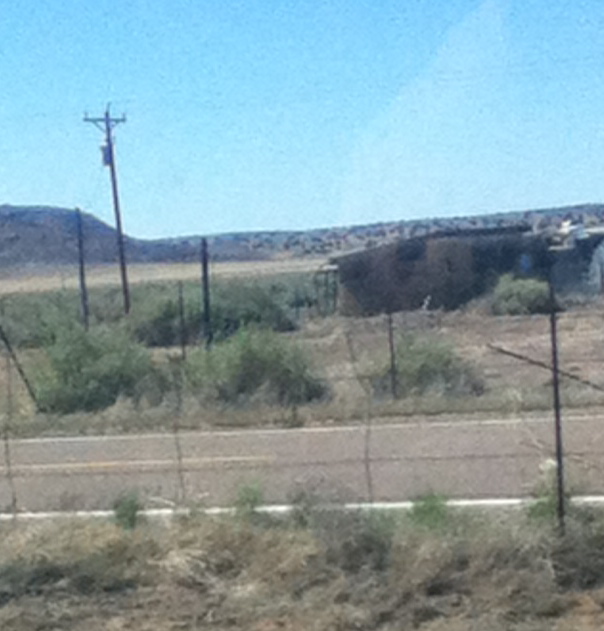
From the interstate, the conditions on the reservations are modest at best, gut-wrenching at worst. The lean-tos and shacks and campers parked in the middle of vast fields speak of both the poverty and the determination of the people. Determination to maintain their culture... a culture which was assaulted... a culture which fought tooth and nail to survive. The people who live in homes such as the ones below are keeping alive a part of history that should never be forgotten... and nurturing a culture that is rich with tradition.


Then, around the next bend in the road would be a lavish and exorbitant casino. Such a contrast to the poverty evident just from driving by the homes on the reservations. So much so that I almost took a picture of a casino, but then decided I didn't want to make it that important. The casino, after all, isn't really a part of the culture. Supposedly, the casino developers give a percentage of their profits back to the tribe and the reservation, but if that money had made any sort of impact on the people living on the reservations, you could not tell by looking.
When I returned home, I contacted a friend of mine who has worked for several years on different reservations teaching literacy. She confirmed what I suspected... that on some reservations, the casinos had made some kind of positive impact on the tribe, and on many others... not so much. She also told me that many reservations do not have high schools. Students on those reservations who want to attend high school have to go to the nearest town, stay with relatives, or attend a boarding school (and, yes, she said those do, in fact, still exist.) Of course, for many students of high school age, these conditions make it impossible to attend high school, and so they drop out.
She also described the hardships faced by many on the reservations. Not only poverty, but addiction, illiteracy, domestic abuse, etc. But she was quick to say that the cultures on the reservations are still beautiful... still rich... and in many places, still thriving.
I won't say I felt pity when I saw the reservations. I'm sure that's not what the Native Americans would want us to feel. I felt sadness. I felt humbled. I felt a kind of righteous indignation for the way their culture had been attacked. But more than that, I felt proud. And I felt a sense of gladness that even after all the tribes had experienced over the last several centuries, they still endeavor to keep their culture alive.

And because of their endeavors, we should NEVER forget.
Happy reading and writing.

Let me start by saying that I knew I would be affected by seeing the reservations in person. Long before we neared the first one, thoughts of what I'd learned in school had already filled my mind. The Trail of Tears. The Indian Removal Act. Boarding Schools to force "cultural assimilation". Manifest Destiny. I'd learned about all those things and more. I'd been appalled and angry about how the Native Americans had been treated. But in no way could I prepare myself for how I would feel when I saw the reservations for the first time.

From the interstate, the conditions on the reservations are modest at best, gut-wrenching at worst. The lean-tos and shacks and campers parked in the middle of vast fields speak of both the poverty and the determination of the people. Determination to maintain their culture... a culture which was assaulted... a culture which fought tooth and nail to survive. The people who live in homes such as the ones below are keeping alive a part of history that should never be forgotten... and nurturing a culture that is rich with tradition.


Then, around the next bend in the road would be a lavish and exorbitant casino. Such a contrast to the poverty evident just from driving by the homes on the reservations. So much so that I almost took a picture of a casino, but then decided I didn't want to make it that important. The casino, after all, isn't really a part of the culture. Supposedly, the casino developers give a percentage of their profits back to the tribe and the reservation, but if that money had made any sort of impact on the people living on the reservations, you could not tell by looking.
When I returned home, I contacted a friend of mine who has worked for several years on different reservations teaching literacy. She confirmed what I suspected... that on some reservations, the casinos had made some kind of positive impact on the tribe, and on many others... not so much. She also told me that many reservations do not have high schools. Students on those reservations who want to attend high school have to go to the nearest town, stay with relatives, or attend a boarding school (and, yes, she said those do, in fact, still exist.) Of course, for many students of high school age, these conditions make it impossible to attend high school, and so they drop out.
She also described the hardships faced by many on the reservations. Not only poverty, but addiction, illiteracy, domestic abuse, etc. But she was quick to say that the cultures on the reservations are still beautiful... still rich... and in many places, still thriving.
I won't say I felt pity when I saw the reservations. I'm sure that's not what the Native Americans would want us to feel. I felt sadness. I felt humbled. I felt a kind of righteous indignation for the way their culture had been attacked. But more than that, I felt proud. And I felt a sense of gladness that even after all the tribes had experienced over the last several centuries, they still endeavor to keep their culture alive.

And because of their endeavors, we should NEVER forget.
Happy reading and writing.


No comments have been added yet.
Amy Durham

Imagination & Escape
for the young... and young at heart
for the young... and young at heart
- Amy Durham's profile
- 155 followers

