
Fix Your Life: Notes From Reconstruction
So, I don't really do self-help, for a variety ofreasons, but I've had this article jangling around in my head for aminute.
I'm in the middle of working on a bunch of healthconditions, and changing my lifestyle and habits to actually try and improve ormanage them, and I couldn't help but think about how deeply ineffective andfrustrating most self-help tends to be.
This, then, is a quick rundown of techniques I've beenrelying on and making use of while I've been trying to improve myfunctionality.
Where I started
For some context, I've been struggling with really terribleburnout from my editing practice for a few years now. Life stuff happened, itwas bad; it left me with mental health scars. I won't bare every inch of mysoul for the internet, but suffice to say that the Tolstoy quote about howunhappy families are unhappy in their own way is not that accurate. Trauma canfollow exhaustingly repetitive patterns between people's lives. It's notparticularly exciting or salacious, although there were a few dramatic momentshere and there.
What matters is, I got better, and I got back to editing,but I also got worse. As anxiety and depression paralysed me and depressionweighed me down like pocketfuls of stones, I couldn't finish projects, lettingdown clients and friends one by one. I dragged my feet, though, terrified tochange my career and lose all the progress I'd made.
I'd been suspecting I was burnt out for years, but I was tooscared to let go. My wife's pregnancy, two house moves, and our son's birth letme delay the decision, even though I'd already made my mind up in private. ThenI had a mental health backslide a couple of months ago, my partners gottogether and insisted I deal with my shit, and well, I had to do exactlythat.
What I'm doing
For most of my life, I've struggled with body image andweight issues, with a glaring exception - in the first year of university, Ihad to bike to school every day and was also swimming regularly, and it made astark difference in my mental health. Accepting that I needed to work outregularly whether I liked it or not, but not worrying about weight loss orgain, has been shatteringly effective. I've also changed my language aroundworking out, avoiding the term "exercise", which is too loaded withtrauma and negative associations for me personally. I considered my options andwent with biking and swimming, with a surprise addition of some gardening,which I really enjoy; in addition to some housekeeping and chores, which I wasalready doing, of course. Biking and swimming make me feel fast, strong, andgraceful, and having physical ways to move that make you feel good isabsolutely vital.
You will not fix your life by suffering. You'll justexhaust yourself and end up in the same place you started, or worse. Find waysto move your body that are a) safe for your physical constraints, b)cost-effective, and c) sustainable for you personally. One person'storture is another person's pleasure, and vice versa. Don't just do whateveryone says you should do if you absolutely fucking hate it.
I'm also in four different kinds of therapy right now, doinga short-term intensive for three months, which I'm about halfway through rightnow. It's pretty tiring, and yes, it can take a lot of time each week. Findingtherapy and groups that work for you is essential. Again, it's not going to beeasy, but there's a difference between difficulty and pain. Free therapy groupsare abundant online and more available locally than one might suspect, and Ihave to admit that group counselling has been surprisingly helpful. Thedominant approach is called Dialectical Behavioural Therapy, an improvement onCognitive Behavioural Therapy, and it's working really well forme.
Subsequent to the therapy thing...I'm using mindfulness alot, and for me, it's working well. Now, mindfulness is actually a hazardoustechnique for some people, and can worsen their mental health, but many othersbenefit from it. However, it actually refers to a bunch of techniques. Forme, that's colour breathing, grounding, and exercises to create sensoryawareness of my body. Sometimes fully tensing all muscles andreleasing them can really help. Point is, mindfulness involves a variety ofconcrete techniques and approaches; it isn't just a sort of vague mindsetthing. It's a bunch of stuff. Try things, carefully. Those therapy groups oftentalk about techniques with more expertise.
Frustratingly, the whole thing about scheduling has alsobeen proven true. It's often told to neurodivergent people that we need toschedule our shit, and...yeah. I use a digital calendar app to block off mytime and handle both regular obligations and appointments. For instance, I havereminders about when to scoop our cats' litterboxes, my therapy sessions, andmy intended swimming times all colour-coded out. Adjust your reminders'frequency to help you actually pay attention to them.
Self-care often gets described as either really unpleasant,important tasks like doing the dishes and scrubbing the toilet and making phonecalls, or as a sort of fuzzy, vague, indulgent thing, like baths and eightkinds of skincare. However, it's a balance of these things. The most importantthing I'm finding is re-framing what I consider a reward or a treat.
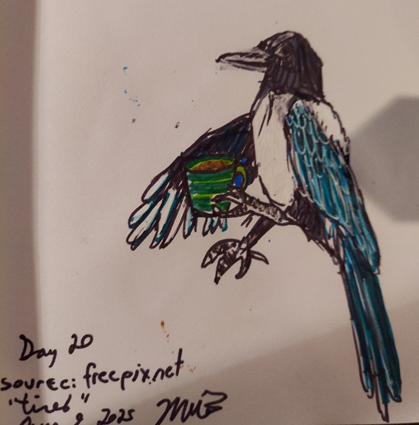
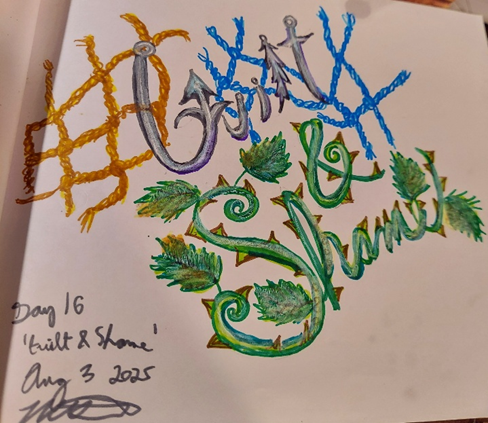
Very recently, I've been shifting the perception of a treatfrom physical rewards to actual time. Setting aside my little chunk of time toread a book and have a little snack and a cup of tea, or to draw some words formy daily drawing challenge, has immensely enriched my life. The way Ieven have time for those things is that I've had to identify where I waswasting time. Doomscrolling can take many forms, and it's important toremember that our phones and social networks and apps and Netflix and games andsuch are designed to keep us watching. Spend time on people, things, andactions that either make you happy or challenge you.
Another thing has been moderating the content I take in morecarefully. I'm limiting some of my interactions with politics, because quitefrankly, a lot of people are just fucking using the news to self-harm, and Idon't want to be one of them. Toquote Propaganda the rapper and activist, tapping out is vitallyfucking important right now.
I will never advocate for people to wrap themselves in abubble of ignorance either. Completely disengaging from the news isreally dangerous. But limit your exposure, and especially if you're on multiplesocial networks - for god's sake, don't try to be politically focused andactive on every single one of them. That's a shortcut to burnout. Internalboundaries are required for survival. Don't let anyone guilt or shame you intothinking otherwise. They're not respecting their own limits, and they'll end uppaying for it or hurting other people along the way.
Caveats
There are several important components that are making thispossible for me. One is, frankly, financial support from my parents andpartners. Now, I realise that's not doable for most people, but I'm not goingto be one of those people who pretends they've hauled their asses up by theirbootstraps with no help or support. My family isn't wealthy, but the smallamount of money and more generous supportive time, has been a huge advantage.My unconventional family structure with my partners also makes things a hell ofa lot more doable and accessible.
One of the most important components of this whole thing isjust time, period. I'm lucky enough to live in Canada, where we have a flawedbut still extant social service and safety net. I also have health insurancethat covers my therapy. Being white and having an English-speaker name means Iget the benefit of the doubt in a lot of situations. I think about these thingsa lot, and I'm grateful for them.
We're often taught to be ashamed of privilege, rather thanpractical about it. If you have it in any area of life - and most people haveit in one or two ways - lean on it and use it. Play into it, if you can do sowithout harming yourself mentally. Use privilege as a ladder foryourself, and then extend the same help to others who don't have it.
That said, it's important to get your shit together enoughto survive, and balancing that with community care and help is tricky. I'm notgoing to say "fuck everyone else, save yourself" because frankly,that's also bad for you, but it's also really important to learn yourlimits and know how much you can do without hurting or exhaustingyourself.
What should you do?
Still, if you find yourself in need of help direly, the bestthing I can suggest to anyone is to stop trying to do it alone. If you have afew poor friends, band together. If you're living alone, move back home or findsome kind of co-living situation. A bunch of disabled people working together,or family or friends, can patch each other's holes both financially andsituationally.
If you already have roommates, family, or housemates,moving to a cheaper living situation or talking to the landlord about a rentreduction might be necessary. Changing living situations to be aroundpeople who will actually support you might also be necessary. I knowsome people find the thought of living with others unbearable, but if it's achoice between living with others and dying alone, find a way to make it work.Have boundary and alone time talks. It beats working yourself to death for anillusion of independence.
I cannot recommend enough that, wherever you live, youtake advantage of any resources available. Rent relief, affordable housingprograms, any kind of food stamps, free therapy groups, and outreach centres.There are no prizes for not using the social safety net, while it stillexists.
Furthermore, the social workers I know have made it clear tome that their programs actually live and die on participation. Even if thewaitlists are long, it's much better to get involved, because then local,provincial/state, and federal programs see that *the resources are being used,and therefore need to be funded.* Yes, I know what's happening in the USA rightnow, but they haven't actually destroyed the entire system *yet*.
But Magpie, I can't do any of this stuff.
Now, for those who are looking at this list and going,"I don't have a safe home, I don't have a regular diet, I don't havesupportive people..."
The truth is, your life is already in the process ofcollapse, and my type of recovery plan is not right for you right now. What youneed is to work on stabilizing your living situation. You absolutely cannot fixyour shit right now, and that has to be okay. I'm sorry to be the one tellingyou. However, some of these tips - utilizing program resources, talking tofriends and family to pool resources, scheduling, and getting movement in - areall doable. Working through the panic and overwhelm is important.
If you have any type of privilege or resources you canlean on, without harming yourself, use them. There's no sense infeeling guilty about it, and remember that what people think of you doesn'thave to reflect who you are inside. Again, I stress that there's a line hereabout self-harm - other trans folks will know this line well, because it's commonfor nonbinary people to have to portray themselves as binary-gendered, forinstance - but as long as drawing on a systemic or familial resource isn'tactively hurting you, it's okay to do it. To be even clearer, approachingabusive family members for help is probably a bad idea, but may be required insurvival circumstances.
It's often said that "nobody can save you butyou," and while that's got elements of truth to it, it's also completelywrong. Support networks of various kinds - systemic infrastructure andinterpersonal ones - are the only way out.
You have to ask for what you need. Yes, I know that'sfucking scary. Yes, it means figuring out what you need. But it beats dyingslowly and suffering all the way down.
The quick and dirty summary
To fix your life and mental health issues, you need:
1) Financial support - a stable place to live and food toeat, plus therapy fee coverage if applicable
2) Emotional support - people who will support and enableyou to change and make changes
3) Health plans - these are going to be different for everyperson, but movement is a basic need. Find a safe and sustainable way to moveyour body regularly. Figure out food supplies and needs. Same with meds orother therapy access. Procrastinating on health issues does not make them goaway, and in fact, can make them get worse. They also won't make waiting listsfor appointments get any shorter.
4) Scheduling - I know, it's annoying and overwhelming, butyou gotta do it.
5) Advantages - if you have any form of privilege that youcan use without causing yourself mental or physical distress, use it.
6) Self-knowledge - this is fucking hard, and comes inch byinch, but you have to learn your own mental and physical constraints. What canyou do sustainably? What help can you give others without tiring yourselfout?
7) Boundaries - limit your news exposure and pick a fewareas you care about. Overwhelm and witnessing suffering can be a form ofdigital self-harm. People will try to convince you that this is cowardly, butit's not your job to perform enlightenment or empathy. Also, you can't knoweverything, and trying will exhaust you. Consuming media is not the same asactually doing shit for your community, whether local or global. Supporting andhelping others is essential for building mental health, but you also have tonourish yourself.
I realise a bunch of these need to be tailored and adjustedto each person's situation. I definitely have a bad-faith Tumblr/old Twitterghost in my head arguing with every single point, but this is the best I can doto dole out some survival advice.
I'm going to end with some media recommendations - for news,I really like Cool Zone Media's podcasts; It Could Happen Here, Behind theBastards, Hood Politics, There Are No Girls on the Internet, and Better Offlineare probably my favourites. I also like the journalistic coverage from SomeMore News, Vox's Today Explained, What Next from Slate, and Frontburner fromCBC.
For non-news, I'm really enjoying enjoying working throughall the albums I've been meaning to listen to over the years, including newmusic from artists I already like and exploring artists whose songs catch myears. I've been making absurd numbers of playlists, soif that's your thing, check out my Youtube and see if anything intriguesyou.
Oh, and I've gotten back intoactually reading books for pleasure, which is amazing. I'll probably have anarticle about modern gothic horror coming out soon, because that's what I'mfixated on right now, but everything I'm reading has been wall-to-wall bangers.You can follow my reviews on Goodreads, Amazon, or Storygraph,but please be aware that I am *NOT ACCEPTING REVIEW REQUESTS* forbooks.
A writer and artist, Michelle Browne lives in southern ABwith xer family and their cats. Xe is currently working on the next books inher series, other people's manuscripts, knitting, jewelry-making, and drinkingas much tea as humanly possible. Find xer all over the internet: *Website * Amazon * Substack * Patreon * Ko-fi * Instagram * Bluesky* Mastodon * Tumblr * Medium * OG Blog * Facebook *


SciFiMagpie

- Michelle Browne's profile
- 601 followers

