The Blind Dead Tetralogy
My newest horror novel – Mound Dwellers – is an action-packed zombie novel that takes its inspiration from a certain brand of European horror movie common in the ’70s and ’80s. Although it has a contemporary setting, I drew a lot of influence from movies made in the wake of George A. Romero’s Dawn of the Dead (1978) like the Italian movies Zombie Flesh Eaters (1979) and Hell of the Living Dead (1980). One series of Spanish horror movies was a particular inspiration, namely the Blind Dead Tetralogy which, unusually for its time, returned to the occult origins of the zombie genre, rather than opt for Romero’s Cold War-era science.
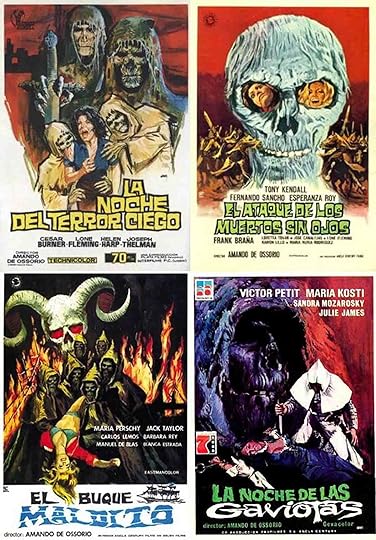
Incidentally, I covered the Blind Dead movies in my non-fiction book Satan in the Celluloid: 100 Satanic and Occult Horror Movies of the 1970s. The brainchild of Spanish filmmaker Amando de Ossorio, the series began with 1972’s La noche del terror ciego (Tombs of the Blind Dead) which has a sect of Templar knights who, in an exaggeration of the real-life accusations of heresy leveled against them, content themselves with sacrificing virgins and drinking their blood at some Spanish castle in the 12th century. Horribly executed and cursed for eternity, the Templars rise from their tombs in the modern day and terrorize the living.
The Templars are, without a doubt, the best part of the whole movie. Perfectly creepy and shrouded in moldering rags, they are blind and seek out their victims by sound, in one case, by the beating of a victim’s heart. Shot mostly in slow motion, they are somewhat reminiscent of the Nazgûl from The Lord of the Rings, especially when they mount their horses (which mysteriously have also been brought back from the dead).
The success of the first film prompted de Ossorio to make a follow-up which is more of a remake as it changes some of the lore surrounding the Templars. El ataque de los muertos sin ojos (Return of the Evil Dead) is a solid followup that borrows liberally from Romero’s first zombie movie, Night of the Living Dead (1968). Unfortunately, the third entry in the series – 1974’s El buque maldito (The Ghost Galleon) – is a little underwhelming, despite switching the setting to a 16th century galleon. De Ossorio returned to form in the final entry – 1975’s La noche de las gaviotas (Night of the Seagulls) – by far the most polished and interesting of the series, being something of a folk horror as a young doctor and his wife encounter a coastal cult who sacrifice victims to the undead Templars in order to keep them pacified.
Considering that de Ossorio made his Blind Dead movies before Romero’s oft-imitated Dawn of the Dead, the series is an impressive low-budget slice of zombie fun. Despite being a little slow in places as well as inconsistent in its lore (each movie seems to deal with a different group of Templars with slightly different backstories), The Blind Dead Tetralogy drips with atmosphere and presents an original take on zombies making the movies cult classics.
Personally, I loved the idea of zombies from a specific historical period coming back after hundreds of years to terrorize the living and, rather than go for any sci-fi explanations like viruses or radiation, I wanted my zombies to have an occult reason for existing. While Mound Dwellers isn’t supposed to be in any way connected to the Blind Dead movies, I like to think that it is a spiritual companion.
Mound Dwellers is available from Godless.com here and will be hitting Amazon and other stores on April 30th!