New Year, New Writing Goals – Part 2
Last time we thought about what we wanted to achieve with our goals. This week we’re going to ask ourselves the next question in our goal setting:
Question 2: How will I do it?We made goals that are actionable, but how exactly are we going to do them?
We’re going to make an action plan. We want to figure out the step by step things we’ll be doing to achieve our goal. Here’s my example for a goal to write a chapter book series:
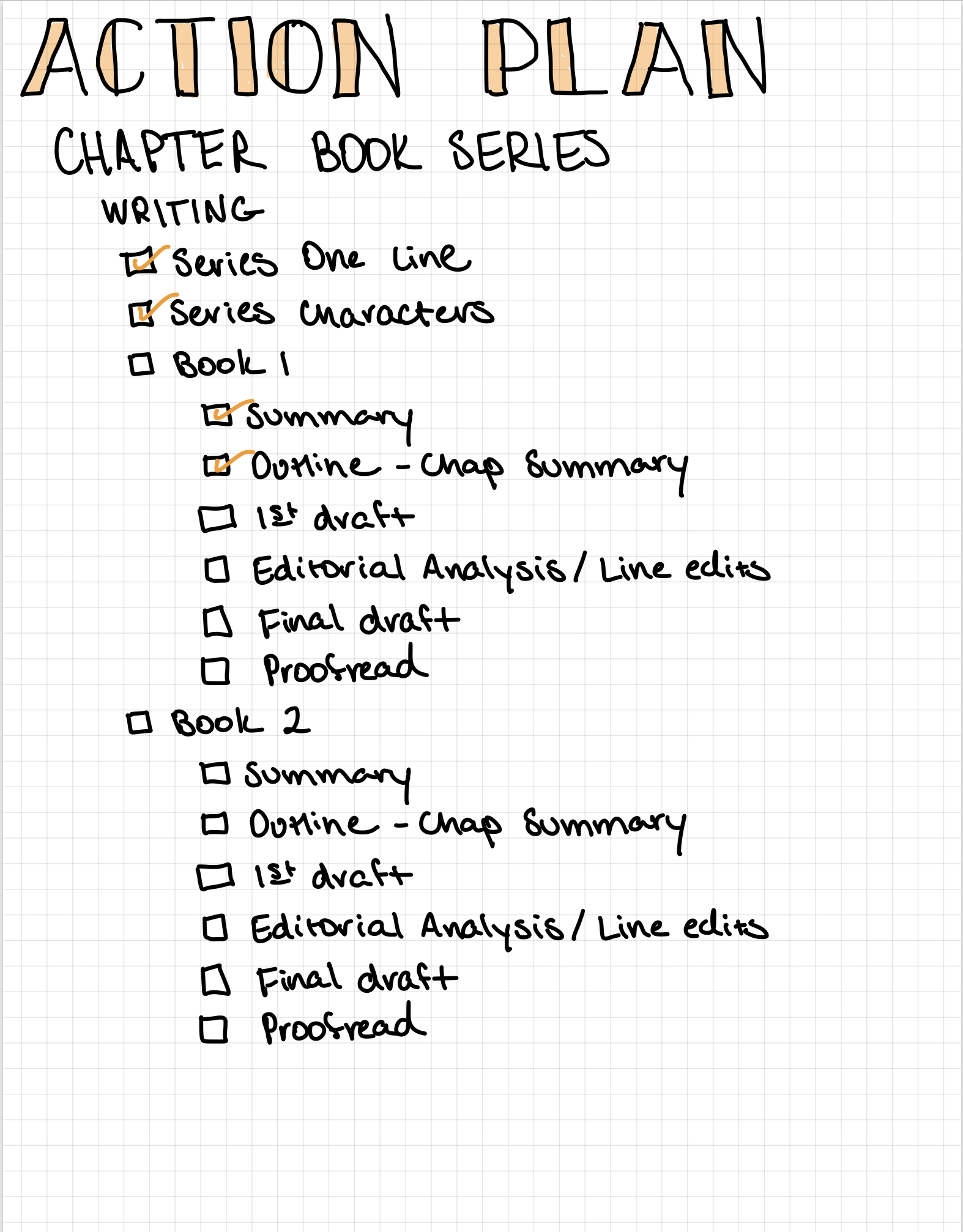
Now, let’s be honest, my action plan looks like a glorified to do list. That’s just how my brain works.
But you don’t have to do it this way. You can do whatever works for you.
You can chunk your book into parts or chapters or by word count or whatever. If you’re a pantser, then maybe your steps are brainstorming, drafting, and revising. These can be as broad or as specific as you need. If you find something like this overwhelming, do a simpler list. If you need even more detail so you don’t forget something, then do that too.
And once we actually have our plan, we’re going to hold ourselves accountable to it. And we’re going to do that by keeping track of our goals.
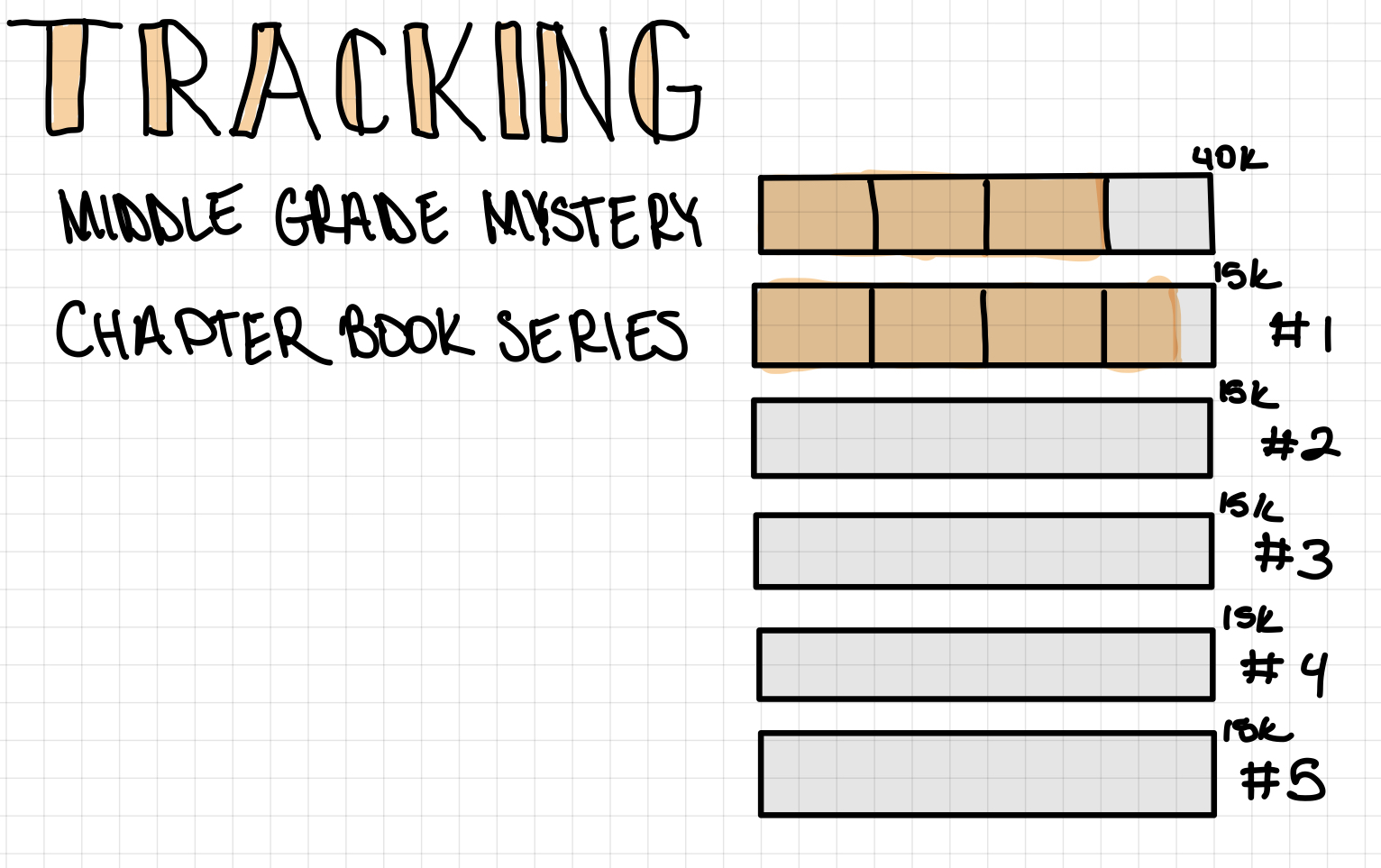
You can keep track any number of ways. You can measure how much of your book you’ve written in words in a bar chart like this.
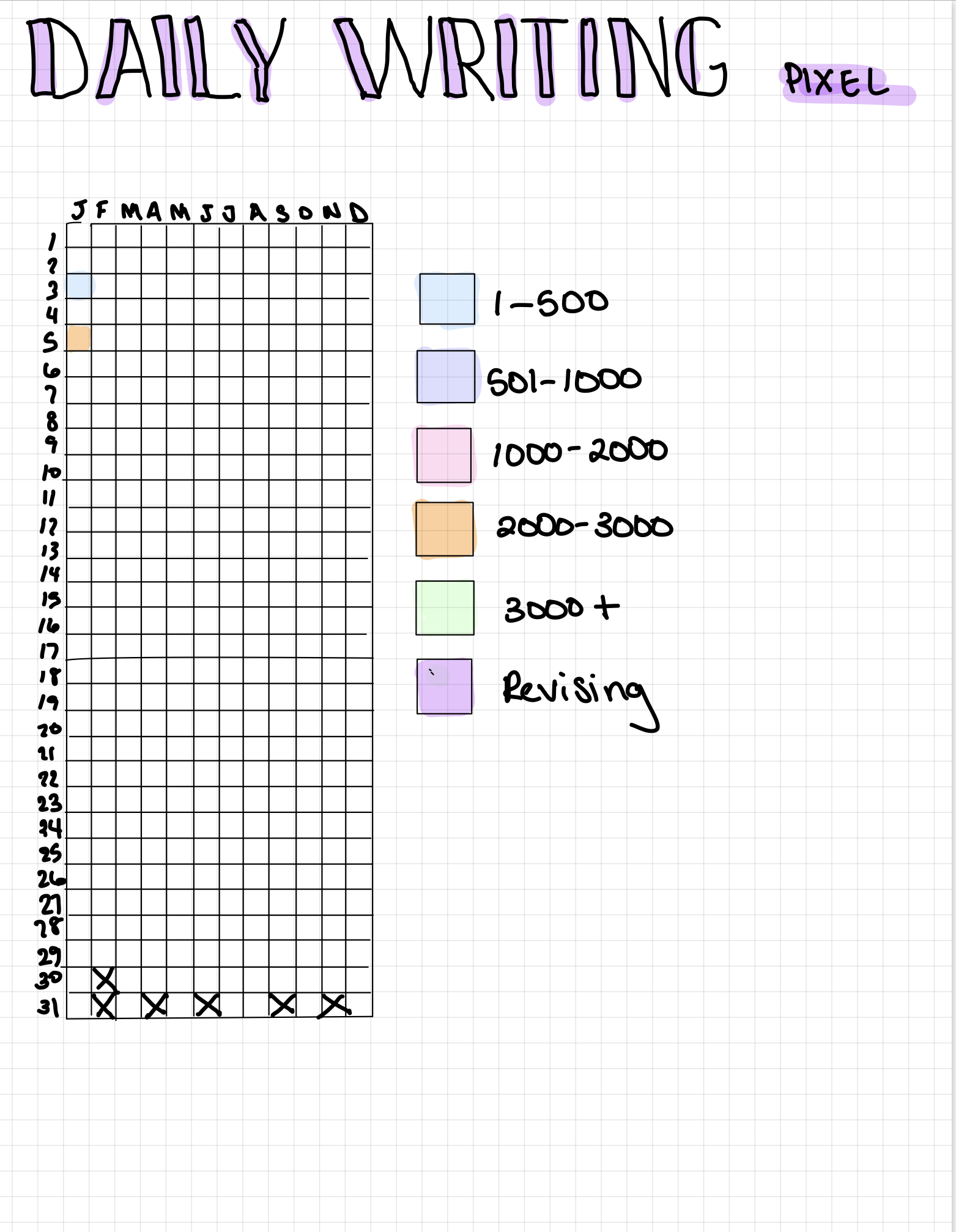
You can pull inspiration from the bullet journal people by having a day in pixels page like this to track pages or words written. Mine here tracks words. Good thing my goal isn’t to write every day. But if it was, this would be a good tracker. You could track hours spent writing, words written like mine, or pages written.
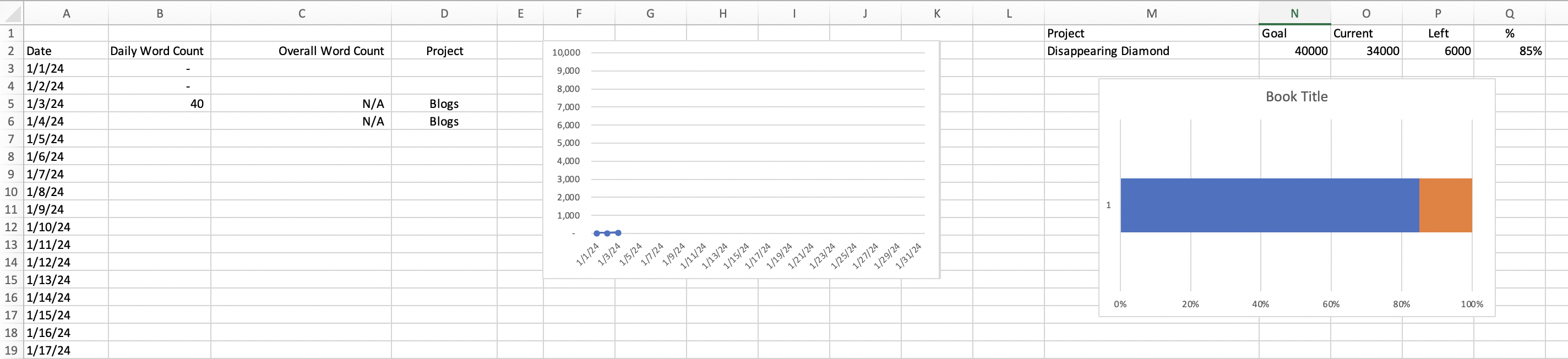
Or if you like your spreadsheets, you can track your word count in one like this. This shows the amount of words written each day (most unimpressive for the beginning of the year. I also have a bar chart showing progress on my specific project.
So, now take that goal you wrote down before and spend a couple of seconds thinking about how to turn it into a bunch of bite-sized steps you can accomplish. Remember, we picked goals that are doable, so this is going to be a bunch of doable steps too. Then determine how you’re going to track. Is it a to do list you check off? A chart or picture you fill in? Whatever works best for your brain is what you should do.
Let’s make these goals happen!