The Story Behind the Story with Jan Fancy Hull of Lunenburg County, NS, Canada.

Jan was one of our participants atthe GMRD Book Fair last April and we had a ton of fun.
She kindly accepted my invitation to be a guest today so, read onmy friends.
Jan:
I didn’t find my writing (orthinking) voice until after retiring in my mid-fifties. I worked to soften mysharp humour, to eliminate maudlin phrases and passive sentences, and to learnhow to tell an interesting story interestingly.
My first novel was a bloated 120kwords. It’s good for parts; I’ve cannibalized it for characters, settings, andback story for the novels I’m writing now.
My advice: write your junk:nothing’s wasted. Writing is the best job ever.
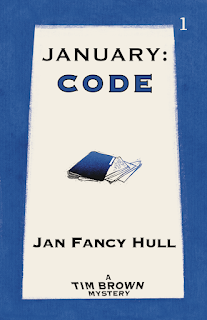
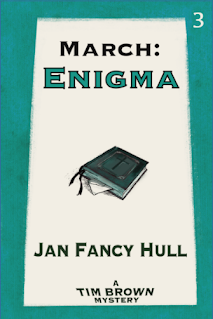
Titles: Funny story: I thought I was going to write about a murder in thechoir loft, and that someone would “sing”, i.e. squeal, so the working titlewas “Sweet Singing in the Choir”. But the story didn’t go that way at all. Itwas set in January, so my new title was January:Code. On a whim (I love whims) I added “A Tim Brown Mystery” on the titlepage and sent it to the publisher (Moose House Publishing). The editor asked ifI meant it to be a series and would there be twelve in all? And that’s how ithappened. The right title matters. May: Facadeswill be released in September 2023.

Synopsis: In the current novel, April:Sweetland, Tim is bamboozled into searching for a lost cabin because he wasmis-introduced as a Private Investigator. He shilly-shallies past theopportunity to decline, so he complies, but only “for practice”. What he findsin the woods back of Sweetland is illegal, and beautiful. Can he catch a wilyculprit and satisfy his client at the same time?
The Story Behind theStory:
Tim Brown is publisher / editor ofthe weekly newspaper in South River, a fictitious town on Nova Scotia’s southshore. He inherited the paper from his hard-charging late mother, who raisedhim on her own and under her thumb in the newspaper office. Now forty, he hastaken this year (1999) as a sabbatical from the job.
He believes his community paperhad been coasting, taking direction from the advertisers, and skimming thesurface of goings-on in the town. He states that he will use the year “to delve”but lacks a strong concept of what he means. He is bullied into investigatingthe coded contents of a file he hasn’t seen (January), puzzles about a woman unconscious on a trail (February), is moved by a dear friend’sdeath to research his murky family history (March),inadvertently agrees to search for a missing cabin (April) and faces public misconceptions (May). In June, he supervises long overdue home and gardenimprovements and—wait for it!
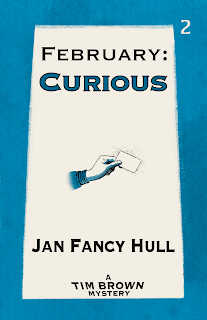
Every day isa chapter in each month’s book. We must live each day as it comes, I thought,so why not have my protagonist deal with the speed of real life, too, not onlythe highlights, but also the haircuts? Consequently, we get to know Tim Brownand his unorthodox methodologies very well. Read them all so you’ll be readyfor the great December conclusion in 2027 dea volente. People do seem to like them.

A questionbefore you go, Jan:

Scribbler:Can you tell us about the perfect setting you have, or desire, for yourwriting? Music or quiet? Coffee or tequila? Neat or notes everywhere?
Jan: At home in my chair next to the wood stove, while autumn leaves,cold rain, and snow swirl around outside my windows. (Sunshine is distracting:summer is for outdoor pursuits.) The days grow short and lengthen again whilethe hours and words fly by. My daily word count is 1500 - 3000.
I haveclassical music playing softly. If I detect something especially beautiful,I’ll take a moment to listen. It helps me ignore ambient sounds or unhelpfulthoughts.
Coffee tillnoon. Tea till 3. Water if I remember. Maybe a martini, but not while writing. Nevertequila, not since that one time…
Mostly neat.The laptop computer was invented for me. I write notes on scraps of paper,mostly reminders of things my characters or I must remember to do (which one ofus is out of milk?) or maybe a better word to go in Chapter 10. Once the taskis done, the note is tossed. I keep a “story bible” in which daily actions andnew characters are recorded, and I may tuck a note or two in there for futurestories. There’s no storyboard with colour-coded sticky notes. Seat of my pantsall the way!
Thank you for being our guest this week, Jan. Wishing youcontinued success with your stories.

And a big thank you to all our visitors and readers.
So, tell us something in the comment box below. Don’t be shy.