Anti-trendy design: a hymn to rawness, flexibility and repairability
This post consists of an extract from my book Anti-trend. It is taken from the last chapter in the book; a chapter dedicated to investigating the characteristics of the anti-trendy design-object.
***
The Anti-trendy Design-objectOne of the major realizations that I have made throughout the research for and the writing of this book is that the number one obstacle when it comes to eliminating over-consumption and the pollution and oppression that follows in the wake is a combination of our cultural and societal norms and trends influenced by capitalism and the credulous praise of growth—and in part that our idea of the good life seems to be interlinked with consumption: consumption of luxurious food and drink, exotic holidays, fancy cars, and of a continuous stream of new clothes, gadgets, and entertainment.
Naming this book Anti-trend, which initially was just meant as a working title due to the fact that I was concerned it might hold too many fashion-connotations to carry the entire project, has turned out to be an apt descriptor during the whole process of book-writing. Trends are interlinked with the ever-changing status-symbols and norms that are intertwined with consumerism. Anti-trends are the antitheses. Trends and the fleeting stream of whatever is vogue, and the longing for trendy, alluring products, is one of the chief offenders to combat when it comes to reduction of consumption in the name of sustainable development. The other one is habits; our routines that keep us stuck in a pattern of over-consumption and make us reluctant to change, even if the change is meaningful and beneficial for us and our community as well as our human-made and natural environment. An alternative is needed. We are in need of more anti-trendy, resilient product solutions that include a larger degree of user-flexibility, and of objects that are designed to be open to change. In order to alter our cultural and societal norms, more sustainably innovative product solutions are compulsory. In order for the supply or creation of sustainable design solutions that encourage resilient living to raise, the demand for resilient, sustainable products must increase, and vice versa. The creation of sustainable solutions and the need are interlinked. One cannot look at one side of this equation without looking at the other one as well.
Anti-trend is not synonymous with immovability and stagnation, even though it could appear to be since trends are associated with newness and change. Anti-trendy objects are intertwined with flexibility and alteration.
In the below table the differences between anti-trendy and trendy design-objects are compared side by side:
The anti-trendy design objectThe trendy design-object ResilientFleetingLong-lived or short-lived (permanence or sustainable planned obsolescence) Perceived as obsolete after a short period of usage (despite being made from materials that can last for a long time)HeavyLightAlterable, adaptable, in flowStaticFlexibleFixedRepairable, mendableUn-repairableRaw, imperfectSmoothOpen, ever evolvingClosedRegrowth and degrowthExponential growth followed by rapid declinationUnderdone (usage “finishes” it)Declines or worsens when usedCircular, iterativeLinearChallenging expressions or functionalities (might offer new ways of life or nudge the user to alter habits)Convenience (easily understandable, usable, and decodable)Uneven, variated textures (tactilely nourishing)Picture perfect (even the slightest blemish ruins its appearance)DiverseHomogeneousEncourages wholesome rhythmsPraises newnessEmbraces and celebrates decayDecay makes it obsoleteUpcycled or craftedMade from virgin materialsSharableMade to be consumed (and replaced)Cherishes innovation (made to encourage sustainable living)Conventional (made to “fit in”)Challenges conventional status symbolsMade to be admired by peersFriction, texturesqueEvenness, “glittery” surfacesAs the table shows, the anti-trendy design-object is characterized by being flexible, alterable, and repairable. But it is also interlinked with more abstract characteristics such as heaviness and rawness. These features are entwined with the friction and openness of the anti-trendy object, as they revolve around an object’s ability to nourish the receiver’s senses by introducing a degree of “graininess” or coarseness to the daily life; they are not easily or quickly digestible or consumable and require time to consume.
The anti-trendy design-object is underdone in the sense that when it is released into the world by the designer it is not yet finished. Usage finishes it, as the object is created to develop and to embrace change and decay. The anti-trendy design-object is characterized by gently nudging the user toward sustainable living; whether that means inviting more textural stimulation into life by investing in handcrafted artefacts that are anti-smooth or texturesque, engaging in nourishing daily rhythms that can provide life with a sense of direction and with the beauty of continuity and perseverance, or by allowing for more rawness, inconvenience, and heaviness in life in order to escape the despair and the dullness that follows detachment from nature and a life in a homogeneous physical—and cultural—environment.
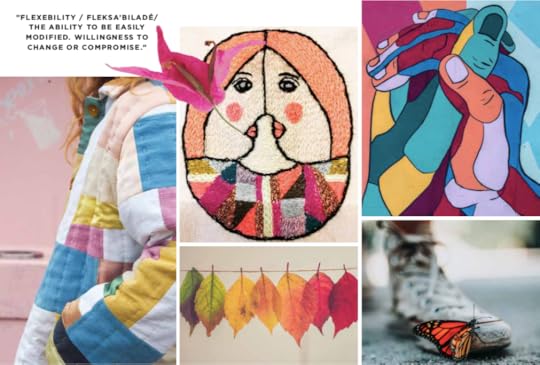 Flexibility moodboard from my recent anti-trend report made in collaboration with Pej Gruppen: Scandinavian Trend Institute
The trendy design-object is made to develop from being new, shiny, and attractive at its peak—when it is brand-new and freshly acquired by the consumer—to slowly, or perhaps very quickly, being experienced as unattractive and obsolete. That is the mechanism that makes the wheels of consumption spin.
The trendy design-object is linear: it moves from a starting point to an endpoint, and this development is designed to be a downgrade. A trendy dress, pair of shoes, piece of furniture or toy is premeditated to be consumed—to have all its nutrients sucked out of it and provide the user with a quick burst of energy, and then to be discarded or expelled. As an antithesis, the anti-trendy design-object has a circular or, maybe even more accurately, an iterative lifespan. Using the term iterative rather than circular is done to emphasize the anti-trendy design-object’s inherent ability to develop, as well as the fact that despite anti-trendy development involving continuous aesthetic nourishment, it doesn’t necessarily implicate a movement back to its starting point. It might in some cases, but not always. In the section “Waste Materials, Deconstruction, and Upcycling” in Chapter Five I discussed different ways of embracing decay and traces of usage in a design-object, one of them being “wiping the slate clean” or returning to a default state. The example from the mentioned section includes furniture made from plastic waste characterized by a hardiness that makes it extremely durable and robust, and furthermore makes it possible to sand away scratches and other traces from usage and continuously remove blemishes in order to keep the original look and style. This particular development can be described as circular; it repeatedly returns the object to its starting point because the object is designed to rejuvenate.
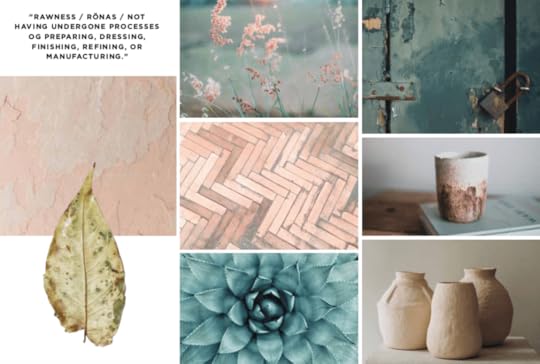 Rawness moodboard from same anti-trend report
However, in most other cases, the anti-trendy design-object develops in a more iterative way. An iterative process involves doing something again and again, usually to improve it. This is exactly what happens when the anti-trendy object is being used. The more the object is used, the better it becomes. It matures and develops, supporting the functional and aesthetic needs of the user. The anti-trendy design-object is created to be long-lived and is underdone when released into the world. Usage molds it, refines it, and gives it character. Iterative refinement involves the modification and enhancement of the object; the anti-trendy object is made to be used, touched, timeworn, shared, modified, repaired, adjusted, decorated, personalized, and altered.