
Rejection. Rejections.
I want to talk about rejections.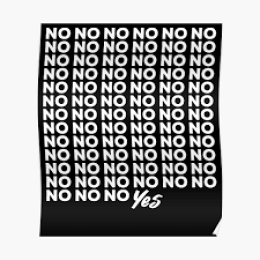
On Facebook and Instagram, and Twitter and these public places, we don’t usually hear about gut-wrenching stuff. These sites are perhaps how we market ourselves to the world. How we manage the front window of our lives and perhaps pull the curtain on the back room which might be darker and certainly messier.
I’m not saying what is shared out there isn’t genuine. These sharings simply seem selective as in … no one wants to hear someone whine.
I won’t go back too far, just to my last bout of job hunting (2008-2010) and then a bit of feedback as I shopped around my first novel. One led to the other. At age of sixty-three (2009), when I seemed suddenly unemployable, my soon-to-be husband said, “Ok. Write the book. I’ll pay for vet bills and food.”
And I won’t try to say that rejection is a healthy thing that sets us on a better road or is a gift. That feels glib. Rejections hurt. And when they pile up like during my job-hunting failures and then my attempts to find representation as well as sell the novel, they deliver messages that take grit and courage to face the messages they deliver.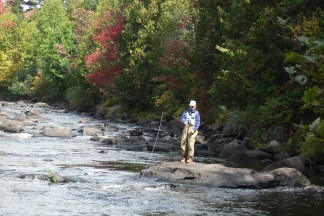
Fact to Face: You are now probably too old to compete with job candidates fifteen to twenty years younger in a Maine job market swamped with qualified younger applicants.
Job Rejection Letters (just a few here):
“My apologies for the length of time in getting back to you. We received 67 applications for the E.D. position, and the process has taken longer than we anticipated. You were among the top eight candidates, but we initially chose to interview a smaller number whose experiences most closely matched IHE’s needs.”
“The number of highly qualified applications that we’ve received has been truly remarkable. We wanted you to know that, while we were impressed with your skills, experience and genuine interest in working for MITA, our Search Committee is pursuing other candidates at this time.”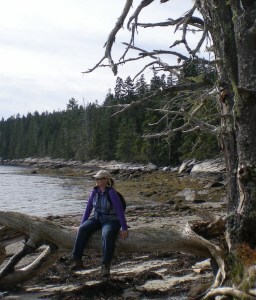
“As an organization we were flattered to see such interest in our Coalition and this position. We received a large number of very qualified applicants and this made our selection process more difficult.”
“I wanted to thank you again for talking the time to interview with us for the Director of Marketing position. I was frankly overwhelmed by the number of highly qualified individuals who applied for the job. Given this fact, we had a difficult decision to make, but we have offered the job to another candidate and they have accepted.”
Fact to Face: Even with an agent, my novel is not going to get picked up by a national or even a Maine publisher.
Book Rejections (just a few here; usually email)
“I also loved the concept for WOLF WOODS — as you know, we’ve done incredibly well with Margaret Mizushima’s novels, which have a similar concept, and I adore Maine and the idea of setting a thriller there. Try as I might, though, I just didn’t fall in love with Patton in the way I would need to in order to be able to make an offer on this.”
“The plot was great, but it took much too long to get into it. Too many detailed descriptive passages and tangents detracted from the main plot. I found myself trying to skip ahead and bypass the unnecessary prose.”
“I think the author has an interesting idea here and certainly can write, but I’m sorry to say that the story didn’t resonate in the way I had hoped.”
“She knows her territory, and I enjoyed her descriptions of Maine. 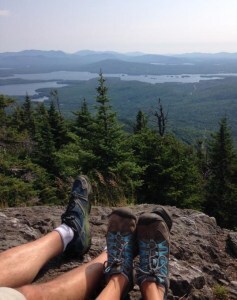 However, I didn’t find the murder as believable as I’d need to get invested in the mystery. I’m sorry that this one isn’t for me, but thanks for giving me a chance with it.”
Did I stop job hunting? Yes. I stopped applying for career-level jobs but pursued seasonal work like the front desk at the Botanical Gardens.
Did I stop trying to sell the novel? No, but I moved over to co-op publishing or “pay to play” where I paid for most of the same services a small Indie publisher might offer me. (Great help: Jane Friedman’s chart.)
Did all this sink me? Sometimes, but my mode-altering drug of choice is the outdoors … with me in it. Yes, sometimes I sank as low as a fetal, rolled up ball on the floor, but then I have dogs that lay their heads in my lap and lick my tears and say (quite selfishly) “You done? Let’s go out.”
If we are still standing, we have our survival strategies, but rejection is still often a life altering event. Piled on repeatedly, it demands survival strategies, friendships, grit, and often a renewed faith in ourselves when the rest of the world is rejecting us. 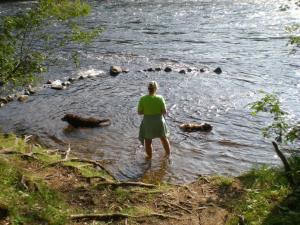
And for me, there’s nature’s feel-good message after a blizzardy ski or a hike where legs get wobbly before the car appears, or unexpected wind makes the paddle home a wrestle with the lake.
That’s when I am in a full-on acceptance mode, far beyond any hint of rejection and I can honestly say what really matters: “Damn, I’m good.” 
*************************
PS Just for fun: famous rejections: Marcel Proust had to pay for his own publication.Zen and the Art of Motorcycle Maintenance by Robert M. Pirsig was rejected 121 times before it was published.Animal Farm by George Orwell was rejected because “there is no market for animal stories in the USA.”J. K. Rowling of Harry Potter fame was told “not to quit her day job.” Gone with the Wind by Margaret Mitchell was rejected 38 times before it was published.John le Carré’s The Spy Who Came in from the Cold was passed on because le Carré “hasn’t got any future.”Sandy’s debut novel, “Deadly Trespass, A Mystery in Maine” won a national Mystery Writers of America award, was a finalist in the Women’s Fiction Writers Association “Rising Star” contest, and was a finalist for a Maine Literary Award. The second Mystery in Maine, “Deadly Turn,” was published in 2021. Her third “Deadly” is due out in 2022. Find her novels at all Shermans Books (Maine) and on Amazon. Find more info on Sandy’s website.


Lea Wait's Blog

- Lea Wait's profile
- 509 followers

