Elimination diet for asthma, eczema and allergies
If you think you have gut issues that may be affecting your asthma, eczema and allergies, then the only real way to find food culprits is to do an elimination diet.
I will start by saying I’m not a medical expert and I would urge you to find a dietician or nutritionist who can help and guide you through this process.
However I did this diet in my 20s when I think I went through topical steroid withdrawal without really realising. I worked with a dietician so feel I am able to revisit the information I learnt and try it again.
How do you do a food elimination diet?You have to be really strict if you’re going to do this, if you don’t you’ll get confusing results and won’t really get an understanding of what’s going on at all. You need to be really regimented, only eat things from the safe list below and also keep a food, mood and symptoms diary so you can log your progress. Your specialist may advise slightly different foods but this is the protocol suggested by my dietician at the time. If you’re going to find any answers you should see changes or improvements quite quickly. I’m going to give it a go for a week or so. It’s very restrictive so isn’t practical for much longer.
You may also find some further help and guidance on how to do an elimination diet on the IBS clinics website and also Diet Recommended for Asthma on Healthline’s website.
Allowed foodsThis list of elimination diet foods is from the Nutrition and Dietetic Department at St Albans City Hospital and I hope you find it useful. It’s quite strict but will help avoid most of the common culprits to start with.
Do this diet for at least a week, but possibly for a whole month. If you can last for three months and work on doing as much to reduce inflammation like getting good sleep, constructive rest
MEAT – Chicken and lamb – Buy plain, fresh or frozen, any cut. Roast, stew or grill in own juice with permitted oil and saltSTARCHY STAPLESRice – brown or white. Rice krispies, rice flour, rice cakes, flaked rice, rice pasta, ground rice, rice noodles (not egg) Sweet potatoVEGETABLES – Fresh or frozen, raw, or cooked in homemade soup or stewBroccoliBrussel SproutsCabbageCauliflowerFRUIT – May be stewed or bakedApplesPearsFATSOlive oilSunflower oilPure dairy free spreadBEVERAGESMineral water, still or sparkling to drink and use for cooking rice etc. Herbal teas – Mint, camomile.Rice MilkMISCELLANEOUS – Salt, Pepper, Pure herbs (fresh or frozen)Some ideas for daily mealsI’ll add to this as I get more experience and find more recipes for you.
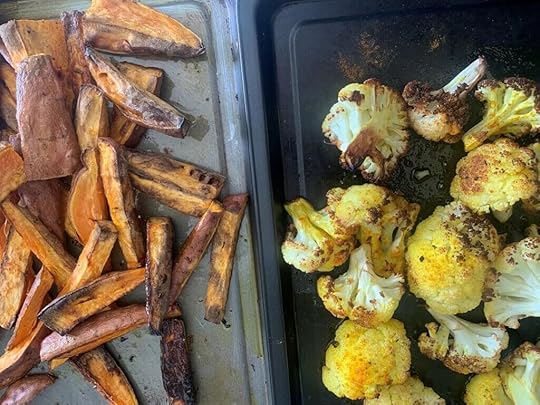 Roasted sweet potato wedges with olive oil, salt and pepper and Cauliflower roasted in olive oil, turmeric, black pepper
Breakfast – Stewed apples or pears, rice flake porridge, sweet potato bread
Lunch – Cooked chicken with raw brocolli and roasted sweet potato or Soup
Evening – Lamb stew or minced lamb with cabbage and sweet potato mash
Snacks – Sweet potato crisps, apples and pears, rice cake
Keeping a food, mood and symptoms diaryIt’s not easy remembering what you ate in a day, so to help you I’ve created my own food, mood and symptoms diary. You can download it for free here – Keeping a Food Mood and Symptoms Diary.
 Keeping a Food, Mood and Symptoms Diary
I hope it helps you. Be really strict about this, note down everything. I’ve also heard friends use fitness tracker apps on their phones to log what they eat. If you think this is more your style, check out My Fitness Pal, My Net Diary or See how you ate apps. I haven’t used these myself so can’t tell you how they work but have hear good things.
Good luck! And don’t cheat!
Reintroducing foods againThis is where the advice of a specialist will be useful. I have a feeling there is an order you should reintroduce foods to the diet. When you choose a food, only introduce one food at a time and wait a day to see if there was any adverse reaction in gut, mood, skin or breathing.
You need to do this very carefully and slowly. Pick your foods, maybe a wish list of what you really would like to get back into your diet and reintroduce them slowly.
Some foods are definitely more inflammatory, like dairy, eggs etc. so save those to reintroduce last.
The way to reintroduce would be to just have it one day for one meal. Some foods are simpler than others. For eggs for instance, you might start with egg cooked in a cake with safe ingredients. If you have no symptoms, try egg yolk. The next day egg white. Eggs change quite a lot during cooking so you may find some types of egg are OK but not all egg.
Be really scientific and note down all your reactions, from skin to gut, bloating, itching, irritability etc.
Responses can be delayed so don’t rush to add everything back in really quickly, take your time.
Other things to considerAre you reacting to high histamine foods?Are you reacting to high salicylate foods?Is FODMAPS an issue?These questions are not simple to answer and this is where having a nutritionist involved to help you understand the reactions.
I’d love to hear from anyone who has done this, What were you reacting to? What did you discover? Please share your thoughts below and any advice you might have.
Coming soon…I’m also looking into what supplements can help asthma, including magnesium which I do know about. How to breathe properly and stop mouth breathing so watch this space for future blogs.
And finally, asthma proofing your home! from cleaning products to furnishings. There is a lot you can do to help you breathe more easily at home.