Encouraging Usage
This post consists of another short extract from my new book Anti-trend. It is taken from Chapter 3: Anti-trend and Authenticity. Considerations on what good design really means.
I hope you will enjoy!
***
Let’s return to the term usage that I am suggesting as a replacement for consumption. In my handling of the word usage, I am not solely referring to the usability or the practical, functional qualities of an object. Actually, when you purchase objects for long-term usage, you should avoid solely buying an item because it fulfils a practical need of yours—the need to cook, dress, or transport yourself. This dimension of an object’s properties is obviously important, but a lot of our dearest belongings are not exclusively practical items, but items that also please us aesthetically—or, they are both functional and aesthetically nourishing. I have eloquently elaborated on the aesthetic dimension of objects and the importance in Aesthetic Sustainability. But, in relation to usage, the aesthetic dimension is so crucial that we cannot avoid bringing it in focus in this context as well.
Basically put, if you invest in things that nourish you aesthetically, you will be less inclined to experience them as obsolete when they have been consumed—or are no longer functional or appear worn and weathered, or when the fashion trends have shifted—and more inclined to repair them. You might find yourself more motivated to creatively focus on the usability of the object; maybe you will even find that it can be used for more than the one thing it was bought for. The aesthetically nourishing dimension of an object often leads to an emotional bond between the object and the user or owner. If an emotional bond arises, mindlessly discarding the particular object becomes next to impossible.
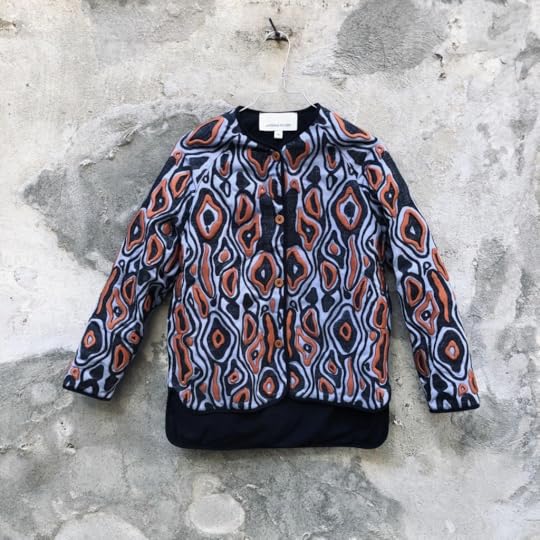 Embroidered jacket made from recycled tablecloths by Danish La Femme Rousse
When you are about to buy something next, try to stop for a moment and consider how you will get rid of it again. The things that pro- vide you with a quick “consumer-fix” are often the ones you will want to get rid of the fastest because they are rapidly experienced as insignificant and trivial, but the things that give you a quick feel-good fix are usually the hardest ones to get rid of because no one wants to buy them as second-hand items, and no one wants to receive them as hand-me-downs. Think of that quick-fix trendy dress you bought before a party, or that cheap easy-chair that wasn’t exactly what you wanted but was bought to fill that void in your living room, or that new pedometer gadget, which at the time felt so important, and that now just stays in your drawer. We are all guilty of such irrational consumer ventures, and we all know how short-lived their pleasure is.
An important question to raise in this context is: What does it take for an object to encourage usage, mending, sustaining, and repairing?
We should demand something from the objects we are surrounded by. Sustainable objects shouldn’t be designed to make our lives easier but to question the way we do things—to make us stop and think, remain critical, reconsider and change if necessary, and be present and appreciative. Obviously, we should be willing to pay more for such well-thought-out objects than for mass-produced, trend-based things. Using the term investing rather than shopping might be the first step.
***