Memoir and the Imagination
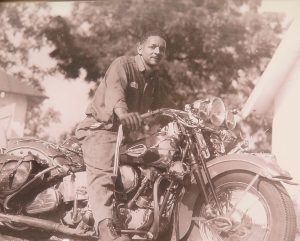 My wife Cathy has told me it’s all right if I tell this story. It’s her story of never knowing, until recently, the identity of her biological father. Her mother, a few years before she died, finally, when pressed, gave Cathy the identity of her father. He was deceased, but Cathy had no reason to doubt her mother was telling her the truth. Cathy could recall her mother being in this man’s car when they had an accident during Cathy’s childhood, so it wasn’t too much of a stretch to imagine that the two of them had a relationship.
Fast forward to these days of DNA tests, and to make a long story short, Cathy found out, through DNA matches, that her mother hadn’t told her the truth. Her actual biological father, it turns out, was a man who had a wife and a family of his own. He carried on an affair with Cathy’s mother for the time it took to have at least three of his children. She gave two of those children up for adoption. Cathy was the one she kept.
Her mother carried her secret with her to the grave, but DNA has now revealed the facts she couldn’t bring herself to admit. Cathy has been reunited with two full-blooded sisters. As an only child, I can only imagine what this must be like for her and her sisters. They went so long without knowing the truth, and now they stand united in the bonds of love they feel for one another. They’ve finally found their way back together despite the deeds of others that separated them. I often think of the miracle of it all. Sometimes Cathy’s phone rings, and when she sees who it is, she says, “It’s my sister.” I can tell how much joy it brings her to say that word. How often, I wonder, did she try to imagine her father into existence? How often did she wonder whether it might be him, or him, or him? The mystery of what we don’t know can lead us to wonder, to ponder, to dream.
So it is for the writer, particularly those of us who tell family stories in our memoirs and personal essays. When it comes to family, there’s always something we don’t know—the origin story of our parents’ relationship, for instance. We might know the facts—where they met, etc.—but how often do we know what they carried in their hearts and minds? How often do we know the interior lives they lived? For instance, what was it like for Cathy’s mother, a white woman in a small Midwestern town, to carry on a long-term affair with a married Black man during the late 1950s and early 1960s? How much did she love him? What did it cost her to try to maintain that love? What did she feel inside, knowing most nights he was with his wife and children? Did it practically break her when she made the choice to give up two children and when ultimately the affair came to an end?
My own parents married later than what was usual. My mother was 41, my father was 38. I imagine they’d all but given up on finding love. I know my father used to stay late at my grandparents’ general store where my mother worked after teaching school during the day, but that’s all I know about their coming together. I can’t keep myself, though, from imagining what my father’s proposal must have been like and whether it took place one of those nights after the store was closed. In one of my essays, I say, “I like to imagine the melancholy call of rain birds, a breeze moving through the branches of the oak trees, the lush white pom-pom blossoms of a snowball bush, and my mother memorizing all this so she could recall it time and time again before she finally said, ‘I’m in love with Roy Martin.’”
If you admit to your readers that you’re using your imagination, you can rely on the intersection between what you know and what you wish you knew to create a situation and an interior life. You can daydream on the page, and in that daydream, you’ll not only be making your family members more vivid, you’ll also be revealing more of your own character because you’ll be the one making the choices, and those choices will expose your heart in a way you might be reluctant to without the safety of the imagination.
Cathy’s biological father has been dead for many years. She still has much she doesn’t know, but at least now she has two sisters with whom to make that journey into the past and on through the present into the future.
The post Memoir and the Imagination appeared first on Lee Martin.