The last couple of months seem to have been a renaissance for...
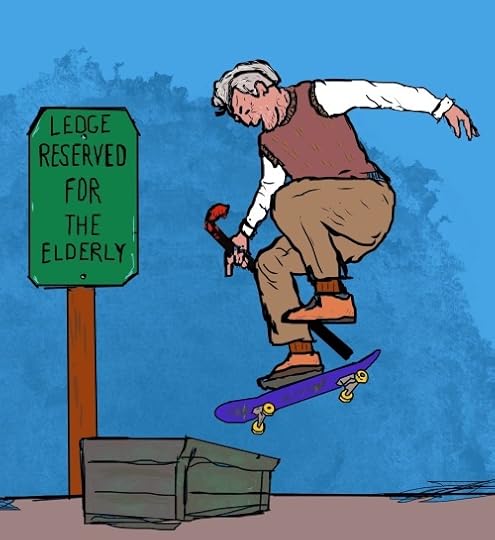
The last couple of months seem to have been a renaissance for ‘older’ skateboarders. Having published research on this topic before and being a greying skater in his mid-forties, the topic is far from new to me. However some changes seem to be afoot that can be described as somewhat typical responses to our collective plight during 2020. On various social media platforms it seems I have encountered growing numbers of videos from older skaters either trying out for the first time because of the lockdown, or returning to skateboarding after a protracted gap sometimes trailing back to their teenage years.
This is all good news and older skaters have been around… well, for a long time.
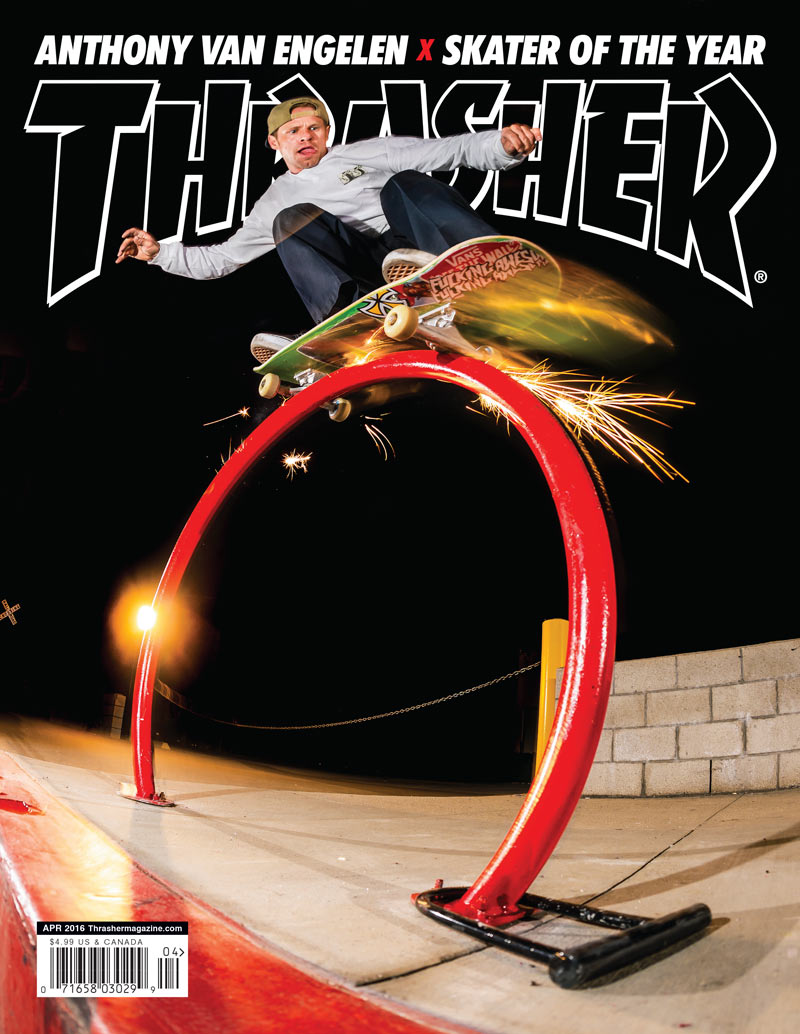
When I first started investigating older skateboarders I was partly drawn to the fact that older skaters remained quite visible in the professional circuit. Take Tony Hawk and Steve Caballero as examples, but also consider AVE who was awarded SOTY at the age of 35. Mark Gonzales at 52 still inspires and recently had a video part with the 2018 SOTY Tyshawn Jones. This was aptly captured in their ages at the time which were used as the title to the video 20|50. Gonzales has also just released a new book, remaining influential in a sport typically associated with youth. Influential beyond the niche world of core skateboarding, Tony Hawk re-released his iconic THPS video game which has no doubt inspired people to touch base with their long forgotten boards. Similarly the Tony Alva documentary released by Vans is another slice of nostalgia that is set to fan the flames of a certain demographic of older skater. Poignantly the Alva story is narrated by Jeff Grosso, the unofficial statesman of old school skate nostalgia and sadly one of skateboarding’s greatest losses this year.
In one of Grosso’s final videos he also touches upon another important part of the ‘older skateboarder’ revival, or most recent transformation. Interviewing LGBTQ skaters we see that over the last few years the inclusivity of skateboarding has expanded further. Many of the skateboarders who have come out and made space for LGBTQ skaters are some of the old guard. So it is not just that older guys are finding skateboarding, or re-visiting it. Now the older skater can be literally anyone, no longer typically the white male, but also people of colour, trans, disabled, you name it.
One enjoyable blog post from Josh Sutton involves a discussion with Esther Sayers. Josh started skateboarding in his early 50s and Esther started skateboarding in her late 40s. It is an enjoyable discussion and highlights how we don’t need the validation of professional skateboarders or the latest SOTY to prove that you can skate at any age. I remember being struck by what Esther said at the Pushing Boarders conference, where she noted that at a certain age women become somewhat invisible . By skateboarding we redefine the notions of age and challenge them. We start to claw back control and shape the narrative about our own abilities and competencies. Some fantastic research has been performed in this area of lifestyle sports. Belinda Wheaton has really provided some first class contributions on surfing and also my colleague Indigo Willing, herself a convert to skateboarding in her forties, has written about the Tired video and also the Bones Brigade documentary.
In my own research (which you can download here or email me for a copy), I spoke to a variety of skateboarders both male and female who skate into and beyond their forties. One of the elements that I came across repeatedly was the sense of community and meaning that older people get from skateboarding. What is remarkable about this, is the fact that as you get older, friends, community, and meaning seem to be harder to establish or hold on to. I think this helped me turn my research focus to skateboarding and religion. After a lifetime of skateboarding many of the people I interviewed had developed some kind of spiritual attachment to the activity. But then again these ideas were not absent in youth. Similarly my friend Sophie Friedel taps into this soothing potential of skateboarding and wellbeing and explores how skateboarding can be part of therapy for all ages.
The other really important thing about older skateboarders is their roles as receptacles of history. Indeed the explosion in skateboarding podcasts has been a great way to delve into the stories of pros and compile an oral history. I am no fan of mawkish nostalgia stealing the limelight from the current state of skateboarding, but I do think having a dialogue with the past is valuable. I recently read the doctoral thesis of Neftalie Williams in his exploration of race in skateboarding. One of the fascinating parts of his research is the history of skaters of colour (SOC). He does an important job of compiling a history that in an even handed way highlights that skateboarding has historically been far from the toxic and exclusive culture some have argued it to be. Through an exploration of the experiences of older SOC and a deep delve in skateboard media, Neftalie highlights that skateboarding in the USA has historically been more progressive about race than many others sports and elements of popular culture.
The very best thing about being an older skater is that you don’t have to live in the past. You get to be there and participate in how skateboarding continues to evolve and continues to be a space for all.