
On the frontline
The Accredited Social Health Activists (ASHA) of the Indian government talks about their experiences of working during the pandemic
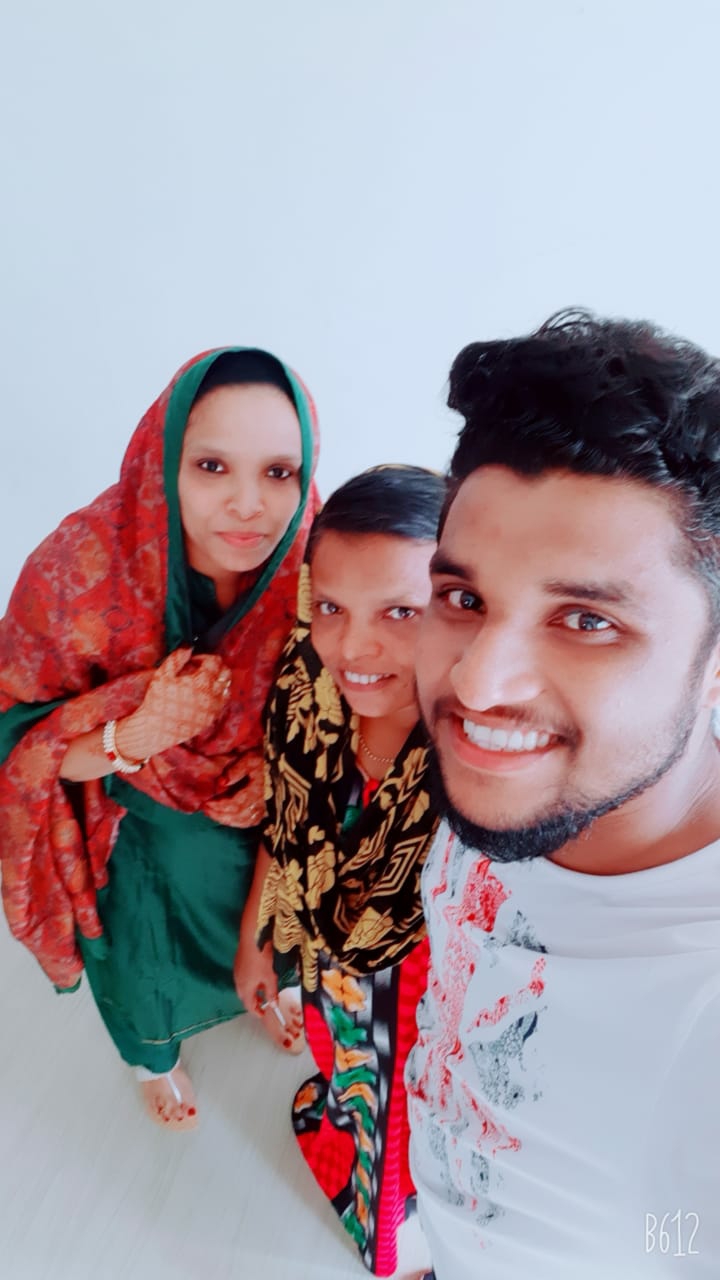
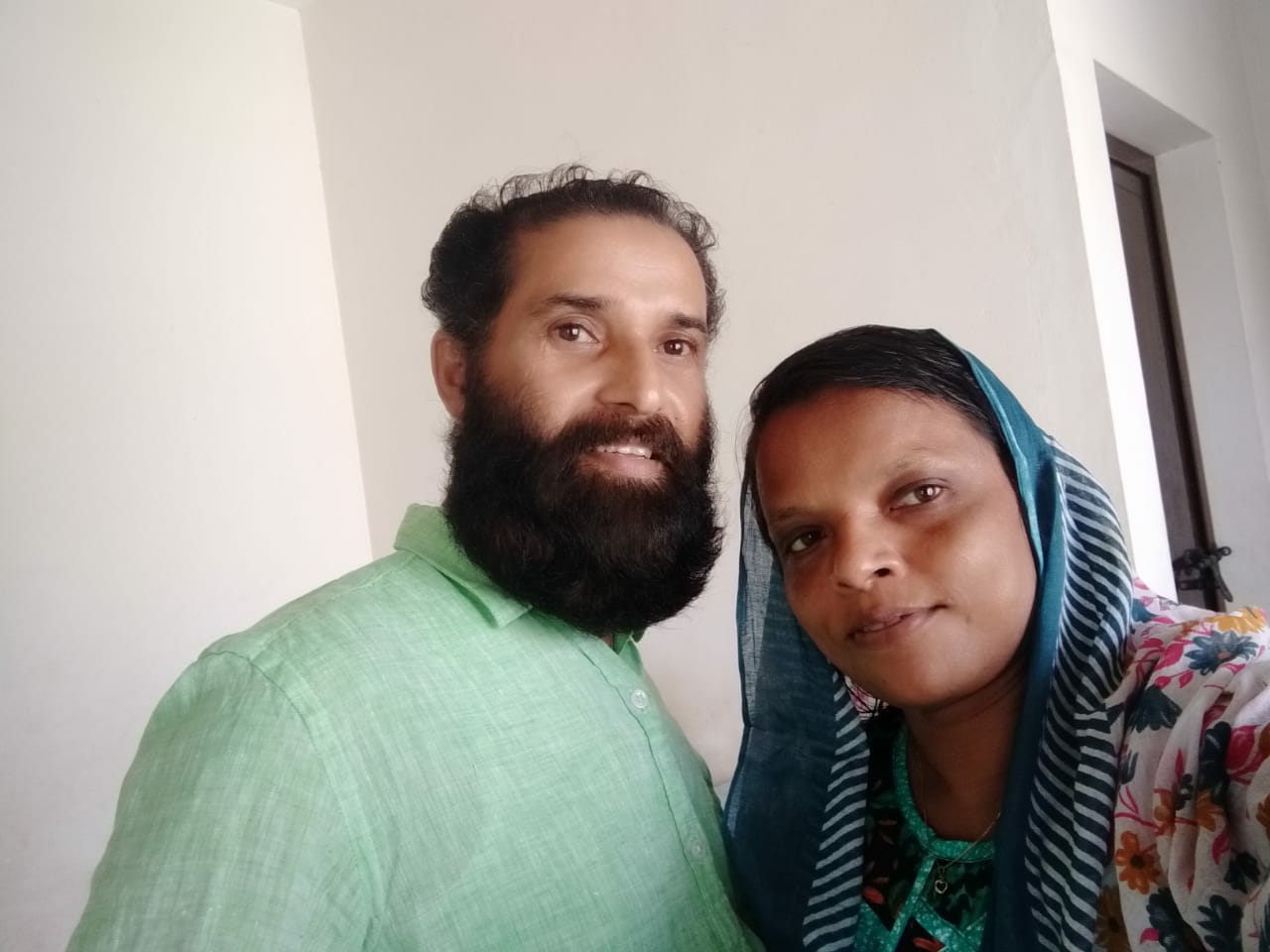
Pics: Shamla PM and family
By Shevlin Sebastian
Shamla PM goes to the government hospital at Fort Kochi and takes the list of the people who have been afflicted with COVID 19. Then, she, along with the other workers, locate the address of the families. They go to their houses and provide food kits, usually made by community kitchens belonging to the state government.
In each kit, there are rice grains and other essentials. “For a family of four, it should last for about two weeksor more,” says Shamla.
The only precaution she takes is to wear gloves and a face mask. She also carries a sanitizer bottle. What they lack is personal protective equipment.
Shamla is an ASHA worker (The initials stand for Accredited Social Health Activist belonging to the Indian’s government’s Ministry of Health and Family Welfare).
She is in charge of 300 households. Shamla says that when somebody is diagnosed with COVID, the neighbours shun the family, as it scares them they will also get it. “That is a problem the family faces,” says Shamla. But she cannot blame the neighbours. It is a colony where houses are very close to each other. So people have a right to be scared.
Shamla advises the family not to step out. But sometimes, they are forced to, as the water tap is outside. So they have to come out and collect water.
Thankfully, in the area where she is staying, the people have appreciated the work she has been doing. Shamla has twice won the ‘Best ASHA Worker Award’. Incidentally, there are 24 ASHA workers in Fort Kochi.
In between, Shamla, 44, had to face a personal crisis. Her husband, Najeeb, 49, a fisherman who worked at the Cochin Harbour, had a heart attack in April. He needs to get an angioplasty done, but the government hospital is busy treating pandemic patients. So, the doctor has given him medicines. Shamla has two children, a daughter, Sujeesha, 30, who is married. Her son, Alameen, 24, is doing a logistics course, but they have suspended classes for the time being. “My family is supportive of my work,” she says.
As the days go past, Shamla isamazed at the power of the virus and its ability to disrupt lives and the economy too. “My husband is not able to earn because the harbour is closed,” she says. “I know of so many people who are jobless. We are going through hard times. And we had already suffered the impact of two major floods in 2018 and 2019.”
It is not a risk-free job. Around 20 ASHA workers have died nationwide. According to newspaper reports, one of them was a woman named Bheemakka, 51, who passed away on May 13.
She was working at a village in Ballari district, Karnataka. The relatives refused to take the body until she received insurance for having died of COVID. However, the doctor said Bheemakka had tested negative for the virus. The cause of death was a heart attack.
There is no doubt about the risks. ASHA workers go to many houses and when they come across positive cases, they inform the hospital. Thereafter, they have to provide the medicines and look for primary and secondary contacts.
Seena KM, Senior Consultant, Social Development, National Health Mission, of the Kerala State Government, says that ASHA workers do a daily tracking of people in quarantine to see whether they are displaying any symptoms of the virus. “If a person becomes symptomatic, the worker will immediately inform the primary health centre,” she says. “Then a swab test is done.”
The workers have to put up posters outside houses where people are in quarantine along with the date. “This prevents outsiders from coming to the house,” says Seena.
On May 21, the state government had launched a campaign called ‘Break the chain’. The aim was to bring about a change of behaviour among the people. ASHA workers spearheaded this programme. They talked about how to keep a distance from each other at funerals and marriages. “The workers also distributed pamphlets, conducted health education sessions and did home visits to generate awareness,” says Seena.
There are over 9 lakh ASHA workers all over the country. In Kerala, it is 26,475. They earn anywhere between Rs 2000 and Rs 7000 per month. Shama, in Fort Kochi, is earning Rs 7000 a month.
Sheeja AS, 44, is also earning the same amount. She is working in Manaloor village, near the Canoly Canal in Thrissur (87 km from Kochi). She has been an ASHA worker for the past 12 years. At present, she has the responsibility for 234 houses. She gives the residents notices from Arogya Jagratha (a Kerala state initiative) of the actions that need to be taken to safeguard oneself during the pandemic.
Sometimes, she buys medicines for elderly people who live alone. So far, nobody has got the virus in her area. She wears a mask, a face shield, and carries a sanitiser bottle.
Some residents are happy to see her. But others have told Sheeja to just call them on the phone. “They told me they had seen on the TV that a few ASHA workers had turned positive, so it scares them I might have it also,” says Sheeja. In Thrissur district, two workers have tested positive.
So, to comfort them, Sheeja speaks from the courtyard itself.
Regarding her family, her husband Premlal, 54, works in a shop at Thrissur. Daughter Krishnendu, 26, is married, while son, Pranav, 24, is working in the credit card section of a bank.
The family takes precautions. As soon as they return home, all of them take a bath first. “We have to do this because you can never say from where the virus will come,” says Sheeja.
As community spread increases in Kerala, Seena says there is coordination between ASHA workers, health volunteers, police, and the COVID Rapid Response Team, so that they can render efficient services.
“We are doing our best,” she says.
(Published in the Jesuit magazine Pax Lumina)


