
An Excerpt from The Coach’s Guide to Teaching, Chapter 5: Building Culture
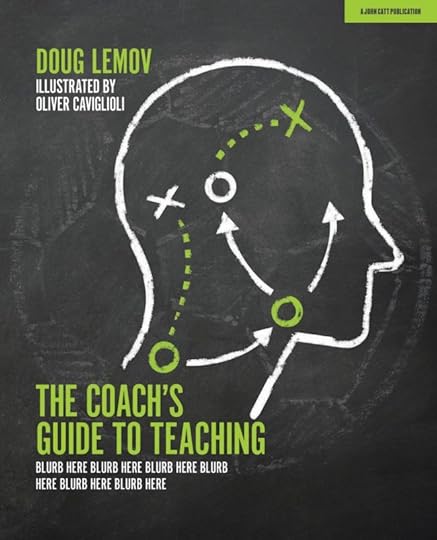
The Coach’s Guide to Teaching, my book for sports coaches on developing athletes through better teaching, hits the shelves this winter. Meanwhile I’m trying to get the manuscript buttoned up. I’ve shared examples from some of the other chapters here, here and here. This excerpt is from the beginning of the chapter on Building Culture which features a deep dive into some of the magic of Jesse Marsch’s systems to connect his teams and build a strong mindset. You won’t get to read that part here, alas but maybe I’ll share that next…
 Getting closer to reality…
Several years ago I observed Chris Apple training a group of boys at Empire United’s Development Academy in Rochester, NY. Chris is also men’s soccer coach at University of Rochester. I’ve learned a lot from him in a variety of settings over the years, but that particular session was especially memorable. He saw and taught the hidden sides of the game more than almost any coach I’d observed. His guidance and his stoppages were almost always about what was happening away from the ball, for example. And, when I asked him why he’d chosen to work on pressing during so much of the session, he replied with a phrase I’ve thought about frequently since: “The great majority of coaches spend the great majority of their time on the offensive side of the ball.” His coaching focused what players did in the moments away from the spotlight. Compared to that, what they did with the ball was easy.
Fittingly, then, what turned out to be the most significant takeaway from the session was also away-from-the-spotlight. It was an interaction I noticed almost by chance and jotted in my notebook as an after-thought. I didn’t ask Chris anything about it at the time.
And then, a few years later, I was asked an unexpected question during a workshop for the US Soccer Academy Directors course. A coach wanted to know how he could help players to forget more effectively- to put mistakes behind them and focus on the next moment. The question caused me to remember that moment from Chris’ training and a few days later I asked him about it. His answer revealed a great deal about culture—arguably the single most important aspect in determining a club’s outcomes on the field and in players’ lives.
Here’s
the interaction I’d seen at that practice: After technical work and a series of
exercises on pressing, Chris’ session ends with a chance for the boys to play,
full-field and relatively uninterrupted. The quality of play reflects the
culture of Chris’ team more broadly: intense and competitive. In the waning
minutes of practice, the game is deadlocked, and you can feel the tension.
And then suddenly there’s a clear chance for one of the strikers. He finds himself in the center of the box, with a bit of space and the ball arriving at his feet. No one but the keeper to beat; it’s a sitter. His first touch is perfect; two defenders lunge desperately to close but it’s hopeless. He leans into the shot and … fires four feet over the bar. A bad, bad miss, and infuriating to most coaches.
But Chris, on the sideline shouts nothing, says nothing. The sound of the ball slamming against the wall echoes inside the training facility. The player jogs slowly back, head down and a teammate jogs nearer. “Next play, kid. Get it back,” he says.
In
retrospect I’m not sure why I bothered to describe that in my notes. I suspect
I was stuck by the contrast between Chris’ response and the counter-productive
things I had heard so many coaches yell in similar situations:
“Caleb, you
gotta make that!” [Pretty sure Caleb knows that, coach.] “Aw, get over
the ball, Caleb!” [True, though it doesn’t help much now, unfortunately] Or, turning
to the players on the bench in exasperation: “What is he doing?”
Coaches make statements like that in response to player errors in part to protect their own ego, suggests Stu Singer, a consultant who works with coaches to develop their mindfulness and self-discipline. “The statement lets everybody know: I taught him better. It’s about protecting the self instead of responding to the athlete.”
Chris didn’t remember the specific play when I described it to him but there had been a hundred like it since. So many that Chris had a working theory on what to communicate in such moments.
“He
knows he missed and me pointing it out adds insult to injury,” he said. “It’s
the last play of a scrimmage he really wanted to win; he’s upset, angry, maybe
feeling he let his team down, maybe trying to break into the starting 11 and
feels he just blew it. He’ll be thinking about that play the entire car
ride home. If anything, I could have told him to shake it off or remind him of
the three he scored that day.”
I’m
careful about the term mindfulness. It means a
lot of things to a lot of different people, with varying degrees of rigor, but
the versions of the idea I am drawn to involve intentional decisions about what
to pay attention to, particularly in moments of distraction and emotion, and
Chris’ response strikes me as being especially mindful. He was able to see
past his own emotional response and focus on the player, the long-term goal and
most of all the culture of the team. What does he need now? What will
make him better? What do I want the rest of the team to think about his
mistake and what it will mean to make a similar one? “You have to respond
versus react,” Singer advises. “Emotion is ok. But the question for a coach is
always: did you choose it, or did it choose you?”
Culture
is built in a thousand smaller moments when we’re not fully aware that we’re
building it. The aggregate message of those moments is at least as influential as
the moments when we are aware that we are building culture: talks before
or after games or before the season when we discuss how as a team we want to
interact and what our mindset should be. Those aren’t irrelevant. But culture
really is the thousand unacknowledged half second interactions in which our
response communicates mindset and relationship. For Chris it was:
when you make a mistake I will stand by you; therefore play fearlessly and embrace accountability
rather
than
when you make a mistake I will seek to establish blame; therefore play self-consciously and be ready to point the finger at others.
The difference between responding and reacting is worth some consideration. Much of athletic performance, as I discussed in chapter one, is about honing the brain’s fast systems so we can react in the fractions of a second before we can engage conscious thought. Coaching, by contrast, is often about slowing down, about giving ourselves just a fraction of a second in which to respond intentionally. Reaction is instantaneous. Response is slower-often only by a fraction of a second though sometimes by an hour or a day—and lets the brain’s more advanced centers of planning and logic—the prefrontal cortex—take precedence over its instinctual ones—the amygdala. Even a second’s delay can allow a coach to think about the larger context in which athletes play- culture, in other words.
Chris’
response was memorable because he had chosen not to say anything. He gave the
player a bit of space. Over time Chris had found himself thinking about the
importance of the things he should not say. This also communicated culture. Saying
less gave players more space and autonomy and ownership. If he commented on
everything his players did, they would never learn to judge for themselves. In fact they would hear him more when it
mattered if he chose more carefully when to speak. He would earn their trust
and appreciation if he do not seek to judge every action.
It had not always been that way. “Early in my career, I was abysmal at this,” Chris noted. “I’m not sure I was even conscious of it. I coached everything. Imagine your boss was looking over your shoulder and correcting every error. Not fun, not sure how much I’d learn, pretty sure how resentful I’d become.” Learning to coach for Chris had been learning to be intentional about when to remain silent, to let the story play out, to focus, in the drama of the moment, on long-term relationships. Over the years Chris had given a name to this idea: Coaching by not coaching.
* * *
Culture, the topic of this chapter, has been written about extensively in a thousand settings. In part because culture is so powerful. “Culture eats strategy for lunch,” the management guru Peter Drucker said. Want to run a successful organization? Take everything you do and “multiply by culture,” says Harvard Business School professor Frances Frei.
“Group
culture is one of the most powerful forces on the planet,” writes Daniel Coyle
in The Culture Code. The introduction to his book is called ‘when two
plus two equals ten,’ an allusion to the idea that a team that inspires people
to give their all, causes them to work together, and brings out their best,
will win out over one that lacks cohesion and unity, often even if it has a better
game plan or superior talent. You can get a lot wrong if you get culture right.
It’s
interesting to note how strongly we are drawn to the idea that culture is the
ultimate source of strength, and that cohesion and unity will beat talent. We
desire above all things for that to be true. How many movies can you think of
that tell the story of underdogs who manage to come together and triumph through
camaraderie, collaboration, and self-sacrifice? In those tales the opposition
are never another group of cast offs who manage to build a positive shared culture.
They are always more favored by life: usually demonstrated by their being enormously
large and having nicer uniforms and snobby attitudes. Count, by contrast, the
number of movies about the under-matched group who win because they prepare
better, study hard, and learn to to understand the subtleties of the game. They
like each other well enough mostly but they generally keep to themselves. Still
their knowledge is deep and profound, and, in the end, they win because of
their abiding respect for the game. Not one movie tells that tale. The story we
want to be told again and again is the story of culture triumphant.
It’s almost as if some deep truth has been demonstrated in the triumph of the group over superior talent based on “chemistry” and principles of shared culture. And no wonder. Humankind’s triumph as a species is, as Hollywood might describe it, the story of a bunch of underdogs who must learn to work together despite their differences. In learning to value the group as much as themselves, they win out over fangs and claws and other superior evolutionary talent. The opposition in the story of evolution is not teams called the Lions, the Tigers and the Bears, it really is lions and tigers and bears- superior species in their physical attributes whom we out-competed by understanding the nuances of working together. The triumph of culture is the story of our species, but it’s not a simple one.
It’s
worth hearing how an evolutionary scientist describes it. The sociobiologist
Edward Wilson describes the success of humans as being the result of two parallel forms of natural selection,
one that rewarded strength and intelligence among individuals and another that
rewarded coordination and cooperation among groups,. “The strategies of the
game were written as a complicated mix of closely calibrated altruism,
cooperation, competition, domination, reciprocity, defection and deceit… Thus
was born the human condition: selfish at one time, selfless at another, the two
impulses often in conflict.” A weaker
individual in a stronger group might be more likely to survive through the eons
of prehistory than would a stronger individual in a weak group, in other words,
but everyone was always noticing that the best case of all was to be the strong
individual within a strong group and this creates a constant tension. The
desires and needs we have evolved for as individuals conflict with the needs of
the group we have also evolve to pursue. We are all of us jockeying for
position within the group even as we want to ensure that it remains empowering.
Individuals come together to form groups that are greater than the sum of their
parts, but not easily. The natural state, Wilson is telling us, is one of
tension created by deep seated and conflicted instincts. Building culture is
the story of how we reconcile that tension as we seek to achieve things.
The post An Excerpt from The Coach’s Guide to Teaching, Chapter 5: Building Culture appeared first on Teach Like a Champion.


Doug Lemov's Blog

- Doug Lemov's profile
- 111 followers

