
Why You Need to Stop Pushing Yourself So Hard at Work
 Most of us believe that in order to succeed, we have to push ourselves hard. Working excessively and compulsively has become the norm, to the degree that Americans are considered workaholics.
Many of us don’t take the time to think about the toll that working so hard takes on us. But science tells us that overwork is damaging—that pushing yourself too hard comes with serious consequences for your physical and mental health.
Keep yourself and your employees in mind as you read through these early symptoms of stress from overwork. If they sound familiar, consider finding ways to begin adjusting the norms so everyone within your organization can maintain productivity without sacrificing their health and well-being.
Chronic irritability. Cranky behavior often signals an imbalance within; it’s a sign that things are not right. Are workloads and expectations creating unhappiness and irritability?
Feeling that you never do enough. Do you suffer from constantly thinking you you’re not accomplishing enough? Are you always pushing and pressuring yourself to do more, feeling that you can’t even stop to acknowledge what you’ve achieved or celebrate what you’re accomplishing? If so, you need to rebalance your work life.
Constantly having to be on. Overworked people often feel pressure to be productive all day every day, constantly connected to their computer and devices. If any effort to relax, even for one night, fills you with guilt and anxiety, think about how much unnecessary stress you’re subjecting yourself to.
Distancing yourself from your personal life. If you find yourself coming up with work-related reasons to avoid doing the things that matter to you and spending time with the people who are important to you, you’re doing damage that will be hard to repair later. The people and causes in your life need your presence, and you’ll never be able to reclaim the time you lose out on with them.
Compromising on self-care. If you hardly leave your desk, if you’re living on takeout and junk food, if you can’t remember the last time you had a good night’s sleep or worked out or even took a walk, you have a problem that’s going to take a profound toll on your health and well-being. Long-term productivity requires that you keep your body in good working order.
If pushing yourself too hard at work is harming your life, your relationships, and your mental and physical health, you already know what you need to do. Make it stop, now. Don’t allow yourself to get away with saying “I’ll start taking care of myself after this project is complete” or “I’m only working this hard until my promotion comes through.” Begin today to insist that you, and everyone in your organization, deserves a happy and well-balanced life and take the steps you need to make it happen.
Sacrificing your well-being in the hopes achieving something great is never smart.
Lead from within: The way to succeed is not to work long hours, but to work hard in each hour.
hr />
#1 N A T I O N A L B E S T S E L L E R
The Leadership Gap
What Gets Between You and Your Greatness
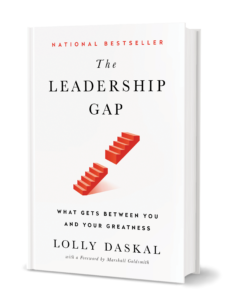
After decades of coaching powerful executives around the world, Lolly Daskal has observed that leaders rise to their positions relying on a specific set of values and traits. But in time, every executive reaches a point when their performance suffers and failure persists. Very few understand why or how to prevent it.
Additional Reading you might enjoy:
12 Successful Leadership Principles That Never Grow Old
A Leadership Manifesto: A Guide To Greatness
How to Succeed as A New Leader
12 of The Most Common Lies Leaders Tell Themselves
4 Proven Reasons Why Intuitive Leaders Make Great Leaders
The One Quality Every Leader Needs To Succeed
The Deception Trap of Leadership
Photo Credit: iStockPhotos
The post Why You Need to Stop Pushing Yourself So Hard at Work appeared first on Lolly Daskal.


