Guest Post: Nicole Peeler – Edumacating with Nano!
I first met Nicole at Authors After Dark. Nothing like sitting together on the sauciest panel of the con to break the ice. LOL.
Props to Nicole for the funniest readings of the hottest hankity pankity scenes even under pressure of a surprise camera crew and a boom microphone lowered to your face out of nowhere.
***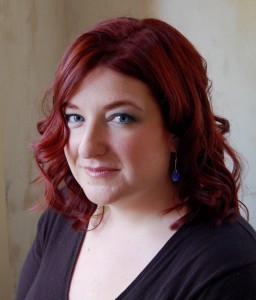 Hi folks! My name is Nicole Peeler and I write urban fantasy for Orbit Books.
But I'm also a professor of English literature and creative writing at Seton Hill, where I teach undergraduates and graduate students in our MFA in Popular Fiction.
In some ways, Nano seems like the opposite of the sort of thing an academic institution would support. After all, it encourages quantity over quality, in that it focuses on writing a lot rather than writing well. Nano also tells students to put aside their inner-editor, when it's that very inner-editor we're so often trying to hone in a classroom setting. Finally, it tells people they've "won," when all they've done is produced a mass of words. A monkey could, theoretically, "win" by typing in random letters with enough space breaks to make 50,000 "words."
So when my colleague, Lee McClain, and I decided to host Nanowrimo at our school as an extracurricular activity, we had a lot of "splainin" to do. First of all, we had to explain what Nanowrimo is, as it's not something many academics know about. After all, it's completely impossible to write an academic treatise at the pace of a few thousand words a day, as such writing requires research, data analysis, et cetera. Just the concept was difficult for some to process. And then, after we explained it, we had to defend it.
The fact is that, from the perspective of someone who has never written a novel, Nanowrimo sounds completely crazy. Why would anyone want to work that fast? What's the point of spending a month writing a pile of what could be steaming horse manure? Especially as you might have to spend six months turning that pile into anything resembling a "real" publishable work?
In the end, our critics asked the same questions all critics of Nano ask: What on Earth can be learned from this experience?
As a published author and professor, I recognize that Nano is not perfect. Obviously the process of revision is not only an important stage of the writing process, but is also arguably more difficult than rough-draft writing. Furthermore, authors need editors, both internal and external. Finally, 50,000 words isn't even a full length novel, but a novella.
So Nano isn't perfect, but it does impart some incredibly important lessons.
First of all, a few thousand words a day is not a lot for a "real" writer, especially of popular or genre fiction. In following New York Times Bestsellers like Richelle Mead or Rachel Caine on Twitter, one discovers that most days finds them writing a quota of 5,000 to 7,000 words a day, usually at least five days a week. And I mean that word, "quota": they have to write that many words to complete their contracts, which demand they write three books a year.
Second of all, there's a fine line between "inner editor" and "inner critic," and oftentimes that inner critic becomes that "inner excuse not to finish a manuscript." As one develops as a writer, gaining more experience in the craft and more confidence in one's own abilities, having a genuine "inner editor" becomes both more important and more realistic. But in those beginning stages of writing, when a new writer is inexperienced with how the process works, that inner voice is more often a critical bully than an editor. After all, one of the things we learn through writing a lot and finishing many projects is that first drafts are terrible. They're meant to be. They're the draft in which we get everything out, so that we can fix it. It's even on the label–rough draft–and yet it's so easy to let that first, unevolved inner critic tell us that the first draft should be genius, or it's worthless.
Long before I had my own inner editor beaten into its evolved state by my PhD supervisors, I would constantly sit down, write three lines, realize they were stupid, and so I'd stop. It was only much later, after I'd written numerous stupid first lines, that I learned the important lesson: "First first lines are supposed to be stupid." They get replaced later with slightly less stupid second and third first lines, and then a (hopefully brilliant) final first line. It's the same process with an entire draft.
So by forcing students not to listen to that inexperienced tyrannical inner critic who, let's face it, is used to being graded by people like me, it means that they can work through to a completed rough draft. And that's such an important thing to do, as a writer–to get to a stage where there's enough crappy writing to call it quits, so revisions can begin.
In other words, Nano, at least to me, is more about learning the process of writing, and the importance of finishing that rough draft, than it is about a completed product. That said, many Nano projects have resulted in publications, with the notable recent example of Erin Morgenstern's The Night Circus.
And obviously I'd love it if one of my students came out of Nanowrimo with a huge success like Morgenstern's. But I think they're going to be a winner if they learn any of the following:
That being a writer means writing–a lot.
That rough drafts will be rough.
That the criteria for judging a rough draft a success is not its quality, but if its finished. For only then can revisions begin, and all work needs revising.
That inner critics should not be inner executioners, killing our ambitions, aspirations, or dreams
That the only way to combat such nasty inner critics is by forcing them to become inner editors through putting them to work. And they can't do any work till that rough draft is ready to revise. So complete that rough draft and then make them revise it.
And here's what my colleague, Lee, says about Nano:
"Nanowrimo gives students a fun, supportive environment in which to write more than they ever thought they could. The online component and local meetups make novel writing a social event, and the craziness of writing a whole novel in a month appeals to writers young and old who tend to be, well, extremists. I can't wait to get started!"
And here's what a student, Sarah Last, said about her experience completing Nanowrimo last year:
"Nanowrimo is an incredibly inspiring activity. I like that it has no restrictions as far as what is written, and that they send emails of encouragement throughout the entire month. I'm going to be working on the same novel I've been working on since I've been in high school–and I'm really eager to get more written."
Nanowrimo may not be the perfect vehicle to catapult students directly to publishing deals, but it teaches a number of important lessons, all of which are wrapped up in a fun, frenetic package.
That we get to eat pizza during our SHU Write-Ins is just the pepperoni on the pie.