Pay attention to the footnotes
More evidence that the movement made Martin, not the other way around, from reader and former newspaper colleague Paul Wenske:
“The reckoning with integration that began after World War II in the United States certainly found a voice in Martin Luther King, Jr. — but, as you point out, it was realized in dozens of other less conspicuous places and in less dramatic scenarios across the nation,” Paul writes.
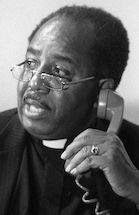 “I recall as a kid in Torrance, Calif., in the 1950s my father causing a mild stir, cov...


No comments have been added yet.