
The Same, Only Different
My best writing buddy spent this past week writing blurb copy, that all-important couple of paragraphs that you can read on Amazon about what to expect from the book. There are posts all over the internet on what needs to be included and in what order, and writing blurb copy has evolved into a very fine art form which can make or break a book. If you're published via the traditional route, you submit a version of your blurb and then the publisher changes it to make it better. If you're self-published, you're pretty much on your own.

My buddy asked for my help with writing her blurb. Rather than massage her work, I wrote another version of it, since I've read the book already. She sent both versions to her editor and didn't tell the woman which was hers and which was mine. This editor has proofed every book written by my buddy and had no problem deducing which version was hers. We had written essentially the same thing, only different. Each version had strengths and drawbacks, so the final version will probably be a mash-up of the two, but it brought home some points about writing that are usually lurking in the background.
One: You can give a room full of writers the same characters, the same plot points, the same set of circumstances, and you'll get as many different versions as there are people in the room. They're all writing the same thing, but the difference comes in the style, the voice, the backgrounds of the authors.
 Two: Beginning authors often don't know what it means when an agent or editor says they like their voice. (Or don't like it, heaven forbid!) Debut authors who hit the big time right out of the gate know intrinsically what their voice is. The rest of us have to work at it. It's the way we write, if we have more dialogue than we do description, if we have a distinct pace, if a sense of humor is evident, if we've taken a usual situation and turned it on its ear. If we've written the same thing, only somehow made it different.
Three: There are only so many tropes in writing romance: friends to lovers, second chances, beauty and the beast, secret baby, etc. The difference between a mediocre work and one that truly shines is to take a trope and make it different.

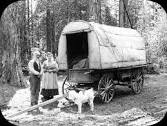
While I'm waiting to see the final version of the blurb, I'm also working on my next manuscript–a mail-order brides book. There's a trope that's been done to death, but readers seem to love reading about them, so I thought I'd give it a go, since I like to write about American history and I have a ton of books about Covered Wagon Women. Now, my trick is to take a well-loved trope and write something that's the same, only different. Maybe I'll add a dog.

My buddy asked for my help with writing her blurb. Rather than massage her work, I wrote another version of it, since I've read the book already. She sent both versions to her editor and didn't tell the woman which was hers and which was mine. This editor has proofed every book written by my buddy and had no problem deducing which version was hers. We had written essentially the same thing, only different. Each version had strengths and drawbacks, so the final version will probably be a mash-up of the two, but it brought home some points about writing that are usually lurking in the background.
One: You can give a room full of writers the same characters, the same plot points, the same set of circumstances, and you'll get as many different versions as there are people in the room. They're all writing the same thing, but the difference comes in the style, the voice, the backgrounds of the authors.
 Two: Beginning authors often don't know what it means when an agent or editor says they like their voice. (Or don't like it, heaven forbid!) Debut authors who hit the big time right out of the gate know intrinsically what their voice is. The rest of us have to work at it. It's the way we write, if we have more dialogue than we do description, if we have a distinct pace, if a sense of humor is evident, if we've taken a usual situation and turned it on its ear. If we've written the same thing, only somehow made it different.
Three: There are only so many tropes in writing romance: friends to lovers, second chances, beauty and the beast, secret baby, etc. The difference between a mediocre work and one that truly shines is to take a trope and make it different.

While I'm waiting to see the final version of the blurb, I'm also working on my next manuscript–a mail-order brides book. There's a trope that's been done to death, but readers seem to love reading about them, so I thought I'd give it a go, since I like to write about American history and I have a ton of books about Covered Wagon Women. Now, my trick is to take a well-loved trope and write something that's the same, only different. Maybe I'll add a dog.


No comments have been added yet.


