Book Titles: Choosing a Title and some Good, Bad, and Indifferent Titles from Classic Novels
 Titles are always difficult to decide on. This is all the more of a challenge, as the conventional wisdom of innumerable writers websites says you have to have an outstanding one that will make your readers want to start reading at once: – not an easy task.
Well, I find them difficult, anyway. I was stumped as to what to call the Sophie de Courcy and Émile Dubois story, until I realised that I had the title in the text in the quote from Lord Dale in Émile’s days as a highwayman: – ‘You’re that scoundrel, Émile Dubois: i can tell by your eyes!
I believe this is often true (having difficulty in finding a good title, I mean, and then finding it in a line in the story, not identifying highwaymen by their eyes). That’s handy, given the sickening number of times an author must edit, re-write, and edit again. You can read through looking for a possible title, and the great thing is, these days, it doesn’t have to be conventional; it can be a question, or a threat, as in Harlan Ellison’s classic dystopian fantasy, of which more below…
I am never sure how far titles influence me as a reader. I would say only occasionally when I was younger, and perhaps more often now. Covers often interest me more. Perhaps I have become less visual?
I was pulled in by a several titles, though, even then. For instance, when I saw that one of the late Philip K Dick’s: ‘Flow My Tears,’ The Policeman Said that acted as a hook at once (I would dispute that his surname had a Freudian effect on me, though!) .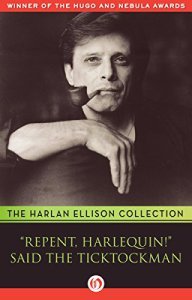
‘Repent Harlequin!’ Said The Ticktockman by Harlan Ellison was another. I knew I’d have to read that or burst, though I was fourteen at the time, and cynical about almost everything.
The Philip K Dick novel disappointed me slightly, though at the end the meaning of the title, elusive throughout , was finally illuminated.
‘Repent Harlequin!’ Said The Ticktockman is surely a work of genius. I gather that it has won classic status, and deservedly.
For anyone reading this blog who hasn’t read that story, I would urge, do, even if it’s the only piece of fantasy you ever read. It is horribly prescient. Written circa 1967, it prefigures our present day Culture of Hurry in a hideous but comical dystopia of a world governed by clocks. The very rhythm of the story is reminiscent of the ticking of a clock out of synch.
It is grotesquely comic, and highly tragic. It’s wonderfully constructed, though this is done with such mastery that it seems almost by the style that it was slapped together accidentally.
 Oddly enough, I have never read a review on it, so these opinions are just ‘off the top of my head’.
But some other classic best sellers have, to say the least, lacklustre titles. It would seem that in the eighteenth and nineteenth centuries, for instance, nobody was that bothered about a title as a form of advertisement. A title seems to have been used as a means of summarising the book, rather than that of selling it.
Samuel Richardson’s Pamela anybody? Well, that does have the subtitle, Or Virtue Rewarded. I am sure that those who have borne with me through many blog posts know at once what my take on that is: ‘Moral and religious hypocrisy and toadying to your would-be rapist rewarded, more like!’
For sheer yawn inducing, try the title of the today little known sequel: Pamela in Her Exulted Condition. Yes, and the story isn’t much more exciting.
Richardson’s Clarissa has a dull enough sub-title: The History of a Young Lady. Maybe that was too put off those readers with perverted tastes who might plough through six of the seven volumes for the fun of the rape (which anyway, takes place offstage to maintain propriety).
Then there is Fanny Burney’s Evelina. That’s a nice name, and unusual, but not exactly a descriptive title. Henry Fielding’s Tom Jones and Joseph Andrews are even less titles that are likely enthral: unlike Richardson and Burney’s, they don’t even have unusual names.
In fact, I have been guilty of calling a novel simply after the name of a main character myself – in ‘Ravensdale’. I liked title, as both the protagonist Reynaud and the antagonist Edmund share that surname, and it is the name of the earldom which Edmund covets; besides which, ravens are seen as birds of ill omen and they circle about at the climatic points of the story. Still, potential readers don’t know that.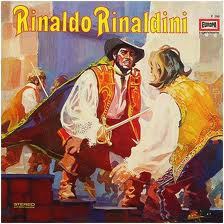
Another early novel is a favourite mine of the so-bad-it’s-good category Rinaldo Rinaldini, Captain of Banditti. That is probably a title that promises much blood and thunder in the original German. I don’t speak or read, any German, so I couldn’t say. In that English one, it sounds like a take off of some school story of the mid twentieth century: Renny Reynolds, Captain of the First Eleven, or some such.
Mary Shelley’s Frankenstein is a name difficult to detach from its lurid reputation, but removed from that, it isn’t much of an advertisement for the excitement of that truly terrifying story.
Then we go on to the more intriguing, but sedate, titles from Jane Austen: Pride and Prejudice, Sense and Sensibility, Mansfield Park etc.
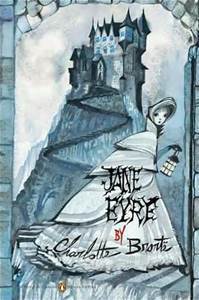
Jane Eyre and Agnes Grey are again far from riveting titles; Wuthering Heights and The Tenant of Wildfell Hall are a bit more likely to stimulate interest.
 Elizabeth Gaskell was another person who went in for sedate titles. Mary Barton, Ruth and North and South etc. Sylvia’s Lovers might be considered to be shockingly risqué for this most Christian of authors –except for the fact that ‘lovers’ had a completely respectable meaning in mid nineteenth century UK…
Her one time editor Charles Dickens knew how to market writing – how to end his serial pieces for his magazine on a cliff hanger, and how to appeal to his audience – and yet, his titles were hardly of the sort likely to send rushing to buy a copy – A Tale of Two Cities, Domby and Son, Hard Times etc. For all that, he was of course, the most successful author of his age. He did seem be fascinated by bizarre surnames and of course, these often feature as titles, ie, Martin Chuzzlewit.
 Then, at the beginning of the twentieth century, we have one of the most famous novels ever to be published in the UK – so famous that it is hard to detach the name from its reputation – Dracula. That name is taken from the title of the sinister ‘Vlad the Impaler’ of fifteenth century Transylvania, Vlad Tepes. It seems that nearly until publication, Bram Stoker was going to call the book, The Dead Un-Dead.
Bland as many of those nineteenth century titles are, it is interesting how a slight alternation would make them either ludicrous or totally boring.
Balmy Valleys by Emily Bronte.
The Tenant of Mellow Meadow Bungalow by Anne Bronte.
A Saga of Two Suburbs by Charles Dickens.
Sylvia’s Acquaintances by Elizabeth Gaskell.
Flat 2B, Mansfield House, Mansfield Road by Jane Austen.
Humility and Open Mindedness by Jane Austen.
They do certainly lose an allure, so there must have been some thought given to those original titles, sedate or not…And on Dickens, how come I forgot last week to include the supremely dull hero of A Tale of Two Cities, Charles Darnay as a Marty Stu hero from a classic novel, and Lucie Manette as an example as a true Mary Sue in my post of the week before?