
“122 Things” you will be able to do in the library of the future that you can’t do today
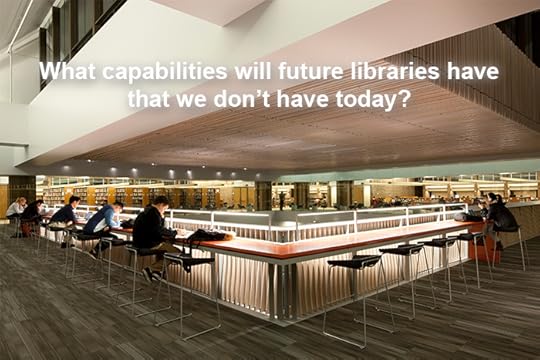
It all started with a conversation I had with the National Library of Greece a couple weeks ago. As they shared with me their plans for constructing a massive new National Library, a beautiful facility they hope to open next year, they started asking my thoughts on how to “future proof” their new facility.
As I advised them to operate it more as a laboratory for future libraries, where their mission will be to constantly test out new features, options, and systems, it occurred to me that very few people in the library world have any idea about where this current transition is taking us.
Over the past two decades, information has morphed and shifted into a myriad of different forms, going digital for the most part, with physical books and paper-based sources, as a percentage of the whole, all on the decline.
With digital comes an exponential increase in the number of ways we can access, manipulate, search, parse, combine, manage, and store each of the growing number of elements in the knowledge universe.
As a result, our expectations surrounding libraries and the activities and capabilities we expect from a local neighborhood information center, are also beginning to change.
Stepping through this list of possible activities, we should begin with the understanding that very few libraries, if any, will have all of them.
My intent in creating this list is to help those working with libraries to think about the multidimensional nature of our unfolding digital world. Certainly these changes will affect far more aspects of life than just libraries, but as a society we expect them to be ahead of the curve, helping us understand what we should be paying attention to.
As we add technologies like chatbots, virtual reality, and artificial intelligence to our libraries, activities will begin to coalesce around the strengths of particular communities and their regional differences. And that’s ok. In fact every library will need to operate as a working laboratory, testing new equipment, activities, and approaches to our ever-expanding info-verse to see where users gravitate.
What should libraries be?
How will we describe the nature of libraries in the future? Should they be:
Baby friendly
Pet friendly
Food friendly
Beer, wine, and alcohol friendly
Event friendly
Party friendly (should they provide a list of approved catering companies)
Homeless friendly
Privacy advocate friendly
Business friendly
Casual user friendly
Should they have facilities for:
Traveling museum exhibits
Private meetings
Aerobic reading
Taking a shower
Preparing and serving food
Taking a nap
Storing personal items
Sending money or making payments
Traditional Information Archive – Over the years libraries have expanded their collections. Certainly not all are large enough to manage every items on this list, but most have a majority of them.
Print books
Digital books
Audio books
Newspapers
Magazines
Music
Movies
TV shows
Radio broadcasts
Presentations
Courseware
Audio materials (discs, tapes, talking books and other recorded formats)
Maps
Microforms
Videos (film, television broadcasts, DVDs)
Sheet music
Photographs, posters, prints, and drawings
Apps and mobile apps
Social media archives
Artwork
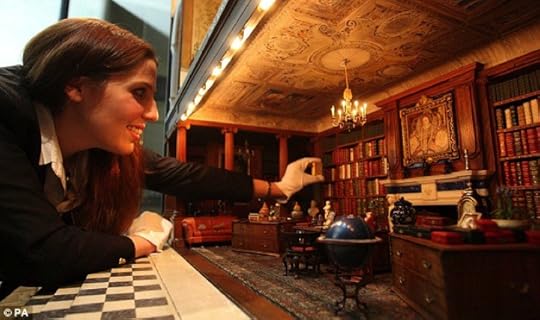
Non-Traditional Archives
Libraries also have an obligation to archive their local communities. Some of the non-traditional archives may include:
1. History of every business in region.
2. Overview of every graduating class in every school.
3. History of local infrastructure including bridges, tunnels, waterlines, sewer lines, fire stations, water towers, police stations, schools, etc.
4. Aging of the community done through sequential photo queues.
5. The sound of the city in the form of audio recordings over the years.
6. Cultural influence timelines.
7. Local archive for emergency equipment such as emergency generators when the power does down, or emergency lighting, emergency cots, etc.
8. Record of every law, ordinance, and regulation affecting every member of the community
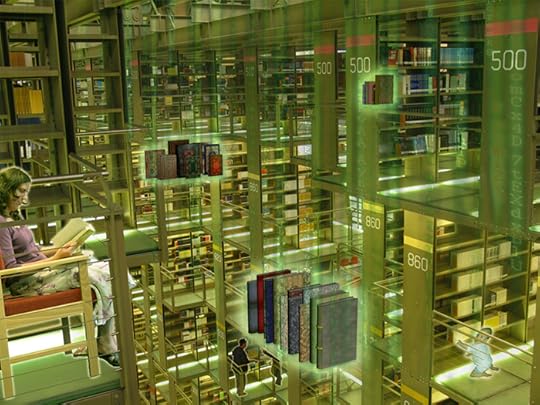
Search Command Centers
Most people entering a library are searching for something. Over the coming years search technology will become increasing complicated, but at the same time we will have far more capabilities to use in our search.
Video Search – When it comes to video search, we still struggle with attributes like context, style, circumstances, and a variety of situational details. Examples of future video searches may include:
9. Bring up every public video of Jane Doe (average person) between 1980 and 2005 when she was in Manchester, England.
10. What are the top 20 most watched videos of an audience laughing at someone who is in the process of dying from a fatal accident?
11. Show me the top 10 Twitch tournament videos of Korean players playing Destiny version 4.3.
12. What are the 12 common features of low grossing movies produced by Paramount Pictures in 1978?
Drone Search – It may seem unlikely today that libraries will have their own fleets of drones to deploy for physical search inquiries, but that will change over the coming decades.
13. Using thermo scans, what houses in my city have the least amount of insulation in the attic?
14. Where is the hole in the fence that is allowing livestock to enter the Eagle Ridge Neighborhood and cause damage?
15. Which areas in my city are least likely to get flooded when the river overflows its banks?
16. Give me a 360-degree views of the three major sculptures erected in my city last year?
Demographic Search – The demographics of the world is changing and we need better tools for monitoring it.
17. Show me a heatmap of the world, broken down by 1 square mile regions, showing highest to lowest birthrates
18. What regions of the world are most like Winnipeg, Canada (pick any city) based on climate, age demographics, political views, education levels, scientific interests, personal health, etc.
19. Who is the most knowledgeable person in the world on acidic soil types?
20. Show me a decade-by-decade breakdown of increasing average incomes in Africa since 1900.
Complex Searches
Over time search engines will deploy a combination of techniques for finding the answer to complex questions.
21. Interactive map of the world highlighting regions currently at 10 degrees Celsius?
22. What world leaders are currently in NYC?
23. Interactive map of butterfly migrations in Panama?
24. What movie has Harrison Ford wearing a blue sweater while chewing gum?
25. Why is this object (hold up an object) important?
26. How famous am I compared to other people in my community?
27. Timeline Search – How have recipes for bread changed over the past 300 years?
28. Who else in the world has a disease like mine?
Future searches
As we enter the age of quantum computing, far more search attributes will become quantifiable. Someday soon we will be able to search for:
29. Smells
30. Tastes
31. Harmonic vibrations
32. Reflectivity
33. Specific gravity
34. Chemical composition
35. Textures
36. Viscosity
Fussy search features
How do we search for things with similar qualities? Future searches may include options to specify:
37. Looks like
38. Smells like
39. Feels like
40. Tastes like
41. Sounds like
42. Absorbs like
43. Echoes like
44. Coats like
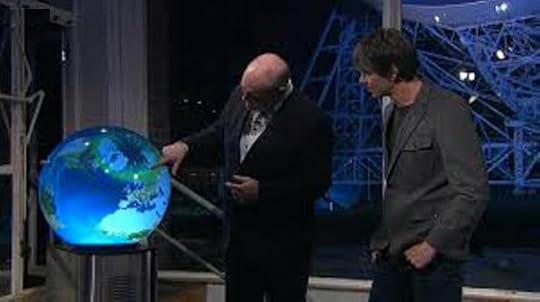
Spherical Displays
Spherical displays in the future will have the ability to give an accurate perspective of planet earth.
45. Track pollution flows across the ocean in real-time
46. Monitor major hurricanes from satellites and track new developments on a minute by minute basis
47. Book a complex travel itinerary from a spherical perspective
48. Show how warm water currents have changed over the past two decades.
Maker Spaces
Libraries are rapidly transitioning from a place for passive visitors who consume information to active participants who would much rather produce it. Areas to include:
49. Potters wheel and workshop for mixing the mud and making pottery.
50. Growing vegetables using aquaponics.
51. Video studio for both shooting and editing a video.
52. A production area for both recording and editing a virtual reality experience
53. IoT workbenches complete with Internet of Things help desk
54. Access to 3D scanners and printers capable of printing items out of several hundred different materials.
55. Laser cutters for etching/cutting wood, glass, metal, and ceramic.
56. Jewelry making stations
Creative Spaces
These types of spaces will come complete with all the tools, technologies, and supplies for creative people to get creative.
57. Produce art
58. Produce music
59. Produce games
60. Produce podcasts
61. Produce webcasts
62. Produce VR experiences
63. Host IoT workshops
64. Create & print with 3D printers
Mini theaters
It’s important for groups have a place to gather for such things as:
65. Watching movies
66. Playing video games
67. Watch live events such as concerts, sporting events, NASA landings, etc.
68. Watch YouTube, Facebook, Twitch, and more
Live webcast studios
While we no longer need a studio for doing live webcasts, the age of the studio is far from over.
69. Book reviews
70. Game reviews
71. App reviews
72. Course review
73. Chatbot review
74. Tech reviews
75. 50 years ago today
76. “How to” accomplish something
3D Printing
As the process of additive manufacturing improves, it will begin to enter all of our lives in unusual ways:
77. 3D printer lending
78. 3D scanner lending
79. 3D printer workshops
80. 3D scanner workshops
81. 3D design competitions
82. 3D printer-scanner help desks
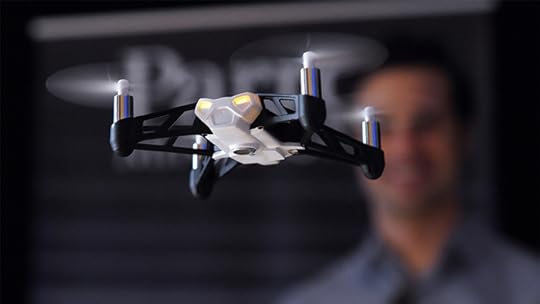
Flying Drones
In much the way kids that lived a century ago wanted to learn how to fly, young people today are enamored with flying and driving drones.
83. Drone lending
84. Flying drone flight simulators
85. DYI drone workshops
86. Drone competitions
Artificial Intelligence
Artificial intelligence is already in existence and already knows far more about you than any person alive today. Will future libraries offer:
87. AI lending
88. AI workshops
89. AI competitions
90. Monitor and anticipate visitor usage
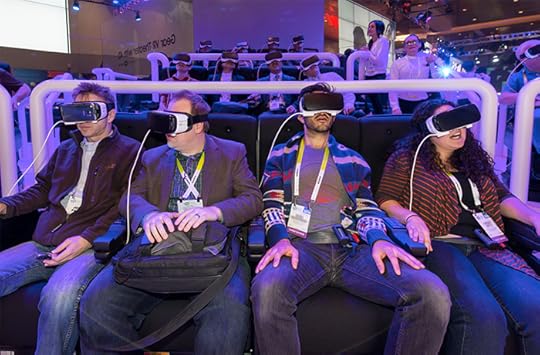
Virtual Reality and Augmented Reality
Both will become far more pervasive in the future.
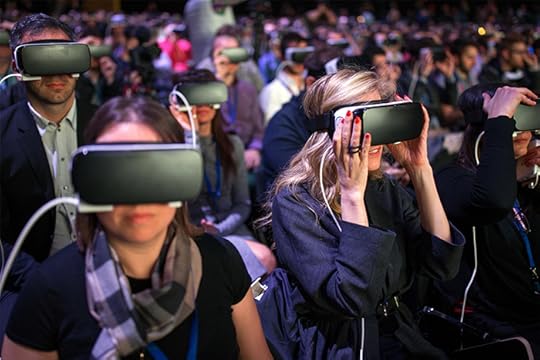
91. VR & AR hardware lending
92. VR & AR software lending
93. VR & AR production studios
94. VR & AR search engines
Robotics
Robots will become far more common in the future.
95. Robot lending
96. Robot rodeos
97. Robot workshops
98. Robot competitions
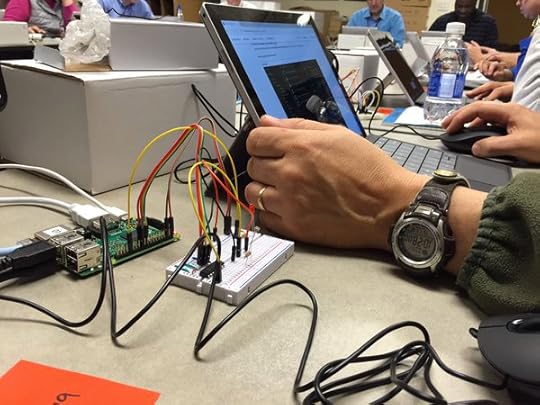
Internet of Things
As more of our devices join the connected world we will see an increase in demand for:
99. IoT device lending
100. IoT prototyping workshops
101. IoT competitions
102. IoT expert speaker sessions
Equipment Archive
Most people have old forms of information on disks, cartridges, stick drves, and tapes, and many are looking for a place to convert it to a new medium that people today can access.
103. Read and print microfiche
104. Both read and convert 8”, 5.25”, and 3.5” disks to the cloud
105. Convert photos to video
106. Convert from VHS to DVD
107. Digitize and repair old photos and documents
108. Old gaming consoles to play programs and games on cartridges, apps, stick drives, and CDs
Global Library Projects
109. VR chat rooms with people in other counties
110. Cross cultural lending programs (i.e. books written in Japanese, not translated, about Ben Franklin)
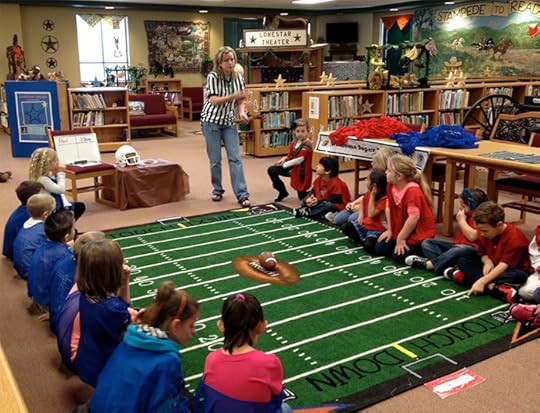
Video and Non-Video Games – Games are quickly becoming the cultural norm for most young people today.
111. Game tournaments
112. Game lending
113. Game builder workshops
114. Game expert events
New Facilities – Most major libraries will be testing out a host of new options to make their facilities relevant for next generation users.
115. Mini Planetariums
116. Robotic storytelling centers
117. VR dating stations
118. Time capsule room
119. Drone lending program
120. Pet lending program
121. Expert events – meet the experts
122. Community archives – let the community decide
Final Thoughts
As a kid growing up, libraries were always that magical place full of ideas and possibilities. Future libraries will have all that and more.
Yes, they will be continually evolving over the coming decades and the key to our understanding them lies in our ability to expand our perspective and reframe our thinking abut their role and purpose.
The list above is merely scratching the surface. Libraries can start with a formula, mission statement, policy plan, or lengthy surveys, but in the end libraries will evolve, morph, and transform on their own even without human intervention.
It’ll be an exciting thing to watch, and even more exciting to be part of.
By Futurist Thomas Frey
Author of Epiphany Z – 8 Radical Visions Transforming Your Future


Thomas Frey's Blog

- Thomas Frey's profile
- 2 followers

