
Brian Solis's Blog, page 37
June 15, 2021
Transforming The Employee Experience

Photo by RODNAE Productions from Pexels
In today’s new world of work, we have seen a big increase in the requirement for remote working solutions. But it’s not just about being able to connect remotely. Employees need the technology to enable them thrive, remain productive and engaged. The right tools make the business run better.
Industry research shows that those who have enhanced flexibility in how, when, and where they work are 60 to 80 percent more productive than those who lack that flexibility. By enabling workers to access all their data and applications from anywhere on any device, many organizations have found that this is the key to greater employee engagement, satisfaction, and retention.
Hear from industry experts Brian Solis, Global Innovation Evangelist, Salesforce and Gerry Lavin, Product Strategist, Citrix, as they discuss how technology is one of the key pillars to deliver a great employee experience, and discover more about digital workspaces as the starting point to empower employees to their best work – wherever, whenever and however works needs to get done.
Presented by Citrix
Please click here to watch the conversation between Gerry and Brian.
The post Transforming The Employee Experience appeared first on Brian Solis.


June 10, 2021
Growing your business in today’s all-digital, work-from-anywhere world

I’ve been spending quite a bit of time with the Salesforce Canada team. Recently, I had a chance to present at the #PathToGrowth LIVE series along with a stellar cast:
Joe Mimran, Founder, Club Monaco & Joe Fresh
Jaldeep Pandya, Sr. Manager Business Transformation, Honda Canada
Zahra Al-Harazi, Purpose-Driven Leadership Expert & Entrepreneur, Skillit
Amber Mac, President, AmberMac Media Inc.
Our theme was not only growth, but also innovation in customer experience and employee empowerment. The world has changed and there’s no going back. The companies that will emerge stronger are the ones that embrace technology to sell, service, market, and collaborate from anywhere.
The team at Salesforce created this snipped from the event on the importance of sprinkling magic in the customer journey.
https://www.briansolis.com/wp-content/uploads/2021/06/r2Azxub9m_cGT9q_.mp4Transcript
We have to look at, where are we not delivering against customer expectations throughout the customer journey, even in the smallest of touchpoints, and in the greatest of services and products. And we need to look for ways where we can start to improve that. What can we fix right now? And then after you start checking those boxes, look at their favorite experiences, especially if they are outside of your industry, and let that inspire you. Look at ways where you can deliver that “wow” factor, where you can sprinkle a little bit of that magic dust on your experiences, so that those experiences become wonderful memories, and those memories become the brand.
The post Growing your business in today’s all-digital, work-from-anywhere world appeared first on Brian Solis.

June 8, 2021
How Government Organizations Have to Make Up For Lost Time in Marketing Innovation

Photo by Eugene Shelestov from Pexels
In this session from the 2020 GovComms Festival, we hear from Brian Solis, the Global Chief Evangelist for Salesforce.
Brian discusses how dramatically society has changed amidst the rise of personal computers, the internet, social media and smartphones.
Brian talks about the top priorities of marketers, according to the sixth edition of the Salesforce State of Marketing Research report. The top three priorities that Brian identifies are: first, compliance with privacy regulation. Second, hiring and developing talent. And third, innovation and engaging customers in real time (tied).
Brian then walks through the top challenges for marketers, and explains why he believes ‘engaging customers in real time’ as the largest challenge.
Brian explores how communications has been democratized and forced to become less hierarchical due to the internet. He also explains why it is important to re-learn who our constituents are becoming and where they are going.
According to Brian, there is an engagement divide between representatives and citizens. Communications professionals must tap into the touchpoints of citizen online engagement. Communicators need to understand where constituents are operating online.
After watching this video, you will be able to:
Understand the changes to society and human behaviour that have been brought about by social media, smartphones and the internet.Recognise the top challenges and priorities for marketers beyond 2020.Understand more about the behaviour and preferences of digital-first customers.Please note that this is a recording of a live presentation.
The post How Government Organizations Have to Make Up For Lost Time in Marketing Innovation appeared first on Brian Solis.

June 7, 2021
Conga Connect Keynote: The Importance of Digital Empathy in a Digital-First World

Brian Solis will keynote Conga Connect Live 2021 along side Serena Williams and Frank Blake, Chairman of Delta Air Lines. Wow!
While working digitally, it’s easy to forget we’re all human and that what we see on the screen doesn’t always reveal what people are really feeling.
Brian will present on “The Importance of Digital Empathy in a Digital-First World.”
Join Brian Solis, Global Innovation Evangelist at Salesforce, 8-times best-selling author, and digital anthropologist, for a discussion on how we can better serve customers, teammates, and ourselves through our practice of digital empathy.
In these times of working, learning, shopping, and leisure from home, make time to recenter…you…for the next normal. Please also make sure to read LifeScale: How to Live a More Productive, Creative, and Happy Life.
The post Conga Connect Keynote: The Importance of Digital Empathy in a Digital-First World appeared first on Brian Solis.

June 1, 2021
Brian Solis Keynotes quantiCon: Why a New Breed of Digital-First, Conscious Consumers Can Guide Business Growth

Brian Solis will keynote quantiCon on June 2nd, 2021 at 12:05 Eastern.
The Rise of Generation-Novel: Why a New Breed of Digital-First, Conscious Consumers Can Guide Business GrowthAmong the most progressive and innovative companies, consumer insights have been thrust into the spotlight? Why? Because customers have changed faster in the last 14 months than they have in the past 10 years.
World-renowned digital anthropologist, futurist, and best-selling author Brian Solis has studied how consumers specifically changed during the crisis. What he learned became the foundation for defining a new genre of digital-first, conscious consumers he called Generation-Novel.
In this inspiring and enlightening talk, Brian will reveal customer insights and trends to guide human-centered innovation and digital transformation in a post-pandemic economy.
Speaker: Brian Solis, Global Innovation Evangelist at Salesforce
The post Brian Solis Keynotes quantiCon: Why a New Breed of Digital-First, Conscious Consumers Can Guide Business Growth appeared first on Brian Solis.

May 26, 2021
5 Steps to Building Brand Loyalty in 2021 and 2022

Photo by Andrea Piacquadio from Pexels
I recently had the opportunity to deliver the keynote presentation at “Digitizing Your Customer Experience” organized by Traction on Demand.
My topic focused on customer enchantment in a now digital-hybrid world, “Effective, Efficient, Experiential: Building Lasting Customer Loyalty.”
Following my presentation, the team at Traction on Demand, summarized the key points in an eloquent, helpful article. I wanted to share it with you here…
5 Steps to Building Brand Loyalty in 2021For anyone working in a customer-facing role or customer service organization — the golden rule is “the customer is always right.” It’s our job to make the customer feel valued through personalized experiences and thoughtful touch points along the customer journey. As the world begins to open back up in this post-pandemic era, businesses have the opportunity to connect and cultivate relationships with their customers like never before. In order to do so, they must adapt and explore innovative new solutions.
1. Creating an Immediate, Relevant and Convenient Customer JourneyIt’s important to first understand your customers expected experience and work backwards to implement technology to deliver this result. Brian Solis, world-renowned digital anthropologist and futurist, 8x best selling author and Global Innovation Evangelist of Salesforce, said it best:
“Once you’ve felt a truly personalized experience, it becomes the new standard for engagement. You, and other customers like you, don’t go back.”
Given the shift to digital over the past few years, especially in light of the pandemic, customers have heightened digital expectations. As customers, our decision-making process is forever changed. We want things to be immediate, relevant and convenient and we seek consistency throughout every stage of the customer journey.
ONCE YOUR AUDIENCE BECOMES A REAL-TIME, DIGITAL-FIRST CUSTOMER, RETENTION IS OF UTMOST IMPORTANCE.
2. Accelerating the Digital ExperienceFor organizations, this can be an exciting opportunity to inject new creativity into their daily routine, forcing them to think about their approach around continuous digital transformation and evolution. As Brian pointed out, “88% of customers expect companies to accelerate digital initiatives”, ultimately placing speed at the forefront of digital transformations. Our customers are constantly connected to the digital world and expect businesses to continually evolve alongside their ever changing needs. It’s your job to take a proactive approach in enabling rapid innovation and increased time-to-value for your customers. This mindset will allow for opportunities of growth and innovation around solutions and products that can continually grow to meet your customers needs.
3. Being People Centric, Not Process CentricEvery customer touchpoint is an opportunity to show empathy. Through studying the customer journey, you can provide thoughtful communication to your audience, ensuring you’re aligning your values with those of your customers. Connecting customer insights with company initiatives will help build trust, which is at the core of what we do at Traction on Demand. We strive to deliver meaningful experiences that put people at the center of their digital transformation. Through digitizing the ability to deliver an emotion within the customer journey, organizations are opening the doors to creating untapped value, differentiation, preference and demand, loyalty and greater margins.
4. Re-imagining the Customer JourneyAt the end of the day, we’re all in the relationship business, no matter the industry. Brian shared his insights around the ‘ah-ha’ moment that happens right before the inspiration to grow, change and adapt takes place.
“We haven’t gotten to this place before because we made decisions based on past experiences. The prelude is asking different questions: what does the customer want and where is the service failing expectations?”
Innovation has always stemmed from times of disruption. Challenging your past processes or business decisions will allow you to effectively reflect on your current customer experience. Keeping the customer involved and in mind when re-imagining the journey is imperative, in order to provide digital features, products and services that will best meet their needs.
5. Seeking Customer Success through SalesforceLeveraging Salesforce tools to build and maintain customer loyalty and success will lead to greater customer enablement and overall satisfaction. The following tools can help to strengthen your digital experience from the first touchpoint.
Sales Cloud – Centralize customer information and log customer interactions to help your company run and improve your customer service experience.Einstein Analytics – Uncover success metrics and data insights based on your customer’s activity.Chatbots – Powered by AI to answer common questions, chatbots can engage customers with rich content and offer customer support.Field Service – Provide virtual customer support that’s tailored to your customer’s needs.Utilizing technology to meet and exceed customer expectations will provide an experience that is unmet and unknown, giving the customer something to think about and explore.
Build Lasting Customer Loyalty with SalesforceIf you enjoyed our 5 steps to building brand loyalty, and you’re looking to create a customer-focused service roadmap, get in touch with a member of our team. With industry experts well versed in the latest tech solutions to elevate and improve your customer experience in 2021, we can help you provide a digital experience – from start to finish.
The post 5 Steps to Building Brand Loyalty in 2021 and 2022 appeared first on Brian Solis.

WTF: What’s the Future Podcast – 3 Ways to Gain Financial Confidence with Eric Weiss of Personal Capital
In episode 5 of WTF: What’s the Future, I’m joined by Eric Weiss, SVP of Growth & Performance Marketing, at Personal Capital.
Did you know that two-thirds of people are losing sleep every night over financial anxiety?
Odds are pretty good you fall in that camp.
Eric joined me on WTF this week to talk about how Personal Capital is aiming to change that statistic.
Their approach?
Simply to make finance personal again.
As time passes, our finances get more complicated and less visible as we manage debts, investments, and portfolios across lots of platforms.
Personal Capital believes that we need both technology and empathetic people to feel confident in owning our finances.
“Customers are demanding three things – immediacy, personalization, and an ethic and value in the brands they work with,” said Eric.
Immediacy is expected from the tools they use to manage and view their finances, updated in real-time, with evolving goals and plans.Personalization is expected the same way Netflix suggests new shows, from evolving personal goals to how you best make use of tech.Ethics is arguably the most important demand after decades of shady financial institutions taking advantage of their own customers.These “demands” were born out of people wanting clarity and confidence as they plan and invest.
And they are best met through innovative tech AND great people support.
In our time together, we chat about:
How Personal Capital approaches finance holistically.
Building financial confidence.
Why your goals deserve more than just management tools.
About Personal Capital
Personal Capital is an Empower company. It’s mission is to transform financial lives through technology and people. Empower and Personal Capital Advisors Corporation serve a combined 12 million individuals, for whom they collectively hold over $1 trillion in assets. The combination of the Empower Retirement individual investor business with the Personal Capital platform will create new opportunities for clients, thanks to new integrated, cutting-edge offerings and tools.
Please, Subscribe to WTF



Thank you to the team at Sweet Fish Media for being my production partner in WTF. Sweet Fish produces podcasts for B2B brands.
About WTFWTF: What’s the Future? is a podcast dedicated to digital Darwinism, the evolution of technology and society. WTF host Brian Solis and his special guests tell the human stories driving innovation and the meaning behind the big changes we all face. Whether you’re looking to learn from today’s most influential leaders, disruptors, and tech luminaries or discover the impact that today’s and tomorrow’s tech trends are having on markets, society and us as individuals, this is the show to help you stay ahead of it all. Each episode features topics that explore the human challenges facing digital transformation, innovation and disruption, corporate culture, personal advancement and more.
The post WTF: What’s the Future Podcast – 3 Ways to Gain Financial Confidence with Eric Weiss of Personal Capital appeared first on Brian Solis.

May 24, 2021
IoD to challenge directors on diversity and digital transformation
The IoD is bringing directors together to set out a roadmap for greater diversity and digital transformation in the boardroom.
The virtual event, on 16 June, features a panel of experienced directors, who will debate and challenge the progress being made on these two critical issues.
The first panel session, Diversity and Inclusion Deficit in the Boardroom, will explore the lack of ethnic diversity of UK boards. The panel will explore how boards can create a culture of diversity and inclusion to develop a pipeline of leaders. It will also examine how leaders of ethnically diverse backgrounds have reached leadership positions.
The panel includes: Harriet Green, former Chairman and CEO, Asia Pacific at IBM; Charu Gorasia, Director General, Capabilities and Resources at the Home Office; Anuradha Razdan, Executive Director, Hindustan Unilever and Vice President HR, Unilever South Asia; Charlotte Valeur, experienced FTSE Chair and investment banker; and Pramila Srivastava, who recently retired from The Coca Cola Company as Vice President of Strategic Transformations.
The second panel, Digital Transformation Deficit in the Boardroom, will explore how Covid-19 has brought digital disruption to the forefront of every organisation’s strategy. Panellists will ask if today’s boardrooms are ready to fully embrace digital transformation and if it should sit alongside traditional committees like audit, risk and compliance.
The panel will include: Charlotte Valeur, experienced FTSE Chair and investment banker; Brian Solis, digital anthropologist and futurist who serves as Global Innovation Evangelist at Salesforce; Natasha Davydova, Global Head of Infrastructure and Information Security, Allianz; and Ashish Kumar Gupta, Corporate Vice President, Head Europe and Africa (Diversified Industries), at HCL Technologies.
Raj Singh, Chairman, IoD Berkshire, who will chair both sessions, said: “These will be inspiring and thought-provoking panel discussions with successful, international business leaders of diverse backgrounds who are championing these causes in the boardroom. We welcome questions from attendees as we look to set out an agenda for change.”
The IoD secured vital support for directors during the Covid-19 pandemic, including financial assistance for wage bills and changes to insolvency rules. Through its Policy Voice programme, it provides government with first-hand reports from those dealing with the crisis.
The post IoD to challenge directors on diversity and digital transformation appeared first on Brian Solis.

May 20, 2021
Surviving Digital Darwinism and Thriving Against Disruption: It’s The Survival of the Most Disruptive
Wow. What an experience. I was asked to present at the incredible Macquarie 2021 Australia Conference, one of the most innovative financial services organization in the world. Following the event, the team at Macquarie shared insights from the conference and I wanted to also share them here with you.
Surviving ‘Digital Darwinism’ and thriving in disruptionSource: Macquarie Perspectives
COVID-19 has indelibly shaped the way we connect and consume, and in doing so has accelerated the digitisation trend by many years.
And it’s the companies pushing this evolution further forward that are poised to be the winners in the high-stakes era of what Brian Solis would call ‘Digital Darwinism’: when consumer behaviour, society and technology evolve faster than some companies’ ability to adapt.
The disruption being caused by a complete halt to immigration, decentralising cities, rural migration, remote working, online learning, at-home shopping and the mass move to ‘doing it online by default’ has proliferated opportunities for new disruptive technologies. But it is also leaving behind the laggards by making it harder to catch up.

While Australia and New Zealand saw an overnight step-change in consumer behaviour in early 2020, the shift from bricks and mortar retail to e-commerce and digital payments has been a long-term structural shift. Keynote speaker at Macquarie’s 2021 Australia Conference, Global Innovation Evangelist at Salesforce, Brian Solis reflects on the acceleration of this trend.
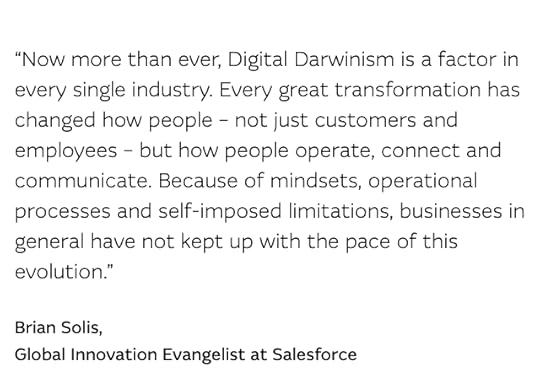
“Now more than ever, Digital Darwinism is a factor in every single industry. Every great transformation has changed how people – not just customers and employees – but how people operate, connect and communicate. Because of mindsets, operational processes and self-imposed limitations, businesses in general have not kept up with the pace of this evolution.”
While the pandemic didn’t create Digital Darwinism, the companies and industries that were pulling digitisation forward – such as the providers of Buy Now, Pay Later (BNPL) services – are now taking advantage of its rapid acceleration and capitalising on the exponential changes in consumer behaviour.
BNPL is one of the key disruptive payment methods that have experienced explosive growth in the past few years, and which – with the increase in non-essential stimulus spending and stockpiling of goods in the first wave of lockdown, – became more appealing to rural, remote and self-isolating consumers during the COVID-19 pandemic. For the lucrative BNPLs, the predicted trajectory for growth is positive, but by acting as a tailwind on the sector this will bring more and more competitors fighting for market share.
Macquarie’s Research Analyst Wei Sim believes that there will be a few years of oversupply, before the supply and demand reaches equilibrium and leads to industry consolidation of BNPL services.
“If we look at other industries with this type of boom-bust cycle, we ultimately see the strong getting stronger and the weak losing out. The players set to survive and thrive are better capitalised and have a vaster two-sided network of merchants and users, which will allow them to entrench themselves as a preferred BNPL payment method. Those without the capital and network reach stand to lose market share as merchants become more selective on their BNPL offerings”, says Sim.
As a backdrop to this competitive landscape, the introduction of new digital infrastructure such as the New Payments Platform (NPP) and Open Banking in Australia is a positive step towards fostering further innovation in the fintech landscape by enabling players to identify gaps in the market and encourage new, consumer-centric innovations.
The biggest loser from the acceleration of digitisation will be the humble physical wallet.
A desire to limit the contraction and spread of COVID-19 saw a global decrease in ATM usage last year and an increase in merchants accepting digital-only payments. This shift away from the use of cash resulted in 2,150 ATMs being decommissioned in Australia alone between June and August 2020.
It also led to consumers experimenting with new shopping and payment methods in most major countries around the world, including Australia, where 57 per cent abandoned their loyalty to one retail brand or shopping method to trial others.
In stark contrast, however, is China, where digital wallets have been the payment method of choice for some time. They’re now used for between 80 and 90 per cent of daily transactions.
With Australia still in the early stages of the adoption of digital wallets, Sim reflects on the challenges that corporates and emerging tech players will need to overcome to encourage further adoption by both the country’s consumers and retailers.
“China is a different market as they largely leap-frogged the physical cards market and went straight from cash to digital payments. The barrier to the widespread adoption of digital wallets for Australia is that we’re accustomed to using cards, but in a post-COVID-19 and increasingly digital world, that is changing.”
While there is still uncertainty for preferred payment methods in Australia, one thing is for certain: digital payments are and will continue to be the beneficiaries of Digital Darwinism.
Mass migration to the cloudAnother key consequence of the decentralisation and dispersing of the workforce and education and healthcare systems over the past year has been the mass migration to cloud-based platforms. This is evidenced by the sector’s 26 per cent annual growth rate (CAGR) and an expected rise in spending on Infrastructure as a Service (IaaS) from $A907 million in 2019 to a $A2 billion by 2024. Such a significant increase in investment over the next 12 months is expected to stem from around seven in ten Australian businesses investing more in data analytics (72 per cent) and cloud-based software (68 per cent), and two-thirds (66 per cent) investing in greater cybersecurity.
How long will data growth continue at this pace? The consensus in the technology world is that the amount of data generated by consumers and enterprises will keep increasing by 20-25 per cent per year,7 boosting demand for cybersecurity, data centres, software providers enabling easy creation and management of network connections and new technologies like 5G, to stay ahead of the competition.
The disruption caused by the pandemic has created an opportunity for legacy analogue-dependant businesses and industries to close the digital gap. The players that commit to long-term investment in digital infrastructure to support this perpetual growth of data will be best placed to bridge the divide, while simultaneously future-proofing products and processes against the next acceleration or disruption.
Survival of the most disruptive
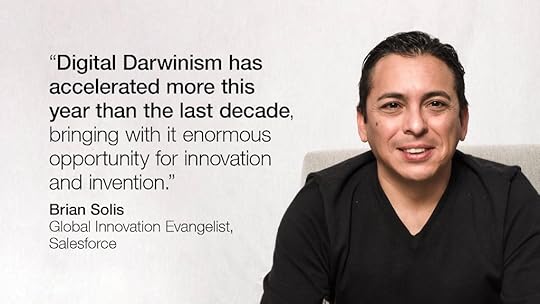
According to Solis, the victims of Digital Darwinism often succumb to two common mistakes.
The first is to confuse iteration with innovation. Innovation does not translate to ‘new’, but rather, ‘net new value’. The truest definition of disruption is if the new thing unlocks new value so that the old process or product becomes obsolete.
The second is the need for businesses to recognise that their consumers are people in a pandemic, and they are changing every day. Therefore, the prerequisites for survival in the era of Digital Darwinism are agility, adaptation to a consumer-led pace and acknowledgment of the impact that the pandemic has had on consumers’ needs and intrinsic beliefs.
Solis left the Macquarie 2021 Australia Conference with a prophetic message to attendees.
“These times are anything but the ‘new normal’. This isn’t a race toward normalcy. It’s a moment of transition and reflection, to build the future we really want. If we return to ‘normal’, we will have missed the lesson and the opportunity in this disruption.”
The post Surviving Digital Darwinism and Thriving Against Disruption: It’s The Survival of the Most Disruptive appeared first on Brian Solis.

May 17, 2021
WTF: What’s the Future Podcast – When it Comes to Safety and Security, Robots and People Become Co-workers with Travis Deyle
In episode 4 of WTF: What’s the Future, my friend Dr. Travis Deyle, CEO and Co-Founder of Cobalt Robotics joins me to explore the real world of robotics entering in the workforce.
What comes to mind when you think of a safety and security robot?
Terminator? RoboCop?
In reality, we should be thinking more along the lines of WALL-E.
That’s what co-founder and CEO of Cobalt Robotics, Travis Deyle, encourages.
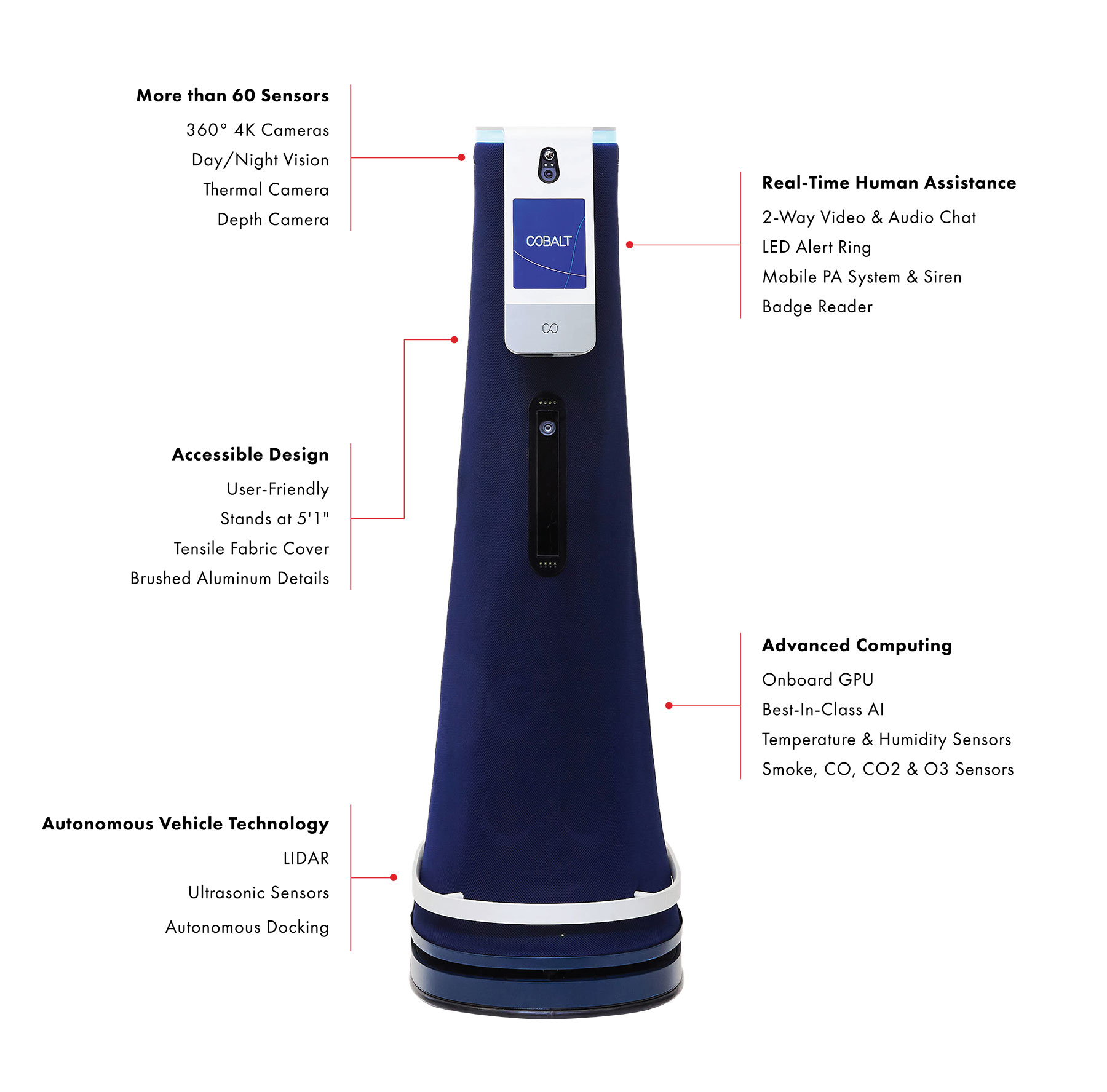
In the latest episode of WTF, Travis shares how he’s working to bridge the educational gap between fiction and physical security bots.
What I didn’t realize was there’s a gaping hole between current security technology and human security officers.
Facilities today have tech installed, such as:
– surveillance cameras
– security badges
– infrared beams
– facial recognition
The problem is, most of the widely adopted security technology is only good for after an incident occurs.
If your facility doesn’t have the resources to keep human security officers on the clock 24/7, there’s a big stretch of time where something could go wrong.
Think beyond break-ins.
– There’s a carbon monoxide leak
– A pipe bursts
– The server room overheats
– An alarm is malfunctioning
– The electricity goes out
It’s these instances where a physical security bot can step in and save the day.
In this episode of WTF, Travis shares how he’s working to bridge the educational gap between fiction and physical security bots.
We also discuss:
The market’s current view of robots in the workforce.
The hurdles society faces with robot adoption.
Practical solutions robots can provide for humans.
Whether or not robots are taking human jobs.

I also want to say thank you to Travis and the team at Cobalt for sponsoring the launch of LifeSCALE at SXSW.
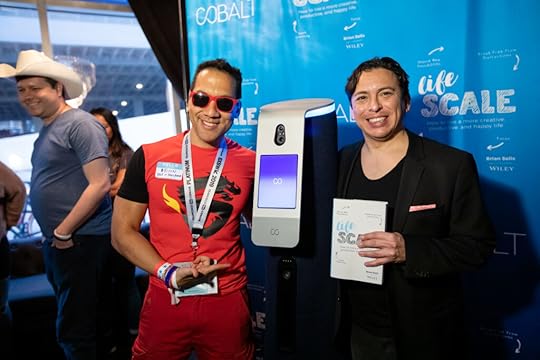
Cobalt’s Dr. Travis Deyle (cowboy hat), Kevin Winston of Digital L.A., and Brian Solis at the launch of LifeSCALE at SXSW in Austin, TX
About Cobalt Robotics
Cobalt’s mission is to make spaces smarter, safer, and more secure. By applying artificial intelligence and robotic automation to handle mundane, important tasks, Cobalt enable customers to focus on what matters most. Their goal is to help companies drive behavioral change to improve the ability to protect people, places, and property.
Cobalt offers improved observation and reporting over certain human applications such as security and clean-up. Cobalt’s robots possess unlimited attention, perfect recall, and real-time human response. By combining robots with consistent, detailed reporting and historical trend analysis, Cobalt improves the security posture of your organization by uncovering gaps, driving behavioral change, and providing data to drive business decisions.
Please, Subscribe to WTF
Thank you to the team at Sweet Fish Media for being my production partner in WTF. Sweet Fish produces podcasts for B2B brands.
About WTFWTF: What’s the Future? is a podcast dedicated to digital Darwinism, the evolution of technology and society. WTF host Brian Solis and his special guests tell the human stories driving innovation and the meaning behind the big changes we all face. Whether you’re looking to learn from today’s most influential leaders, disruptors, and tech luminaries or discover the impact that today’s and tomorrow’s tech trends are having on markets, society and us as individuals, this is the show to help you stay ahead of it all. Each episode features topics that explore the human challenges facing digital transformation, innovation and disruption, corporate culture, personal advancement and more.
The post WTF: What’s the Future Podcast – When it Comes to Safety and Security, Robots and People Become Co-workers with Travis Deyle appeared first on Brian Solis.


