
Sandra Markle's Blog, page 26
May 15, 2013
ANOTHER WINNER!
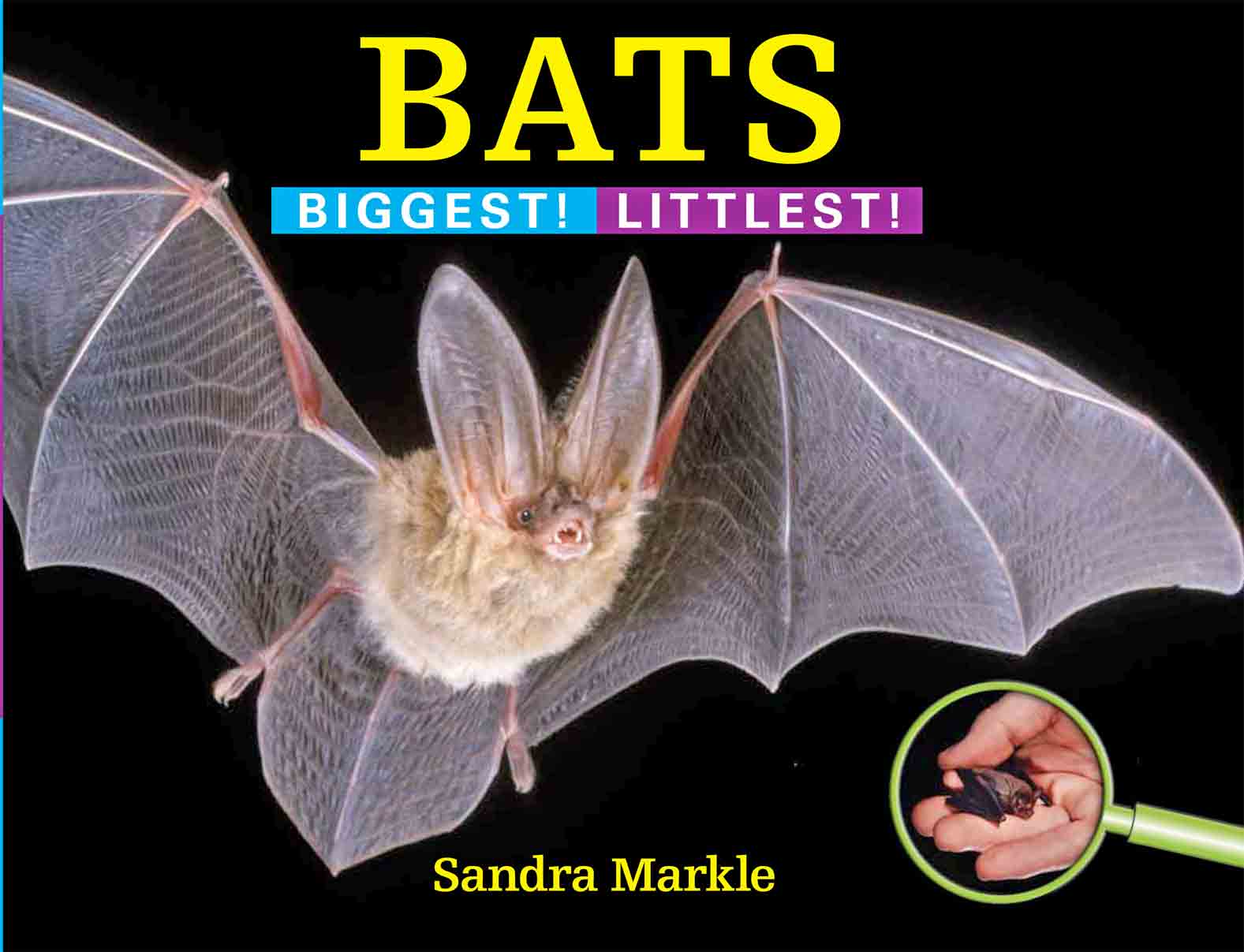
I'm delighted to share that the winner of the autographed copy of my BIGGEST! LITTLEST! Series poster is Kristi Feasel, teacher at Danville North Elementary School in Danville, IN.
CONGRATULATIONS, KRISTI!


May 12, 2013
CLASSY TEETH
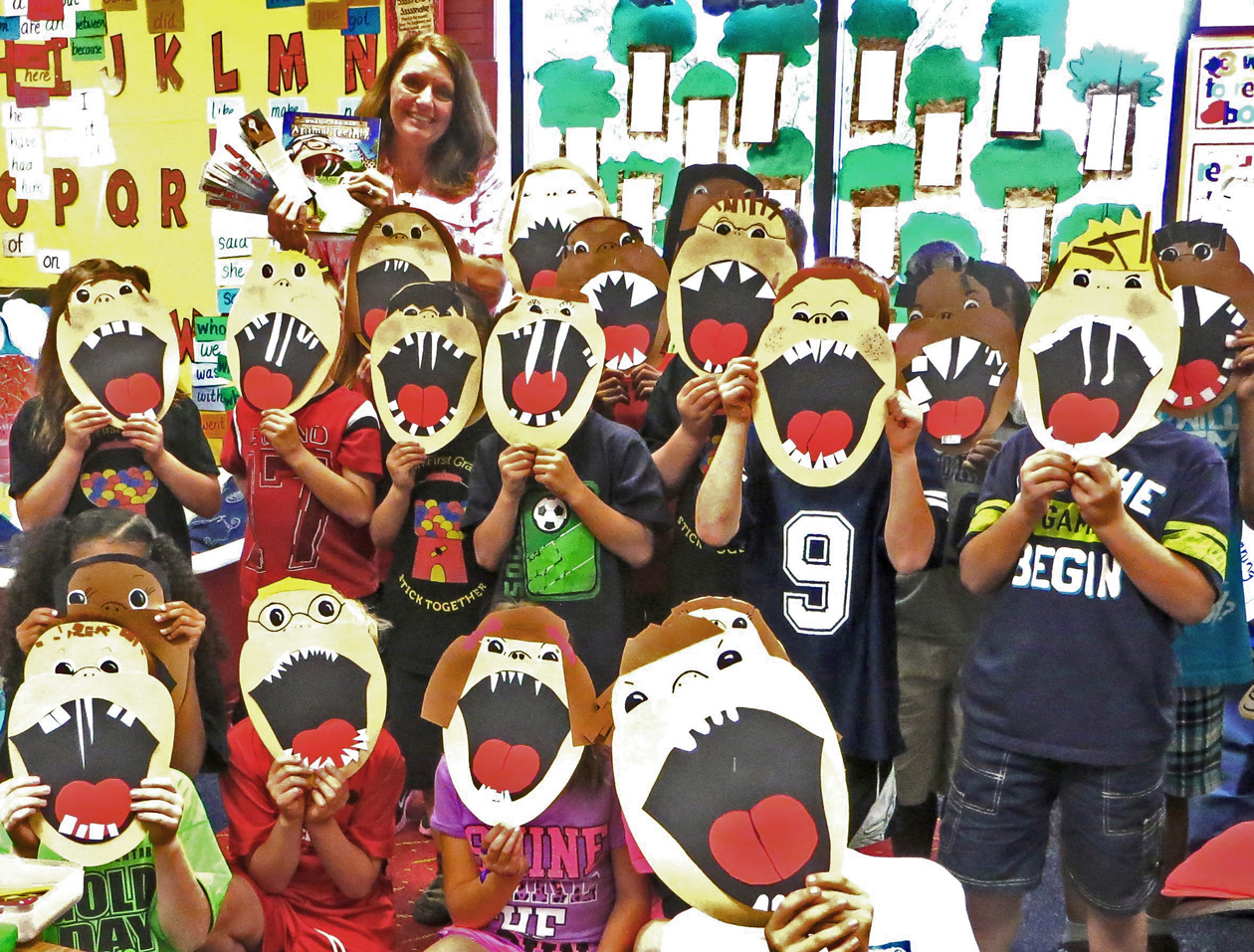
I just had to share this wonderful photo. It's teacher Nancy VandenBerge's first grade class at Dr. E.T. Boon Elementary School in Allen, TX. She was the winner of a recent contest I ran on my blog. Her prize was an autographed copy of WHAT IF YOU HAD ANIMAL TEETH? (plus some bookmarks). And, her thank you note said her students love the book. I love their creativity--and hers--in sharing what kind of teeth they imagine choosing.
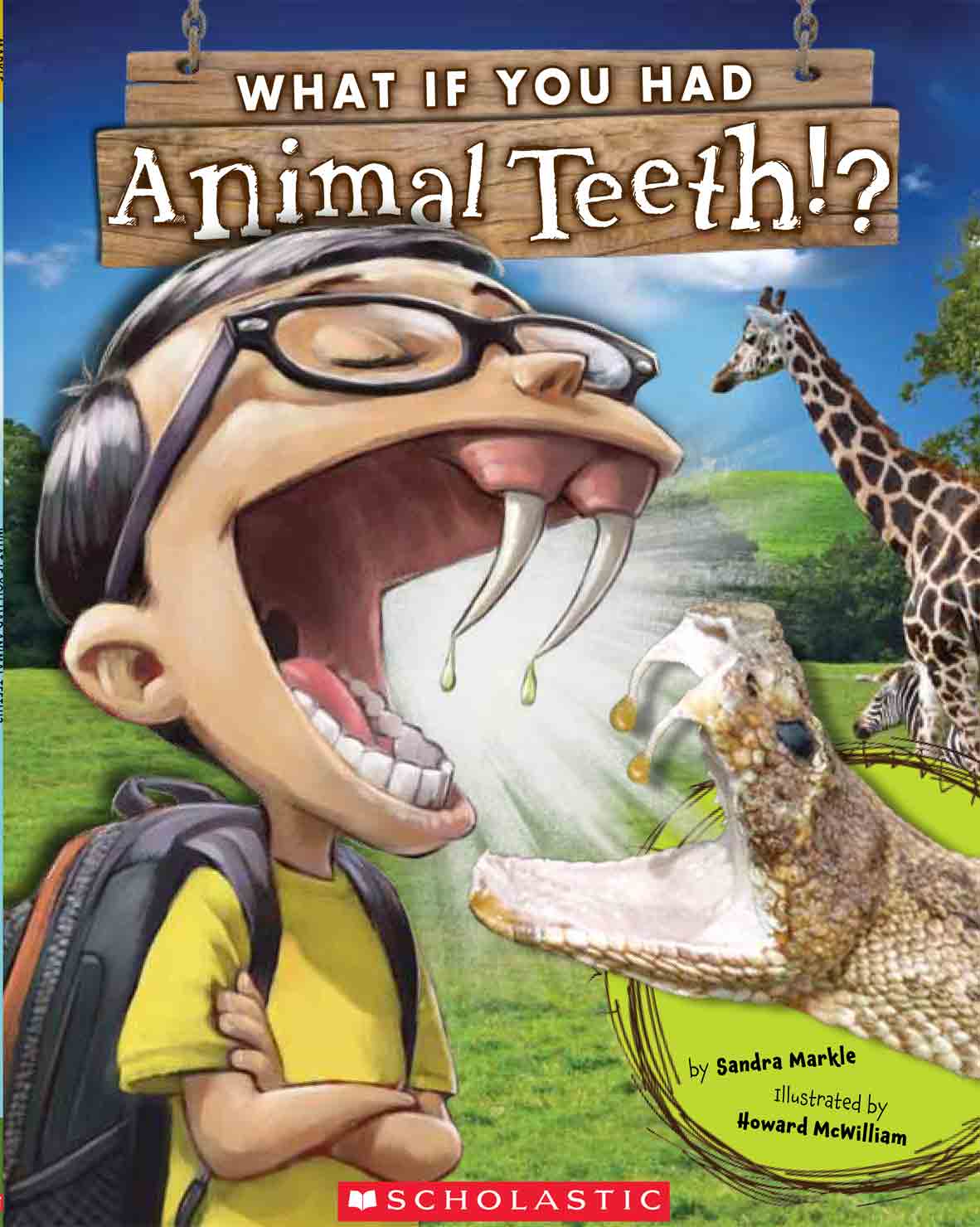
WHAT IF YOU HAD ANIMAL TEETH seems to be attracting an enthusiastic following!
April 29, 2013
AND THE WINNER IS!!!!
I'm delighted to share that the winner of my book WHAT IF YOU HAD ANIMAL TEETH? (Scholastic, 2013) is Nancy VandenBerge. Nancy, please let me know where I should mail your autographed copy of this book.
 Please share photos of your kids showing off which animal teeth they'd love to imagine having.
And now blog followers it's time to announce a new contest. Comment on this post to go in the draw for an action-packed 15 x20 inch poster for my BIGGEST! LITTLEST! Series.
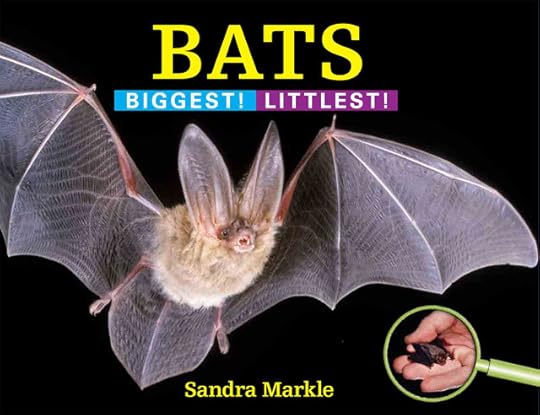
The front of the poster shows a full-color picture of the cover of my newest book in this series BATS: BIGGEST! LITTLEST! The back shares activities for each of the books in this series:
INSECTS: BIGGEST! LITTLEST!
SHARKS: BIGGEST! LITTLEST!
SNAKES: BIGGEST! LITTLEST!
SPIDERS: BIGGEST! LITTLEST!
BATS: BIGGEST! LITTLEST!
Each activity with tie-ins to the Common Core State Standards.
Don't wait to enter. The contest starts NOW! The winner will be selected May 15th!
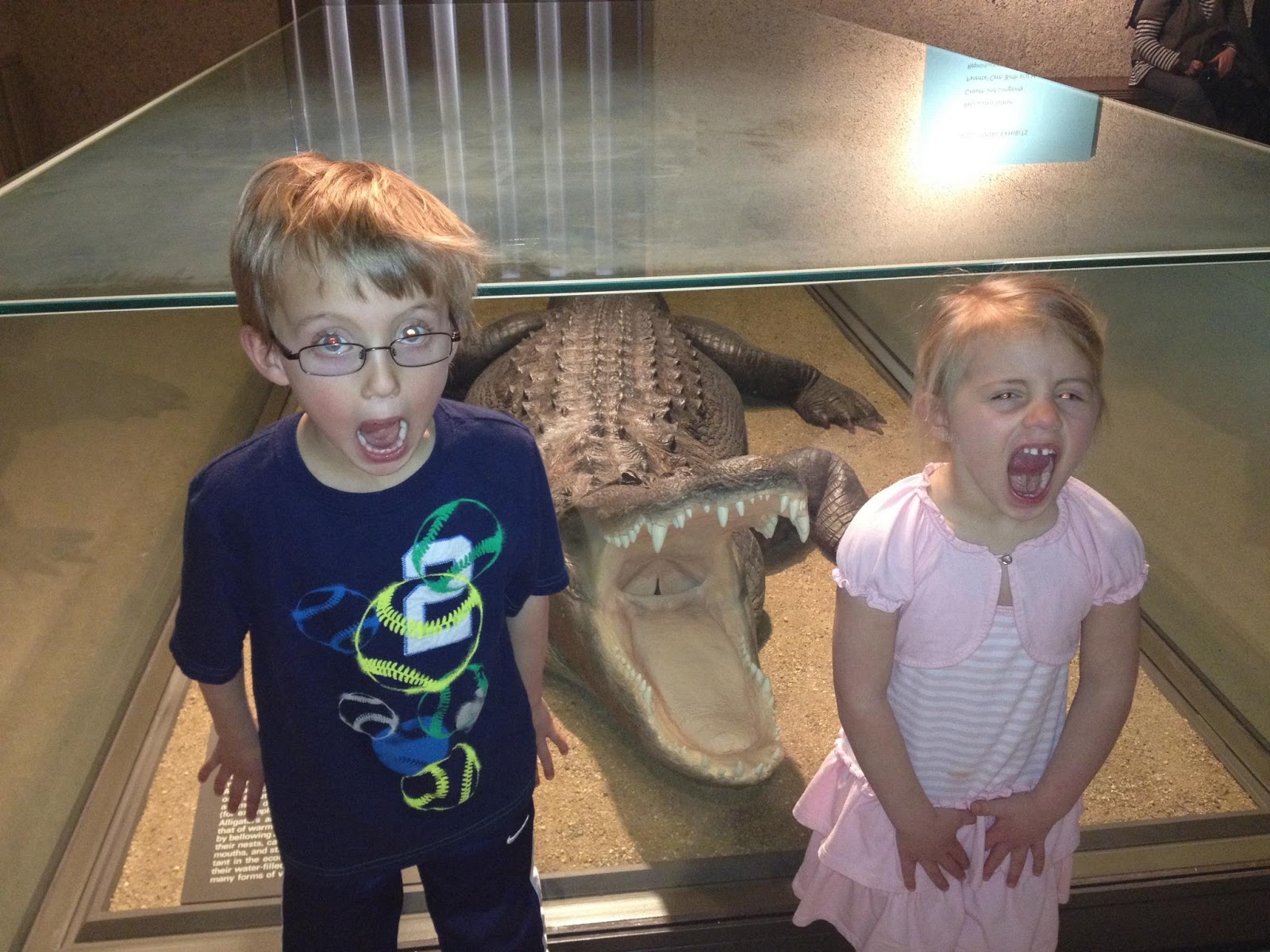 Please share photos of your kids showing off which animal teeth they'd love to imagine having.
And now blog followers it's time to announce a new contest. Comment on this post to go in the draw for an action-packed 15 x20 inch poster for my BIGGEST! LITTLEST! Series.
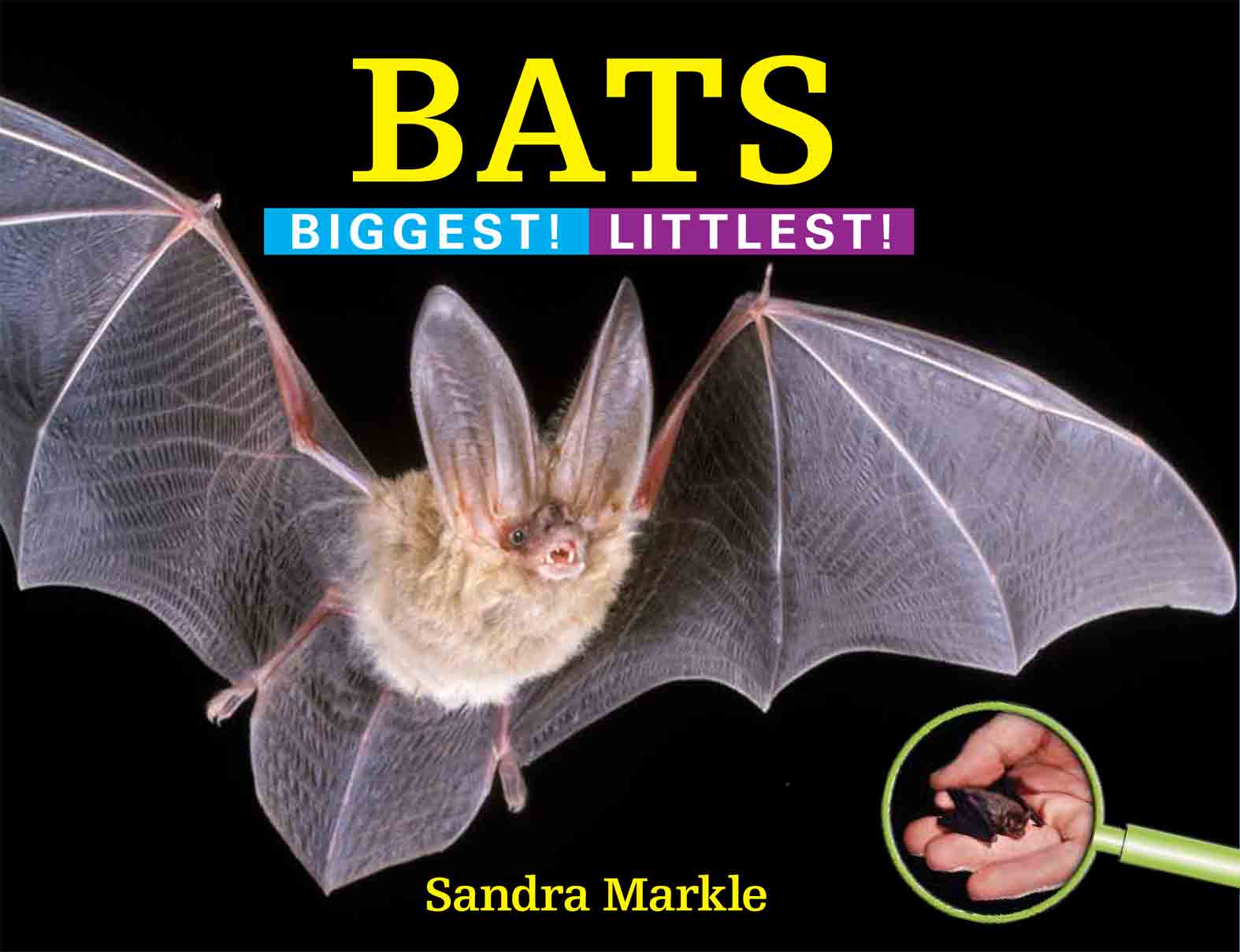
The front of the poster shows a full-color picture of the cover of my newest book in this series BATS: BIGGEST! LITTLEST! The back shares activities for each of the books in this series:
INSECTS: BIGGEST! LITTLEST!
SHARKS: BIGGEST! LITTLEST!
SNAKES: BIGGEST! LITTLEST!
SPIDERS: BIGGEST! LITTLEST!
BATS: BIGGEST! LITTLEST!
Each activity with tie-ins to the Common Core State Standards.
Don't wait to enter. The contest starts NOW! The winner will be selected May 15th!
March 27, 2013
YOU COULD BE A WINNER!!!
Read on to find out how you can win!
On April 28, 2013, I'll be giving away an autographed copy of one of my newest books, WHAT IF YOU HAD ANIMAL TEETH? (Scholastic, 2013). All you have to do to be in the draw to win is become a member of my blog. On April 29th, I'll announce the winner and he or she can email to let me know where to send this autographed book.
Of course, all current members are already entered but I hope you'll help spread the word.
There's more fun ahead and the more the merrier.
[Note: Contest only open to entries from the U.S. and Canada]
March 15, 2013
CONGRATULATIONS to the 2013 Markle's Book Explorers!!!!!
It was an exciting moment as the names of all the schools that sent entries went into my favorite sun hat to be well-mixed and the winners drawn out, one-by-one. I'm delighted to list the following schools as the nine 2013 Markle's Book Explorers. As you'll see, it's, delightfully, schools from lots of different parts of the United States. And this year, because I've recently moved back to the U.S. from New Zealand, I've added a tenth school--of my local schools--to the group.
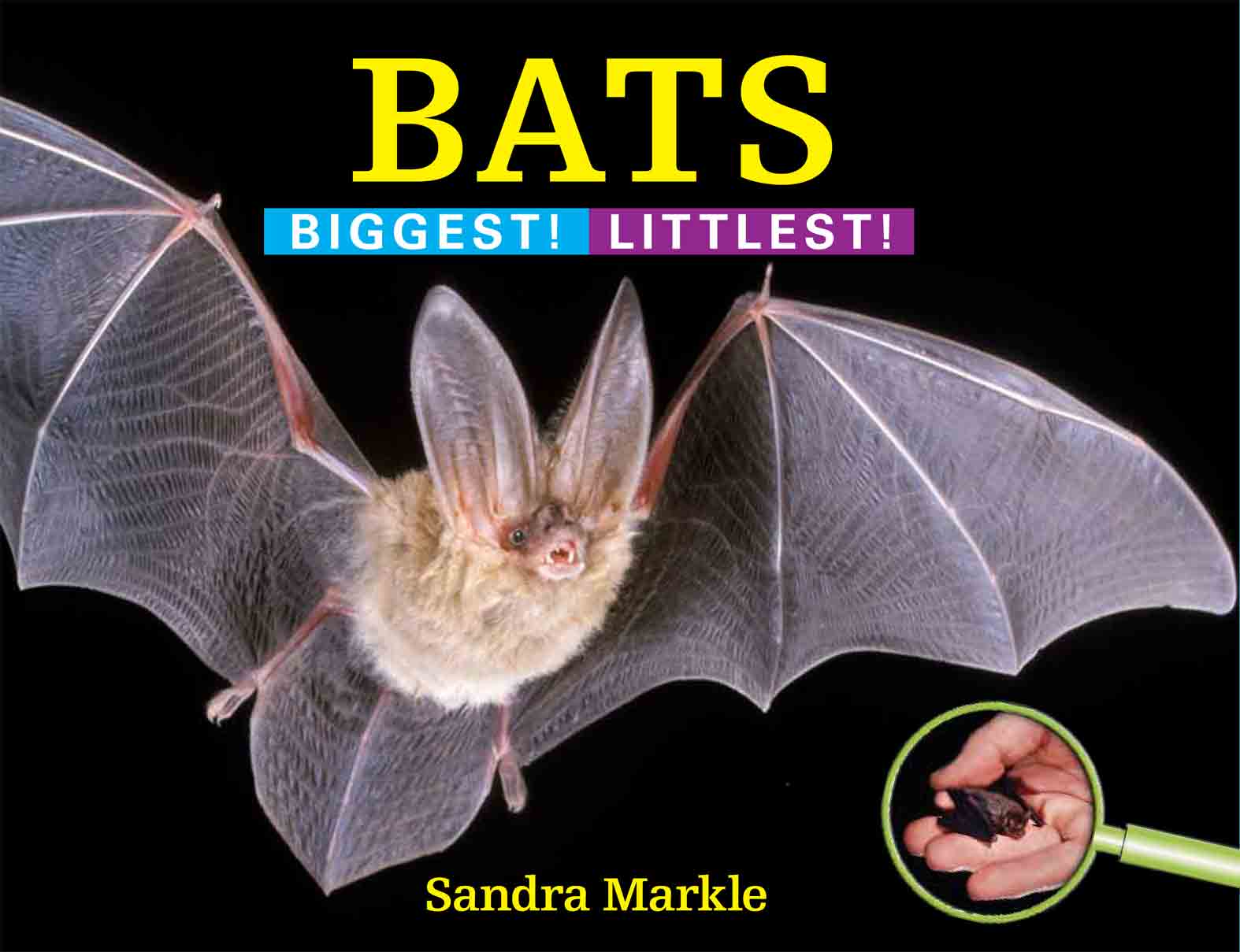
I'm definitely looking forward to connecting and sharing with each of the 2013 Markle's Book Explorers Schools. I'll shortly be sending an autographed copy of my newest book BATS: BIGGEST! LITTLEST! (Boyds Mills Press, 2013) to congratulate the winners.
Arthur Jacobsen Elementary School, Auburn, Washington Burns Elementary School, Kings Mills, OhioGier Elementary School, Hillsdale, MichiganJohn Muir Elementary School, Santa Monica, CaliforniaMcCord Elementary School, Ponca City, OklahomaMinooka Intermediate School, Minooka, IllinoisNaples Elementary School, Naples, New YorkNorth Georgetown Elementary School, Georgetown, DelawareSamoset Elementary School, Bradenton, FloridaShirley Hills Elementary School, Warner Robins, Georgia
February 19, 2013
SIGN UP TO WIN!!!
The deadline for signing up is fast approaching. So come on. Sign up your school for a chance to become one Markle's Book Explorers Schools. Selected schools get free books, the chance for students to email me, and lots more. Nothing is required from the teachers. SMILE. I know you're already overworked. This is simply a chance for free books, bookmarks, and activities that help you connect my books to the Common Core State Standards--activities you can use or not as you see fit. I'm sure it seems hard to believe--FREE and NOTHING REQUIRED. It's my way to connect to my readers. What can I say, I love writing for kids.
Sign your school up by using the comment to share your name, the school's name and address, and your email contact. I'll be drawing the new 9 winning schools in the very near future.
Sign your school up by using the comment to share your name, the school's name and address, and your email contact. I'll be drawing the new 9 winning schools in the very near future.
February 1, 2013
Share The Long, Long Journey
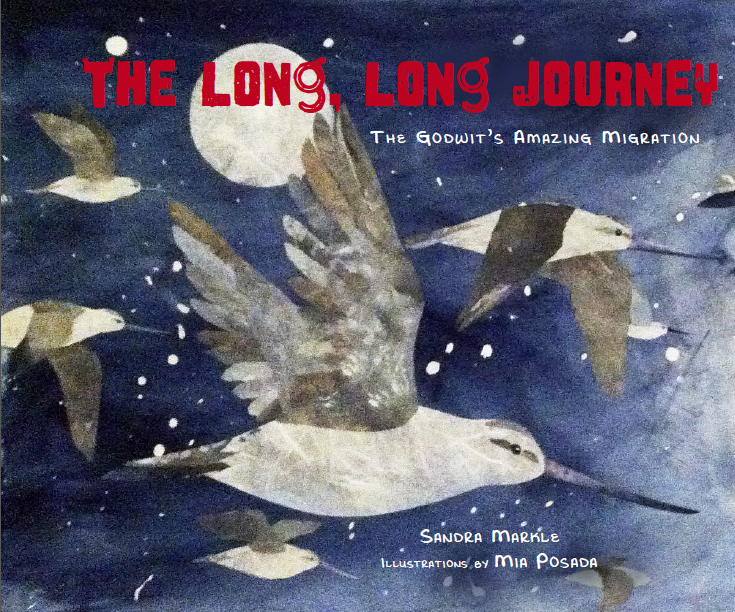
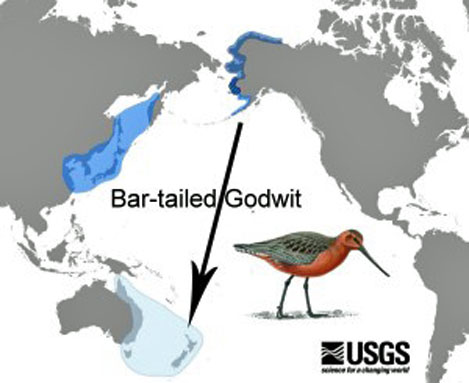
I'm delighted to share the story of the bar-tailed godwits. Every year these birds make a marathon migration from their summer home in Alaska to their winter home in New Zealand. This bird's story is very special to me. For thirteen years, I lived near Christchurch, New Zealand. Along with other New Zealanders, I eagerly awaited the godwits arrival each year in September.
 Here I am the day the godwits arrived this year.
Check out the headline--"Godwits Are Back!"
That always signified winter was over and spring had arrived. So, when scientists tracking the birds reported they were nearing land, bird watchers rushed to the shores. Then as soon as the first group of godwits were spotted, the news was broadcast on the radio and television. The big cathedral in Christchurch also rang its bells. Everywhere banners were raised and crowds rushed to the estuaries to cheer the arriving birds.
Now open the book and enjoy the story. Then have fun digging deeper with these discovery activities.
Check out the aerial view of Cape Avinof, Alaska (the godwits' starting place) by visiting this website. Next, do a Google search to find out how many miles it is between Alaska and New Zealand, the godwits' destination. Now, think about how you would travel from Kipnuk Airport, the closet airport to Cape Avinof, Alaska to Christchurch, New Zealand, one of godwits destinations in New Zealand. Check airline websites to answer the following questions:
Can you fly non-stop, the way the godwits do? If not, how many stops do you have to make along the way?
How much will it cost you to fly between Alaska and New Zealand?
The trip isn't free for the godwits, either. However, what it costs the birds isn't money. Read page 15 of The Long, Long Journey to find out what it costs these birds to make such a long flight.
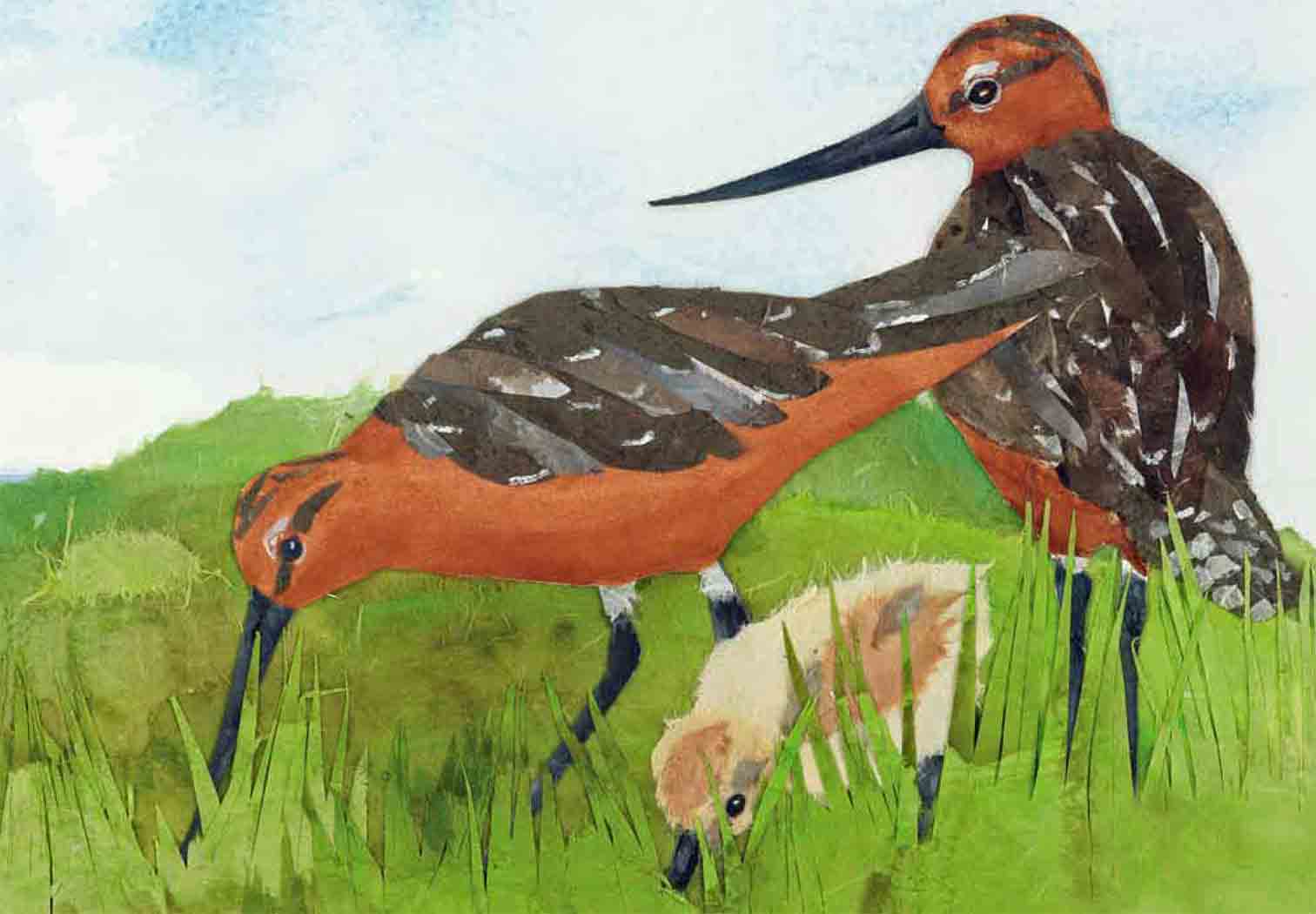 So you learned what it costs the godwits is energy--what they get from eating and storing body fat. Adult godwits have to double their weight between June and September. Chicks have to both grow up and put on weight.
Just for fun, figure out what you would weigh if you doubled your weight to make this long trip.
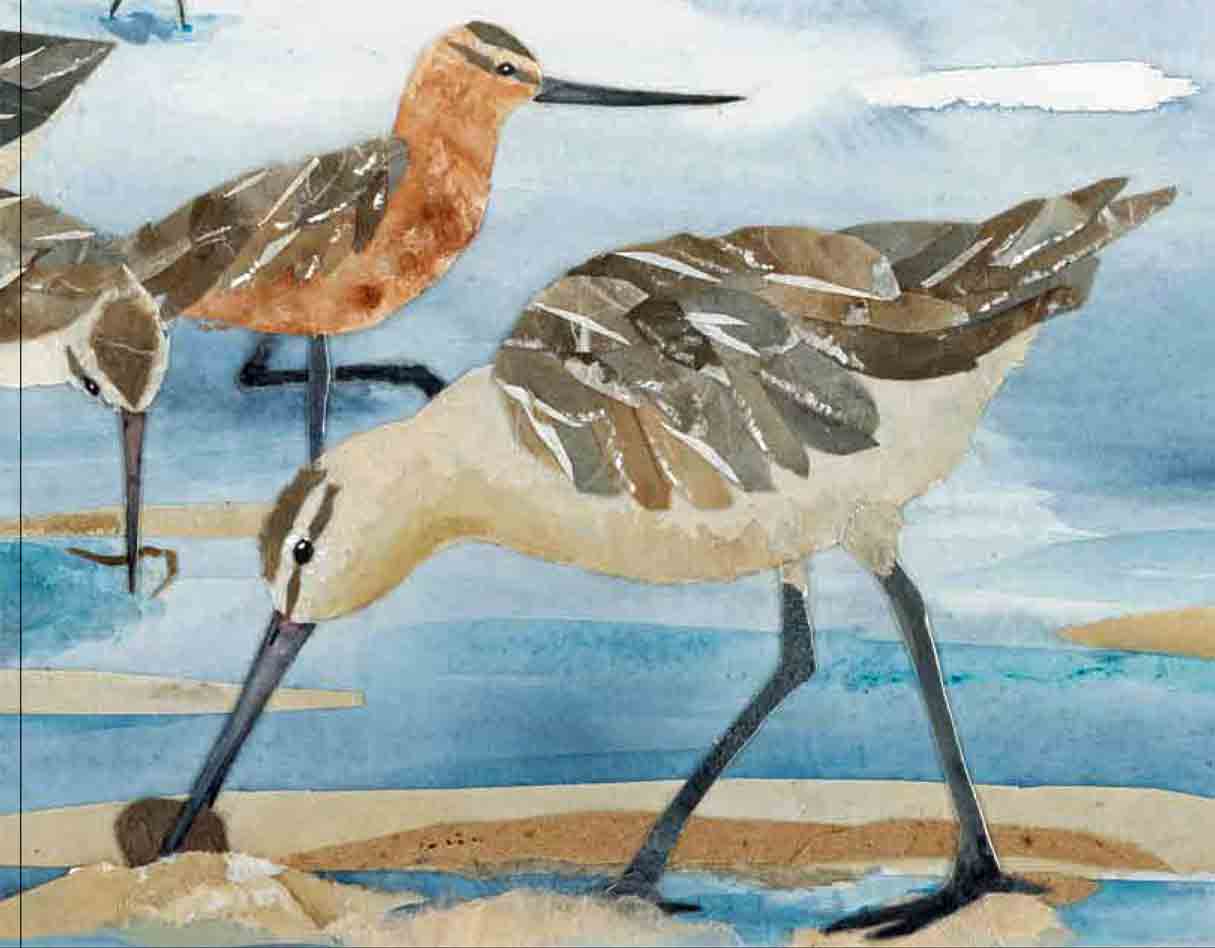 Look at the godwit's long legs.
Such long legs help it wade in the mud to find food.Now, try this activity to find out how the godwit uses its long beak to find and pick up food.
First, cut the top off an empty gallon-sized milk jug. Fill it nearly full of wet sand. Next, have an adult partner bury five pennies in the sand and smooth the top flat to hide the coins. Then use chopsticks or two pencils held like chopsticks to probe the sand for the pennies. Once you find them, use the chopsticks to pluck the pennies out of the sand.
Take a close look at this picture of godwits in flight. Look at how they hold their wings and head.
How do you think holding their head and wings this way helps them fly?
Check out what the godwits are doing with their long legs while they fly. Why do you think the birds hold their legs in this position rather than just letting them hang down below their body.
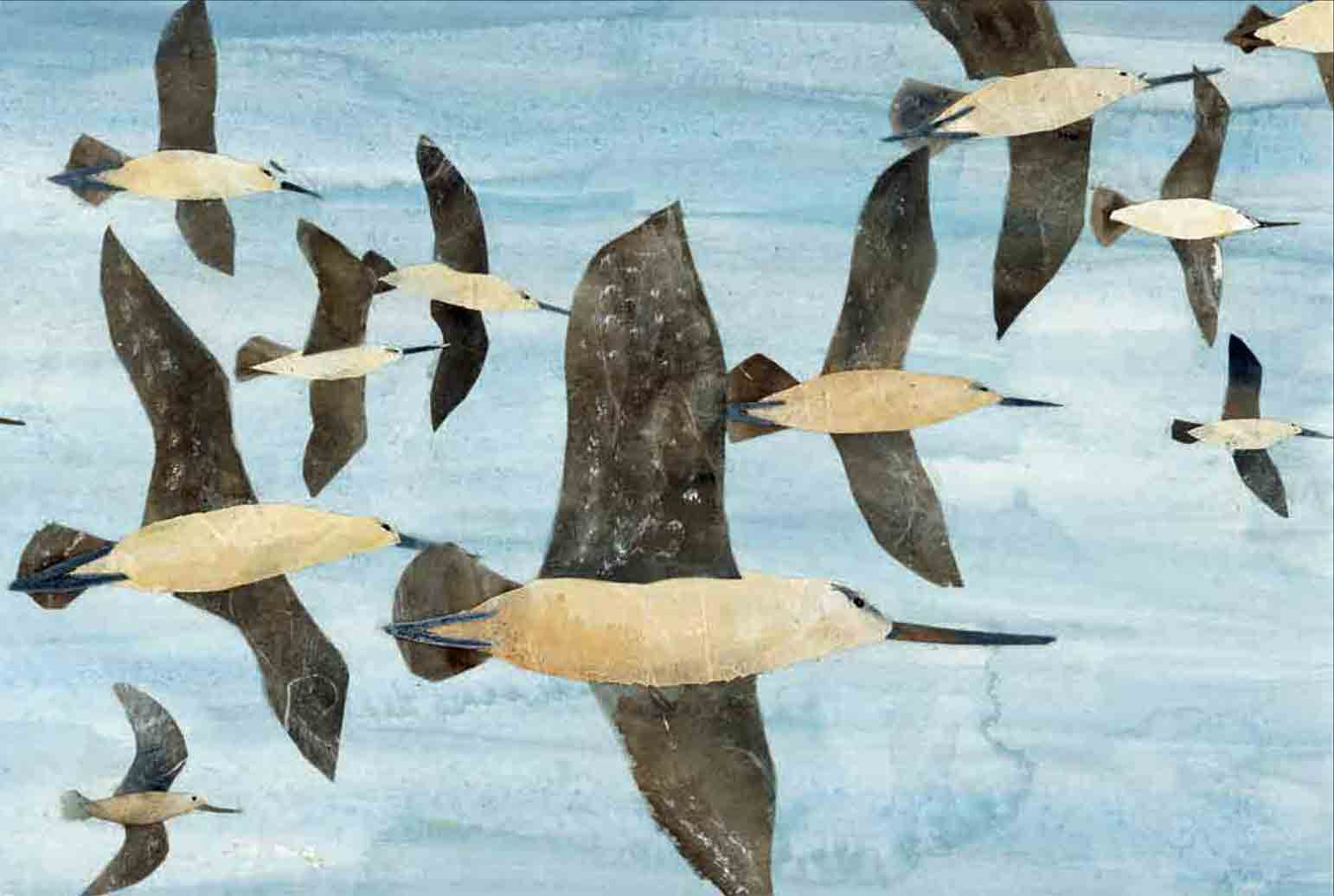
Now, spend some time watching your local birds take off and fly. Draw a picture of one of these birds in flight. Be sure to show how they stretch out their wings, how they hold their head, and what they do with their legs.
Just for fun, play this game to find out how godwits stay together in a flock even while flying through thick clouds and heavy rain. Ask six of your friends to stand in a circle around you. Close your eyes and ask them to make noises one at a time. Try pointing to each person as they sound off. Have your friends score a point for you each time you point at the person making the sound. Now you know that being noisy helps birds keep track of each other and fly together.
The godwits take advantage of the fact that earth's northern and southern hemisphere's have summer at opposite times of the year. They always live where it's comfortably summer and there's plenty to eat year round. To do that, though, means the godwits have to make a Long, Long Journey.
January 7, 2013
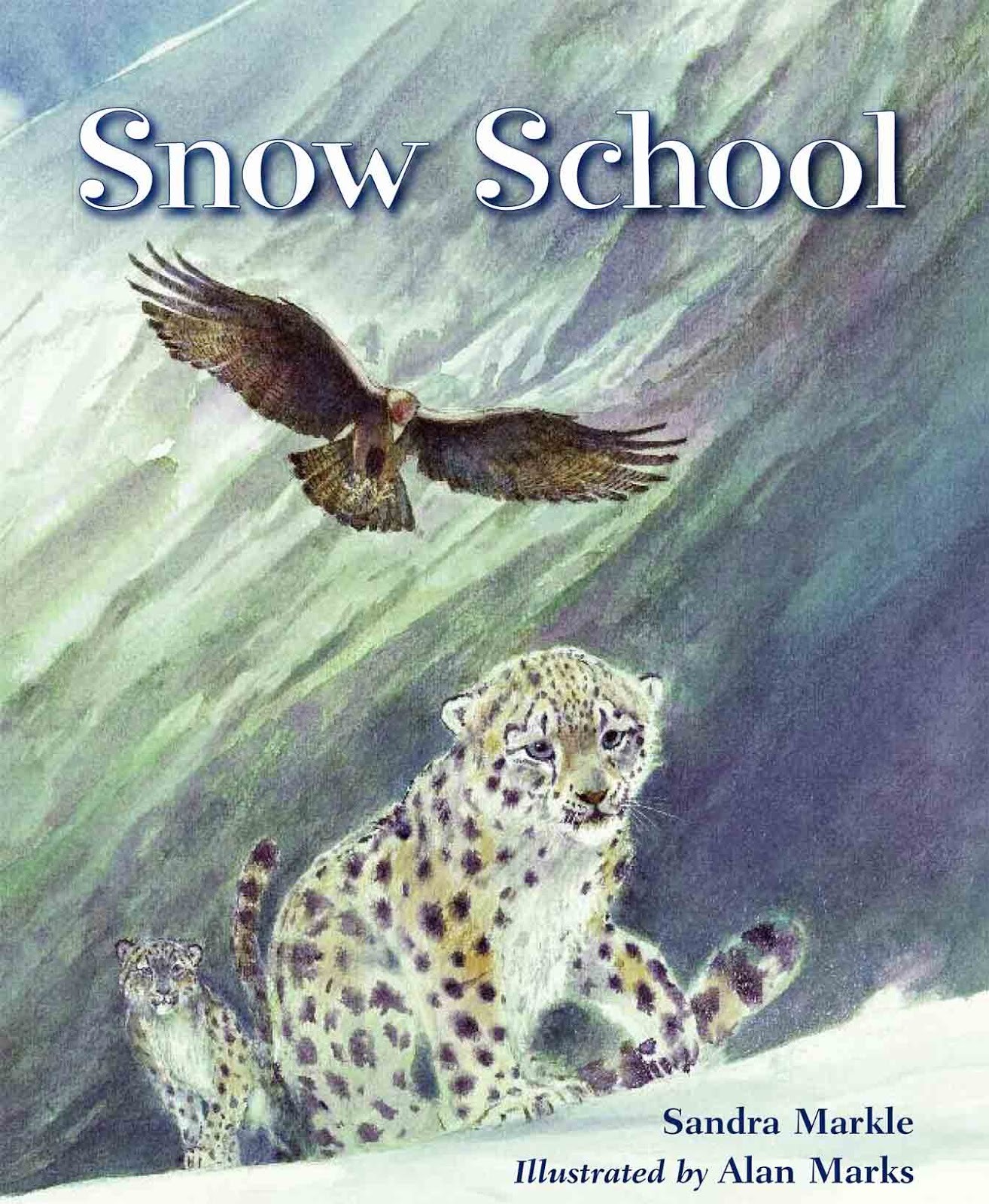
ARE YOU READY FOR SNOW SCHOOL?

My new book Snow School was inspired by my love of cats, especially wild cats. There are none more fascinating than snow leopards. These wild cats are so rare there are believed to be as few as 3,500 left in the entire world.
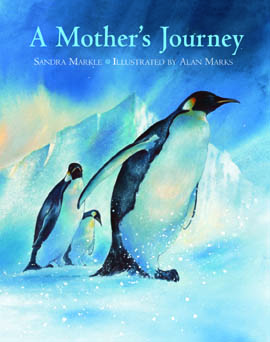
As always, when I want to learn more about a wild animal I go exploring. That’s how I came to spend a winter in Antarctica, the experience that inspired me to write A Mother’s Journey , a story about what female emperor penguins do while the males hatch out the eggs.
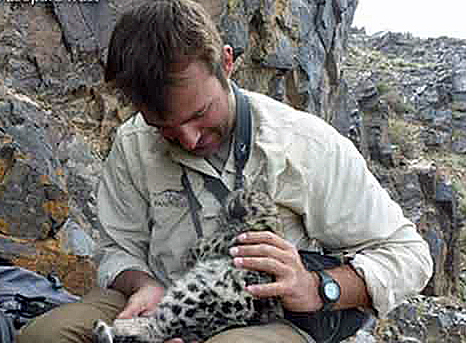 Dr. Tom McCarthy with snow leopard cub
(courtesy of Panthera Snow Leopard Trust)Sometimes, though, I just can’t get to the places I need to go to explore firsthand. Then I track down experts who have been able to go to those places and studied the wild animals I want to write about. That was the case with Snow School . I had the pleasure of interviewing Dr. Tom McCarthy who has spent many years climbing the high, rugged mountains of Pakistan in order to learn about the life and behavior of snow leopards.
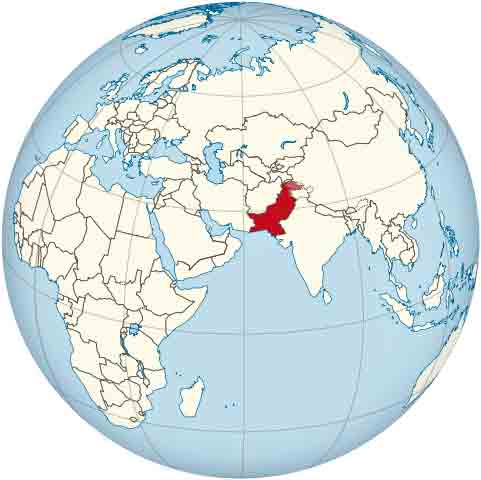
To see where snow leopards live and the story of Snow School takes place, go on-line to find out about Pakistan (in red on the globe). Also search for information about the Hindu Kush Mountains, the setting for the story. This habitat is one of the harshest on earth and requires the cats to be able to chase fast prey downhill over very rocky terrain.
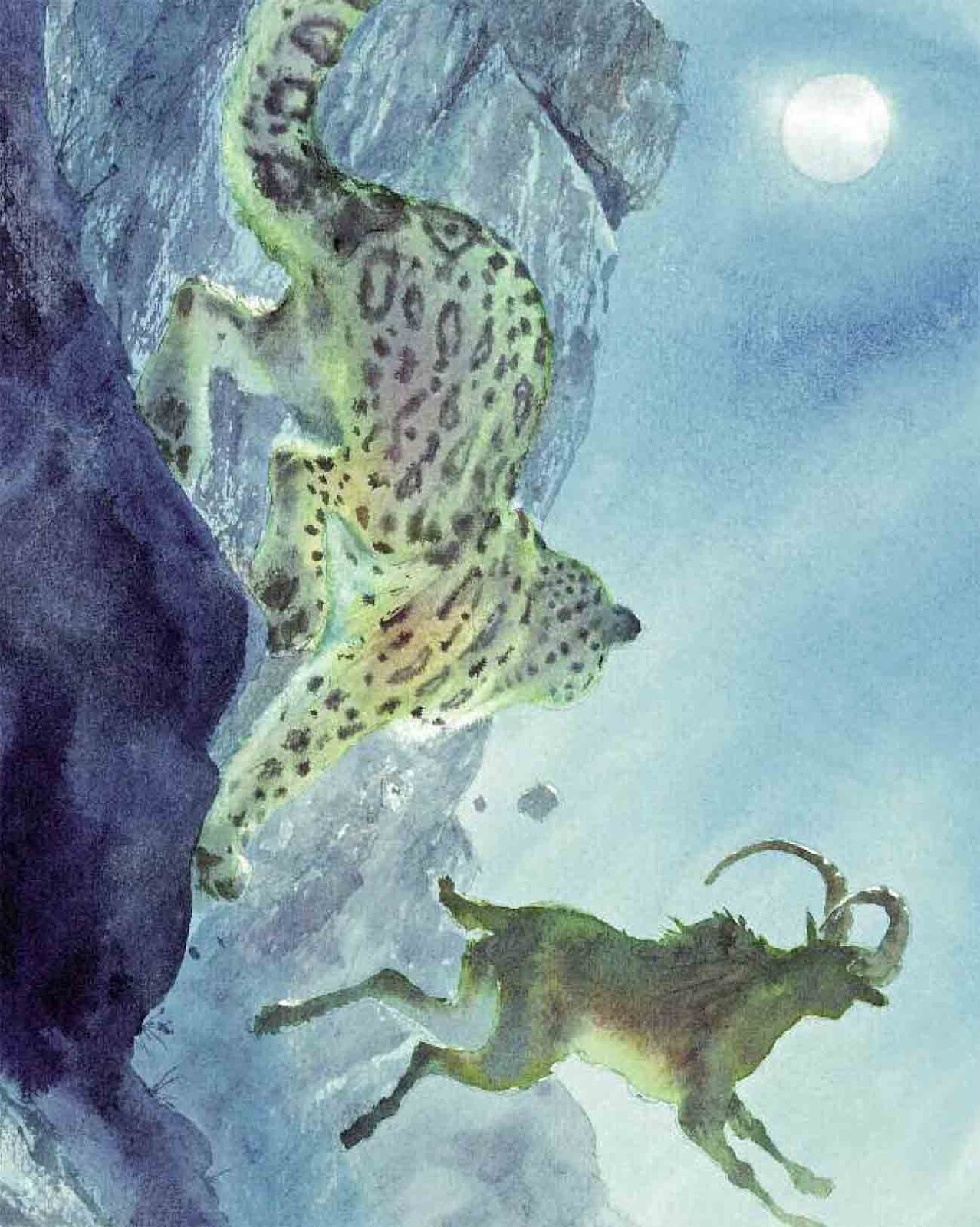
Even during his many years studying snow leopards Dr. McCarthy shared that he only had a chance to watch a few downhill chases as snow leopards caught prey. He said, “Once, I was lucky enough to see a mother have two cubs with her while she hunted.”
Dr. McCarthy guessed these cubs were in training. Snow leopard cubs spend two years with their mothers learning to survive on their own. That inspired me to wonder what lessons snow leopard cubs need to learn in order to be successful in the extreme conditions of their home habitat.
For one thing, as soon as they’re big enough, snow leopard cubs travel with their mother. That way they get a close look at the features of their environment. And they learn the shortest, safest routes to take.

To get a feel for what the snow leopard cubs are learning, go to your local park or playground with a parent or adult partner. Take along a pencil and a notepad. Draw a map of the area. Use symbols to mark any key landmarks, like fountains or statues, big trees, or benches. Next, study the map with your partner and plan the fastest, safest path to use to travel across the mapped area. Then use a watch to time how long it takes you to run across the area following your chosen path. Afterwards, revisit the map and decide if another way might be easier or safer. Time your new route.
The snow leopard’s habitat is really a high desert with very steep terrain. When these cats hunt, they have to chase down prey animals, like ibex, capable of running down steep, rocky slopes without falling. And they have to pounce at just the right moment to stop their prey without going over a cliff.
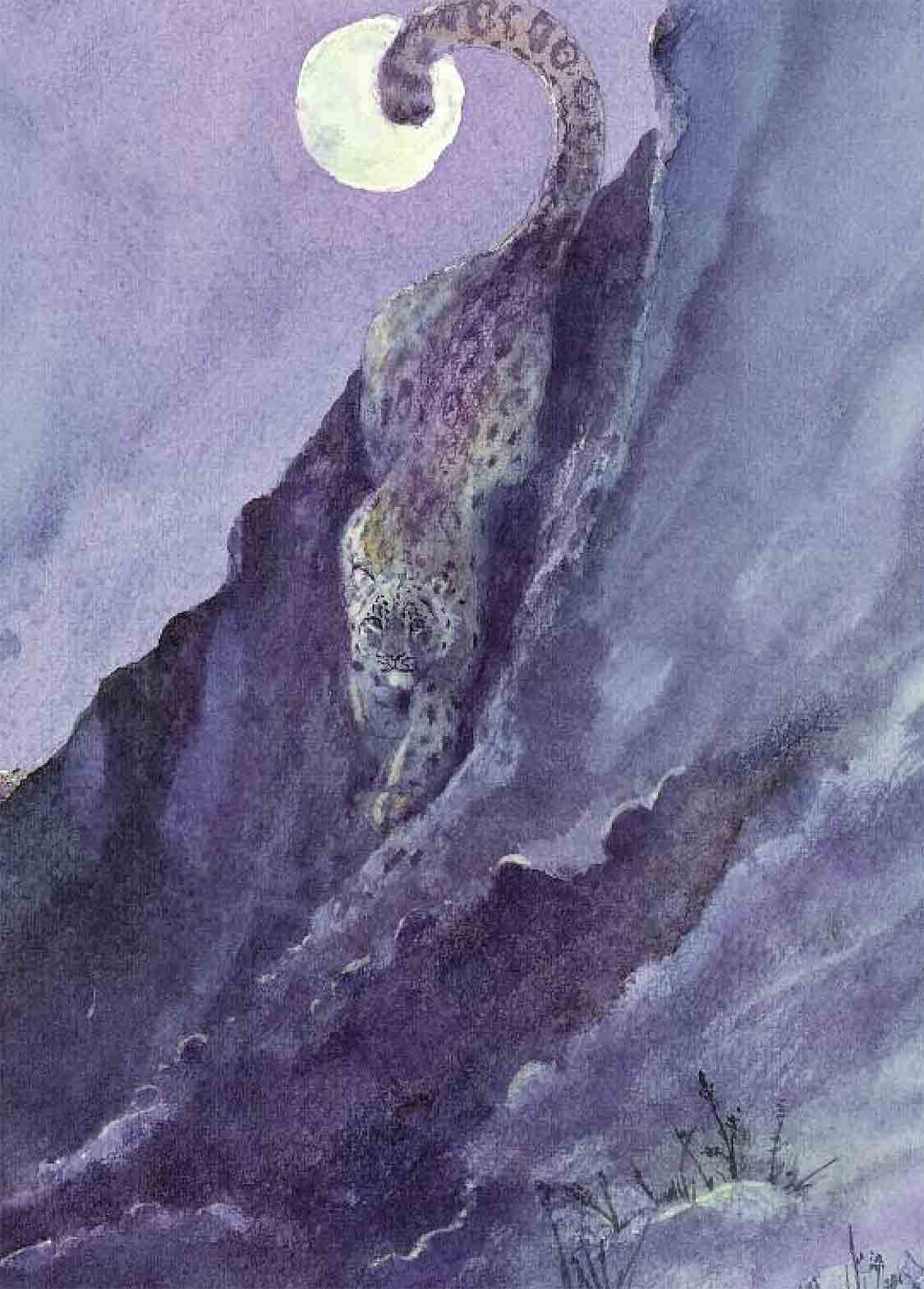
Snow leopards do have some natural built-in advantages. One is a very long tail. Dr. McCarthy reports that a snow leopard’s tail is all muscle and that it’s heavy. He said, “It must even be heavy for the snow leopard. In snow, I’d see a mark where a cat would start to drag its tail after every two or three steps. So holding up its long tail must be tiring.”
Having such a long tail is worth the effort, though, when the snow leopard starts to run. It swings its tail back and forth and that helps it stay balance while twisting and turning. To get a feel for how its tail helps a snow leopard stay balanced, try this. Stand on one foot with your hands at your sides. Then repeat standing on one foot but this time stretch out your arms and move them forward and backward.
Snow leopards also have big feet that act like snowshoes, helping them walk on top of fluffy snow. In fact, Dr. McCarthy reported a snow leopard’s feet leave very round footprints because their feet are about as wide as they are long (about four to five inches in both directions.) Measure the length and width of one of your feet. How much longer is your foot that it is wide? And, just for fun, figure out how much longer your foot is than a snow leopard’s.
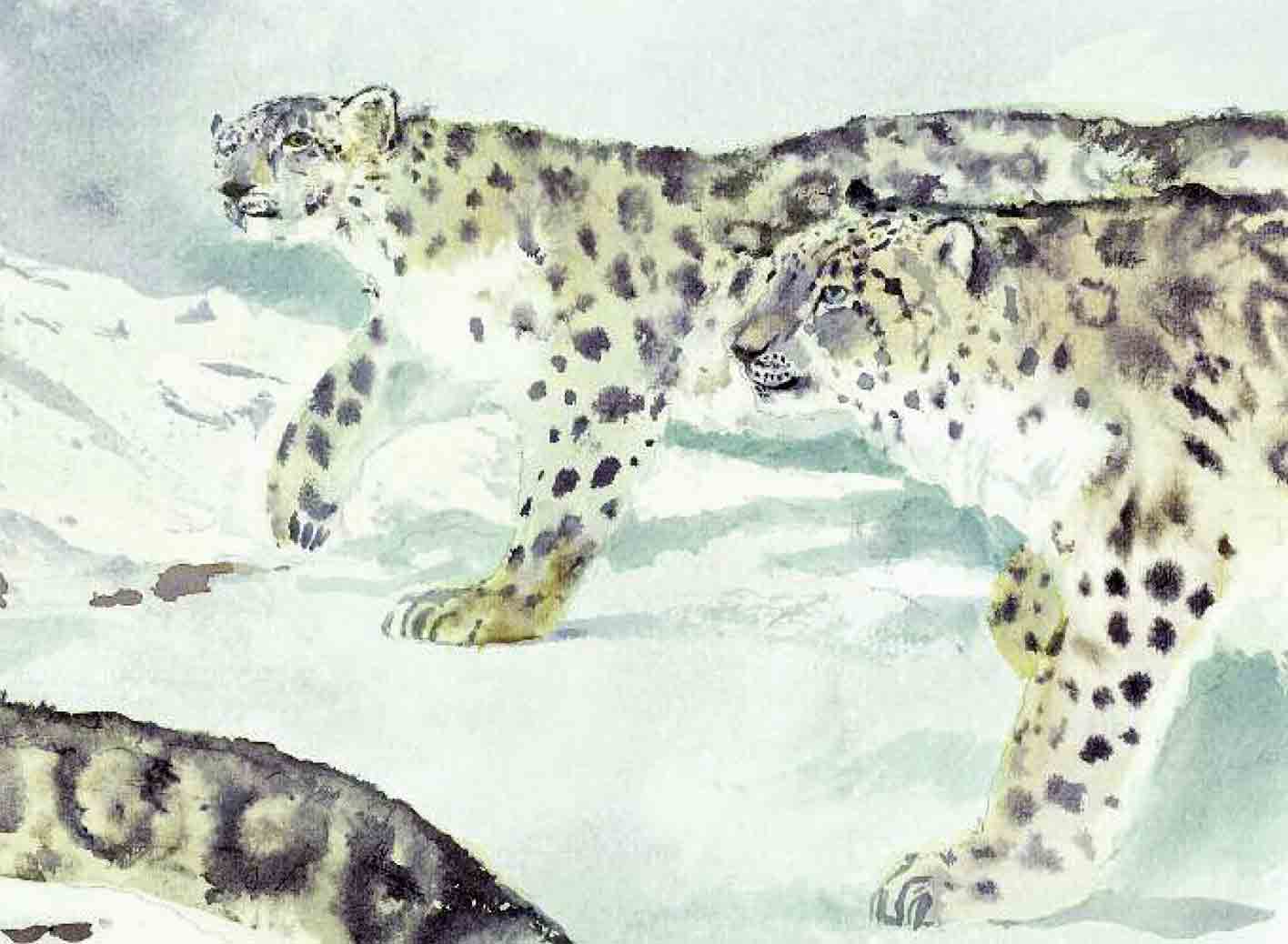
These cats also have a lot of fur around their toes and the pads of their feet to shield them from the ice and snow. Like housecats, snow leopards have retractable claws. They put these out to help them climb and to stop themselves from skidding.
Dr. McCarthy reported that once a snow leopard catches prey it needs a safe place to eat—safer than on a steep mountainside. Dr. McCarthy said, “I’ve watched a snow leopard drag a big goat that weighs as much, if not slightly more, than the cat does. And it drags this prey uphill.”
Imagine pulling something that weighs as much as you do. Now, imagine doing it the way a snow leopard does. This cat bites to grab its prey. Then it drags this weight between its legs. This is another behavior snow leopard cubs learn by being copycats, doing what their mother does.

From an early age, the cubs learn the smell of what’s good to hunt because their mother brings home prey. See if you’ve learned to identify your food by its scent. Have an adult partner blindfold you. Then have them hold each of the following five food items, one at a time, under your nose for you to sniff. Test your scent IQ on the following: peanut butter, orange juice, mustard, cheese, and ketchup.
You might be surprised to learn that snow leopards usually only get a chance to catch big prey about once a week. So when it does, the cat is likely to stay by its prey and eat as much as 25 pounds of meat a day for two to three days. How much is that. Weigh a plate. Then put the food you’re going to eat for dinner on that plate and weigh it again. Subtract the weight of the plate to see how much your meal weighs. How many of those meals would you have to eat to equal what a snow leopard eats when food is available?
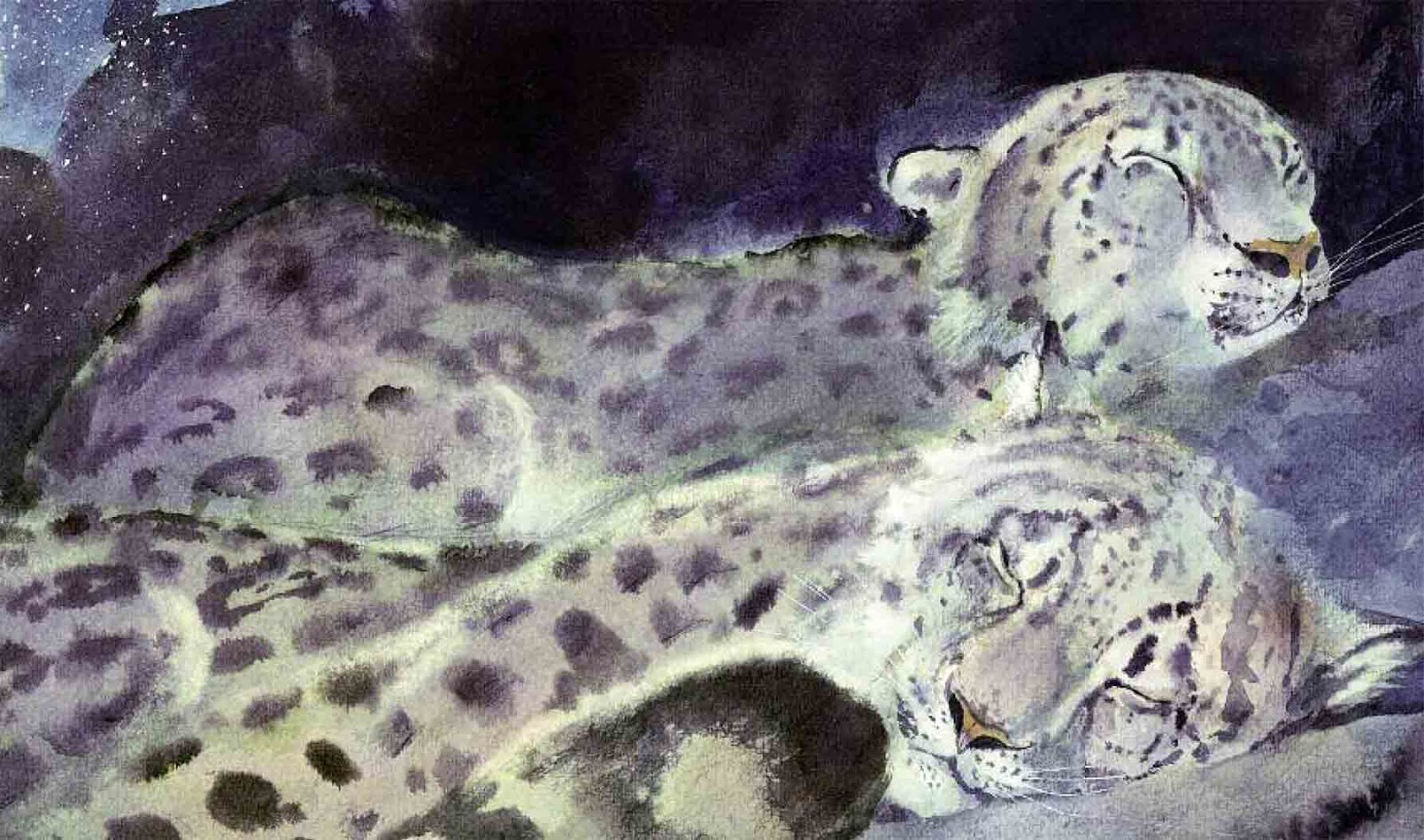
Can you guess what snow leopards do after such big meals? You’re right! They sleep. Like lions, tigers, and housecats, snow leopards sleep most of the day to save their energy for hunting.
I hope you enjoy reading Snow School . For more activities and to explore more of my books visit my blog Write On! Sandra Markle (http://sandra-markle.blogspot.com).
December 30, 2012
WIN A Chance To Become A Markle's Book Explorers School
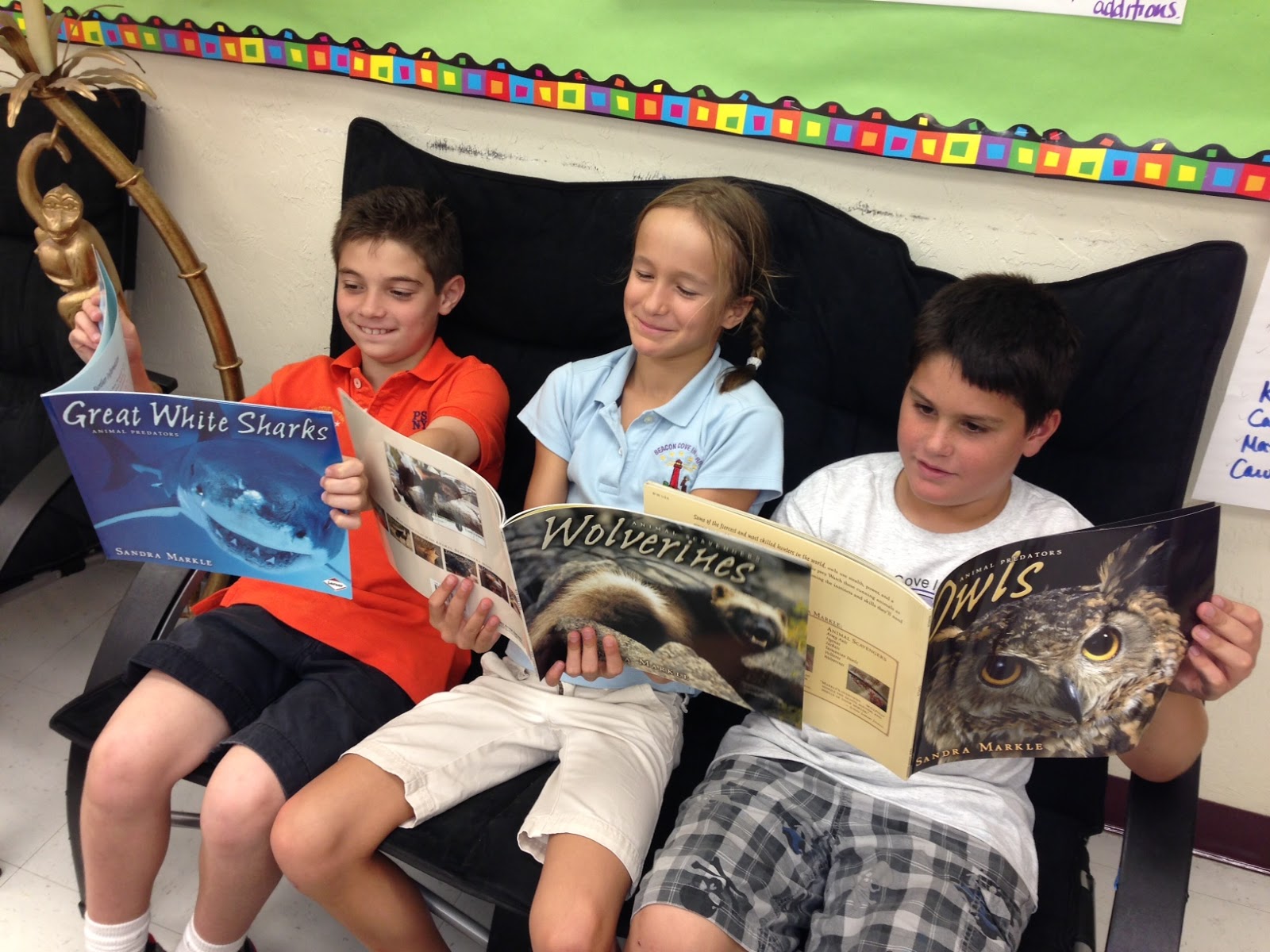 Here's a group of Markle's Book Explorers at Beacon Cover Intermediate School in Jupiter, Florida
WOW! The first year of Markle's Book Explorers was amazing. Through my on-line contest, I adopted nine schools across the United States.
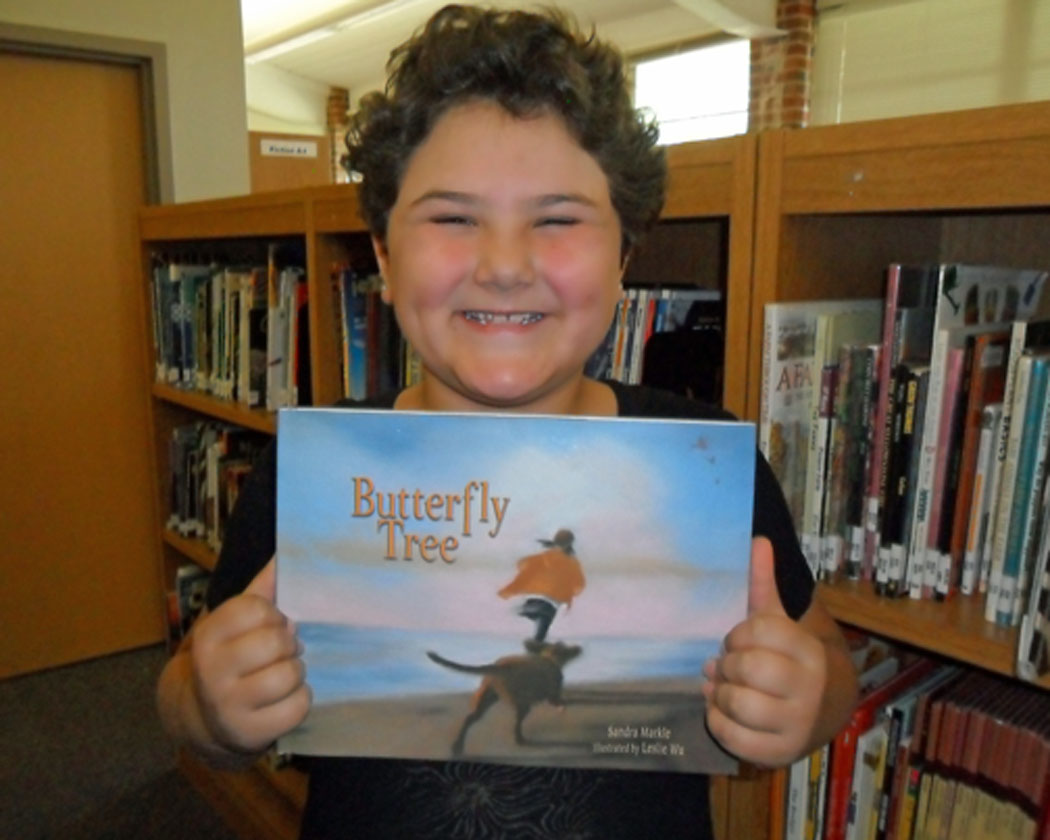 I love it when my books make readers smile!I gave copies of my books to these schools. I shared action-packed opportunities for young readers to explore my books.
 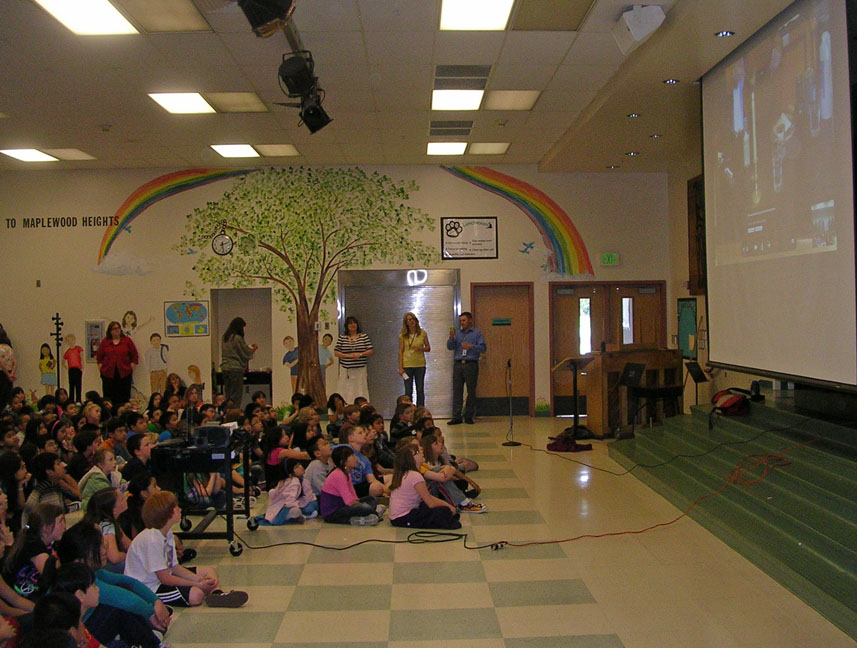 That's me on the BIG screen performing science magic.
Thanks to email and Skype, I also stayed connected to the Markle's Book Explorer schools and even visited most of the schools.
I was overwhelmed by the enthusiastic response I received from the children and the teachers. So I'm going to stay connected with those nine schools. They'll become Markle's Book Explorers Alumni. However, with the start of 2013, it's time to pick a new group of schools to become Markle's Book Explorers. Any teacher, librarian, or school administrator can enter their school before February 28th. I'll announce the winners on March 15, 2013.
To enter, just use the post option to enter your school's name and contact information.
The names of all entries will go into a hat and I’ll select nine.Please be sure to include your email address to make it easier for me to be in touch!
Of course, everyone can still join me and share special activities here at my blog. I look forward to continuing to meet you here and can’t wait to start connecting with the 2013 Markle’s Book Explorers.
November 15, 2012
The Twelve Arachnids of Christmas--Back By Popular Demand
Grab copies of the twelve books in my exciting ARACHNID WORLD series published by Lerner (2010-2011) to join in the fun. You see my true love is an arachnologist, someone who studies all kinds of arachnids. So this year my Christmas gifts were very different, but definitely ones I'll always remember.
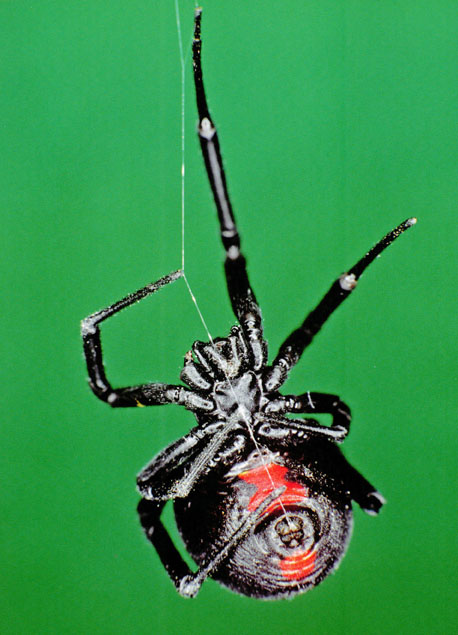
On the first day of Christmas, my true love gave me to a black widow in a fir tree.
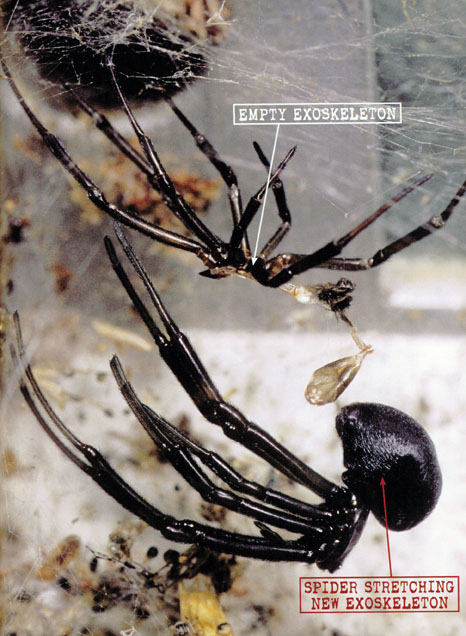
As I watched, that black widow spider dangled upside down from a silk thread. Next, its exoskeleton (armor-like covering) split open along the back. Then the spider pushed and pulled and crawled out of its exoskeleton.
What in the world just happened? To find out, read Black Widows: Deadly Biters pages 22 through 23.
On the second day of Christmas, my true love gave to me two striped bark scorpions--one big female 3 inches (7.5 cm) long and a smaller male.
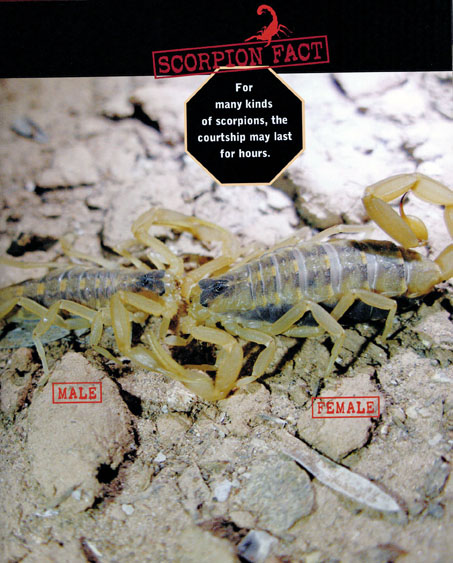
As I watched, the male grabbed the female's pedipalps (body parts near the mouth). He tugged her forward and then they turned around in a circle. They did this over and over for hours.
What was happening to my scorpions? To find out, read Scorpions: Armored Stingers pages 28 and 29.
On the third day of Christmas, my true love gave to me three femaleCarolina wolf spiders.
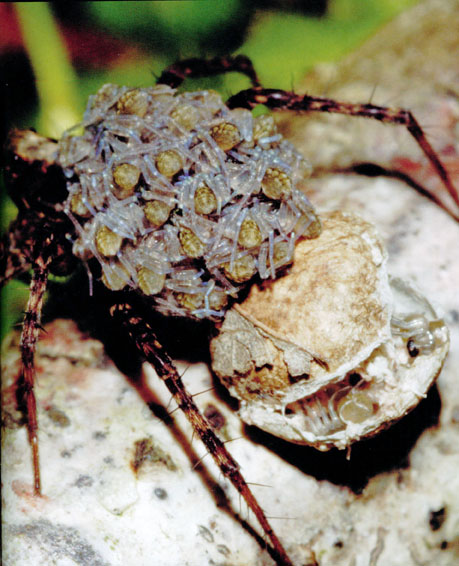
As I watched, a round ball about one-third as big as the spider and stuck to its spinnerets split open. Hundreds of tiny spiders crawled out and climbed onto the big spider.
What's likely to happen next? To find out, read Wolf Spiders: Mothers On Guard pages 26 through 29.
On the fourth day of Christmas, my true love gave to me four wind scorpions.
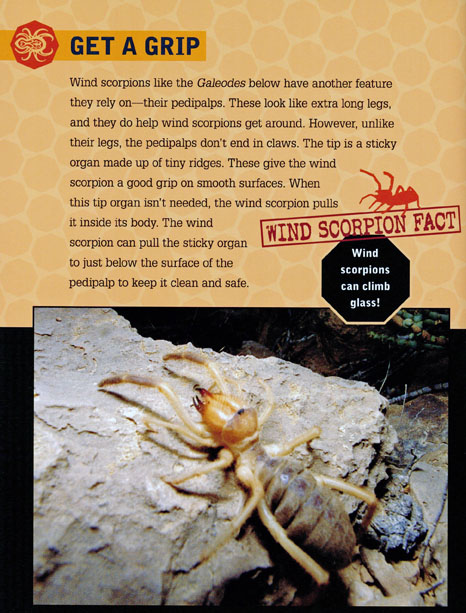
Almost at once, one of the wind scorpions ran straight up a nearly vertical rock. How did it keep from falling off? To find out, read Wind Scorpions: Killer Jaws pages 24 and 25.
On the fifth day of Christmas, my true love gave to me five tarantulas.

One goliath bird-eater tarantula was holding a gecko. As I watched it sank in its fangs and brought up digestive juices.
Why in the world did it do that? To find out read Tarantulas: Supersized Predators pages 32 and 33.
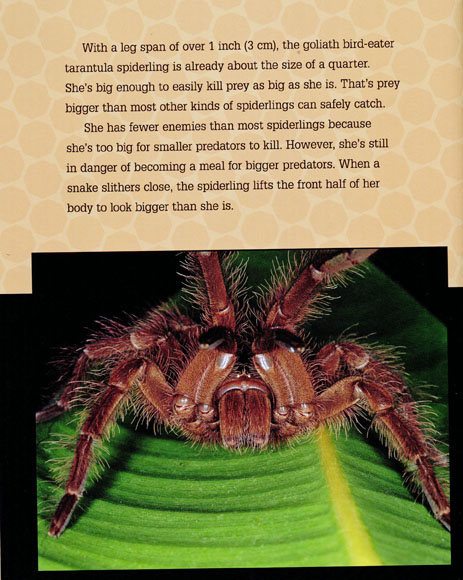
Then keep on reading quickly to let me know whether I should stay to watch or run away. Two of the other tarantulas have turned their hairy rear ends toward me and look ready to rub these with their hind legs.
Help me decide what action to take by reading pages 30 and 31.
On the sixth day of Christmas, my true love to me six female cross spiders spinning their webs.
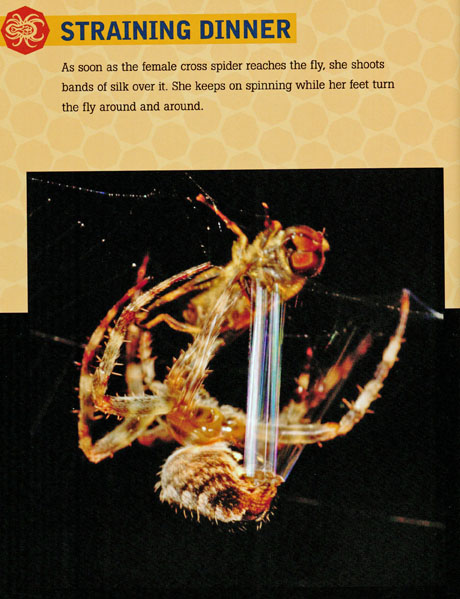
As I watched, a fly landed on one spider's web. That female ran to the fly and shots strands of silk over it.
Why did she do that? To find out, read Orb Weavers: Hungry Spinners pages 24 and 25.
I kept on watching and saw a fly zip into another spider's web. I expected the web to break, but it didn't. Why not? To find out, read page 17 and page 22.
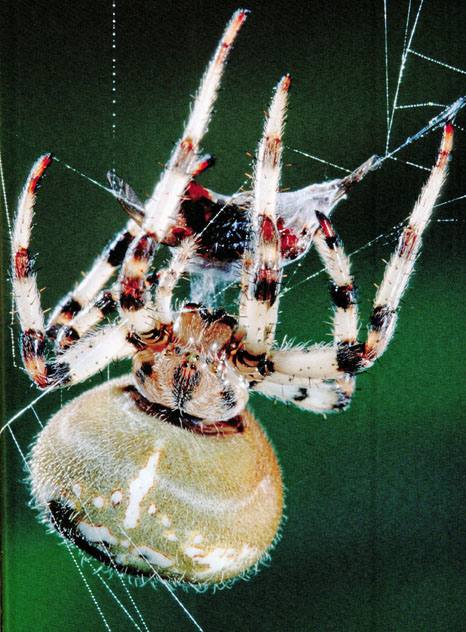
On the seventh day of Christmas, my true love gave to me seven fishing spiders fishing in a pond.
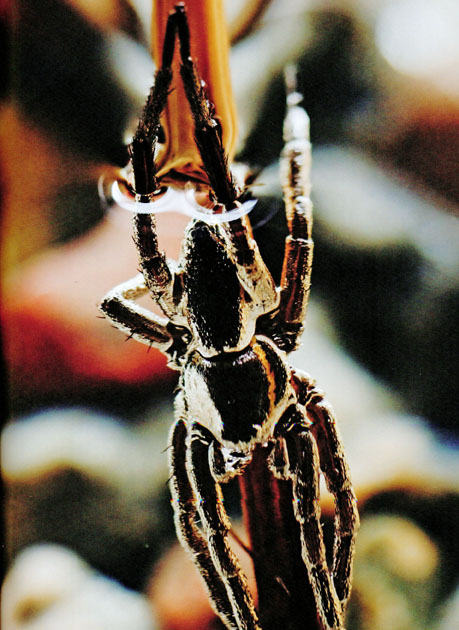
At just that moment, a bat flew past and all the fishing spiders dived beneath the surface. They stayed underwater for nearly thirty minutes.
How were they able to stay underwater for so long? To find out, read Fishing Spiders: Water Ninjas pages 22 through 23.
On the eighth day of Christmas, my true love gave to me eight crab spiderslurking inside flowers.
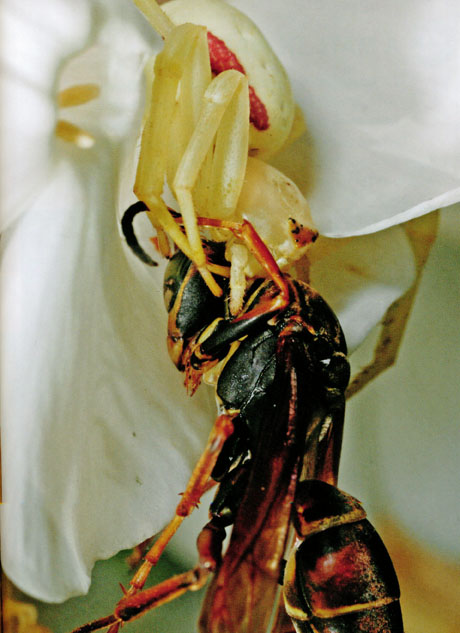
Some goldenrod crab spiders were inside yellow flowers and they were yellow. Other goldenrod crab spiders were inside white flowers and they were white.
How were these spiders able to be just the right flower color to hide and wait to ambush insects? To find out, read Crab Spiders: Phantom Hunters pages 22 and 23.
On the ninth day of Christmas, my true love gave to me nine harvestmen packed close together and bobbing up and down.
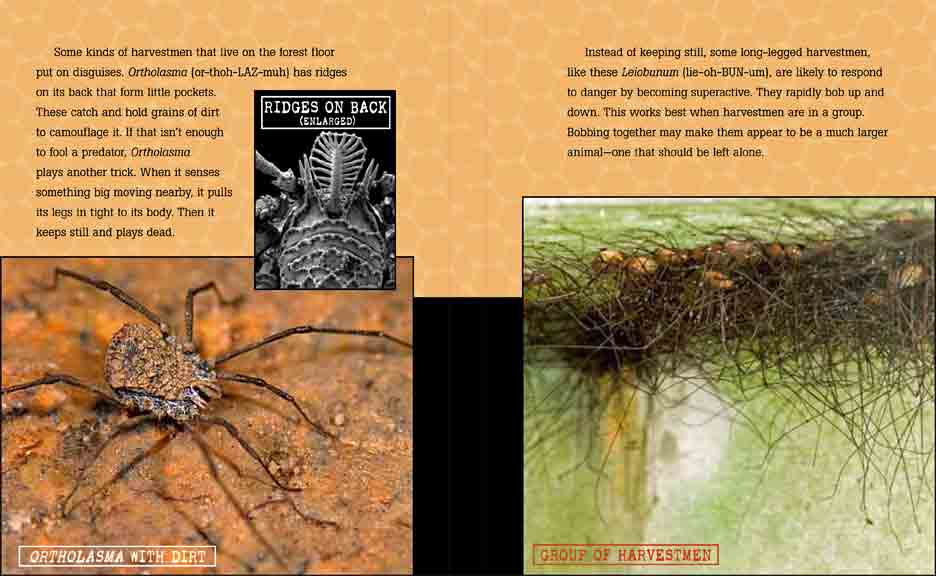
Why were they doing that? To find out, read Harvestmen: Secret Operatives page 21.
On the tenth day of Christmas, my true love gave to me ten ticks-a-sucking blood from their host.
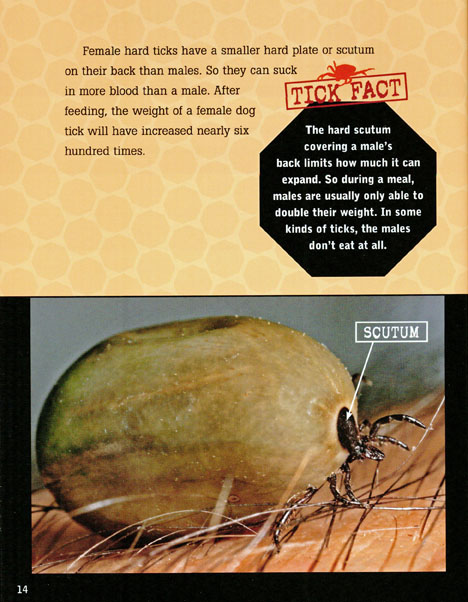
As I watched these female dog ticks over several days, their bodies swelled up until they were nearly six hundred times bigger.
How in the world could they swell so big? To find out read Ticks: Dangerous Hitchhikers pages 14 and 15.
Why can a tick's bite make people and animals sick? Read pages 28 through 36 to find out.
On the eleventh day of Christmas, my true love gave to me eleven jumping spiders jumping.
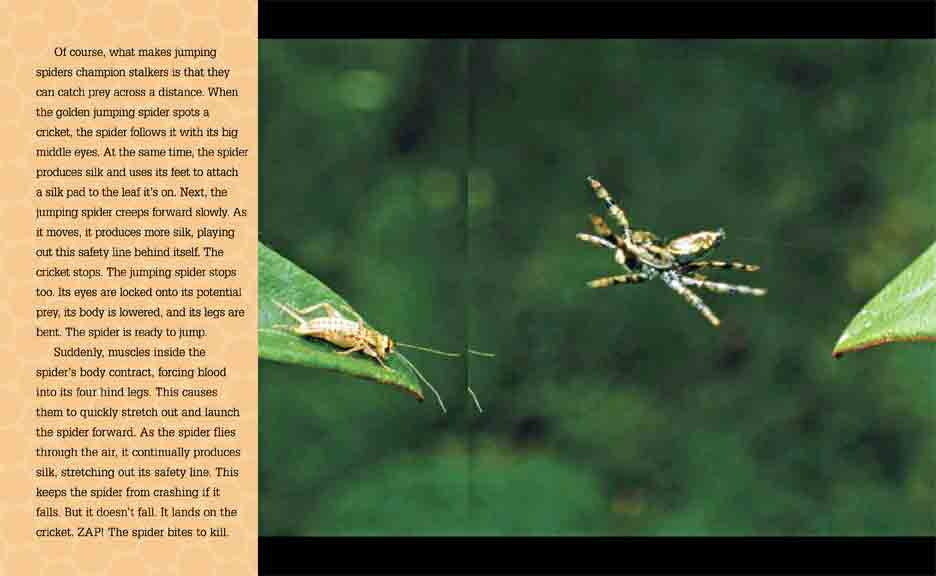
As I watched, one leapt from one leaf to another to catch an insect.
How could it possibly jump so far? To find out, read Jumping Spiders: Gold Medal Stalkers pages 22 and 23.
What's the record for how far a jumping spider can leap? Read pages 46 and 47 to find out.
On the twelfth day of Christmas, my true love gave to me twelve mites-a-multiplyingon a bean plant.

At first, I couldn't see the tiny two-spotted mites sucking on one of the plant's leaves. In less than a month, the plant was nearly covered with web strands dotted with tiny mites. They were sucking the plant's juices and producing even more two-spotted mites.
How did there get to be so many so quickly. To find out, read Mites: Master Sneaks pages 36 and 37.
Yes, my arachnid Christmas this year is one I'll always remember. After all, it's the year I received:
12 mites-a-multiplying11 jumping spiders jumping10 ticks-a-sucking9 harvestmen bobbing8 crab spiders lurking7 fishing spiders fishing6 orb weavers spinning5 tarantulas4 wind scorpions3 wolf spiders2 scorpionsAnd a black widow in a fir tree


