Sandra Markle's Blog, page 22
October 11, 2015
OCTOBER IS NATIONAL DINOSAUR MONTH
Wow! Who knew we could have an excuse to have fun exploring dinosaurs. But October is it!
Dig In
Here are some sites where you can find lots of fun things to do and ways for children to investigate.
Science Made Fun
This site is packed with info about dinosaur record holders. For example do you know which dinosaur is the smallest when fully-grown? Or which kind was the first ever to be discovered in North America? You will once you visit this site.
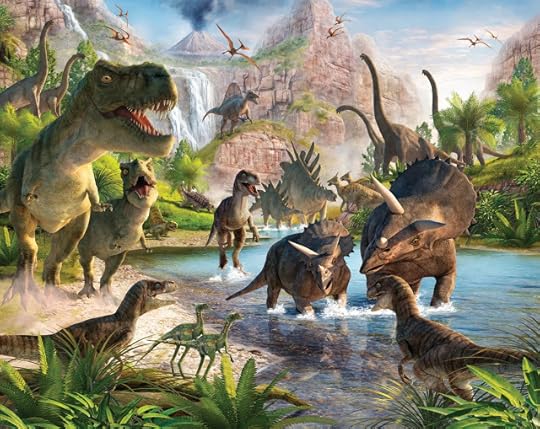
Can you make up a story about what's going on in this picture?
Child Care Lounge: Dinosaur Activities
Songs and crafts add fun and games to learning about dinosaurs.
Enchanted Learning: Dinosaur Quizes
Ten questions, word unscrambles, crosswords and name hunts. There's lots of dino-fun here.
And don't miss the jokes! You'll find the answers to these and more.
Why did the Archaeopteryx catch the worm?
What do you get when dinosaurs crash their cars?
Breaking News: Dinosaur Egg Discovered
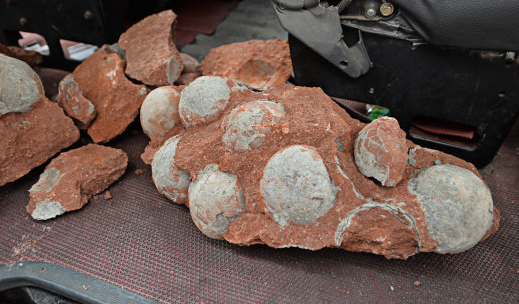
Check out this latest discovery of dinosaur eggs. Also, take a look inside my book to see how the latest technology let scientists study baby dinosaurs. And learn what they were like and how they developed.
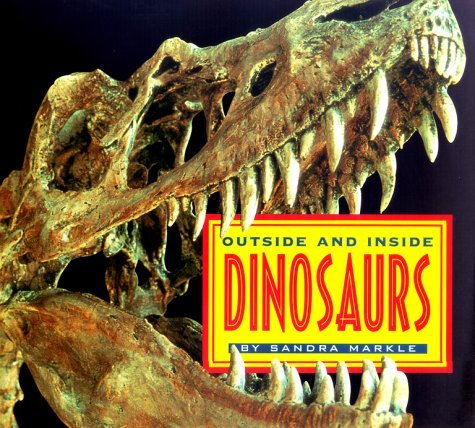 See a real baby dinosaur on page 35
Encourage children to imagine dinosaur eggs were discovered at their school or at home in their backyard. Have them become reporters to bring this breaking news to the world.
South Pole Dinosaurs
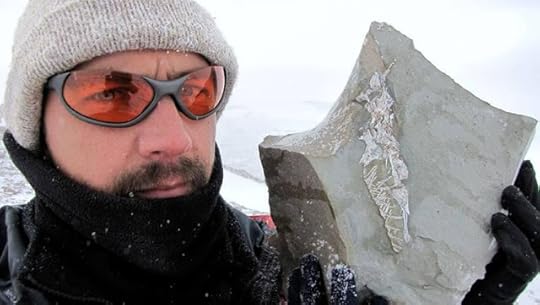 Dr. Christian Sidor with fossil
Hard as it is to believe, during the Age of Dinosaurs the world's climate was very different. In fact, it was a time of Greenhouse kind of warming. So there were forests in Antarctica where the land is now covered with thick ice sheets. Scientist Dr. Vanessa Bowman reported that the rainforests of New Zealand with their fern trees show what the Antarctic forests were once like. In fact, Robert Falcon Scott found fossilized plants there in 1912. Since, explorers have discovered fossilized, bush-sized beech trees and remains of ginkgos, another ancient kind of tree. And dinosaur bones have also been discovered.
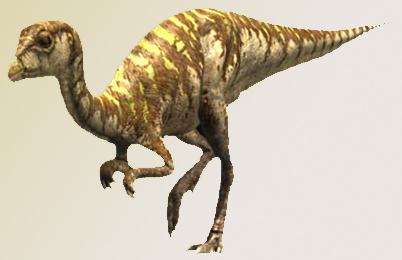 Leaellynasaura
What's fascinating about these dinosaur remains isn't that they lived in Antarctica. It's that they had to deal with the polar night. Though the climate was clearly warmer in that ancient time, there still would have been the long period of dark. Professor Thomas Rich has found several of the now eight known species (kinds) of Antarctic dinosaurs. And the only complete skeleton found was for Leaellynasaura. This provided a big clue as to how the dinosaurs managed. Its skull had extra big eye sockets so it probably had big eyes--what it would have needed to see in the long night.
Leaellynasaura
What's fascinating about these dinosaur remains isn't that they lived in Antarctica. It's that they had to deal with the polar night. Though the climate was clearly warmer in that ancient time, there still would have been the long period of dark. Professor Thomas Rich has found several of the now eight known species (kinds) of Antarctic dinosaurs. And the only complete skeleton found was for Leaellynasaura. This provided a big clue as to how the dinosaurs managed. Its skull had extra big eye sockets so it probably had big eyes--what it would have needed to see in the long night.
[Don't miss the sweet story of how this dinosaur got its name.]
So what kinds of dinosaurs once lived near the South Pole? Here's the names of three. Click on the name of each to link to a site where you can begin learning more about that dinosaur. If you're interested go online to discover more about one or more of these dinosaurs. And create a 12-page mini-picture book about the dinosaur.
Antarctopelta , meaning “Antarctic shield.” Discovered in 1986. Believed to be an ankylosaurus type of armored plant eater.
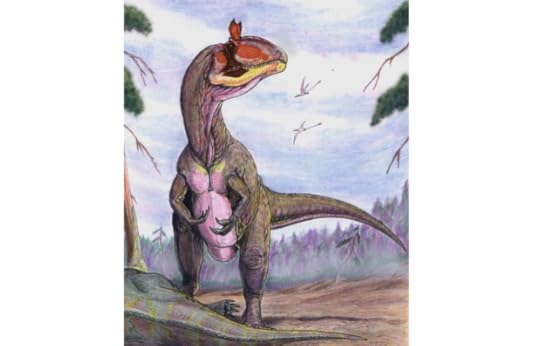 Cryolophosaurus
Cryolophosaurus , means “coldcrested lizard.” Approximately 20–26 feet (6–8 m) long, this massive creature must have required a hefty diet, including other dinosaurs.
Glacialisaurus , meaning “frozen lizard.” The entire dinosaur must have been 20–25 feet (6–8 m) long and weighed an estimated 4–6 tons.
Now, imagine that you have travelled to Antarctica. And you're part of a team that has found the fossil remains of a brand new kind of dinosaur. Read this story about someone who lived that exciting adventure. Then make up a story about being along on this expedition.
Have Dino Dreams
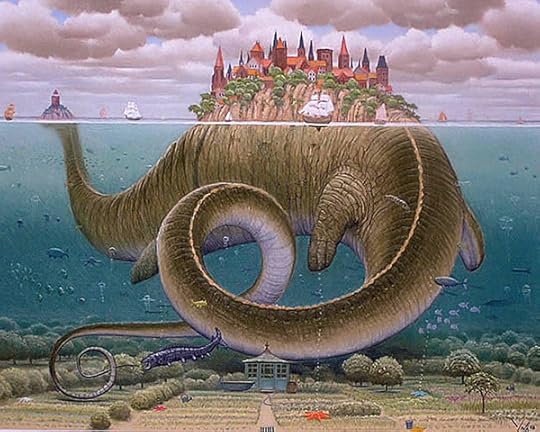
Dinosaurs are also perfect for launching all sorts of creative thinking. Let children look at this picture and:
1. Imagine living in that city.
2. Draw another kind of dinosaur that's hosting a city.
3. Dream up a class pet dinosaur.
And enjoy some of these fun reads:
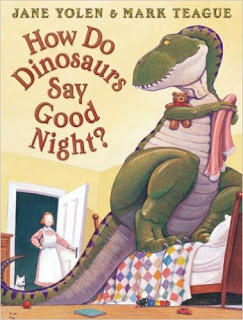 How Do Dinosaurs Say Good Night?
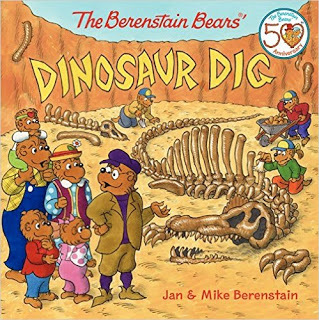 Dinosaur Dig
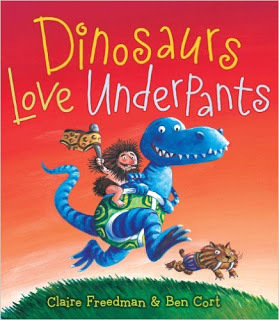 Dinosaurs Love Underpants
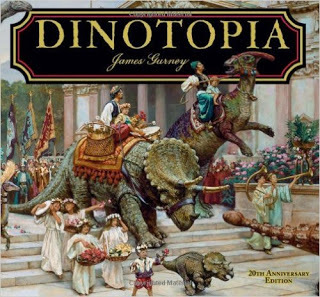 Dinotopia
Dig In
Here are some sites where you can find lots of fun things to do and ways for children to investigate.
Science Made Fun
This site is packed with info about dinosaur record holders. For example do you know which dinosaur is the smallest when fully-grown? Or which kind was the first ever to be discovered in North America? You will once you visit this site.

Can you make up a story about what's going on in this picture?
Child Care Lounge: Dinosaur Activities
Songs and crafts add fun and games to learning about dinosaurs.
Enchanted Learning: Dinosaur Quizes
Ten questions, word unscrambles, crosswords and name hunts. There's lots of dino-fun here.
And don't miss the jokes! You'll find the answers to these and more.
Why did the Archaeopteryx catch the worm?
What do you get when dinosaurs crash their cars?
Breaking News: Dinosaur Egg Discovered
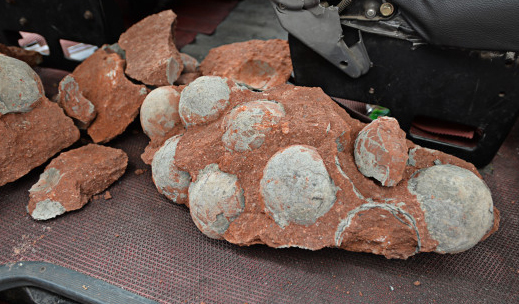
Check out this latest discovery of dinosaur eggs. Also, take a look inside my book to see how the latest technology let scientists study baby dinosaurs. And learn what they were like and how they developed.
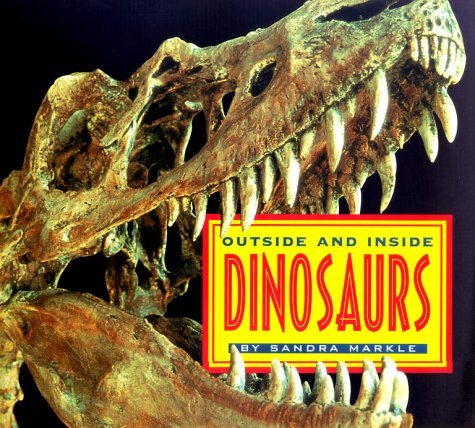 See a real baby dinosaur on page 35
Encourage children to imagine dinosaur eggs were discovered at their school or at home in their backyard. Have them become reporters to bring this breaking news to the world.
South Pole Dinosaurs
 Dr. Christian Sidor with fossil
Hard as it is to believe, during the Age of Dinosaurs the world's climate was very different. In fact, it was a time of Greenhouse kind of warming. So there were forests in Antarctica where the land is now covered with thick ice sheets. Scientist Dr. Vanessa Bowman reported that the rainforests of New Zealand with their fern trees show what the Antarctic forests were once like. In fact, Robert Falcon Scott found fossilized plants there in 1912. Since, explorers have discovered fossilized, bush-sized beech trees and remains of ginkgos, another ancient kind of tree. And dinosaur bones have also been discovered.
 Leaellynasaura
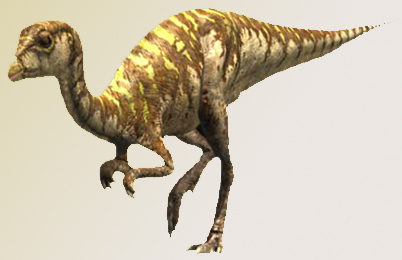
What's fascinating about these dinosaur remains isn't that they lived in Antarctica. It's that they had to deal with the polar night. Though the climate was clearly warmer in that ancient time, there still would have been the long period of dark. Professor Thomas Rich has found several of the now eight known species (kinds) of Antarctic dinosaurs. And the only complete skeleton found was for Leaellynasaura. This provided a big clue as to how the dinosaurs managed. Its skull had extra big eye sockets so it probably had big eyes--what it would have needed to see in the long night.
Leaellynasaura
What's fascinating about these dinosaur remains isn't that they lived in Antarctica. It's that they had to deal with the polar night. Though the climate was clearly warmer in that ancient time, there still would have been the long period of dark. Professor Thomas Rich has found several of the now eight known species (kinds) of Antarctic dinosaurs. And the only complete skeleton found was for Leaellynasaura. This provided a big clue as to how the dinosaurs managed. Its skull had extra big eye sockets so it probably had big eyes--what it would have needed to see in the long night. [Don't miss the sweet story of how this dinosaur got its name.]
So what kinds of dinosaurs once lived near the South Pole? Here's the names of three. Click on the name of each to link to a site where you can begin learning more about that dinosaur. If you're interested go online to discover more about one or more of these dinosaurs. And create a 12-page mini-picture book about the dinosaur.
Antarctopelta , meaning “Antarctic shield.” Discovered in 1986. Believed to be an ankylosaurus type of armored plant eater.
 Cryolophosaurus
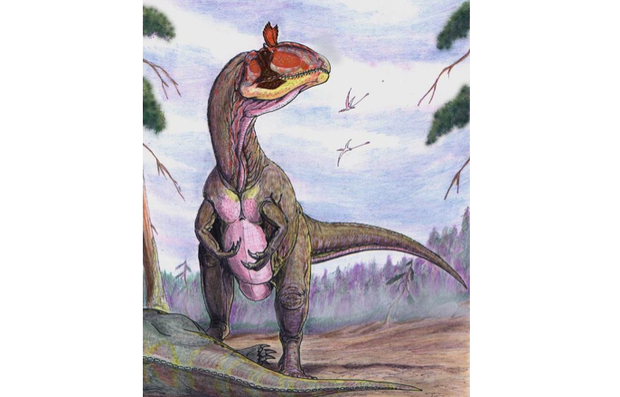
Cryolophosaurus , means “coldcrested lizard.” Approximately 20–26 feet (6–8 m) long, this massive creature must have required a hefty diet, including other dinosaurs.
Glacialisaurus , meaning “frozen lizard.” The entire dinosaur must have been 20–25 feet (6–8 m) long and weighed an estimated 4–6 tons.
Now, imagine that you have travelled to Antarctica. And you're part of a team that has found the fossil remains of a brand new kind of dinosaur. Read this story about someone who lived that exciting adventure. Then make up a story about being along on this expedition.
Have Dino Dreams
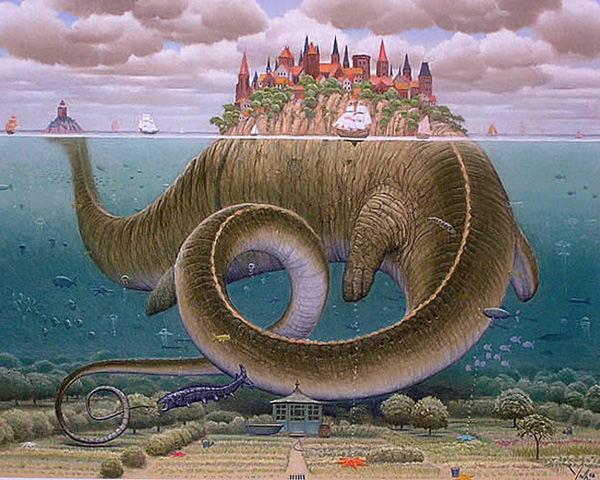
Dinosaurs are also perfect for launching all sorts of creative thinking. Let children look at this picture and:
1. Imagine living in that city.
2. Draw another kind of dinosaur that's hosting a city.
3. Dream up a class pet dinosaur.
And enjoy some of these fun reads:
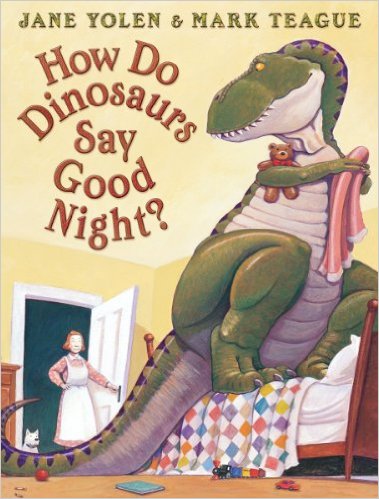 How Do Dinosaurs Say Good Night?
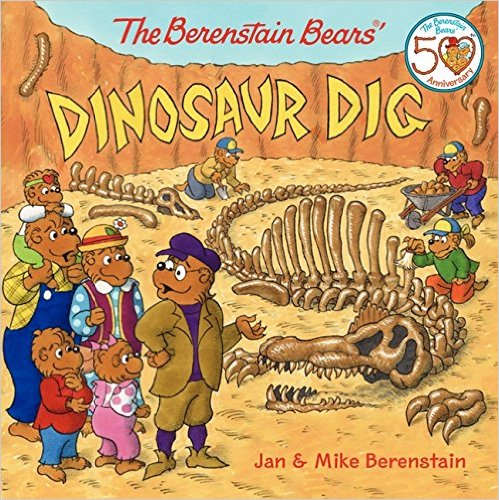 Dinosaur Dig
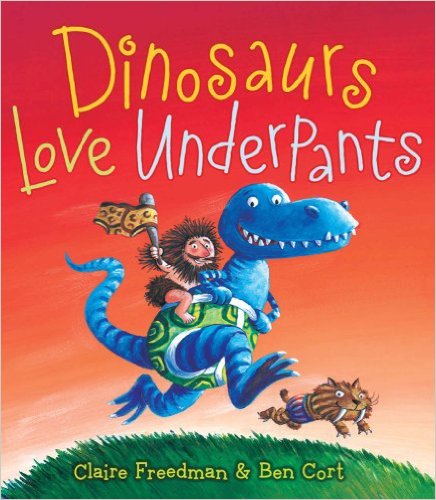 Dinosaurs Love Underpants
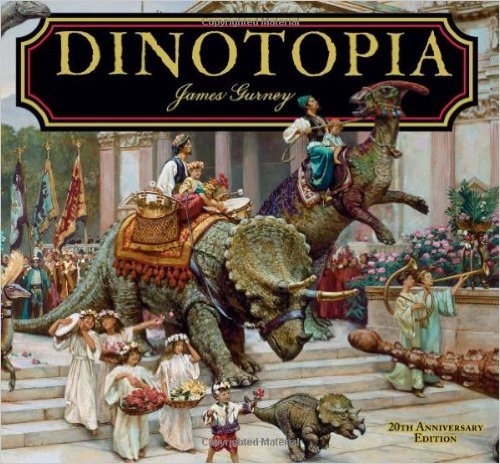 Dinotopia


October 6, 2015
SAIL INTO ACTION FOR COLUMBUS DAY!
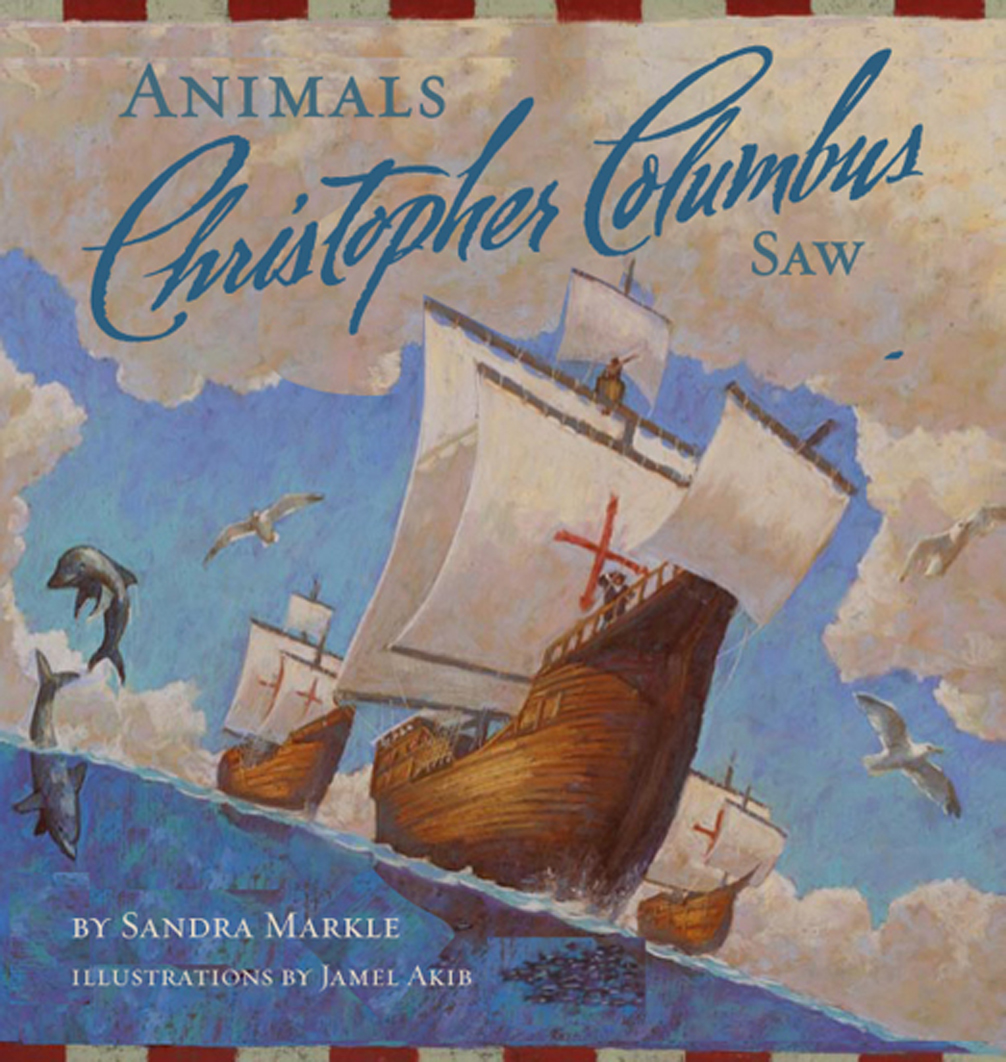 Open this book and set sail.
The E-book is as close as AmazonEnjoy these activities and don't miss the give-away chance to win one of 3 autographed copies of WHAT IF YOU HAD ANIMAL TEETH!?
What if Columbus was planning his voyage today?
Would you laugh and say, "How silly!"
Would you stand on the dock and shout, "Good luck?"
Or would you say, "Sign me up! I'm going with you."
Hi Ho It's A Sailor's Life For Me!
Pretend you've heard Queen Isabella and King Ferdinand of Spain are funding a voyage of exploration.
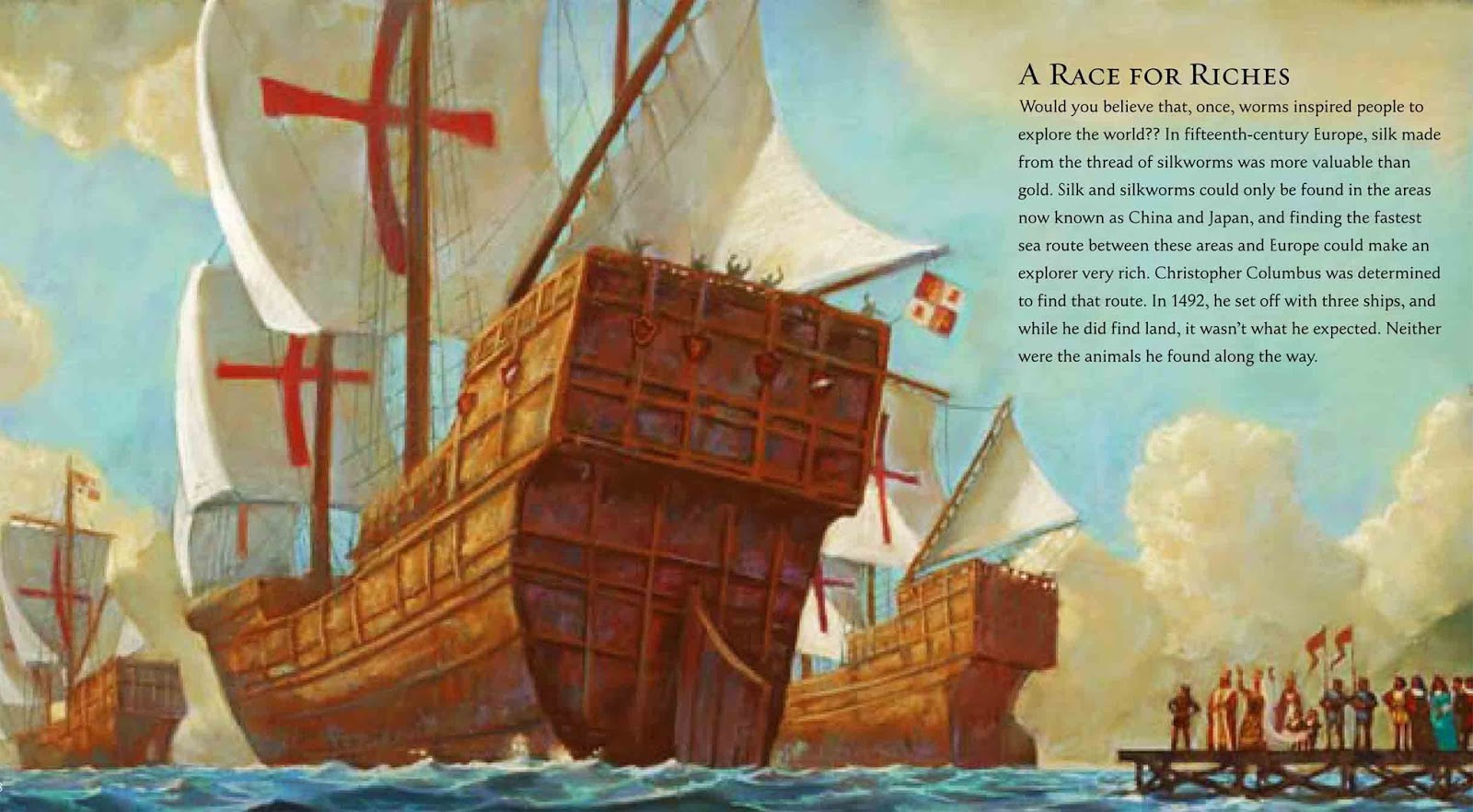
An Italian chap named Christopher Columbus claims he's figured out a sea route to the faraway lands that produce spices and silk. It's an exciting idea because trekking overland to those places is expensive and dangerous.
 Make a list of pros and cons for why you should or shouldn't sign up to join Columbus's crew. Make sure the pros win.
 Then write a letter to your parents--or your best friend--telling you're going and why.
CCSS.ELA-Literacy.W.4.1b Provide reasons that are supported by facts and details.
What animals sailed with Columbus?
 If you have the book or E-book, read pages 16 and 17. Don't miss the info in the Red Box!
Look at this picture to see one of Columbus's ship getting ready to sail. List all the animals you see? Which were stowaways, meaning they weren’t wanted?
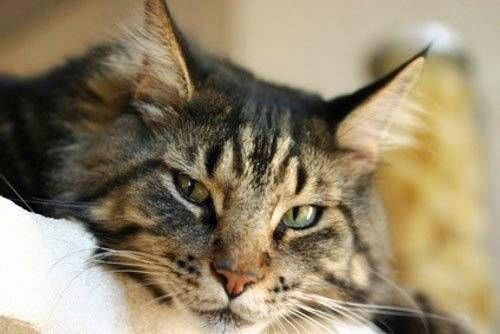 This cat looks like my cat "Tiger". But he hates to travel.
 Write a short story about getting ready to set sail with Columbus from the ship cat’s point of view.
CCSS.ELA-Literacy.SL.4.4 Report on a topic or text, tell a story, or recount an experience in an organized manner, using appropriate facts and relevant, descriptive details to support main ideas or themes; speak clearly at an understandable pace.
Anybody Want A Biscocho? (say biz-KOH-choh)
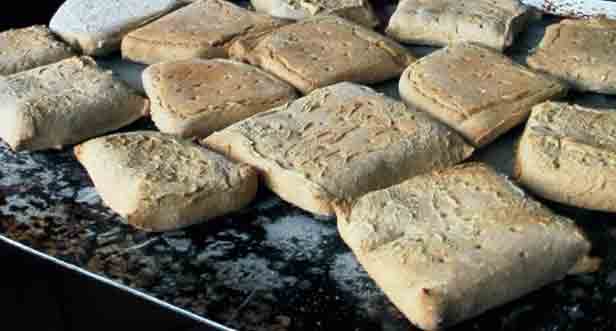 A common sailor's fare onboard was what the Spanish call Biscocho or biscuits.
 Sailor's also called it hardtack. Bake up this recipe and you'll know how this biscuit got it's name.
Recipe3 cups all-purpose flour1 tablespoon salt1 cup waterPreheat oven to 375 degrees.*Be sure and check with an adult that's it's okay to whip up this recipe. Have your adult partner take the hot tray out of the oven.
In a bowl, mix the flour and salt. Add the water and stir until it's a stiff dough. Then knead (push the dough, turn, and push again). Add more flour if necessary to make a very dry dough.
Press the dough out so it is only about 1/2 inch thick. Use a bread knife to cut into squares. Place the biscocho on an ungreased baking sheet. Bake 30 minutes. Remove from oven and cool. Then enjoy! (or at least try)
In Columbus's time, sailors often ate biscotto with sardines or bean soup.
What do you think about that?
Watch Out For The Sargasso Sea!
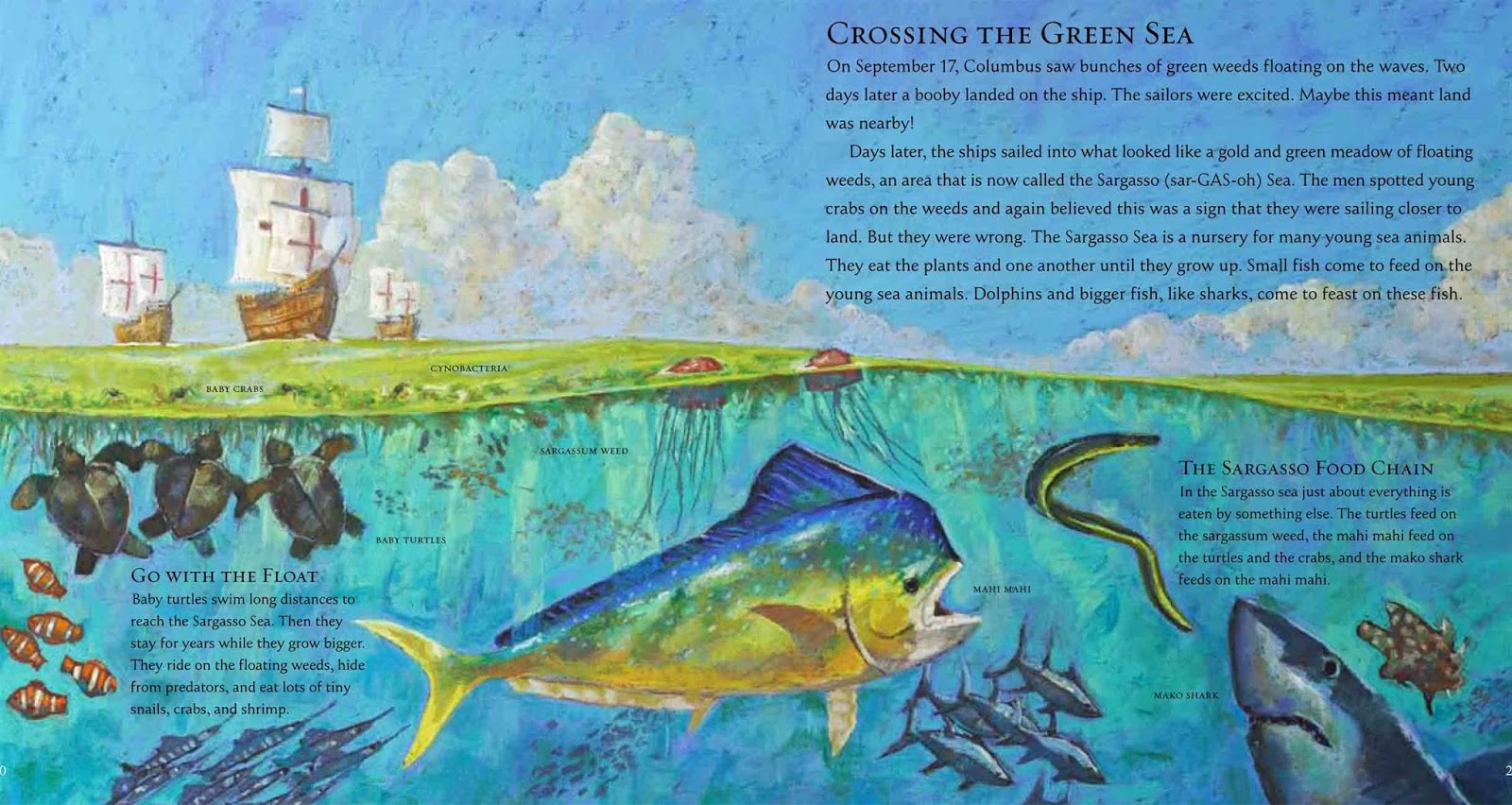 If you have the book or E-book, read pages 20 and 21. Don't miss the Sargasso Food Chain.
Columbus's ships sailed into what looked like a gold and green meadow of floating weeds, an area that is now called the Sargasso (sar-GAS-oh) Sea. Why do you think the sailors thought this meant they were almost to land? Look at this map to find out where Columbus and his crew really were.
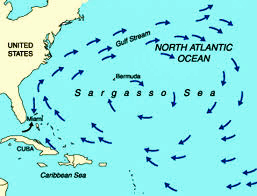 The arrows show sea currents. Why do you think sailors could be trapped in this part of the ocean?
Now, dive in and explore some of the animals living in the Sargasso Sea--the ones in the picture. Next make a mini-book with a little information about any four of these animals: Mahi Mahi, Mako Shark, Dolphins, Baby Eels, Baby Loggerhead Turtles. You can find information on-line or in books. Add pictures to bring your mini-book to life. And don't forget to give it a title.
CCSS.ELA-Literacy.W. 4.7 Conduct short research projects that build knowledge through investigation of different aspects of a topic.
What An Adventure!

Reaching the New World was just the beginning of the adventure. Read pages 28 and 29 to discover some of the events Columbus and his crew shared. Next, pretend you were there--part of Columbus's crew. Tell your story about being part of one of those adventures.
CCSS. ELA-Literacy.W.4.3 Write narratives to develop real or imagined experiences or events using effective technique, descriptive details, and clear event sequences.
And, in honor of featuring animals for this Columbus Day event, I'm giving away 3 autographed copies of WHAT IF YOU HAD ANIMAL TEETH!? Get in the drawing for this gift give-away by emailing me before October 21st at markle.sandra@gmail.com
September 16, 2015
GET TO THE CORE THIS AUTUMN
GOOD GOLLY it's Autumn!
I love this season! Whether you live where autumn brings lots of changes or only a few, it's still a great time for exploring, discovering and seasonal fun. So let's jump in and get started.
 CHOMP!
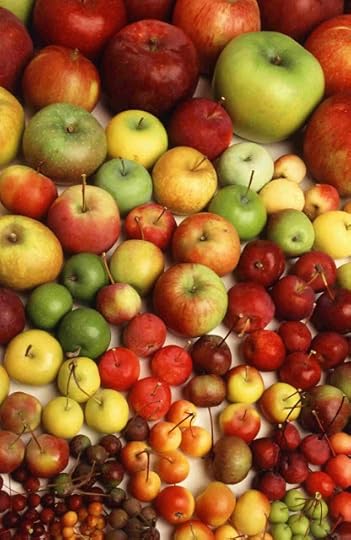
There are thousands of kinds of apples. However, only the most popular are grown and harvested. Even that changes as new varieties emerge. Today, the top ten are most often listed as the following:
Pink Lady
Honeycrisp
Fuji
Golden Delicious
McIntosh
Cox's Orange Pippin
Red Delicious
Gala
Jonasgold
Cortland
Collect samples of any three then compare.
Do the apples look different?
Check color.
Shape.
Size.
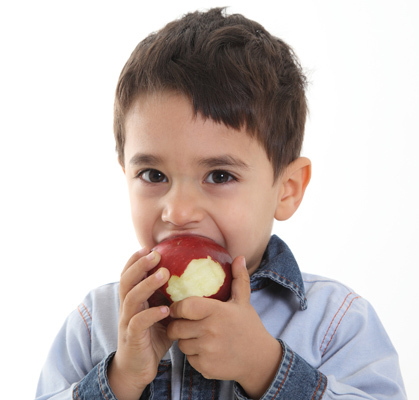
Now wash and slice. Then taste one sample. Rate it from 1 to 4 on crispness with 1 being the softest and 4 being the crispest.
Also rate it on sweetness with 1 being the least sweet and 4 being the sweetest.
Have a swig of water. Next, repeat these two tests with the second apple. Then with the third.
If you can, share your findings with at least five friends and build a bar graph of the firmest and sweetest kinds of apples. It's estimated that each person in the United States eats about 50 apples a year. So while your investigating, you'll be on your way to eating your fair share of this year's crop.
RIDDLE: What kind of fruit do ghosts like?
Boo-berries.
SHRINK A HEAD
In pioneering times, apples were carved and allowed to shrink and dry to make heads for dolls. You can carve an apple head to create a spooky shrunken head. Just follow the easy steps.
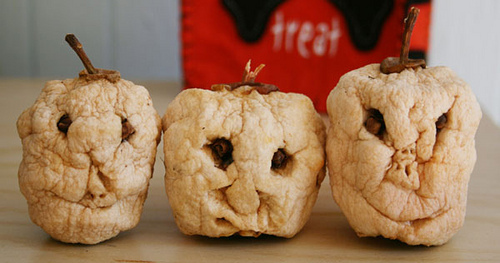
1. First, peel the apple. Leave some peel on top for "hair".
2. Plan what you want the face to look like.
3. Pour 4 cups of water into a bowl and stir in a teaspoon of salt. Place the carved apple in this for about two hours.
That soften's the apple's flesh.
4. Next, use an unsharpened pencil or a popsicle stick to push in eye sockets. Also carve the shape for a nose and mouth.
5. Push raisins into the eye sockets for eyes. You may also want to poke unpopped popcorn kernels into the mouth for teeth.
6. Set your complete apple head on a plate. Check daily to see how the face changes as the apple dries.
The dried apple head usually won't mold. That's why people used to preserve food, like apples, for winter by drying it. The lower water content helps prevent bacteria and mold growth.
RIDDLE: What's a vampire's favorite fruit?
Neck-tarines.
SNAP IT UP
In ancient times, Celts and Romans thought apples were magical fruit. So a popular tradition in Great Britain was apple-snapping. In those long ago times, a rope was tied to the center of a stick that was hung from the ceiling. Next, an apple was stuck on one end of the stick. A candle was attached to the other end. Once the candle was lit the stick was started twirling. Contestants then tried to snatch the apple without getting burned. This was a very dangerous game. Later, it was turned into bobbing for apples.
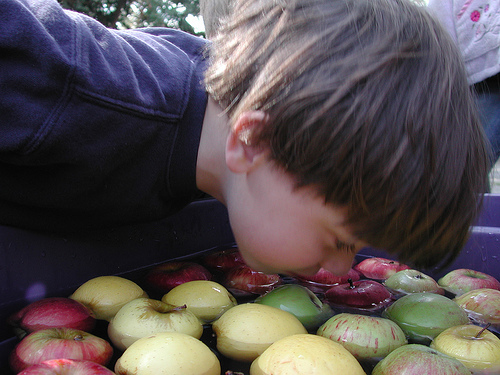
To bob for apples, fill a large plastic storage tub or child's plastic wading pool nearly full of water. Wash the apples--one for each contestant. Set these afloat. To play each person, in turn, bends over the tub with their hands behind their back. Have someone time each person working to snatch an apple in their teeth. The fastest snatcher wins. Only each person wins a tasty apple snack.
RIDDLE: What kind of horses do ghosts ride?
Nightmares.
I love this season! Whether you live where autumn brings lots of changes or only a few, it's still a great time for exploring, discovering and seasonal fun. So let's jump in and get started.
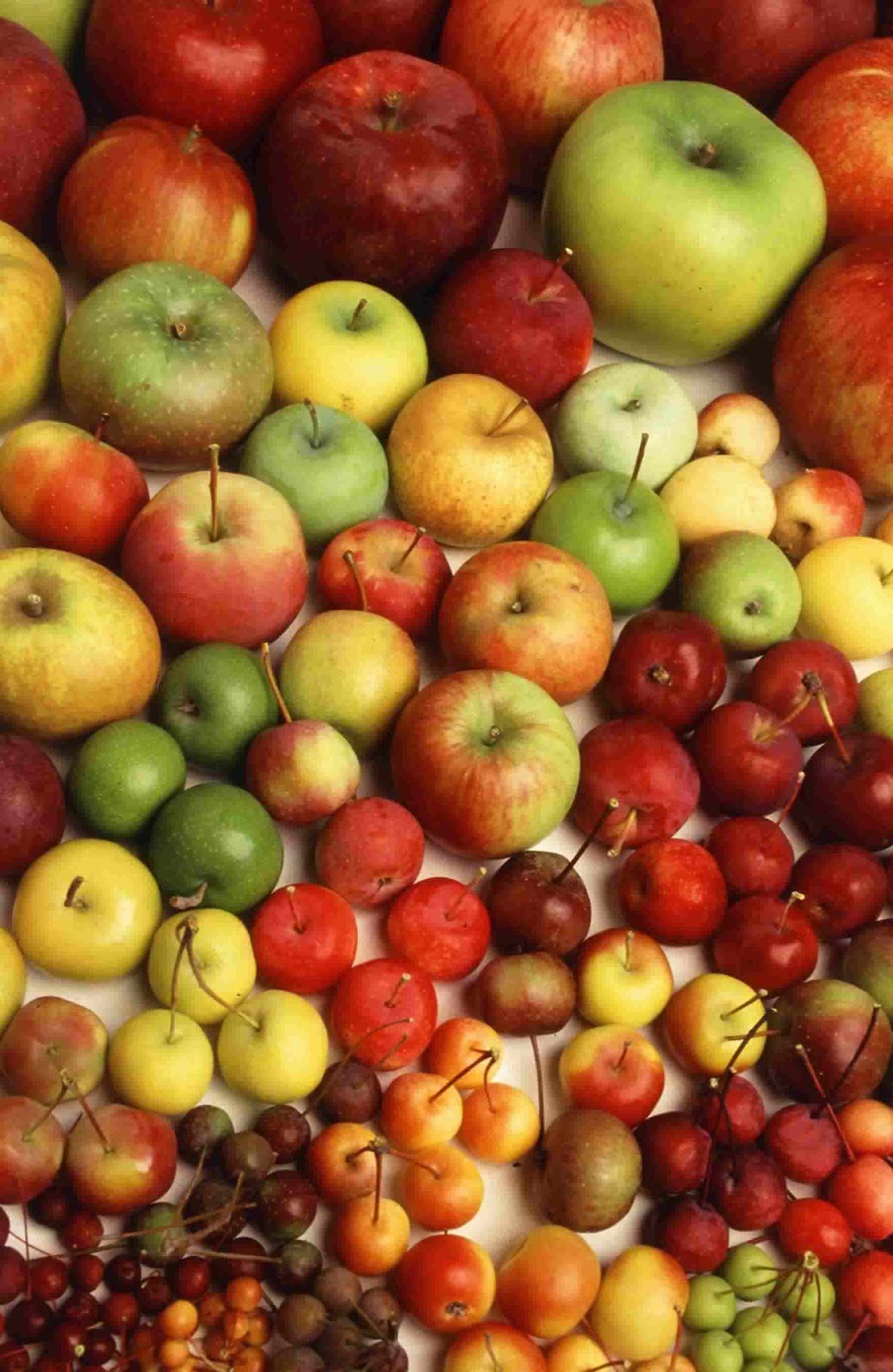 CHOMP!
There are thousands of kinds of apples. However, only the most popular are grown and harvested. Even that changes as new varieties emerge. Today, the top ten are most often listed as the following:
Pink Lady
Honeycrisp
Fuji
Golden Delicious
McIntosh
Cox's Orange Pippin
Red Delicious
Gala
Jonasgold
Cortland
Collect samples of any three then compare.
Do the apples look different?
Check color.
Shape.
Size.
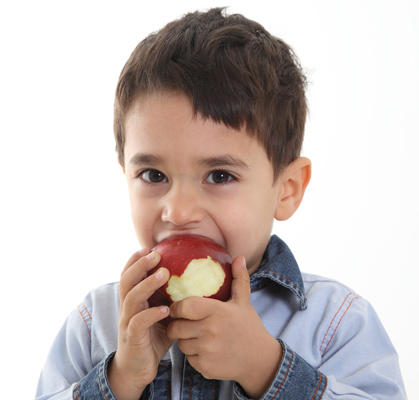
Now wash and slice. Then taste one sample. Rate it from 1 to 4 on crispness with 1 being the softest and 4 being the crispest.
Also rate it on sweetness with 1 being the least sweet and 4 being the sweetest.
Have a swig of water. Next, repeat these two tests with the second apple. Then with the third.
If you can, share your findings with at least five friends and build a bar graph of the firmest and sweetest kinds of apples. It's estimated that each person in the United States eats about 50 apples a year. So while your investigating, you'll be on your way to eating your fair share of this year's crop.
RIDDLE: What kind of fruit do ghosts like?
Boo-berries.
SHRINK A HEAD
In pioneering times, apples were carved and allowed to shrink and dry to make heads for dolls. You can carve an apple head to create a spooky shrunken head. Just follow the easy steps.
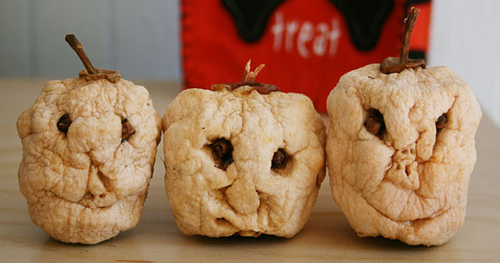
1. First, peel the apple. Leave some peel on top for "hair".
2. Plan what you want the face to look like.
3. Pour 4 cups of water into a bowl and stir in a teaspoon of salt. Place the carved apple in this for about two hours.
That soften's the apple's flesh.
4. Next, use an unsharpened pencil or a popsicle stick to push in eye sockets. Also carve the shape for a nose and mouth.
5. Push raisins into the eye sockets for eyes. You may also want to poke unpopped popcorn kernels into the mouth for teeth.
6. Set your complete apple head on a plate. Check daily to see how the face changes as the apple dries.
The dried apple head usually won't mold. That's why people used to preserve food, like apples, for winter by drying it. The lower water content helps prevent bacteria and mold growth.
RIDDLE: What's a vampire's favorite fruit?
Neck-tarines.
SNAP IT UP
In ancient times, Celts and Romans thought apples were magical fruit. So a popular tradition in Great Britain was apple-snapping. In those long ago times, a rope was tied to the center of a stick that was hung from the ceiling. Next, an apple was stuck on one end of the stick. A candle was attached to the other end. Once the candle was lit the stick was started twirling. Contestants then tried to snatch the apple without getting burned. This was a very dangerous game. Later, it was turned into bobbing for apples.
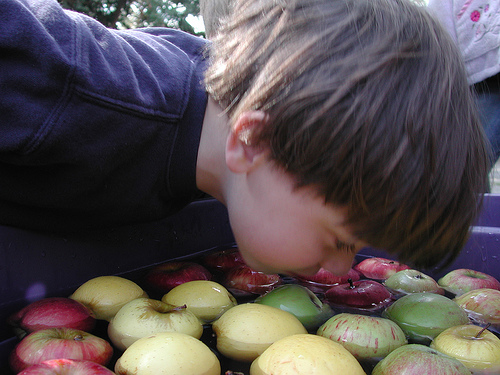
To bob for apples, fill a large plastic storage tub or child's plastic wading pool nearly full of water. Wash the apples--one for each contestant. Set these afloat. To play each person, in turn, bends over the tub with their hands behind their back. Have someone time each person working to snatch an apple in their teeth. The fastest snatcher wins. Only each person wins a tasty apple snack.
RIDDLE: What kind of horses do ghosts ride?
Nightmares.
August 8, 2015
WRITE THE REAL DEAL: Writing Nonfiction for Children
There's never been a more exciting time to be writing nonfiction books for children. That's because nonfiction books need to be just as good at grabbing kid's and making them want to keep turning the pages as fiction. I always add that I want my nonfiction books to be ones kids want to read more than once just the way they would a favorite fiction book. That's why I like to make my nonfiction books discovery experiences on more than one level: the fact-based story is key (and I usually make it have the appeal of an adventure); next there are the photos and captions that can be explored separately as well as within the story. And I pack some more opportunities to explore and discover in the Back Matter.
There are three main types of nonfiction books for children. I'll share some of my books as examples of each of these so you can dig into them at your leisure and get a better feel for each type.
Survey Books--These provide an overview of a topic.
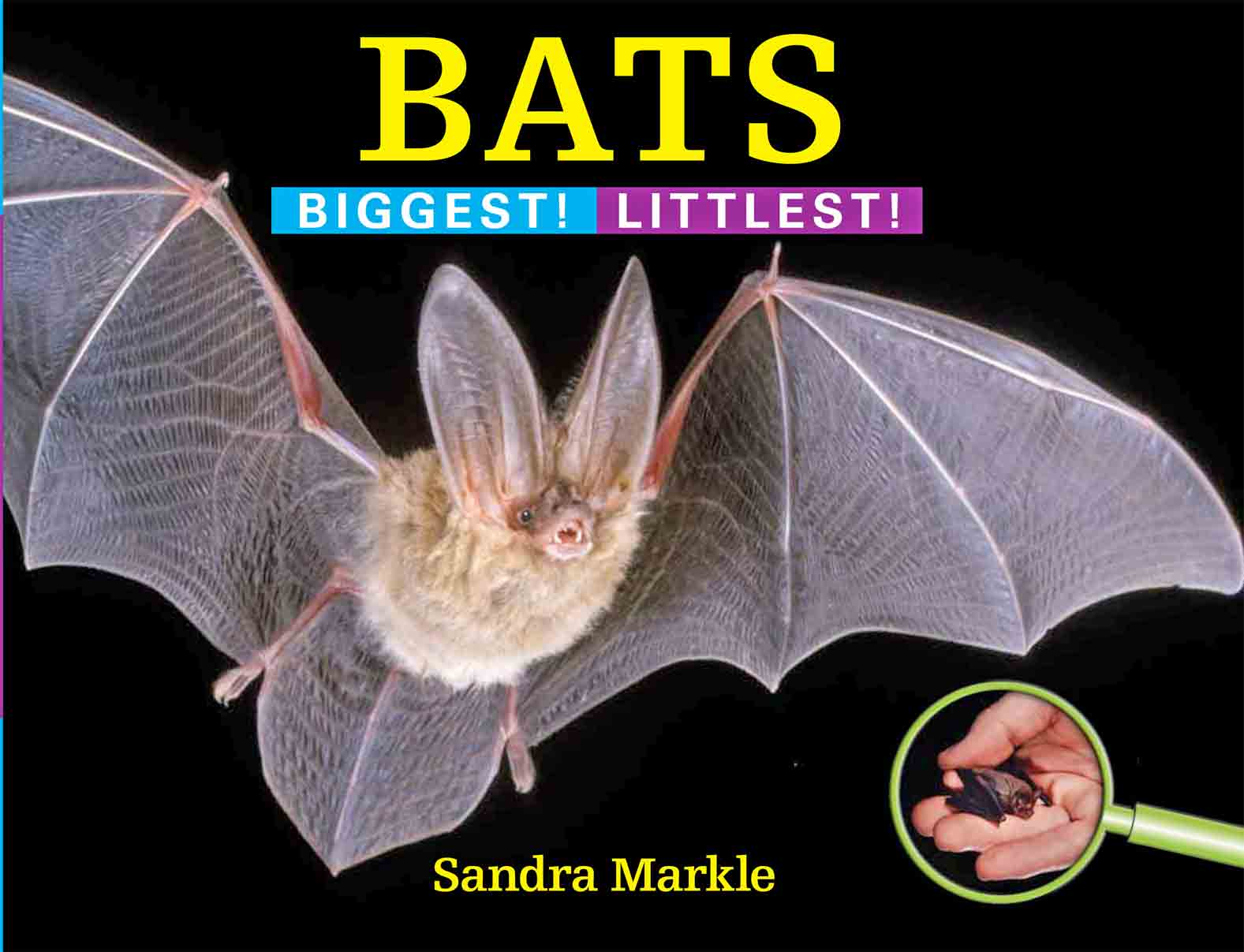
Bats: Biggest! Littlest! (Boyds Mills Press, 2013) introduces children to different kinds of bats using the hook that being big or little or having big or little parts is an adaptation for survival.
Growing Up Wild: Bears (Atheneum, 2000) introduces children to different kinds of bears while also sharing the general life cycle of bears.
Tough, Toothy Baby Sharks (Walker, 2007) provides children with a look at different kinds of sharks focusing on juveniles and how they have special adaptations for survival.
Concept Books--These share an animal's life cycle or a special concept. How Many Baby Pandas (Walker, 2011) shares the Giant Panda's life cycle and presents the concept of why this animal is endangered. It also introduces efforts to protect and expand the population of Giant Pandas.
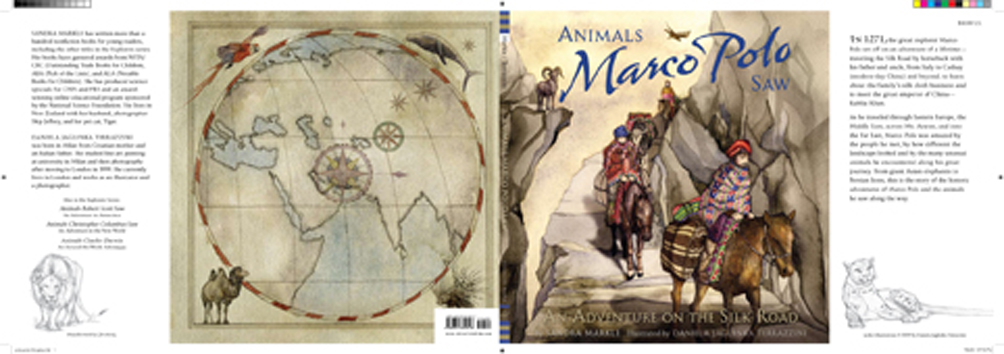
Animals Marco Polo Saw (Chronicle, 2009) introduces children to this historic explorer's life and achievements. It takes the special approach of sharing how the explorer was helped along the by different animals and how he discovered never-before-seen species.
Specialized Nonfiction Books--These dig deep into scientists at work and key science advancements, research, and issues needing further research.
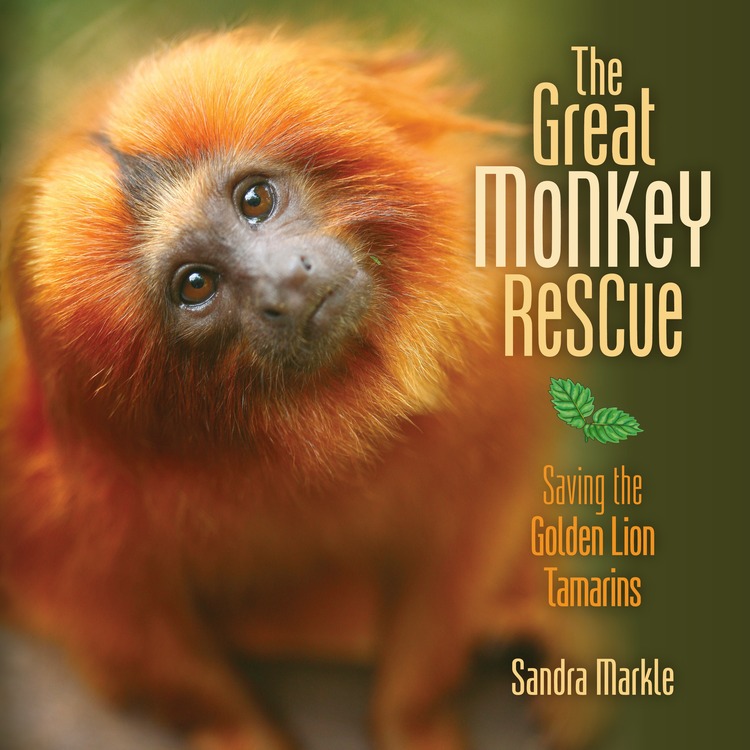
The Great Monkey Rescue (Millbrook/Lerner, 2015) shares the work of teams of scientists and volunteers around the world working to save golden lion tamarins. And they do it in a very creative way
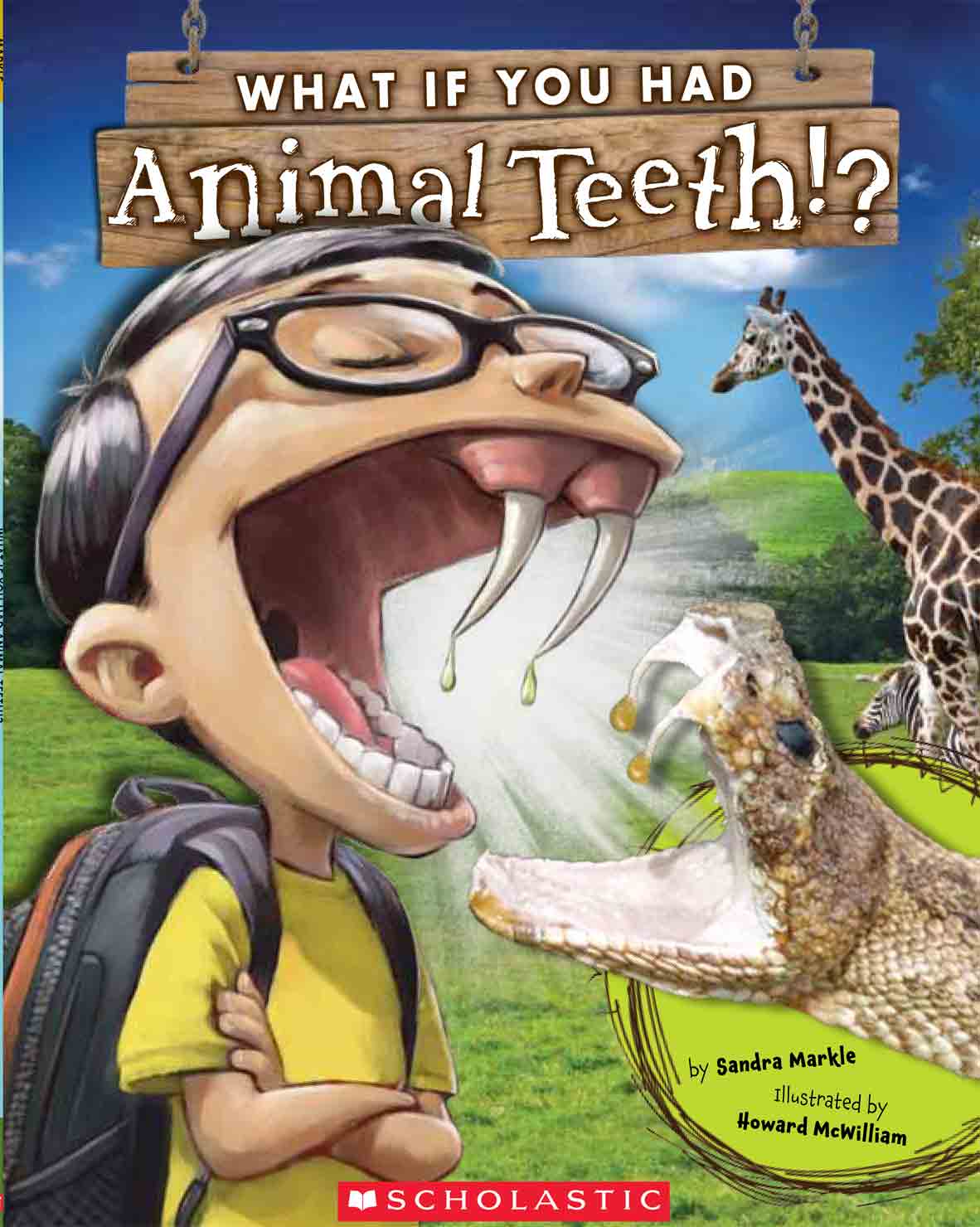 This book is for young children and it's 32 pages long.
Once you decide what kind of nonfiction book you'll write, you need to know what to include. For young children (ages 4-8 years), you should plan on your book being 32 or 40 pages long. For older elementary-aged children (ages 8-12 or 14 years), plan on your book being 48 or 64 pages long.
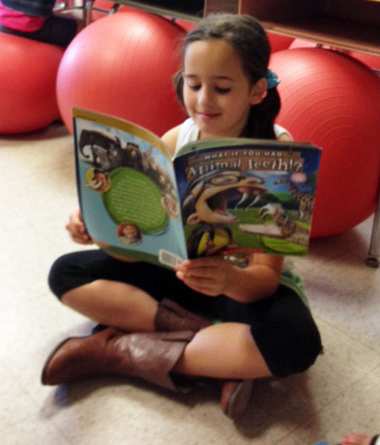
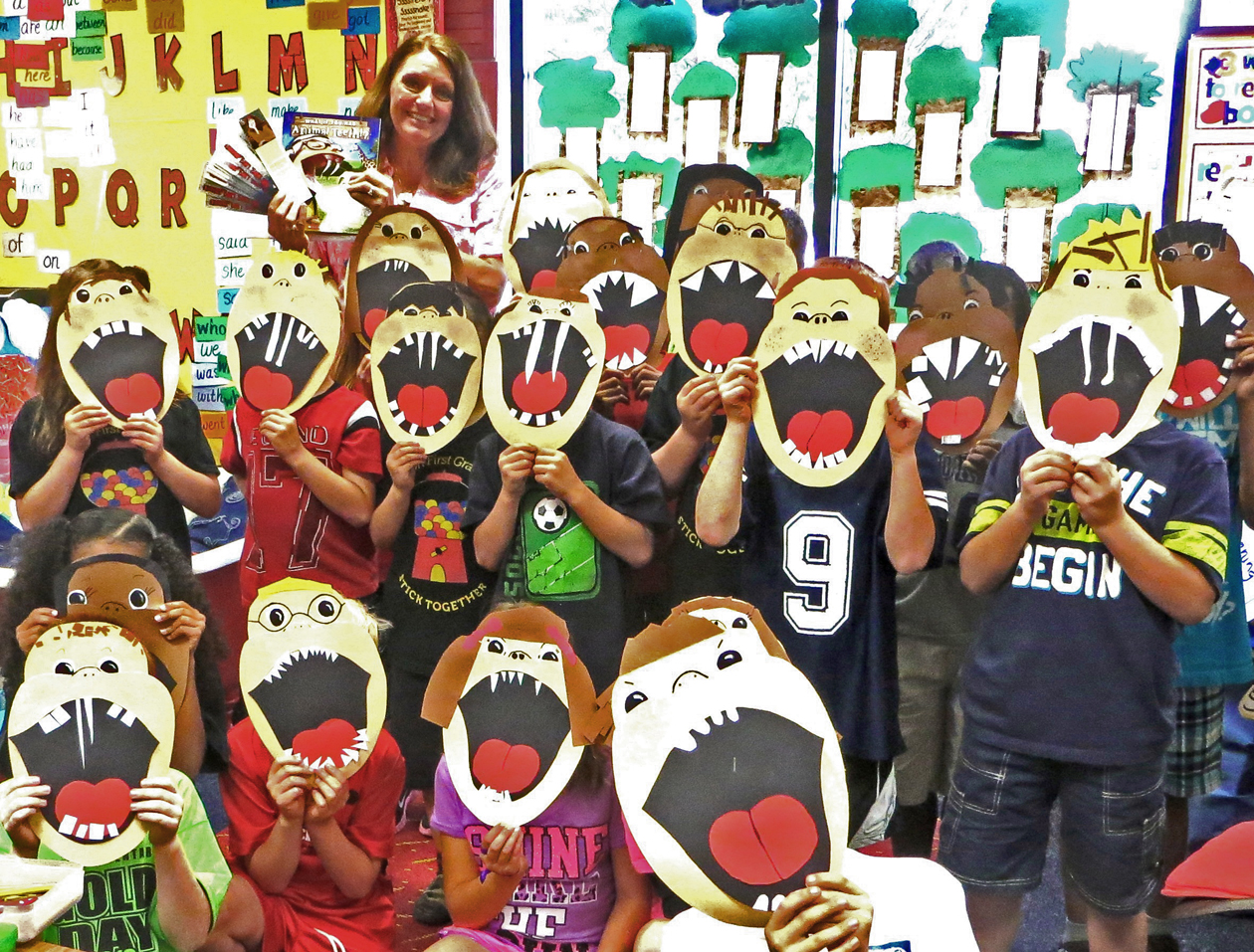
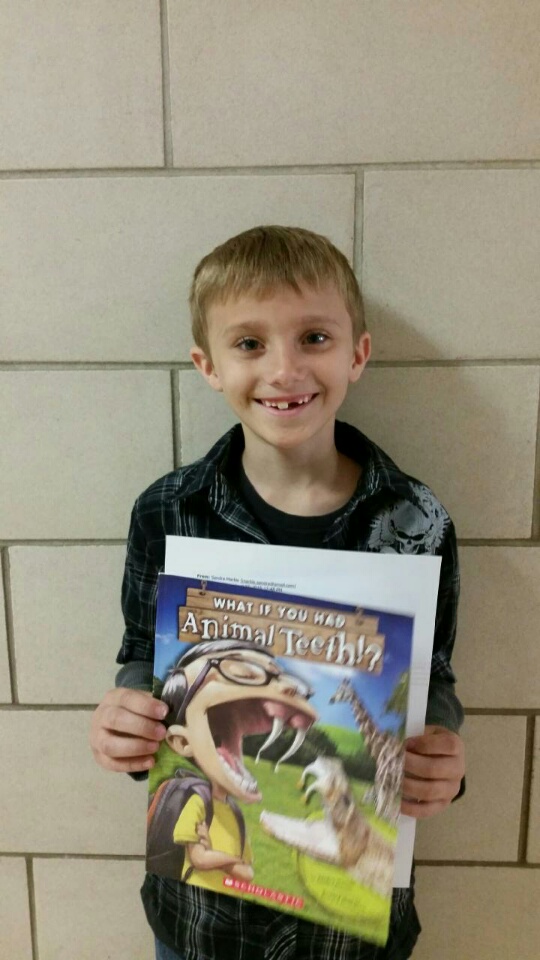
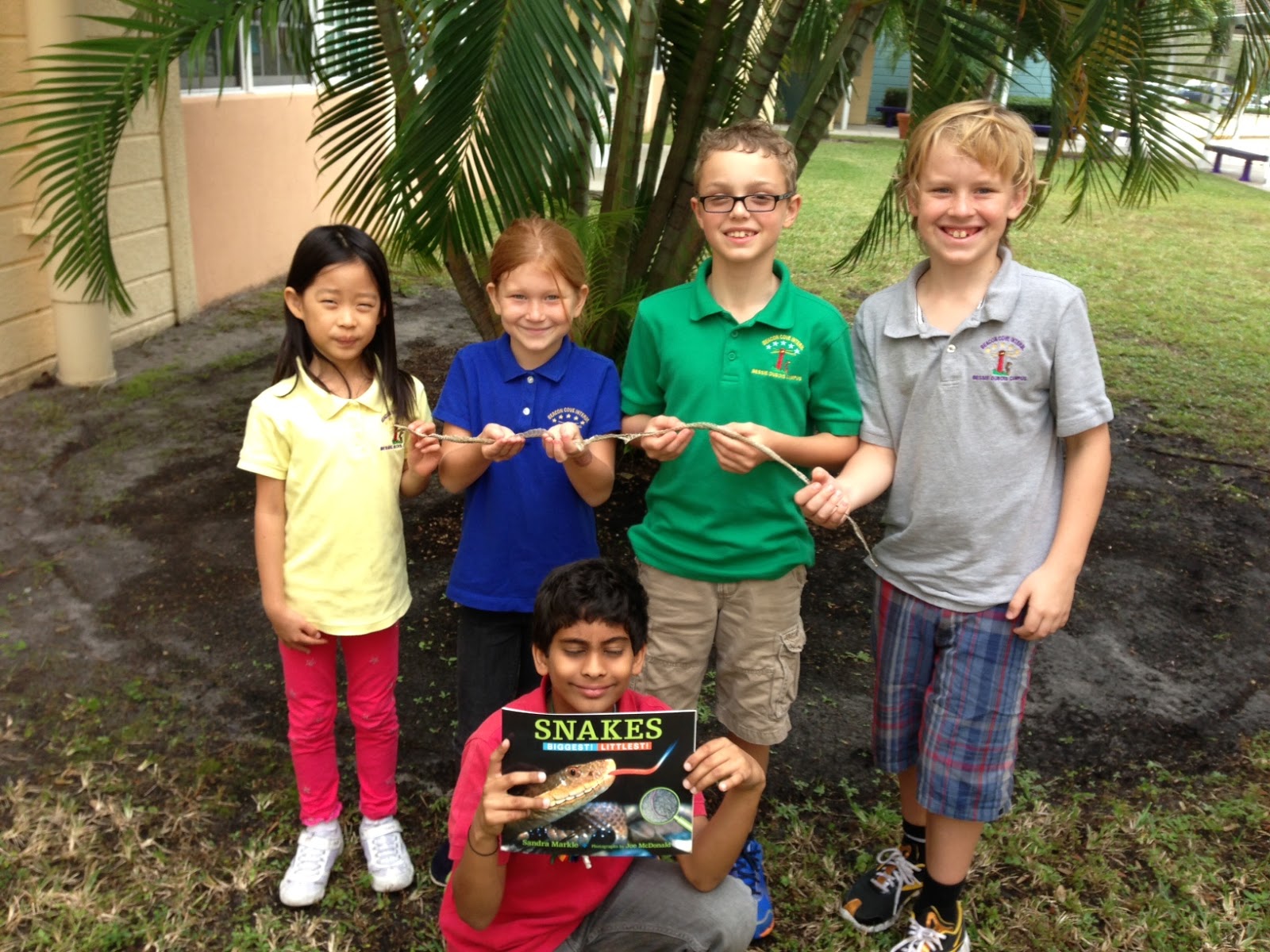
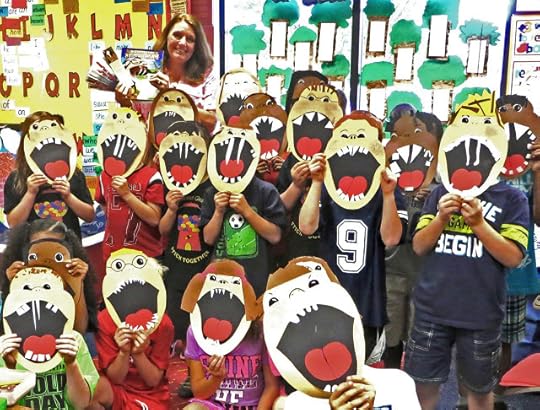
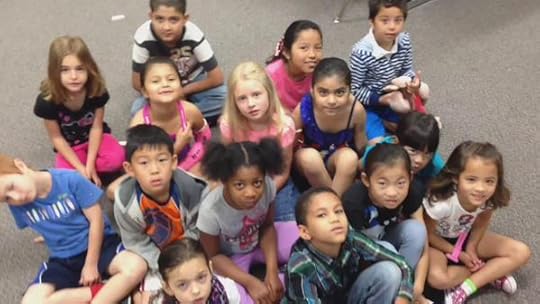
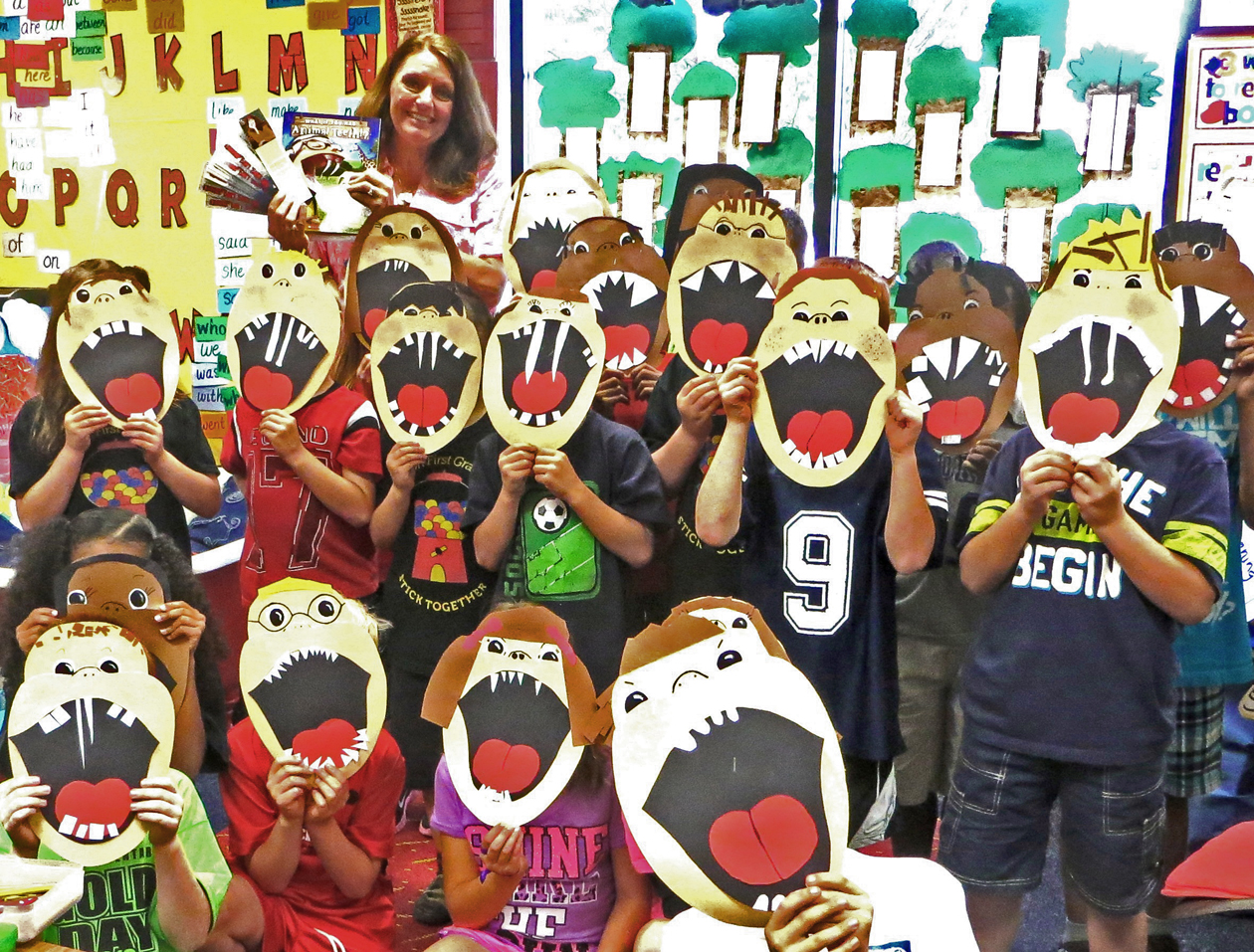
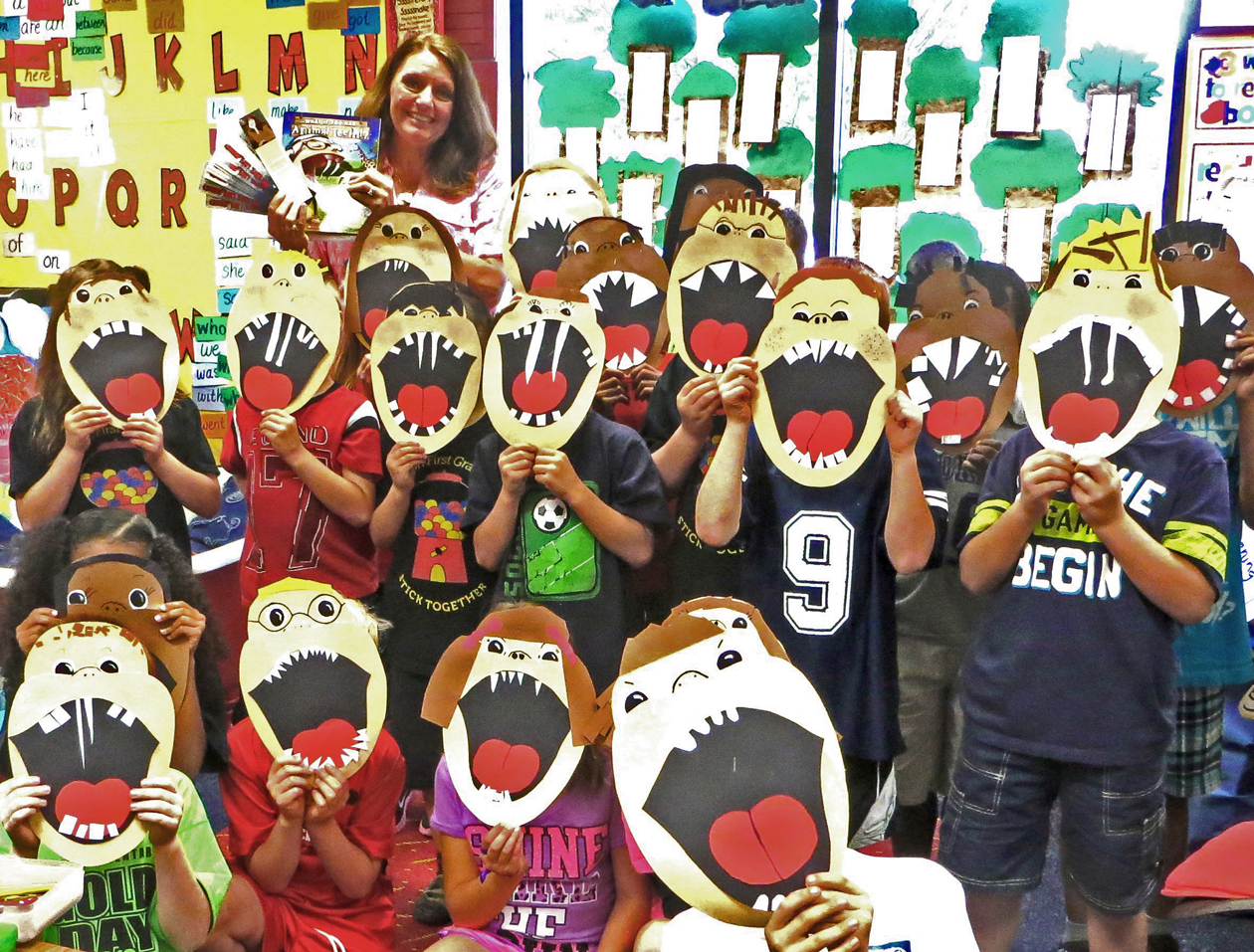 These first graders are showing their enthusiasm for my book What If You Had Animal Teeth?
Your book will include the main story or information. Start with an introduction that grabs attention. Have the story or information unfold page-by-page or in short chapter. Then wrap up with a conclusion that summarizes the key points and leave the reader feeling satisfied.
You may also want to include these features:
Glossary--New vocabulary words introduced in the text.More Information Section--Books and websites children can use to learn more about your topic.Author's Note--What inspired you to write this book or some personal connection you have to the story.Index--This is usually only in longer books for older students to help them quickly locate information.
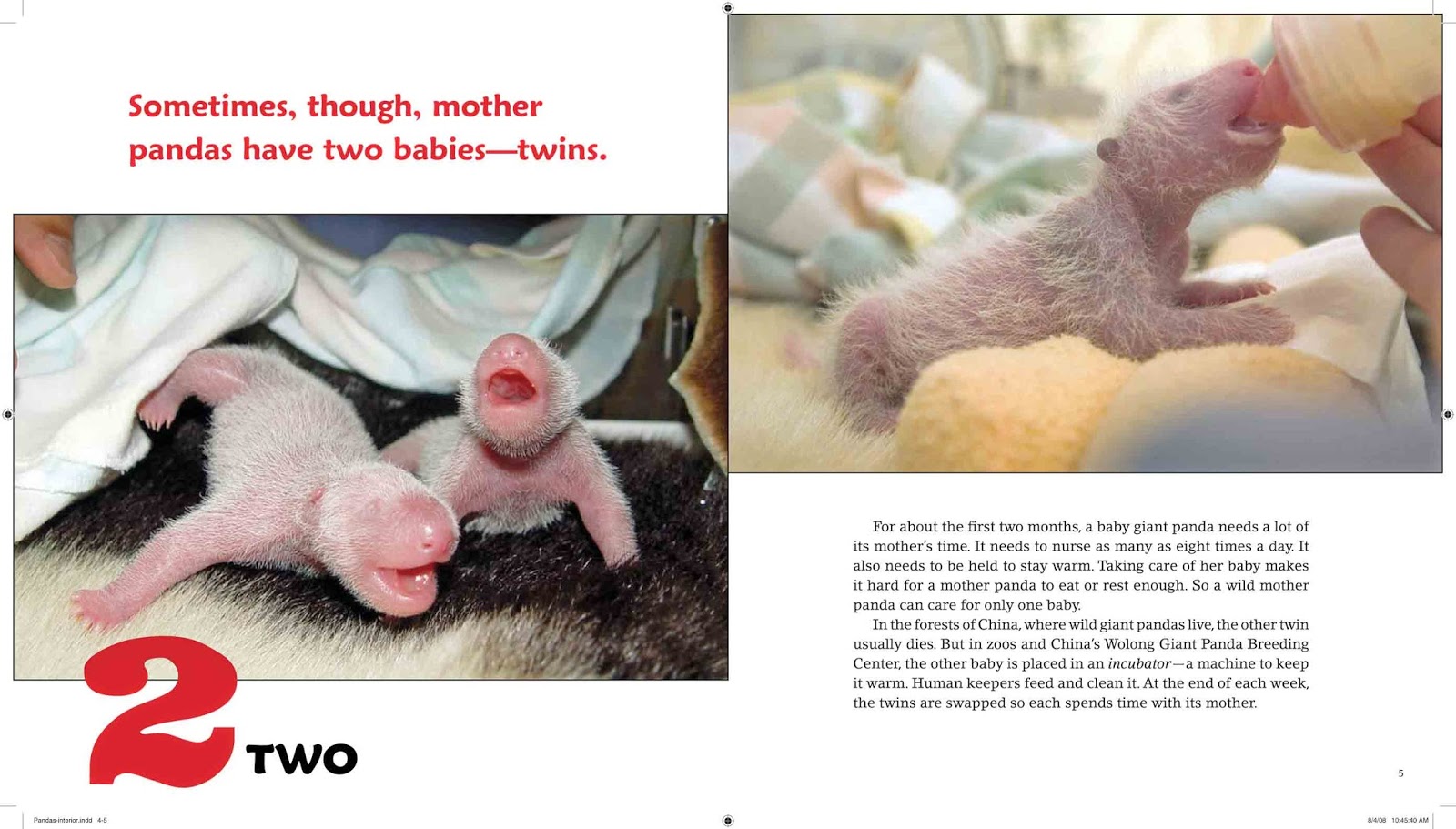 This is a two-page spread from How Many Baby Pandas?
Before you start writing, think about the layout of your book. After I research my book, I always think about how the book will look. By that I mean how each spread--the lefthand and righthand page--will look together. And I consider what children will see and discover by reading that spread. That helps the book flow well and give the book a feeling of completeness. That's really something a nonfiction book shares with a fiction one. The child reading it wants to settle into the book (the introduction) and feel at home in the world it shares. Then the reader wants an adventure or to discover something. Finally, the reader wants to feel there's an ending. The big difference between fiction and nonfiction is that many times readers are challenged to use what they read. They might help save an animal, improve the world, or realize they've discovered the career they want for their lives.
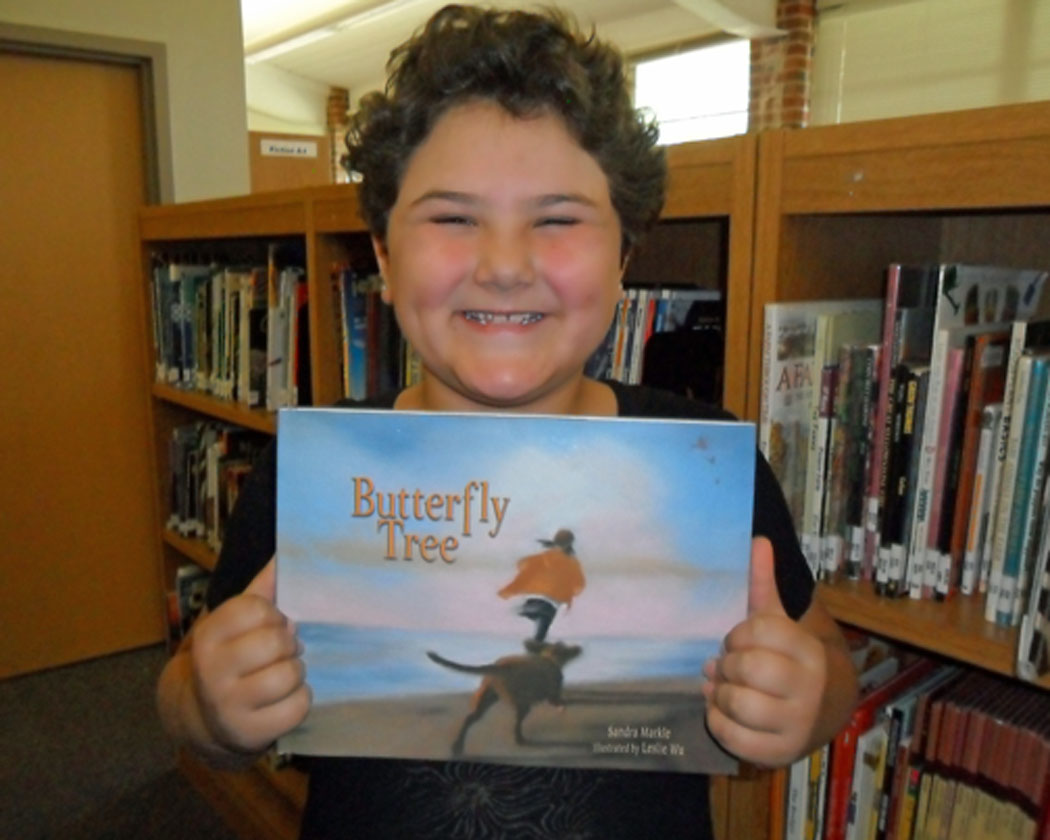 I love to get fan photos! She loves Butterfly Tree (Peachtree Publishers, 2011)
So just like a fiction book, today's nonfiction books for children can inspire and change lives. You could do that!!
August 3, 2015
FREE BOOKS!!
I’m excited to share this special opportunity. August 1-31, 2015, AAAS and Subaru are donating classroom sets of award-winning books including my book, THE CASE OF THE VANISHING GOLDEN FROGS! (Millbrook/Lerner).
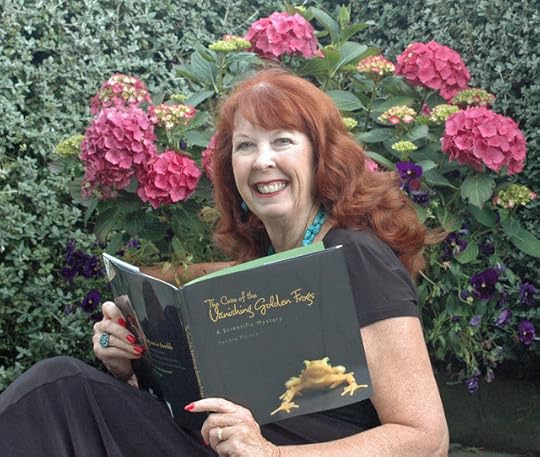
Currently, this offer is being provided through the Eastern part of the U.S. So, if that's where you live, visit your local Subaru retailer for details on how to help your local schools receive classroom sets of my award-winning book! Visit this site for more details.
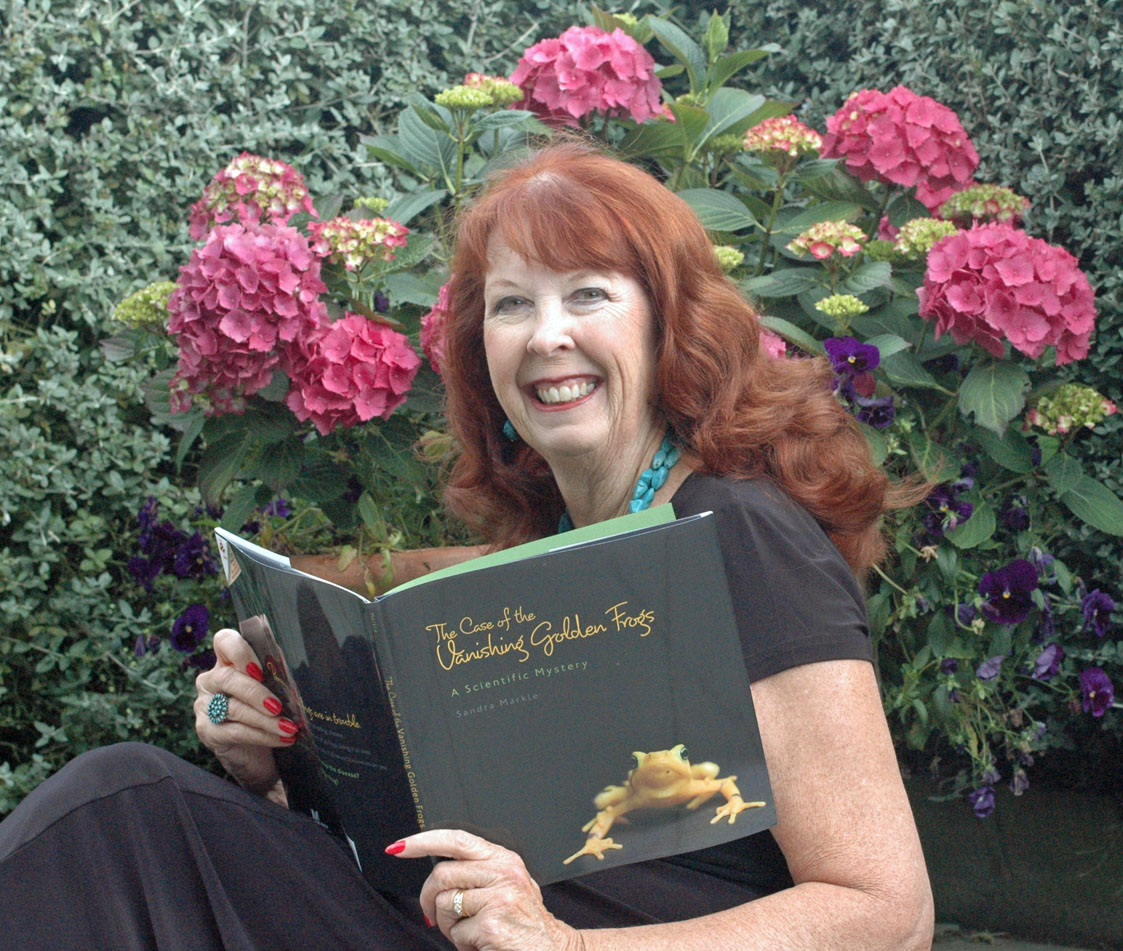
Currently, this offer is being provided through the Eastern part of the U.S. So, if that's where you live, visit your local Subaru retailer for details on how to help your local schools receive classroom sets of my award-winning book! Visit this site for more details.
July 9, 2015
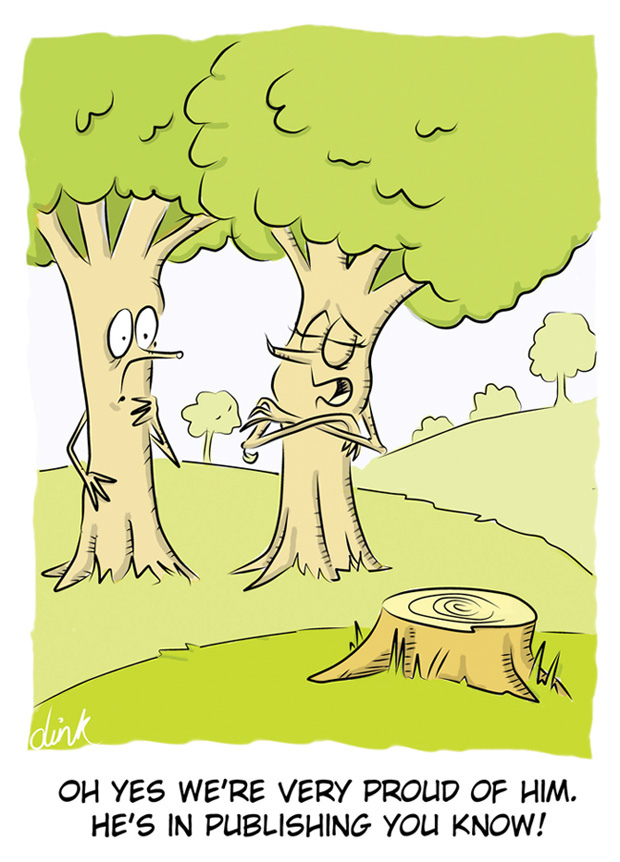
TOP TEN TIPS I WISH I'D KNOWN YEARS AGO FOR GETTING A CHILDREN'S PICTURE BOOK PUBLISHED
Okay, this is going to be one of those top ten lists. Don't know why but lists of tips like this always seem to go from least to most so this one will too. Although, frankly, the order changes for me on a regular basis. This is today's version. SMILE!
TOP TEN TIPS,
I WISH I'D KNOWN YEARS AGO,
FOR GETTING A CHILDREN'S PICTURE BOOK
PUBLISHED
 Please read catalogs digitally. SMILE
NUMBER 10: Study publishers' catalogs thoroughly and regularly. It's the best way to know you're not offering up a book similar to something they've recently published. And to think about the kinds of books they might be looking for.
NUMBER 9: Read interviews with editors and agents. Check out the kinds of books they've worked on or represented and think about whether yours might be a fit--or not. Check if they are also published and, if so, what they've written.
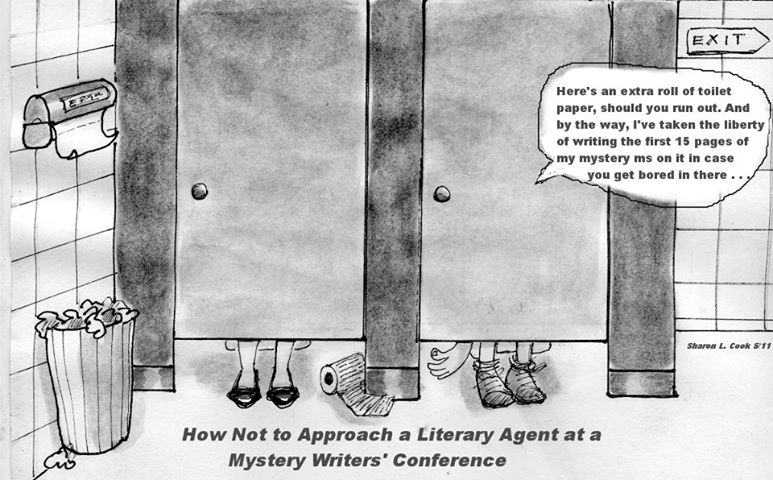 Remember, 9 is only a fact finding step.
NUMBER 8: Read PW Children's Bookshelf to see what editors are newly acquiring. But absolutely do NOT worry about trends.

NUMBER 7: Attend SCBWI conferences and listen. LISTEN. LISTEN!
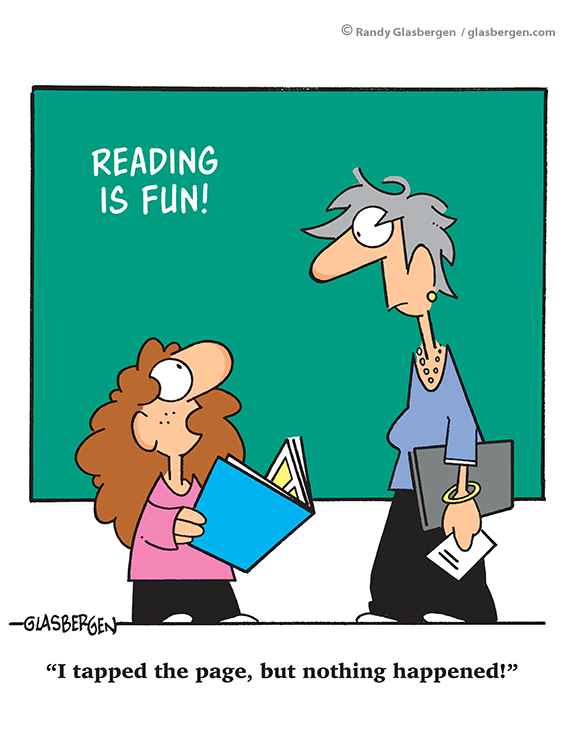
NUMBER 6: Read award winning books. READ more. READ even more!!!
NUMBER 5: Read award winning books aloud. LISTEN!!!!
NUMBER 4: When you think you're ready to send something out, STOP! Let it brew for two weeks and not one day less. Then reread. Revise. POLISH!! Meanwhile, go back through Numbers 10, 9, and 8 to decide who/where to share (and have a Plan B in mind). THEN GET IT THE #%* OUT THERE. Nothing sells sitting on your computer.
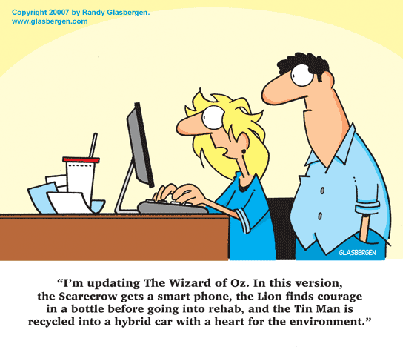
NUMBER 3: Stop writing for yourself. Write to sell. So pick a target audience and get to know them: observe them in action, talk to them, and listen to them.
 I love letters and emails from kids with ideas about the books
 they want me to write.
NUMBER 2: Find a critique group. Share. Bond. Learn from them. Learn with them.
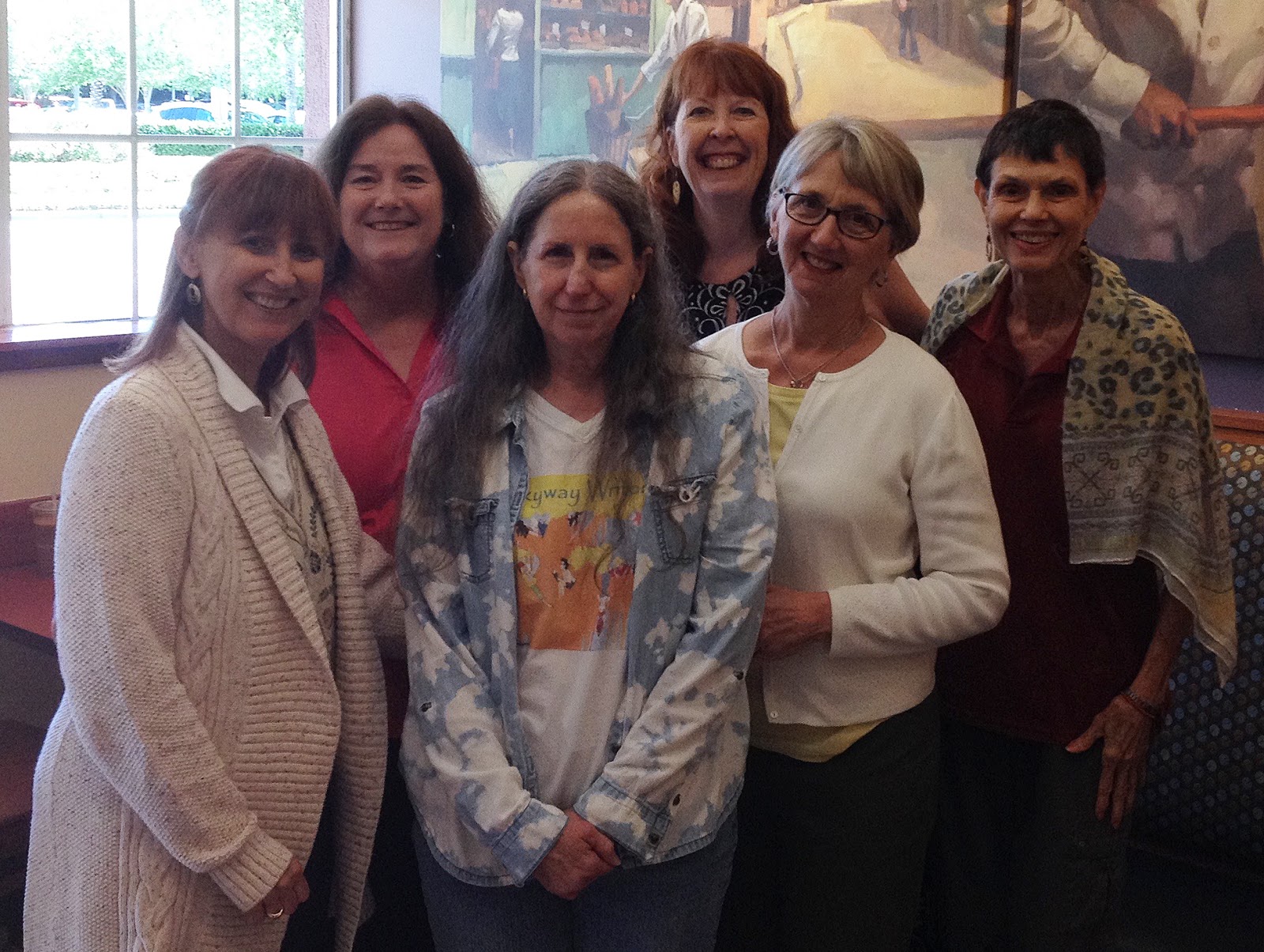 My group (L-R): Janet McLaughlin, Teddie Aggeles, Susan Banghart, Me, Augusta Scattergood, and Melissa Buhler
LOVE YOU GUYS!!!
NUMBER 1: Write. Write. Write. Breath. Sleep. Eat. Write. WRITE. WRITE!!!!!
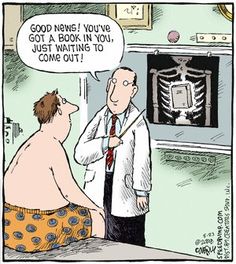
And a final thought to those who've asked me, "How many words should there be in a children's picture book text?" Here's what I tell myself:
Think what you need to say. Then use the very best words you can think of to grab kids and keep them reading (or listening) all the way to the end. Better yet--make them want to read it or hear it again.
July 7, 2015
TIPS ON WRITING NONFICTION PICTURE BOOKS FOR CHILDREN
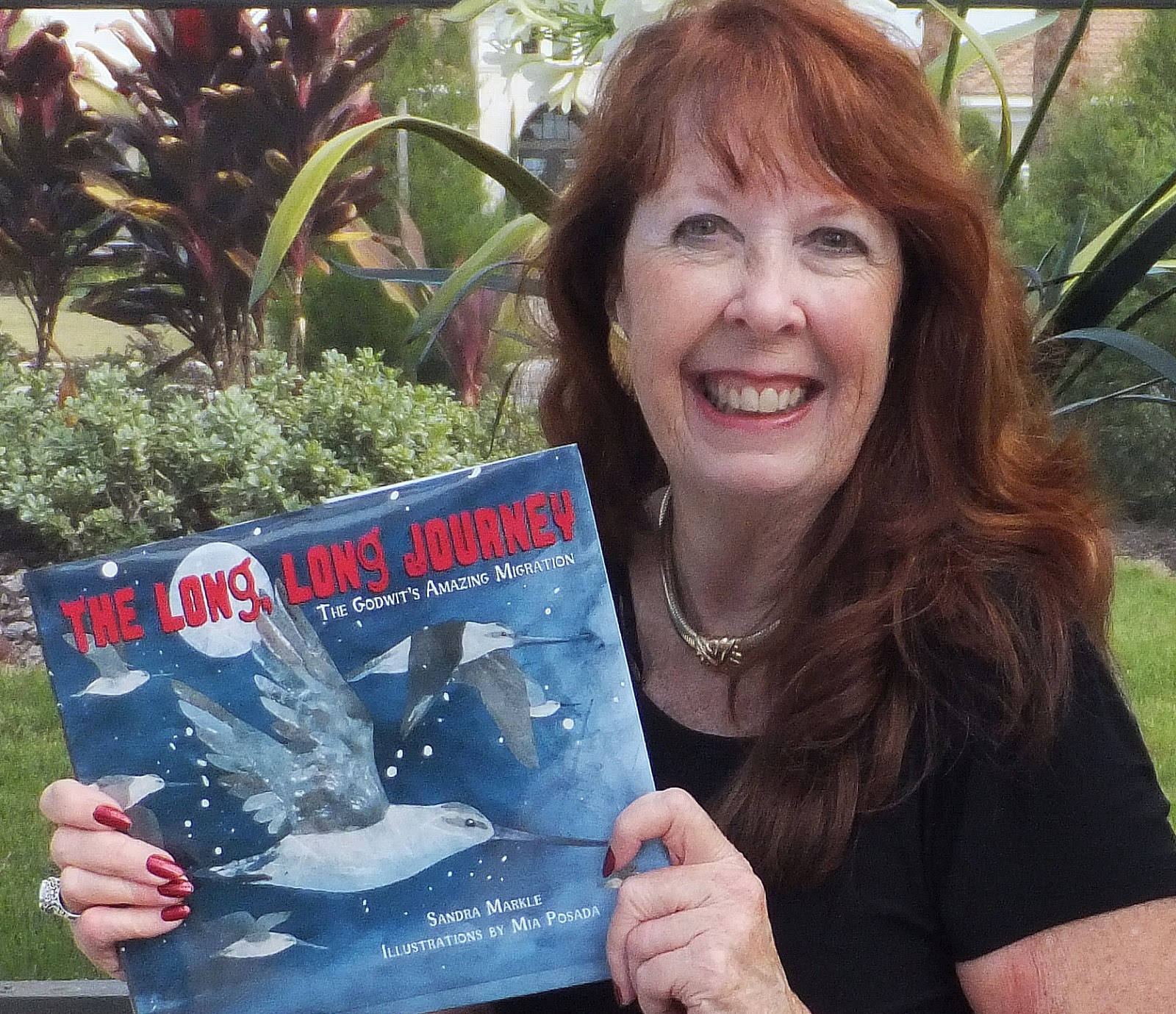
Now we're digging into a topic I'm passionate about. SMILE.
Everything I said about writing picture books holds true here except that there's one more thing--RESEARCH. It's key.
I love the detective work: the figuring out what I need to find out and who I need to ask, ferreting it out, and making sure I've examined the information from every angle. People have asked me how I research my books, which reminded me of my friend who wanted a tour inside my brain to see how I think when I work. So here goes.
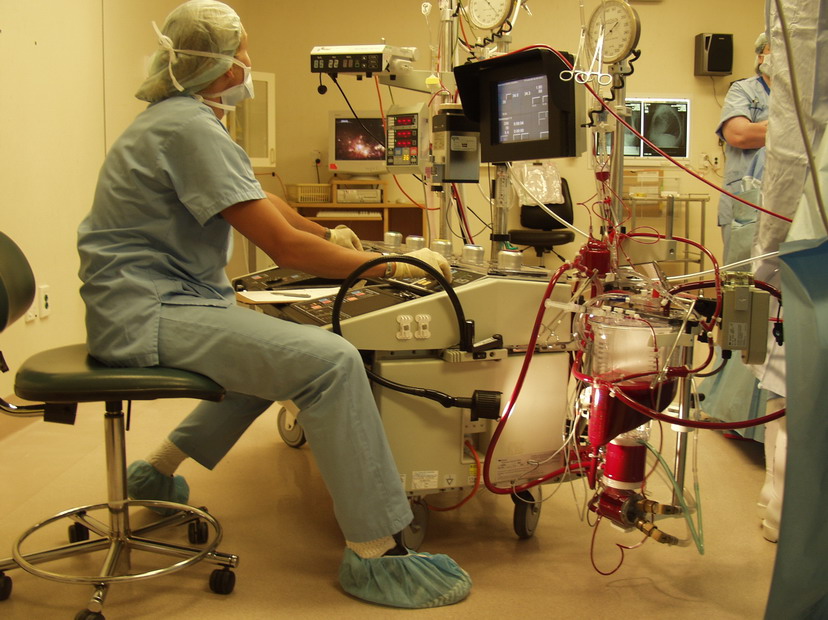 Open Heart Surgery I suited up to observe.
Ultimately, for me, it's all about talking to people: experts, researchers, scientists, people with real-life experience being there, doing that, seeing for themselves.
But to find those people and, frankly, to be worthy of their time talking to me, I read about whatever subject I'm tackling: bats, honeybees, traumatic brain injury, open heart surgery, you name it.
I read books, journals, newspapers, every website with any related snippet (that I trust because there is frankly a lot of crap posted by unreliable sources). I try to think of all the nuances of the subject I should examine. And I look for WHO the people are studying, investigating, observing. I also take note of what school or organization they're affiliated with because that's usually key in tracking them down. Although I have to tell you finding people can be a journey and bring surprises. One of my favorite stories is about interviewing William Shockley, one of the three scientists awarded the Nobel Prize in Physics for inventing the transistor.
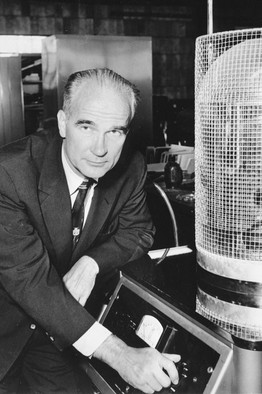 William Shockley
I was determined to interview all three of these men and had already interviewed the other two: J. Presper Eckert and John Mauchley. In fact, Unisys (the company that bought the company Eckert founded) flew me to Philadelphia just to lunch with J. Presper Eckert. TALK ABOUT A MEMORY!
However, try as I might, I couldn't get a lead on contact information for William Shockley. So I decided to back door it. By that I mean I started digging for the man's hobbies and interests. Anything that could connect me to people who were in contact with him. I finally found one.
William Shockley was an active sponsor of the Repository for Germinal Choice (also known as the Genius Sperm Bank). I contacted them and eventually set up a phone interview. William Shockley began by saying, "I never do interviews."
I said, "Okay." And started asking him about everyday things. Eased into his work and inventing the transistor. He talked for an hour. It was fascinating. Like holding hands with history.
And probably the best complement I've ever received was when he said good-bye he added, "You can call me any time." We did talk several more times.
In fact, I'd say I learned my interviewing strategies from William Shockley:
Always be prepared (know the subject and have meaningful questions).
Always ease into what you really want to know.
And when the person is hesitant to share ease around that subject and slip back a little later.
Always check any quotes to be sure it's what they want to share.
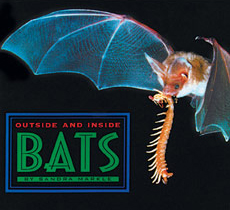
And here's the WHY I always seek out the experts. Years ago when I was working on OUTSIDE AND INSIDE BATS (Atheneum), I wanted to include information about the different ways bats move around. I mean flying is obvious but some hop on the ground and I found a photo in a respected magazine (won't name it for obvious reasons) that showed a bat swimming. I also found reference to bats swimming in a couple of books. So I tracked down a bat researcher and asked him how common swimming was for bats.
His response was, "PLEASE, don't say they can swim. I know about that photo but it's wrong!" He went on to tell me he was there when the photo was taken. To his dismay, the photographer threw the bat in the water. So what had appeared to me to be a look of determination on the bat's face was, in fact, panic. To this day, I never tackle any research without thinking, "I have to be sure I find the ultimate source who can tell me the truth."
Children deserve nonfiction to be absolutely accurate.
 Researching my nonfiction picture books has allowed me the privilege of talking to amazing people around the world. Sometimes from remote places. I remember interviewing Scott Powell for ANIMAL SCAVENGERS: ARMY ANTS (Lerner).
 It was by satellite phone while he was in the jungle watching army ants in action. And Nikita Ovsyanikol in Russia told me such great stories about his experiences studying polar bears on Wrangel Island that besides ANIMAL PREDATORS: POLAR BEARS (Lerner) I also wrote WAITING FOR ICE (Charlesbridge).
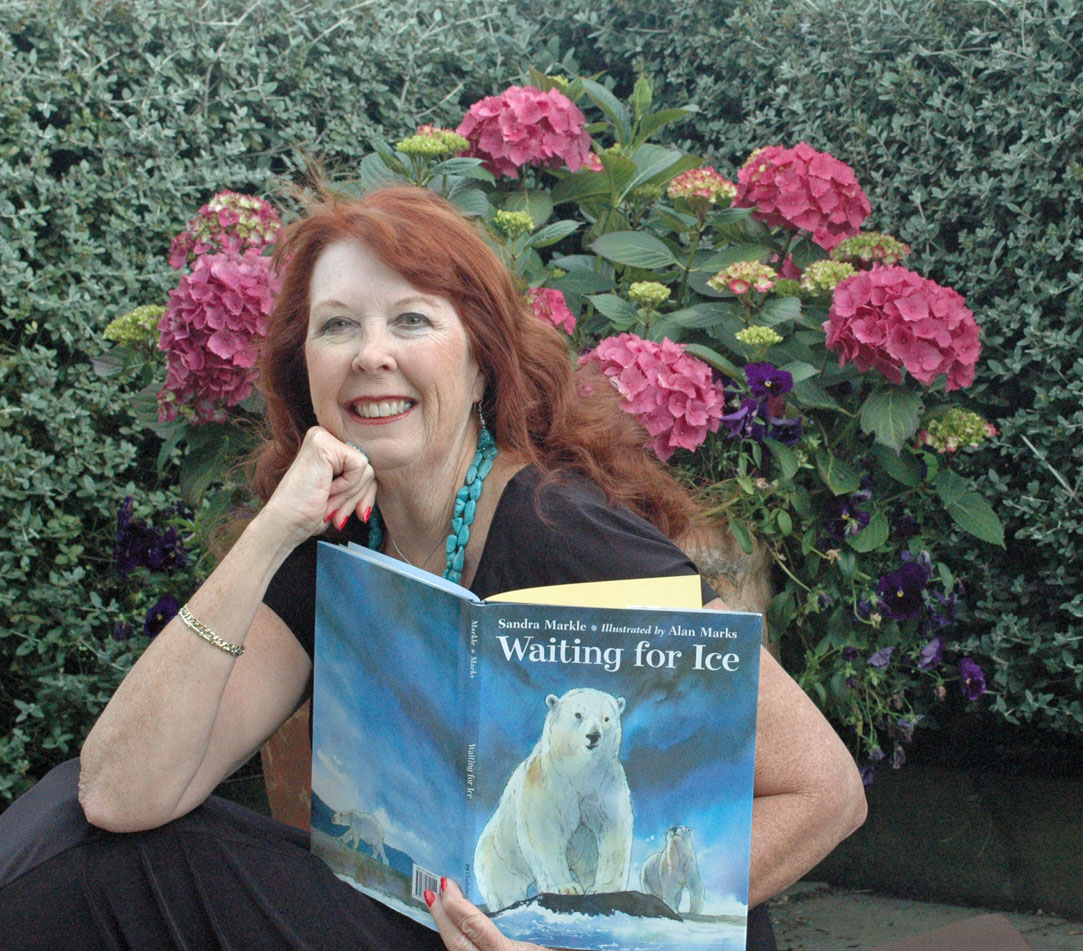
And there was the day Dr. Melissa Behr shared how she climbed down a frozen waterfall into a mine to try to figure out what could possibly be killing hibernating little brown bats for THE CASE OF THE VANISHING LITTLE BROWN BATS (Millbrook/Lerner). Wow! What dedication to research.
My daughter Holly has often said I should write a book called SANDRA MARKLE'S PEOPLE just telling about all of the fascinating people I've been blessed to talk to and sometimes meet in the course of researching my books. Even better, some I continue to touch base with from time-to-time to hear what they're doing now. A few, I'm even blessed to count as friends.
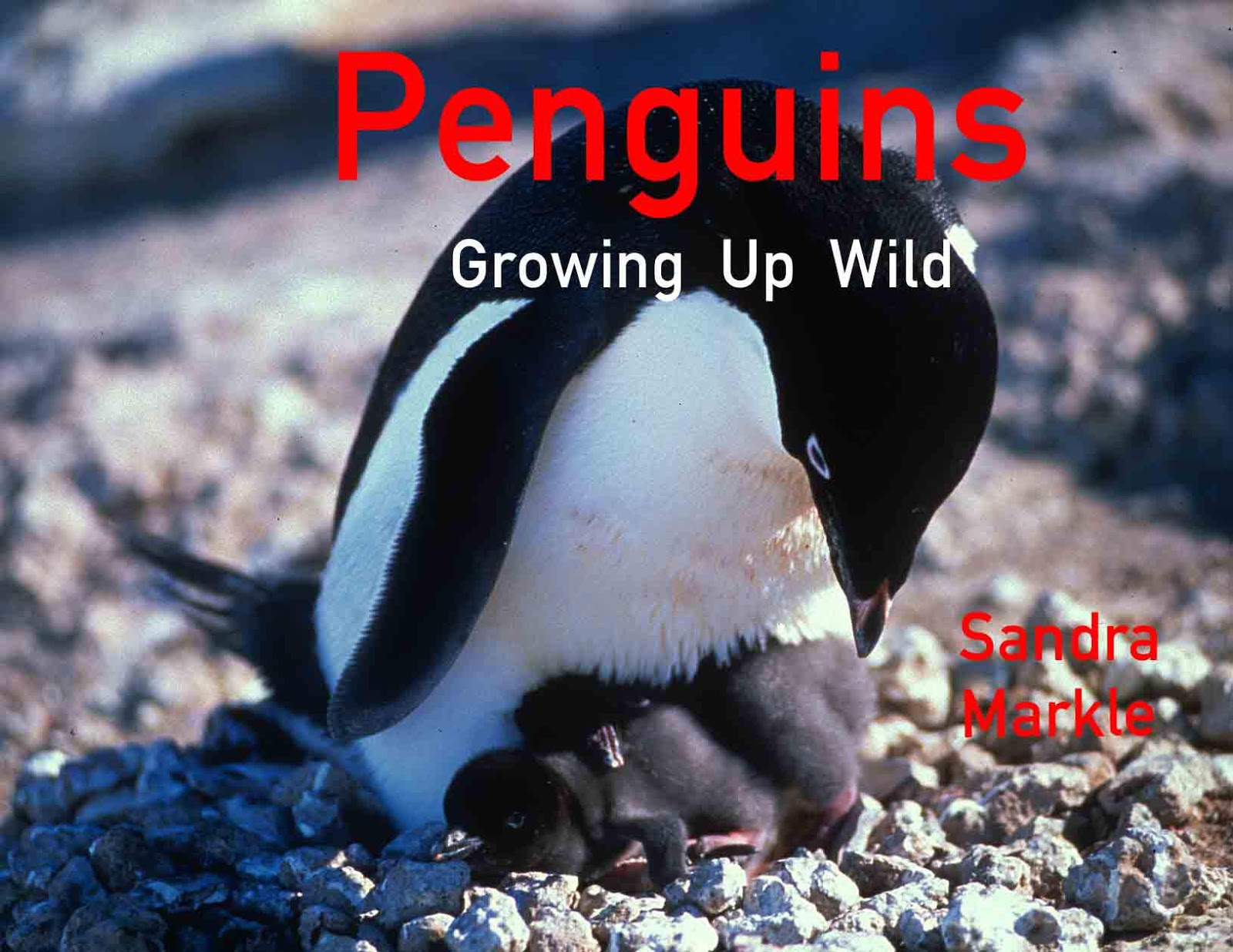 This was one of several penguin books inspired by my Antarctic experiences.
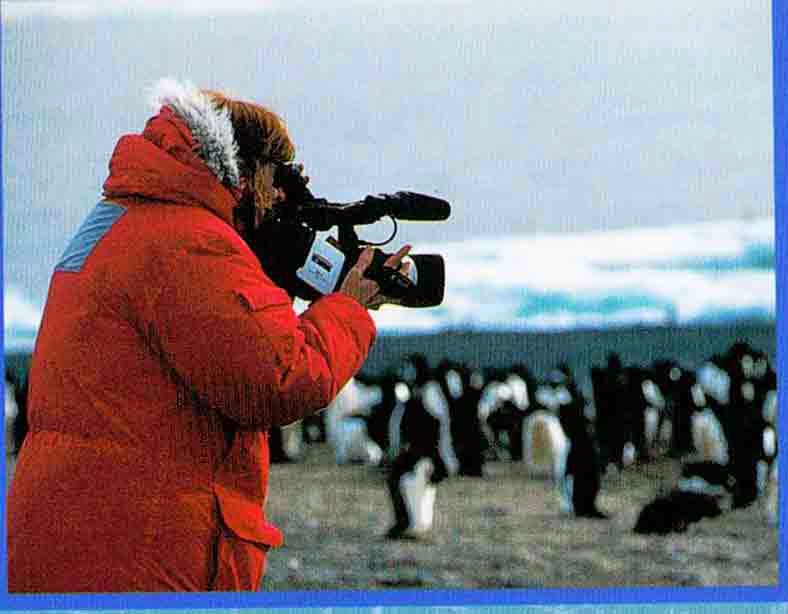
Of course, I have to admit to having an explorer's soul. So some of the research I've enjoyed most is when I've had a chance to do it myself. Like my three trips to Antarctica. I spent two summers camping out with 160,000+ Adelie penguins watching them raise their chicks.
And I spent a 9-month long winter in Antarctica working at McMurdo Station and experiencing firsthand the coldest, fiercest winter on the planet. The record was -149F but trust me anything below -50F is COLD. I had to wear goggles if I went outside because my contacts would freeze to my eyes. BRRRRRR!
I was able to be in the water with a dolphin, touching it and looking it straight in the eye.
 The phone call I received from June Scobee, wife of the Challenger pilot Francis Scobee, was the most touching
 moment in my writing life.
I climbed through the Shuttle training module at NASA, stood under the real Shuttle, was with the press and felt the ground shake the day Sally Ride became the first U.S. woman in space, held a moon rock, and lots more wonderful NASA experiences.
I've helped dissect a giant squid. Been in the operating room watching open heart surgery.
It would take days--months--to list all of the amazing experiences I've had researching my nonfiction picture books.
After the research, the process for writing nonfiction picture books is the same as what I wrote as tips for writing picture books in general. However, I would add two more key challenges.
Share what's true and factual in a picture book in a way that grabs readers every bit as strongly as any fictional story.
Make it worthy of being read aloud.
One of the biggest complements I've received in a letter from a child was that one of my books was her favorite bedtime read aloud. I also love that nearly every letter I receive from both children and teachers includes ideas for other subjects they'd like me to write about. That's truly special.
July 2, 2015
TIPS ON WRITING PICTURE BOOKS FOR KIDS
There's something special about children's picture books. It's because they are exactly that--pictures and words together just for children.
The very best of them, and I'll share a few of my favorites shortly, are wonderful because they're the perfect marriage of art and text. I've written quite a few picture books and happily many have been honored with awards.
I'm frequently asked for tips about how I work. In fact, a writing friend recently said she wished she could have a tour inside my brain to see how I think while writing one of my books. SMILE. So I've given my creative process serious thought and, for me, it comes down to the following:
Have a clear vision.
Think in spreads.
Listen to the story like a reader.
Be willing to tweak to merge text to art.
Okay, starting at the top-- Have a clear vision . IMHO, the world is full of stories. I'm constantly on the hunt for that special one worthy of a picture book. I watch, read, talk to scientists and researchers.
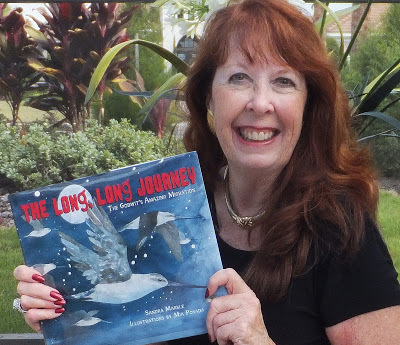 While there are lots of different kinds of picture books, I love to tell stories based on real life animals and people. Stories that have tension, characters you care about, moments of humor, moments that will make your breath catch, and even moments that will tug at your heart.
That may sound like a lot for a thirty-two page book with limited text. But if I do it right, it'll all be there. For me it's often taking a big story, researching and experiencing firsthand whenever possible.
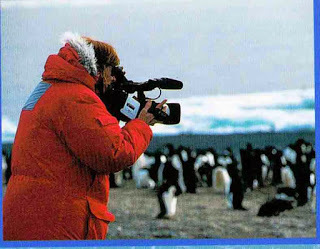
Next, finding the main through line of the action and zeroing in on the heart of the story. Then putting it all through a sieve (mentally) to squeeze out just enough.
So that step is all getting ready. What I think of as brewing the story in my mind.
Next, is step two-- Think in spreads . I'm sure there are lots of picture book writers that jump in and write the story at this point; later figure out how to split it up for the different pages. I think in spreads before I write.
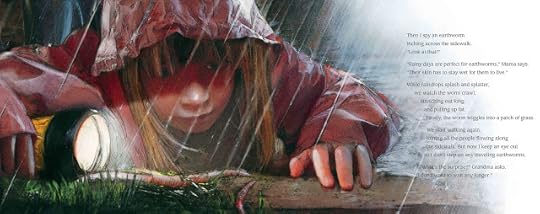 From my book TOAD WEATHER (Peachtree Publishers)
I lay the book out listing LR pp and the page numbers. I decide if I want to start with a full two page spread or if I want a 1 page intro and then into the story. Then I plan out that all important story arc. I'm happy--in fact thrilled--that my publishers have chosen amazing illustrators to bring my stories to life. But I am an artist (painting in oils and water colors) and I admit to my story leaping to full color life in my head at this point. I imagine where children will enjoy seeing the action spread across two pages.
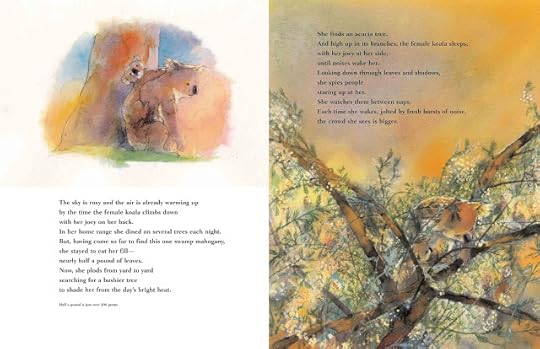 From my book FINDING HOME (Charlesbridge)
And where the story will be more interesting broken into one section on the lefthand page and showing what happens next on the righthand page. I also think long and hard about the action moments in the story: what will illustrators be able to show; what will children love seeing.
At last, I write. However, I described this step as Listen to the story like a reader . That's because my writing process goes like this:
I write and read aloud. Rewrite and read aloud. Revise and read aloud.Tweak and read aloud.
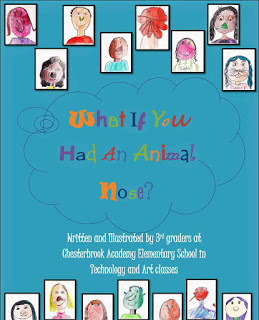 I probably read one of my picture books aloud gazillion times during the course of writing it. And every time I think about children reading it--even better sharing it with others.
You don't believe me? Ask my husband. SMILE!
I usually start each writing session by reading aloud something I've written that feels like it sets just the right tone, pacing, and rhythm for this new story. Then I dig in. And the story sticks with me even after my work session ends.
When the text for one spread doesn't feel quite right, it keeps replaying in my mind. And I frequently rush to my computer or grab a notepad to jot down a phrase or wording change to fix that spot later. There does comes that moment when the story feels right. It's like finishing a jigsaw puzzle--the good feeling of all the pieces clicking into place. That's not to say I won't revise more later. SMILE. There's also the editing process. I've been blessed with wonderful editors to work with who ask me questions or challenge me to think about certain parts of my picture books. Then I make still more tweaks.
And read aloud some more.
The final part is short but critical. The author and illustrator don't communicate--well, we do through our editor but we don't talk directly to each other. The reason is the purest creative process happens when the illustrator can bring his or her own vision to the picture book. I first see the illustrations when they're just sketches. Sometimes, those are very rough sketches.
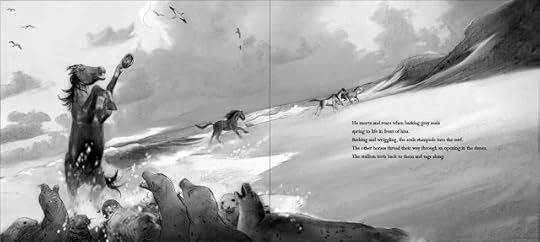 From my book RACE THE WILD WIND (Walker)
Other times, they're very detailed. I remember getting the sketches for RACE THE WILD WIND . Layne Johnson's black and white pencil sketches were so amazingly detailed I called my editor and asked, "Are we doing this book in black and white?"
I believe my role during the illustration process is to make sure anything factual, like anything scientific, is accurately portrayed. But I also believe in doing my part to merge the story with the art. In TOAD WEATHER , for example, I didn't have a moonlit scene. Thomas Gonzalez, though, created an awesome moonlit scene. So I worked the moon into the text. SMILE.
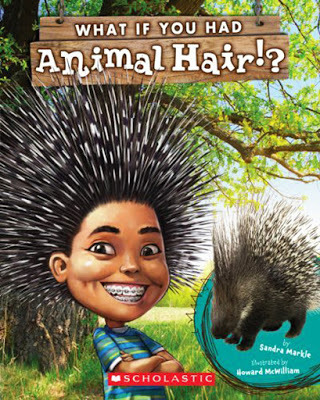
Also, I've now written three WHAT IF YOU HAD ANIMAL PARTS books. I love Howard McWilliam's illustrations for this series. And as I worked on the newest book WHAT IF YOU HAD ANIMAL EARS?! (coming out 2016) I found myself giving the kids having animal ears things to do that I knew Howard would turn into super cool art.
Finally, as promised, here's a list of some of my all time favorite picture books by other authors (not in any particular order except as I thought of them):
Possum Magic by Mem Fox
TheVery Hungry Caterpillar by Eric Carle
The Snowy Day by Ezra Jack Keats
Huge Harold by Bill Peet
Brown Bear, Brown Bear What Do You See? by Bill Martin
Two Bad Ants by Chris Van Allsburg
The Church Mouse by Graham Oakley
Down The Back of the Chair by Margaret Mahy
The True Story of the 3 Little Pigs! by Jon Scieszka
Winnie the Witch by Valerie Thomas
Feathers for Lunch by Lois Ehlers
The Rascally Cake by Jeanne Willis
And lots more but this is a good start. SMILE. Most of all love the process and the book you write is bound to shine.
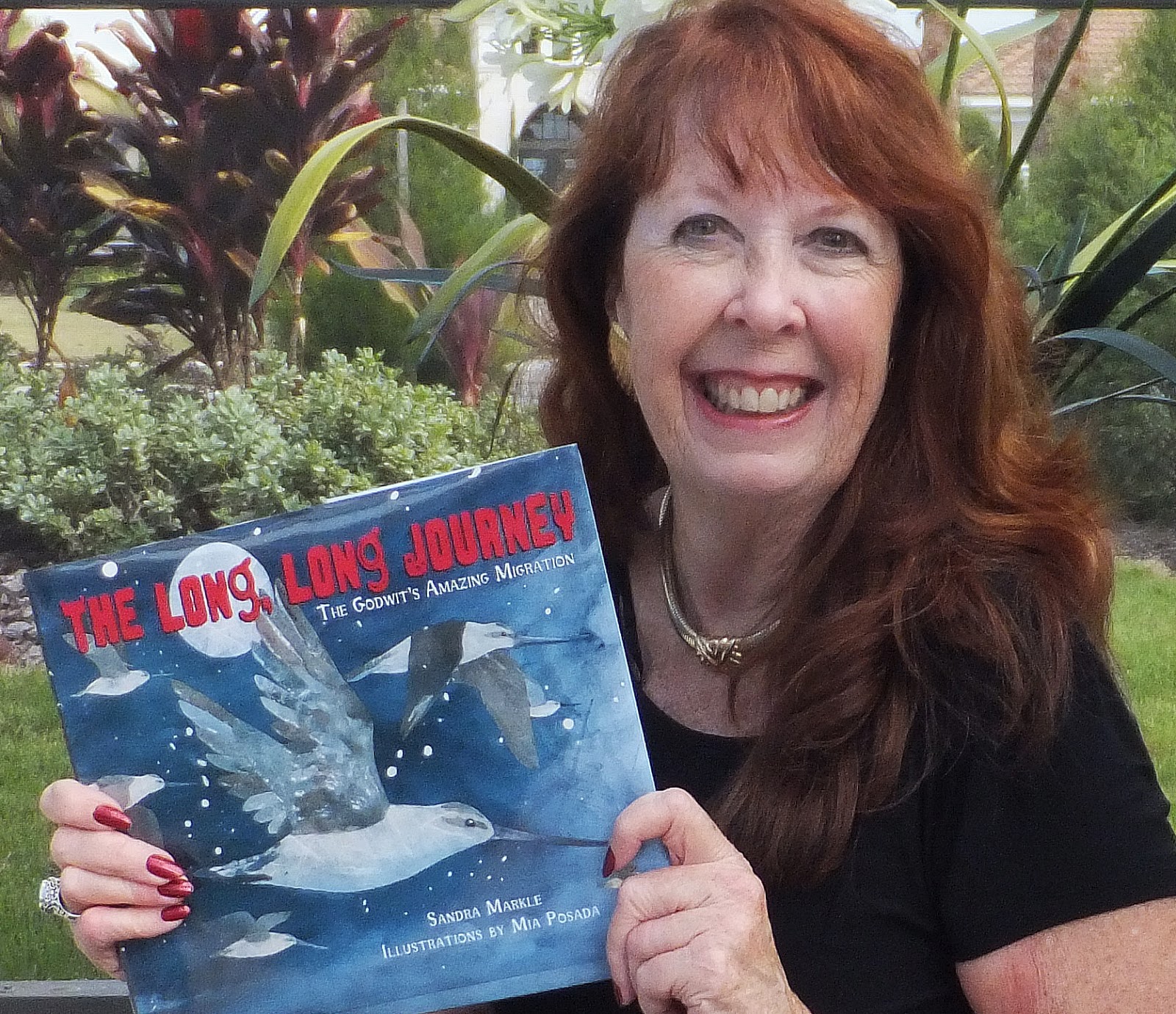
The very best of them, and I'll share a few of my favorites shortly, are wonderful because they're the perfect marriage of art and text. I've written quite a few picture books and happily many have been honored with awards.
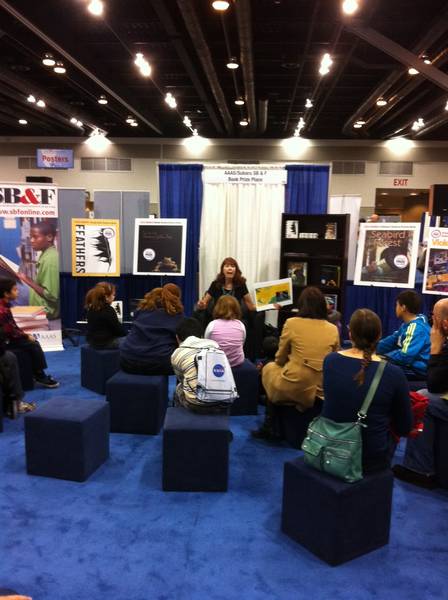
I'm frequently asked for tips about how I work. In fact, a writing friend recently said she wished she could have a tour inside my brain to see how I think while writing one of my books. SMILE. So I've given my creative process serious thought and, for me, it comes down to the following:
Have a clear vision.
Think in spreads.
Listen to the story like a reader.
Be willing to tweak to merge text to art.
Okay, starting at the top-- Have a clear vision . IMHO, the world is full of stories. I'm constantly on the hunt for that special one worthy of a picture book. I watch, read, talk to scientists and researchers.
 While there are lots of different kinds of picture books, I love to tell stories based on real life animals and people. Stories that have tension, characters you care about, moments of humor, moments that will make your breath catch, and even moments that will tug at your heart.
 That may sound like a lot for a thirty-two page book with limited text. But if I do it right, it'll all be there. For me it's often taking a big story, researching and experiencing firsthand whenever possible.
Next, finding the main through line of the action and zeroing in on the heart of the story. Then putting it all through a sieve (mentally) to squeeze out just enough.
So that step is all getting ready. What I think of as brewing the story in my mind.
Next, is step two-- Think in spreads . I'm sure there are lots of picture book writers that jump in and write the story at this point; later figure out how to split it up for the different pages. I think in spreads before I write.
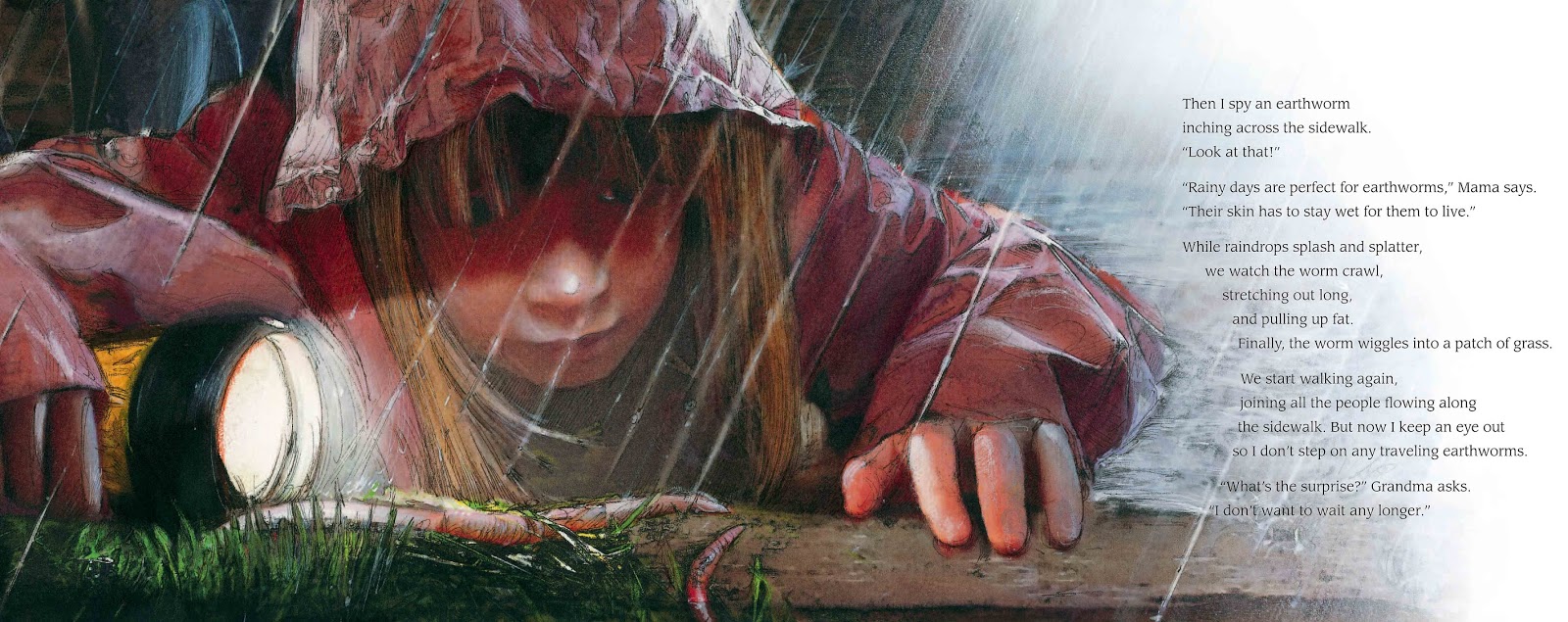 From my book TOAD WEATHER (Peachtree Publishers)
I lay the book out listing LR pp and the page numbers. I decide if I want to start with a full two page spread or if I want a 1 page intro and then into the story. Then I plan out that all important story arc. I'm happy--in fact thrilled--that my publishers have chosen amazing illustrators to bring my stories to life. But I am an artist (painting in oils and water colors) and I admit to my story leaping to full color life in my head at this point. I imagine where children will enjoy seeing the action spread across two pages.
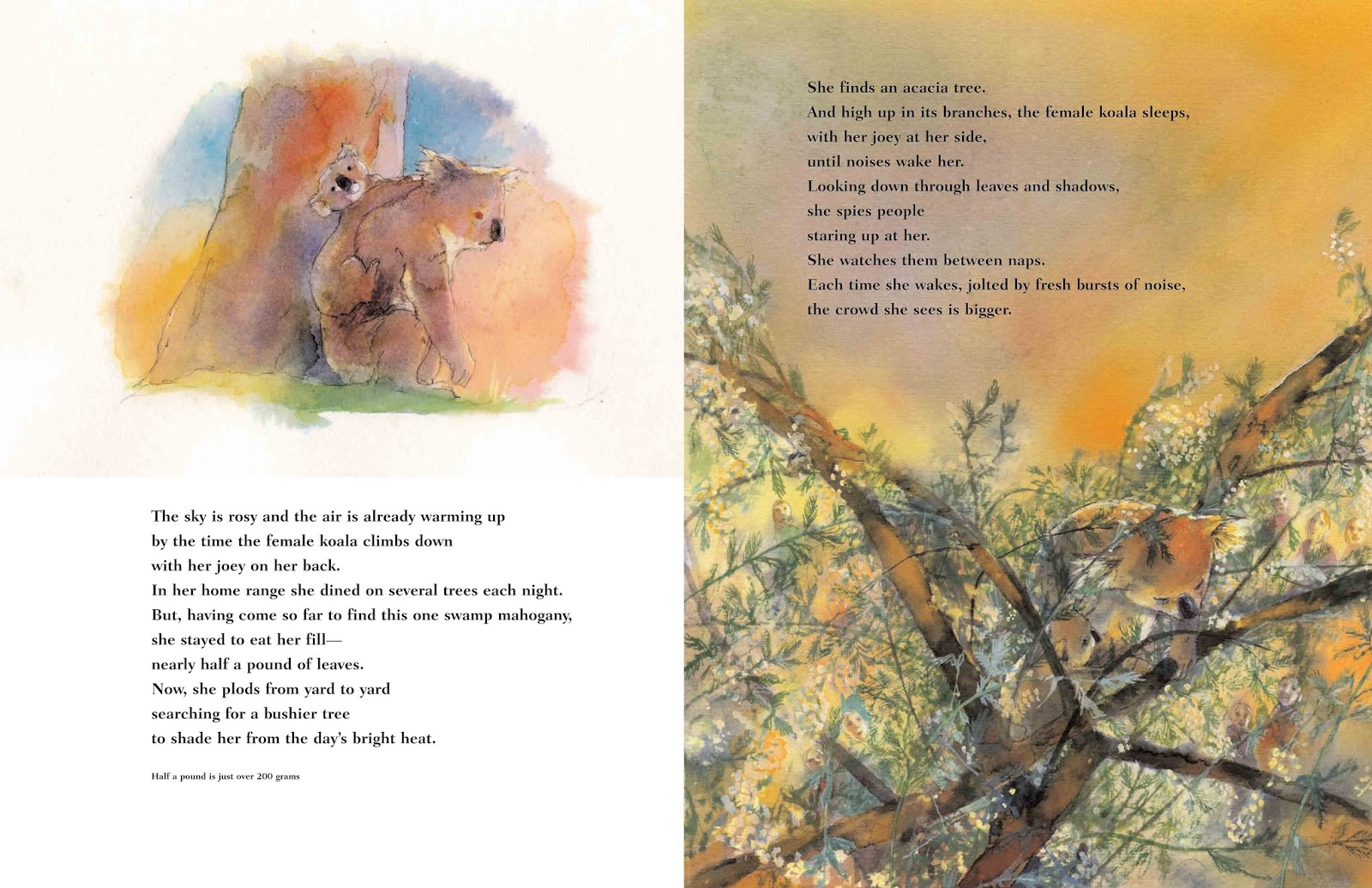 From my book FINDING HOME (Charlesbridge)
And where the story will be more interesting broken into one section on the lefthand page and showing what happens next on the righthand page. I also think long and hard about the action moments in the story: what will illustrators be able to show; what will children love seeing.
At last, I write. However, I described this step as Listen to the story like a reader . That's because my writing process goes like this:
I write and read aloud. Rewrite and read aloud. Revise and read aloud.Tweak and read aloud.
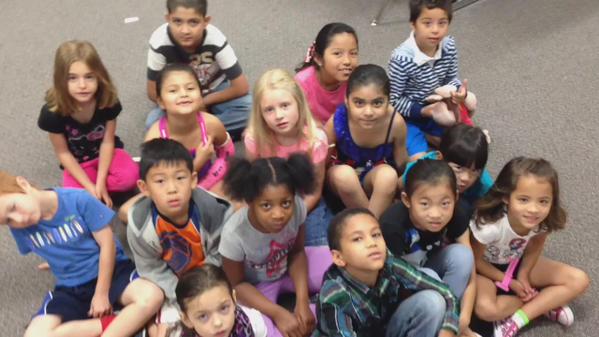
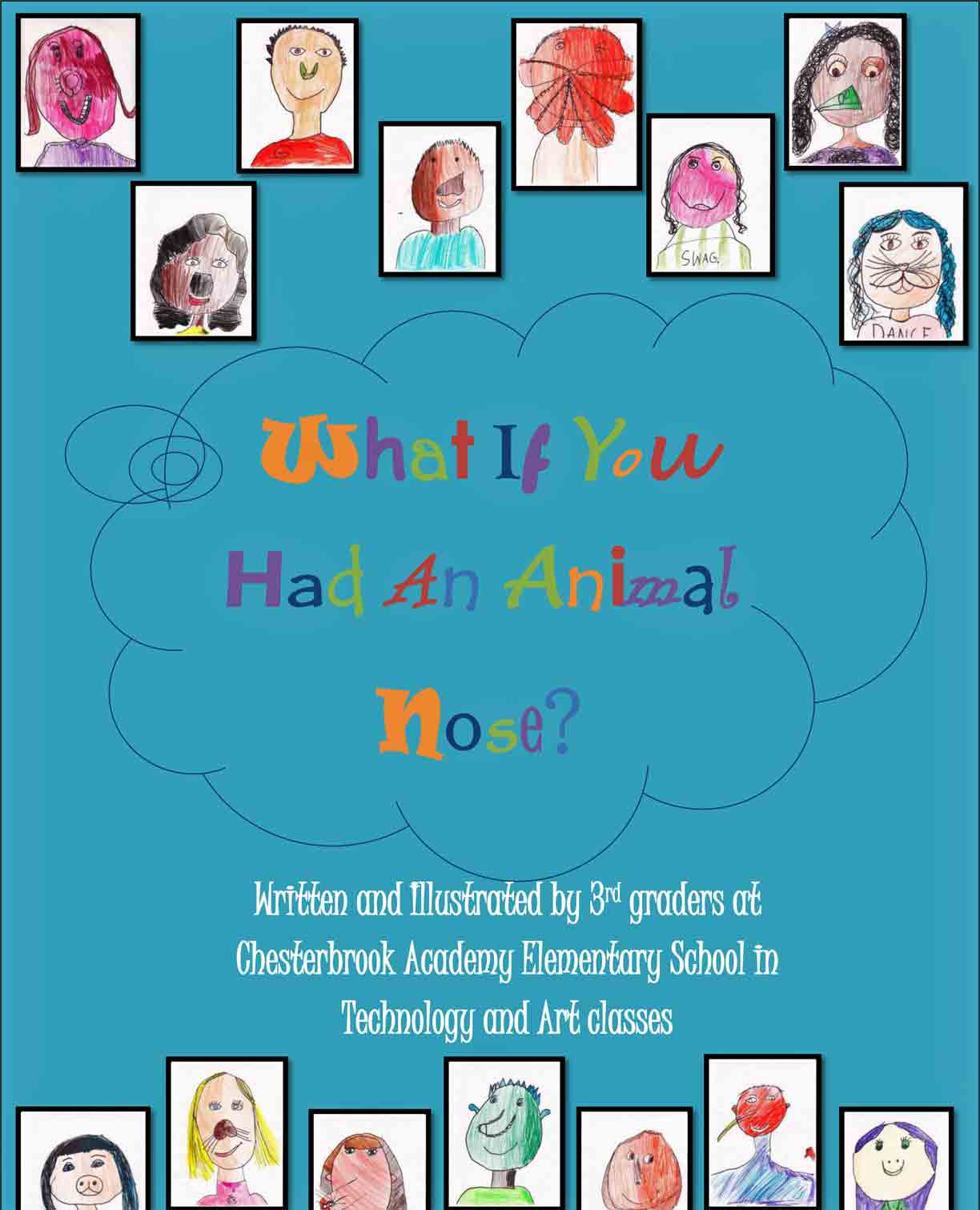 I probably read one of my picture books aloud gazillion times during the course of writing it. And every time I think about children reading it--even better sharing it with others.
You don't believe me? Ask my husband. SMILE!
I usually start each writing session by reading aloud something I've written that feels like it sets just the right tone, pacing, and rhythm for this new story. Then I dig in. And the story sticks with me even after my work session ends.
When the text for one spread doesn't feel quite right, it keeps replaying in my mind. And I frequently rush to my computer or grab a notepad to jot down a phrase or wording change to fix that spot later. There does comes that moment when the story feels right. It's like finishing a jigsaw puzzle--the good feeling of all the pieces clicking into place. That's not to say I won't revise more later. SMILE. There's also the editing process. I've been blessed with wonderful editors to work with who ask me questions or challenge me to think about certain parts of my picture books. Then I make still more tweaks.
And read aloud some more.
The final part is short but critical. The author and illustrator don't communicate--well, we do through our editor but we don't talk directly to each other. The reason is the purest creative process happens when the illustrator can bring his or her own vision to the picture book. I first see the illustrations when they're just sketches. Sometimes, those are very rough sketches.
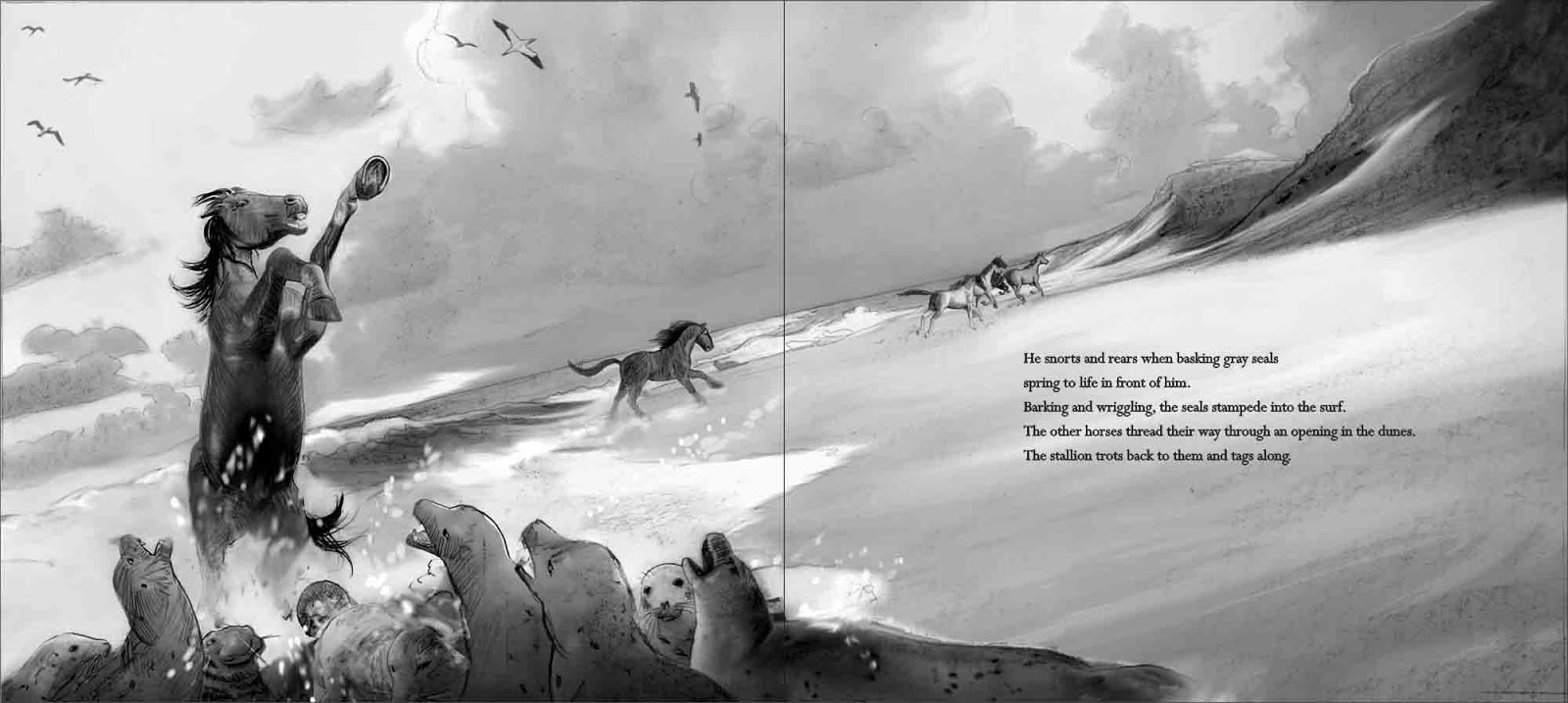 From my book RACE THE WILD WIND (Walker)
Other times, they're very detailed. I remember getting the sketches for RACE THE WILD WIND . Layne Johnson's black and white pencil sketches were so amazingly detailed I called my editor and asked, "Are we doing this book in black and white?"
I believe my role during the illustration process is to make sure anything factual, like anything scientific, is accurately portrayed. But I also believe in doing my part to merge the story with the art. In TOAD WEATHER , for example, I didn't have a moonlit scene. Thomas Gonzalez, though, created an awesome moonlit scene. So I worked the moon into the text. SMILE.
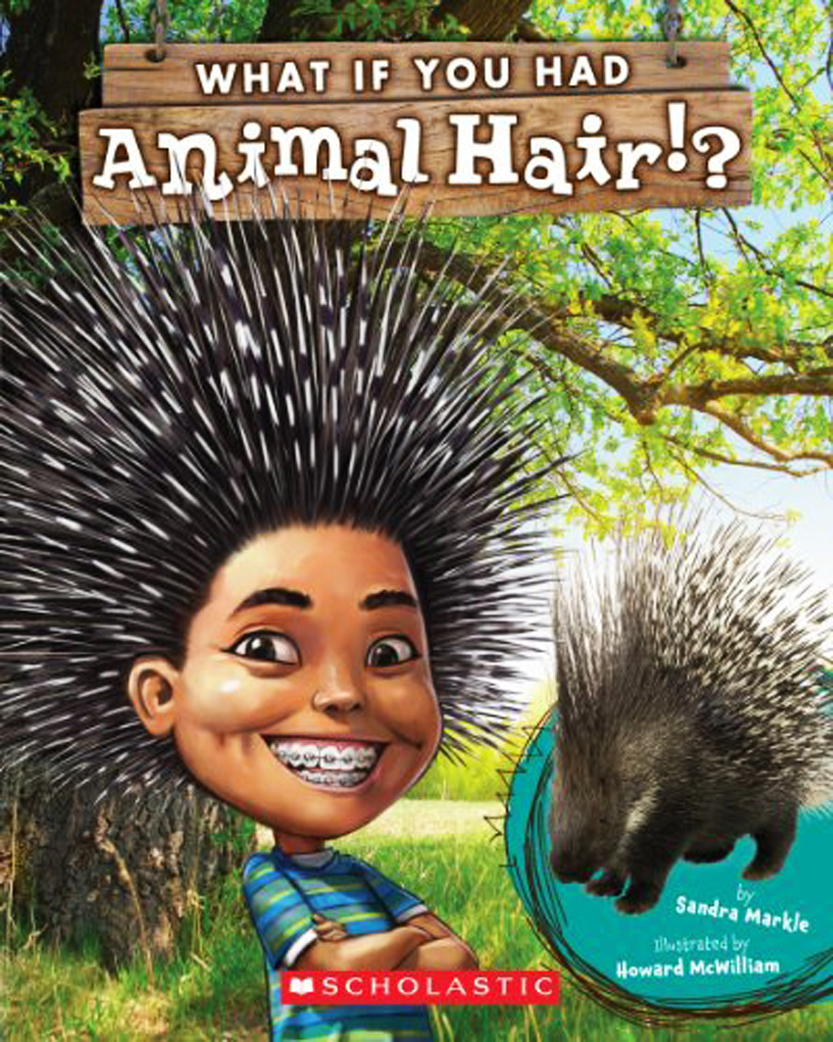
Also, I've now written three WHAT IF YOU HAD ANIMAL PARTS books. I love Howard McWilliam's illustrations for this series. And as I worked on the newest book WHAT IF YOU HAD ANIMAL EARS?! (coming out 2016) I found myself giving the kids having animal ears things to do that I knew Howard would turn into super cool art.
Finally, as promised, here's a list of some of my all time favorite picture books by other authors (not in any particular order except as I thought of them):
Possum Magic by Mem Fox
TheVery Hungry Caterpillar by Eric Carle
The Snowy Day by Ezra Jack Keats
Huge Harold by Bill Peet
Brown Bear, Brown Bear What Do You See? by Bill Martin
Two Bad Ants by Chris Van Allsburg
The Church Mouse by Graham Oakley
Down The Back of the Chair by Margaret Mahy
The True Story of the 3 Little Pigs! by Jon Scieszka
Winnie the Witch by Valerie Thomas
Feathers for Lunch by Lois Ehlers
The Rascally Cake by Jeanne Willis
And lots more but this is a good start. SMILE. Most of all love the process and the book you write is bound to shine.
June 21, 2015
JUST FOR WRITERS......In A Few Verbs
Hello! You haven't heard from me for awhile. I've been busy writing and so that's what I'd like to blog about for a bit--until I run out of steam. Or y'all send me emails telling me to quit. SMILE!
First and foremost, for me, writing is all about language. Okay, that sounds obvious but it's not. Words are amazing. Powerful. Can be wielded like an artist's paint and brush to create a world and everything and everyone in it. Even more amazing words can add the many hues and shades of emotion.
Start by focusing on verbs. They're powerful.
 REALLY!
 For example, Charlie can walk from Point A to Point B. But think how you view what's happening if Charlie---------
runs
dashes
trudges
prances
marches
saunters
strolls
Jump in and brainstorm some other possibilities.
Don't overdo it, of course. Ben Franklin, bless him, cautioned "All things in moderation." Charlie needs to walk sometimes so the other ways he moves have impact.
Definitely take out those adverbs--not just with moderation. SLASH! The name literally means to "add onto" verbs. But adverbs often weaken more than strengthen. Consider these two sentences:
1. Charlie walked easily through the tall grass.
2. Charlie slipped through the tall grass.
Or compare these two.
1. Charlie gently stroked her cheek.
2. Charlie caressed her cheek.
See what I mean. When I'm writing, the first words I focus on and choose like plucking one candy out of box of chocolates are the verbs.
Power up your verbs and your writing will be clearer and more colorful. Dare I say, more interesting.
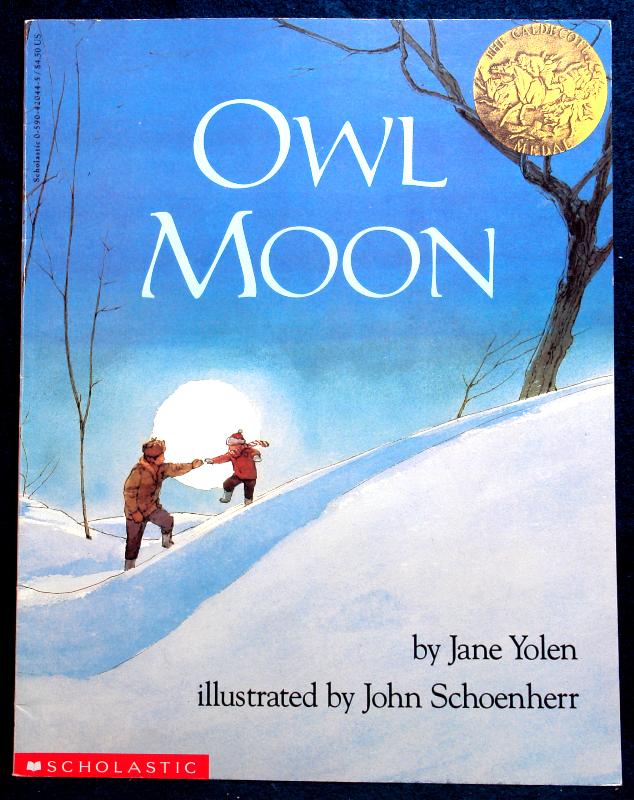
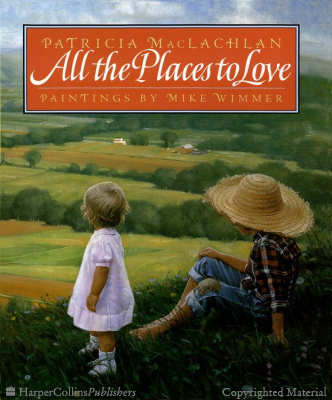
Jane Yolen and Patricia MacLachlan are masters of the power verbs. Read any of their children's books to immerse yourself in language at its storytelling best.
April 20, 2015
CELEBRATE SAVE THE FROG DAY

It's time once again to celebrate SAVE THE FROG DAY. Of course, that also includes appreciating their cousins TOADS.
I value these amphibians for all they do for us:
Eating lots of insects like mosquitoes and flies that would otherwise become pests.
Being food for lots of animals, such as birds, snakes, foxes, and some fish like pike and bass.
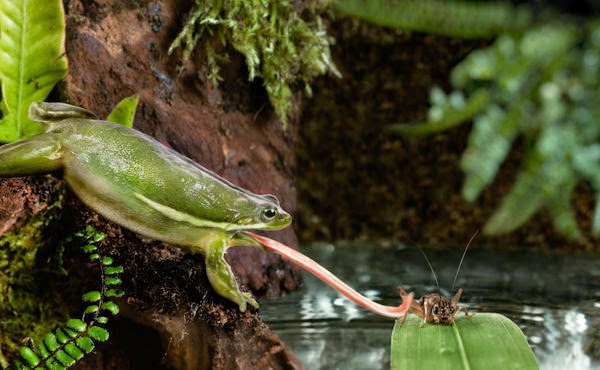
Plus they are just plain cool. Like the fact that they have a sticky tongue attached to the inside front of their mouth and it rolls out in less than a second to snag a bug. Or that to swallow their eyes sink to push food down their throat.
Here are some more fun facts about frogs and toads:
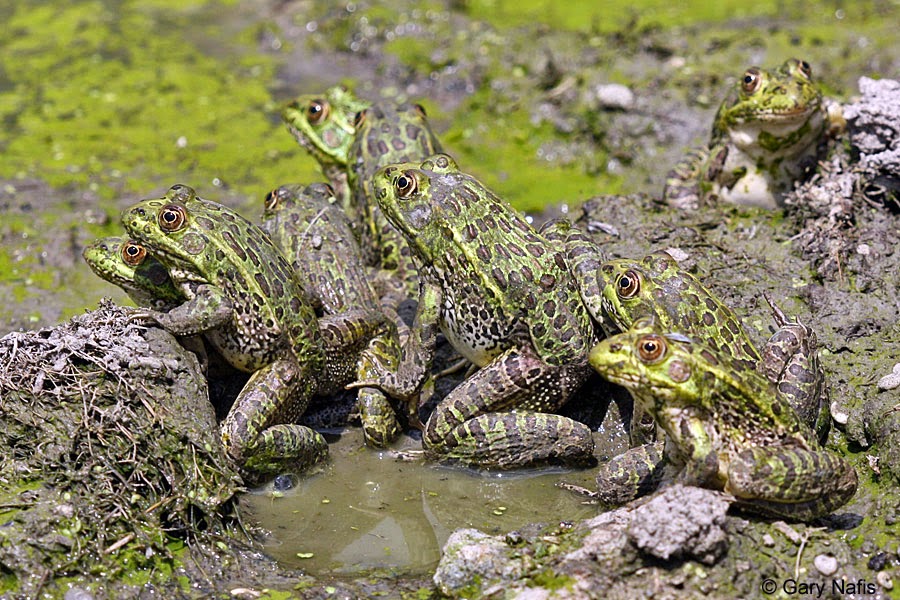
A group of frogs is called an army. A group of toads is called a knot or a nest.
Only male frogs croak. They may also whistle or bark. In some kinds of toads both the males and females make noise.
Some toads play dead or puff up to look bigger, if threatened by a predator.
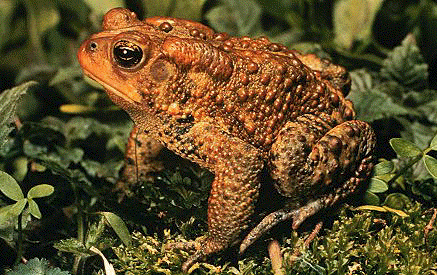
Toads have special glands on the back of their heads. If the toad is stressed, these give off poison that can kill a predator that bites it. It won't cause warts on people but it's best to not touch toads or wash well if you do.

No matter how many times you kiss either a frog or a toad, though,it won't turn into a prince.
And here are some fun frog and toad activities to enjoy in honor of this special event.
Hopping Off The Page
Compare the toads in each of these two book. To do this, first read these books.
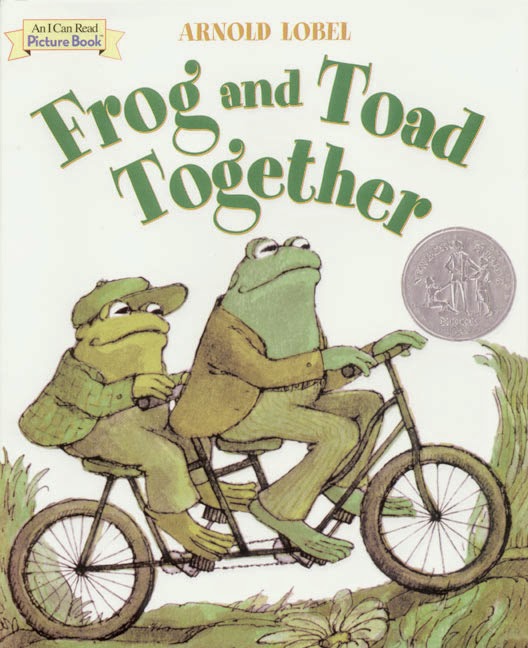
Fiction: Frog and Toad Together by Arnold Lobel (Harper Collins, 1972)
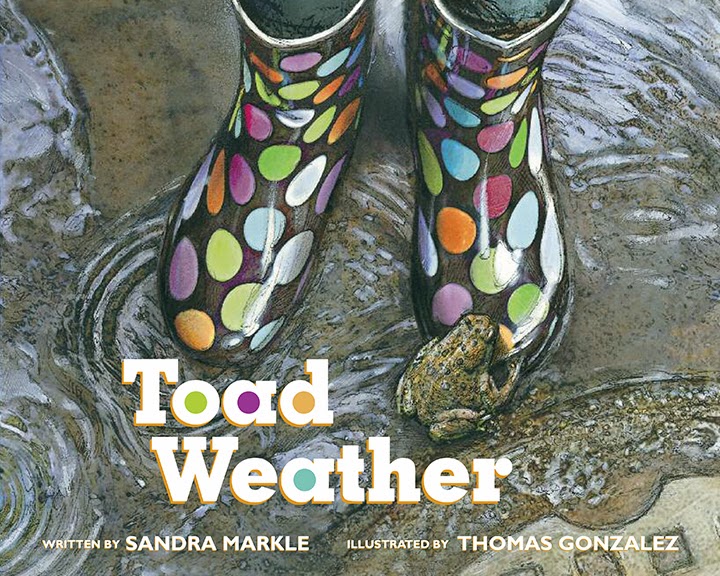
Faction (fictional story where all the facts are true): Toad Weather by Sandra Markle (Peachtree Publishing, 2015)
1. What is one way the toads in these two books are different?
2. What is one way the toads in these two books are alike?
3. What time of day does the fiction story take place? How about the faction story?
4. Look at the pictures of toads in each book. What's one way the toads look alike? What's one way they look different?
Say It In A Poem
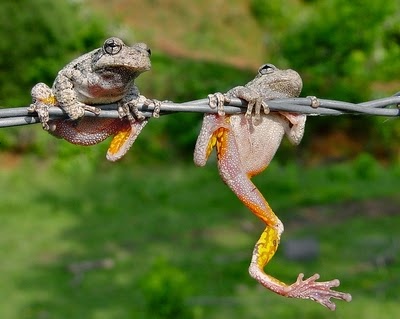
Create a cinquain (say sin-cane) about a frog or toad. This is a kind of poetry first created by the American poet Adelaide Crapsey about 100 years ago.
This kind of poem is just 5 lines long. It usually tells a short story about something and follows this format--2,4,6,8.2. That means
The first line has just 2 syllables (pronounced beats)
The second line has 4 syllables.
The third line has 6 syllables.
The fourth line has 8 syllables.
The fifth line has just 2 syllables again.
What's more there's a flow to the short story shared in a cinquain. It goes like this:
Line 1 = Name the subject
Line 2 = Describe it
Line 3 = Show some action
Line 4 = Share some feeling about it
Line 5 = Give a quick conclusion
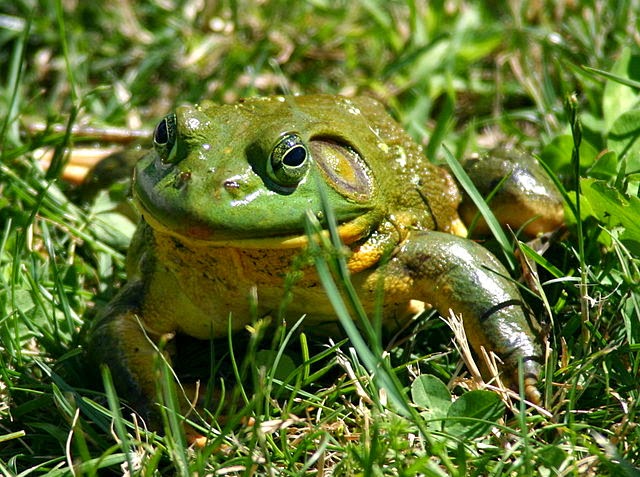
For example
Bull frog.Green and hungry.Sees a fly and snags it.What a master garden insecthunter!
BONUS Fold A Hopper
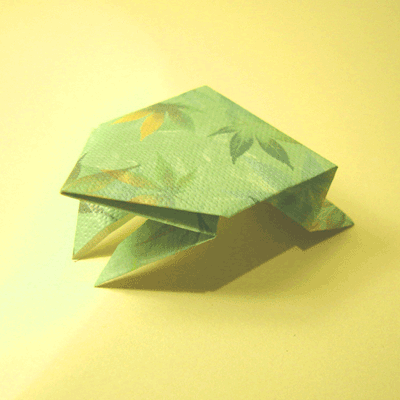
Visit this website and follow the directions to fold a paper frog. Then push on the frog to make it hop off a starting line. Measure how far it hops.
Try your paper hopper on 3 different kinds of surfaces, such as carpeting, wood and tile. On which does your frog hop the farthest? How much farther is the longest hop than the shortest?