Charles Harris's Blog, page 2
July 22, 2022
Creating a Memoir

After publishing two novels, in early 2021 I decided I should write something about my life before I struck off on another fiction book. Publishers, book sellers and readers justifiably avoid memoirs and other autobiographies unless the author is well-known. Because I was not a sports hero, an entertainment star, a famous politician or an infamous criminal, I knew my story would not deserve public distribution, which was fine with me. I wanted to write this story for my family. Plus, I wanted to include personal, family and financial details that I had no interest in sharing outside my family.
Before I started writing, I tested myself by asking why I wanted to do it. I came up with four reasons. First, I wanted to capture some factual history about my life while I was still mentally and physically capable of recording it. I knew little about my mother’s life and even less about my father’s. I wanted to leave better information about me for my wife, my children and my grandchildren. Second, I wanted the story to help my family understand who I am—where I came from, what I accomplished, what I failed to do, how I thought and so on. Third, I hoped that thinking about my life would give me some new insight that might help me become a better person in the time I have remaining. Fourth, and most important, I wanted to leave a gift for my children and grandchildren.
That fourth reason deserves some explanation. Every life story includes the risk that it is motivated by ego. I knew my story would be no different. After all, for any of my efforts to write this story to matter, I had to assume someone would be willing to take the time amid their own busy lives to read it. So, I had to admit that I was writing this story, at least in part, because I hoped my wife, my children or my grandchildren would read it—or at least parts of it—and find some perspective or understanding beyond the historical facts that would help them see their lives, or themselves, more clearly. I wanted to leave a gift that might have some small value for them after my own life was finished.
My first step was deciding how broad my story should be. Because I have been blessed with a wonderful family, my life story overlaps with the stories of my parents, my wife, my in-laws, my children and my grandchildren. I decided to cover the family overlaps with me but otherwise leave the details of their stories for them to tell. I did not try to capture my wife’s life before we met or the many ways where her memories and assessments about our time together might be different than mine. Although I included most of the limited information I had about my mother and father, I did not include earlier generations. (Someday, I hope to compile our family genealogy separately.) These constraints proved advisable. Looking back, I cannot imagine how long my story would have been if I had not limited the scope as I did.
The research for my story started with my imperfect memory and was quickly supplemented by information I dredged up from family and business memorabilia, photos, newspaper clippings and files—both paper and digital. I used Ancestry.com for some of the family history. I also used a lot of internet research, including Newspapers.com, particularly for the historical, political, social and scientific events that I included.
In the process, I found I was reasonably good at remembering that something happened but far less adept at getting the sequencing right. To create a timeline of what happened when, I used a spreadsheet that merged the major personal and family events in my life with the external events that occurred during my life. Dated photos were especially helpful on the personal side.
As a packrat, I still had a lot of old prospectuses and annual reports from the mergers and other corporate transactions I was involved in as a lawyer or an executive. Thanks to the Securities and Exchange Commission (SEC), these public documents contained a wealth of information about deal negotiations, compensation and other issues. These descriptions helped refresh my memories of what happened and let me add detail to my writing. Of course, I had to take care to preserve client and other third-party confidentiality. As a result, I included far less information about legal matters and private business transactions.
As I poured through the materials, I became even more curious about the things I did not know and even more interested in getting the details and sequencing right. My wife helped me page through photo albums, baby books and school records. My children answered endless questions about the things that happened to them across our shared lives. File storage boxes cluttered my home office for months. The research was an ongoing process throughout the project, both as I wrote chapter after chapter and as I swept through the draft manuscript with edits and re-writes.
Faced with this wealth of disorderly information, I had to make decisions about how I was going to approach the story. Some life stories have a moral or an underlying message. Some are humorous. Some are happy. Others are sad. Some are filled with disconnected anecdotes or clearly stated lessons about life.
I decided I would speak in the first person and cover my life sequentially as events unfolded. I set two main goals: first, to record what happened to me and to the world around me, and second, to offer some perspective about why I acted and reacted as I did along the way. If I achieved these goals, I hoped that the resulting story would carry it’s own message about who I was, how I thought and what I valued. When it came to how much to include, I decided I would lean toward more information rather than less. Part of that decision was based on making the book interesting to multiple generations of readers—in effect, offering a little something for everyone.
Little did I realize when I started writing that I would end up with almost 300,000 words spread across 700 pages. Why, you might ask, did I insist on including so much information?
First, I wanted to demonstrate context. Although I am the main character, my story did not take place on a deserted island. It evolved over seventy-five (!) years in my small part of the theater we call life. It was influenced by local and world events, politics, economic cycles, inventions and many other things. It was filled with family and friends, teachers and professors, business partners and colleagues and an assortment of acquaintances. I wanted the background to be vivid, like real life, filled with the color and energy of simultaneous and often unexpected events that showed how much was going on at the time in my life and in the world around me. I needed room to make my story like my life—a seamless mix of personal, family and professional activities and external events and developments where one thing runs into another, surprises happen, and good news turns to bad news and vice-versa.
Second, because I had enjoyed a long, varied career in law and business, I wanted to my children and grandchildren to have front row seats to some of the transactions and negotiations I had worked on, so they could learn from the things that went well or not so well. I also wanted them to know something about my work and why I made the decisions to move from one law firm to another and then into the world of investment banking and business. While I knew some readers might decide to scan or skip this information, I hoped my children and grandchildren with interest in law or business would appreciate the details.
Third, I wanted to capture as much information from my research as I could, believing that I could always winnow the content later but would be unlikely to do the research again. Because I am a sucker for details, I stuffed much of what I learned into the story, fearful of losing forever whatever information I left out.
Fourth, while I knew telling my story would produce a long book, I felt better when I realized that figure averaged out to less than ten pages for every year of my life. Viewed that way, the 700 pages seemed remarkably short.
People justifiably criticize personal histories because they quickly turn into brag books. I wanted to try to be as objective as I could, including the bad with the good and adding enough background for readers to make their own judgments about whether something I did made any sense at the time or later. I was not out to convince readers that what I did was right, but rather to have them understand why I did things, so they could make their own assessments, ideally benefitting from the good decisions and avoiding the bad ones.
Despite my efforts to be candid about my personal shortcomings, writing about my life reinforced the reality that my story overall turned out to be a happy one. Given the challenges I faced along the way, particularly during my earlier years, I wanted to celebrate that result. As I said in the introduction to the book, “My life has turned out far better than it could have. I have lived longer and learned, experienced and accomplished more than I might have. I have been blessed with good health and a wonderful wife and family. So, if I seem to be enthusiastic as I tell parts of this story, it’s because I am. If that comes across as bragging—and I hope it will not—so be it. I am grateful. Whatever I did well, I did not do alone, and I know that.”
As I wrote, I divided the book into eight parts that included a total of 27 chapters. The first seven parts paint a picture of my life across time and include a few thoughts about what I was thinking along the way. Chapter 1 begins the journey with some history about my mother and father. Chapter 2 records my birth shortly after the end of World War II. I was pragmatic in how I divided the chapters. My family and my work have been the great drivers and loves of my life. Some of the chapter titles are based on personal or family matters. Others are grouped around where I was working at the time.
Although I included a lot of self-assessment throughout the first seven parts of the book, I wanted to coalesce the heavier introspection with some specific thoughts and advice in a separate part, where readers could access these topics without wading through the lengthy story of my life.
I placed these chapters in Part Eight, which I called Perspectives. I titled its four chapters Strengths and Struggles, Family and Financial Management, Other Paths, and Passing the Torch. Of those four, the first title should be self-explanatory. The second covers how we raised our family and the approaches we took to managing our financial situation, not only in the early, scarce years of our marriage but later as well. Other Paths explores the alternate career choices I might have taken and asks whether I regret not following those pathways. (I do not.) Passing the Torch talks about the ideals I hope I can pass on to my children and grandchildren—and hope they can pass on to theirs.
Writing Part Eight was tough work. I wish I had grasped some of those perspectives years earlier when I had a longer time to benefit from them. Some of it was painful. Some of it was uplifting. But it was all cathartic to think about and share.
Whether I am writing fiction or nonfiction, I try to write every day. I find that mornings deliver my best creativity, so I generally defer my edits and heavy research to afternoons or evenings. I use timelines and chapter lists to keep me organized, but I do not outline my content. I type directly into Word as I write, setting up the page sizes, margins, fonts and other parameters in advance to fit the book I plan to produce. I am not great at keyboarding, which slows me down but probably gives me extra time to think as I create. I use the review and editor tools in Word to reduce grammar and spelling errors, the search box to find words I may have overused, the thesaurus and Google to find better word choices and the navigation pane to help with headings and page organization.
I was not naïve enough to think that anyone in my family would read this 700-page book from cover to cover. I expected those who did read it would bounce from chapter to chapter over a period of months or years, perhaps looking for events or life experiences that they might relate to their own lives.
To facilitate this chapter hopping, I created a modified table of contents that listed the parts and chapters by topic. This provided a good overview of the story, but little granularity. I thought about building a traditional index of keywords but decided it would be too challenging to produce and too detailed to be helpful. Instead, I used the timeline spreadsheet I mentioned earlier to create a 15-page appendix that combined the list of the major events of my life and the list of the external historical events that affected my life. The appendix lists these events by calendar date and groups them by chapter, making it easy to see the dates and events in any chapter. It is a clever tool that even my younger grandchildren have enjoyed using.
The book covers a lot of ground across the seven decades of my life—growing up, schools, marriages, jobs, births, deaths, children, families, grandchildren, vacations, houses, growing older and much more. One of my favorite aspects of the book is the way it integrates external events into the stories about my life. Among the external events the book tracks is the growth in global population, which increased from 2.6 billion to more than 7.0 billion over the timespan of my story.
When I was growing up, I used to ask adults to tell me about the changes and events that had occurred during their lives. All the answers seemed so distant, so far away. I wanted to provide the answers to some similar questions about my life. It’s quite a list, ranging from the Salk polio vaccine, the first local television channels, school desegregation, Interstate highways, the space race, the Cold War, the Cuban missile crisis, the Kennedy assassinations, Medicare and Medicaid, the Voting Rights Act, Gatorade, the moon landing, the Viet Nam War and Disney World—to name just a few of the things that happened between my birth and the time I left law school.
Because I had used family photographs to guide my research and help me keep events in date order, I wanted to include some of those photos in the book. That simple idea took me down a lengthy process of collecting, scanning and editing thousands of personal and family photos—one of those things I had been meaning to do but like so many people had put off. Ultimately, I created 30 pages of mostly color photos for the book, with each page consisting of about ten photos with a brief caption box at the bottom of the page—roughly 300 photos in all. Rather than grouping the photo pages in one in one or two places, I organized the photos by chapter, inserting a page or two of relevant photos ahead of each chapter in the first seven parts of the book. Spreading the photo pages out across the chapters they related to made the photographs much more meaningful. It also added to the paper and printing costs.
Having published novels through Amazon’s Kindle Direct Publishing (KDP), I formatted and created my own production-ready manuscript for the book using Microsoft Word for the writing and photo pages and an Adobe Acrobat PDF/A for the camera-ready copy. As I only intended the book to be read by my family, KDP was not an option for the printing. So, I sought out another self-publisher to produce the quality hardcover books I wanted. After researching the field, I selected 48 Hour Books. I decided on a 6” by 9” format. My production specs provided for white 80-pound silk text, which is a nice coated paper, and a hunter green leatherette cover with case binding and the title and author names stamped in gold foil. I did not include a dust jacket. Because of the color photos and my desire for a professional look and feel, I used the coated paper throughout the book. Coated paper also adds physical weight as well as gravitas.
I was pleased with the service and the result. It’s an impressive book. With the cover, it is about two inches thick and weighs over three-and-a-half pounds. As I told my children, they can use it for a door stop if they don’t want it on a bookshelf.
I named the book Angels in the Pathways, a title that came to me as I was about halfway through the manuscript. After reading the first few chapters, my wife (who was my capable and patient editor) mentioned that I must have had some guardian angels looking after me to get though some of the adversities of my childhood. As I kept writing about my life, I continued to mention the people who had influenced and shaped me, for better or worse. Many of these people had made the difference between my success and failure, helping me achieve good things and guiding me away from bad decisions. I realized these people had effectively been the angels in the pathways of my life—and I named my story after them.
I gave copies of the book to my wife and my adult children for Christmas in 2021. I plan to give copies to my grandchildren as they move toward college. Along with each hard copy of the book, I included a USB drive with an electronic PDF/A copy of the book and an archive of more than 4,300 personal and family photographs that I compiled and categorized in researching and writing the book.
In the introduction to the book, I optimistically referred to it as a First Edition. Time will tell whether I have enough to say to make a Second Edition worthwhile—and, if so, whether I am around to write it. In the meantime, I am deeply grateful for opportunity I had to live the life I have lived and to tell my family about it.
If you are contemplating telling your own story, my advice is to do it now, while you still can. It does not need to encompass 290,000 words over 700 pages to be meaningful and appreciated. Whatever the length and format, leave something for the people you care about who can benefit from your experience. As I said in the closing words of my story:
“The most important thing to pass on is that life matters. It’s precious and magical and filled with people and experiences. It’s also fleeting. Life is worth living—and passing on.
“Pass it on.”
Note: This post is based on an article published by the author on LinkedIn on July 22, 2022.


June 15, 2022
Intellectual Thrillers: The Eva Johnson Series
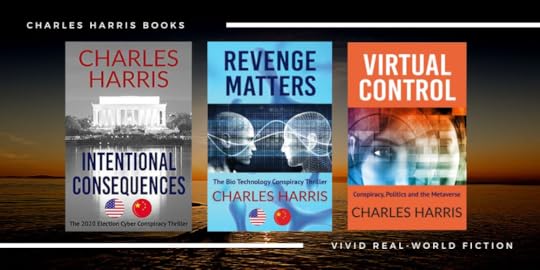
With the publication this week of the third book in the Eva Johnson Series of intellectual thrillers, I want to lay out some of the factors that make this series so compelling and unique.
The books in the Eva Johnson Series are thrillers based on real-world issues at the intersection of politics, technology and social and cultural change.Although filled with action and surprises that drive the plot forward like any good thriller, the books are more sophisticated than typical thrillers. They are psychological mystery thrillers that foreshadow and explore issues that are altering who we are, what we think and how we live. Set in or near the present, the books blend fact and fiction so seamlessly that readers often wonder where the facts end and the fiction begins. The books strive to be prescient, sometimes as to outcomes and more often as to important issues that are speeding toward us—issues that will become even more challenging in the years ahead.
When I was in law school, I learned to appreciate the value of issue identification, not just in law but also in life. If you don’t see an issue coming, you don’t have much chance of preparing for it. The Eva Johnson books are designed to encourage you to think about the issues the book raises, both while you are reading and long after you have finished.
Although I have my own personal point of view on these issues, I am not out to tell you what you should think. I believe that engagement and debate are essential to a healthy democracy and to continuous learning and personal growth. I embrace passionate disagreement as long as mutual respect for people and ideas prevails. I distrust political correctness and sheltering people from realities that need to be confronted and understood. I want to help identify the issues we should be thinking and talking about and let my characters point out the pros and cons. Whatever your views may be about the issues in these books, I urge you to share them and consider what others may think about your opinions.
The Eva Johnson books are for you if you enjoy intellectual, action-packed fiction:
Set in the context of current real-world issues. Where psychology and technology are as important to the plot as firefights and bloodshed. Where politics form part of the story but the book is not an echo chamber for one side or the other. That explores the psychological links between truth and lies, anxiety and fear, confidence and control and wealth and power.Sexy digital artist and tech executive Eva Johnson is the protagonist in the series.Eva is a smart, talented and vibrant character who enjoys challenging stereotypes and the issues the books explore. I like to use cultural and political clichés and tropes as literary tools to encourage (some might say incite) reader reaction and engagement. Eva’s colorful (some might say controversial) character and personality traits are an important part of my efforts to stimulate reader reaction. Authors often say they talk with their characters and I am happy to admit that I have good discussions with mine. I can assure you that Eva is not shy on or off the page.
Intentional Consequences was the first book in the series, followed by Revenge Matters and Virtual Control.
Although the later books include a few hints about Eva’s earlier escapades, you don’t need to read either of the earlier books first to enjoy Virtual Control and you can read the earlier books later in either order. The more books you read, the more you will appreciate Eva's past and how it affects how she thinks and acts today.
Each book in the series crafts an exciting story around an important current event or subject.
In Intentional Consequences, it’s national politics and the pending presidential primaries for the 2020 election. In Revenge Matters, it’s biotechnology and the microbiome. In Virtual Control, it’s artificial intelligence, personal data and the metaverse. You don’t need to be an expert in any of these areas to enjoy the rapidly evolving story. Each book will pull you along with what you need to know. If you are already an expert, you will appreciate the research and attention to detail and enjoy the nuances between what is true and what is almost true.
Even though the books in the series are set in the present or near present, the stories have lasting messages and appeal. For example, Intentional Consequences is set in the early months of the primaries for the 2020 presidential election, but the underlying conspiracy and political maneuvering will be as troubling and real in the 2024 election as they were when that book was published in August 2019. As in good historical fiction, the players may pass into history but the issues and human frailties endure.
June 10, 2022
Anger in America is Tearing Us Apart

Great leaders have the ability to look ahead and prepare to manage important issues and trends before they arrive. If you want to add another concern to your list, take a look at the results of The Wall Street Journal-NORC poll that were released on June 6, 2022. We're not only struggling with 40-year high inflation, we are facing similar highs in our lack of trust and faith in our national values and the sociopolitical institutions that bind us together. And people see things getting worse rather than better.
Consider these survey highlights as reported by The Wall Street Journal:
· “Some 86% of respondents said Americans are greatly divided when it comes to the most important values, and over half said they expect those divisions to worsen five years from now, up from just a third of respondents who were asked the question last year.”
· “About six in 10 respondents said they were pessimistic about the ability for most people to achieve the American dream.”
· “Nearly two-thirds of respondents, 64%, said platforms such as Facebook and Twitter are harmful for society because they emphasize differences between people, while just over one-third, 34%, said they are helpful because they provide a way for all Americans to share.”
· Just 13% of respondents said they were optimistic that people of different races or religions could come together and solve the country’s problems if they held different political views.
As our nation recovers from a bitter 2020 election and an equally bitter fight with Covid, we all need to think about what these trends mean and what we can do to reverse them.
Psychologists tell us that happiness is linked to anticipation of positive future events. People endure adversity better when they believe the future will be better. That belief is the essence of the American Dream. It is the power behind generations of immigrants who have come to our shores, enduring difficult, demeaning jobs as they build a new and better life for their families. It’s the incentive that fuels the creativity and hard work that inspire millions of Americans to aspire to making their lives and our nation better.
Destroy that belief by removing those expectations and everything changes. I am not talking about the classic political complaints that economic inequality is increasing or capitalism is failing and needs to be replaced with some form of socialist democracy. I am talking about the impending gloom that America is no longer good at doing the things that made it become the beacon of hope for the world—and a place where working hard and doing things together will give you the opportunity get ahead. This is not just political gloom, it’s cultural despair fed by three harsh recognitions: We can no longer count on our leaders to prioritize and deliver the things we most expect our government to provide; we can no longer trust the media to furnish us the objective information we need to make the decisions we need to make; and we can no longer look to our traditional social institutions to help us and our children learn to live and work together.
Everything we have counted on is failing us and the more we realize that, the more frustrated we become. We look for someone or something to blame. Trump, Pelosi, Biden? Democrats blame Republicans and vice versa. Conspiracy theories abound. Traditional and social media judge and misjudge truth or simply become echo chambers for one side or the other, firing up bitterness and disagreement. Following the science becomes political science. Covid. Excessive government spending or not enough. Supply chain glitches. The war in Ukraine. Fossil fuels. Assault rifles. It’s a long list.
Finding people and things to blame is easy in today’s world of sound bites and breaking news alerts. The hard part is going beyond the 25-word headlines and talking points to understand the background and the details—and most important, the pros and cons. Unfortunately, most of us act and react based on the sound bites.
The hard part is finding people we can trust to fix the problems. When people are despondent, they look for new leaders with new solutions. Whatever your political views, this reality had a huge impact on the 2016 election. People who felt left behind wanted to “Make America Great Again!” After 2020, the progressive wing of the Democrat party wanted to use their narrow margins in Congress to make their own sweeping changes. After Donald Trump was elected, the traditional media were filled with concerns that he would become a demagogue. But demagogues and dictators can come from either political party or from a third party. The important point is to remember that these tyrants are usually propelled by people who are frustrated and angry.
Anger is spiking in America today. Too many Americans are not just down about America, they are increasingly angry about it. You see it in the increase in homicides and other violence, in the deaths from traffic accidents, in the conduct of airline passengers, in the rudeness of customers and employees and, of course, in the bitter “winner-take-all” debates in our halls of governance.
Respect, especially mutual respect, is badly out of fashion, not just for each other but for our nation and its system of government. Compromise is viewed as weakness or selling out. Belligerence and “standing your ground” are in, whether you are defending your home, protesting in front of the house of a Supreme Court Justice or justifying your party’s unyielding position in Congress.
As our inflationary spiral continues and takes its toll on more and more segments of our society, as leadership failures and Black Swan events further shake our confidence in our politicians and each other, as we politicize everything and use identity politics to inflame passions and hate, as we move closer to the bitter politics of the fall mid-term elections, the second half of 2022 is not looking good. The next six months are almost certainly going to become more physically and emotionally dangerous as well as more economically difficult.
We are reaching a boiling point—a dangerous, difficult place where more and more people are expressing their frustration by lashing out physically, verbally and emotionally. We all need to do our part to lower the temperature instead of fueling the fire. We need to pull America back together. We need to do more to find common ground and less to divide and tear us apart.
NOTE: This article is based on an article entitled Anger in America Is a Business Issue that was originally posted to LinkedIn on June 10, 2022 at: https://www.linkedin.com/feed/update/urn:li:activity:6941069319820783616/
January 19, 2021
Where Does Business Activism Go from Here?

As the political divisiveness of the 2020 election slammed home with the images of the horrific attack on our nation’s Capitol, many businesses stepped forward to call out and sever relationships with the people seen as participants, perpetrators or encouragers of the violence and the allegations that helped fuel that anger. President-elect Biden has called for national unity in building back better. But the trial of President Trump on his second impeachment charge will hang over the new Congress and calls for revenge continue to dominate the cable and network news channels.
In this heated, bitterly divided political environment, where should business activism go from here?
Studies show that Americans’ trust in the fundamental institutions that guide us—religious organizations, schools, government and media—has fallen for the past two decades. The latest (2020) Edelman Trust Barometer shows Americans trust businesses more than government or the media. I believe business has an opportunity—indeed, a moral and civic obligation—to provide sociopolitical leadership in this time of increasingly dangerous divisive politics.
The question is how that leadership should be exercised. Should businesses lead by speaking out about sociopolitical issues that matter? Or should they go further by using their power to censor and punish those whose ideas they disagree with? In effect, should they work to unify America or strive to cancel out the voices they see as negative?
Some argue that businesses have a unique opportunity to dispense unilateral, extrajudicial punishment to silence those who dare to express unpopular sociopolitical views. They explain that the First Amendment’s protection of free speech applies to government action, not private action. This is the distinction that is often used to justify allowing the big social media companies to censor or delete speech or even cancel users who purport to violate the company’s rules against various types of speech.
I don’t buy the idea that the suppression of speech by businesses is an acceptable approach. From a constitutional standpoint, there are two arguments (narrowing the state action limitation and expanding the town square concept) that may limit concerted business action that is designed to cancel voices and ideas. I expect we will see some Supreme Court decisions on these points before long.
But regardless of the constitutional arguments, should businesses get into the game of dispensing extrajudicial punishment for people who express views they dislike?
As business leaders, we need to think about the issues here, free from the rancor about the Trump Presidency. Forget Trump. How would you react if you or one of your family members were faced with allegations about something you said or did that gained coverage on social media or the television or cable networks and the following day, without any legal action or other due process:
· Twitter cancelled your account.
· Facebook suspended your account.
· Amazon cancelled your company’s AWS cloud services, leaving thousands of your customers in the dark.
· Your board of directors terminated you.
· Delta prohibited you from flying on their airline. Other airlines followed.
· Your bank cancelled your checking account.
· Your credit card companies cancelled your credit cards.
· Your national grocery store gave you a trespass warning telling you not to shop there anymore.
· The private school where your kids go told you to move them someplace else.
The list could go on, but you get the idea.
Oh, that’s silly you say. That would never happen to me. Besides, they wouldn’t do that unless I really did something horrific. After all, businesses need every customer they can get. Why would they want to cancel customers?
Two primary reasons, among several others: First, the business is being threatened or encouraged by leading politicians to do something the government cannot do itself. Second, the business believes the action will appeal to its customer base. (Hey, it can even be good publicity as cries for social justice and political revenge increase and the media responds with coverage.) As Nike founder and former CEO Philip Knight said at Stanford recently, “It doesn’t matter how many people hate your brand as long as enough people love it.”
While it may be easy to see some of the responses to the January 6 Capitol invasion as justified in light of the President’s alleged incitement of violence, was this a one-time, Black Swan event or should the punishment and cancellation continue? Should business activism echo some Democrats’ calls for revenge against a host of people formerly aligned with the Trump presidency? Should businesses blacklist people who worked for (or just voted for) the “wrong” politicians? Should restaurants or hotels refuse to serve people who support fracking or speak against the Green New Deal or argue against making the District of Columbia a state? What about people on the other side of whatever issue?
My answer is no.
Businesses need to use their own First Amendment rights to join the conversation and speak out about the issues that unite us and, if they dare, about the issues we need to solve together. With rare exceptions, they should not punish their customers or employees for what they say, the legal causes they support or the exercise of their right to peaceable assembly. Whatever America’s challenges, due process, fairness and equal protection matter. American businesses work because we are a nation of laws. As business leaders, we need to do our part to preserve that essential fabric, not help tear it apart.
Whatever the answer and however we do it, we cannot have businesses that affect virtually every aspect of our daily lives use their power to unilaterally judge and dictate the actions we are allowed to take and the words we are allowed to speak. The nightmare in George Orwell’s dystopian social science fiction novel, 1984, would not be any easier to accept if a group of businesses, rather than the government, ruled our minds. We are moving in that direction. We need to stop while we still enjoy the free exchange of ideas needed to preserve what we have.
NOTE: This article was originally posted to LinkedIn on January 19, 2021 at: https://www.linkedin.com/pulse/where-does-business-activism-go-from-here-charlie-harris-1f
September 24, 2020
Does Promoting Diversity Justify Eliminating Equal Opportunity?
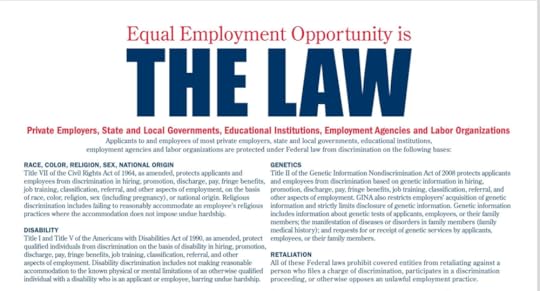
Suppose your company tore up its commitment to be an Equal Opportunity Employer and replaced it with a policy of using race, sex, color, ethnicity, or national origin to address diversity. How would you feel—as an employee, or as a prospective new hire, customer or business partner? Better yet, how would you feel if your state government did the same thing with respect to its public employment, education and contracting decisions?
That’s essentially the question California voters will be considering when they vote on Proposition 16 on November 3. Backed by California Governor Gavin Newsom, Democratic vice-presidential nominee Kamala Harris as well many others, Prop 16 would repeal an earlier amendment to the California Constitution, which was added by Proposition 209 in 1996. The 1996 amendment generally prohibits state and local governments from discriminating against, or granting preferential treatment to, individuals or groups on the basis of race, sex, color, ethnicity, or national origin in the operation of public employment, education, or contracting. Why eliminate this commitment to equal opportunity? The official ballot text for Prop 16 euphemistically states that it would “Allow Diversity as a Factor in Public Employment, Education, and Contracting Decisions.” Put another way, it would protect affirmative action efforts that might otherwise be attacked as discriminating against or granting preferential treatment to individuals or groups on the basis of race, sex, color, ethnicity, or national origin in the operation of public employment, education, or contracting.
In a world where businesses are stepping up their internal and external commitments to diversity, the approach in Prop 16 is filled with land mines. By way of a few examples: When and how does affirmative action justify discrimination? Who decides which groups should benefit from a diversity commitment? Is it always acceptable to discriminate against white males if they have majority status? What about discriminating against one minority group (e.g., Asian-Americans) to increase diversity for another minority group? Where do identity politics and the opinions in social and legacy media fit into the judgments about which individuals and groups should benefit from diversity and which should face discrimination? How would Prop 16 interplay with federal laws and regulations?
Most Americans support diversity in concept. The hard part is deciding how to implement the changes needed to protect and enhance diversity. Affirmative action has its place, but I struggle with the idea that it’s acceptable to improve “diversity” by allowing corporations or state or local governments to intentionally disregard our core American commitment to equal opportunity in employment, education and contracting.
In our current era of bitter partisan politics and loss of trust in our major public and private institutions, we need more collective support for the concepts that bind us together, not more identity politics that will pit us against each other. We can do a lot to improve equal opportunity for all Americans without taking opportunity away from some. None of us got to pick our race, sex, color, ethnicity, or national origin. All of us get to decide what to do with the cards we were dealt. But we need opportunity to make it happen.
If we decide we need quotas (something I do not support) or better protections for specific affirmative action efforts, let’s have those conversations. But let’s not give some unelected bureaucrats the right to decide who deserves equal (or better) opportunity and who deserves discrimination and why. If we allow that to happen at the government level, it will just be a matter of time before those decisions will be applied to private enterprise as well.
This post originally appeared as an article by the author in LinkedIn.
August 28, 2020
Is Your Business Prepared for Disruption After the Presidential Election in November?

After struggling with the economic and health impacts of COVID-19, is your business prepared to handle yet another black swan--the risk of post-election disruption in November and December?
For those of you who are dead tired of everything being politicized, this is not an article about Donald Trump refusing the leave the White House if he loses or the Postmaster General conspiring not to deliver absentee ballots in the mail. It is an article about a business risk that you need to assess.
The risk relates to the possibility of election-related violence following the 2020 presidential election, regardless of who wins or loses. Why is 2020 a matter of special concern? Four reasons:
First, the COVID crisis and partisan efforts to maximize voter turnout are driving efforts to use vote-by-mail or absentee ballot procedures on a national scale never seen before. If you strip away all the competing political claims about this, the reality is no one knows how this huge increase in mailed-in ballots will play out. The concerns surround how and when mailed ballots will be counted and disputed, both administratively and in the courts. Voter fraud may or not be relevant, but it’s not the principal issue for this discussion.
Second, both political parties are lawyering up, anticipating and planning lawsuits across every state where political advantage might be achieved by disputing some aspect of the electoral process. Lawsuits heap additional time on top of the effort required to count and validate or invalidate ballots cast by mail or in person. Lawsuits also bring the courts into a highly political arena, potentially creating further questions about the proper role and objectivity of our judicial system. The Supreme Court will almost certainly be involved, raising interesting questions about the alleged “conservative majority” and the Chief Justice’s record of crossing over with the more liberal justices to try to preserve the integrity of the court.
Third, this is an especially bitter presidential election. Emotions are high on both sides and heightened by the cumulative burdens from COVID (both its lockdowns and its health impacts) and a summer of violent protests and differing concepts of law and order. Whatever happens in the election, a substantial portion of the American people (and perhaps the media) will be indignant about the outcome. Some people think this factor alone could bring millions of sore losers to the streets, regardless of who wins. Let’s hope Belarus is not our role model.
Fourth, and I will try to be politically correct here, we are in a time where historical standards of acceptable and unacceptable conduct are being challenged both by peaceful protesters and opportunistic activists. Less politely, Americans are more ready to take to the streets and opportunists will be glad to incite and take advantage of that action.
One of the intriguing risk vectors revolves around what happens if various states are unable to certify their electors to the Electoral College by the dates required in the Constitution. Stay with me. The details here are important and I will stick to the highlights.
The U.S. Constitution establishes the process for the Electoral College vote that formally elects the President and the Vice President. The Constitution also requires that the electors in each state must meet on the same day. But a federal law provides when this process must take place: The electors of President and Vice President must be appointed, in each state, on “the Tuesday next after the first Monday in November” and those electors must meet and deliver their votes on “the first Monday after the second Wednesday in December next following their appointment.”
So, this year, the electors who are elected in the November 3 presidential election must formally vote on December 14 to select the new President and Vice President. Pursuant to the 20th Amendment to the Constitution, Inauguration Day will occur on January 20.
Another federal statute says that any controversy over the electors a state has appointed must be resolved, under pre-existing state law, at least six days before the Electoral College meets. This year, that date is December 8. All state recounts and court contests over presidential election results must be completed by this date. If any such dispute is not resolved by the December 8 “safe harbor,” the state will forfeit its electoral votes unless the state legislature decides by December 14 how the electors are to be selected. (Yes, you might ask how control of the state legislature might affect that vote.)
As Washington attorneys David B. Rivkin Jr. and Lee A. Casey write in a recent Op/Ed in The Wall Street Journal, “At best, the result would be electors chosen by state legislatures. At worst, states would be disfranchised in the Electoral College—or send rival slates of electors to vote on Dec. 14, leading to a bitter dispute in Congress over which votes to recognize.” Congress has various ways of objecting to the electors from any state. (If you are a glutton for punishment, read this wonderfully arcane review of the legislative history of the Electoral Count Act of 1887.)
These requirements coalesce to create a five- or six-week period during which the state electors must be chosen and certified. Unless we are extremely fortunate to have a clear electoral mandate coming out of November 3, this time period may make the impeachment process look like a cake walk.
Many political commentators predict we will not know the outcome of the presidential election on the night of the election or even the day after. If that’s all we need to deal with, we’ll get through it. But if the “hanging chad” vote counting debacle Florida brought to the 2000 presidential election is repeated on steroids across the United States, tensions will build to a point where the slightest allegation, tweet or event may bring mobs to the street. And if questions about the validity of individual state results push state elector certifications into the state legislatures or into Congress, things will not go well. COVID and BLM will seem like minor distractions.
Beyond the incalculable damage to American democracy, a contested election—especially one marred by street protests and violence—would add to the social and economic disruption wrought by COVID-10, potentially adding one more nail into the coffins of suffering small businesses at the height of the holiday shopping period. Major U.S. companies are already looking at how to manage this risk.
If you have updated your Business Continuity Plan for the effects of COVID-19, you will have already made some of the adjustments you need to consider for a potential contested election, such as bolstering your online commerce capabilities to serve customers who may prefer to stay home and extending your work-at-home options to provide better safety for your employees. Depending on where your offices are located, you may also need to devote further attention to the security of your physical locations, including the servers and other gear that handle your customers and your staff. And you may need to update your revenue and cash flow forecasts to add further contingencies.
Whatever else you do, pay attention to the physical and emotional well-being of your employees. 2020 is proving to be a debilitating year for so many businesses and individuals. As tense as we have all become about politics, a political black swan would cast a long shadow across the holidays and the future. Sending a message that you care, and that you respect every employee’s right to his or her own opinion, can go a long way, both for your company and for our country. Think about your company policies on mutual respect, political speech and protests, both for fairness and for clarity. Encourage employees to share their concerns and needs. Consider additional flextime or time off if that is feasible. Particularly with the challenges of remote work, stay in touch.
Practice togetherness. Be respectful about social, racial and ethnic differences, but be cautious about identity politics. Send the message that we’re in this together and we’ll get through it together. If your side is on top, be a gracious winner. If your side is on the outs, be a gracious loser. One way or another we need to remember E. Pluribus Unum. Out of many, one.
Business Continuity Plans are all about assessing and preparing for possible risks. For years, political disruption in the U.S. has not been on the list. We can and should hope it does not become relevant now. But we cannot ignore the risk.
Note: This article by the author also appeared on LinkedIn at: https://www.linkedin.com/pulse/your-business-prepared-disruption-after-presidential-election-harris/
August 25, 2020
What if Politicians Had to Comply with Business Antifraud Rules?

Have you ever wondered what would happen if we held U.S. politicians to the same anti-fraud rules that apply to America’s public companies? The U.S. securities laws include a general antifraud provision known as Rule 10b-5. This rule says a company and its leaders cannot “make any untrue statement of a material fact or…omit to state a material fact necessary in order to make the statements made, in the light of the circumstances under which they were made, not misleading.” It also says they cannot “engage in any act, practice, or course of business which operates or would operate as a fraud or deceit upon any person.”
Rule 10b-5 not only covers affirmative statements that are fraudulent, it also covers statements that defraud by omitting information that should be included to make the information that is presented not misleading. The rule essentially reminds us that fraud by omission is still fraud. Try applying that to a typical negative political campaign ad or tweet.
If businesses or their executives used the misleading information and manipulative advertising tactics used by many of America’s politicians, the Securities and Exchange Commission would be after them for fraud and the media and the public would be up in arms. Yet too many politicians and PACs from both parties (yes, both) do this every day in one form or another.
The problem has been getting worse, fueled by political bitterness, social media, the decline of local newspapers and the rise of politicized cable channels and national media that increase revenue by inciting their intended “echo chamber” audience. (If you have not witnessed this in action, compare the major cable news channels and a few Twitter hashtags when national political news comes out.)
Could we actually regulate “fraudulent” political speech? Legally, probably not. At the risk of sounding a bit jaundiced, the politicians write the laws and have little interest in subjecting themselves to these constraints. Applying rules like 10b-5 to the political arena could also mire every political race in endless litigation or politically-biased regulatory overreach—a point to remember if Congress ever decides to increase regulatory controls over social media content. Most importantly, the First Amendment to our U.S. Constitution would likely get in the way. The First Amendment provides particularly strong protection to political speech because it goes to the heart of our democracy. If you are interested in the nuances, see Freedom of Speech and Press: Exceptions to the First Amendment, published by the Congressional Research Service.
So, does that mean “fraudulent” political speech is a necessary part of the American political landscape? Are we stuck with this worsening situation?
At a time when everything is becoming politicized, from sports to business to science, the answer depends on whether the American people—and American businesses—care enough to demand 10b-5 level truth from politicians and from the media that cover them. (“Fact checking” that itself is biased is part of the problem.) In many ways, the stakes are even higher than the risks of business fraud. In a democracy, truth does matter, even when we dislike it. A post-truth internet world where truth depends largely on who said it, or what racial, political or other group or hashtag is associated with it, threatens democracy to its core.
Businesses have a special role in pushing for truth in our politics. They know and respect the antifraud rules that demand truth in advertising, the public markets and business transactions. They also know the importance of truth in their business deliberations and analysis. Few successful businesses would put up with employees who intentionally and repeatedly disregard or manipulate the truth in meetings or other discussions. In our business we call America, why do we accept a different standard from the politicians we hire to run the place?
Note: This article by the author also appeared on LinkedIn at: https://www.linkedin.com/pulse/what-politicians-had-comply-business-antifraud-rules-charlie-harris/
August 13, 2020
Provocative Political Thriller Foreshadows Elites’ 2020 Election Plan for a Single-Party America
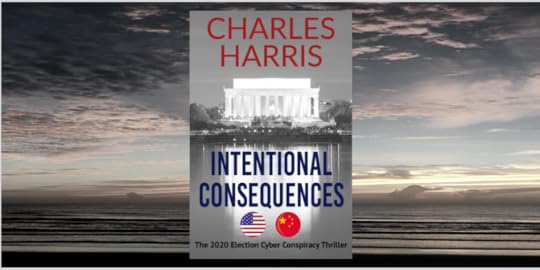
A year ago this month, I released my provocative new novel, Intentional Consequences, on Amazon.com. The book tells the story of a geopolitical cyber conspiracy among wealthy Democratic elites, Chinese government interests and a social media company executive. The conspirators’ goal is to dominate the 2020 U.S. presidential election and restructure American democracy to single party rule that will last for generations.
The book was first published in August 2019 and the story line ends during the summer of 2019. Readers immediately called the book prescient. Although I never intended for the book to predict future events, I did hope it would show how our angry partisan politics and advanced technologies like social media are imperiling our democracy. As I said then, the story is fiction, but the issues and political strategies are all too real.
One year later, I’m amazed at how well the book foreshadowed the bitter political divisions that are racking our country and the dangers of trying to manage a black swan crisis like Covid-19 in the face of that bitterness. In those respects, the book was prescient.
Let me offer a couple of examples. (If you have not read the book yet (and you should), these will not be spoilers.
First, in one of the early chapters, Rakesh Jain, a billionaire tech company executive, and his wife, Valerie Williams, a University of Texas government professor, are talking with David Bernbach, the leading Democratic elite behind the political conspiracy. Valerie says she thinks the U.S. “is more susceptible to radical political change today than it has been since the thirties” due to “the combined effect of social and political factors we’ve never seen come together before.”
Rakesh then says, “I worry about the potential impact of a Black Swan event on this. I don’t know how we’ll find national consensus in an economic or wartime emergency if the American public can’t decide who to believe or what the facts are. Trump calls everything he disagrees with ‘fake news’. The Democrats and much of the media are doing everything they can to destroy the President’s credibility, both to make it hard for him to govern and to defeat him in the next election. If America gets into a crisis and the public doesn’t believe their president, who will they believe? Nancy Pelosi? AOC and her gang? Upwards of 20 Democratic presidential contenders? The military? And how will we decide?”
To which Valerie responds, “In our modern history, we’ve never faced risks like these before. It’s easy to blame Trump for his role in undermining presidential credibility and creating confusion about American foreign policy, but the Democrats and the liberal media are far from innocent beneficiaries. They know exactly what they’re doing. I’m not sure whether they fail to appreciate the unintended consequences that could follow, or they just don’t care about the results.”
The second example occurs later, in a chapter that includes a website post of a purportedly leaked secret preview of the Democrats’ Action Plan for a Single-Party America. I portrayed the leaked post as part of a strategy to “stir the pot” and incite political fear and anger. When I wrote the book, I intended the post to be a radical “to do” list. It's chilling to realize that only one year later, this fictional post captures the mainstream thoughts of many leading Democrats and their allied media. It’s also troubling to realize how few voters understand that “centrist” Joe Biden and many Democratic Congressional candidates support a lot of these radical restructuring measures.
In the book, the “Single Party Action Plan” was presented as a secret plan on a political website (ironically named RevengeMatters.com—the name of my latest book). Excerpts of the fictional post on that site appear below:
Secret Preview of Democrats’ Action Plan for a Single-Party America
By the RevengeMatters Team
RevengeMatters has gained exclusive access to a draft of the Democrats’ secret plan to position themselves for single-party rule in 2020. The remarkable paper calls for stripping away the existing procedural safeguards in the House and Senate, packing additional Justices onto the Supreme Court and enacting key legislation to assure progressive control for decades.
The draft was provided by a reliable source with high-level access to Democratic strategy. The Democrat candidates for President and the Democrat members of the House and Senate we showed this to all refused comment. We have been unable to reach Speaker Pelosi. Although we expect to hear the no comment responses turn to denials and allegations of fake news, the plan resonates with existing conversation within the party. It also reflects the increasing influence of the progressive wing of the party. The individual items listed on the action plan are not new. What is new is the party commitment to implementing the ideas in the 2020-2024 timeframe you’ll see in the plan.
We are printing the entire document below so you can make your own assessment. For clarity, the Additional Commentary is part of the document we received.
CONFIDENTIAL DRAFT – DO NOT DISTRIBUTE
Single Party Action Plan (SPAP) 2020-2024
With Democratic control of the White House, the House of Representatives and the Senate in 2020, the following steps will accomplish lasting realignment of American politics and usher in progressive single-party rule for decades.
This Action Plan is based on the following important realities:
First, to achieve success, . This action should be taken only if we have the discipline to follow this plan to completion.
Second, the current imbalance in the Supreme Court must be corrected before any important legislation is enacted. Having a clear majority of the Court is essential to protecting far-reaching legislative changes from judicial interpretation or override.
Third, structural reforms must be prioritized ahead of platform and policy legislation.
ACTIONS FOR 2021:
Adjust Procedural Norms in Congress.
Eliminate PAYGO, which requires any bill that increases entitlement spending or decreases revenues be offset by corresponding tax hikes or decreased spending.
Ignore the Federal Deficit in passing new programs.
Alter the Senate Filibuster, which effectively requires 60 votes to pass significant legislation (base action here on Democrat votes available after 2020).
Expand the current reconciliation process, which applies to less significant legislation (this could require replacement of the Senate Parliamentarian), or make it harder or even impossible to filibuster legislation.
Increase Supreme Court size – at least 3 to 5 new seats.
Make nominations and provide Senate consent to fill new open seats on the Supreme Court. (Note: Swear in new Justices before enacting any important legislation.)
Enact H.R. 1 – For the People Act (approved by House in early 2019).
Voting and Election Laws – increase access, enable online registration.
Campaign Finance – increase disclosure, eliminate “sidecar” SuperPACs.
Ethics – increase disclosure of individual donors, restrict lobbying.
Enact American Equality Tax Reform Package – aimed at the Super Rich:
Income Taxes;
Estate Taxes;
Wealth Taxes.
Enact Federal Data Privacy Legislation, including Tech Tax.
Enact Immigration Reform:
Immediate pathway to citizenship and voting for Dreamers;
Accelerated pathways to citizenship and voting (three-year and five-year options) for other illegal immigrants.
File Other Platform Legislation (e.g., climate, college tuition, health care, other tax reform).
ACTIONS FOR 2022-2023:
Enact Other Platform Legislation (e.g., climate, college tuition, health care, other tax reform).
Pursue longer-term (2021-2024) structural changes:
Reduction of voting age to 16 for Federal elections;
Statehood for the District of Columbia and Puerto Rico;
Division of California into two states (North and South);
Direct national election of President (eliminate Electoral College).
ADDITIONAL COMMENTARY:
Sweeping the Federal elections in 2020 does not assure longer-term dominance. The structural changes above are intended to assure the Democratic Party dominates all three branches of national government for decades.
H.R. 1 comprises over 500 pages of legislation, much of it seemingly benign and overdue, but some of it extensive in impact. Mitch McConnell has called it a “power grab” and the “Democrat Politician Protection Act”. It’s hugely important to our dominance.
Key to tax reform is to focus on Super Rich and not get bogged down on broader tax policy or reversing Trump’s tax legislation.
Data privacy and the tech tax will be popular with the public’s anti-Tech backlash and provide an opportunity to enact legislation that will have a chilling effect on corporate involvement in political campaigns and issues.
The immigration changes will offer an opportunity to add even more voters to the rolls in advance of 2024.
* * *
After presenting the fictional post, the book goes on to describe the reaction:
“By evening, the Action Plan was everywhere. The timing was impeccable as the media was looking for any story to keep politics in the spotlight after the letdown from the Mueller report. Blindsided, the Democrats initially did their best not to comment or even talk at all for fear of being asked. As the RevengeMatters site had predicted, the “no comments” moved to denials and accusations of fake news.
“The conservative media had a heyday, claiming the plan showed the Democrats’ true intentions to seize one-party control at any cost to democracy. To bolster the paper’s validity, they quoted articles from liberals and progressives recommending the same actions the plan espoused, and in some cases more.
“The liberal media was all over the place, not sure whether the paper was real, but recognizing the ideas were, and the paper probably did reflect ongoing conversations and maybe even a formal commitment within the party. Most of the Democratic presidential candidates willing to talk did their best to hedge their positions by vaguely saying the ideas were interesting or blaming the Republicans for making it necessary to consider all the options. For Pete Buttigieg, it was an opportunity to repeat his call for structural reforms in American democracy that would make it easier to accomplish the progressive agenda. Some of his primary opponents even suggested Buttigieg was behind the post, given how closely it aligned with some of the changes he advocated.
“Outside the leadership and the presidential candidates, progressive Democrats widely applauded the plan. By the following day, initial polling showed strong progressive support for the plan, which led key progressives in the House to pile on the bus. In contrast, polling showed the plan infuriated the Republican base, worried most independents and drew mixed support from the rest of the Democrats. President Trump was the biggest beneficiary. In another day, the media would report his overall approval rating topped 50%.”
* * *
A lot of changes have happened since I released Intentional Consequences just one year ago but the book’s description of political manipulation by both parties remains disturbingly relevant. If you haven’t read the book yet, it’s worth doing now—before the 2020 election. Chillingly real, it’s an electrifying story about what people and countries will do to manipulate political opinion in our social media world--and a vivid preview of the 2020 general election. But beyond all that, it’s an entertaining thriller filled with twists and turns, betrayals, dirty tricks, deadly assaults, virtual assassinations and a torrent of surprises.
Excerpts from Intentional Consequences are © 2019 Charles Edison Harris.
August 11, 2020
Sophisticated New Biotech Thriller Set in 2020 Brilliantly Blends Fact and Fiction
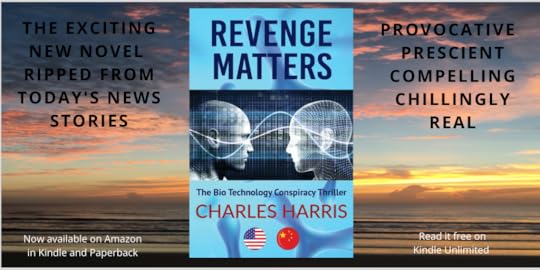 Current science, politics and technology drive an explosive story of biomedical innovation targeted against millions to achieve unthinkable social and political goals.
Eva Johnson is back, in a prophetic story of biomedical innovation targeted against millions of innocent people to win an ugly struggle for cultural supremacy. Chillingly real, Revenge Matters is set in the first quarter of 2020, as the Covid-19 pandemic begins its sweep across a bitter U.S. presidential election year. Although the action takes place with Covid emerging across the globe, the biomedical conspiracy is not based on the virus.
Eva Johnson, a beautiful artist, tech company founder and DHS undercover agent, takes on a global biotech conspiracy to use the human microbiome to achieve unthinkable social and political goals. In a world of immunologists, Chinese spies, billionaire industrialists, germfree mice and weaponized probiotics, she confronts Tom Stone, the talented, egotistical CEO of StoneBio to discover how his biotech breakthroughs are being funded and deployed.
As Eva races to find a way to stop the conspiracy before it’s too late, she struggles to recover from the earlier death of her husband—while coping with a new love interest, managing the Chinese and learning her latest roles as a venture capitalist and federal agent. Amid Chinese espionage, betrayals, deadly firefights and political intrigue, Eva chases the conspiracy to the highest levels of American business and government, unleashing a remarkable combination of technology, psychology, influence and force against wealthy, powerful opponents and overwhelming odds.
Revenge Matters is a tough, thought-provoking book that’s much more than a typical thriller. Beyond delivering a high-speed ride that builds to a torrent of surprises, Revenge Matters explores challenging social, political and technology issues that are affecting our future. The story is fiction, but the fact-setting and the underlying issues are real. Regardless of your politics or scientific acumen, it will keep you thinking and talking about the issues long after you have finished reading. The volume includes interesting discussion questions for book clubs.
This is the second book in the author’s Eva Johnson series. Like the first book in the series, Intentional Consequences, Revenge Matters is a sophisticated, prescient thriller and a compelling read. Both books in the series weave fact and fiction so tightly you’ll wonder where the facts end and the fiction begins.
If you like sophisticated political, medical and technology thrillers by authors who make you think—people like Dan Brown, Michael Crichton, Ken Follett, Stieg Larsson, John le Carré and Daniel Silva—you’ll be glad you read Revenge Matters.
About the Author
Charles Harris writes vivid real-world fiction that unleashes his characters into the emerging social, political, scientific and technological changes that are altering who we are and how we live. Driven by years of experience as a business lawyer, professor, investment banker and CEO of publicly traded technology and financial companies, he uses meticulous research, action-packed plot twists and suspense to bring his characters and settings to life. Harris has a degree in political science from the University of Florida and a law degree from the Harvard Law School. He is the author of Intentional Consequences, which stars Eva Johnson in a geopolitical cyber conspiracy thriller about the 2020 U.S. presidential election, where wealthy elites, Chinese interests and a social media company conspire to dominate the election and convert the U.S. to single party rule. He is also the author or co-author of several books on business negotiating as well as articles on technology, banking and the law. He lives in Florida with his wife.
August 10, 2020
Sophisticated New Biotech Thriller Set in 2020 Brilliantly Blends Fact and Fiction
Current science, politics and technology drive an explosive story of biomedical innovation targeted against millions to achieve unthinkable social and political goals.Eva Johnson is back, in a prophetic story of biomedical innovation targeted against millions of innocent people to win an ugly struggle for cultural supremacy. Chillingly real, Revenge Matters is set in the first quarter of 2020, as the Covid-19 pandemic begins its sweep across a bitter U.S. presidential election year. Although the action takes place with Covid emerging across the globe, the biomedical conspiracy is not based on the virus.
Eva Johnson, a beautiful artist, tech company founder and DHS undercover agent, takes on a global biotech conspiracy to use the human microbiome to achieve unthinkable social and political goals. In a world of immunologists, Chinese spies, billionaire industrialists, germfree mice and weaponized probiotics, she confronts Tom Stone, the talented, egotistical CEO of StoneBio to discover how his biotech breakthroughs are being funded and deployed.
As Eva races to find a way to stop the conspiracy before it’s too late, she struggles to recover from the earlier death of her husband—while coping with a new love interest, managing the Chinese and learning her latest roles as a venture capitalist and federal agent. Amid Chinese espionage, betrayals, deadly firefights and political intrigue, Eva chases the conspiracy to the highest levels of American business and government, unleashing a remarkable combination of technology, psychology, influence and force against wealthy, powerful opponents and overwhelming odds.
Revenge Matters is a tough, thought-provoking book that’s much more than a typical thriller. Beyond delivering a high-speed ride that builds to a torrent of surprises, Revenge Matters explores challenging social, political and technology issues that are affecting our future. The story is fiction, but the fact-setting and the underlying issues are real. Regardless of your politics or scientific acumen, it will keep you thinking and talking about the issues long after you have finished reading. The volume includes interesting discussion questions for book clubs.
This is the second book in the author’s Eva Johnson series. Like the first book in the series, Intentional Consequences, Revenge Matters is a sophisticated, prescient thriller and a compelling read. Both books in the series weave fact and fiction so tightly you’ll wonder where the facts end and the fiction begins.
If you like sophisticated political, medical and technology thrillers by authors who make you think—people like Dan Brown, Michael Crichton, Ken Follett, Stieg Larsson, John le Carré and Daniel Silva—you’ll be glad you read Revenge Matters.
About the Author
Charles Harris writes vivid real-world fiction that unleashes his characters into the emerging social, political, scientific and technological changes that are altering who we are and how we live. Driven by years of experience as a business lawyer, professor, investment banker and CEO of publicly traded technology and financial companies, he uses meticulous research, action-packed plot twists and suspense to bring his characters and settings to life. Harris has a degree in political science from the University of Florida and a law degree from the Harvard Law School. He is the author of Intentional Consequences, which stars Eva Johnson in a geopolitical cyber conspiracy thriller about the 2020 U.S. presidential election, where wealthy elites, Chinese interests and a social media company conspire to dominate the election and convert the U.S. to single party rule. He is also the author or co-author of several books on business negotiating as well as articles on technology, banking and the law. He lives in Florida with his wife.