
Blair Bancroft's Blog, page 44
February 20, 2016
Attitudes toward Point of View

This photo by Amazing Thoughts seems the perfect illustration for
the poem below (even if the age is off by a few years).
There was a 3-day ice-skating competition in our area this week, involving skaters from as far away as Connecticut and the Mid-west. Hailey was a participant all three days. Which resulted in her mother posting the following to Facebook.
After a 3 day weekend, mostly filled with skating, last night Hailey finally discloses that she has to write a 'rant' poem for homework. Never heard of it so we looked it up. You just have to rant about something! Hers was supposed to be on some kind of social injustice which, honestly, she doesn't know much about yet. So I gave her several ideas, all of which she rejected. Finally at 1:30am I screamed her into bed! This morning I wrote her the following example of a 'rant' poem.... It's called 'My Tween'. Here's how it goes:
My daughter is a tween
Her choices aren't always keen
When asked to make her room clean
She either whines or just plain screams!
With her sisters she will fight
Off and on all day and night
Professing clearly with all her might
That 'they are wrong and she's right!!'
She LOVES to do her chores
Insisting that SHE gets to mop the floors!
Oh wait, just kidding! For real
she thinks chores are a miserable bore!
She doesn't mention her homework
to write a 'rant' poem till midnight! Help! Advice??
But she doesn't listen to what I offered
not once, not twice, but thrice!!
Sometimes she is amazing
A sweet, giggly skating queen
But mostly she is a pain in my a--
My first born, my Tween....
-- by Mommy Reale 2/16/16
~ * ~
ATTITUDES TOWARD POINT OF VIEW
I read constantly, and am always amazed at the authors who say they don't have time to read. How, I wonder, can they keep up with what's going on in their profession if they don't read other people's books? But there are treasures out there we all miss, and for me the works of Linda Castillo were among them. I am currently in the process of reading my way through the whole Kate Burkholder series. Wow! (Though her books are not for the faint of heart.) They did, however, inspire a new look at that old challenge of Point of View.
Twenty-five years ago when I first began to write with serious consistency, the rules for romance were cut and dried, mostly set by Harlequin. Fortunately, as I've mentioned before, I wrote my first two books with no idea there were any rules at all. I remember having to ask what POV was when the acronym was used by a judge in a contest I entered.
My naivety didn't last long, however. I went to my first Romance Writers of America conference and discovered I was only supposed to use two points of view and stick to just one of those for an entire chapter before switching. I still remember raising my hand and saying that I'd just tossed a book where in Chapter 1 the heroine described a scene, and in Chapter 2 the hero described exactly the same scene from his Point of View. Something I considered ridiculous. The speaker was gracious enough to allow that that might be overdoing the concept a bit.
Truthfully, as I began to understand the narrow POV concept a bit better, I had to concede that if you're writing a 50,000-word category romance, anything more than two POVs could be hard to handle and perhaps tricky to read. But in longer works . . . I just couldn't see the restriction.
The "rules" eventually expanded to Hero, Heroine, and Villain. (I shake my head as I recall how many times I wrote that on contest entries, as I had now reached the stage of being a judge.) And then, in awelike tones, I began to hear about authors who actually had four POVs and, oh wonder of wonders, even five. An agent told aspiring authors at another RWA conference that he had liked best a submission that had a dog's POV. Lions and tigers and bears, oh my!
Gradually, one POV per chapter became one POV per scene. And authors like Nora Roberts, bless her, demonstrated that good writers could do as they pleased, causing no confusion in their readers' heads, even if they changed POV after a couple of paragraphs. Unfortunately, not all good writers were blessed with finding flexible editors, and the POV strictures continued.
There had been one hold-out through all this, traditional Regencies where multiple POVs were intrinsic to the style. And then came the great crash The two major publishers who allowed multiple POVs, even occasional one-line snippets, in their traditional Regencies, closed their lines, putting authors like me out of work.
A quick look at Mystery/Suspense, which is one of the many sub-genres of Romance.
I have always liked books written in first person, but many romance readers say they do not, usually because they want to see the story through the hero's eyes as well as the heroine's. Some authors, particularly those writing Mystery/Suspense, have solved this problem by inserting the third-person POV of the hero in between the heroine's first-person narration. Admittedly, the first author I encountered doing this was a mainstream mystery writer, James Lee Burke, in his Dave Robicheaux series. His main character narrates in first person, but he leaps seamlessly into the third-person narratives of both friends, victims, and villains. Linda Castillo, whose books inspired this week's blogs, does the same. Except she goes one step further. Her heroine narrates in first person present tense, while the other POVs from victims to villains to Kate's boyfriend tell their stories in traditional third-person.
So what are the POV rules now? And why did they change?I attribute a lot of the broadening of the so-called rules of POV to the advent of the e-publishing industry. In indie publishing anything went, and although there were a lot of doubtful, badly presented stories at the beginning, there were also a lot of stories that broke all the rules and were highly successful, forcing a reevaluation across the board.
It's also likely that authors chafing at the bit plus the inevitable inroads of time on tradition, such as PCs making Courier, 25-lines-per-page, and underlines to indicate italics concepts that should have died with the manual typewriter, even though they lingered on, quite incredibly, for another twenty years or so.
Whatever the reason, I became so indoctrinated to the narrow concept of POV that I've had to struggle to dig my way out. I write my Regency Gothics in first person only, because that is necessary to the style - a beleaguered heroine who considers herself alone in her fight against whatever evil is stalking her. But in my Futuristic Paranormal series, Blue Moon Rising, I am beginning to get back the feel of what one reviewer, way back when, called my "slippery" POVs in Tarleton's Wife. (She gave it five stars just the same.) And I'm thoroughly enjoying it. The freedom to say what I want when I want to say it is marvelous. (Makes me cringe when I think of all the times I, as a judge, told a budding author, "You can't do that." Truth was, at that time they couldn't, not if they wanted to be published.)
So where does that leave us?
Attitudes toward POV are still going to vary. If you're print-published and your editor is old school, you're stuck with doing what he/she will accept. Mainstream books, whether contemporary or historical, are still more liberal about POV than category or traditional romance. I would advise a new author who is writing short "category" romance* to stick to the POV of hero, heroine & villain (if applicable) until your first book is accepted and you find out what your editor will allow. For all other sub-genres of romance, you can be more flexible these days. Don't be hamstrung by the old rules.
How often can you change POV?
As often as you can handle it without upsetting your readers. And that's saying a mouthful. Are you aiming at the sixth grade reading level newspapers supposedly target? Or are you aiming your plot and vocabulary at a higher level? How many POVs do you see in published works in the market you're targeting? How often do they switch? By chapter, by scene, by a page or two, or even as often as a paragraph or two? What is acceptable? And, most important, what works? I once read a mainstream book by a multi-published print author I'd been reading for years that bounced back and forth between POVs so fast my head spun. It was an excellent object lesson, however, demonstrating all too clearly why the "rule" against "head-hopping" was such a staple of the romance industry. So keep in mind that exaggerations of either approach to POV can be truly annoying. Keep to the middle of the road until you find your comfort zone, and your readers' comfort zones as well.
My personal recommendation is one POV per scene, but I'm now enjoying sneaking in occasional silent comments from other characters, as I did in my first two books. Nora Roberts has a zillion magnificent examples of switching POVs in the midst of a scene, and I admit I've done it as well. If you can do it seamlessly and without confusion about whose head you're in, then by all means, do it. And more power to you.
Yes, the millennia has come. The "rules" have changed. HOWEVER, if making a POV switch, make sure the first line of the paragraph indicates whose head you're in, and take it from there.
*For those interested in writing category romance, Harlequin and Silhouette have descriptions of their many lines online. But always keep in mind those guidelines are just for H/S books, not a guide for all sub-genres of romance. For those, I recommend researching what is acceptable by reading, reading, reading books in whatever sub-genre you're targeting. Please! Don't be one of those authors who says, "I never have time to read"!
~ * ~
Thanks for stopping by,
Grace
For Grace's website, listing all books as Blair Bancroft, click here.
For a brochure for Grace's editing service, Best Foot Forward, click here.


February 13, 2016
Running off at the Keyboard
How time flies!
 Hailey, on patrol, 2013
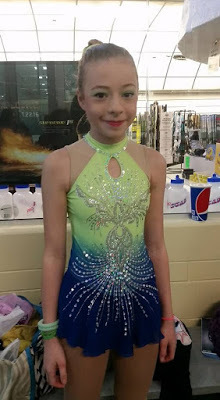 Ready for skating competition, 2016
My Futuristic Paranormal Rebel Princess not only has a pub date at long last - February 23 - but is now on pre-order at Amazon. If you'd care to take a peek . . . here's the link.
~ * ~
RUNNING OFF AT THE KEYBOARD
Rant time again. I watched a perfectly good book go downhill fast this week as it went from a fine story of love and suspense to too much repetition, too many ponderous details, and a plot that belabored its denouement to the point of extinction. And it's not only indie authors without adequate content editing that are making this mistake. One of my all-time favorite authors, print-published by a major publisher, is also guilty of similar errors in her most recent works. In her case, perhaps her editor thought she was so well-known, her readers would swallow whatever she wrote. Well, this reader didn't. I flipped through the last sixty to eighty pages of her last two books just the way I did with the indie book I just finished.
But how to explain the fix needed? That's a tough one. Even as an experienced editor, as I read the book, I asked myself, "What would I tell this author to cut? How can I explain she's beating a dead horse, that a book has to keep moving forward? Once the action plot has been resolved, the villain exposed or the book's major challenge) resolved, then it's time to settle the romance and move into Happily Ever After. In the book that set me off on my rant, more than three-quarters of the book was a gripping story, unique and well told. And then it began to dither, evidently trying to be a 100,000-word book when 80,000 would have been enough. Similar scenes were repeated over and over, the story going nowhere. Details that had previously enhanced the story now seemed to bog down the pace just when it should be picking up, moving toward a conclusion. Emotion that originally captivated now poured off the pages in a flood, repetitive, unproductive. Signifying nothing. What was exciting became boring as the same old plot points were flogged across the page, again and again.
Stories must constantly move forward. The hero and heroine solving problems, discovering new ones. Wading through the intricacies of a relationship. Floundering, moving on. The dialogue as fresh and innovative on page 250 as it was on page 25. But the writer has to be able to sense when the story needs winding up. When it's time to build toward the big action finale, after which the story should quickly ease into a resolution of the love story. (And, yes, it's always in that order. That's one of the unbending "rules" of romance.)
Going back for a moment to word count - never, ever, take a story that can be told, and told well, in 80,000 words and try to "pad" it to 100,000. Your readers' eyes will glaze, guaranteed! If you absolutely, positively believe your book must be 100,000 words, then you need to add enough action, sub-plots and secondary characters to sustain 100,000 words. As previously stated, it's deadly to pad a story by finding new words to say the same thing twenty times over! So . . .
1. Do not fall in love with your own words, spewing them out in an endless repetitive stream.
2. Do not make the mistake of thinking that just because you write well, with emotion, color, and clever dialogue, you can get away with repeating yourself. Say what you have to say, say it well, then let go. Your readers are busy people, bright people. Don't waste their time belaboring a point.
3. Do not reveal the villain (or whatever major revelation is the climax of your tale), then spend fifty-plus pages on a sub-plot with only an occasional vague reference to the story's main storyline.
4. Do not write endless pages of emotion-filled rhetoric, which end up overwhelming and destroying what might have been a climactic moment. A moment now drowned under an avalanche of histrionics.
5. Instead, write that Big Moment for all its worth. Pull out all the stops. Action, details, color, emotion. Wring every ounce of drama out of it. Then LET IT GO! Move on to the quiet moments that come after—the relief, the explanations.
6. And then comes that absolute "must" - the resolution of conflict between the hero and heroine (with optional sex scene and/or optional glimpse of the future).
Grace note: There are many nuances to the above, but I hope you get the gist of it. "Running off at the Keyboard" is a kiss of death. Don't fall in love with sound of your own "voice." See your work as others see it. Tell readers what they need to know, tell it well, then "hands off!" Enough is enough, and any other cliché you can think of to keep you from turning a lean, mean, fighting machine into a candidate for Extreme Weight Loss.
~ * ~
Thanks for stopping by,
Grace
For Grace's website, listing all books as Blair Bancroft, click here.
For a brochure for Grace's editing service, Best Foot Forward, click here.
 Hailey, on patrol, 2013
 Ready for skating competition, 2016
My Futuristic Paranormal Rebel Princess not only has a pub date at long last - February 23 - but is now on pre-order at Amazon. If you'd care to take a peek . . . here's the link.
~ * ~
RUNNING OFF AT THE KEYBOARD
Rant time again. I watched a perfectly good book go downhill fast this week as it went from a fine story of love and suspense to too much repetition, too many ponderous details, and a plot that belabored its denouement to the point of extinction. And it's not only indie authors without adequate content editing that are making this mistake. One of my all-time favorite authors, print-published by a major publisher, is also guilty of similar errors in her most recent works. In her case, perhaps her editor thought she was so well-known, her readers would swallow whatever she wrote. Well, this reader didn't. I flipped through the last sixty to eighty pages of her last two books just the way I did with the indie book I just finished.
But how to explain the fix needed? That's a tough one. Even as an experienced editor, as I read the book, I asked myself, "What would I tell this author to cut? How can I explain she's beating a dead horse, that a book has to keep moving forward? Once the action plot has been resolved, the villain exposed or the book's major challenge) resolved, then it's time to settle the romance and move into Happily Ever After. In the book that set me off on my rant, more than three-quarters of the book was a gripping story, unique and well told. And then it began to dither, evidently trying to be a 100,000-word book when 80,000 would have been enough. Similar scenes were repeated over and over, the story going nowhere. Details that had previously enhanced the story now seemed to bog down the pace just when it should be picking up, moving toward a conclusion. Emotion that originally captivated now poured off the pages in a flood, repetitive, unproductive. Signifying nothing. What was exciting became boring as the same old plot points were flogged across the page, again and again.
Stories must constantly move forward. The hero and heroine solving problems, discovering new ones. Wading through the intricacies of a relationship. Floundering, moving on. The dialogue as fresh and innovative on page 250 as it was on page 25. But the writer has to be able to sense when the story needs winding up. When it's time to build toward the big action finale, after which the story should quickly ease into a resolution of the love story. (And, yes, it's always in that order. That's one of the unbending "rules" of romance.)
Going back for a moment to word count - never, ever, take a story that can be told, and told well, in 80,000 words and try to "pad" it to 100,000. Your readers' eyes will glaze, guaranteed! If you absolutely, positively believe your book must be 100,000 words, then you need to add enough action, sub-plots and secondary characters to sustain 100,000 words. As previously stated, it's deadly to pad a story by finding new words to say the same thing twenty times over! So . . .
1. Do not fall in love with your own words, spewing them out in an endless repetitive stream.
2. Do not make the mistake of thinking that just because you write well, with emotion, color, and clever dialogue, you can get away with repeating yourself. Say what you have to say, say it well, then let go. Your readers are busy people, bright people. Don't waste their time belaboring a point.
3. Do not reveal the villain (or whatever major revelation is the climax of your tale), then spend fifty-plus pages on a sub-plot with only an occasional vague reference to the story's main storyline.
4. Do not write endless pages of emotion-filled rhetoric, which end up overwhelming and destroying what might have been a climactic moment. A moment now drowned under an avalanche of histrionics.
5. Instead, write that Big Moment for all its worth. Pull out all the stops. Action, details, color, emotion. Wring every ounce of drama out of it. Then LET IT GO! Move on to the quiet moments that come after—the relief, the explanations.
6. And then comes that absolute "must" - the resolution of conflict between the hero and heroine (with optional sex scene and/or optional glimpse of the future).
Grace note: There are many nuances to the above, but I hope you get the gist of it. "Running off at the Keyboard" is a kiss of death. Don't fall in love with sound of your own "voice." See your work as others see it. Tell readers what they need to know, tell it well, then "hands off!" Enough is enough, and any other cliché you can think of to keep you from turning a lean, mean, fighting machine into a candidate for Extreme Weight Loss.
~ * ~
Thanks for stopping by,
Grace
For Grace's website, listing all books as Blair Bancroft, click here.
For a brochure for Grace's editing service, Best Foot Forward, click here.
February 6, 2016
Character Development - 4

While Hailey, Riley, and Cassidy were rehearsing for a musical, Mommy had to be the Girl Scout selling cookies at her Real Estate Investors' meeting! Please note the double pony-tails & Scout bandolier.
My cousin in California shared this photo taken by Steph Ball on Highway 88 in California. Oh, the joy of living in Florida!

For the most stunning photo I've seen on Facebook in a long time, here's Sunset Through the Trees by Francis Broadrick.

PYTHON UPDATE.
The Big Cypress Wildlife Management Area and several other areas in the Everglades have been closed to the Python hunt due to high water levels. The hunt continues elsewhere. The count as of February 6, 2016, is 90.
For a video from the Python hunt's website, click on the link below, then click on the python photo.
Link to Python video
CHARACTER DEVELOPMENT - MORE EXAMPLES
Grace note: this week I'm continuing examples of ways in which characters need to change and grow to keep them interesting. The characters are from my new SyFy series, Blue Moon Rising (Book 1, Rebel Princess, expected out soon from Kindle Scout).
K'kadi Amund.
K'kadi is the bastard half-brother of Kass from last week's blog (the princess turned rebel). When K'kadi is first seen, he's nineteen, definitely odd—in our century we'd probably consider him autistic. He speaks only through illusions which he creates out of thin air. He is easily distracted, unreliable, quicksilver when the rebellion needs steel. He loves to scatter smiley faces and fireworks over people's heads. In spite of Kass's efforts to teach him discipline, near the end of Rebel Princess, he disgraces himself by allowing compassion to overcome duty, dropping the invisibility cloak of a rebel shuttle right under the noses of the enemy. In Book 2, Sorcerer's Bride, K'kadi's powers begin to grow—resulting in not only bigger and more dramatic illusions but what appear to be visions of the future. The problem is, no one can be certain if he's displaying fact or fantasy. Matters are also complicated by his falling in love at first sight with his mental opposite, a female warrior who considers anyone with his kind of magic—even if only makes pretty pictures—a monster. Because his attitude toward the girl from the planet Herculon verges on stalking, his brother-in-law orders K'kadi to endure military-style basic training. The ruthless discipline helps, but it's only at the end of Book 2, with the near death of Psyclid's rebel leaders, including his half-sister M'lani, that K'kadi finally begins to get a grip.
However, Book 3, The Bastard Prince is his. Yes, K'kadi must share the pages with Tal and Kass, but late in Book 2 he has progressed to "silent speak," an abbreviated form of silent communication which is a dramatic step up from being forced to communicate solely through illusions. He is older, taller, stronger, and much more powerful. He experiments with different talents, perfecting Kass's own gift of telekinesis. He has learned to "cool" his passion for Alala, the warrior, even as he unashamedly uses his gifts to peek at Tal and Kass in bed. (Just so, you understand, he won't make a fool of himself when his day comes.) Although The Bastard Prince is a work in progress, it's easy enough to see that K'kadi has grown and changed a great deal. Hopefully readers will also anticipate that there's far more to come. (I need to remind myself to add hints that he's not infallible. Our boy just might slip up again sometime, because, after all, there's always Book 4.)
Princess M'lani, Kass's younger sister.
M'lani is much more the classic princess than Kass ever was. She never longs to leave home and explore the universe. She first appears at the end of Book 1, when she volunteers to stand in for Kass as bride of the Sorcerer Prime, Jagan Mondragon. Though she is hurt by his seeming indifference to her magnanimous gesture—which will keep Jagan in line to be the next king—she is always aware that she is making a marriage of convenience, a far cry from the love match between Tal and Kass. Unlike the other members of her family, M'lani has displayed no psychic talent of any kind. She is, however, a pacifist like her father. And yet after enduring five years of Reg occupation and learning about her sister's role in the rebellion, she does not balk at being drawn into Jagan's assignment to organize Psyclids against the Empire.
On the one hand, M'lani must struggle with her engagement to Jagan, whose prime assistant is his long-time mistress. On the other, she must cope with the dramatic appearance of a personal psychic talent that is diametrically opposed to her strict pacifist upbringing. She must also act as arbitrator between Jagan and the local rebel leader, who clash at every turn. All major challenges for the sheltered princess who has never been farther away from home than royal family's former vacation site, Blue Moon.
As M'lani is drawn further into the rebellion, on the night of her marriage, she uses her Gift of Destruction to help Psyclid hostages escape, killing ten Regs in the process. And breaking the strongest tenets of her upbringing. She is a torn soul. Even after being arrested and beaten by the Regs, she maintains her desire to take back Psyclid without shedding blood. Which eventually happens . . . except just as it's over and everyone is celebrating, it's M'lani's blood that is shed. Jagan's as well. And finally, in near death, they find each other. Neither a strong patriot to begin with, M'lani and Jagan are now the hero and heroine of Psyclid Freedom Day.
Jagan Mondragon, the Sorcerer Prime.
Jagan is the most difficult character in the series. He's arrogant, egotistical, and comes very close to being an abject coward when we first see him, as at the first sign of trouble on Psyclid, he ran as far as he could get. He has a mistress, but he's clung to notion of marrying Kass long after she's told him she has a different life in mind. We get the idea he's returning to Blue Moon only because Kass shames him into it. Gradually, Jagan redeems himself, proving his sorcery a major weapon for the rebellion, yet even when he becomes a main character in Book 2, he remains difficult—agreeing to marry M'lani out of expediency, quarreling with the local leader of the rebellion, his arrogance continually getting in the way of Happily Ever After, whether for M'lani and himself or for Psyclid. Yes, he's mellowed, he's discovered he's married to the right sister, but he's never going to be easy to understand. And that's okay. Change doesn't mean that your characters have to do a complete about-face.
B'aela Flammia.
(Hard to write about B'aela without a "reveal" that's a complete spoiler, but here goes . . .)
B'aela is a witch and a pragmatist—Jagan's chief assistant and long-time mistress. She is highly intelligent, worldly, and perfectly aware she will someday be replaced. After all, Jagan has been engaged to Kass since they teenagers. Although a minor character in Book 1, B'aela comes into her own in Book 2, becoming a weapon of war in more ways than one, taking a new lover, and just perhaps finding an attraction that may become more permanent. By the end of Book 2, we realize she has become a major player, although the resolution of her love life will take as long as the resolution of the rebellion. B'aela is a good example of a minor character who insists on blossoming into something far more than she was intended to be. (One of the reasons I'm an "out of the mist" author instead of tied to an outline.)
A Grace note on Secondary Characters.
For the most part, secondary characters are allowed to remain themselves. The wise old gramma, the grumpy grampa, the BFF, the best buddy, the good boss, the bad boss, the charming child, the whining child, etc. These come in many shapes and forms and mixed personalities. They provide color, contrast, and someone for the h/h to bounce dialogue off of. BUT keep in mind that making these characters too complex can result in them overshadowing your two main characters, so that's a no-no. Concentrate on making them fulfill their roles, but keep the "growing & changing" to a minimum (unless it's an essential part of the plot).
Summary.
Whatever kind of romance you're writing—Contemporary, Romantic Suspense, Paranormal, Futuristic, Inspirational, etc.—creating three-dimensional, interesting main characters who change and grow is essential. The basic lesson remains the same: Introduce your most important characters with a strong "description" - whether physical, mental, or both - and build from there. Make them characters your readers can love or hate, then show us why. Show us there's more to these people than we thought, that they're capable of learning, growing, stumbling, coming back from adversity to be something more than they were before. That's life, that's humanity. Without it, your characters are merely cardboard, not more fleshed out than a child's stick figure.
~ * ~
Thanks for stopping by,
Grace
For Grace's website, listing all books as Blair Bancroft, click here.
For a brochure for Grace's editing service, Best Foot Forward, click here.
January 30, 2016
Character Development - Examples
From the Archives:
 Legoland - 2012 (I think)
Python Hunt Update:
According to The Orlando Sentinel, January 26, 2016, a Florida Wildlife Commission officer shot a 16' 10" Burmese python in Everglades National Park. Unfortunately, as a FWC officer he is not eligible for the longest-snake prize. (That record is currently 18' 8" for a snake found in a rural section of southwest Miami-Dade County c. 2 years ago.)
As of Saturday, January 30, the Python Hunt total is 66, two short of the total for the last hunt, with two weeks yet to go.
Character Development - Examples
As I began Book 3 of the Blue Moon Rising series, I realized it offered some good examples of characters changing over the course of a book. Admittedly, a series gives them more scope, but the concept is the same: characters become boring if they remain static. For example: if the main characters fall in love on page one and stays that way throughout the book, with no more "conflict" than a bit of bickering here and there. Or the villain is just a villain, with no nuances, no effort to show any depth or multiple facets to his/her character. The heroine is born Miss Goody Two-Shoes or Ms Tough Bitch and never shows any other side to her character. Same for the hero. If any of the above happen, no matter how complex your plot, the book remains boring, boring, boring. Even if you're writing Mystery or Suspense, your characters are all-important. They must grab and hold a reader's interest. They must make readers want to root for them, forgive their sins, love them, identify with them. Readers do not want turn page after page and find your hero and heroine the same-old, same-old. Ho-hum, and wham against the wall! (Though not your Kindle, please!)
Grace note: Yes, there are always exceptions. For example, long-running mainstream mystery or suspense series (usually by male authors) in which the main characters remain pretty much true to form and changes are relegated to secondary characters. But in books where romance is emphasized, character change and growth are pretty much mandatory. The classic example: Pride and Prejudice.
Below are a few examples I am just now analyzing for character change. I never consciously thought about it while I was doing it. Let's see if I followed what I preached.
From the Blue Moon Rising series - Book 1, Rebel Princess, is expected to debut soon from Kindle Scout.
Talryn "Tal" Rigel. Tal is your classic much-decorated hero of a militant race in a distant star system. When he is assigned to mentor some Space Academy cadets during a brief respite from battle, he encounters a young woman from the pacifist planet Psyclid, who obviously doesn't belong in his country's Space Academy. Yet there she is, and leading the cadets to victory in every mock battle they stage. From suspicion and reluctant admiration, Tal slips into rescuing the cadet when she becomes the enemy, and slowly, ever so slowly, while the story concentrates on the imprisoned heroine, Captain Tal Rigel becomes a traitor, launching a rebellion against his country and the empire it has built. (And that's just the first four chapters.)
Princess L'ira, aka Kass Kiolani.The girl known at the Regulon Space Academy as Kass Kiolani has stars in her eyes. She wants to break free of the placid neutrality of her home planet, Psyclid, and explore the sector, the quadrant, the universe. She knows the Regs think Psyclids are weird, and she thoroughly enjoys using her paranormal powers to tweak military exercises in her favor. Secure as only a princess can be, she never dreams menace can find her. Until the eve of Regula's invasion of Psyclid when Tal saves her, confining her to a private prison to save her from rape and possible medical experimentation. Over the next four years she builds a fantasy hero based on Tal Rigel and is totally unprepared for the moment the supposedly "Killed in battle" hero pops back into her life. (Again, that's just the first four chapters.)
Grace note: By the end of Chapter 4, both Tal and Kass have already encountered major changes in their lives. This much drama is not necessary, but they make excellent examples of "change" - heros and heroines who are forced into being something they never expected to be.
Tal & Kass.
Another romance staple—Conflict—blows up in their faces. Kass is furious because Tal let her think he was dead, because in the process of escaping she, the girl from a pacifist planet, has been forced to kill three men, and because the real Tal Rigel is nothing like the man of her dreams. Tal is bewildered because she doesn't seem to understand that because of her, he has given up everything to become leader of the rebellion. In addition to conflict with each other, Tal and Kass must deal with the rebellion's civilian governing body, Kass's encounter with them revealing yet another facet of her character - an arrogant, and highly royal, temper.
Grace note: Conflict is the breath of life in Romance, both inner conflict and conflict from without.
The story continues:
Tal, a non-believer in both magic and paranormal, has been forced to accept that there are powers beyond the Regulon beliefs, but it's not easy. Nor is it easy for either Tal or Kass to find the real person beneath the fantasy person who had filled their dreams. Matters are further complicated by Kass's fey younger brother, who is mute, and by the fact she is engaged to Jagan Mondragon, Psyclid's Sorcerer Prime.
Grace note: Conflict added on top of conflict.
Action conflict:
As Tal and Kass return to Blue Moon, with the Sorcerer Prime on board, they are attacked by ships of the Regulon Fleet. In the aftermath, Tal and Kass finally move closer together.
Grace note: A hot action scene with a more cosmic scope than previous actions scenes. And high drama is frequently followed by high romance. (Leading to an even more dramatic change in their relationship.)
More conflict:
Never make it too easy on your h/h. Tal and Kass's union is soon followed by a blow-up of epic proportions, purely personal and remaining unsettled when they go on a scouting trip to Psyclid to visit Kass's parents, the king and queen. there, they are forced to "put up or shut up." Will Kass wed Tal or Jagan Mondragon? Will she rule Psyclid? Or not? In the royal palace on Psyclid each takes one more significant step toward being something more than they had thought to be.
Grace note: In addition to becoming something far more than either Tal or Kass dreamed of, they give up treasured goals from their past. They become new people, better people, more powerful people; hopefully, more appealing people. If they've made you agonize with them, exult with them, then I succeeded in writing a good book.
Tal and Kass - the Future:
In Book 2, Sorcerer's Bride, Tal and Kass are in the process of becoming an "old married couple," leaving most of the drama and romance to Jagan, the Sorcerer Prime, and Kass's sister, M'lani. But in Book 3, The Bastard Prince, we see cracks appear in their relationship, and it becomes clear that it's not going to be smooth sailing for this star-crossed couple. Never letting emotions become static keeps things lively.
Grace note: And that's the story of just the two main characters from Book 1. More next week on the quite different conflicts and changes encountered by Kass's siblings and their significant others—how they too must earn their way to that magical Happily Ever After.
~ * ~
Thanks for stopping by,
Grace
For Grace's website, listing all books as Blair Bancroft, click here.
For a brochure for Grace's editing service, Best Foot Forward, click here.
 Legoland - 2012 (I think)
Python Hunt Update:
According to The Orlando Sentinel, January 26, 2016, a Florida Wildlife Commission officer shot a 16' 10" Burmese python in Everglades National Park. Unfortunately, as a FWC officer he is not eligible for the longest-snake prize. (That record is currently 18' 8" for a snake found in a rural section of southwest Miami-Dade County c. 2 years ago.)
As of Saturday, January 30, the Python Hunt total is 66, two short of the total for the last hunt, with two weeks yet to go.
Character Development - Examples
As I began Book 3 of the Blue Moon Rising series, I realized it offered some good examples of characters changing over the course of a book. Admittedly, a series gives them more scope, but the concept is the same: characters become boring if they remain static. For example: if the main characters fall in love on page one and stays that way throughout the book, with no more "conflict" than a bit of bickering here and there. Or the villain is just a villain, with no nuances, no effort to show any depth or multiple facets to his/her character. The heroine is born Miss Goody Two-Shoes or Ms Tough Bitch and never shows any other side to her character. Same for the hero. If any of the above happen, no matter how complex your plot, the book remains boring, boring, boring. Even if you're writing Mystery or Suspense, your characters are all-important. They must grab and hold a reader's interest. They must make readers want to root for them, forgive their sins, love them, identify with them. Readers do not want turn page after page and find your hero and heroine the same-old, same-old. Ho-hum, and wham against the wall! (Though not your Kindle, please!)
Grace note: Yes, there are always exceptions. For example, long-running mainstream mystery or suspense series (usually by male authors) in which the main characters remain pretty much true to form and changes are relegated to secondary characters. But in books where romance is emphasized, character change and growth are pretty much mandatory. The classic example: Pride and Prejudice.
Below are a few examples I am just now analyzing for character change. I never consciously thought about it while I was doing it. Let's see if I followed what I preached.
From the Blue Moon Rising series - Book 1, Rebel Princess, is expected to debut soon from Kindle Scout.
Talryn "Tal" Rigel. Tal is your classic much-decorated hero of a militant race in a distant star system. When he is assigned to mentor some Space Academy cadets during a brief respite from battle, he encounters a young woman from the pacifist planet Psyclid, who obviously doesn't belong in his country's Space Academy. Yet there she is, and leading the cadets to victory in every mock battle they stage. From suspicion and reluctant admiration, Tal slips into rescuing the cadet when she becomes the enemy, and slowly, ever so slowly, while the story concentrates on the imprisoned heroine, Captain Tal Rigel becomes a traitor, launching a rebellion against his country and the empire it has built. (And that's just the first four chapters.)
Princess L'ira, aka Kass Kiolani.The girl known at the Regulon Space Academy as Kass Kiolani has stars in her eyes. She wants to break free of the placid neutrality of her home planet, Psyclid, and explore the sector, the quadrant, the universe. She knows the Regs think Psyclids are weird, and she thoroughly enjoys using her paranormal powers to tweak military exercises in her favor. Secure as only a princess can be, she never dreams menace can find her. Until the eve of Regula's invasion of Psyclid when Tal saves her, confining her to a private prison to save her from rape and possible medical experimentation. Over the next four years she builds a fantasy hero based on Tal Rigel and is totally unprepared for the moment the supposedly "Killed in battle" hero pops back into her life. (Again, that's just the first four chapters.)
Grace note: By the end of Chapter 4, both Tal and Kass have already encountered major changes in their lives. This much drama is not necessary, but they make excellent examples of "change" - heros and heroines who are forced into being something they never expected to be.
Tal & Kass.
Another romance staple—Conflict—blows up in their faces. Kass is furious because Tal let her think he was dead, because in the process of escaping she, the girl from a pacifist planet, has been forced to kill three men, and because the real Tal Rigel is nothing like the man of her dreams. Tal is bewildered because she doesn't seem to understand that because of her, he has given up everything to become leader of the rebellion. In addition to conflict with each other, Tal and Kass must deal with the rebellion's civilian governing body, Kass's encounter with them revealing yet another facet of her character - an arrogant, and highly royal, temper.
Grace note: Conflict is the breath of life in Romance, both inner conflict and conflict from without.
The story continues:
Tal, a non-believer in both magic and paranormal, has been forced to accept that there are powers beyond the Regulon beliefs, but it's not easy. Nor is it easy for either Tal or Kass to find the real person beneath the fantasy person who had filled their dreams. Matters are further complicated by Kass's fey younger brother, who is mute, and by the fact she is engaged to Jagan Mondragon, Psyclid's Sorcerer Prime.
Grace note: Conflict added on top of conflict.
Action conflict:
As Tal and Kass return to Blue Moon, with the Sorcerer Prime on board, they are attacked by ships of the Regulon Fleet. In the aftermath, Tal and Kass finally move closer together.
Grace note: A hot action scene with a more cosmic scope than previous actions scenes. And high drama is frequently followed by high romance. (Leading to an even more dramatic change in their relationship.)
More conflict:
Never make it too easy on your h/h. Tal and Kass's union is soon followed by a blow-up of epic proportions, purely personal and remaining unsettled when they go on a scouting trip to Psyclid to visit Kass's parents, the king and queen. there, they are forced to "put up or shut up." Will Kass wed Tal or Jagan Mondragon? Will she rule Psyclid? Or not? In the royal palace on Psyclid each takes one more significant step toward being something more than they had thought to be.
Grace note: In addition to becoming something far more than either Tal or Kass dreamed of, they give up treasured goals from their past. They become new people, better people, more powerful people; hopefully, more appealing people. If they've made you agonize with them, exult with them, then I succeeded in writing a good book.
Tal and Kass - the Future:
In Book 2, Sorcerer's Bride, Tal and Kass are in the process of becoming an "old married couple," leaving most of the drama and romance to Jagan, the Sorcerer Prime, and Kass's sister, M'lani. But in Book 3, The Bastard Prince, we see cracks appear in their relationship, and it becomes clear that it's not going to be smooth sailing for this star-crossed couple. Never letting emotions become static keeps things lively.
Grace note: And that's the story of just the two main characters from Book 1. More next week on the quite different conflicts and changes encountered by Kass's siblings and their significant others—how they too must earn their way to that magical Happily Ever After.
~ * ~
Thanks for stopping by,
Grace
For Grace's website, listing all books as Blair Bancroft, click here.
For a brochure for Grace's editing service, Best Foot Forward, click here.
January 23, 2016
Do You Know What Genre You're Writing?
A lot of "mosaic moments" this week:
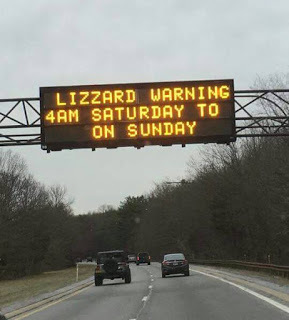
The Northeast is currently enduring a blizzard - the forecast in Connecticut, where my son lives, has gone from 3-5" to 10-12" to 12-18". From Washington DC to New York City, the accumulations are much worse - 24-30". But on Long Island, it appears they're having a problem of a different kind. Photo credit on Facebook: "via Daniel San Filippo/Tri-State Meatball member."
On an entirely different front . . .
I think you'll enjoy the video my daughter made when she went outside at 7:30 a.m. (1/21/16) to walk her girls to the school bus stop.
To see a family of deer enjoying life in Longwood, click here.
 Shot of the stage at the Dr. Philips Center for the Performing Arts, Orlando - 1/22/16
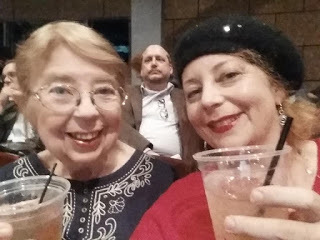 Another mother/daughter drinking selfie - this time at the Star Trek event
STAR TREK - THE ULTIMATE VOYAGE
In celebration of fifty years of Star Trek, someone - and I have no idea who - put together an amazing evening of live orchestral music and a mélange of snippets from all the Star Treks, from first to most recent. It was beautifully done - a truly moving experience. The audience went wild, with a standing ovation for the show and for the encore! If you're a Star Trek fan and this presentation comes your way, do not miss it.
Update on Alligator Attack - from The Orlando Sentinel, January 19, 2016:
Rachel Lilienthal, the woman who lost the lower part of her arm just below the elbow to an alligator last August, went back to work last week as a Spanish lecturer at Rollins College in Winter Park. She admits she has a bit of trouble stacking students' papers in the classroom, but she manages to swim laps in a pool and is hoping to strengthen her muscles enough for a prosthesis at some point in the future. So, three cheers for a truly gallant survivor.
Crocodile Tale:
Finding an alligator in a swimming pool is not uncommon - after all, they're in almost every last puddle of fresh water in the state of Florida, but a crocodile . . .?
Crocodiles live in salt or brackish water, and here in Florida are generally found only in the lower Everglades. But this week a resident of Islamorada in the Florida Keys woke to find an 8-footer in the shallow end of his pool. Florida Fish and Wildlife returned the croc to his native habitat.
~ * ~
Do You Know What Genre You're Writing?
I frequently find my topic for the week in events that happened during the week, whether in my own writing or in my editing work. And this week, as I attempted to explain the nuances of Romantic Suspense to an author who thought that's what she was writing, I realized something I had forgotten since those first struggling years as an author: sometimes it's really tough to know what the guidelines are for a certain sub-genre of romance, let alone follow them well enough to impress and editor or agent.
Frankly, if you want to "write in the cracks" - skimming styles from multiple genres - then indie publishing may be the only way to go. Editors who must adhere to the requirements of a "line" and agents who want to be sure they're going to make money with your book are going to leery of any story that strays from the accepted norm, no matter how good it is. Certainly, I ran into this problem head-on when I started submitting back in the late '90s. I was writing what I wanted to write - and running head-on into the conventions of romance. Back then, it was pretty much "Start out writing for Harlequin/Silhouette, and if you're good enough, maybe you'll be able to break out into some longer and more serious. My problem: I started out writing "Mainstream," although at the time I had no idea that's what I was doing. (And yes, as I've said before, those first two books, Tartleton's Wife and The Sometime Bride, are still the best work I ever did. Because I wrote from the heart, paying no attention to rules I didn't know existed. (As proof positive, I was just granted my rights to my books published by Ellora's Cave Blush - all but Tarleton's Wife, which in its fourth incarnation since it was first published in 1999, is still selling too many copies to qualify for rights reversion!)
So what's an author to do? In attempting to analyze Romantic Suspense alone, I was forced to acknowledge three styles: 1) Category Suspense - short, 60% romance, 40% suspense; 2) Middle-of-the-road - 80,000+ words, strong suspense plot, strong romance (sex scenes likely), plenty of action but not too bloody or hair-raising, minimal profanity; 3) Mainstream - 90,000+ words, emphasis on complex plot and hard-hitting suspense, romance a factor but not predominant. Gritty details, blood & guts. Profanity likely. Skilled writing a must.
A good example of an author who writes category, middle-of-the-road, and mainstream is the most prolific and respected romance author, Nora Roberts. Although she no longer writes category, that is how she got her start. And she seems to alternate her more recent books between series aimed at the "middle" family romance market and more hard-hitting single title mainstreams. And then there are her mysteries, written under the pseudonym, J. D. Robb!
So how does an author figure out the vagaries of Romantic Suspense, let alone all those other sub-genres of Romance? I have only one bit of advice. Explore book stores and online until you find the genre you like best. (You probably already know what that is. But maybe not. Until recently I avoided one of my true loves - Science Fiction - because I thought I didn't have the technical knowledge to write it. And then I discovered "Futuristic"!)
Do your homework. Find the genre you most want to write. Then do nothing but read, read, read the best books you can find in that field. Don't even think of writing a single word until you've researched the parameters of that genre.
Example: If you want to write a cozy mystery, death is usually off-stage, even the action is not "strong stuff." Include too much realistic drama and the editors of "cozy" lines will shudder and shy away. On the next level up, I would include the authors Rhys Bowen, Julie Hyzy, Tasha Alexander, and Catharine Lloyd, who hit a great happy medium between "light" and "serious" mystery (and without a lot of blood & guts). In Mainstream, Robert Galbraith (J. K. Rowling), J. D. Robb and C. S. Harris shine (sticking to female authors only).
The same sub sub-genres apply to every other romance sub-genre from Contemporary to Historical. There's a the simple "category" story, the longer middle-of-the-road book, designed to appeal to the majority of readers, and the harder-hitting Mainstream novels intended for those who want more "meat" in their fiction.
And the problem is, unless you're going indie, you have to write to what the marketing departments of New York publishers want. (With few exceptions, NY is where agents make their money. From what I've seen recently, even the e-market for erotica, which had been paying well, has slowed.) So it' basically, conform or go indie.
This does not mean you cannot have a unique idea. Lori Szoberg sold to Kensington when she made a hero out of the Grim Reaper! It's how you approach your idea that matters - how you swing the bat, if you will. And exactly because there are so many ins and outs to each sub-genre of romance, you must do your homework. You must pay attention to what is selling in your chosen field and not stray too far from the fold until you've established enough of a reputation to branch out with a few new wrinkles to the genre.
Then again, I'm glad I didn't know any of this when I wrote Tarleton's Wife and The Sometime Bride. They might never have been born.
The big decision - Write what you want to write or Write what editors and agents think readers want. (NY editors have a lot of statistics behind them, but the enormous success of indie publishing indicates they narrowed the market beyond what readers wanted.) So . . . your call. Just be aware that for all that editors tell you to write the "book of your heart," they really mean: "Write the book of their heart" or "Write the book that meets the criteria of their company's executives."
Good luck! And do your homework.
~ * ~
Thanks for stopping by,
Grace
For Grace's website, listing all books as Blair Bancroft, click here.
For a brochure for Grace's editing service, Best Foot Forward, click here.
The Northeast is currently enduring a blizzard - the forecast in Connecticut, where my son lives, has gone from 3-5" to 10-12" to 12-18". From Washington DC to New York City, the accumulations are much worse - 24-30". But on Long Island, it appears they're having a problem of a different kind. Photo credit on Facebook: "via Daniel San Filippo/Tri-State Meatball member."

On an entirely different front . . .
I think you'll enjoy the video my daughter made when she went outside at 7:30 a.m. (1/21/16) to walk her girls to the school bus stop.
To see a family of deer enjoying life in Longwood, click here.
 Shot of the stage at the Dr. Philips Center for the Performing Arts, Orlando - 1/22/16
 Another mother/daughter drinking selfie - this time at the Star Trek event
STAR TREK - THE ULTIMATE VOYAGE
In celebration of fifty years of Star Trek, someone - and I have no idea who - put together an amazing evening of live orchestral music and a mélange of snippets from all the Star Treks, from first to most recent. It was beautifully done - a truly moving experience. The audience went wild, with a standing ovation for the show and for the encore! If you're a Star Trek fan and this presentation comes your way, do not miss it.
Update on Alligator Attack - from The Orlando Sentinel, January 19, 2016:
Rachel Lilienthal, the woman who lost the lower part of her arm just below the elbow to an alligator last August, went back to work last week as a Spanish lecturer at Rollins College in Winter Park. She admits she has a bit of trouble stacking students' papers in the classroom, but she manages to swim laps in a pool and is hoping to strengthen her muscles enough for a prosthesis at some point in the future. So, three cheers for a truly gallant survivor.
Crocodile Tale:
Finding an alligator in a swimming pool is not uncommon - after all, they're in almost every last puddle of fresh water in the state of Florida, but a crocodile . . .?
Crocodiles live in salt or brackish water, and here in Florida are generally found only in the lower Everglades. But this week a resident of Islamorada in the Florida Keys woke to find an 8-footer in the shallow end of his pool. Florida Fish and Wildlife returned the croc to his native habitat.
~ * ~
Do You Know What Genre You're Writing?
I frequently find my topic for the week in events that happened during the week, whether in my own writing or in my editing work. And this week, as I attempted to explain the nuances of Romantic Suspense to an author who thought that's what she was writing, I realized something I had forgotten since those first struggling years as an author: sometimes it's really tough to know what the guidelines are for a certain sub-genre of romance, let alone follow them well enough to impress and editor or agent.
Frankly, if you want to "write in the cracks" - skimming styles from multiple genres - then indie publishing may be the only way to go. Editors who must adhere to the requirements of a "line" and agents who want to be sure they're going to make money with your book are going to leery of any story that strays from the accepted norm, no matter how good it is. Certainly, I ran into this problem head-on when I started submitting back in the late '90s. I was writing what I wanted to write - and running head-on into the conventions of romance. Back then, it was pretty much "Start out writing for Harlequin/Silhouette, and if you're good enough, maybe you'll be able to break out into some longer and more serious. My problem: I started out writing "Mainstream," although at the time I had no idea that's what I was doing. (And yes, as I've said before, those first two books, Tartleton's Wife and The Sometime Bride, are still the best work I ever did. Because I wrote from the heart, paying no attention to rules I didn't know existed. (As proof positive, I was just granted my rights to my books published by Ellora's Cave Blush - all but Tarleton's Wife, which in its fourth incarnation since it was first published in 1999, is still selling too many copies to qualify for rights reversion!)
So what's an author to do? In attempting to analyze Romantic Suspense alone, I was forced to acknowledge three styles: 1) Category Suspense - short, 60% romance, 40% suspense; 2) Middle-of-the-road - 80,000+ words, strong suspense plot, strong romance (sex scenes likely), plenty of action but not too bloody or hair-raising, minimal profanity; 3) Mainstream - 90,000+ words, emphasis on complex plot and hard-hitting suspense, romance a factor but not predominant. Gritty details, blood & guts. Profanity likely. Skilled writing a must.
A good example of an author who writes category, middle-of-the-road, and mainstream is the most prolific and respected romance author, Nora Roberts. Although she no longer writes category, that is how she got her start. And she seems to alternate her more recent books between series aimed at the "middle" family romance market and more hard-hitting single title mainstreams. And then there are her mysteries, written under the pseudonym, J. D. Robb!
So how does an author figure out the vagaries of Romantic Suspense, let alone all those other sub-genres of Romance? I have only one bit of advice. Explore book stores and online until you find the genre you like best. (You probably already know what that is. But maybe not. Until recently I avoided one of my true loves - Science Fiction - because I thought I didn't have the technical knowledge to write it. And then I discovered "Futuristic"!)
Do your homework. Find the genre you most want to write. Then do nothing but read, read, read the best books you can find in that field. Don't even think of writing a single word until you've researched the parameters of that genre.
Example: If you want to write a cozy mystery, death is usually off-stage, even the action is not "strong stuff." Include too much realistic drama and the editors of "cozy" lines will shudder and shy away. On the next level up, I would include the authors Rhys Bowen, Julie Hyzy, Tasha Alexander, and Catharine Lloyd, who hit a great happy medium between "light" and "serious" mystery (and without a lot of blood & guts). In Mainstream, Robert Galbraith (J. K. Rowling), J. D. Robb and C. S. Harris shine (sticking to female authors only).
The same sub sub-genres apply to every other romance sub-genre from Contemporary to Historical. There's a the simple "category" story, the longer middle-of-the-road book, designed to appeal to the majority of readers, and the harder-hitting Mainstream novels intended for those who want more "meat" in their fiction.
And the problem is, unless you're going indie, you have to write to what the marketing departments of New York publishers want. (With few exceptions, NY is where agents make their money. From what I've seen recently, even the e-market for erotica, which had been paying well, has slowed.) So it' basically, conform or go indie.
This does not mean you cannot have a unique idea. Lori Szoberg sold to Kensington when she made a hero out of the Grim Reaper! It's how you approach your idea that matters - how you swing the bat, if you will. And exactly because there are so many ins and outs to each sub-genre of romance, you must do your homework. You must pay attention to what is selling in your chosen field and not stray too far from the fold until you've established enough of a reputation to branch out with a few new wrinkles to the genre.
Then again, I'm glad I didn't know any of this when I wrote Tarleton's Wife and The Sometime Bride. They might never have been born.
The big decision - Write what you want to write or Write what editors and agents think readers want. (NY editors have a lot of statistics behind them, but the enormous success of indie publishing indicates they narrowed the market beyond what readers wanted.) So . . . your call. Just be aware that for all that editors tell you to write the "book of your heart," they really mean: "Write the book of their heart" or "Write the book that meets the criteria of their company's executives."
Good luck! And do your homework.
~ * ~
Thanks for stopping by,
Grace
For Grace's website, listing all books as Blair Bancroft, click here.
For a brochure for Grace's editing service, Best Foot Forward, click here.
January 16, 2016
The Tricks to "Track Changes"
 Photo (and effort?) by Maria KangCouldn't resist posting this party photo from the Christmas holidays. Not that I'd ever go to that much trouble, but if you had some nimble-fingered children to help . . . A truly creative idea.
Out of the family archives . . .
 "I want to be just like mommy."
The Tricks to "Track Changes"
This past week I had the interesting experience of the editor being edited. It's been a long while - years filled with a lot of experience editing my own and other authors' work - since the last time I was edited. I came away from the experience of editing Rebel Princess with several conclusions.
1. Even with all my experience, I needed to broaden my understanding of Microsoft Word's Track Changes, the most commonly used interactive editing program around. (I had always relied on my editors to produce the final totally clean copy. This is not the case with Kindle Scout.)
2. Being edited by someone with whom you have NO interaction is way different from the kind of editing I've experienced in the past. (Kindle Scout provides an editor who does line edits and offers an overall critique on content, but there is no further interaction. After that, it's DIY. The author is on his/her own. A major surprise.)
3. It's possible for the hotshot editor (which I consider myself) to make mistakes. Which I most certainly did. (I was particularly grateful to my editor for catching a plot revelation that snuck in too soon. There were also some other cogent comments for which I was grateful.) [By the way, I use "snuck" quite deliberately. It is the past tense of "sneak" I learned in school and is still listed in the dictionary, even though it's going out of style because word processing programs list it as a "spelling error."]
4. It is also possible for editors to make mistakes. Which my Kindle Scout editor obviously did, as I spent about fifty percent of my Track Changes updates okaying words or punctuation that were perfect to begin with. Aargh! (I can only assume he did a Search & Replace, changing both the planet and nationality "Psyclid" to lower case, only to realize I had it right in the first place. I must have had to "okay" about a thousand capital Ps as I went through the manuscript. Same for ellipses. I do mine right out of the Chicago Manual of Style and have no idea why each one had been played with, forcing me to okay the change back to the way they were when I submitted the manuscript. Double aargh!)
5. And, yes, you are allowed to reject editorial changes. Be sure you've considered the suggestion fairly and then, if you're absolutely "certain sure," hit the X for Reject.
6. If I, who have used Track Changes many times, had difficulties creating "clean copy," it seems likely other people might have the same problem. So below please find the instructions I send to my editing clients and also the instructions I revised just for Kindle Scout (and other "single edit" publishers). I hope all the authors (fiction or non-fiction) who read this blog will find the list helpful the next time they're faced with a page of red or blue or green that has to be turned back to black.
THE "HOW TO" OF TRACK CHANGES
Grace Note: I do all my writing in Word Perfect but keep an older copy of Microsoft Word for editing purposes. In my copy Track Changes is in the Tools menu. If necessary, check all Menus until you find it.
1. In Tools, select Track Changes.
A new set of icons will appear. Run your mouse over them to see what they do. The important ones are: Accept Change, Reject Change, & Comment.
2. To accept a change, place your cursor on the tiny triangle & click on “Accept Change.” (You’ll know the cursor is in the right place when the little dotted line darkens to solid.) See also #6 below.
3. To reject a change, place your cursor on the tiny triangle & click on “Reject Change. (You may have to manually delete any words your editor added.)
4. To write a comment, click on the “Comment” icon.
5. To erase a comment, place your cursor on the comment box in the margin and use “Reject change “ to make it disappear.
6. Frequently, even after getting rid of the triangle, some colored characters will remain. They can be turned to black by putting your cursor on the word (or character) and clicking either Accept or Reject, depending on the situation. (On rare occasions only a portion of the colored section will change, and you’ll have to keep repeating the Accept or Reject until every character has turned black.)
7. When you’ve turned as much of your manuscript back to black as you can, return it to your editor with your comments. Usually there are a couple of back-and-forth exchanges before the editor cleans up the final copy, turning everything back to black.
Grace note: For those working with publishers who provide only ONE edit, see the instructions written for Kindle Scout authors below.
TRACK CHANGES FOR "SINGLE EDIT" PUBLISHERS
1. In Tools, select Track Changes.
A new set of icons will appear. Run your mouse over them to see what they do. The important ones are: Accept Change, Reject Change, & Comment.
2. To accept a change, place your cursor on the tiny triangle & click on “Accept Change.” (You’ll know the cursor is in the right place when the little dotted line darkens to solid.) See also #6 below.
3. To reject a change, place your cursor on the tiny triangle & click on “Reject Change. (You may have to manually delete any words your editor added.)
4. To write a comment, click on the “Comment” icon. (This is not applicable to Kindle Scout and other "single edit" publishers as you are not working on a “back & forth” basis with your editor.)
5. To erase a comment, place your cursor on the comment box and use “Reject change “ to make it disappear.
6. Frequently, even after getting rid of the triangle, some colored characters will remain. They can be turned to black by putting your cursor on the word (or character) and clicking either Accept or Reject, depending on the situation. (On rare occasions only a portion of the colored section will change, and you’ll have to keep repeating the Accept or Reject until every character has turned black.)
7. When you’ve turned your manuscript back to black, CONGRATULATIONS. It means you made it through all the editing changes.
8. But, WHOA, you’re not really done. When authors work with print publishers and most e-publishers, your editor does the final run-through. For authors working with "single edit" publishers, such as Kindle Scout, it’s do-it-yourself. And since it’s almost impossible to spot every last little Track Changes edit the first time around, go back to the top and scroll through the whole blasted manuscript, looking for those lingering flashes of color.
9. That’s it. Cross your fingers, send up a prayer or two, and you’re ready to send your baby back.
~ * ~
Thanks for stopping by,
Grace
For Grace's website, listing all books as Blair Bancroft, click here.
For a brochure for Grace's editing service, Best Foot Forward, click here.
January 9, 2016
Random Thoughts on the Universe
 Florida Panther FamilyThis magnificent photo of the endangered Florida panther is copied from the site of Vern Buchanan, Florida Congressman, who is attempting to aid this dwindling breed. Forty-one panthers were killed this year, thirty in traffic accidents - most, I believe, in the southern half of the state. Supposedly, there are only 180 panthers left in the state.
After a lifetime of membership in the Congregational Church, on January 3, 2016, I became an Episcopalian. (Few Congregational churches here in Florida bear any resemblance to the Congregational Churches of New England where I grew up.) And at Church of the Resurrection the intellectual level is high, the choir (in which I sing) truly amazing. Best amateur choir I've ever sung with.
 Being helped to my feet by both Father Paul & the Bishop!
 Walking away, officially Episcopalian
 Hailey as an X-Wing fighter
 ~ * ~
Random Thoughts
Monday, January 4, 2016:
I was checking out at Walgreen's today when I saw a National Geographic with the absurd Cover Headline (in giant letters): "Are We Alone?" set against a star-filled sky. My immediate reaction was, "They've got to be kidding!" I mean, in this day and age, with all we know about the Universe, how could there be any thinking person on earth too arrogant to admit that it's absolutely impossible that we are the only sentient beings in the cosmos. Look at the night sky. Look at the Hubble photos. Read any modern text on astronomy. There is no way, no how, that we can be alone. And that a well-respected, long-established magazine like National Geographic should pose such a question makes me cringe. I mean, really, that is just plain stupid.
If you take the answer to that question a step further, the obvious answer suggests that some alien civilizations will be far ahead of us, some on a par, and some far behind. But that anyone could question whether there are sentient beings elsewhere in the universe is like finding one drop of rain on earth and assuming that to be all the water there is.
Of course we are not alone. But distances are vast, and who knows when we'll be able to venture out far enough to find other people like us - or people who may be vastly different from what we consider normal?
Have "they" come to us? I'm inclined to think so. I'm old enough to remember the first reports on the Roswell incident, before it got all "tidied up" into a downed weather balloon. I even know someone who has seen what he calls "the evidence" at Area 51. (And no, he's not a kook but someone who was stationed there in a responsible job.)
Do we actually adore Star Wars and Star Trek because we consider them nothing more than fantasy adventure? I don't think so. We love them because they show us what many of us think may be the future. In the case of Star Wars, an epic battle of good versus evil. In Star Trek, we see a series of stories that reveal a more benign future, a time of exploration, combined with parables of good and evil, right and wrong, with touches of both comedy and pathos.
We are not simply fans, we are believers. The world we see on screen is out there, and we know someone, someday is going to go all the way - out of our star system and into the Quadrant, across the Galaxy, and finally to that great and mysterious universe beyond. We're not going to be there to see it, but it will happen. So we enjoy the gorgeous on-screen fiction, while hoping that no matter what form the future takes, it will be a Star Trek world of optimism and strong life-respecting values.
 Spiral Galaxy Messier 81Okay, folks, can anyone actually look at this single photo from a universe that contains countless galaxies and still believe we are alone. Every pin point of light is a star system, and it's well beyond the law of averages to say that not a single one of them has a planet capable of producing sentient life.
~ * ~
Thanks for stopping by,
Grace
For Grace's website, listing all books as Blair Bancroft, click here.
For a brochure for Grace's editing service, Best Foot Forward, click here.
January 2, 2016
Winter Park Scenic Boat Tour
Before beginning another scenic photo essay, I want to take a few moments to acknowledge that not everyone has had a "holly, jolly holiday" to end 2015. The worst El Niño in nearly a hundred years is causing misery in the Mid-west, as well as abnormally warm temperatures in Florida. We hit 87° (30.55 C.)on Christmas Day. [For my foreign readers, El Niño is a broad current in the Pacific Ocean that directly affects our weather. When it gets overly warm, look out! Deteriorating weather is expected in Florida in the new year.] The tornadoes and floods in the Mid-west have been appalling, destroying many people's houses, as well as their chance of enjoying the holiday. And as if the weather weren't enough, innocent people are still getting shot; one of the worst cases right here in Orlando, where the daughter of a policeman and a 911 dispatcher came home from vacation unexpectedly and was shot and killed by her own mother, who thought her a burglar. This is tragedy on an epic scale. So anyone whose family managed a traditional, happy holiday, be grateful. Life can so easily go wrong.
~ * ~
PYTHON HUNT. To my surprise, since the Python Hunt in 2013 netted only 68 snakes - and the estimated non-native snake count in the Everglades is in the thousands - they are bringing the hunt back January 16-February 14. (Allegedly to make the general public aware of the ongoing problem.) More as the story develops.
~ * ~
WINTER PARK SCENIC BOAT TOUR
Naturally, Riley's two sisters were not totally overjoyed by her London photos being featured in last week's Mosaic Moments. So when we all went on our favorite boat trip this week, the oldest informed me the three girls would share the camera. Which they did, and below are some of the results.
The Winter Park Scenic Boat Tour is the longest running attraction in the State of Florida. It has been in continuous use since 1938, which leaves no doubt that it is very popular. It tours three lakes in Winter Park (FL), which are connected by very narrow canals, which are my favorite part of the trip. There were so many would-be passengers last Sunday, they put all four boats on an unscheduled 5:00 run, which meant we were coming back when it was nearly dark. A lovely ride, as always, if not the greatest lighting for photos.
All photos below by Hailey, Riley, and Cassidy.
 The photographers, being silly
 I didn't even know my camera could DO this!
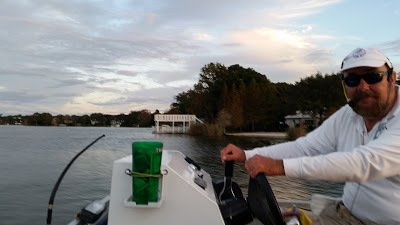 Our captain
 A sample of the homes ringing the 3 lakes - note the setting-sun reflection in the lake.
 No straight lines in this canal!
 Christmas lights on the Palmer Ave. bridge
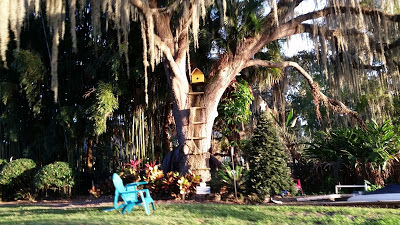 One of the many lovely yards seen from the canals
 Sunset

And after sunset, during a very brief twilight . . .
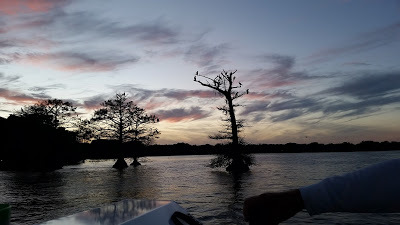 Cormorants roosting for the night
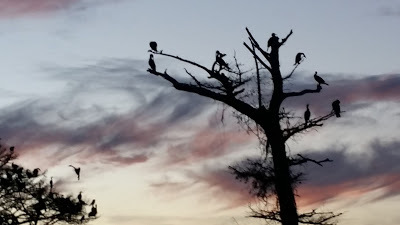
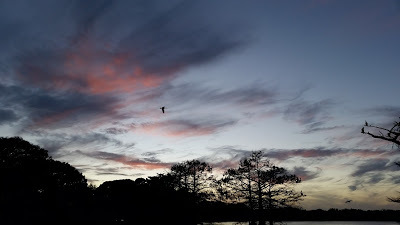 Last bird home . . .
Addendum: Hailey is 12, Riley now 11, and Cassidy is 9.
If you live anywhere near Orlando - or even if you're visiting (with car) - I cannot recommend the Winter Park Scenic Boat Tour too highly. It is lovely, peaceful, and if not "all natural," darn close to it. And the price is right.(FYI, it's just a block off Park Avenue, Winter Park's Main Street, and well-marked by signs.)
For a link to their website, click here.
~ * ~
Thanks for stopping by,
Grace
For Grace's website, listing all books as Blair Bancroft, click here.
For a brochure for Grace's editing service, Best Foot Forward, click here.
~ * ~
PYTHON HUNT. To my surprise, since the Python Hunt in 2013 netted only 68 snakes - and the estimated non-native snake count in the Everglades is in the thousands - they are bringing the hunt back January 16-February 14. (Allegedly to make the general public aware of the ongoing problem.) More as the story develops.
~ * ~
WINTER PARK SCENIC BOAT TOUR
Naturally, Riley's two sisters were not totally overjoyed by her London photos being featured in last week's Mosaic Moments. So when we all went on our favorite boat trip this week, the oldest informed me the three girls would share the camera. Which they did, and below are some of the results.
The Winter Park Scenic Boat Tour is the longest running attraction in the State of Florida. It has been in continuous use since 1938, which leaves no doubt that it is very popular. It tours three lakes in Winter Park (FL), which are connected by very narrow canals, which are my favorite part of the trip. There were so many would-be passengers last Sunday, they put all four boats on an unscheduled 5:00 run, which meant we were coming back when it was nearly dark. A lovely ride, as always, if not the greatest lighting for photos.
All photos below by Hailey, Riley, and Cassidy.
 The photographers, being silly
 I didn't even know my camera could DO this!
 Our captain
 A sample of the homes ringing the 3 lakes - note the setting-sun reflection in the lake.
 No straight lines in this canal!
 Christmas lights on the Palmer Ave. bridge
 One of the many lovely yards seen from the canals
 Sunset
And after sunset, during a very brief twilight . . .
 Cormorants roosting for the night
 Last bird home . . .
Addendum: Hailey is 12, Riley now 11, and Cassidy is 9.
If you live anywhere near Orlando - or even if you're visiting (with car) - I cannot recommend the Winter Park Scenic Boat Tour too highly. It is lovely, peaceful, and if not "all natural," darn close to it. And the price is right.(FYI, it's just a block off Park Avenue, Winter Park's Main Street, and well-marked by signs.)
For a link to their website, click here.
~ * ~
Thanks for stopping by,
Grace
For Grace's website, listing all books as Blair Bancroft, click here.
For a brochure for Grace's editing service, Best Foot Forward, click here.
December 27, 2015
London Collage by Riley
When we were in London last July, we set out to do a classic double-decker bus tour. On this, my seventh visit to London, I thought I knew my way around pretty well, but somehow we mistook the address of the transport station and ended up with a lo-o-ong walk, arriving, breathless, at the very last minute and having to sit on the first floor (windows instead of open air). I was exhausted and when Riley, age ten, asked to borrow my phone to take pictures, I gladly handed it over.
Over the next 45 minutes she took an absolutely amazing collage of London, even remembering my maiden name and snapping a photo of a sign saying saying "Hays" in order to surprise me. So I'm dedicating this holiday collage to the photos Riley took that afternoon. I suspect she inherited some of her Grandfather Elliott's skill with a camera. (He founded the Audio-Visual Center at Yale.) All photos are from a Samsung Galaxy 5, taken under gray skies, through a window, from a moving bus.) Brava, Riley!










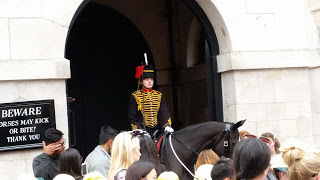

























~ * ~
Thanks for stopping by,
Grace
For Grace's website, listing all books as Blair Bancroft, click here.
For a brochure for Grace's editing service, Best Foot Forward, click here.
Over the next 45 minutes she took an absolutely amazing collage of London, even remembering my maiden name and snapping a photo of a sign saying saying "Hays" in order to surprise me. So I'm dedicating this holiday collage to the photos Riley took that afternoon. I suspect she inherited some of her Grandfather Elliott's skill with a camera. (He founded the Audio-Visual Center at Yale.) All photos are from a Samsung Galaxy 5, taken under gray skies, through a window, from a moving bus.) Brava, Riley!





~ * ~
Thanks for stopping by,
Grace
For Grace's website, listing all books as Blair Bancroft, click here.
For a brochure for Grace's editing service, Best Foot Forward, click here.
December 14, 2015
The Welshman's Bride
 Caught with my mouth openPhoto taken December 13, 2015, at Lessons & Carols,Church of the Resurrection, Longwood, Florida
 There I am in the front row, with my choir book all scrunched up because I was being squeezed from both sides. This concert is also the reason The Welshman's Bride didn't get uploaded until Monday morning, thus messing up my blog schedule. The youngest participant in this Sunday night concert was four, the oldest over ninety. In addition to piano and organ, we had an orchestra of high school students, which included three tympani! A grand event indeed. Though after days of rehearsal and performance (about 15 numbers), I'm so exhausted I can hardly move.
THE WELSHMAN'S BRIDE
I enjoy creating heroines who are less than perfect, but this time I outdid myself. If you like your heroines poised, confident, self-sacrificing, cheerful, and magnanimous in forgiveness, Jocelyn Hawley may not be the girl for you. But perhaps we should each ask ourselves how we would react, given a background similar to hers, under the circumstances she encounters when she marries a near stranger, and a "foreigner," at that.
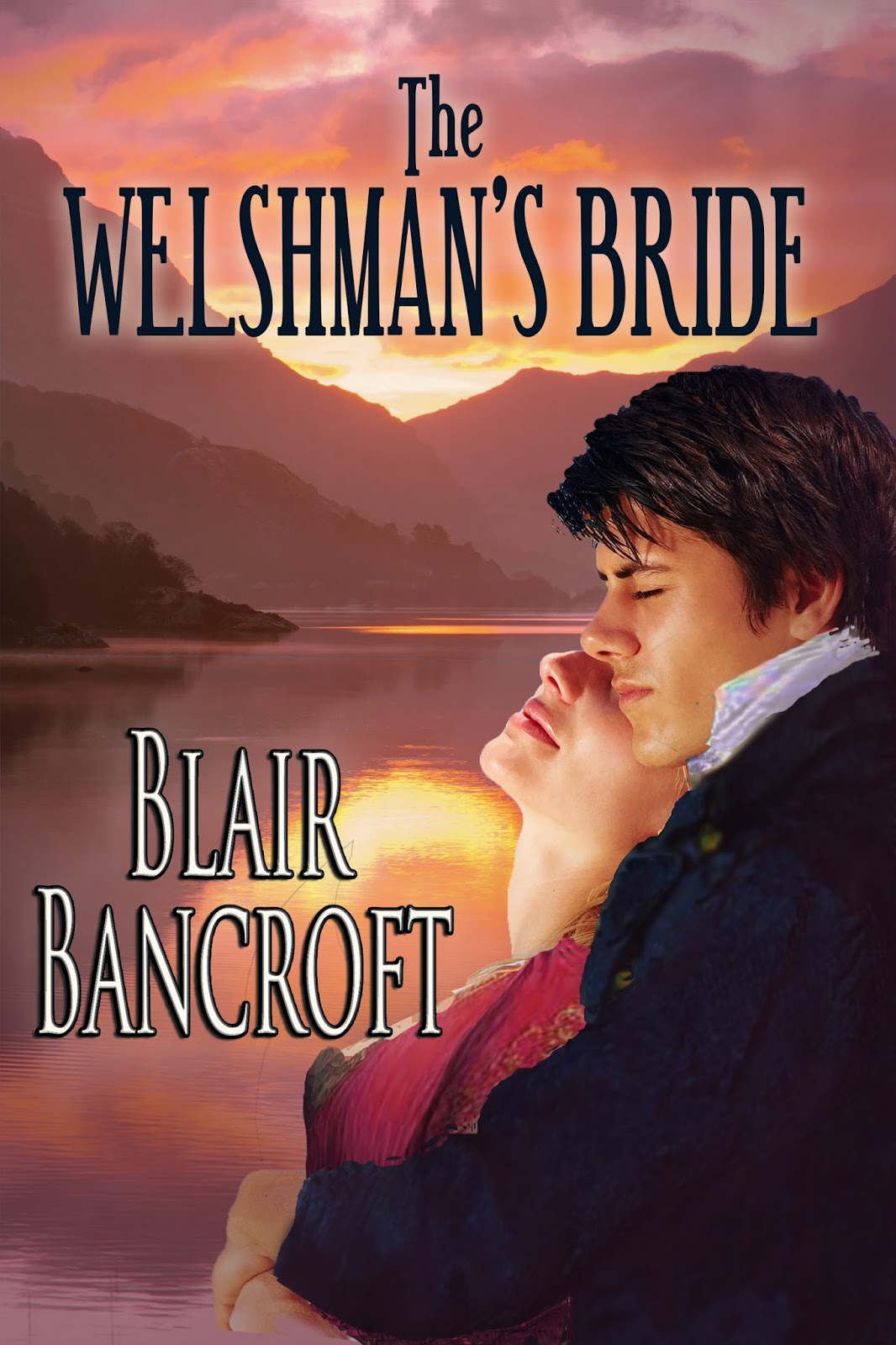
Although it seems likely she is being married for the magnificence of her dowry, Jocelyn Hawley accepts an offer of marriage from a Welshman. And quickly discovers she is as unprepared for marriage as she is for her new family—a mother-in-law who insists on living in Wales' Medieval past and a sister-in-law who seems to be trying to get rid of ehr. Jocelyn is also plagued by the problem of her husband's mistress and a series of disastrous incidents—some potentially lethal—that dog her footsteps. As she grows more alienated from her husband, who barks at her to "grow up," she finds herself the classic stranger in a strange land. Where it appears someone is trying to kill her.
Grace Note: The Welshman's Bride is a Gothic novel in the tradition of Victoria Holt, Mary Stewart, Phyllis Whitney, and my previous Regency Gothics, Brides of Falconfell, The Mists of Moorhead Manor, and The Demons of Fenley Marsh. As has happened before, I've created a heroine who has flaws, this one more than most. I hope you'll like her anyway.
The Welshman's Bride is available on Amazon Kindle, Smashwords, and other online vendors (though it may take up to a week for uploading to other sites)
For a 20% free read on Smashwords, click here.
For a direct link to Amazon Kindle, click here.
~ * ~
Thanks for stopping by,
Grace
For Grace's website, listing all books as Blair Bancroft, click here.
For a brochure for Grace's editing service, Best Foot Forward, click here.


