
Blair Bancroft's Blog, page 41
November 19, 2016
MISTLETOE MOMENT
The difference a decade makes:
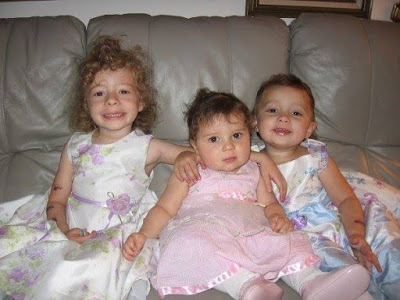 Hailey, Cassidy, Riley
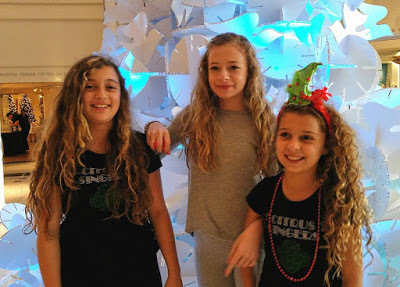 Riley, Hailey, Cassidy
~ * ~
About five years ago I wrote a Christmas novella for an anthology published by Ellora's Cave Cotillion. This year I got my rights back and have just re-published it under the same title: Mistletoe Moment. (I'd wanted to call it Mistletoe Magic, but there were too many other books of the same name!) Mistletoe Moment is a classic heartwarming tale of two wounded people getting a second chance at happiness. One has been wounded only by the slings and arrows of society, the other by the horrors of war. Both have retreated from the world, only to stumble upon each other in the winter countryside.
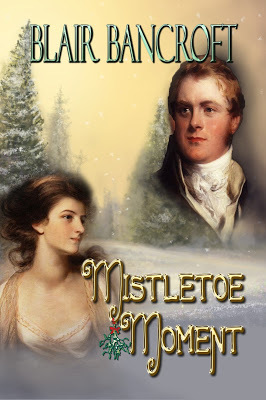
After suffering social disaster at her very first ball—severely aggravated by the nastiness of an unfeeling family—Miss Pamela Ashburton hides herself in the country, expecting to live out her life as a spinster. Major Will Forsythe, injured in body and spirit at Waterloo, comes to the country to escape the concern of well-meaning relatives. Privacy, peace and quiet—that's all he wants. Until he meets a holiday sprite in search of mistletoe. And the Christmas spirit, in the form of a cluster of white berries, gives them both a second chance.
For a link to Mistletoe Moment on Amazon, click here.
For a 20% free read of Mistletoe Moment on Smashwords, click here.
~ * ~
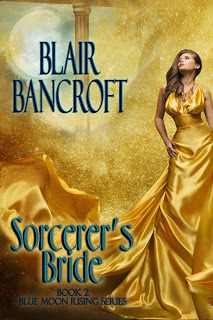
And please don't forget the 5000-word free read of Sorcerer's Bride available at Kindle Scout. If the book is accepted, all those who recommended Sorcerer's Bride get a free e-book. For a link to Sorcerer's Scout Campaign, click here. ~ * ~
Thanks for stopping by,
Grace
For Grace's website, listing all books as Blair Bancroft, click here.
For a brochure for Grace's editing service, Best Foot Forward, click here.
 Hailey, Cassidy, Riley
 Riley, Hailey, Cassidy
~ * ~
About five years ago I wrote a Christmas novella for an anthology published by Ellora's Cave Cotillion. This year I got my rights back and have just re-published it under the same title: Mistletoe Moment. (I'd wanted to call it Mistletoe Magic, but there were too many other books of the same name!) Mistletoe Moment is a classic heartwarming tale of two wounded people getting a second chance at happiness. One has been wounded only by the slings and arrows of society, the other by the horrors of war. Both have retreated from the world, only to stumble upon each other in the winter countryside.

After suffering social disaster at her very first ball—severely aggravated by the nastiness of an unfeeling family—Miss Pamela Ashburton hides herself in the country, expecting to live out her life as a spinster. Major Will Forsythe, injured in body and spirit at Waterloo, comes to the country to escape the concern of well-meaning relatives. Privacy, peace and quiet—that's all he wants. Until he meets a holiday sprite in search of mistletoe. And the Christmas spirit, in the form of a cluster of white berries, gives them both a second chance.
For a link to Mistletoe Moment on Amazon, click here.
For a 20% free read of Mistletoe Moment on Smashwords, click here.
~ * ~

And please don't forget the 5000-word free read of Sorcerer's Bride available at Kindle Scout. If the book is accepted, all those who recommended Sorcerer's Bride get a free e-book. For a link to Sorcerer's Scout Campaign, click here. ~ * ~
Thanks for stopping by,
Grace
For Grace's website, listing all books as Blair Bancroft, click here.
For a brochure for Grace's editing service, Best Foot Forward, click here.


November 12, 2016
Blatant Promo
A truly remarkable week. On Monday I submitted Sorcerer's Bride, Book 2 of my Futuristic Paranormal series, Blue Moon Rising, to Kindle Scout. On Friday, I uploaded Tangled Destinies, my fifth Regency Gothic, to Amazon and Smashwords. And by the end of next week I hope to have re-launched my Christmas novella, Mistletoe Moment, first published by Ellora's Cave Cotillion.
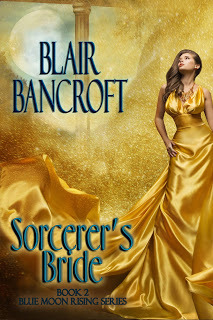
Sorcerer's Bride is involved in what Kindle Scout calls a "campaign" for nominations for inclusion in the KS program. I would, therefore, be extremely grateful if you would take a moment to follow the link below and choose "Nominate." No, you don't have to do it on faith. Scout provides the first 5000 words for you to read. For a link to Sorcerer's Bride,click here.
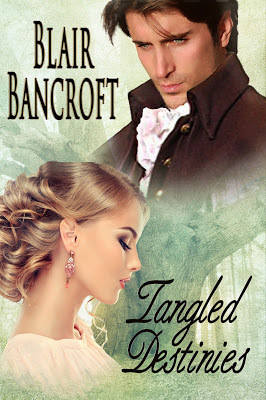
Miss Lucinda Neville has more than a few problems. She has felled her importunate brother-in-law, become a surrogate mother to a foreigner's baby, a keeper of dangerous secrets, and staunch defender of a child someone seems to want gone from this earth. And then she finds herself under attack as well. The person with the most motive? The rakish son of a marquess who just happens to have the best reason for doing away with both Lucinda and the babe.
Author's Note:
Tangled Destinies is the fifth in my series of Regency Gothics in the grand tradition of the Victorian and contemporary Gothics of Victoria Holt and Mary Stewart. I would like to thank my readers for showing so much interest in my books, which are set in the early 19th century period known as the Regency. I truly love creating them.
For a link to Amazon Kindle, click here. ("Look Inside" available)
For a link to a 20% free read on Smashwords, click here.
~ * ~
Thanks for stopping by,
Grace
For Grace's website, listing all books as Blair Bancroft, click here.
For a brochure for Grace's editing service, Best Foot Forward, click here.

Sorcerer's Bride is involved in what Kindle Scout calls a "campaign" for nominations for inclusion in the KS program. I would, therefore, be extremely grateful if you would take a moment to follow the link below and choose "Nominate." No, you don't have to do it on faith. Scout provides the first 5000 words for you to read. For a link to Sorcerer's Bride,click here.

Miss Lucinda Neville has more than a few problems. She has felled her importunate brother-in-law, become a surrogate mother to a foreigner's baby, a keeper of dangerous secrets, and staunch defender of a child someone seems to want gone from this earth. And then she finds herself under attack as well. The person with the most motive? The rakish son of a marquess who just happens to have the best reason for doing away with both Lucinda and the babe.
Author's Note:
Tangled Destinies is the fifth in my series of Regency Gothics in the grand tradition of the Victorian and contemporary Gothics of Victoria Holt and Mary Stewart. I would like to thank my readers for showing so much interest in my books, which are set in the early 19th century period known as the Regency. I truly love creating them.
For a link to Amazon Kindle, click here. ("Look Inside" available)
For a link to a 20% free read on Smashwords, click here.
~ * ~
Thanks for stopping by,
Grace
For Grace's website, listing all books as Blair Bancroft, click here.
For a brochure for Grace's editing service, Best Foot Forward, click here.
November 5, 2016
More Thoughts on Final Edits
 Cassidy, Halloween 2016If anyone can figure out how this photo happened, unintentionally, please don't hesitate to say!
My daughter took the photo in the bed of the trailer 10-15 children were riding in for Trick or Treating in their neighborhood, where the houses are widely spaced. She thinks it has something to do with trying for a panorama, but it's WAY spooky. Particularly on Halloween night with what appears to be a cloaked figure lurking in the background. It reminds me of the time her father took a photo of Cassidy steering a tour boat in Boston Harbor, and she came out as a double image, something we didn't think possible on a cellphone photo. Hmmm.
MORE THOUGHTS ON FINAL EDITS
When I heard that Microsoft had bought Corel, the parent company of Word Perfect, beyond my initial groan at the possibility of losing Word Perfect, I could only hope MS would incorporate the best of Word Perfect, finally making Word the outstanding word processing program it claims to be. Admittedly, I'm prejudiced since the early days of Word when it was light years away from being as good as Word Perfect. Admittedly, it's made progress, but it's only true claim to excellence is Track Changes.
A few more things I've learned this week . . .
While struggling with the final formatting of Sorcerer's Bride in Word 2016, I shook my head over the number of blue "squiggles" under the lines. A few made sense, but others were a total mystery. It was as if whoever programmed the grammar-check portion of the program had grown up reading and writing a different language. If authors actually took all those squiggles seriously, we'd not only end up with stilted sentences or a mish-mash of unintelligible garbage, we'd have a break-down before we made it half-way through. Maybe the squiggles are programmed for business speak and not for fiction? Whatever. I strongly suggest taking them with a grain of salt.
One thing I really appreciate is the little box in Word 2016 that says: Pick up where you left off. For years I've been using Post-it notes to remind me where I left off. To have the program remember is a marvelous touch. Love it.
As I began a final run-through of Tangled Destinies in Word Perfect with Reveal Codes on - the original written on a computer with Windows 7 - I found the copy so much cleaner than Sorcerer's Bride, which was written in XP. So, sigh, I guess age matters. I whipped through 10 chapters of Tangled in a hour this morning. Best time ever. (That's just looking for code glitches, not editing for content.)
Grace Note: my Windows 10 continues to perform really well. (Love the constant parade of surprise screen-savers.) I think whoever said 10 only gives trouble when put onto older computers was likely right.
The Nitty-Gritty.
I've gone into this process before, but it can't hurt to repeat it, as so many authors are going DIY these days. To do final edits & formatting:
1. Put all your book's documents into ONE.
Grace note: I usually have my manuscript divided into 5 or 6 sections of 5 chapters each. So before final editing, the first thing I have to do is put these documents together. In the case of Tangled Destinies, I saved "Tangled1" as "TangledDestinies2016" and proceeded from there. (We'll call "TD2016" the "Editing Document" in the instructions below.)
2. At the end of the Doc 1, enter a Required Page End.
3. Open Doc 2, Select all, Copy. Switch to Editing Document, paste Doc 2 at the end of Doc 1.
Grace Note: Those of you who make each chapter a separate doc are in for a LOT of work - which is why I don't recommend that approach. You also have to make sure a Required Page End is inserted after every chapter. (Fastest method: Ctrl + Enter)
4. Proceed in a similar manner until the entire manuscript is in the Editing Document.
Insert for Word Perfect users, turn on Reveal Codes if you have them, and delete the formatting at the beginning of the document - all but "Paragraph Indent." Arrow through the document, looking for wonky codes (see last week's Mosaic Moments). When finished, save document to rtf. Open Word, then open the rtf copy of your book from Word Perfect. Save as a Word doc or docx.
5. If you have not already done so, Select All and . . .
a. delete page numbering
b. change to single space
c. change auto paragraph indent to .3
d. select Justified
6. Turn on Word's version of "Reveal Codes," the ¶ in the Tool Bar. Proceed to read through your entire manuscript for content, copy edits, and at the same time format the chapter headings and Date & Locations lines (see below).
7. In general, chapter headings are usually centered and often set in larger type than the manuscript. So . . . you need to do the following:
Highlight the chapter heading and . . .
a. select font size
b. select Bold, if desired
Under "Paragraph":
c. select Alignment Centered
d. make Auto Indent "0"
8. Date & Location lines are traditionally Flush Left.
Highlight the line and under "Paragraph" . . .
a. select Alignment Left
b. make Auto Indent "0"
9. Run Spell Check one last time.
Grace note: You should have been running Spell Check after every chapter, at the end of every section, at the end of a first overall edit, and any subsequent edits! It's not a reflection on your spelling but a way to find typos, double words, etc. It's a "MUST"!
Yes, the steps above are meticulous and time consuming, but do you want your work to look like a real book or not?
What I do not do.
I don't do the Flush Left for opening paragraphs of new sections. It's fine if you want to do it, but I feel e-publishing is its own new genre. Writing a good book is important, as is getting the grammar and punctuation right. But slavishly copying paper print styles? I'm not comfortable with that. This, however, is a subjective decision each author must make for her/himself.
Dropped caps? Forgetaboutit. They either come out completely bollixed up, looking ridiculous, or they indicate somebody cared more about imitating New York print books than about the content of their own creation.
Nor do I see any reason to create an "index" with links to chapters. My Kindle comes back to wherever I left off, and I presume other e-readers do the same. And who on earth remembers enough details about a book to say, "Oh, I want to go back and re-read that scene in Chapter 6?" If someone can enlighten me about what I consider foolishness, please don't hesitate to do so. This oddity, by the way, is new to e-pub. Did you ever see a Chapter Index in any work of fiction? Definitely an innovation we can do without.
I feel the same way about all the rest of the junk publishers, mostly New York print pubs, insist on putting "upfront" in a book, including page after page in which the author thanks everyone including his/her dog or cat. When I open my Kindle, I want to see "Chapter 1." I don't want to have to go flip-flip-flip-where does the blasted book begin?"
Oh yes, one more thing I do not do: struggle to format my book in a bunch of different e-formats. Amazon accepts Word docs, docx, & rtf. (And possibly one or two others I've forgotten.) Smashwords will happily take your Word doc and translate it to every format known to mankind for a very minimal cut of your selling price. So why bother? Are a few cents worth it?
E-pub is not only a new way of publishing, it is the future of publishing. We need to break from convention and establish our own way of doing things. (As long as we still respect the English language!) What really matters is—and pardon me for saying this for the umpteenth time—
1. Edit the blasted book!
a. Self-edit, self-edit, self-edit.
b. Self-edit, self-edit, hire a professional.
2. Format your book so it immediately catches a reader's eye.
a. DIY
b. Hire a pro - and be sure they do it the way you want it, not in some "precious" format that smacks of past centuries.
Okay, that's my two cents on getting a book ready for that final upload. (And the editing part applies to "print" authors as well. NEVER send your editor a manuscript full of errors you could easily have fixed yourself!)
~ * ~
Thanks for stopping by,
Grace
For Grace's website, listing all books as Blair Bancroft, click here.
For a brochure for Grace's editing service, Best Foot Forward, click here.
October 29, 2016
The Agony of Final Edits
After a long hot summer, bear season is back. (I wonder where they all went during the hot weather.) For a video my daughter took on Thursday, October 27, click here.
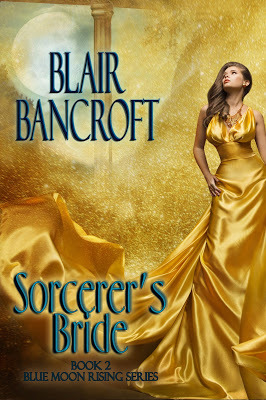 I consider this one of Delle Jacob's all-time great covers. Absolutely love it!
The Agony of Final Edits
The last thing I ever planned was to be in final edits and formatting for two different books at the same time. This is not supposed to happen. And now, on top of that, I've realized I have to get busy polishing the Christmas novella I plan to republish for the holiday season. (It was originally published by the Cotillion division of Ellora's Cave.)
And that makes THREE, side by side, and back to back. Aargh!
It looks like Regency Gothic #5, Tangled Destinies, will make it online first. If I can straighten out all the kinks that weren't meant to be kinky! But even before that, I plan to have Sorcerer's Bride, Book 2 of the Blue Moon Rising series, ready to upload to Kindle Scout. That process takes a while - and may or may not work out. In either case, I suspect it will be the first of the year before it makes it online. As soon as Tangled is uploaded, I'll turn my attention to re-editing Mistletoe Moment. In spite of all the agonies of so many final edits, I will get this poignant Christmas tale back online in time for the holiday season. So please keep a look-out for the announcement about this story of two people who have, with considerable bitterness, withdrawn from the polished manners and mores of society.
Down to the Nitty-Gritty . . .
After many years of listening to all the horror stories about not being able to use most of my well-loved and expensive programs if I upgraded to Windows 10, my poor old Dell (XP) and its Windows 7 successor both succumbed within months of each other, and there I was, stuck. No choice. New computer. New programs. No-o-o-o!
Incredibly, my Geek Squad guy, well aware of my fears, was quite smug about presenting me with a Lenovo* Windows 10 loaded with every last one of my old programs, including Word Perfect 5, and even Word 2003, which I had used to successfully upload every last one of my books to Amazon and Smashwords. He had to fight to get my Oxford English Dictionary to work, but he managed it. Yeah, hurray, Geek Squad! I've continued to do my professional (outside) editing work in Word 2003, but I'm doing final edits of Sorcerer's Bride in Word 2016 and expect I will soon feel comfortable with Track Changes there as well. All in all, a much better experience with Windows 10 than I had been led to anticipate.
*Grace note: the keyboard of the Lenovo model I chose was totally unacceptable. I purchased a separate wireless keyboard and mouse to go with the new computer. A keyboard whose layout was similar to the keyboards I had been using since 1981 and not some dinky little "shortcut" model that looked like it was designed for people who could only type with two fingers!
The biggest editing challenge:
One of the many reasons I write in Word Perfect is its "Reveal Codes" function. It may seem unutterably boring to go through your book line by line, looking for wonky codes, but I always feel it's worth it. Inevitably, I find stray Italics codes, Left Tabs that shouldn't be there, and those pesky extra spaces that inevitably creep in. In Sorcerer's Bride I even found one or two Required Page Ends that had mysteriously disappeared. (The page ends & extra spaces would have been caught in Word with codes on. The others would not.)
Alas, I also found the editing pane chock-full of italics codes that did belong there. I had not realized how many times I used italics in Bride until I saw the manuscript with Reveal Codes turned on. And every last one was necessary. A few were used for emphasis, but most were for other reasons. 1) I invented a new language for Sorcerer's Bride, and every "foreign" word had to be set in italics. 2) There are a lot of spaceships in Bride; the name of every one of them had to be in italics. 3) There is a great deal of "thought-speak" in Sorcerer's Bride, which is set on a planet where people are psychically gifted. Each bit of silent dialogue had to be in italics. 4) Almost all my books tend to have saucy inner voices that give the heroine or hero a hard time (in present tense). These, too, need italics. So, all in all, Sorcerer's Bride is likely a strong candidate for "Most Italics Used in a Single Novel."
The next step:
After going through Sorcerer's Bride line by line, looking only at codes, I saved it into RTF. I then went to my brand new Word 2016 and played with a few chapters of Tangled Destinies until I could find the necessary editing menus. (They are, I admit, after the initial struggle, an improvement on good old 2003 - just harder to find.) After that, at last, I opened the RTF copy of Sorcerer's Bride in Word 2016, turned on what few codes Word shows by clicking ¶ in the Tool Bar, and settled down to reading the entire manuscript from top to bottom. True agony, as I've now been through it so many times I'm ready to scream.
Yet, incredibly, I'm still finding things I want to change. Even on this last time through. That's what good writing is—it includes editing. Making your work the best you possibly can before foisting it on an unsuspecting world.
Ah, if only more of us were willing to suffer for our art.
I ran into an author not long ago who begged for my help with her book, and then rejected every bit of advice I gave her, after I struggled through the longest, hardest, most difficult bit of editing plus critique that I have ever done. An attitude like this is self-defeating. I doubt even her friends will be willing to plow their way through that particular manuscript. So wake up, authors. Don't shoot yourself in foot. As I've said so often before, don't insist you're perfect. Don't insist you never make mistakes. Don't insist you never leave things out. Don't insist you never go on and on over something that is best deleted. Don't close your mind to enlightenment. Don't be so arrogant you can't at least consider expert advice.
Repeat: Do not shoot yourself in the foot. Your friends and relatives may read your first book, but will they read your second? Will anyone?
~ * ~
Thanks for stopping by,
Grace
For Grace's website, listing all books as Blair Bancroft, click here.
For a brochure for Grace's editing service, Best Foot Forward, click here.
 I consider this one of Delle Jacob's all-time great covers. Absolutely love it!
The Agony of Final Edits
The last thing I ever planned was to be in final edits and formatting for two different books at the same time. This is not supposed to happen. And now, on top of that, I've realized I have to get busy polishing the Christmas novella I plan to republish for the holiday season. (It was originally published by the Cotillion division of Ellora's Cave.)
And that makes THREE, side by side, and back to back. Aargh!
It looks like Regency Gothic #5, Tangled Destinies, will make it online first. If I can straighten out all the kinks that weren't meant to be kinky! But even before that, I plan to have Sorcerer's Bride, Book 2 of the Blue Moon Rising series, ready to upload to Kindle Scout. That process takes a while - and may or may not work out. In either case, I suspect it will be the first of the year before it makes it online. As soon as Tangled is uploaded, I'll turn my attention to re-editing Mistletoe Moment. In spite of all the agonies of so many final edits, I will get this poignant Christmas tale back online in time for the holiday season. So please keep a look-out for the announcement about this story of two people who have, with considerable bitterness, withdrawn from the polished manners and mores of society.
Down to the Nitty-Gritty . . .
After many years of listening to all the horror stories about not being able to use most of my well-loved and expensive programs if I upgraded to Windows 10, my poor old Dell (XP) and its Windows 7 successor both succumbed within months of each other, and there I was, stuck. No choice. New computer. New programs. No-o-o-o!
Incredibly, my Geek Squad guy, well aware of my fears, was quite smug about presenting me with a Lenovo* Windows 10 loaded with every last one of my old programs, including Word Perfect 5, and even Word 2003, which I had used to successfully upload every last one of my books to Amazon and Smashwords. He had to fight to get my Oxford English Dictionary to work, but he managed it. Yeah, hurray, Geek Squad! I've continued to do my professional (outside) editing work in Word 2003, but I'm doing final edits of Sorcerer's Bride in Word 2016 and expect I will soon feel comfortable with Track Changes there as well. All in all, a much better experience with Windows 10 than I had been led to anticipate.
*Grace note: the keyboard of the Lenovo model I chose was totally unacceptable. I purchased a separate wireless keyboard and mouse to go with the new computer. A keyboard whose layout was similar to the keyboards I had been using since 1981 and not some dinky little "shortcut" model that looked like it was designed for people who could only type with two fingers!
The biggest editing challenge:
One of the many reasons I write in Word Perfect is its "Reveal Codes" function. It may seem unutterably boring to go through your book line by line, looking for wonky codes, but I always feel it's worth it. Inevitably, I find stray Italics codes, Left Tabs that shouldn't be there, and those pesky extra spaces that inevitably creep in. In Sorcerer's Bride I even found one or two Required Page Ends that had mysteriously disappeared. (The page ends & extra spaces would have been caught in Word with codes on. The others would not.)
Alas, I also found the editing pane chock-full of italics codes that did belong there. I had not realized how many times I used italics in Bride until I saw the manuscript with Reveal Codes turned on. And every last one was necessary. A few were used for emphasis, but most were for other reasons. 1) I invented a new language for Sorcerer's Bride, and every "foreign" word had to be set in italics. 2) There are a lot of spaceships in Bride; the name of every one of them had to be in italics. 3) There is a great deal of "thought-speak" in Sorcerer's Bride, which is set on a planet where people are psychically gifted. Each bit of silent dialogue had to be in italics. 4) Almost all my books tend to have saucy inner voices that give the heroine or hero a hard time (in present tense). These, too, need italics. So, all in all, Sorcerer's Bride is likely a strong candidate for "Most Italics Used in a Single Novel."
The next step:
After going through Sorcerer's Bride line by line, looking only at codes, I saved it into RTF. I then went to my brand new Word 2016 and played with a few chapters of Tangled Destinies until I could find the necessary editing menus. (They are, I admit, after the initial struggle, an improvement on good old 2003 - just harder to find.) After that, at last, I opened the RTF copy of Sorcerer's Bride in Word 2016, turned on what few codes Word shows by clicking ¶ in the Tool Bar, and settled down to reading the entire manuscript from top to bottom. True agony, as I've now been through it so many times I'm ready to scream.
Yet, incredibly, I'm still finding things I want to change. Even on this last time through. That's what good writing is—it includes editing. Making your work the best you possibly can before foisting it on an unsuspecting world.
Ah, if only more of us were willing to suffer for our art.
I ran into an author not long ago who begged for my help with her book, and then rejected every bit of advice I gave her, after I struggled through the longest, hardest, most difficult bit of editing plus critique that I have ever done. An attitude like this is self-defeating. I doubt even her friends will be willing to plow their way through that particular manuscript. So wake up, authors. Don't shoot yourself in foot. As I've said so often before, don't insist you're perfect. Don't insist you never make mistakes. Don't insist you never leave things out. Don't insist you never go on and on over something that is best deleted. Don't close your mind to enlightenment. Don't be so arrogant you can't at least consider expert advice.
Repeat: Do not shoot yourself in the foot. Your friends and relatives may read your first book, but will they read your second? Will anyone?
~ * ~
Thanks for stopping by,
Grace
For Grace's website, listing all books as Blair Bancroft, click here.
For a brochure for Grace's editing service, Best Foot Forward, click here.
October 22, 2016
Mystery vs. Gothic
 Hailey as a skeleton (after Gramma made the top smaller)
HAPPY HALLOWEEN!
The Difference Between Mystery and Gothic
I don't check my reviews very often, but when I did this week, one thing leaped out at me. (Besides the reviewer who forced a loud burst of laughter (appreciative laughter) out of me because she was so angry with the hero of The Welshman's Bride—fully involved in her indignation of his treatment of the heroine.)
But the reviewer of one of my other Regency Gothics said something that made me stop and think. He/she was not happy because the villain was not kept a big secret until the final revelation. And that got me to thinking, Hmm, I think I know the feel of a Gothic as opposed to a Mystery - mostly because I've read so many of them, but obviously, it's not so clear to others. And who knows, perhaps the genres have so much cross-over, it really is difficult to tell them apart. Certainly, very few of any fiction genre's rules are set in stone any more. But today I'm going to attempt to list the differences as I see them.
1. First person or third? Mysteries can be written in either first person or third. Some are written in both - the hero or heroine's viewpoint in first person, other viewpoints in third.
A Gothic is written in first person only. This is because Gothic novels emphasize the main character's vulnerability. She is alone, on her own. Readers can't be allowed to see into other people's heads and find out if they're good guys or bad guys. 2. Male or Female Point of View. The main character in a mystery can be either male or female, occasionally a couple (m/f, m/m, f/f) working as partners.
The main character in a Gothic has to be female. A lone female, without the support of friends or family. A vulnerable, threatened male just doesn't cut it.
3. Murder or Attempted Murder.The whole point to a mystery is that there is a murder(s) to solve - a puzzle if you will - questions to be asked, clever detecting, etc. Mysteries are "who done it's" in the classic sense.
The whole point to a Gothic novel is that a murder(s) may happen, but attempted murder, the threat of murder, even an imagined threat, is more important than solving an actual murder. The ambiance, the atmosphere on every page is more important than solving the question of who did what to whom.
4. Drama or Comedy.As anyone who's ever read Janet Evanovich knows, mysteries can be either drama, comedy, or both.
Gothics by their very nature are drama, sometimes melodrama. Dark, drear, threatening, scary. Hard to get any humor in there, although I try.
Action.Mysteries vary in the amount of action they show. From, say, James Lee Burke, with lots of action, "onstage" murders, and the hero up to his neck in mayhem to Cozy Mysteries, where murders occur "offstage" and the action is usually muted to accommodate those who like to keep well away from blood and gore.
Gothics often have both kinds of action. "Onstage" attempted murder, "Offstage" murder(s), and finally a dramatic "onstage" crisis involving the heroine, who somehow always manages to survive.
Setting.A mystery can be set almost anywhere and in any time period.
Gothic novels of the 18th & 19th c. were primarily set in dark and eerie castles or gloomy mansions. Today, as long as the author gets the dark & eerie ambiance correct, the setting can be almost anywhere—even, as in my current Regency Gothic, Tangled Destinies, a fine country home nestled in the beauty of the Cotswolds.
Modern Gothics can be contemporary or historical, although most Gothic historicals are set in the 19th c. Many consider the Victorian era THE period for Gothic novels—the classic example, the novels of Victoria Holt. For classic examples of contemporary Gothics, you can't do better than the works of Mary Stewart.
I personally prefer the early 19th c., which is why I call mine "Regency Gothics." Can you set a Gothic in another time period? Of course . . . but will readers accept it? Who knows? Tradition is a funny thing.
Plot.In a mystery almost anything goes, as long as there is a murder to be solved. The main character/detective, can be an amateur or a professional (law enforcement or private eye). A great many questions must be asked, convoluted paths followed, perhaps another death or two. If the main character is an amateur detective, there is usually a professional lurking in the background, offering criticism, and sometimes help.
In a Gothic, the struggling heroine attempts to figure out things on her own. She is alone, no backup. Her romantic interest is frequently the person who looks most guilty, the person she dare not trust. She may have a lot of questions and doubts running through her head, but few, if any, people she can rely on. The solution to the disasters that are happening around her are important, but not as important as the general feeling of imminent threat - to herself and/or to a child.*
*Most Gothics use the device of an innocent child in one way or another. Not a "rule," but a common thread. In my current Regency Gothic, the threatened child is a baby.
Grace note: For the benefit of my foreign readers, "onstage" is a term borrowed from the theater, indicating that an action is described in detail, happening "live" in the pages of the book. "Offstage" indicates that certain actions, such as a murder, are mentioned in the book, but readers are only told about the event. It is not described in gory detail, either at the time it happens or when the detective investigates the scene of the crime.
Romance.
Romance is optional in Mystery.
Romance is essential to a Gothic novel, although the road is rocky, as the heroine suspecting the hero of villainy is one of the primary themes of a Gothic.
SUMMARY.
Mystery - a puzzle—almost always a murder(s)—to be solved through meticulous investigation - sometimes clever, sometimes just plain dogged.
Gothic - a dark, threatening atmosphere combined with murder, attempted murder, and/or other dangers (real or imagined). The general ambiance, the continuing threat-level are more important than "who done it."
~ * ~
Thanks for stopping by,
Grace
For Grace's website, listing all books as Blair Bancroft, click here.
For a brochure for Grace's editing service, Best Foot Forward, click here.
October 15, 2016
The Difference a Word (or two) Makes
Hurricane update:
Although the greater Orlando area wasn't hit as hard as we had feared, the shoreline counties north of here, as well as Georgia and the Carolinas took a beating. Flooding is still a problem in the Carolinas, including a burst dam. As for the Florida shoreline, school did not reopen until almost a week after the storm hit, and some are still without power as I write this on Friday, October 14th.
For a dramatic "Matthew" video, Click here.
Addendum: And then Nicole came along - I suspect it swallowed the remnants of Matthew, and even though it was headed north, well out to sea, it grew so large, the outer bands are affecting us, producing five straight days of clouds and spitting rain. Strange weather for October, one of Florida's most idyllic months.
~ * ~
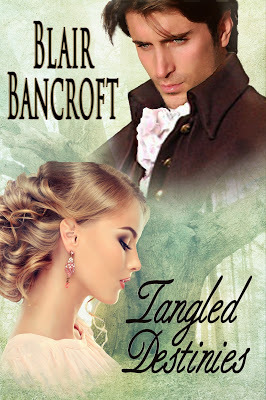
A sneak preview of the lovely cover Delle Jacobs did for Tangled Destinies, my fifth Regency Gothic.(Hopefully out in November.)
~ * ~
THE POWER OF A SINGLE WORD
When offering Writing & Editing examples, I have to admit I don't spend a lot of time on research. I usually just borrow my examples from whatever I'm working on at the moment. Or, as in the past few weeks, I get ideas from books I'm editing for other authors. (These books, of course, are never used for exact examples, as I do not reveal what is in anyone else's book.)
I will, however, reveal that once upon a time I ran across a book where it was obvious the author had never even run spell check, let alone done any self-editing. This resulted in a great deal of extra work when the Track Changes edits came back, as the author had to "accept" a whole slew of changes to typos and duplicate words that would have been caught in a simple spell check.
As my regular readers know, I am a strong advocate of self-editing—adding, subtracting, clarifying, etc. There may be a few geniuses in the world who get it right the first time, but most of us don't. We have to slog through, and slog through again, line by line, finding ways to make things better. Sometimes it's only a single word - or the deletion of a word - that makes that sentence zing instead of fall flat. And yes, you doubters out there, a single word can make a difference. So go ahead, fuss! Get it right. Don't just write, write, write, sit back, say, "Whew!" and send it off without another look.
And, believe me, having judged at least 450 RWA chapter contest entries, as well as being a professional editor for more than a quarter of a century, there are authors who do exactly that. Is their work any good? Sometimes, but poor presentation shoots them in the foot, the end result—not a winner.
So, listen up! Read over your work. Find those missing words. Find the awkward phrases. Find the places where you thought you said one thing, but it came out something else entirely. Find the meager descriptions. Find the places where you ran on and on about something that didn't affect your story one way or another. (Get rid of it! Or that pesky secondary character who's intruding on the primary plot!)
Below are some examples of the kinds of things you might change on a second or third edit (after you've made all the big, obvious changes). These are seldom earth-shattering, just the last little tweaks that make your sentences more clear, more dramatic. Or simply because they sound better. And sometimes it's just to avoid duplicating a word used in a previous sentence. All picky little things, but if you really care . . ., you'll take the time to get it right!
All examples are from my Work-in-Progress, Regency Gothic #5, Tangled Destinies.Additions shown in hot pink. Deletions in blue.
Yet somehow life went on, although I admit to a few twinges of the heart when I received a succession of letters . . .
Yet somehow life went on, although I admit to more than a few twinges of the heart when I received a succession of letters . . . .
"When Lord Thornbury returns, please tell him I must speak to him at once.""When Lord Thornbury returns, please tell him I must speak with him at once."
Nell!—sleeping while he was being whisked away to God alone knew where. Or why.Nell!—sleeping while her charge was being whisked away to God alone knew where. Or why.
So he did know.My last doubt disappeared.
Searching for Nell Scarlett would be fruitless.A search for Nell Scarlett would quickly reveal that no such person existed . . .
Yet he was there, I knew he was. Hunting.Yet he was there, I knew he was. Stalking me.
. . . ten-foot walls of yew, no matter which direction I looked. No-o-o!. . . ten-foot walls of yew. No matter which direction I looked, dead ends.
Dear Flora, what a Godsend she'd been.Dear Flora, what a Godsend she'd turned out to be.
Nonetheless, perhaps it was guilt that caused me to wake later that night.Nonetheless, perhaps it was nagging guilt that caused me to wake later that night.
"Ye c'n practically see the steam rising, like one of them pump engines on the canal.""Ye c'n practically see the steam rising. Not like a tea kettle, miss. More like one of them pump engines on the canal."
Totally chagrined, I begged his pardon.Chagrined, I begged his pardon.
(Grace note: There are a number of words, particularly adverbs, that we all overuse. "Suddenly" is also a good example. When you see an "-ly" word, ask yourself if you really need it. Would your sentence sound better, fresher, without it?)
My voice rose to a height unbecoming enough to paint my cheeks scarlet. I could feel the hot flush.My voice rose to a height unbecoming enough to be called a shriek.
Though fear demanded I slow my footsteps to a crawl, I forced myself to a steady pace.Fear demanded I slow my footsteps to a crawl, but somehow I forced myself to a steady pace.
I clamped my lips tight over the words of response that were exploding in my head.I clamped my lips tight over the angry words exploding in my head.
. . . although my nerves did not begin to settle until I heard the snick of the bolt behind me.. . . although my nerves did not begin to settle until I'd snicked the bolt closed behind me.
(Grace note: # 2 more active)
Getting rid of him quietly made sense.Getting rid of my poor Nick quietly made sense.
My dressmaker had been adding a good two inches of fabric to my tops since I was sixteen.My dressmaker had been adding a good two inches of fabric to my bodices since I was sixteen.
(Grace note: more correct Regency language)
With the uncertain aid of the rocker's arm, . . .With the uncertain aid of the rocking chair's arm, . . .
Now that I'd bloodied my brother-in-law, delivered a baby, and ended up in the country seat of the heir to a marquisate, albeit in the attics . . .
Now that I'd bloodied my brother-in-law, delivered a baby, and ended up in the country seat of a marquess, albeit in the attics . . .
Aunt Trevor had paid me a visit shortly before the dinner bell the previous day.
Shortly before the dinner bell the previous day, Aunt Trevor had paid me a visit.
I could, of course, think of highly legitimate reasons why he was not.
An absurdity easily destroyed by reason.
Not even feeding would satisfy him.
Not even a feed would satisfy him. (Grace note: more Brit-sounding)
. . . worse were the words chasing through their minds.
. . . worse were the words chasing through the congregation's minds.
. . . where I plopped into the upholstered chair near the window and forced my whirling thoughts . . .
. . . where I plopped into my favorite chair near the window and forced my whirling thoughts . . .
"Hermione, balked of her quarry, is capable of wrecking havoc wherever she can."
"Hermione, balked of her quarry, seems bent on wrecking havoc wherever she can."
The "but" that was coming screamed at me.
The "but" that was undoubtedly coming screamed at me.
Good advice, but not easy to follow, except those times when I held Nick in my arms . . .
Advice not easy to follow, except for those times when I held Nick in my arms . . .
The dawning horror on his face as I described Nick and the wagon sailing off the ha-ha was almost worth all the fear and doubt that had gone before.
Horror dawned on his face as I described Nick and the wagon sailing off the ha-ha.
Lady Winterbourne treated me with some ambiguity.
Lady Winterbourne continued to treat me with some ambiguity.
. . . my right shoulder, which reminded me daily of the knocks it had taken on coach and stairs.
. . . my right shoulder, which reminded me daily of the knocks it had taken in the coach accident and on the stairs. (Grace note: original too "shorthand")
. . . and were almost to the copse nearest the house when I heard a commotion behind me.
. . . and were almost to the cluster of trees nearest the house when I heard a commotion behind me.
(Grace note: changed to avoid repetition of "copse" & to give an explanation for those not well acquainted with Brit-speak.)
~ * ~
Thanks for stopping by,
Grace
For Grace's website, listing all books as Blair Bancroft, click here.
For a brochure for Grace's editing service, Best Foot Forward, click here.
Although the greater Orlando area wasn't hit as hard as we had feared, the shoreline counties north of here, as well as Georgia and the Carolinas took a beating. Flooding is still a problem in the Carolinas, including a burst dam. As for the Florida shoreline, school did not reopen until almost a week after the storm hit, and some are still without power as I write this on Friday, October 14th.
For a dramatic "Matthew" video, Click here.
Addendum: And then Nicole came along - I suspect it swallowed the remnants of Matthew, and even though it was headed north, well out to sea, it grew so large, the outer bands are affecting us, producing five straight days of clouds and spitting rain. Strange weather for October, one of Florida's most idyllic months.
~ * ~

A sneak preview of the lovely cover Delle Jacobs did for Tangled Destinies, my fifth Regency Gothic.(Hopefully out in November.)
~ * ~
THE POWER OF A SINGLE WORD
When offering Writing & Editing examples, I have to admit I don't spend a lot of time on research. I usually just borrow my examples from whatever I'm working on at the moment. Or, as in the past few weeks, I get ideas from books I'm editing for other authors. (These books, of course, are never used for exact examples, as I do not reveal what is in anyone else's book.)
I will, however, reveal that once upon a time I ran across a book where it was obvious the author had never even run spell check, let alone done any self-editing. This resulted in a great deal of extra work when the Track Changes edits came back, as the author had to "accept" a whole slew of changes to typos and duplicate words that would have been caught in a simple spell check.
As my regular readers know, I am a strong advocate of self-editing—adding, subtracting, clarifying, etc. There may be a few geniuses in the world who get it right the first time, but most of us don't. We have to slog through, and slog through again, line by line, finding ways to make things better. Sometimes it's only a single word - or the deletion of a word - that makes that sentence zing instead of fall flat. And yes, you doubters out there, a single word can make a difference. So go ahead, fuss! Get it right. Don't just write, write, write, sit back, say, "Whew!" and send it off without another look.
And, believe me, having judged at least 450 RWA chapter contest entries, as well as being a professional editor for more than a quarter of a century, there are authors who do exactly that. Is their work any good? Sometimes, but poor presentation shoots them in the foot, the end result—not a winner.
So, listen up! Read over your work. Find those missing words. Find the awkward phrases. Find the places where you thought you said one thing, but it came out something else entirely. Find the meager descriptions. Find the places where you ran on and on about something that didn't affect your story one way or another. (Get rid of it! Or that pesky secondary character who's intruding on the primary plot!)
Below are some examples of the kinds of things you might change on a second or third edit (after you've made all the big, obvious changes). These are seldom earth-shattering, just the last little tweaks that make your sentences more clear, more dramatic. Or simply because they sound better. And sometimes it's just to avoid duplicating a word used in a previous sentence. All picky little things, but if you really care . . ., you'll take the time to get it right!
All examples are from my Work-in-Progress, Regency Gothic #5, Tangled Destinies.Additions shown in hot pink. Deletions in blue.
Yet somehow life went on, although I admit to a few twinges of the heart when I received a succession of letters . . .
Yet somehow life went on, although I admit to more than a few twinges of the heart when I received a succession of letters . . . .
"When Lord Thornbury returns, please tell him I must speak to him at once.""When Lord Thornbury returns, please tell him I must speak with him at once."
Nell!—sleeping while he was being whisked away to God alone knew where. Or why.Nell!—sleeping while her charge was being whisked away to God alone knew where. Or why.
So he did know.My last doubt disappeared.
Searching for Nell Scarlett would be fruitless.A search for Nell Scarlett would quickly reveal that no such person existed . . .
Yet he was there, I knew he was. Hunting.Yet he was there, I knew he was. Stalking me.
. . . ten-foot walls of yew, no matter which direction I looked. No-o-o!. . . ten-foot walls of yew. No matter which direction I looked, dead ends.
Dear Flora, what a Godsend she'd been.Dear Flora, what a Godsend she'd turned out to be.
Nonetheless, perhaps it was guilt that caused me to wake later that night.Nonetheless, perhaps it was nagging guilt that caused me to wake later that night.
"Ye c'n practically see the steam rising, like one of them pump engines on the canal.""Ye c'n practically see the steam rising. Not like a tea kettle, miss. More like one of them pump engines on the canal."
Totally chagrined, I begged his pardon.Chagrined, I begged his pardon.
(Grace note: There are a number of words, particularly adverbs, that we all overuse. "Suddenly" is also a good example. When you see an "-ly" word, ask yourself if you really need it. Would your sentence sound better, fresher, without it?)
My voice rose to a height unbecoming enough to paint my cheeks scarlet. I could feel the hot flush.My voice rose to a height unbecoming enough to be called a shriek.
Though fear demanded I slow my footsteps to a crawl, I forced myself to a steady pace.Fear demanded I slow my footsteps to a crawl, but somehow I forced myself to a steady pace.
I clamped my lips tight over the words of response that were exploding in my head.I clamped my lips tight over the angry words exploding in my head.
. . . although my nerves did not begin to settle until I heard the snick of the bolt behind me.. . . although my nerves did not begin to settle until I'd snicked the bolt closed behind me.
(Grace note: # 2 more active)
Getting rid of him quietly made sense.Getting rid of my poor Nick quietly made sense.
My dressmaker had been adding a good two inches of fabric to my tops since I was sixteen.My dressmaker had been adding a good two inches of fabric to my bodices since I was sixteen.
(Grace note: more correct Regency language)
With the uncertain aid of the rocker's arm, . . .With the uncertain aid of the rocking chair's arm, . . .
Now that I'd bloodied my brother-in-law, delivered a baby, and ended up in the country seat of the heir to a marquisate, albeit in the attics . . .
Now that I'd bloodied my brother-in-law, delivered a baby, and ended up in the country seat of a marquess, albeit in the attics . . .
Aunt Trevor had paid me a visit shortly before the dinner bell the previous day.
Shortly before the dinner bell the previous day, Aunt Trevor had paid me a visit.
I could, of course, think of highly legitimate reasons why he was not.
An absurdity easily destroyed by reason.
Not even feeding would satisfy him.
Not even a feed would satisfy him. (Grace note: more Brit-sounding)
. . . worse were the words chasing through their minds.
. . . worse were the words chasing through the congregation's minds.
. . . where I plopped into the upholstered chair near the window and forced my whirling thoughts . . .
. . . where I plopped into my favorite chair near the window and forced my whirling thoughts . . .
"Hermione, balked of her quarry, is capable of wrecking havoc wherever she can."
"Hermione, balked of her quarry, seems bent on wrecking havoc wherever she can."
The "but" that was coming screamed at me.
The "but" that was undoubtedly coming screamed at me.
Good advice, but not easy to follow, except those times when I held Nick in my arms . . .
Advice not easy to follow, except for those times when I held Nick in my arms . . .
The dawning horror on his face as I described Nick and the wagon sailing off the ha-ha was almost worth all the fear and doubt that had gone before.
Horror dawned on his face as I described Nick and the wagon sailing off the ha-ha.
Lady Winterbourne treated me with some ambiguity.
Lady Winterbourne continued to treat me with some ambiguity.
. . . my right shoulder, which reminded me daily of the knocks it had taken on coach and stairs.
. . . my right shoulder, which reminded me daily of the knocks it had taken in the coach accident and on the stairs. (Grace note: original too "shorthand")
. . . and were almost to the copse nearest the house when I heard a commotion behind me.
. . . and were almost to the cluster of trees nearest the house when I heard a commotion behind me.
(Grace note: changed to avoid repetition of "copse" & to give an explanation for those not well acquainted with Brit-speak.)
~ * ~
Thanks for stopping by,
Grace
For Grace's website, listing all books as Blair Bancroft, click here.
For a brochure for Grace's editing service, Best Foot Forward, click here.
October 8, 2016
Matthew, Agnes, and No-Name
 Matthew's Wrath - Downtown Charlotte, South Carolina
The Orlando area lucked out. The coast did not fare as well. Since no one was allowed back on the barrier islands until today, Saturday, photos are just beginning to come in of washed-out roads and smashed beachfront homes. Nor is there any power. And coastal areas to the north - Daytona, St. Augustine, Jacksonville - were hit even harder as Matthew arrived at high tide.
Below are two videos I found on Facebook.
Here's a Weather Channel video taken at Paradise Island in the Bahamas, demonstrating what we were expecting here in our area, except Matthew calmed a bit before grinding up the Florida Coast.
To view a weatherman attempting to stand and deliver during hurricane-force winds, click here.
For video from Jacksonville Beach, click here.
~ * ~
I learned what a hurricane was when I was only five years old. An indelible memory. We were living in Mansfield, Massachusetts at the time. I also experienced some brutes while living in Connecticut. We lived on Long Island Sound, and one hurricane (Agnes, my son tells me) came in with a tornado at 6:30 a.m., twisting a rose hedge in circles, dropping a tree onto our porch, and ripping the electrical panel off the far side of the house. I recall that it seemed the noise of the wind would never stop. I can't remember how long we were without power, but I know we lost all the frozen food that had just been stocked in our cellar freezer - we hauled out trash bag after trash bag. I also recall our very staid neighbor, a Yale professor, on about the fourth day after the storm (still no power), standing on his rear deck and screaming his frustration out over the salt marsh below.
So - compared to the Connecticut storm and the one when I was five, which killed 700 along the southern New England coast and washed away every house built on the barrier islands, Matthew turned out to be a pussy cat. But that was only lower & mid Central Florida. After days of moving toward the west, Matthew took a last-minute jog east and spared the area where I live from nothing more than tropical storm winds and 10" of rain. Many still lost power - 40,000 here in Seminole County alone - but I lucked out. I was not among them. My daughter and her family were not so lucky. They had to dig out a generator not used since 2007.
Along the coast north of here, St. Augustine in particular, the storm hit much harder, as it came in at high tide. There was quite a bit of damage, although nothing compared to the devastation in Haiti.
Seminole County was under curfew from Thursday night to Friday at 5:00 pm. The result was an amazing silence. My house backs up to a busy road and to realize not a single car or truck was going by . . . Wow! The curfew was lifted early, at 2:00 p.m. Friday, but I didn't venture out until today (Saturday). No fun driving without working stoplights or having to deal with debris in the road.
Prior to Matthew's arrival, we were barraged with constant warnings from the governor on down. Mandatory evacuation orders for the barrier islands. Warnings from the various Sheriffs that if you don't evacuate, we're not coming to get you! (Besides, they closed all the bridges at 6:00 p.m. on Thursday.)
The best one-liner, however, came from the head of Orange County Emergency Management. At the end of his warning, he said: "If you live in a mobile home and you have not gone to a shelter, please call 311 and give them the name of your next of kin!"
But if you're one of those who thinks the warnings were too loud for too long, here's the story of what happened when I was five. (I remember it like yesterday - much too dramatic to forget.)
GRACE'S REMINISCENCE - Or what happens when there is no storm warning.
Re: the hurricane that hit New England when I was five.
It was my father's birthday. Must have been a Saturday as he was a high school principal and he had the whole day off. To celebrate, we were driving into Providence, Rhode Island, to go shopping, have lunch, and see a movie. A big treat for all of us.
My father had been brought up on a a farm in Nebraska and was always very conscious of the weather. If there had been any indication of a storm, we would not have left home that day. But we had barely arrived in Providence when my father started sniffing the air and saying, "If this was Nebraska, I'd think there was a tornado coming." We went shopping - I think we had lunch. And then my father suddenly declared we were going home. I remember bursting into tears because I really wanted to go to the promised movie. No. We're going home. (From what happened next, though I don't remember it, I think the wind must have started to pick up.)
As we retrieved our car from a parking lot and started to drive out of town, green balls of fire were jumping out of the electrical wires in Providence's downtown. I was ordered to lie flat on the floor in the rear of the car. So I saw nothing after that until my parents' comments had me peeking out the window. We were out in the country, and a rather roly-polly police officer was standing with his hand against a great tree and motioning all cars to drive out into a field to avoid it. The whole sight was so pathetic (and no, that's not a word I knew at the time), because there was no way in this world he could hold up that tree if it decided to topple.
The next time I looked, we'd made it home, and I was devastated to see the giant tree in a lot across the street was down. We were all so ignorant about hurricanes that one of the local shop-owners ventured out during the quiet of the eye and was killed when the storm roared back from the other direction.
As for what happened back in Providence . . . we found out that 20 minutes after we left town, storm surge (called a "tidal wave" at that time) struck the city - which is quite a ways upriver - and there was 12 feet of water where our car had been.
As mentioned above, because there was absolutely no warning of any kind, 700 people died that day. The barrier islands along the Rhode Island shore were wiped clean. Many years later I heard the following true story about one incident in that area:
My mother's best friend and her husband bought a cottage on the Rhode Island shore (Mesquamicut, I think). And were told its history. It seems their cottage replaced a house that had been there on the day of the infamous hurricane. That house had been swept up by the storm surge and deposited almost a mile inland. The owners bought the land and left the house where it dropped. The house our friends bought (built on the original site) was not on the barrier island but on land directly behind it. (The houses on the barrier island were nothing more than kindling.) The way the story went is that the electrical wires did NOT break. Therefore, the original cottage must have gone OVER the wires, not under them. In any event, the story of the two houses is absolutely true. I've seen the one, stayed in the other. The tale of just how high the storm surge was . . . well, I've often wondered about that. I suspect the wires may have surged up as well, allowing the house to scoot under.
The moral of this tale: Never complain about, or scoff at, all the effort the weather forecasters put into informing us about storms. Without the work they do, our hurricane death tolls could be more like that No-name storm in New England when I was five.
~ * ~
Thanks for stopping by,
Grace
For Grace's website, listing all books as Blair Bancroft, click here.
For a brochure for Grace's editing service, Best Foot Forward, click here.
October 1, 2016
Telltale signs of Amateur Writing
Saturday, 3:30 p.m.
I just saw a perfect example of bad editing, or perhaps just plain fuzzy thinking. AOL news headline: Clinton mocks Trump with 3 a.m. tirade online.
Now if I, or you, didn't know better, doesn't that headline indicate that it was Hillary "tirading" at 3:00 a.m.? There HAD to be a better way to write that headline. (Maybe the writer was a Trump supporter?) In any event it makes an excellent example of how easy it is to say something we never intended to say. [For my foreign readers, it was Trump who embarrassed himself (again) with a tweet at 3:00 a.m., ranting against a former Miss Universe.]
Frankly, I'm coming around to the idea I've heard expressed by several commentators: Trump went into this as a lark, has enjoyed the ego trip, but doesn't really want to take on the burden of office. (Perhaps he's smart enough to understand how truly unready he is.) In any event - particularly when his own people say he was prepared for his debate with Hillary yet did not use the material he was given - I suspect not all his "blunders" are just Donald raving. He may actually be making an effort to shoot himself in the foot. (Not that he hasn't done that a lot of times before, but so close to the election . . .)
~ * ~
During the twenty-five years I lived in Venice, Florida, a delightful community on the Gulf Coast, there is one thing we all knew not to do: swim in fresh water. I was absolutely astounded when I moved to the Orlando area and discovered there were actually fresh-water beaches on many of the lakes. Everyone was so complacent that even Disney failed to warn its guests about the possibility of alligator attack, leading to the death of a toddler this past summer. Warning signs are finally going up everywhere.
While in Venice, I frequently took guests on the tour boat at Myakka State Park where the lake is just crawling with alligators. But never have I seen anything to equal the video taken by a bicyclist on the Lake Apopka trail just this week. For a link to the video, click here.
~ * ~
TELLTALE SIGNS OF AMATEUR WRITING
More reminders of those little bitty things that show uswe're not as smart as we think we are.
This morning I got up and made coffee and then I drank it while I read the newspaper and then the doorbell rang and it was a special delivery telling me I won the Publishers' Clearing House Sweepstakes.
Wow! Is that exciting, or what?
1. The sentence runs on and on, mixing the mundane with the thrill of a lifetime.
2. The sentence is strongly sprinkled with the word "then," which has to be at the top of the list of words every author should avoid like the plague.
3. The sentence is also liberally strewn with the word "and," which is probably the second most deadly word in an author's vocabulary.
4. The marvel of winning a Sweepstakes is totally thrown away by being tacked on at the end of a run-on sentence. No suspense, no thrill. Just BLAH.
Yes, of course "then" and "and" are necessary. Occasionally. (I admit to a real problem with "and." It's the word I most frequently delete when self-editing.)
Below is another version of the first paragraph, tossed off the top of my head, but surely better than the original.
This morning I got up, made coffee, and settled down to drink it while reading the newspaper. I was savoring the French Vanilla flavor and being depressed by the latest mass shooting when the doorbell. Didn't want to get up. Hadn't had enough coffee yet, and who comes by this early in the morning anyway? But—I heaved a sigh—it just might be important.
I cracked open the door, and got the shock of my life. You won't believe! It was Publishers' Clearing House. I won!
Grace Note: Somehow one sentence became eight, and there was at least a little excitement. The main character was experiencing his day, not just sitting back and telling us about it. Yes, I used "and," but I did not run one sentence on and on and on until each clause detracted from the one that went before. I also managed to convey my meaning without using the dreaded "then."
I hasten to add, because some people take warnings so literally - yes, there are places where you can use "then," just as there are places where you can use "and" without creating a run-on sentence. But be SPARING. Make an effort to say what you want to say without using either one.
More on "and"
"And" is a wonderful word - it comes in really handy at times. But if you're writing an action scene, forgetaboutit. "And" slows action to a crawl. Short, sharp sentences are what you need. Sentences uncluttered by additions or qualifications. The same is true of dramatic scenes. Do not bog them down by long, meandering sentences that become meaningless because they do not convey a sense of urgency, tension, or suspense.
Less is More.
The above paragraphs lead up to this classic "rule" of self-editing. Yes, there are places where you can, and should, let the descriptive juices flow, but in general, clarity comes from using less words, not more. In the past I've spent a lot of time on the subject of ADDING color, description, explanations, motives, identifications, etc., but it is also vitally important to be able to spot the places where you need to delete. Sometimes an entire sentence, but most often just a word here and there. ("Very" is frequently a word we can do without.) Find better, more succinct ways to substitute for the "stream of consciousness" that flew off your fingers. It may be artistic, but does it make sense to 21st c. readers?
Punctuation of those Pesky Conjunctions.*
In a compound sentence, tradition dictates a comma before the conjunction that joins the two clauses. Even the Chicago Manual of Style allows you leave it out, though grudgingly. I personally hate compound sentences without a comma in the middle. It is, however, considered Author's Choice these days.
In a sentence with only a compound verb, do NOT use a comma between the verbs unless you want a deliberate pause, the feeling of a switch to a different topic.
The ubiquitous "then." For some reason almost everyone continues to put a comma before "then." Why? Must be that our teachers dinned it into our heads and we can't let go. Even when it divides a compound verb. Guess this is a case where I say, "Don't do it" and go ahead and do it myself. Sigh.
Perhaps another reason not to use "then" in the first place!
*And, then, but, yet, so, etc.
A few reminders that came up recently while editing.
1. Time. Writing time can be tricky. The Chicago Manual of Style recommends the following:
a. "Time of day in even, half, and quarter hours are usually spelled out in text": five o'clock, seven-thirty, quarter to four
b. For more exact times, such as 5:22, and times when the number is emphasized (the train leaves at 2:00), use numerals.
c. a.m. and p.m. are recommended, but AM and PM without periods is permissible (ideally in smaller type)
2. Single quotes are used only within double quotes. If you need quotes during narration, you must use the same double quotes you use for dialogue.
3. Italics are used for Date & Location lines, the names of newspapers, books, and ships. Example: The Orlando Sentinel, Disney Princess. They are not used for the names of companies, streets, or restaurants.
4. May & might. "May" is present tense. "Might" is past tense. Since most books are written in past tense, "might" is the word you need to use. For some mysterious reason I am seeing more and more books written in past tense which suddenly switch to present, using "may" in place of "might." This error screams at me. I just don't understand how this trend happened. (And no, I didn't get this information out of my 60-year old Webster's Unabridged. My source is two dictionaries only a few years' old.)
Please, folks, "might" is not a word out of the past. It's a PAST TENSE and needs to be used correctly.
Speculation: authors reading books written in present tense are letting that style creep into their own works, even though they're writing in past tense??
~ * ~
Thanks for stopping by,
Grace
For Grace's website, listing all books as Blair Bancroft, click here.
For a brochure for Grace's editing service, Best Foot Forward, click here.
I just saw a perfect example of bad editing, or perhaps just plain fuzzy thinking. AOL news headline: Clinton mocks Trump with 3 a.m. tirade online.
Now if I, or you, didn't know better, doesn't that headline indicate that it was Hillary "tirading" at 3:00 a.m.? There HAD to be a better way to write that headline. (Maybe the writer was a Trump supporter?) In any event it makes an excellent example of how easy it is to say something we never intended to say. [For my foreign readers, it was Trump who embarrassed himself (again) with a tweet at 3:00 a.m., ranting against a former Miss Universe.]
Frankly, I'm coming around to the idea I've heard expressed by several commentators: Trump went into this as a lark, has enjoyed the ego trip, but doesn't really want to take on the burden of office. (Perhaps he's smart enough to understand how truly unready he is.) In any event - particularly when his own people say he was prepared for his debate with Hillary yet did not use the material he was given - I suspect not all his "blunders" are just Donald raving. He may actually be making an effort to shoot himself in the foot. (Not that he hasn't done that a lot of times before, but so close to the election . . .)
~ * ~
During the twenty-five years I lived in Venice, Florida, a delightful community on the Gulf Coast, there is one thing we all knew not to do: swim in fresh water. I was absolutely astounded when I moved to the Orlando area and discovered there were actually fresh-water beaches on many of the lakes. Everyone was so complacent that even Disney failed to warn its guests about the possibility of alligator attack, leading to the death of a toddler this past summer. Warning signs are finally going up everywhere.
While in Venice, I frequently took guests on the tour boat at Myakka State Park where the lake is just crawling with alligators. But never have I seen anything to equal the video taken by a bicyclist on the Lake Apopka trail just this week. For a link to the video, click here.
~ * ~
TELLTALE SIGNS OF AMATEUR WRITING
More reminders of those little bitty things that show uswe're not as smart as we think we are.
This morning I got up and made coffee and then I drank it while I read the newspaper and then the doorbell rang and it was a special delivery telling me I won the Publishers' Clearing House Sweepstakes.
Wow! Is that exciting, or what?
1. The sentence runs on and on, mixing the mundane with the thrill of a lifetime.
2. The sentence is strongly sprinkled with the word "then," which has to be at the top of the list of words every author should avoid like the plague.
3. The sentence is also liberally strewn with the word "and," which is probably the second most deadly word in an author's vocabulary.
4. The marvel of winning a Sweepstakes is totally thrown away by being tacked on at the end of a run-on sentence. No suspense, no thrill. Just BLAH.
Yes, of course "then" and "and" are necessary. Occasionally. (I admit to a real problem with "and." It's the word I most frequently delete when self-editing.)
Below is another version of the first paragraph, tossed off the top of my head, but surely better than the original.
This morning I got up, made coffee, and settled down to drink it while reading the newspaper. I was savoring the French Vanilla flavor and being depressed by the latest mass shooting when the doorbell. Didn't want to get up. Hadn't had enough coffee yet, and who comes by this early in the morning anyway? But—I heaved a sigh—it just might be important.
I cracked open the door, and got the shock of my life. You won't believe! It was Publishers' Clearing House. I won!
Grace Note: Somehow one sentence became eight, and there was at least a little excitement. The main character was experiencing his day, not just sitting back and telling us about it. Yes, I used "and," but I did not run one sentence on and on and on until each clause detracted from the one that went before. I also managed to convey my meaning without using the dreaded "then."
I hasten to add, because some people take warnings so literally - yes, there are places where you can use "then," just as there are places where you can use "and" without creating a run-on sentence. But be SPARING. Make an effort to say what you want to say without using either one.
More on "and"
"And" is a wonderful word - it comes in really handy at times. But if you're writing an action scene, forgetaboutit. "And" slows action to a crawl. Short, sharp sentences are what you need. Sentences uncluttered by additions or qualifications. The same is true of dramatic scenes. Do not bog them down by long, meandering sentences that become meaningless because they do not convey a sense of urgency, tension, or suspense.
Less is More.
The above paragraphs lead up to this classic "rule" of self-editing. Yes, there are places where you can, and should, let the descriptive juices flow, but in general, clarity comes from using less words, not more. In the past I've spent a lot of time on the subject of ADDING color, description, explanations, motives, identifications, etc., but it is also vitally important to be able to spot the places where you need to delete. Sometimes an entire sentence, but most often just a word here and there. ("Very" is frequently a word we can do without.) Find better, more succinct ways to substitute for the "stream of consciousness" that flew off your fingers. It may be artistic, but does it make sense to 21st c. readers?
Punctuation of those Pesky Conjunctions.*
In a compound sentence, tradition dictates a comma before the conjunction that joins the two clauses. Even the Chicago Manual of Style allows you leave it out, though grudgingly. I personally hate compound sentences without a comma in the middle. It is, however, considered Author's Choice these days.
In a sentence with only a compound verb, do NOT use a comma between the verbs unless you want a deliberate pause, the feeling of a switch to a different topic.
The ubiquitous "then." For some reason almost everyone continues to put a comma before "then." Why? Must be that our teachers dinned it into our heads and we can't let go. Even when it divides a compound verb. Guess this is a case where I say, "Don't do it" and go ahead and do it myself. Sigh.
Perhaps another reason not to use "then" in the first place!
*And, then, but, yet, so, etc.
A few reminders that came up recently while editing.
1. Time. Writing time can be tricky. The Chicago Manual of Style recommends the following:
a. "Time of day in even, half, and quarter hours are usually spelled out in text": five o'clock, seven-thirty, quarter to four
b. For more exact times, such as 5:22, and times when the number is emphasized (the train leaves at 2:00), use numerals.
c. a.m. and p.m. are recommended, but AM and PM without periods is permissible (ideally in smaller type)
2. Single quotes are used only within double quotes. If you need quotes during narration, you must use the same double quotes you use for dialogue.
3. Italics are used for Date & Location lines, the names of newspapers, books, and ships. Example: The Orlando Sentinel, Disney Princess. They are not used for the names of companies, streets, or restaurants.
4. May & might. "May" is present tense. "Might" is past tense. Since most books are written in past tense, "might" is the word you need to use. For some mysterious reason I am seeing more and more books written in past tense which suddenly switch to present, using "may" in place of "might." This error screams at me. I just don't understand how this trend happened. (And no, I didn't get this information out of my 60-year old Webster's Unabridged. My source is two dictionaries only a few years' old.)
Please, folks, "might" is not a word out of the past. It's a PAST TENSE and needs to be used correctly.
Speculation: authors reading books written in present tense are letting that style creep into their own works, even though they're writing in past tense??
~ * ~
Thanks for stopping by,
Grace
For Grace's website, listing all books as Blair Bancroft, click here.
For a brochure for Grace's editing service, Best Foot Forward, click here.
September 24, 2016
A Tale of Three Books
 My daughter's neighbor took this photo last week. I suspect the bear-proof lock wasn't down tight.
 Taken outside a school. Aargh!
A Tale of Three Books
Over the course of the last few weeks, I have had occasion to edit three extremely different manuscripts - two by beginners with widely varying talent and attitudes and one from a published author who is not only good but ought to be well on his/her way toward the best-seller list. And the odd thing is, I enjoyed working on them all, though I anguished over having to tell one of them a total rewrite was necessary.
The simple truth is that I enjoy editing, particularly the "content" part, from awkward sentences to gaps in the plot. I have no idea why this appeals to me - must be that I was born into a long line of teachers. In any event, I tackle each new book with wonder - what will this one be like?
A quick review from past Mosaic Moments. Why should you have someone edit your book? Unless you have a strong background in English and the patience of Job, you need help. There's no way any book is going to read well without judicious self-editing by you, plus content and copy editing by those willing to deal with the nitty gritty. I recently groaned over Book 2 of a series I really like. It had some truly egregious errors, the kind that indicated nobody had bothered to proofread, let alone edit. Fortunately, Books 1 and 3 in the series were a clean read, so giving the author the benefit of the doubt,she is still on my "read" list. (Believe me, there are authors who are not, because I felt that when they failed to edit, they did not respect their readers. Including me.)
Now to the Tale of Three Books . . .
The three books I've worked on over the last few weeks brought home to me the truth of all I've been preaching since the start of this blog in January 2011. The same beginners' mistakes seem to occur over and over and over again. (As well as a few "doozies" I hadn't run into before!) Here are a few home truths and reminders sparked just by the three most recent books I edited.
Attitude. Although every author needs confidence in his/her work - and huge doses of perseverance - it can be fatal to ignore expert advice. Never assume that your first draft is perfection and you only need a little help with fact-checking (or punctuation or whatever). We're all guilty of this arrogance at some time - I once had a contest judge deduct five points from my score, calling the the alien language I had so carefully crafted "misspelled words"! But seriously, if you go to the expense of hiring an editor, pay attention to what he/she tells you. You don't have to accept every comment and correction, but consider that a professional editor just might know what he/she is talking about. . For example, if told the overuse of "then" is the mark of an amateur, make an effort to get rid of as many of those pesky little words as you can.
Subjective Editing Decisions. Cooperate with your editor when asked your preferences about the many variations in grammar and punctuation allowed in Fiction.
Self-edit. For heaven's sake, self-edit! Run Spell Check daily. Edit at the end of every chapter or two. Edit for content - did you actually say what you thought you were saying? Edit for clarity. Add more description and color, missing motivations, etc.. Delete sentences that sound like running-off-at-the keyboard - words that obfuscate rather than clarify. Words that detract.
Five weeks, three books. Here are some of the classic lessons I pointed out in my critiques. (Most you've read in great detail on Mosaic Moments over the last few years.)
1. Identify. Always identify your characters clearly as they are introduced. (If in the midst of an action scene, do it as quickly as possible afterward.)
2. Clarity. Write clearly, using the principle of "Less is more." Make sure you don't leave things your readers need to know inside your head. Remember: Everything you want your readers to know must be on the pages of the manuscript.
3. Motivation. In most cases you can bring off the most incredible plot if you provide enough motivation, explanation, set-up, etc. Do NOT just plop some twist into your story and expect readers to swallow it. There must be set-up, hints - something that prepares for the reader for the big revelation, dramatic action . . . whatever. The reader needs to understand what is happening and is entitled to an explanation in a reasonable amount of time.
4. Big Moments. Do not be in such a hurry to get through a scene that you forget to give special moments the attention they deserve. Readers love details. And they absolutely hate it when you slough off what should have been a Big Moment with only a few words.
5. Secondary Characters. Do not allow them to overshadow your hero and heroine. They are there to add color, be foils for dialogue, etc. You can make them interesting, sassy, evil, whatever, but we do not need their life stories as part of this particular book.
6. Show vs. Tell. Yes, authors are still having trouble with this one. All this phrase means is that you have to get inside the heads of your main characters and let us see what they see, hear what they hear, feel what they feel. Do not, as author, TELL us. Let them SHOW us through their introspection, action, and dialogue.
7. Self-edit. Once again, do not be so arrogant you think what you wrote the first time around is perfect. Self-edit to improve your content, choose better words and phrases, add better descriptions, better clarity, more clear motivations, etc. Always self-edit at least twice before letting anyone else see your manuscript. Don't let your ego, or laziness, get in your way. That's why editing at the end of each chapter is easier. You don't find yourself at the end of the book with ALL those chapters waiting for a first "read."
Don't be the author who trips over that old saying, "Pride goeth before a fall." Listen and learn. Your work will be far better for the time it takes to edit.
~ * ~
Thanks for stopping by,
Grace
For Grace's website, listing all books as Blair Bancroft, click here.
For a brochure for Grace's editing service, Best Foot Forward, click here.
September 17, 2016
God Wept
This post was planned for last week, but my new "used" computer died, and I was finally forced into the modern world, kicking and screaming, with an "All in one," which absolutely can't be a computer and Windows 10, which turned out to be a lot less scary than I'd been led to believe. Thanks to the best of the Geek Squad, who salvaged programs that go back to 2003, as well as my $300 Oxford English Dictionary. Wow!
So here is the post that should have appeared late last Sunday after a very moving 9/11 Memorial in Oviedo, Florida. I was there because The Citrus Singers were performing two numbers, and my daughter, their director, was singing "Amazing Grace." The event started late, due to a sudden squall, which came back right in the middle of all the speeches. Susie sang from "under the canopy." I had brought an umbrella and was one of the few who didn't have to take shelter. And as I heard the Moderator, the Mayor, a Seminole County Commissioner, and our District 4 Representative speak - and watched memorials dedicated to the fallen policemen and firemen from Seminole County while the rain beat down and we remembered not only the 3000 who died in the towers but all the first responders who have died of diseased lungs since, I could only think, "God Wept." The gloom seemed fitting.
But through some mysterious means, the clouds parted for The Citrus Singers, only one of whom was even born in 2011. The girls were able to stand and sing in the open at beginning and end without being deluged. Below - hopefully - is a link to their final number, "America the Beautiful."
For the Citrus Singers, click here.
And here are three photos I took in spite of the rain. The soldier in the white coat stood even more stiffly than the guards at Buckingham Palace, but I notice he bowed his head while Susie sang "Amazing Grace." The entire event, by the way, was outside Rock & Brews in Oviedo, a franchise owned by the rock group Kiss.

Fifteen years, and we each still remember where we were that day.) I was living in Venice, Florida, at the time, and Susie called me just long enough to shout, "Turn on your TV!" And, alas, Venice turned out to be the place where the leader of the pilots learned how to fly. He even lived in my part of town - I'm quite sure I saw him walking to the airport two or three different times.
Our sleepy little town was swarmed by the FBI the next day. They even confiscated all the computers in our quiet little library, as that is how he communicated with the others. Needless to say, that flight school never operated again.
So I was very glad I had an opportunity to attend such a well-organized memorial service, even if we all ended up rather damp. It might have been conducted in the parking lot of a Rock & Roll restaurant in the pouring rain, but it was sincere and well done. I'm glad I was there.
~ * ~ Thanks for stopping by,
Grace
For Grace's website, listing all books as Blair Bancroft, click here.
For a brochure for Grace's editing service, Best Foot Forward, click here.
So here is the post that should have appeared late last Sunday after a very moving 9/11 Memorial in Oviedo, Florida. I was there because The Citrus Singers were performing two numbers, and my daughter, their director, was singing "Amazing Grace." The event started late, due to a sudden squall, which came back right in the middle of all the speeches. Susie sang from "under the canopy." I had brought an umbrella and was one of the few who didn't have to take shelter. And as I heard the Moderator, the Mayor, a Seminole County Commissioner, and our District 4 Representative speak - and watched memorials dedicated to the fallen policemen and firemen from Seminole County while the rain beat down and we remembered not only the 3000 who died in the towers but all the first responders who have died of diseased lungs since, I could only think, "God Wept." The gloom seemed fitting.
But through some mysterious means, the clouds parted for The Citrus Singers, only one of whom was even born in 2011. The girls were able to stand and sing in the open at beginning and end without being deluged. Below - hopefully - is a link to their final number, "America the Beautiful."
For the Citrus Singers, click here.
And here are three photos I took in spite of the rain. The soldier in the white coat stood even more stiffly than the guards at Buckingham Palace, but I notice he bowed his head while Susie sang "Amazing Grace." The entire event, by the way, was outside Rock & Brews in Oviedo, a franchise owned by the rock group Kiss.


Fifteen years, and we each still remember where we were that day.) I was living in Venice, Florida, at the time, and Susie called me just long enough to shout, "Turn on your TV!" And, alas, Venice turned out to be the place where the leader of the pilots learned how to fly. He even lived in my part of town - I'm quite sure I saw him walking to the airport two or three different times.
Our sleepy little town was swarmed by the FBI the next day. They even confiscated all the computers in our quiet little library, as that is how he communicated with the others. Needless to say, that flight school never operated again.
So I was very glad I had an opportunity to attend such a well-organized memorial service, even if we all ended up rather damp. It might have been conducted in the parking lot of a Rock & Roll restaurant in the pouring rain, but it was sincere and well done. I'm glad I was there.
~ * ~ Thanks for stopping by,
Grace
For Grace's website, listing all books as Blair Bancroft, click here.
For a brochure for Grace's editing service, Best Foot Forward, click here.


