
Blair Bancroft's Blog, page 39
May 6, 2017
Don't be a "Rule" Slave
Last weekend the grandgirls all had solo roles in local "Junior" productions of The Lion King and Grease. Hailey and Riley shared a role, performing on different nights. They also shared the same dress! Cassidy played the villain Scar in The Lion King.
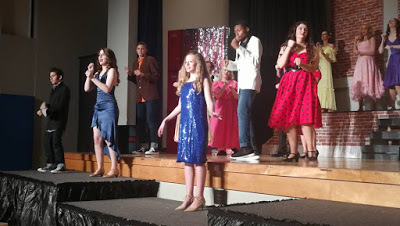 Hailey
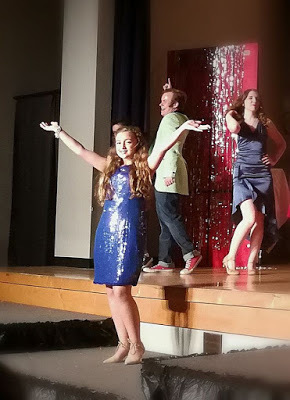 Riley
Riley
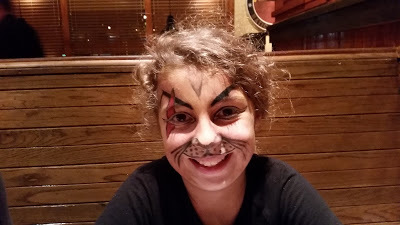 Cassidy - a smiling villain (the show was over)
Don't Be a "Rule" Slave
A lengthy discussion on adverbs on the Regency authors' BeauMonde email loop is the spark behind this week's Mosaic Moments. I'll be holding forth on Adverbs this week, but I expect there will be a lot more about "rule busting" in the foreseeable future.
I'd like to begin with an adverb story from real life. Over the last few years I've been bothered by dentists and dental assistants telling me to "Open big." (In both East Orlando and Longwood.) I finally broke down and tried to explain it made me feel like a four-year-old with a minimal vocabulary. Not that it was easy to explain to people in the medical field that "big" is an adjective and can only modify a noun, while "open" is a verb and must be modified by an adverb. Therefore a dental patient should be told to "Open wide."
For more uses of adverbs, please the definitions below.
From the Oxford English Dictionary (very academic, as one would expect):
Name of one of the Parts of Speech; a word used to express the attribute of an attribute; which expresses any relation of place, time, circumstance, causality, manner, or degree, or which modifies or limits an attribute, or predicate, or their modification; a word that modifies or qualifies an adjective, verb, or other adverb.
From Random House Webster's Collegiate Dictionary (a little closer to clarity):
a member of a class of words functioning as modifiers of verbs, adjectives, other adverbs, or clauses, as quickly, well, here, now, and very, typically expressing some relation of place, time, manner, degree, means, cause, result, exception, etc., . . . often distinguished . . . in English by the ending -ly.
From The Blue Book of Grammar and Punctuation by Jane Straus*:
Adverbs are words that modify everything but nouns and pronouns. They modify adjectives, verbs, and other adverbs. A word is an adverb if it answers how, when, or where.
*Grace note: You can see why I recommend Ms. Straus's book for authors who need to brush up on their grammar and punctuation! Whatever definition made sense to you, I think we can now agree on what kind of words we're talking about; i.e., a large portion of the English (or any other) language.
To put the matter more dramatically (please note the use of an adverb) - without adverbs, your book just lost a good portion of its punch. Descriptions go blah, nuances fade to black. You lost lively, delightfully, sorrowfully, wickedly, absolutely positively, inside, outside, upstairs, downstairs, first, last, today, tomorrow, always, never, every—even happily ever after.
So who's the idiot who decided authors should not use adverbs? You've got to be kidding!
Which brings up the Big Question: Why do we have adverbs if we're told we can't use them? Not that my English teacher ever told me that, but I realize, looking back, he was never a slave to rules. His standard was quality. But evidently a great many budding authors have been hit with this problem—by teachers, by how-to- books, by critique groups. So . . .
This is my seventh year of Writing and Editing tips on Grace's Mosaic Moments, and I've bashed "rules" before, but until the recent discussion on BeauMonde I don't think I appreciated how badly damaged some authors' efforts have been by strict adherence to so-called "rules." Yes, I recall mentioning a manuscript I was judging that was almost incoherent because the author was afraid to use any form of "was" or "were." It was just plain sad, an excellent example of how to shoot yourself in the foot.
Grace's advice?
Don't be afraid to fly. "Wing it." Make your words sing.
Like every aspect of life, don't overdo any one word or type of word*, but never be afraid to make your sentences shine with the words you feel need to be in that sentence.
For examples of adverbs, I looked through my current Word in Progress, The Lady Takes a Risk. Could I have avoided the adverbs I used? Possibly. But why should I? As long as I wasn't overdoing it, why not use a perfectly good adverb and save elaborate verbiage for a more important moment? I.e., if I use a lot of descriptive words to replace the adverb in a sentence of a transitional or not-so-important paragraph, I detract from the big moments I want to dramatize with more colorful language.
Grace note: All examples below are taken from the first six pages of the various books.
From The Lady Takes a Risk by Blair Bancroft:
What more could you possibly wish?”
So here she was, feet flying to three-quarter time, while Cedric, Earl of Penhurst, imparted a running commentary—frequently derogatory—on each of the dancers, and more than a few chaperons, ranging from imposing dowagers to wilting lilies.
No matter how waspish her suitor became, Lady Amelie kept her perfectly polished social smile firmly fixed in place.
Horrified by her vehemence, Amelie silently begged forgiveness.
She twisted, squirmed, her fists pounding his back, her feet kicking frantically until she encountered solid flesh. She had the satisfaction of hearing him grunt, before abruptly breaking off the attempts of his wet, slobbering tongue to force open her mouth. Revolting!
A heaviness in her heart told her she really shouldn’t ask, but inevitably the words tumbled out.
The awful thing was, Amelie almost laughed. The thought of Cedric being able to compromise anyone was simply beyond her imagination. Which didn’t bode well for what she could expect of her marriage.
~ * ~
After copying the above from the first six pages of my manuscript, I got the bright idea of checking the masters of the Regency (since the discussion that sparked this blog was confined to Regency authors). Here is what I found. (All examples are from the first six pages of each book.)
From Pride and Prejudice by Jane Austen:
It is a truth universally acknowledged, that a single man in possession of a good fortune must be in want of a wife.
He was quite young, wonderfully handsome, extremely agreeable, and to crown the whole, he meant to be at the next assembly with a large party.
~ * ~
From The Grand Sophy by Georgette Heyer:
Grace note: Since Ms. Heyer’s sentences tend to be long and involved, I confined myself to the clause with the adverb in it.
The butler, having tolerantly observed those transports . . .
. . . said his sister hastily.
. . . so rudely interrupted,
You see, what with the really dreadful expense . . .
~ * ~
From The Reluctant Widow by Georgette Heyer:
A lady, soberly dressed in a drab-coloured pelisse . . .
She stepped up into it, her spirits insensibly rising . . .
. . . by performing menial tasks, generally allotted to a second housemaid.
Miss Rochdale’s astonished gaze alighted presently . . .
~ * ~
I tried to picture what convoluted passages might have prevailed if Jane Austen or Georgette Heyer felt they had to avoid those adverbs. Absurd! Both authors, masters of their art, are telling you a tale in the language that was appropriate for her voice. (Their magnificent voices.) Are there places you should ask yourself, "Is there a better way of saying this?" Of course there are! Every sentence cries out to be the best you can make it. But those sentences must come from your heart. Not from the dictates of some how-to book, what you heard in a workshop, what someone whispered in your ear at an authors' meeting, or what people of no talent - forced to regurgitate what they've read or heard because they have no original thoughts - tell you.
Finally, I decided I should add examples from other genres, just to show that Regency authors aren't the only ones using adverbs.
From Murder on the Serpentine by Anne Perry:
As Pitt vaguely recalled being here before, Sir Peter stopped abruptly and knocked on a large paneled door.
In short form, still from the first six pages:
. . . visibly struggling
. . . drew in his breath sharply
. . . almost as if they were equals.
From Rain on the Dead by Jack Higgins:
They were obviously on drugs, which exasperated Tod, though there was no point in mentioning it now.
They didn't reply, simply turned and swam away, and so did he.
~ * ~
The moral of ALL these examples: Adverbs are good. They give us a way to play with our verbs, adjectives, and adverbs, to subtly alter or nuance what we want to say. They provide us with words like forever and never, phrases like I walked upstairs, I'll see you tomorrow. Adverbs are an integral part of our language. And yes, they provide us with a simple way to say what we want to say. (And many times "simple" is best.)
No, you don't tack an adverb onto every verb in your paragraph, any more than you attach an adjective to every noun. But for heaven's sake, don't listen to the no-can-do's who throw up their hands and cry, "Oh, horrors, you used an adverb!"
Hold your head high, fly in the face of ignorance, and if an adverb is the word that works for you in a sentence, USE IT!
~ * ~
Thanks for stopping by,
Grace
For Grace's website, listing all books as Blair Bancroft, click here.
For a brochure for Grace's editing service, Best Foot Forward, click here.
 HaileyRiley
 Cassidy - a smiling villain (the show was over)
Don't Be a "Rule" Slave
A lengthy discussion on adverbs on the Regency authors' BeauMonde email loop is the spark behind this week's Mosaic Moments. I'll be holding forth on Adverbs this week, but I expect there will be a lot more about "rule busting" in the foreseeable future.
I'd like to begin with an adverb story from real life. Over the last few years I've been bothered by dentists and dental assistants telling me to "Open big." (In both East Orlando and Longwood.) I finally broke down and tried to explain it made me feel like a four-year-old with a minimal vocabulary. Not that it was easy to explain to people in the medical field that "big" is an adjective and can only modify a noun, while "open" is a verb and must be modified by an adverb. Therefore a dental patient should be told to "Open wide."
For more uses of adverbs, please the definitions below.
From the Oxford English Dictionary (very academic, as one would expect):
Name of one of the Parts of Speech; a word used to express the attribute of an attribute; which expresses any relation of place, time, circumstance, causality, manner, or degree, or which modifies or limits an attribute, or predicate, or their modification; a word that modifies or qualifies an adjective, verb, or other adverb.
From Random House Webster's Collegiate Dictionary (a little closer to clarity):
a member of a class of words functioning as modifiers of verbs, adjectives, other adverbs, or clauses, as quickly, well, here, now, and very, typically expressing some relation of place, time, manner, degree, means, cause, result, exception, etc., . . . often distinguished . . . in English by the ending -ly.
From The Blue Book of Grammar and Punctuation by Jane Straus*:
Adverbs are words that modify everything but nouns and pronouns. They modify adjectives, verbs, and other adverbs. A word is an adverb if it answers how, when, or where.
*Grace note: You can see why I recommend Ms. Straus's book for authors who need to brush up on their grammar and punctuation! Whatever definition made sense to you, I think we can now agree on what kind of words we're talking about; i.e., a large portion of the English (or any other) language.
To put the matter more dramatically (please note the use of an adverb) - without adverbs, your book just lost a good portion of its punch. Descriptions go blah, nuances fade to black. You lost lively, delightfully, sorrowfully, wickedly, absolutely positively, inside, outside, upstairs, downstairs, first, last, today, tomorrow, always, never, every—even happily ever after.
So who's the idiot who decided authors should not use adverbs? You've got to be kidding!
Which brings up the Big Question: Why do we have adverbs if we're told we can't use them? Not that my English teacher ever told me that, but I realize, looking back, he was never a slave to rules. His standard was quality. But evidently a great many budding authors have been hit with this problem—by teachers, by how-to- books, by critique groups. So . . .
This is my seventh year of Writing and Editing tips on Grace's Mosaic Moments, and I've bashed "rules" before, but until the recent discussion on BeauMonde I don't think I appreciated how badly damaged some authors' efforts have been by strict adherence to so-called "rules." Yes, I recall mentioning a manuscript I was judging that was almost incoherent because the author was afraid to use any form of "was" or "were." It was just plain sad, an excellent example of how to shoot yourself in the foot.
Grace's advice?
Don't be afraid to fly. "Wing it." Make your words sing.
Like every aspect of life, don't overdo any one word or type of word*, but never be afraid to make your sentences shine with the words you feel need to be in that sentence.
For examples of adverbs, I looked through my current Word in Progress, The Lady Takes a Risk. Could I have avoided the adverbs I used? Possibly. But why should I? As long as I wasn't overdoing it, why not use a perfectly good adverb and save elaborate verbiage for a more important moment? I.e., if I use a lot of descriptive words to replace the adverb in a sentence of a transitional or not-so-important paragraph, I detract from the big moments I want to dramatize with more colorful language.
Grace note: All examples below are taken from the first six pages of the various books.
From The Lady Takes a Risk by Blair Bancroft:
What more could you possibly wish?”
So here she was, feet flying to three-quarter time, while Cedric, Earl of Penhurst, imparted a running commentary—frequently derogatory—on each of the dancers, and more than a few chaperons, ranging from imposing dowagers to wilting lilies.
No matter how waspish her suitor became, Lady Amelie kept her perfectly polished social smile firmly fixed in place.
Horrified by her vehemence, Amelie silently begged forgiveness.
She twisted, squirmed, her fists pounding his back, her feet kicking frantically until she encountered solid flesh. She had the satisfaction of hearing him grunt, before abruptly breaking off the attempts of his wet, slobbering tongue to force open her mouth. Revolting!
A heaviness in her heart told her she really shouldn’t ask, but inevitably the words tumbled out.
The awful thing was, Amelie almost laughed. The thought of Cedric being able to compromise anyone was simply beyond her imagination. Which didn’t bode well for what she could expect of her marriage.
~ * ~
After copying the above from the first six pages of my manuscript, I got the bright idea of checking the masters of the Regency (since the discussion that sparked this blog was confined to Regency authors). Here is what I found. (All examples are from the first six pages of each book.)
From Pride and Prejudice by Jane Austen:
It is a truth universally acknowledged, that a single man in possession of a good fortune must be in want of a wife.
He was quite young, wonderfully handsome, extremely agreeable, and to crown the whole, he meant to be at the next assembly with a large party.
~ * ~
From The Grand Sophy by Georgette Heyer:
Grace note: Since Ms. Heyer’s sentences tend to be long and involved, I confined myself to the clause with the adverb in it.
The butler, having tolerantly observed those transports . . .
. . . said his sister hastily.
. . . so rudely interrupted,
You see, what with the really dreadful expense . . .
~ * ~
From The Reluctant Widow by Georgette Heyer:
A lady, soberly dressed in a drab-coloured pelisse . . .
She stepped up into it, her spirits insensibly rising . . .
. . . by performing menial tasks, generally allotted to a second housemaid.
Miss Rochdale’s astonished gaze alighted presently . . .
~ * ~
I tried to picture what convoluted passages might have prevailed if Jane Austen or Georgette Heyer felt they had to avoid those adverbs. Absurd! Both authors, masters of their art, are telling you a tale in the language that was appropriate for her voice. (Their magnificent voices.) Are there places you should ask yourself, "Is there a better way of saying this?" Of course there are! Every sentence cries out to be the best you can make it. But those sentences must come from your heart. Not from the dictates of some how-to book, what you heard in a workshop, what someone whispered in your ear at an authors' meeting, or what people of no talent - forced to regurgitate what they've read or heard because they have no original thoughts - tell you.
Finally, I decided I should add examples from other genres, just to show that Regency authors aren't the only ones using adverbs.
From Murder on the Serpentine by Anne Perry:
As Pitt vaguely recalled being here before, Sir Peter stopped abruptly and knocked on a large paneled door.
In short form, still from the first six pages:
. . . visibly struggling
. . . drew in his breath sharply
. . . almost as if they were equals.
From Rain on the Dead by Jack Higgins:
They were obviously on drugs, which exasperated Tod, though there was no point in mentioning it now.
They didn't reply, simply turned and swam away, and so did he.
~ * ~
The moral of ALL these examples: Adverbs are good. They give us a way to play with our verbs, adjectives, and adverbs, to subtly alter or nuance what we want to say. They provide us with words like forever and never, phrases like I walked upstairs, I'll see you tomorrow. Adverbs are an integral part of our language. And yes, they provide us with a simple way to say what we want to say. (And many times "simple" is best.)
No, you don't tack an adverb onto every verb in your paragraph, any more than you attach an adjective to every noun. But for heaven's sake, don't listen to the no-can-do's who throw up their hands and cry, "Oh, horrors, you used an adverb!"
Hold your head high, fly in the face of ignorance, and if an adverb is the word that works for you in a sentence, USE IT!
~ * ~
Thanks for stopping by,
Grace
For Grace's website, listing all books as Blair Bancroft, click here.
For a brochure for Grace's editing service, Best Foot Forward, click here.


April 30, 2017
The Nitty Gritty of Names
 Can't remember where I found this, but I love it!
Florida Update:
A few weeks ago, the sheriff of Lake County, which is adjacent to Seminole County, where I live, decided to make a drug prevention video. His undercover officers wanted to be included. The video they made has been criticized by some for his men looking too "ISIS." Most of us think it's great. Certainly, the sheriff and his men never thought to go viral. The video has, however, been viewed more than 700,000 times on You Tube. If you'd like to see it, click here.
The Nitty Gritty of Names
Since I first blogged about the importance of names, I've been working my way through all five books of The Song of Ice and Fire (Game of Thrones) by George R. R. Martin. Believe me, here is the ultimate user of names as a writing technique. The names of Martin's literally thousands of characters sing. They evoke the person behind the name.They scream, they shout, they cry, they suffer. They love, they die. You have only to look at the list of characters at the back of his books to know Martin is a master of the Art of Names. As an example, here is the opening line of the chapter, "The Wayward Bride" from Book 5, A Dance With Dragons:
Asha Greyjoy was seated in Galbart Glover's longhall drinking Galbart Glover's wine when Galbart Glover's maester brought the letter to her.
I ask you, would this line have had the same ring if Martin wrote:
Asha Greyjoy was seated in Glover's longhall drinking his wine when Glover's maester brought the letter to her.
The answer is, Of course not. Full names have a ring to them nothing else can match.
Here is an example of the dramatic use of place names, also from Martin's A Dance With Dragons:
But the day before that, three ships had come out of the south together—his captive Noble Lady, lumbering along between Ravenfeeder and Iron Kiss. But the day before and the day before there had been nothing and only Headless Jeyne and Fear before that, then two more days of empty seas and cloudless skies after Ralf the Limper appeared with the remnants of his squadron. Lord Quellon, White Widow, Lamentation, Woe, Leviathan, Iron Lady, Reaper's Wind, and Warhammer, with six more ships behind, two of them storm-wracked and under tow.
Martin could have settled for saying a fleet of ninety-nine ships plus a large number of captured ships had been reduced to a mere fifty-four, but he spends nine Kindle pages giving details of what happened before he gets to the paragraph above and a good many more afterward. These details, in addition to using names to add dramatic effect, are what it takes to turn an author's efforts from satisfactory to great.
Do you and I have Martin's incredible imagination for creating names? Well, I know I certainly don't, so below are the ways I've coped with this problem over the years.
As my regular readers know, I've spent a lot of time talking about the importance of names—full names and titles, not just first names. But perhaps more advice is needed on how to get past Dick, Jane, David, and Mary. Past wasting time puzzling over last names that have some "zing" to them. Or maybe you need a wimpy name . . . Which is why I always put naming my characters way up at the top of my book preparation list, right after the Title . . . hmm, maybe even before the Title. Where on earth do all these names come from?
Way back when I first began to write, computers had small memories. Hardcopy research was necessary, so that's the way I still do it. In a 4" 3-ring notebook. In those little pocket folders featured every fall in the school supply section. In baby books and place name books, and in scribbles on legal pads. Any way I can to keep those precious names from slipping away.
So how did I compile all these lists over the course of the last 25 years? Let's see if I can reconstruct it for you . . .
1. Fortunately, I kept the books of names I bought to search out names for my children. One book included the meanings of each name, the country of origin, and the many variations of the name. Another book listed the names by Traditional, Strong, Ultra-Feminine, Cross-Gender, Biblical, Exotic/Ethnic, Unusual, Very Unusual, etc. Thus,in two small paperbacks, a treasure trove of first names.
2. For last names, there's nothing like a genuine phone book. While still living on Florida's Gulf Coast, I used both the Venice and Sarasota phone books. After moving to Orlando, I made an even more sweeping commitment of time to find the English names I needed for my books set in Regency, England. I sat down with the huge Orlando phone book (c. 2008) and copied all the English-looking names by hand onto a legal pad. I used up almost the entire pad, but it has been a boundless source of names ever since. It was that search that turned up the name "Mondragon," which I promptly took for the sorcerer in my SyFy/Adventure, the Blue Moon Rising series. Nowadays , of course, all you have to do is google any city's phone book, and there it is. Wow! But if you want specific ethnic names, you're still going to have to buckle down and make your own list.
3. In a 4" 3-ring notebook, I have typed lists of many aspects of the Regency, including the following sections on names (mostly compiled from the Regency books of Jane Austen, Georgette Heyer, and Clare Darcy:
First Names, Female
First Names, Male
Last Names
Titles
Servants, Female
Servants, Male
Servants, Last Names
Last Names, General*
*Last Names, General, has mostly been replaced by the "Orlando" list mentioned above.
4. I also have pocket folders with names I researched for different countries, as needed for whatever book I was writing. As of this moment, they are: Russian Names; Greek Names; Medieval Names; Welsh Names; Arab Names; Spanish Names; plus print-outs on Greek Gods and Egyptian Gods. (To find lists of foreign names, just ask Google.)
5. I have a separate 4" 3-ring binder with the endless details of the world I made up for my Blue Moon Rising series, including pages of astronomical references for place names and the names of space ships. I also created several pages of male and female first and last names for several different races, most based on tweaked versions of standard Earth names, as almost all my characters are descended from Old Earth. (Some really strange ones came directly out of the Orlando phone book!)
6. Cities, Towns, & Titles. When I was in England, I bought a book called, Dictionary of English Place-Names, a compendium of every last village, town, and city in the country. It has been an immense help in my work. I strongly advise searching the Net for similar books for whatever country is of interest to you.
This mountain of reference materials sits on the first two shelves of a bookcase in my bedroom, the phone books nearer to my bed where I can guard them from people who say, "You don't need those any more. Why don't you throw them out?"! The SyFy notebook rates a place on a desk in my office—close at hand, always ready for me to make sure that I'm spelling a newly created word the same way in Book 3 as I did in Book 1!
~ * ~Are names important? Yes, yes, yes, and yes! Full names and titles. Glorious names, wonderful names. Terrible names, scary names. Names that purr, names that scratch. Names that say, "This is who I am."
"I'm proud. I conquer."
"I'm small and weak and frightened."
"I'm a survivor."
(Or whatever you want them to say)
And keep in mind that after all those amazing names George R. R. Martin created for so many incredibly divergent characters, male and female, his primary hero is a simple Jon Snow.
~ * ~
Thanks for stopping by,
Grace
For Grace's website, listing all books as Blair Bancroft, click here.
For a brochure for Grace's editing service, Best Foot Forward, click here.
April 22, 2017
Recipe Encore
 Beauty & the Beast. 2
 Note license plate - BYBY FLUGoldenrod is near where we used to live in East Orlando - not far from Florida Hospital East and UCF. I presume this germy VW is associated with one or the other.
  Cassidy, awake, posing with a posyPhotos by Susie
WILDFIRE UPDATE: As of Saturday night, April 22, there are 115 wildfires burning in the state. Enough that the governor postponed a scheduled 5-day trip to Argentina. Many displaced families. One of last week's fires (about 20 miles north of here) has gone underground, creating what they call a "mud fire." Newscasters keep assuring homeowners that it's really rare for such a fire to spread to "under houses." Yikes!
~ * ~
I've been saving the above photos for a "Mosaic Moments" occasion, and this week seemed to be it. Our extended-family Easter dinner last week (27 strong), plus another "empanada" session with Cassidy prompted this second round of recipes in a such a short time. So many people asked for my cornbread recipe that this seemed the easiest way to get it to those who wanted it.
The cornbread recipe below is the result of taking a standard cornbread recipe, found on the Internet, and adding quite a lot! Here it is.
GRACE'S JALAPEÑO CORNBREAD
Grace note: I added the chilies, corn, bacon, cheddar, and sour cream to a basic cornbread recipe.
3/4 cup all-purpose flour
3/4 cup yellow cornmeal
1/4 cup sugar*
1½ teaspoons salt **
1½ teaspoons baking powder
1 teaspoon baking soda
1-2 jalapeño chilies, finely diced***
3/4 - 1 cup corn kernels
¼ lb. bacon, crisped & crumbled
c. ½ cup shredded cheddar
Fresh herbs, chopped (optional)
1¼ cups buttermilk****
2 large eggs
1 large dollop sour cream*****
¼ cup (½ stick) unsalted butter, melted, cooled
* I used “Sugar in the Raw.”
** I used c. 1 teaspoon kosher salt
*** I used 1½ chilies, finely diced**** It’s possible to substitute milk, but it just won’t taste as good. ***** I used a serving spoon, not the “measuring” tablespoon, & dipped out a heaping scoop of sour cream (my mother added sour cream to as many recipes as possible, saying it made everything taste better).
Before you begin to assemble your cornbread, cook & crumble the bacon, dice the chilies, shred the cheddar, & melt the butter, giving it time to cool.
Preheat oven to 350°. Use solid shortening, such as butter or Crisco to grease a 13x9x2 baking pan. Whisk flour, cornmeal, sugar, salt, baking powder, and baking soda in large bowl to blend. Stir in diced jalapeños, corn, bacon, cheddar, and fresh herbs.
Whisk buttermilk and eggs in medium bowl; add sour cream, whisk until blended. Add buttermilk mixture to dry ingredients and stir just until blended. (Do not overmix.) Transfer batter to prepared pan.
Bake until lightly browned on top & toothpick inserted in center comes out clean, about 25 minutes. (If making ahead, cover & store in refrigerator; reheat in oven or microwave.)
~ * ~
SPANISH BEEF EMPANADASwith Roasted Red Pepper Sauce
Grace note: This is a recipe found on the Internet. The Roasted Red Pepper sauce looked good, but Cassidy and I were swamped with making 20 empanadas for six people, so I I bought a different salsa from my usual (Three Pepper) and a package each of fresh pico de gallo and chopped creole-style vegies from my local Winn Dixie. Used together, or just one alone, they provided a refreshing topping for the empanadas.
To make 10 empanadas, using frozen “Discos Grandes” from the supermarket:
1 lb. lean ground beef
½ cup onion, chopped
1/3 cup tomato sauce
¼ teaspoons salt & pepper (preferably kosher salt & ground fresh pepper)
⅛ teaspoon red pepper flakes (or to taste)
¼ teaspoon smoked paprika
½ teaspoon minced garlic
½ cup roasted red peppers, chopped
½ cup sliced green olives, pimiento stuffed
Filling:
In a large skillet over medium heat, sauté beef and onions until beef is browned and onions are translucent. Drain excess liquid. Add tomato sauce, salt, pepper, red pepper flakes, paprika, garlic, roasted red peppers and olives. Cook, stirring, about 5 minutes.
Assemble & Bake:
Preheat oven to 425°. On a floured board, stuff the wrappers one at a time, using about 2-3 rounded tablespoons each. Brush water on the edge of one side of each disk; pinch closed, finish by “forking” the edge. Place on baking pans lined with parchment paper. For egg wash, whisk together one egg & up to ½ cup water. Brush the top of each empanada with egg wash. Bake for 17-20 minutes or until golden brown.
Roasted Red Pepper Sauce (if desired):
8 oz. cream cheese
1 cup roasted red peppers, chopped
½ teaspoon minced garlic
⅛ teaspoon salt
¼ teaspoon smoked paprika
In food processor combine cream cheese and roasted red peppers. Pulse until combined. Add garlic, salt & paprika. Process until smooth. Serve cool or at room temperature with empanadas. Store leftovers in refrigerator.
~ * ~
Thanks for stopping by. Next week: More on the importance of names.
Thanks for stopping by, Grace
For Grace's website, listing all books as Blair Bancroft, click here.
For a brochure for Grace's editing service, Best Foot Forward, click here.
April 15, 2017
United we fall!

Above is a photo of MaryAnn Barry, CEO of the Citrus Council Girl Scouts speaking on Wednesday afternoon to the Women's Executive Council of Orlando.
Last Saturday afternoon, April 8, a wildfire only about four miles from my house burned eight buildings in a beloved Girl Scout Camp. Around 100 Girl Scouts had to be evacuated, as well as an entire subdivision of homes - though none were lost. (The thanks to the fire department were profuse!) My daughter, Susie, attended the event where Ms. Barry described the tense moments as the drama unfolded and provided the photo above. Even the dock burned! The Scouts are determined that the camp will continue to function, although it may be 18 months before the buildings can be replaced, and half the woods on site are nothing more than charred ashes. My eyes are still suffering from the smoke, which has lingered for days, somehow insinuating itself into my windowless office and refusing to leave. The drought here is extreme at the moment. Last night's TV news reported that there are currently 104 wildfires in the state of Florida, 24 of them more than 10 acres.
Grace Note to my foreign readers: I keep telling you that Florida is a great deal more than beaches, Disney, Universal, Sea World, and the Kennedy Space Center. We haven't paved the state over yet - we have a LOT of trees.
Saturday, April 15: two more wildfires in our area tonight, 500-900 acres, only partially contained - roads closed & smoke spreading. Though they're 10-15 miles away, I can feel the grit in my eyes. We need rain!
UNITED WE FALL!
Or should I say, "United, you failed"?
Grace note (Saturday, April 15, 2017): this blog was written several days ago. Since then, United Airlines has opted for raising the "bribe" to get customers to give up their seats. This is such a patently obvious move that it is shocking that no one had the sense to do this before the appalling incident that prompted the following rant.
It takes very little thought to realize that something stinks to high heaven about the way Airlines treat their passengers. The extreme example seen on video around the world this week is only the tip of the iceberg. I’m not sure what has makes Airlines think they don’t have to follow rules known by every business since the first caveman decided to make an arrow for some guy who was all thumbs. What about that classic, "the customer always right"? And those known business generators and gatherers of repeat customers: courtesy and a smile?
It’s been just under a year since I was nearly bumped from a Southwest flight at a changeover in Charlotte when I was on the way to my son’s wedding. Fortunately, someone was “bought off” by the airline and I made it to the wedding. This, when we’d had our tickets for months! And one time when I was changing from an international flight from London to Continental in Atlanta, the timing was tight. My daughter-in-law and her sister ran ahead to tell them I was coming. I was about two-thirds of the way there, when one of them came running back to tell me I had to get there on time or else. The officials at the gate were adamant - and nasty about it. And when I arrived, huffing & puffing, I was yelled at by a security agent. When, totally shocked, I spoke back to him, he threatened to throw me off the flight. Needless to say, I had never been treated like that by anybody in my entire life. When I got home, I wrote to the President of Continental, detailing my experience. I received a phone call from one of the presidential assistants, assuring me that my letter did make it all the way to the top and the matter was being dealt with. Good PR, but I couldn’t help wonder if any actual changes were made.
That was not my last encounter with airport arrogance. One evening a few years ago I was attempting to pick up my son and his girlfriend from Orlando International Airport. Each pass around “Arrivals” was met with irate shouts by security to “go round, even though there were many open spaces along the sidewalk at airlines where no planes were expected. On my third or fourth time around, I spotted my son and his friend; they saw me and headed toward an open space fifty feet down the sidewalk. This time I was screamed at. The guard, arms flailing, insisted I go around again!
I wrote a letter, detailing the incident, to the Chairman of the Board of Orlando International, with a copy to the TSA. I heard from TSA immediately, stating that they regretted the incident but the outside security guards were not part of their agency. Shortly after, I received a call from a woman in the Airport Chairman’s office. She was the perfect person for her job, adept at PR, and highly apologetic. But when she asked permission to use my letter for training purposes, I decided that I just might have made a dent in the system.
Alas, however, I never again picked up anyone at the airport. I made my daughter take over that task.
So naturally the sight of someone being dragged down the aisle of a United Airlines jet just so an EMPLOYEE of United could have a seat set my brain to humming. They had to be kidding! I can only hope United stock keeps on plunging, all the way to the bottom of the Marianas Trench. Could anything have pointed more clearly to the fact that it’s time to change the way Airlines do business?. I’m no PR expert, but it doesn’t take much to figure out possible alternatives to this heinous situation. Here are a few suggestions:
1. Stop bumping passengers. Better to fly a few seats short of full, depending on Stand-bys to fill the gaps than risk your company’s stock plunging into the toilet due a repeat of the nightmare scene we witnessed this week.
2. If your CFO whines & says that just isn’t economically feasible (which I don’t believe for a second), and if no passenger rises to the bait (money) being offered when a flight is overbooked, then up the ante ’til they do. Again, it’s way cheaper than the resulting bad publicity.
3. NEVER bump a paying passenger for EMPLOYEES. Fix up space in the baggage hold, if necessary.
4. NEVER bump a paying passenger for EMPLOYEES. Charter a Lear Jet. Pay for passage on another airline.
Why? Because it’s wrong, wrong, wrong. Airlines, you are treating your life’s blood like dirt. You are insulting the people who keep you in business. You are playing arrogant monarch of all you survey, forgetting that the people squeezed into those seats are paying your salary, your mortgage, your kids’ college tuition, your country club fees, your health insurance.
5. No matter which approach you use to the problem, treat passengers with the respect they deserve. They have paid you money to take them where they need to go. They are trusting you with their lives. They deserve respect, courtesy. And a safe journey.
They do not deserve to be yelled at, denigrated, manhandled, punched, or dragged down an aisle. Yes, unruly passengers happen, but too many times perfectly innocent people have been ejected from airplanes by those who have let a little power go to their heads.
We deserve better. Much better.
To United, and all the other airlines out there . . .
Kindly remember it’s ordinary people like me who keep you in the air. If you don’t shape up, some airline is going to come along that remembers that Rule One of every business is: The customer is always right. And that’s the airline all of us will be flocking to, for good Customer Service is what makes businesses grow and thrive. They certainly don’t do it by dragging 69-year-old passengers down the aisle, dripping blood!
I had already vowed never to fly Southwest again. I now add United to my blacklist.
I debated with myself whether or not to add the following, but I think it has to be said. This is too serious a matter to gloss over. The ultimate end of tolerating petty dictatorship is loss of individuality, loss of freedom. Loss of respect, honor, and our personal responsibility for the fate of others. It is Tyranny, plain and simple.
There are certain people to whom a whiff of authority goes to their head. It’s that old, “Give ’em an inch, they’ll take a mile” philosophy. We see instances of it almost every day on the evening news. At its most foolish, it’s the guard who screamed at me at the airport. At its worse, it’s the guards who shoved people into the “showers” at Dachau and Buchenwald.
'Ware tyrants, in whatever form! Our ancestors came to this country to escape tyranny, and look what’s happened. Don’t accept it. Do not roll over and play dead. Protest! Write a letter, an e-mail. Make a phone call. Or shout, “I’ve had enough. I’m not going to take it anymore!” Never forget: Not protesting is what gives tyrants power.
~ * ~
Thanks for stopping by, Grace
For Grace's website, listing all books as Blair Bancroft, click here.
For a brochure for Grace's editing service, Best Foot Forward, click here.
April 8, 2017
Fairy Tales, BACA, & 99¢ Mysteries
FAIRY TALE ADDENDUM
On Friday night we had another Girls' Night Out, attending an absolutely stunning performance of Stephen Sondheim's Into the Woods by Lake Brantley High School. Both Susie and I are professional musicians, and believe me, if we say we were impressed, it means something! This is the musical, along with the Harry Potter books, that revived fairy tales in our modern age. Like its offspring, the TV show Once Upon a Time, Into the Woods demonstrates what happens after "Happily Ever After"—from infidelity to retribution for Jack stealing the Goose That Laid a Golden Egg. [My favorite line, delivered by one of two princes: "I was brought up to be charming, not sincere!"] Amazingly, the show's powerful, not-so happy message was beautifully enacted by a cast of 16- to19-year-olds. (Though on the way out I heard two teen girls say of a moment in the second act, "I didn't think they'd go that far!") Kiddies can watch this musical (it's PG, sort of), but basically this is a fairy tale for adults - intended for viewing by a tough Broadway audience.
I was fascinated enough by the imaginative tale that I've ordered from Netflix both the 1991 version with the original cast and the 2014 version with Chris Pine (Captain Kirk). I can hardly wait. [Although no performance can be as thrilling (or hysterically funny) as watching high schoolers do such a outstanding job, from music to scenery and costumes, in front of an audience primarily composed of peers and parents.] Take a peek. Into the Woods may shock you, but you'll love the beauty of it and appreciate the genius behind it.
BIKERS AGAINST CHILD ABUSE
On Sunday, April 2, I went to Crane's Roost Park in Altamonte Springs, Florida, to hear the grandgirls perform with The Citrus Singers. (With "Mommy/Susie" directing.) Frankly, I had no idea what the occasion was. So I was surprised to find myself parking only feet away from an array of motorcycles. And to hear an impassioned story from a young lady who had endured years of childhood abuse before being helped by a group called BACA. She is now in college and planning to be a social worker. BACA is Bikers Against Child Abuse, an organization with chapters not only all over the U. S. but around the world. They are frank about being willing to use their "tough guy" image to protect children who need it, particularly when it comes to escorting them to testify against their abusers.
The message was inspiring, the Girl Scouts (age 7-16) sang magnificently, as always, even being asked to perform an additional two numbers. And afterwards, they had their pictures taken with some of the many bikers there.All in all, an inspirational event.
 Citrus Singers with Seminole County Sheriff on the left
 The Citrus Singers & bikers at Crane's Roost Park
Grace's Mysteries - 99¢ Sale(writing as Blair Bancroft)
Two of the mysteries below are set in my favorite Gulf Coast mini-city, Venice, FL; the third, in Sarasota, FL, at a thinly disguised John & Mable Ringling Museum for the Arts, the creation of famed circus entrepreneur John Ringling, who is undoubtedly rolling in his grave at the announcement that the circus is closing at the end of this season. (The Venice Sarasota area is the permanent home for a great many circus families involved in several well-known traveling circuses.)
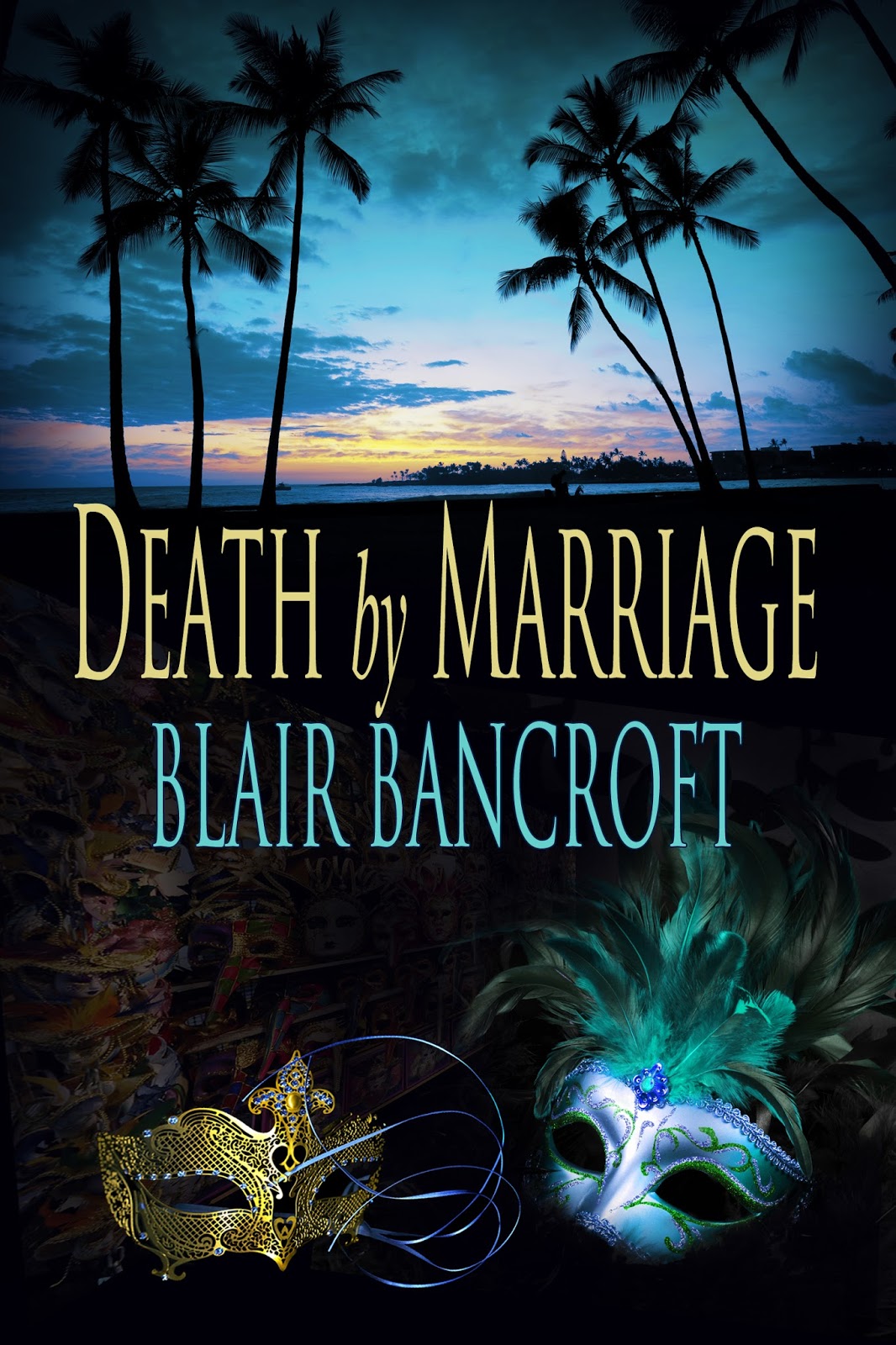
Death by accident, old age, strangulation. An elderly senior about to marry a con artist. A rash of burglaries. Only an artistic imagination could conjure these disasters into connected events. But costume designer Gwyn Halliday manages it, as she flees trauma in the big city, only to discover that bad things can also happen in a sleepy Florida retirement community.
For a link to Amazon, click here.
For a link to Smashwords, click here.

Want to get married in a hot air balloon? Have the bride step out of a Fabergé egg? Just call Fantascapes, the Halliday family business. Trouble in paradise? Call Laine Halliday, who travels the world smoothing out bumps encountered by high-end clients. But when Fantascapes is used as a front by the Russian mob, in action ranging from Florida to Peru to France, Laine steps into a whole new world of Serve and Protect.
For a link to Amazon, click here.
For a link to Smashwords, click here.

Someone is killing people at the Bellman Museum, staging the deaths as bizarre works of art. Though struggling to recover from a severe injury and the death of her lover, FBI Special Agent Rory Travers can't resist the challenge of tackling this mystery, which brings two new men into her life. But in the end she stands alone, facing evil one-on-one.
For a link to Amazon, click here.
For a link to Smashwords, click here.
~ * ~
Thanks for stopping by,
Grace
For Grace's website, listing all books as Blair Bancroft, click here.
For a brochure for Grace's editing service, Best Foot Forward, click here.
April 1, 2017
What's the Fascination with Fairy Tales?
 Girls night out (Mommy took the photo.)
Grace note: Any post last week would have been more like Shattered Mosaics - nothing awful happened, just too much going on - so let's hope this promised post on Bacon Bread & Beauty and the Beast doesn't turn out to be an April's Fool's prank!
WHAT'S THE FASCINATION WITH FAIRY TALES?
Attending Disney's latest version of Beauty and the Beast set off today's blog topic, although I didn't realize how rich a topic it was until I started scribbling notes. Wow! No wonder fairy tales have survived the years, in the last couple of decades becoming even more popular with the overwhelming success of Harry Potter and the TV series, Once Upon a Time. I can't help but wonder if this revival of the fanstastical has come about because our world needs magic so badly. Because we look around, and what we see screams for heroics in the grand manner. For Faith, Love, Loyalty, Honesty, Caring, Leadership, Friendship, Integrity, Helpfulness, Humor, and perhaps above all, Redemption. We need these stories to tell us Happily Ever After has not completely fallen by the wayside. And on the reverse side, fairy tales make us all aware of the sins of Greed, Selfishness, Heedlessness, Power-grabbing, Marchivellian scheming, and flat-out Evil.
Yes, some of the original fairy tales were pretty grim (pardon the pun), but most of us remember with vivid fondness the exotic settings and amazing people, the happy endings, even if only one of the Three Little Pigs survived! We're quite sure the wolf didn't really eat Red Riding Hood - hey, it's just a long-ago tale to warn kids of Stranger-Danger, right? And Greed's bad - the story of Rumplestiltskin tells us so. Except Rumple didn't get the baby after all, so . . .
Okay, so fairy tales offer mixed messages, but they make us think. They not only provide lessons in good and evil for everyone, they offer challenges. For those whose lives are less than ideal, the tales provide a dream, a look at a world beyond poverty, violence, and despair. They say, Okay, this too can be yours. For the more privileged among us, fairy tales offer an opportunity to see evil not created by Marvel comics and learn to be wary. They prod the privileged and protected to be morally stronger than many of them have been challenged to be. Basically, fairy tales are lessons in right vs. wrong, heroism vs. cowardice, responsibility vs. leaving duty to someone else. And also lessons about evil lurking in the happiest of times.
The TV series, Once Upon a Time, takes bits and pieces from just about any fantasy you can name. From your favorite fairy tales to medieval classics, such as King Arthur (even a brief appearance by Beowulf!). And then there are the characters who never lived anywhere but in a Disney animated film. Plots, Characters, and Settings are juxtaposed, twisted, tumbled into nearly unrecognizable forms, and yet the classic "moral of the story" remains: Good versus Evil. Honor vs. Bad Deeds. And the ever-present hope of Redemption. A happy ending, even for the Bad Guys.
Powerful Stuff.
I don't want to leave out my favorite among the modern fairy-tale re-tellings, Snow White and the Huntsman. If you haven't seen it, make an effort to do so. It's a gem. Which, alas, was spoiled by a sequel that completely ruined the "up in the air" ending of "Oh wow, maybe she's going to marry the Huntsman instead of Prince Charming." Snow White and the Huntsman goes one-up on Once Upon a Time in providing a magnificent depiction of a twist to the classic tale. But through it all the "morals" are there. Love prevails, the good guys triumph, even when the road to success is long, harsh, and nearly lost to the machinations of the evil witch.
So don't be a cynic about fairy tales. (I exclude the modern versions created for the sole purpose of being horror stories.) We can learn a lot from these stories, including elements we need to include in our own books. No book is so "modern" or action-filled that it isn't enhanced by a bit of magical love, a goodly dollop of friendship, and the triumph of honor over temptation. And don't forget that soupçon of evil.
Above all, fairy tales add Wonder to our lives, whether they're dealing with magic or only showing us a precious family moment. They show us the best and the worst of ourselves and show us, no matter how stupid or downright bad we are, redemption is possible. Though sometimes the price is high.
Are there bad people who triumph in real life? Of course there are. But fairy tales keep hope alive. Consider the possibility that adding a bit of fairy tale magic to the next book you write just might give it that extra sparkle, that tug at the heart we all want our books to have.
~ * ~
BACON BREAD
My bacon bread, derived from a long-ago recipe found on the Internet, is always in demand, but on the Saturday before St. Patrick's Day I was invited to two parties on the same night. I told my daughter I had pledged my bacon bread to the choir party, but she informed me, "It's bacon bread or nothing." In other words, "Don't show up to my party without it." So after school on Friday, I solicited Cassidy's help, and together we made a bacon bread she could take home for her mother to reheat for her brother-in-law's birthday party. And on Saturday afternoon I made the one for the choir, resulting in back-to-back bacon breads. Whew! (At least I was able to have a few bites of the one at the choir's St. Pat's party. There wasn't a smidgin left by the time I arrived at the birthday party.)
The recipe below has been adapted from the original, which was created before Pillsbury began to produce only the larger "Grand" biscuits.
 Pull-apart Bacon Bread made in a Bundt pan
PULL-APART BACON BREAD
Since it is almost impossible to buy the 7.5 oz. Pillsbury Buttermilk Biscuits any more, I have attempted to revise the original recipe, using “Grands.” Two “Grands” make quite a bit more dough than three of the smaller biscuit packages, so I have adjusted the other ingredients accordingly. Needless to say, there is quite a bit of leeway for you to adjust the recipe to your taste, including increasing the amount of bacon, which remains the same in this recipe as in the original.
Grace Note: This recipe is much easier if you do the preparations ahead of time - several hours up to a whole day. Cook the bacon to crisp. Cool & crumble. (I cut the strips into quarters before frying.) Shred the cheese; sauté the onion & pepper. Refrigerate until an hour or two before putting the bread ring together. Just prior to opening the biscuit packages, melt the butter.
Prepare a Bundt pan with a generous coating of solid shortening (such as Crisco), plus a dusting of flour. (Do not use a spray. The bread will not unmold correctly.)
c. 1 cup finely chopped onion
c. 3/4 - 1 cup finely chopped green pepper (optional)
1½ teaspoons vegetable or olive oil*
1 lb. bacon, cooked & crumbled
3/4 c. butter, melted
3/4 - 1 cup shredded Cheddar cheese
Fresh herbs, chopped (if available)
2 pkgs. (16.3 oz. ea.) Pillsbury “Grand” buttermilk biscuits
Grace note: No need to preheat the oven until you start cutting the biscuits.
Sauté onion & green pepper in oil until tender. Cut each biscuit into six sections. In a large bowl, gently toss onion & pepper mix, biscuits, bacon, butter, cheese & herbs, until combined.** Transfer to Bundt pan. Bake at 350° for c. 30 minutes, or until golden brown. Let stand for 10 minutes. Carefully run table knife around the outer & inner edges of the bread before inverting onto a serving plate. Serve warm. Refrigerate leftovers. Reheat in microwave before serving leftovers.
*I sauté the onion & green pepper in the bacon fat (pouring off all but what I need). But sautéing in olive oil would likely be considered more healthy.
**This is a hands-on process. You need to separate each hunk of dough and make sure it is coated with the butter mixture.
Please remember this is "finger food." Pull apart - do not slice!
~ * ~
Thanks for stopping by,
Grace
For Grace's website, listing all books as Blair Bancroft, click here.
For a brochure for Grace's editing service, Best Foot Forward, click here.
March 18, 2017
What's in a Name?
 Debut of cover for book-in-progressA duke's daughter proposes marriage to the retired colonel of the 10th Hussars
~ * ~
WHAT'S IN A NAME?
For me, the answer to that is: Everything. Names have power. (And that's not a fantasy allegedly perpetrated by tribal lore or certain religions.) Names have weight. Names tell us who a person is, often what a person is. For example: Mark Wilson, Chief Executive Officer, The Great Widget Company. Technically, I suppose CEO is a title, but it is also a form of Identification. Those three little words tell us something about Mark Wilson. If you introduced your character as "Mark, CEO of The Great Widget Company," he immediately loses stature. "Mark" works in the mailroom. Even "Mark Wilson" can be anybody, from basement to executive suite. But put the three sections together—Mark Wilson, Chief Executive Officer of The Great Widget Company—and you have a "somebody."
Although it's not necessary to write out CEO, those words also add importance to Mr. Wilson's name. We see the acronym "CEO" so much we don't stop to think what it means. "Chief Executive Officer" rings a much louder bell. As for "The Great Widget Company" . . . well, firstly, I'd hope you'd choose a more auspicious name for your fictitious company. But keep in mind that the three parts of that identification add up to who (Mark Wilson), what (CEO), and where (Great Widget Company), three of the most important aspects of identifying a character well enough so readers aren't left scratching their heads about "Mark," asking who he is, what his job is, or where he's doing it. Yes, the "why" remains to be told at a later date, but in nine short words you've said enough to keep your readers with you long enough to discover the rest of Mark Wilson's story—whether he's a hero, villain, or secondary character.
Opening Paragraphs:
Get those identifications in there right up front (exception - see Action Scene below). Don't wander around with a whole slew of Dick and Jane first names and expect readers to figure out who you're talking about. Your characters' last names give them substance. And if you're writing in an historical setting, last names are a "must." First names were rare, even in the United States, until within the last sixty years or so.
When introducing a character, go beyond names, if possible. Give us at least a hint of who these people are the moment they make an appearance in your story. "Jane Beresford's friend, Emily." "George, Ben's partner at the law firm." As an example of something a bit longer: ". . . Jack Phillips. She'd heard he belonged to the East Side Raiders, but that was hard to believe. He didn't have the swaggering, hardened look of a gang member."
Keep in mind that historical times were generally more formal, the men identified mostly by last names or titles, noble ladies by their titles (Lady, Mistress, Dame, Missus); female servants by first names, male servants generally by last names.
Whatever you do, do not toss out a series of first names (or even full names) and let them lie there, writhing, while your readers try to figure out who is who and what they're doing in your story. Identify, identify. Identify. Whether you're on the opening paragraphs or way over in Chapter 26.
Opening with an Action Scene:
Your writing style needs to fit the scene - short, sharp sentences for fast action. And it's a time when you can fudge the introductions a bit. The hero or heroine may be identified by first name only, their friends and/or enemies as briefly as possible, saving full identification until a less busy moment. Just don't forget to get the info in there as soon as feasible!
Grace note: the above advice also applies to most stories written in first person, where full names, even first names, are more difficult to work into the opening paragraphs.
Body Copy:
After you have made sure your readers understand who your characters are, both primary and secondary, do not say, "Okay, I did it. Now I can call them Marcus and Amelie for the rest of the book. Make an effort to refer to your characters in as many different ways as you can. Keep that last name going, the person's title, position, their relation to other people, etc. For example, from my latest Regency Historical, The Lady Takes a Risk:
Hero - Marcus Rexford Trevor, Colonel, the 10th Hussars =
Colonel Trevor, Colonel, the colonel, Marcus, the earl's younger son, husband, brother-in-law
Heroine - Lady Amelie Christabel Beaumont Sherbrooke =
Lady Amelie, Amelie, daughter, the ducal daughter, wife, sister, daughter-in-law
Secondary Characters - using Major Courtland Randolph as an example =
Major Randolph, Randolph, Courtland Randolph, the major, and (rarely) Court
Again, whatever you do, do not forget to make it clear who each person is and what their place in the story is. And if you can't justify their place in the story, get rid of them!
Grace note: A secondary character's place may be vital to the story, or he/she might simply be there to provide color. Both are valid reasons for that character to exist. Superfluous characters include those who pop in for no reason, do not advance the story, or do not add the color, humor, etc., that adds to your readers' enjoyment. Kick them out!
Warning: No matter how charmed you might be by one of your Secondary Characters, never allow him/her to overshadow your hero and heroine. If they're that good, give them their own book.
~ * ~ I decided to challenge myself to see if I put my money where my mouth is (to use an old expression - which I love to do in my books). Below please find the opening paragraphs of several of my books. Decide for yourself if I used the names with clarity:
From my current Work in Progress, The Lady Takes a Risk (Regency Historical):
It is not easy to be the daughter of a despot duke. For that matter, Lady Amelie Sherbrooke was forced to concede, there were likely earls, barons, tavern-keepers, farmers, soldiers, sailors, tinkers, and tailors whose daughters considered them quite as despotic as the Duke of Wentworth. Which did her no good at all. Misery might love company, but as for finding a way to prevent her betrothal to most the most pretentious, fatuous, unbearable idiot in the ton . . .
From The Sorcerer's Bride (SyFy Adventure):
Blue Moon
How had he gotten himself into such a fydding mess?
Jagan Mondragon, Sorcerer Prime of the planet Psyclid, stood at a high window in the Round Tower at Veranelle—once the summer retreat of the royal family—and scowled at the glowing orb of his home planet hanging low in the night sky. A few hours ago he had been down there, witnessing without protest his betrothed’s marriage to the leader of a hopeless rebellion. His woman, smiling, turning up her face to be kissed by a fydding Reg.
From Tarleton's Wife (Regency Historical):
January 1809 - Northern Spain
“Major! Major!” Lt. Avery Dunstan burst into his major’s room after a token scratch at the door. Slamming it shut behind him, he leaned against the door, gasping for breath. Relief lit his youthful features at the sight of Nicholas Tarleton.
“I’ve already heard,” snapped the major who had been savoring one of his few moments of comfort and privacy since the army left Salamanca in November. “The transports have been sighted.”
“Yes, sir!” the lieutenant agreed with enthusiasm, diverted from his mission. “And battleships. Even The Victory, they say.” His hazel eyes sparkled in a face which had softened from exhausted soldier to the eager, boyish countenance of a young man who had barely reached his majority. “It looks like we’re really going home, Major.”
From Paradise Burning (Romantic Suspense): [an "action" scene which manages to get the heroine's last name into Line 4.]
“Kira?”
“Almost in.” Kira Malfi’s honey-warm voice pinged off a satellite, crossing thousands of miles as clearly as a call to Boston.
To Mandy Armitage, Kira was a reddish blob of body heat on her computer screen, but in her head she held a clear picture of AKA’s whipcord-fit agent, poised over a keyboard in a dilapidated warehouse on the outskirts of Lomé, Togo, her chocolate-brown skin blending smoothly into the darkness around her.
From Tangled Destinies (Regency Gothic): [an example of an "action" opening & also "first person" - the heroine's last name does not appear until Page 4]
As I placed the sleeping baby in her cradle, I heard the click of the latch. In spite of a frisson of alarm, I pulled the bedcovers up under little Sarah’s chin, placed a kiss on her smooth-as-silk brow, and murmured, “Good-night, little one.” Then, and only then, did I allow myself to consider why that click had sent a shiver up my spine.
It was too early for Nurse to return from supper and a comfortable coze in the kitchen far below. My sister Emilia, Sarah’s mother, was too weak to climb the stairs. Meg, the nursery maid, would have breezed straight in, bringing her customary cheer and competence without raising goosebumps on my arms and a chill in my soul.
“Good evening, Lucinda.” The satisfaction in my brother-in-law’s baritone had me fisting my hands before I slowly turned to face him.
From The Art of Evil (Mystery): [another "first person" book where it takes until page 2 for a full name - but please note I said, page 2 , not page 22 or 122!]
There’s something about a naked man seventeen feet tall. Even if he’s bronze and pushing one hundred. I eat lunch with him twice a week, thanks to the machinations of my Aunt Hyacinth. More accurately, my great-Aunt Hyacinth, the sister of my mother’s mother, and the only person in our whole extended family who’s never had to work a day in her life.
“Go visit Aunt Hy,” my mother told me. “Florida’s the perfect place to recuperate.” She paused, pondering her next words, an unusual move for my mother who is seldom at a loss on any occasion. “Your Aunt Hy has always been a bit—ah—different,” she confided.
As if I didn’t know.
“But, lately,” she continued, “well . . . I’d feel much better if you were down there keeping an eye on her.”
There was more, I knew it. After all, when had Aunt Hyacinth not been strange?
“You know, Aurora”—I winced at my mother’s use of the name she had inflicted on me in an excessive burst of romanticism some twenty-nine years ago— “your Aunt Hy is very wealthy and has no children—”
“Mom!” I cut her off, nearly strangling as I repressed a screech unsuitable to my proper New England upbringing. “Aunt Hyacinth lives in a condo at the Ritz. With a housekeeper and a maid. Believe me, she plans to spend it all.”
“Nonetheless,” my mother decreed, “you have several months of recovery ahead of you and Florida is the ideal place to be. Aunt Hy tells me she’ll be delighted to have you, so you might as well start packing. It’s the perfect solution to your problem.”
My problem. That’s as close as we’d ever come to talking about my problem. My “accident.” My probable career change. The great red blob in the middle of the white rug that everyone pussy-foots around and no one ever mentions. I guess I should have been grateful my parents recognized I wasn’t yet ready to face the monster in the closet. Correction. My particular monster refused to be relegated to a closet. It hovered beside me every minute of every day, hissing in my ear, Screwed the pooch, didn’t you, girl? Messed up big time. Pay for it the rest of your life, you will, Rory . . . Ro-ry . . . Ror-r-ry . . .
Mom may have tippy-toed around the crisis in my life, but on the subject of my visit to Aunt Hyacinth she was inexorable. Okay, so I’d go to the land of the has-beens, the cast-offs, the seniors who alleviated boredom with endless rounds of golf and shopping while they longed to be back in the boardrooms and teeming activities of the North.
Or so I thought, while sunk in depression in my parent’s Connecticut living room with its great bay windows overlooking Long Island Sound. Connecticut, the land of real people—the movers and shakers, from the rich-as-sin to university intellectuals, with a few dons and capos still clinging to the good old days. Florida, in contrast, was the end of the world. Exile. I’d be fallen off the edge of the map, lost in the place that used to be labeled, “There be dragons!”
Some dragons! White-haired seniors with quad canes or walkers, creeping along with oxygen bottles at their sides. And Rory Travis fitting right in. In fact, it was a good bet most of the seniors could outdistance my hobbling steps nine times out of ten.
~ * ~Next week (probably): Bacon Bread and Beauty & the Beast
Thanks for stopping by,
Grace
For Grace's website, listing all books as Blair Bancroft, click here.
For a brochure for Grace's editing service, Best Foot Forward, click here.
March 12, 2017
How to Write a Bad Book
 Caption of photo from 2014: "Evidently Florida alligators have taken up sign-making."
Python Update:
Heard on the local TV news this week (hopefully I got the facts straight): The State of Florida has come up with enough money to hire a "Python Posse": 50 hunters who will be paid minimum wage plus $50 per python & $25 for other snakes. It will be interesting to see if this approach is an improvement on the free-for-all python hunt in the Everglades, which hasn't put much of a dent into the reptile population so far.
HOW TO WRITE A BAD BOOK
In my final post on writing a Series, I mentioned a book I was trying to get through just so I could make notes on all the things that were wrong with it. In the end, unable to torture myself any longer, I archived the book well short of the end. The incident did, however, inspire me to come up with a list of what made that book, and a few others I've run into, so torturous to plow through.
The Three Basic Essentials of Writing a Bad Book:
CHARACTERS. Don't tell readers who your characters are - just start talking about them - they'll catch on. Don't tell us your characters' last names or what they do, where they live. Don't show us how they think. Just chatter on, assuming we know all the things you know about them, even if you've left most of it in your head instead of putting it down on the page.
PLOT. Plots are so bothersome - they require thought. Why bother? Just toss in any old mish-mash of ideas. And if one plot is good, three or four is even better, right? But don't bother to explain which is which, or how or why you jumped from one to another. I mean, readers like to be confused - after all, that shows you're smarter than they are. Clarity, shmerity, who needs it?
WRITING. What's hard about writing? You just sit down and do it. One sentence after another - noun, verb; noun, verb, etc. Don't forget to make every sentence declarative. No opening clauses with -ing words, right? Or, heaven forbid, a preposition. Every sentence "complete," just the way your English teacher taught in school. No fragments. No exclamations. No italics. No variety. "Tell" everything from the author's Point of View, just like a storyteller in the tales of old.
Grace note: Okay, you get the idea. but since I have the horrible feeling some people might miss the irony above and not notice I'm talking about writing a BAD book, I'm going to switch to a more positive mode for the list below.
The following list is not in order of importance. (They're all important.) I'm sure I've left many vital things out. So feel free to comment with any writing faux pas you'd care to add.
1. Lack of Identification. Every time a character is introduced, not just in the opening chapter, you need to tell readers who this person is. It might be as simple as saying "Jason, Earl of Warchester," instead of a simple "Jason," or "Kitty, Lady Mary's maid," instead of "Kitty." Don't leave important facts in your head. Give readers all they need to know to appreciate the characters you've created.
2. Lack of Dialogue. Back in the 19th c. authors like Dickens could get away with page after page of narration. In the 21st c., no way, no how! Readers will not plow through it. Yes, narration is important, but it needs to be enlivened with meaningful, credible, interesting dialogue. (NOT a wandering kaffeeklatch of words, cute but going nowhere, accomplishing nothing.)
3. Lack of Narration. Not as common as lack of good dialogue, but I've read books where the dialogue went on and on, and readers never had an opportunity to know the identities of the people speaking, no idea of what thoughts were going through their minds. No idea of where they were or how they got there. No idea of what they're doing while they're talking. Well-written narration - identification, thoughts, actions, setting, etc. - is vital to a good book. And good balance between dialogue and narration is essential to every book.
4. Introspection - too much or too little. Looking inside the heads of your main characters is a top priority. Readers don't want to be told what these people are thinking. They want you to get right inside their heads - let us see what they see, hear what they hear, feel what they feel. But we don't want you to spend page after page in there, writing an entire book of introspection; for example, waxing eloquent on the heroine's thoughts and emotions for page after page with no dialogue, no action, no story. Let your main characters reveal their thoughts, but not ad nauseum. Keep the story moving.
5. Repetition. Yes, there's a certain leeway when it comes to repetition. We all know how easy it is to miss key points. But if you must repeat something, try to say it in a different way. Also, watch your paragraphs for repetition of words. Just this week I was editing a book where one word appeared three times in the same paragraph. Don't do it!
6. Lack of Credibility. If you absolutely must have a plot situation that stretches credulity, then you have to work hard at justifying it. And if you can't, change the situation to something your readers can believe. I absolutely gaped at a certain plot development in that book I couldn't finish. Yes, the author acknowledged it was unusual but did nothing to make this outrageous situation believable. It could have been done, but she simply threw it out there and went on with the story. Sorry, maybe some readers will swallow that, but if you want a build a career, get people to buy your next book . . .
7. Lack of Action. Readers enjoy lively dialogue, descriptive narration (as long as it isn't overdone), but after a while they also expect Action. They want the characters to actually do something. It can be a simple as attending a dance or as complex and dangerous as a car chase or a shoot-out, but action is required. Plots tend to flounder without action. (And yes, I'm aware I used "action" four time in one paragraph!)
8. Wandering Off-topic. Hopefully you have created interesting characters and placed them in a well-thought-out plot, but there's always that temptation to wander off-topic, to write a scene you think is so funny or cute or whatever . . . but has absolutely nothing to do with moving your story forward. Think twice! If the scene reveals more of your heroine's character, if it provides a clue to the plot, etc., well then, fine. Keep it. If not, it needs to go, no matter how clever you thought it was.
9. Secondary Characters Steal the Show. This goes hand in hand with "Wandering Off-topic." Do not let your secondary characters grab the bit and run with it! Secondary characters are wonderful - they add all kinds of color to a book, but they cannot be allowed to overwhelm one or more of the main characters - even if you are planning to let one of them have his/her own book. Save all those details for their book; don't let them draw attention away from the hero, heroine, or plot of your present book.
10. Ignore the Facts. Whether you are writing Contemporary or Historical, please don't be one of those authors who never lets facts get in the way of his/her fiction. Yes, there are some readers who don't care, but most do. Unless you're writing Alternative History, you need to get your facts straight - from actual historical events to the laws of whatever land your story takes place in. In 1810, did clothes have zippers? Did shirts have buttons? Did a young man walk up to a girl he didn't know and just say, "Hi"? Oh, and by the way, did you know a duchess is not a "lady"? And did you know marriages in Medieval times were conducted on the church steps as marriage was a bit too racy a concept for inside?? Whatever you're writing, get your facts straight!
11. Foolish, die-away Heroines. Barbara Cartland wrote a great many Regency-set novels, bless her heart. All with foolish little twits who get saved by the big strong hero, yay hurray. She even called Peruvian llama "sheep." And her books worked for their time, though having been to Peru twice, the "sheep" bit turned me off her books forever after. But to offer a cliché, that was then, this is now. Heroines are expected to be reasonably intelligent, competent, sometimes heroic. Yes, they can mess up, just as we all do. But they're allowed to be brave, even to the point of rescuing the hero. (Think Stephanie Plum in the long-running Janet Evanovich series or the even stronger heroines who are police officers, soldiers, etc.)
12. Do not edit your book. I'm done, I got it right the first time. No need to look it over - I'm a genius. I don't make mistakes. My book is perfect just the way it is. Okay, KDP, here I come! This, of course, is the kind of thinking that results in those apologetic second-time-around books "completely re-edited," etc. that appear from time to time on Amazon's Kindle Direct Publishing pages. Sigh. And then there are all the books where the author remains ignorant or I-don't-care about all the egregious errors in his/her book. And we, the unsuspecting reader, buy that book and suffer through it. Or more likely, "archive" it part-way through. I've been preaching on this topic since 2011, so all I'll say here is: EDIT THE BLASTED BOOK!
~ * ~
Sorcerer's Bride is on sale 'til the end of the month - 99¢
For Amazon link, click here.
Thanks for stopping by,Grace
For Grace's website, listing all books as Blair Bancroft, click here.
For a brochure for Grace's editing service, Best Foot Forward, click here.
March 4, 2017
New-to-me Recipes
How time flies . . .
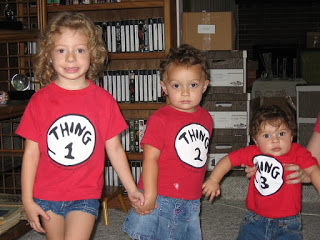 Hailey, Riley, Cassidy - 2006(?)
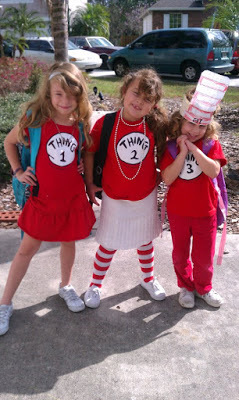 2012
2012
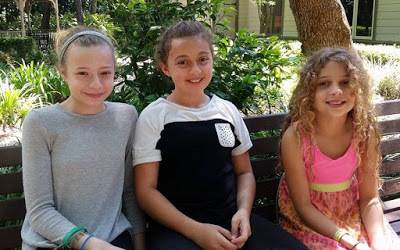 2016
2016
New-to-Me Recipes
As I've mentioned before, I am addicted to recipes. I tell myself I'm not buying another recipe magazine at the grocery check-out counter, but my resolution fails, time and time again. I save recipes from the newspaper, scribble them down from magazines in waiting rooms . . . Well, you get the idea. But I have a never-ending treasure trove to choose from when teaching the grandgirls to cook. But recently, Cassidy ended up teaching me. When asked if she wanted to make bread or scones the next day, she replied, "Empanadas." Huh? She had to be kidding - her gringa grandmother never made an empanada in her life. But with the aid of Google, Publix (grocery store), and a bit of improvisation, we made 20 empanadas, 10 bacon & cheese (the improvisation) and 10 chicken & olive (from a recipe found on the Net). The chicken & olive recipe will be found below.
Another item I'd eaten at restaurants but never made was Flatbread, but as I went through the Publix check-out, there was this magazine, "Mediterranean Recipes." Oops. And flatbreads were prominently featured. Sigh. Another challenge to be met.
As for the last recipe . . . I admit to making beef stew a time or two, but I had never made Hungarian Beef Stew, a wholly different beast. This recipe I found last week in the Orlando Sentinel, just crying to be tried. No improvisation on this one - I made it exactly to the recipe, and it was the best stew I ever tasted. Perhaps not completely authentic Hungarian Golash, but absolutely amazing. Try it for yourself & see.
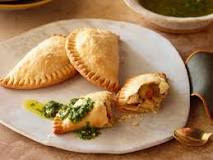
Chicken and Olive Empanadas with Chimichurri Sauce
I was fortunate enough to have all the herbs for the Chimichurri Sauce in my herb garden. But where, oh where, could I find empanada wrappers? With the help of one of Publix's famously helpful employees, I found “discos grandes” in the "International" frozen foods section (10 wrappers to a bag). There were also packages of smaller wrappers, and I think I’ve also seen empanada wrappers in the refrigerated section of the store. You will NOT, however, find them among the dry goods in the Ethnic Foods section.
Note: the following recipes are adapted from those found on the Internet.
Chimichurri Sauce:
1¼ cups lightly packed parsley leaves
1 cup lightly packed oregano leaves
½ cup lightly packed cilantro leaves
6 cloves of garlic
½ teaspoon crushed red pepper
Kosher salt
¼ cup red wine vinegar
3/4 cup olive oil
Filling:
1 pkg. chicken tenders
2 cups low-sodium chicken broth
a few sprigs of parsley
1 bay leaf (dried)
1 tablespoon Crisco or vegetable oil
½ small yellow onion, diced
c. ½ cup Swiss cheese or mozzarella, shredded (optional)
Kosher salt
1 heaping teaspoon ground cumin
1/8 teaspoon crushed red pepper
½ teaspoon all-purpose flour
1/3 cup pimento-stuffed green olives, chopped *
*I used sliced olives right out of the jar
DIRECTIONS
Chimichurri sauce: Combine parsley, oregano, cilantro, garlic, red pepper & c. 3/4 teaspoon salt in food processor.** Process until coarsely chopped. Add vinegar & pulse to combine. Scrape mixture into a bowl & whisk in oil & 2 tablespoons water. Set aside. Note: The sauce can be made a day ahead and refrigerated; bring to room temperature before serving.
**Original said 1½ teaspoons salt. Also, in my mini processor I chopped the ingredients separately, mixing them later.
Filling: Put rack in upper third of oven, preheat to 425°. Place chicken in a large sauce pan. Add chicken broth, parsley & bay leaf. Cover and simmer on medium-high about 15 minutes. Transfer chicken to a plate. When cool enough to handle, shred the meat into large pieces (I used a fork). You should have about 2 cups. Place in a medium bowl. Reserve ½ cup broth.
Wipe out saucepan; heat it over medium heat, add Crisco. When melted, add the onion, season with salt, stirring until soft but not brown, about 4 minutes. Sprinkle with cumin and crushed red pepper and cook, stirring, 30 seconds. Stir in flour. Whisk in the ½ cup broth and let it bubble and thicken, stirring frequently, about 4 minutes. Remove from heat, add chicken and olives; mix. Allow to cool 10-15 minutes.
Empanadas: Place a small bowl of cool water by your work surface. Line a sheet pan with parchment paper. Working with 1 wrapper at a time and keeping the rest covered, brush a little water on one edge of the wrapper. Put 2 tablespoons* of filling in the center of the wrapper & fold in half. Use your fingers to press out the air, making a border of about ½ inch around the filling. Press with a fork to seal edges. Transfer to the prepared sheet pan. Repeat with the remaining wrappers & filling.
Grace note: if using shredded cheese (not in original recipe), sprinkle it on the flatbread before adding the chicken mix.
*Probably for smaller empanadas than the “discos grandes” Cassidy and I used. Our bacon & Swiss cheese empanadas were "thin." The chicken & olive recipe, however, made 10 fat empanadas.
Egg wash (optional) : In a small bowl, whisk one egg; add ½ cup water. Whisk together. Brush egg wash on top of empanadas.
Bake empanadas until golden brown, about 15 minutes, rotating baking sheet halfway through. Serve warm with chimichurri sauce.
Grace note: other empanada recipes can be found on the Internet, including one called, Spanish Beef Empanadas with Roasted Red Pepper Sauce.
------------------------------------
Grace note: You can find recipes for Flatbread dough on the Internet, but most of us are too busy. I recommend buying pre-made flatbread from your local grocery or, as I prefer, Naan bread. Both are perfectly sized for individual servings. Flatbread toppings are as many as your imagination will allow. I've copied two of those I most enjoyed below.
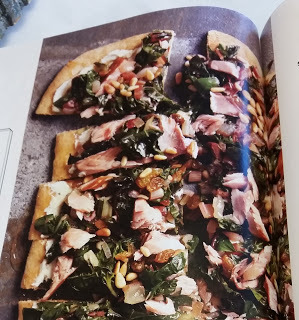
Smoked Salmon (Lox) and Chard Flatbread
2 Tbspn. olive oil
1 cup chopped onion
4 cloves garlic, minced
1 lb. rainbow (or red) Swiss chard, stems removed & chopped
½ cup golden raisins
1 5.2 oz. pkg. semisoft cheese with garlic & fine herbs
4 oz. smoked salmon, broken into pieces
2 Tbsp. purchased balsamic glaze*
2 Tbsp. toasted pine nuts**
Ready-made flatbread or Naan
*found in the vinegar section of larger supermarkets
**I did not bother to toast the nuts
Heat olive oil over medium heat. Add onion & garlic; cook & stir 3 minutes. Gradually add chopped chard stems; cook 10 minutes or just until tender, stirring occasionally. Add chard leaves in batches, stirring until wilted before adding next batch. Add raisins; cook 5 minutes or until chard is tender, stirring occasionally.
Warm purchased flatbread in microwave. Spread cheese over flatbread. Top with salmon & chard mixture. Drizzle with balsamic glaze; sprinkle with pine nuts.
----------------------------
Pesto-Prosciutto FlatbreadCornmeal
2 Tbsp. olive oil
3 oz. thinly sliced prosciutto, cut into strips
3 Tbsp. dried tomato pesto
4 oz. provolone cheese, shredded (1 cup)
1 Tbsp. lemon juice
1 cup baby arugula
Ready-made flatbread or Naan
Preheat oven to 350°. Heat 1 Tbsp. oil over medium heat. Add prosciutto. Cook, stirring occasionally until brown & crisp. Drain on paper towels.
Spread pesto over dough. Sprinkle with prosciutto and cheese.
Sprinkle cornmeal on sheet pan, top with flatbread. Bake c. 6-8 minutes until flatbread is heated and cheese melted. While flatbread is in oven, whisk together 1 remaining Tbspn. olive oil and lemon juice. Add arugula, toss to coat. Top flatbread with arugula mix.
----------------------------
Hungarian Beef Stew
Sorry, no photo available - frankly, it doesn't look like much, but the taste is marvelous. And so very easy, except patience is required for the time needed to cut up the veggies!
1¼ pounds beef stew cubes*
1 lb. fresh carrots, sliced or in small chunks
2 med. onions, thinly sliced
3 cups thinly sliced cabbage
½ cup dry red wine
1½ cups water
1 6-oz. can tomato paste
1 envelope dry onion-mushroom soup mix
1 Tbspn. paprika
1 tspn. caraway seed
1 cup reduced fat sour cream
*My current Publix provides perfect bite-size beef cubes with little fat. This isn't always true. You may need to buy enough to cut cubes smaller & trim the fat.
In a 4-qt or larger slow cooker, combine all ingredients except sour cream. Mix well. Cover & cook on Low for 8 hours. Turn off cooker; stir in sour cream & serve.
Suggest you have a loaf of crusty bakery bread or perhaps cheese biscuits on hand to serve with the stew.
ENJOY!
~ * ~
Thanks for stopping by,
Grace
For Grace's website, listing all books as Blair Bancroft, click here.
For a brochure for Grace's editing service, Best Foot Forward, click here.
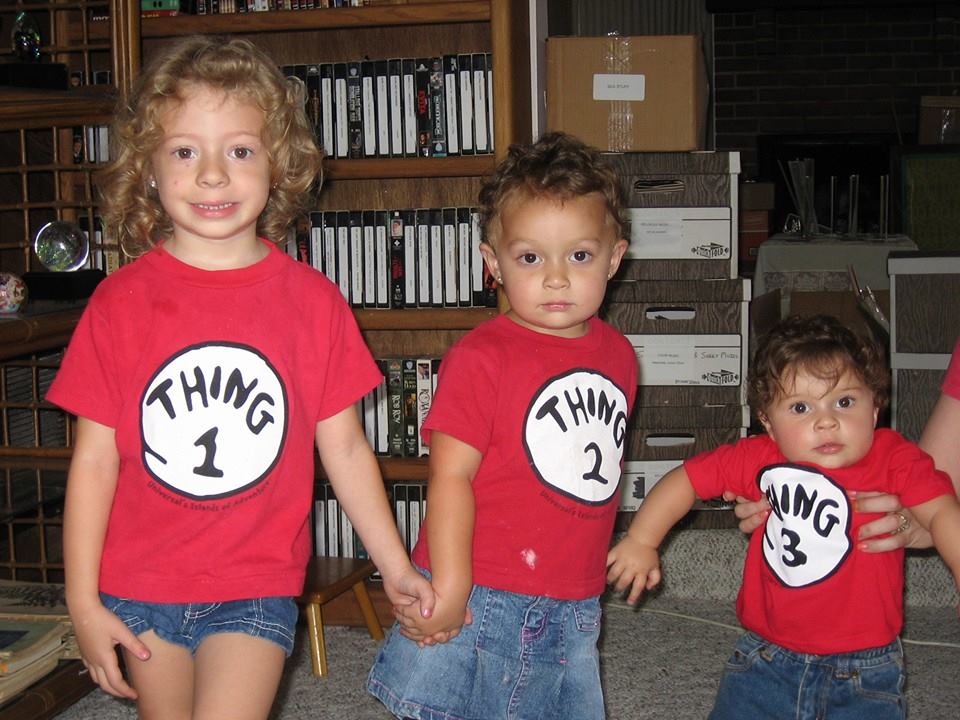 Hailey, Riley, Cassidy - 2006(?)
 2012
2012 2016
2016New-to-Me Recipes
As I've mentioned before, I am addicted to recipes. I tell myself I'm not buying another recipe magazine at the grocery check-out counter, but my resolution fails, time and time again. I save recipes from the newspaper, scribble them down from magazines in waiting rooms . . . Well, you get the idea. But I have a never-ending treasure trove to choose from when teaching the grandgirls to cook. But recently, Cassidy ended up teaching me. When asked if she wanted to make bread or scones the next day, she replied, "Empanadas." Huh? She had to be kidding - her gringa grandmother never made an empanada in her life. But with the aid of Google, Publix (grocery store), and a bit of improvisation, we made 20 empanadas, 10 bacon & cheese (the improvisation) and 10 chicken & olive (from a recipe found on the Net). The chicken & olive recipe will be found below.
Another item I'd eaten at restaurants but never made was Flatbread, but as I went through the Publix check-out, there was this magazine, "Mediterranean Recipes." Oops. And flatbreads were prominently featured. Sigh. Another challenge to be met.
As for the last recipe . . . I admit to making beef stew a time or two, but I had never made Hungarian Beef Stew, a wholly different beast. This recipe I found last week in the Orlando Sentinel, just crying to be tried. No improvisation on this one - I made it exactly to the recipe, and it was the best stew I ever tasted. Perhaps not completely authentic Hungarian Golash, but absolutely amazing. Try it for yourself & see.

Chicken and Olive Empanadas with Chimichurri Sauce
I was fortunate enough to have all the herbs for the Chimichurri Sauce in my herb garden. But where, oh where, could I find empanada wrappers? With the help of one of Publix's famously helpful employees, I found “discos grandes” in the "International" frozen foods section (10 wrappers to a bag). There were also packages of smaller wrappers, and I think I’ve also seen empanada wrappers in the refrigerated section of the store. You will NOT, however, find them among the dry goods in the Ethnic Foods section.
Note: the following recipes are adapted from those found on the Internet.
Chimichurri Sauce:
1¼ cups lightly packed parsley leaves
1 cup lightly packed oregano leaves
½ cup lightly packed cilantro leaves
6 cloves of garlic
½ teaspoon crushed red pepper
Kosher salt
¼ cup red wine vinegar
3/4 cup olive oil
Filling:
1 pkg. chicken tenders
2 cups low-sodium chicken broth
a few sprigs of parsley
1 bay leaf (dried)
1 tablespoon Crisco or vegetable oil
½ small yellow onion, diced
c. ½ cup Swiss cheese or mozzarella, shredded (optional)
Kosher salt
1 heaping teaspoon ground cumin
1/8 teaspoon crushed red pepper
½ teaspoon all-purpose flour
1/3 cup pimento-stuffed green olives, chopped *
*I used sliced olives right out of the jar
DIRECTIONS
Chimichurri sauce: Combine parsley, oregano, cilantro, garlic, red pepper & c. 3/4 teaspoon salt in food processor.** Process until coarsely chopped. Add vinegar & pulse to combine. Scrape mixture into a bowl & whisk in oil & 2 tablespoons water. Set aside. Note: The sauce can be made a day ahead and refrigerated; bring to room temperature before serving.
**Original said 1½ teaspoons salt. Also, in my mini processor I chopped the ingredients separately, mixing them later.
Filling: Put rack in upper third of oven, preheat to 425°. Place chicken in a large sauce pan. Add chicken broth, parsley & bay leaf. Cover and simmer on medium-high about 15 minutes. Transfer chicken to a plate. When cool enough to handle, shred the meat into large pieces (I used a fork). You should have about 2 cups. Place in a medium bowl. Reserve ½ cup broth.
Wipe out saucepan; heat it over medium heat, add Crisco. When melted, add the onion, season with salt, stirring until soft but not brown, about 4 minutes. Sprinkle with cumin and crushed red pepper and cook, stirring, 30 seconds. Stir in flour. Whisk in the ½ cup broth and let it bubble and thicken, stirring frequently, about 4 minutes. Remove from heat, add chicken and olives; mix. Allow to cool 10-15 minutes.
Empanadas: Place a small bowl of cool water by your work surface. Line a sheet pan with parchment paper. Working with 1 wrapper at a time and keeping the rest covered, brush a little water on one edge of the wrapper. Put 2 tablespoons* of filling in the center of the wrapper & fold in half. Use your fingers to press out the air, making a border of about ½ inch around the filling. Press with a fork to seal edges. Transfer to the prepared sheet pan. Repeat with the remaining wrappers & filling.
Grace note: if using shredded cheese (not in original recipe), sprinkle it on the flatbread before adding the chicken mix.
*Probably for smaller empanadas than the “discos grandes” Cassidy and I used. Our bacon & Swiss cheese empanadas were "thin." The chicken & olive recipe, however, made 10 fat empanadas.
Egg wash (optional) : In a small bowl, whisk one egg; add ½ cup water. Whisk together. Brush egg wash on top of empanadas.
Bake empanadas until golden brown, about 15 minutes, rotating baking sheet halfway through. Serve warm with chimichurri sauce.
Grace note: other empanada recipes can be found on the Internet, including one called, Spanish Beef Empanadas with Roasted Red Pepper Sauce.
------------------------------------
Grace note: You can find recipes for Flatbread dough on the Internet, but most of us are too busy. I recommend buying pre-made flatbread from your local grocery or, as I prefer, Naan bread. Both are perfectly sized for individual servings. Flatbread toppings are as many as your imagination will allow. I've copied two of those I most enjoyed below.

Smoked Salmon (Lox) and Chard Flatbread
2 Tbspn. olive oil
1 cup chopped onion
4 cloves garlic, minced
1 lb. rainbow (or red) Swiss chard, stems removed & chopped
½ cup golden raisins
1 5.2 oz. pkg. semisoft cheese with garlic & fine herbs
4 oz. smoked salmon, broken into pieces
2 Tbsp. purchased balsamic glaze*
2 Tbsp. toasted pine nuts**
Ready-made flatbread or Naan
*found in the vinegar section of larger supermarkets
**I did not bother to toast the nuts
Heat olive oil over medium heat. Add onion & garlic; cook & stir 3 minutes. Gradually add chopped chard stems; cook 10 minutes or just until tender, stirring occasionally. Add chard leaves in batches, stirring until wilted before adding next batch. Add raisins; cook 5 minutes or until chard is tender, stirring occasionally.
Warm purchased flatbread in microwave. Spread cheese over flatbread. Top with salmon & chard mixture. Drizzle with balsamic glaze; sprinkle with pine nuts.
----------------------------
Pesto-Prosciutto FlatbreadCornmeal
2 Tbsp. olive oil
3 oz. thinly sliced prosciutto, cut into strips
3 Tbsp. dried tomato pesto
4 oz. provolone cheese, shredded (1 cup)
1 Tbsp. lemon juice
1 cup baby arugula
Ready-made flatbread or Naan
Preheat oven to 350°. Heat 1 Tbsp. oil over medium heat. Add prosciutto. Cook, stirring occasionally until brown & crisp. Drain on paper towels.
Spread pesto over dough. Sprinkle with prosciutto and cheese.
Sprinkle cornmeal on sheet pan, top with flatbread. Bake c. 6-8 minutes until flatbread is heated and cheese melted. While flatbread is in oven, whisk together 1 remaining Tbspn. olive oil and lemon juice. Add arugula, toss to coat. Top flatbread with arugula mix.
----------------------------
Hungarian Beef Stew
Sorry, no photo available - frankly, it doesn't look like much, but the taste is marvelous. And so very easy, except patience is required for the time needed to cut up the veggies!
1¼ pounds beef stew cubes*
1 lb. fresh carrots, sliced or in small chunks
2 med. onions, thinly sliced
3 cups thinly sliced cabbage
½ cup dry red wine
1½ cups water
1 6-oz. can tomato paste
1 envelope dry onion-mushroom soup mix
1 Tbspn. paprika
1 tspn. caraway seed
1 cup reduced fat sour cream
*My current Publix provides perfect bite-size beef cubes with little fat. This isn't always true. You may need to buy enough to cut cubes smaller & trim the fat.
In a 4-qt or larger slow cooker, combine all ingredients except sour cream. Mix well. Cover & cook on Low for 8 hours. Turn off cooker; stir in sour cream & serve.
Suggest you have a loaf of crusty bakery bread or perhaps cheese biscuits on hand to serve with the stew.
ENJOY!
~ * ~
Thanks for stopping by,
Grace
For Grace's website, listing all books as Blair Bancroft, click here.
For a brochure for Grace's editing service, Best Foot Forward, click here.
February 24, 2017
Dinosaurs in Orlando
On Presidents' Day (Feb. 20), a school holiday, Susie, the grandgirls, and I went to Leu Gardens in Orlando, a place we've always enjoyed, but from now through April 30, the gardens have become home to a wide variety of dinosaurs. In addition to a map showing the location of the thirteen types of dinosaurs rearing up out of the jungle (one group actually clinging to a tree trunk), the back page of the map shows photos of all the dinosaurs with their proper names. Therefore, there's no excuse if I mess up the identifications!
Seriously, if you live anywhere near the Orlando area, this is an exhibit not to be missed. In addition to the dinosaurs, the camellias are all in bloom, the rose garden always has some plants in blooms (though how they manage it, I don't know), and the pavilion along the lake has just been rebuilt, offering a lovely view, plus turtles, fish, and a bubbling stream flowing out of the jungle. And then there's the floral clock, the vegetable and butterfly gardens, and an endless jungle of exotic plants, including bamboo and leaves the size of a flatscreen TV. I cannot recommend this exhibit too highly.
For a link to Leu Gardens website, click here.
The photos below were taken by Susie and Riley (to whom I entrusted my Smartphone).
 The garden explorers, minus Mommy (the photographer)
 Daspletosaurus - "Frightful Lizard" - the first "meet & greet" peering out of the jungle
 Cassidy with the bamboo she learned to identify at Leu Gardens at age four - plus a camellia (picked off the ground!)
 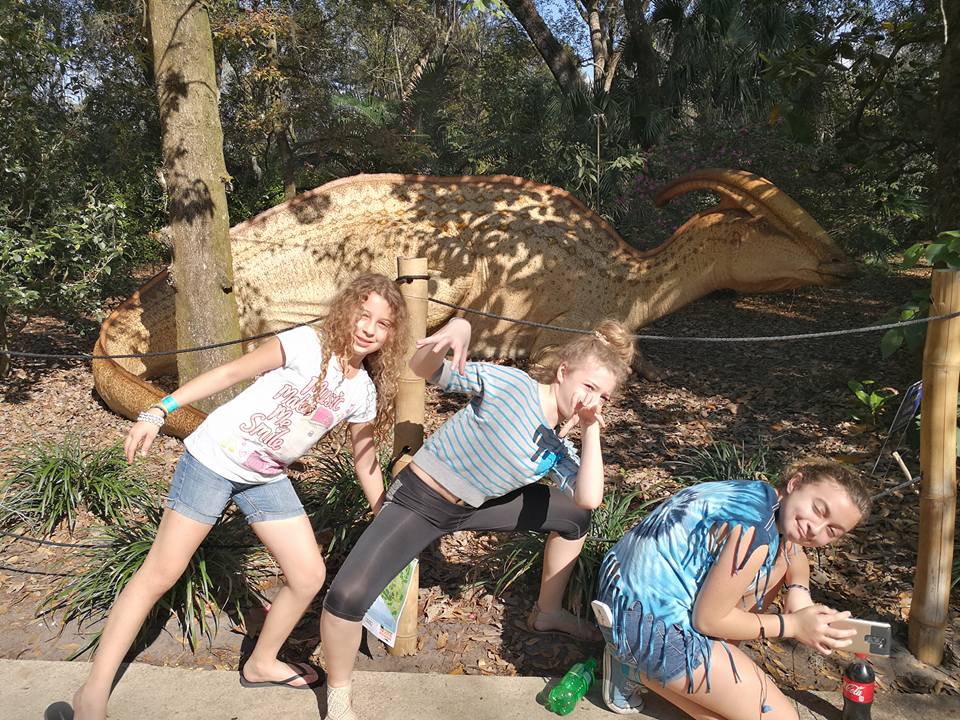 Don't eat us, Parasaurolophus!
 I definitely wouldn't want to meet a Dimetrodon on a dark night! Or by daylight.
 I think that's a Hypsibema about to devour Hailey for lunch.
 Sordes (Demon). No doubt here about why scientists say birds are descendants of dinosaurs
 This one too. A Quetzalocoatlus (Feathered Serpent) - named for the Aztec god. (Ancestor of the turkey?)
 Uh - I can't seem to find this one on the map - maybe he's free-roaming. Yikes! Or is that a close-up of Dinosaur #1, taken with Susie's brand new phone??
 Bambiraptors lurking in the ferns. Do you recall their large cousins, the velociraptors in Jurassic Park?
P. S. The bambiraptors had a mind of their own. They were supposed to be near the beginning, but they insisted on staying at the end, every new photo loaded below them miraculously jumping above. They also refused to have the same type font at the other photos. So . . . I admit it, raptors are scary beasts, even if these three were only about a foot high. ~ * ~
Thanks for stopping by, Grace
For Grace's website, listing all books as Blair Bancroft, click here.
For a brochure for Grace's editing service, Best Foot Forward, click here.


