Doug Walsh's Blog, page 3
April 21, 2020
The Scents and Sounds of Art
Judging by my social media feeds, it seems I’m not alone in bumping against reminders of sunnier times. For many, the yardwork and home improvement projects have given way to deep cleaning. The forgotten treasures of scrapbooks and photo albums have been unearthed and shared. Class photos, first cars, first crushes. Nostalgia, to borrow Dave Chapelle’s line, is a hell of a drug.
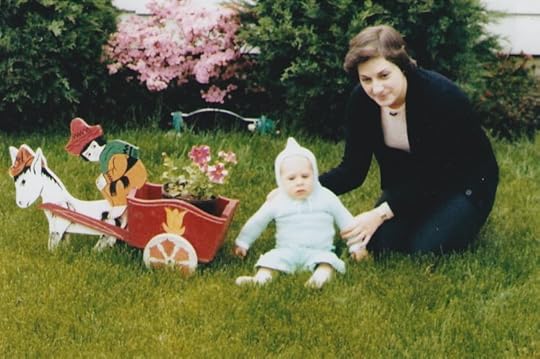
The photo above is of my mother and I, from the spring of 1976. Probably Easter Sunday. Breakfast at my late grandparents’ house, judging by the sprinkler and white siding. Grandpa was forever watering his lawn. No doubt a byproduct of his being an avid golfer.
The photo resides on the second page of a bulging album my sister assembled for me several years ago. The album sits atop a bookshelf in our computer room, always in view, seldom paged through. My other keepsakes are stored in plastic bins in a closet. I haven’t gone rummaging. That’s not what this post is about.
Rather, I want to discuss the power of spontaneous nostalgia, so often triggered by the scents and sounds we stumble upon. For me, they’re among the most powerful emotional triggers we humans experience, for better or worse.
And I must begin with something beautiful: Final Fantasy VII Remake.
A Prelude to Gaming Memories
I want you to listen to the following video. That it’s from a video game soundtrack is irrelevant. Close your eyes and let the emotion of the piece wash over you.
That’s “The Prelude”, a piece of music as famous to older gamers as anything by Bach or Chopin. Specifically, that’s the updated version of the song featured in the recent remake of Final Fantasy VII, one of the most famous PlayStation games of all time. A game that I, back in 1998, sank over 70 hours into.
I haven’t yet played the remake – and this post isn’t about video games, so don’t worry – but I’ve bumped into this song quite a lot lately, and every time I do it transports me back to our townhome in North Carolina, before I worked in gaming. Final Fantasy VII was unlike anything that had come before it. The 3D graphics, for the time, were so lifelike and the characters so rich that, even today, millions of gamers can point to a particular scene as having caused them to cry for the first time while playing a game. That’s what I remember. Not the gameplay.
The theme songs from Super Mario Bros. and Legend of Zelda are undoubtedly even more popular. I for one can’t hear either of those songs, especially their chiptune versions, and not flash back to my tween-age years. The title theme from the Shenmue trilogy hits me even harder. For others, it’s the Halo theme.
Music isn’t the first thing we think of when recalling our favorite games, movies, or television shows, but who among us doesn’t feel that familiar pang upon hearing a theme song from a beloved sitcom? But whereas I’ll seldom remember a particular tv episode or boss battle from a game, it takes only a few notes from one of those songs to remind me how I felt interacting with it.
It’s that power of how we felt in those moments I want to draw attention to.
Oh, and by the way, if you’re a fan of classical music and want to be blown away by the beauty of video game themes, check out this playlist.
The Nose is a Time Machine
The first time I walked into my local CrossFit gym, I was immediately transported to my childhood, to a gymnastics studio my mom had taken each of us kids to when we had extra energy to burn. The combined scents of chalk and rubber mats now usher me back to that memory four days a week. And from that memory, a yellow and blue striped clown costume I wore to the recital.
Every year, when the Christmas decorations are being unboxed and spread out just so, when the right candles are at the right spacing, and the packaging hasn’t been put away just yet, I’ll catch a whiff of the past. To the smell of holiday spice and pine and aging cardboard that so perfectly mimics the scent of the crawlspace where we stored heaping mounds of decorations in my childhood.
October walks in the forest, on trails of crunching leaves lined with thickets of shriveling blackberry, return me to those early winter hunting trips I took with my dad.
The smell of tatami mats will forever remind me of my first trip to Japan, then those five magical weeks Kristin and I spent chasing the cherry blossoms as we mourned the loss of her father.
The scent of Market Spice Tea from the famed Pike Place Market doesn’t remind me of my early trips to Washington, but rather the massive care package my Seattle-based aunt had sent to me in 1993. Nearly a decade before I ever traveled west of the Delaware River.
I can go on and on. The sight of a boardwalk, the cawing of seagulls, the smell of saltwater taffy. Oh, how the memories came back upon seeing the Asbury Park pavilion in The Sopranos, to the hunting and fishing expos I’d attended there with my dad – and the shark tooth he once bought me.
It’s How We Feel That Matters
Kristin was finishing reading Tai-Pan by James Clavell the other day. She was describing what was going on in the story and, despite considering the book one of my all-time favorites, I realized that I could scarcely recall a single character’s name. I only vaguely remembered a few plot details. What I remembered most was how I felt reading it. That I was awestruck by the interwoven storylines, the richness of the setting, the author’s mastery of the craft.
I have friends who can remember the characters and plotlines of stories and movies they experienced decades ago. That’s not how my memory works, or at least not what I attach to art.
Take, for example, the first book in Stephen King’s Dark Tower series, The Gunslinger. I read the book several times as a teen and during my twenties. There are some vague plot aspects I can remember, but no more than three character names. Instead, I recall how reading it made me feel. The book’s opening sentence is magical: “The man in Black fled across the desert, and the Gunslinger followed.”
I see those words and I’m transported to my teenage self, falling in love with fiction all over again. That line reminds of how I dreamt of becoming a writer, hoping one day I could write like Stephen King.
I’ve long since given up on the hope of writing like Stephen King … or Jane Austen or Kurt Vonnegut. Rather my goal is to not-so-simply create a story readers will remember. Not necessarily for the originality of the plot or the liveliness of the characters (though that would be nice, too), but rather for how it made them feel.
When writing, I try to impart the memories I mentioned above, and the scents and sounds that trigger them into my story. Whether by lending my personal reflections to my characters or by inventing new ones whole cloth.
I do this to add depth to the story, to add texture to the setting and make the characters more lifelike, of course, but there’s more to it than that.
It’s because I love how it feels when a book reminds me of a particular memory, for better or worse. I want this for you, my readers. Hopefully, by instilling enough of these memory-triggering scents and recollections, you’ll not only be transported to happy memories of your own, but create new ones in the process. And then recall fondly how one of my own books made you feel, even if you can’t remember the main character’s name. Or what the story was about.
The post The Scents and Sounds of Art appeared first on DOUG WALSH.


April 4, 2020
Travel At the End of the Tunnel
We can all use a little something to look forward to right about now. Though I’m not at all pleased with the string of cancellations that have befallen my calendar — and yours, I’m sure — having to postpone next month’s trip to Jamaica really bummed me out. Of course, I say that knowing full well how much worse we could have it right now. My wife and I — and hopefully you, too — are among the lucky ones.
But that doesn’t mean we’re not permitted to feel disappointment or desire to look ahead. To whatever ahead looks like.
For me, that means our December trip to Belize. Being that each of the ideas for my novels has come from travel, I’m particularly excited to visit someplace new. Our recent trips overseas haven’t spawned any new ideas yet, but you never know where inspiration will strike.
And in wanting to look ahead, I finally got around to posting about our upcoming trip to Belize, over on our travel site, Two Far Gone. You can read about how we recreated our own National Geographic Private Tour in DIY fashion and saved over $5,000 in the process.
The post Travel At the End of the Tunnel appeared first on DOUG WALSH.
February 26, 2020
Let’s Talk About Parasite
The blanketing grey that plagues the upper left corner of North America for half the year lifted last week, awarding us our annual “faux spring” tease. The sun burned through the cloudbank; jackets were optional, outdoor imbibing mandatory. I walked my laptop and doodle over to the local brewery and attempted to write this blog. It didn’t feel right. The weather was too nice, the surrounding faces and dogs too friendly, too pettable. The dogs, that is. Most of all, it’s not in my nature to think about movies in sunlight – and a Parasite prefers the dark.
Alas, the drizzle and grey returned by morning, and in the interest of data collection, we watched another Academy Award winner. Our fourth this season, and all of them exceptional. I wouldn’t hesitate to recommend The Joker, Ford v Ferrari, and Toy Story 4 to anyone.
But it’s Parasite, the Best Picture winner, I want to talk about. After all, it’s the one I’ll remember years from now.
Kristin and I watched it knowing only that the movie showcased the wealth gap in South Korea through the eyes of two disparate families. I’d heard the movie was funny, shocking, and even tragic. I’d add that it’s briefly horrifying as well, but in a way that felt right. It’s also beautifully filmed, but I’ve no interest in talking about cinematography or the necessary subtitles (you stop noticing them after a few minutes), or why some other movie should have won in its place.
To that last point, I’ll only add that Parasite is the first Best Picture winner in years that, to me, actually feels like a Best Picture. Like the way Forest Gump, Gladiator, and Silence of the Lambs did years ago.
But no, that’s not what interests me. Not today.
I want to talk about money.
Bear with me, this gets personal.
Fish Sticks & Chauffeurs
The wealthy Mrs. Park has decided to throw her young son a backyard birthday party. To her credit, she insists on doing the shopping herself, albeit with the help of their driver, Mr. Kim, the head of the destitute Kim family. The two proceed to spend the day visiting a string of luxury grocers and boutiques. Mrs. Park shops on autopilot, forever on the phone chatting with her friends, filling cart after cart with delicacies. She never pauses to comparison shop, doesn’t once check a price, shows no signs of wondering if she’s buying too much. The cost, be it hundreds or thousands, is irrelevant.
Meanwhile, at home, the Kims pool loose coins for noodles.
The luxury house in a posh Seoul enclave, the Mercedes S-class, and the private tutors and live-in help do a fine job of displaying the Parks’ wealth in shorthand, but it’s this shopping scene that shouted the loudest to me.
One of my most vivid memories as a child is of my mother rooting through her coin purse and stacking the last of her change in my hand. Just enough for a gallon of milk. I walked to the 7-Eleven two blocks away, and returned home, swinging the plastic jug as I went. I was twelve or thirteen. Probably chewing a Bazooka gum bought with a leftover nickel.
Want to guess what happened next?
Halfway home, the jug slipped from my grasp on the upswing. I watched it cartwheel through the air and explode on the street, sending a beautiful tsunami of milk into the gutter. The punishment I suffered for my carelessness paled in comparison to the agony of knowing how important a cup of coffee, taken very light and sweet, was to my mother at a time when it was her only luxury in life.
For Rich and For Poor
Tara Westover, in her bestselling memoir, Educated, writes:
“The most powerful advantage of money: the ability to think of things besides money.”
Like Westover, spending my teenage years poor helped me to develop my own definition of financial success. Throughout adulthood, I’ve defined that success by whether or not I’d have to worry if my car broke down.
Probably why I’ve always bought Japanese. Zing!
I have never been as desperate as the Kim family, at least not that I’m aware of — there but for the grace of Visa go I? Yes, my childhood basement flooded with rainwater sewage, like the Kims. And yes, my siblings and I even helped my mother fold and glue thousands of free samples for pizza money, not unlike the Kims.
But we didn’t live in the basement. Unlike them, we didn’t have to con our way out of poverty.
Similarly, I know I’ll likely never be as rich as Mr. Park. One doesn’t major in Geology and pursue a career in fiction with the goal of amassing wealth. But that doesn’t mean I couldn’t relate to them either. I suspect many of us with the privilege of having time to spend reading this email (thank you for that, by the way) can relate to some aspect or another of the life the Parks lead.
But for me it will be that shopping scene that sticks with me. Both for how I won’t take for granted those days I can shop without concern for cost, and for the reminder of that day long ago, when two dollars for milk was a luxury we could barely afford.
And maybe, deep in the recesses of my subconscious, that memory guides my habits today. Perhaps it’s why I drink my coffee black: so that no amount of financial distress will ever leave me crying over spilled milk.
Give Me Your Foreign Film Recommendations
Some of my other favorite foreign language films include Train to Busan, Angel-A, Amelie, Ikigami, and Swimming Pool. If you’ve got recommendations of your own, I want to hear them.
Reply to this email or chime in on this Facebook thread.
The post Let’s Talk About Parasite appeared first on DOUG WALSH.
February 3, 2020
My Return to Kalalau
I met the sign seven miles into my hike along the Kalalau Trail, the one needlessly warning hikers about the hazardous cliff ahead. Should the growing collection of cartoon stickers eventually overwhelm the sign, it won’t matter — everyone knows the threat looms. The ensuing quarter-mile of crumbling dirt and basalt is the most infamous stretch of trail in the Hawaiian islands. Nicknamed “Crawler’s Ledge,” the path hugs the side of a cliff some three-hundred feet above the churning Pacific. It’s rocky, uneven, narrower than a sidewalk, and not for those who’ve never before stood where a misplaced foot can spell their demise. Yes, people have crawled.
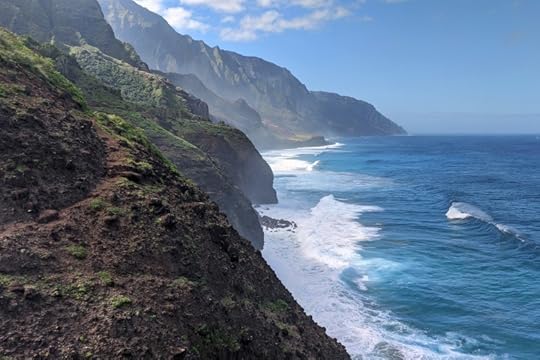
The narrowest section of “crawler’s ledge” curling around the cliffs above the Pacific with the full splendor of the Na Pali Coast on display.
National Geographic calls the Kalalau Trail one of the world’s best, the “finest coastal hike in the world,” and also one of the most dangerous. Eleven miles, point-to-point, with 3000-feet of elevation gain in the humid tropics can make for a long day, but it’s that ledge that haunts the sleep of many first-time visitors. Crawler’s Ledge is the gatekeeper to Kalalau Valley; a rite of passage for some, a monumental hurdle for acrophobic others. A hashtag for too many.
It’s hardly worth a mention.
Kalalau On My Own
Fifteen years ago, overburdened with bulky backpacking gear, a wife bordering on tears, and little experience with what, in outdoor circles, is known as “exposure,” the trail frightened me. The heat, humidity, and hills had worn us down. The knowledge that we’d have to hike back the next day made us consider turning around. We nearly paid for a boat ride out the following morning.
This time, on my own with lightweight gear and the experience of thousands of hours spent hiking and mountain biking in the Cascade Mountains, I cruised across Crawler’s Ledge, pausing only to take the photos I was too scared to capture years ago. I’d come a long way — in every way — and I had business to tend to.
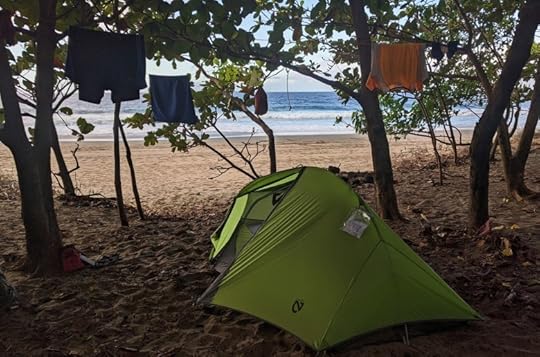
My Nemo Hornet 2P tent and clothesline set up amongst the milo trees and passionfruit vines at Kalalau Beach.
My three nights in Kalalau were no mere holiday. This was a research trip. It was my chance to record the details, sounds, and scents I aim to imbue my next novel with. This was an opportunity to fact-check what I’ve written thus far, to correct my fading memories, and inspire the scenes to come. It was on the hike out back in 2005 where I first asked myself the requisite “what if” question that gave rise to this novel. The seed has been marinating ever since.
Catastrophic floods thwarted my attempt to hike the trail in 2018, rendering my return to Kaua’i that year as little more than a sightseeing mission. Given the timing of the collapse of Prima Games and desire to write The Walkthrough, that was probably for the best. I didn’t truly begin this story until May 2019.
Then, in early 2020, I was spurred by the promise of perfect weather, fewer hikers, and a new-and-improved (thanks to plenty more bureaucracy) Kalalau Valley. The trail takes most hikers 6-10 hours to complete. I finished in five — who says CrossFit doesn’t translate to other activities? On the trail by sunrise, I had my tent pitched and was toes-in-sand with a good book shortly after noon. I wanted to get to work right away, but exploration of the vast Kalalau Valley would wait till the next day. After all, there was a sunset to prepare for.
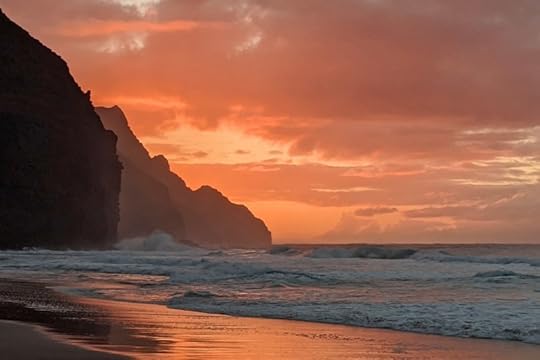
The only thing that could rival Kalalau during sunset is Kalalau at midnight, when the Milky Way lights the sky with millions of stars — and you can see every one of them.
Valley Wanderings
Fifteen years have passed since I last stood at the intersection of the two trails. To my left, the Kalalau Trail stretched eleven miles back the way I’d come. The other option headed mauka, inland, along the Kalalau Valley Trail. The valley is a Polynesian jungle two miles deep by one mile wide, ringed by emerald fluted cliffs towering three and four-thousand feet above. The Kalalau Stream, fed by several cliff-born tributaries, runs the length of the valley, pooling and plunging as it steps its way to the sea.
I crossed the first creek and abruptly overlooked a sign pointing up-valley. An obvious trail, wider and better-traveled than the one I sought, continued straight ahead. I followed it. First to a grove of noni fruit (tastes like peppered blue cheese — used in medicine) and papaya, then, upon spotting a frayed piece of rope on a tree, off into the woods to an abandoned tent, left behind from the recent clearing of the squatters who long dwelled in the valley. From there, I meandered along overgrown boot paths, emerging unexpectedly on the main trail. It wasn’t at all where I wanted to be, but was a happy accident nonetheless. A key scene in the book called for just such a hidden trail granting access to an overlook.
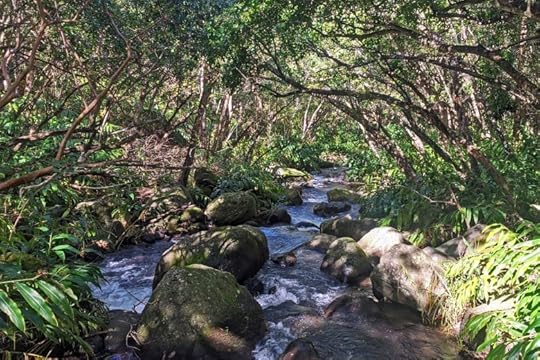
The trail’s gotta be around here somewhere. Or so I thought.
The next day, I tried again. And once again, I somehow failed to spot what I now know to be an obvious fork in the trail. But, unlike the prior day, I didn’t continue across Kalalau Stream. I recalled a map that showed the Kalalau Valley trail on the west side of the stream. So I bushwhacked. I clung to rocks, waded up the stream, and pushed through bamboo thickets. The cool, clear waters of Kalalau Stream swirled around my thighs, mud splattered my face, sweat soaked my hat. I reached the pools I’d heard about the hard way and took a swim. I found the trail leading back down valley in the most indirect way possible.
An hour later, after a heavy rain soaked the beach (the only rain of my four day trip), I led a group of five other hikers back up the valley. They asked me to take them to a swimming hole (surf on the beach was up to 20-feet and growing). I was determined to find the community garden. I told them it was a half-mile hike. Why? I have no idea. Two miles later, on the verge of a mutiny, I finally found the garden I sought. Ancient Hawaiian terraces had been planted with taro. Papaya and banana trees ringed the periphery and coffee and chili pepper plants dotted the landscape. And that was just what I could identify in-season.
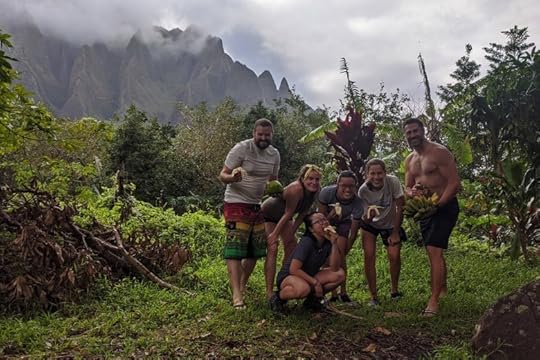
Myself (right) and five friendly hikers I befriended down on the beach. The supply of fresh bananas staved off the mutiny.
A bunch of ripe-enough bananas sat atop one of the terrace walls, awaiting our arrival, sweetening the bounty of details I was absorbing. I kicked off my “slippahs” (read: flip-flops) and walked more than two miles back to camp barefoot through the mud and rocks. Just as my characters know to do — downhill in mud is no time be wearing a shoe with a thong. Or so I learned as the shoe attempted to slice each of my feet in two.
A Visit to Kalalau Sticks With You
Back at the beach, another tasty Alpine Aire dehydrated meal awaited me, as did a shower beneath the waterfall. Bed once again came early. But not sleep. Kalalau Beach may be one of the darkest places I’d ever been — nearly as dark as the Sahara, and the night sky was unlike anything I’d seen in years. But it was too noisy to rest. I crawled from my tent to stare skyward at the confetti starlight, unable to sleep due to the sound of the two-storey tall waves crashing yards from my tent: The high water line had almost reached the milo forest.

Click for a full-size image. Pan and zoom for detail. This was taken at the water’s edge directly in front of my tentsite.
I took my time breaking camp that morning, due equally to my reluctance to leave and confidence in my ability to make my scheduled pick-up at the trailhead.
I chased away a gang of goats near camp and claimed the passionfruit that had fallen in the night before they could eat them. I filtered another three liters of water from the waterfall. I took a final sequence of photos of my temporary home. And then I left. Not by boat. Not dreading the trek ahead. I left with love in my heart for this place. For how difficult it is to reach it, for its lack of cell service and light pollution (the constant tourist helicopters are another story), and for how friendly the people are who make the journey.
The day was hotter. Humid. The trail was far more crowded, especially the final two miles where dayhikers are free to roam without a coveted backcountry permit.
I hiked my hike, took plenty more photos, and stopped at Hanakapi’ai Beach, the site of so many recent flash floods. There, I devoured the remainder of my food. I walked off the trail less than five hours after I started. I wasn’t anxious to leave, but the cross-island smell of a double cheeseburger had me chasing the barn … the inspiration of Kalalau had me racing back to the page.
Want to Know More?
Interested in learning more about my work-in-progress set in Kalalau? Then sign up now for my mailing list. Subscribers receive updates, sneak previews, and even a chance to be an advanced reader! The currently untitled book is expected to release in Spring 2021. Stay tuned!
The post My Return to Kalalau appeared first on DOUG WALSH.
December 19, 2019
My Favorite Reads of 2019
With the end of the year mere day’s away and my annual “Year in Books” email from Goodreads fresh in my inbox, there’s no better time than now to share my favorite reads of the past year. I seldom read new releases so understand that this is not a “best of” list. It’s simply a way for me to highlight my favorite books that passed across my nightstand in 2019. As I said last year, they’re not necessarily the best-written, but they each share something in common: I didn’t forget reading them. In fact, I probably recommended each of them several times throughout the year.
But before we get to the books, here’s some fun stats about my 2019 reading, care of Goodreads. Page counts and reader counts should be taken with a splash of salt.
Books Read: 34
Pages Read: 11,001
Shortest Book: 121 pgs – BookBub Ads Expert by David Gaughran

Longest Book: 800 pgs – Arcade Perfect by David L. Craddock

Most Popular: 3,691,841 People Also Read – The Great Gatsby by F. Scott Fitzgerald

Least Popular: 3 People Also Read – The Red Virgin by Clark McCann

My Average Rating Given: 3.9 Stars
Now, on to my favorite books that I read in the past year, listed in alphabetical order by title.
All the Pretty Horses by Cormac McCarthy (1992)
 As with Michener last year, this was my first time reading McCarthy but won’t be the last. In fact, I’ve already begun The Crossing, the second book in his western Border Trilogy in which All the Pretty Horses is a part of. McCarthy writes in a style unlike anyone I’ve ever read and All the Pretty Horses was certainly a difficult-at-times book to read. This was not only due to the author’s sparse use of dialogue tags, but also for the extensive inclusion of untranslated Spanish. Yet, there is a mesmerizing quality to the prose as it is at once minimalist and expansive, sprinkling poetic seventy-word sentences in amongst machine-gun dialogue and action. It’s about as masculine a style as I’ve ever encountered and I highly recommend reading it. [Buy Here]
Before the Fall by Noah Hawley (2016)
 When a painter survives a plane crash — and manages to save the son of a wealthy news network chief by swimming several miles through the night to Long Island — he finds himself embroiled in a media war pitting a conservative news personality against him and the celebrity heiress who was so impressed with his heroism that she takes him in. Though the characters in the book are clearly inspired by Bill O’Reilly and Paris Hilton types, the mystery surrounding the plane crash, how the protagonist survived, and the description of the harrowing swim to safety made the book easy to remember. Some may not appreciate the commentary on celebrity worship or conservative media’s rush to point a distrusting finger at behavior that runs counter to their instincts, but I found it both authentic and done deftly. [Buy Here]
The Boys in the Boat by Daniel James Brown (2014)
 Easily my favorite non-fiction read of the year, and one I’ve been aiming to get around to for quite some time. The Boys in the Boat is about the nine boys from the University of Washington who, from all manner of humble beginnings, found themselves rowing for a gold medal at the 1936 Berlin Olympics. This wonderfully researched book takes you through three rowing seasons, following each of the young men as they journey from neophytes to Olympic Champions, all the while contending with the Great Depression. I learned so much about crew reading this book, but also about Seattle during the depression era and the construction of Grand Coulee Dam (which we visited this past August for the first time). This is a first-rate book and worth reading for anyone with even a passing interest in Olympic sports. [Buy Here]
Less by Andrew by Sean Greer (2017)
 That it won the Pulitzer is probably all I need to say relating to the quality of the writing, so let me get on with the description. Arthur Less, the title character, is a struggling author about to turn 50. As if things weren’t going bad enough for him, he receives a wedding invitation from his boyfriend of the past nine years. Rather than attend, Less embarks on an expansive trip, accepting a number of invites to half-baked literary events and teaching assignments around the world. What follows is a hilarious and heart-breaking story of travel mishaps, cultural faux-pas, and love lost and found. It’s the first book I’ve read featuring a gay protagonist in which his gayness was a focal point instead of character trait and I came away entertained and, dare I say, a tad bit more informed. [Buy Here]
Mrs. Hemingway by Naomi Wood (2014)
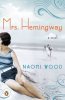 This is an exquisitely written story about the four wives of Ernest Hemingway that reads as much like a novel as it does a documentary. His first wife, Hadley, made famous in The Paris Wife, was but one of the four women who found themselves married to the great writer … and the even greater philanderer and drinker. The story is tragic, exhilarating, and wonderfully researched. The four women couldn’t have been more different, but the thrills and heartaches they experienced had plenty in common. Whether a fan of Hemingway’s work or not is irrelevant. This is ultimately a tragic love story that provides a tour of the 20th century, from French cafes to Cuban villas, with one of the most famous men in modern history serving as a fellow passenger. [Buy Here]
Next on My Nightstand
As mentioned above, I dove into The Crossing the very morning after finishing All the Pretty Horses and I may well continue bingeing on McCarthy for some time.
But what about you? What was your favorite read of the past year? What are you anxious to read next? Let me know in the comments below or hit me up on social media. I’m always looking for recommendations … despite the limitless bounds of my to-read list.
The post My Favorite Reads of 2019 appeared first on DOUG WALSH.
December 18, 2019
Flash Fiction: Clouds of Ezorlem
My 2019 foray into flash fiction has come to an end. I didn’t advance to the final round of the NYC Midnight Flash Fiction contest.
My second entry, “Replacement Cost“, finished 1st in my group of 30, which I was thrilled to learn. That placing, combined with the 3rd place finish from “Tanuki’s Dream Salon“, landed me atop my group after Round 1. The top 5 finishers from each of the 25 groups advanced to Round 2, cutting the field of entries from 3,750 to 625. The top 3 from each group in Round 2 would then advance to a final round of 75 with $10,000 in prizes at stake.
Alas, the competition in this next round was much stiffer and the luck of the draw was not in my favor.
Genre: Fantasy
Location: Construction Site
Object: Mirror
Have I mentioned I don’t read fantasy? I don’t. Nor do I write it (aside from “Tanuki’s Dream Salon”). But that’s the beauty of the NYC Midnight Flash Fiction contest. It forces you out of your comfort zone, and offers little time to dwell on what you don’t know. Unfortunately, 48 hours leaves little time for coming up with a story (and polishing it) if you also have to familiarize yourself with the conventions of a new genre. I had my story in mind by the next morning and got to work. I was happy with how “Clouds of Ezorlem” came out, but felt less confident about it than I had my prior entries. Knowing I was competing with the best of the earlier round meant the margin for error was slimmer.
The judges had some nice comments:
The prose itself had a lovely lyrical quality, enriching even the most simple passages. Every scene was pleasurable to read, but Devyn’s bold changes to the mirror were definitely the most enchanting moments.
But ultimately felt that more was needed from the backstory and that I didn’t get into the conflict soon enough (a common refrain from certain corners of my critique group). I’ll spare you the details so as to not spoil the story below. I hope you enjoy it, even if it wasn’t a top 3 finisher. I’ll try harder next time.
Clouds of Ezorlem
“There’s no reason we should all suffer.” Devyn positioned his easel within the sliver of shade cast by the barn’s eave and daubed his brush. “Besides,” he added, “it’s not my fault Father says I only get in the way.”
His sister plucked a clod of dirt from the sunbaked field and readied to throw it, but halted at their mother’s reproachful glare. “It’s not fair!” She slammed the lump at her feet, causing a fog of clay to rise amongst the heat shimmers.
“Enough. Bronwyn, the quicker we shave these sheep, the sooner we can escape the sun.”
Bronwyn yanked a sickly ewe by the tail, one of the few that haven’t succumbed to starvation, and readied the shears as Devyn held his breath. She clipped with adolescent fury, sending fleece flying, all the while jutting her tongue at Devyn. But she didn’t say it, didn’t dare hurl the epithet too often used by the village’s men: Devyn the Cripple.
He exhaled and resumed painting.
Though Devyn never used his stunted leg as an excuse, even he couldn’t deny the benefits of being shunned by the workmen. Especially on this ninetieth day of a searing drought that has hammered the village of Ezorlem, annealing harvest, home, and hearts alike. Despite his love of art, Devyn’s distracted gaze drifted toward the site of the temple expansion, where construction continued round the clock in hope greater tribute to the gods would yield a rainy answer to their prayers. So confident was the High Priest, he ordered a cistern be dug within the courtyard, a backbreaking task given the parched soil.
Several strokes later, Devyn set down his brush. As the town’s self-appointed artist — and only owner of tempera — he knew he’d regret not painting the cistern site. Devyn raised himself on his oak crutch and gathered his supplies, earning a concerned look from his mother. “I’m going to town,” he said, hoping his father’s seniority amongst the workers would shield him from scorn. He’d scarcely finished shouldering his easel and case of pigments when the temple’s bells launched a chaotic tolling.
His mother and Bronwyn raced toward the alarm, urging him on. Though Devyn limped along as fast he could, he was among the last villagers to arrive. The crowd packed the courtyard, encircling the cistern in a wide oval. Gasps of awe went out as villagers clutched at one another and whispered prayers.
But what for? Devyn could see nothing through the throng.
He pressed forward, stepping past shovels and pickaxes, as heretical theories spread from mouth to ear. He heard tales of a frozen pond, a sheet of azurite, and even a fallen sky buried long ago. Emboldened by the absurdity, Devyn jabbed the feet around him with the end of his crutch. “Let me through!”
Enduring shunts and jeers, Devyn finally managed a glimpse into the pit. There, set a dozen hands deep, lay a massive mirror. But more startling than the discovery of the sprawling silver erratic, was that it only reflected the blue sky above. No matter the angle Devyn tilted his head, he could see no other’s reflection.
I must record the scene at once!
He unpacked his easel but was jostled while readying his paints, causing lead white to spot the mirror. Accusations of contaminating the cistern flew amid demands to “clear out, cripple.” But when Devyn sighed skyward, he noticed a miniscule puff of cloud.
Though he’d long believed the minerals used in pigments were imbued with magic, this coincidence was the first hint of it being true. Curious, he slyly dipped his brush into yellow ochre, then flicked the paint at the inexplicable mirror.
Cries erupted as drips splattered the backs of the men before him and paint streaked the mirror. Someone grabbed Devyn by the throat, only to release him when a sudden bolt of lightning ruptured the cloudless sky, crackling with ferocity.
“The lad’s angered the gods, run!”
The threatening crowd fled at once for cover, with many taking refuge in the sanctuary while others huddled beneath the scaffolding and hoists surrounding the dig site.
“Get outta here, Devyn. Crawl yourself back home!”
Devyn scanned the cowering crowd, eventually locking eyes with his father, reading his disgust. He wanted to make him proud, but also prove him wrong. “I’m not useless,” he hissed.
He pivoted toward the cursed mirror and flopped to the ground. Devyn clawed his way to a forgotten bucket and quickly filled it with sand. With his case of paints still slung around his shoulder, he pried open the carbon black and emptied the jar, along with the remainder of white into the bucket. Using his brush handle like a spoon, he mixed the slurry until every grain was soaked in an ashen grey.
“Stop right there, Devyn,” shouted his father.
Devyn dismissed the command with a shake then, summoning all the courage he possessed, rose to a knee and swung the bucket in an arc, sloshing grey-tinted sand across the massive mirror.
Please, gods, let me be right.
Amid resumed threats and hollering, Devyn fell to his back, exhausted. He closed his eyes, too afraid to watch. Weary in heart and muscle, he imagined himself the hero of the village. No longer teased for his handicap but heralded as Devyn the Diviner, the artist who shepherded Ezorlem to water.
The raindrops fell first as a drizzle too faint to be believed, then as a torrent, pelting his face, soaking his clothes. Devyn laid in the pooling mud, content and proud, but reluctant to open his eyes, else he blink the dream away.
Soon, familiar arms slipped beneath him and lifted. Only when he stood, leaning against his father, did he dare inspect his masterpiece. The sky, for months an imprisoning blue, now heaved a perfect stormy grey. Rain flooded the cistern, washing the paint from the mirror, but still the rain came.
Save for where Devyn’s heroic portrait remained forever etched in the spell-broken glass.
The post Flash Fiction: Clouds of Ezorlem appeared first on DOUG WALSH.
December 6, 2019
Praise from Writer’s Digest for TPF
I can’t lie. The following comments from Writer’s Digest really made my day.

Tailwinds Past Florence by Doug Walsh is a book of hope, change, evolving married love, and so many other things all rolled into 329 pages. Walsh has managed to capture the essence of what happens in so many marriages—falling into a rut, inch-by-inch, day-by-day. However, in the opening chapter, that rut becomes so rough, the only way out for the main character is to give in to something he should have done long ago.
This is one of those books that are hard to put down, and it stays in your head and heart long after it’s finished. That is difficult for any author to do. The book starts at a major turning point in the characters’ lives and takes readers on a journey that has many twists and turns.
There are only a couple of things that can take this book to the next level of greatness. First of all, there needs to be a smoother transition from Chapter One to Chapter Two because it was confusing. It felt like I was reading a completely different book. Just a simple paragraph would help. The second issue is a small amount of over-explaining. This happens in several places, including the beginning of Chapter Twenty-One. It isn’t a major issue, but it is unnecessary.
This is an excellent book that I would recommend to anyone who wants something different. The contrast between the cities and rural settings as the main character and his wife pedal from one place to another is parallel to the changes in their relationship. The supernatural element adds to and enhances the surprises.
– Judge, 27th Annual Writer’s Digest Self-Published Book Awards
Tailwinds Past Florence scored a 29/30 in the Mainstream/Fiction category but didn’t make the list of finalists in what is likely one of the biggest annual contests in the English-speaking world. This commentary — and the second paragraph in particular — certainly took the sting out of not winning. Not bad for a debut novel by an indie author.
Tailwinds Past Florence is available in ebook, paperback, and audiobook everywhere books are sold.
The post Praise from Writer’s Digest for TPF appeared first on DOUG WALSH.
October 30, 2019
Fall Ball: Gaming Story Bundle
This one’s for you who enjoy video games or know people who do. I’m stoked to announce my book, The Walkthrough: Insider Tales From a Life in Strategy Guides, is part of the fall Story Bundle. Name your price, your royalty split, and claim up to 9 eBooks at a great price! This deal runs through November 22nd so get on it. The files are good for any eReader, mobile device, or PC and are easily giftable to a friend.
Fall Ball Story Bundle
From the Curator: As the weather turns chilly and the scents of falling leaves and woodsmoke perfume the air, StoryBundle’s Fall Ball Game Bundle invites you to fill your dance card with nine DRM-free books about game development and culture. Hit the dance floor while you can: the Fall Ball Game Bundle is available for a limited time on StoryBundle!
Read more about the 9 books in the bundle here, and make sure to click on each cover for a synopsis, reviews and preview of each book!
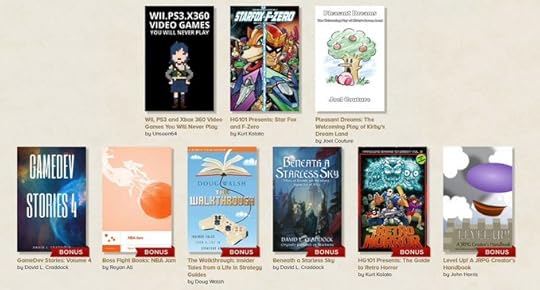 Click the image to check out the Story Bundle.
The post Fall Ball: Gaming Story Bundle appeared first on DOUG WALSH.
October 14, 2019
Flash Fiction: Replacement Cost
I had an incredible run of good news and harder work last month. On the heels of a wonderful trip to Japan, I learned that my short story “Tanuki’s Dream Salon” placed 3rd in my group for Round 1 of the NYC Midnight Flash Fiction Contest. That left me sitting pretty heading into the second round, with a total of 13 points.
The top 5 combined scores after two rounds will survive the first cutoff and advance. On the one hand, YAY! On the other, Round 2 overlapped with a busy weekend involving the PNWA Writer’s Conference, which I was speaking at.
Alas, I love a good competition — even if it means I only really had about 18 of the 48 hours to write my story — and sleep.
The rules for round 2 were just like last time: contestants received their story prompts on Friday night and had 48 hours to complete a 1000-word story. I was several beers into a good old-fashioned gossip session with some conference organizers at a DoubleTree when I finally got around to checking my email. Here’s what I saw.
Genre: Ghost Story
Location: Waiting Room
Object: Jar of Honey
I’m not feeling as confident as I was after round 1, not only because I only had Saturday to really work on it (it’s admittedly a bit rough), but also because I decided to veer away from a “scary” ghost story. I can only hope the judges don’t hold that against my entry. There are 30 people in each group. I figure if this story can snag me a top 8 finish, I should advance. Without further ado, here’s my entry presented as submitted.
Replacement Cost
Rhonda tugged the handle and cringed at the elegant fastness of the door’s closure. It wasn’t the gentle thud that annoyed her, but its echo. Echoes of her late husband’s bloviated lectures about the marks of Italian luxury. His favorite anecdote? The door. No clank, not a single rattle. “It’s like an airlock,” he’d say, snorting at his own cleverness before making a crack about her Acura. Always with the Acura. Rhonda’s car was good enough to get her to and from the job that paid for his toys, but that was a detail conveniently forgotten. Just like he’d forgotten to remain employed — or faithful.
The Maserati was off limits to her until the day the police called to say he was dead. She’d been chauffeuring him around ever since.
She swallowed a quick sip of air and checked her lipstick in the rearview mirror. Then, with manicured finesse, Rhonda fluffed her copper curls, smoothed her skirt, and started the car. The V8 roared with baritone gusto and sent a wisp of pulsation rippling through her seat — she’d certainly miss that once it was sold. Ironically, it was the faulty engine mount that caused the titillating vibration, or so the service tech said when she woke up beside him last week.
Rhonda pointed the car toward the Maserati dealership and channel-surfed the decade-themed stations, singing along to Britney then Janet, Madonna and The Bee Gees. The 60s station was always risky and, sure enough, that godforsaken Beach Boys song was mid-chorus. She toggled the next preset, gritting her teeth as a lifetime of annoyance ran its course — fellow boomers singing her name back at her, pleading for assistance, as if she hadn’t heard it a million times before. No sooner had she joined in with Elvis on another channel before AL Jardine and Brian Wilson interrupted, as if by magic.
“What the?” She turned again, this time to NPR, only for the radio to switch back to the Beach Boys with a jump in volume that launched her from her seat.
“Not funny, Marc,” she hissed. It wasn’t that she always believed in ghosts, but her husband sure loved this car. Enough to die in it while out banging some perky plaything. For which, he’s since promised to make amends. But he of all people knew how much that song tweaked her. “Asshole.”
She slapped the off button and drove the final miles to the dealership in silence. With any luck, she’d be rid of the car by midday.
Rhonda took a seat in the service center’s minimalist waiting room, positioning herself at the perfect angle to watch Tyler or Cody, or whatever Mr. Six-Pack’s name was as he worked on the car. He must have appreciated her seasoned talents, judging by how fast he had the hood popped. He strode across the polished floor not twenty minutes later with a clipboard and a naughty, knowing grin. His name tag read Dylan.
That’s right, Dylan. The little lamb that could, Rhonda thought, recalling their tryst. Her first lay in six months.
“Good morning, Mrs. Griffin.”
“Rhonda will do.”
He glanced toward the service desk then squatted before her.
“I’ve got the parts to repair the engine mounts, but the diagnostics suggest there might be an exhaust leak. I’ll put her on the lift and check.”
“On the lift?”
“It’s probably nothing.” He waved her concern away, then lowered his voice. “We don’t normally buy without a new purchase, but the general manager is willing to take it from you as-is — then lease it to me.”
“You?”
Dylan blushed. “The Granturismo is my dream car. We don’t get many in. You’re probably not gonna like the offer, but it’d really help me out.” He gave her knee a quick squeeze. “Give it some thought, then I’ll walk you over to sales.”
Rhonda didn’t need time to consider. The thought of Dylan wanting the car was positively delicious. Sweeter still if Marc’s spirit was around to see it.
Rhonda crossed and recrossed her legs while Dylan raised the Maserati on the lift. A sudden chill swept over her as she watched him inspect the underside of the car, so she decided to warm up with some tea from the swank hospitality table. While the Earl Grey steeped, she helped herself to a croissant and one of the neatly stacked jars of honey. She couldn’t help wondering why, given the car’s six-figure price tag, they don’t have a barista.
Back at her chair, she struggled against the honey jar’s lid, ultimately dropping it onto the coffee table, spilling a slick of honey. “Oh, for chrissake.” Rhonda shivered as she raced to fetch paper towels from the restroom, thankful the waiting room was devoid of customers to witness her clumsiness.
As she bent to clean up the mess, she saw a message had been written in the smear: “Help Me, Rhonda.”
Rhonda scowled then attacked the message with the towels before someone saw it. She thought she’d succeeded, only to stare as an invisible finger scratched an arrow in the sticky residue.
On cue, the supercar’s V8 sprang to life as her gaze followed the arrow toward the service center. Despite the glass wall between them, she could feel the engine scream and the car buck atop the lift as its rear wheels spun maniacally. The roar sent the teacup dancing within the saucer. Employees sprinted into the service bay from all corners, like moths to a flame — the flame of a pearlescent blue rocket ready to launch.
She knew she should run, but couldn’t bear to look away. Instead, Rhonda stood squeezing the honey-soaked towels as the car leapt from the lift, crushing Dylan as he tried to flee.
She gasped, taken aback by the violence of the crash, but quickly regained her composure.
“Shame about the boy,” she said with a sigh. “But I gotta hand it to you, Marc. You did it. The insurance check makes us even.”
The post Flash Fiction: Replacement Cost appeared first on DOUG WALSH.
October 7, 2019
Tailwinds Past Florence - $0.99 This Week Only

Grab the ebook for any platform, including Kindle, Nook, Kobo, iBooks, or Google Android.
Sale ends 10/13.