Doug Walsh's Blog, page 2
October 16, 2020
Facing Fears & Changing Minds on the Road
By far, one of my biggest highlights of 2020 was appearing on J.F. Penn’s podcast Books & Travel to discuss travel and my novel Tailwinds Past Florence.
 I’ve been a big fan of Joanna Penn’s indie publishing podcast, “The Creative Penn” for years and had only recently learned of her other podcast. And unlike other discussions I’ve done with travel writers, our chat focused more on the challenges, fears, and disappointments that cropped up. It’s not a negative discussion, by any stretch, but it’s honest. And the travel world needs more honesty.Listen In
The post Facing Fears & Changing Minds on the Road appeared first on Doug Walsh.


September 4, 2020
Tailwinds Past Florence - $0.99 This Week Only
Tailwinds Past Florence is a contemporary romance with a time travel twist, set against the backdrop of an around the world bicycle tour.
BookBub called it "An enchanting, whirlwind tale of romance and adventure."

Available everywhere books are sold. Signed copies and audiobooks also available. See author website for details.
August 30, 2020
The 2020 Decennial Gratuitously Specific Book Awards
Once every ten years (maybe), or whenever I’m really struggling for content (probably), I plan to comb through the books I read since the last installment and present awards in a host of categories that don’t exist in popular book competitions, but certainly should. This inaugural celebration includes a couple books that I read outside of the 2011-2020 decade, but hey, it’s my awards, my rules. And without further ado, and in no particular order …
 Best Book About the Creation of Another Book
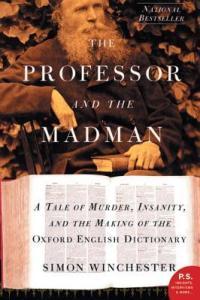
 The Professor and the Madman by Simon Winchester
Like the consultants in Office Space, I celebrate Winchester’s entire catalog. With rare exception, I’ve found every single book of his to be absolutely fascinating. But this? Hoo boy! You’re forgiven for thinking the story behind the creation of the Oxford English Dictionary might be dull, but the truth is pure, wait for it, madness. Also a movie.
 Best Book About Baseball Featuring the Exhumation of a Corpse
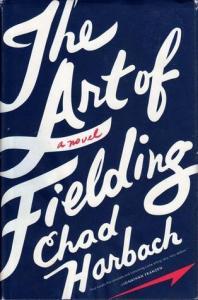
Art of Fielding by Chad Harbach
A beautifully written book about college, love, family and ambition. And baseball. I read this book multiple times in 2015, studying its structure, its prose. As someone who dealt with their own ups and downs in college sports, it really spoke to me. And, between you and me, I’ve always wanted to dig up a grave.
 Best Book by an Author Who Fed His Tumor to a Turtle
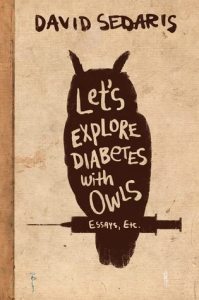
Let’s Explore Diabetes with Owls by David Sedaris
Yes, I know the essay in which he feeds his tumor to a turtle actually appears in Calypso, and no I haven’t read all of Sedaris’s very funny books, but Let’s Explore Diabetes with Owls is laugh out loud hilarious. If you ever get a chance to see Sedaris … read? perform? speak? … do it. It’s not a cheap night out, but you’ll enjoy yourself.
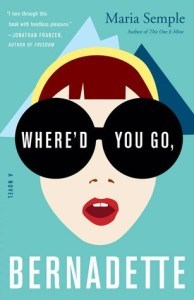 Funniest Book to Itemize Everything Newcomers Hate About Seattle
Where’d You Go, Bernadette by Maria Semple
Few books elicit more than a chuckle from me. But I found myself laughing with every turn of the page throughout chunks of this book. It’s about a woman from Los Angeles who, after years of silently hating her Seattle life – and every one of the very real peculiarities of life in the Pacific Northwest – disappears. In fact, she has quite the meltdown. And it’s glorious. Also a movie.
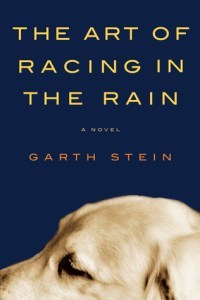 Best Book to Remind You that All Dog Stories End in Tears
The Art of Racing in the Rain by Garth Stein
Kristin and I were flying home from Seoul back in 2007 or so, before we all had our own screens to watch movies on. We were at Air Canada’s mercy for entertainment. They played Marley & Me. I haven’t flown Air Canada since. The memory of crying alongside several hundred strangers lives on. The Art of Racing in the Rain is kind of like that. With race cars. It’s terrific. Bring tissues. Also a movie.
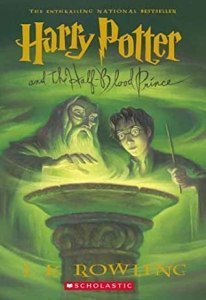 Marked Incomplete: Most Notable Series I Refuse to Finish
Harry Potter by J.K. Rowling
I tore through the first three Harry Potter books in a week’s time during our bicycle tour. Every afternoon, in Italy, upon arriving in camp, I’d plop myself down with my Kindle and a beer, and read for hours. But by the time I finished the fifth book, presumably titled Harry Potter and the Adjective Noun, I stopped. Rowling did a fantastic job of aging her cast of tweens into teens. And, by definition, teenagers suck. I’m told there are movies.
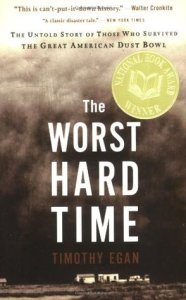 Best Book Featuring the Most Off-Putting Title
The Worst Hard Time by Timothy Egan
A staple of PBS documentaries involving the American West, Egan is, as far as I’m concerned, the Simon Winchester of America. He tends to focus on the natural world – forest fires, dust bowls, etc., — and is an exceptional researcher. The Worst Hard Time is about the Dust Bowl and Great Depression, but rather than take an approach like Steinbeck, Egan dives deep into the causes, effects, and lessons learned. Simply fascinating.
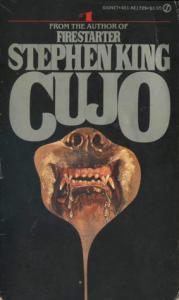 Scariest Book to Haunt Me Into Adulthood
Cujo by Stephen King
To this day, August 2020, at the ripe age of 44, I seldom fail to hurriedly shut the car door behind me and scan the immediate area with a sense of trepidation. I’m looking for him. Cujo. The rabid, killer St. Bernard that terrified me as a child. Though I read the book years after seeing the 1983 movie (at a way-too-young-age, mom!), I’m listing it here because Stephen King needs to be on this list somewhere. Have you ever wondered how strong the windows in your car are? If they can keep a 140-pound dog at bay? I have. Every. Single. Day.
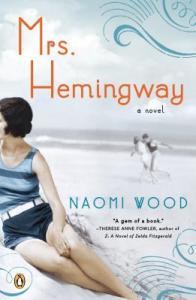 Best Book About the Ex-Wives of a Famous Dead White Guy
Mrs. Hemingway by Naomi Wood
By and large, I don’t really care about the personal lives of the artists, authors, and musicians I enjoy. But I can make exceptions. Especially if it’s as imaginative, well-written, and believable as this. Divided into four parts, Mrs. Hemingway brings to life the complicated tangle of love, sex, and alcohol-soaked desire that led Ernest Hemingway in and out of marriage with four women. Terrific book.
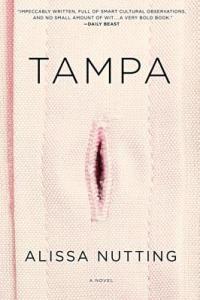 Excellence in Cover Design: NSFW Edition
Tampa by Alissa Nutting
We’ve all read the headlines about young female teachers getting involved with their adolescent students. And many of us have read Lolita or seen American Beauty. Let me assure you, neither goes where Tampa goes. And with conviction! Told through the point-of-view of a female 8th grade teacher, this is a scorching hot, disturbing, erotic, and very uncomfortable tale. It will titillate and repulse. But this award is for the cover design. Well done. It stopped my scroll dead in its tracks.
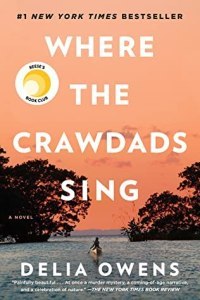 I Hate It Cause I Wish I Wrote It Award
Where the Crawdads Sing by Delia Owens
I recommended this book in a recent newsletter and yet here it is again. Back to rub my face in its wonderful prose and memorable characters. I’ve showered enough praise on this book already. It doesn’t need anymore. Soon to be a movie. Shocker.
The post The 2020 Decennial Gratuitously Specific Book Awards appeared first on DOUG WALSH.
August 21, 2020
Rediscovering Our Dreams in a Jeep Showroom
The salesman walked away for the third or eighth time to “talk with his manager.” He no doubt believed the longer he left us alone, staring out the showroom window at the rain-beaded Grand Cherokee Trailhawk, the deeper in love we’d fall. He stood there playing on his phone, chatting with colleagues, discussing the weather, baseball, his commission. Probably. He bided his time, waiting for us to eagerly accept the last price he quoted.
We’d been there for two hours. We test-drove it. We walked the lot to see a similar model in the color we desired. There was one in slate blue, with the Hemi engine and options packages we wanted over in Idaho. He could have it delivered in three days.
I’d won the battle on pricing. Despite a trade-in offer several thousand dollars lower than KBB estimated, we’d negotiated the out-the-door price down (with trade-in) over 35%. Taxes, registration, and delivery included.
But I was uneasy. And Kristin knew exactly why—and what to say to knock me off the fence I straddled.
Even dreams, the most delicate and intangible of things, can prove remarkably difficult to kill.” – Neil Gaiman
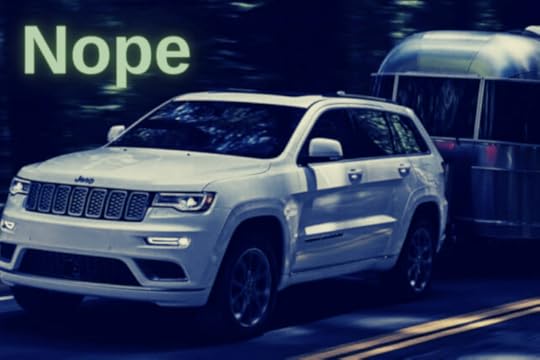
A Grand Cherokee and an Airstream. Perfect together, just not for us.
Window Shopping at the Campground
We returned yesterday from three nights spent camping in Olympic National Forest, here in Washington. It was our third camping trip this summer, each with our funky compact travel trailer. We hike, we read, and we eat way too much junk food, all beyond the reach of a cell signal. It’s marvelous. We’ve now spent 31 nights in our little Taxa Tigermoth since buying it in March 2018.
This was the first time we arrived home with no desire to upgrade.
We cap each night while camping with a stroll around the campground, as much to give the dog one final potty break before bed as for a chance to window shop. If you’ve never attended an RV show or spent much time in a campground, the vast array of styles and sizes of trailers and RVs may surprise you.
Our Tigermoth draws a steady stream of gawkers due to its gullwing door and rugged, minimalist aesthetic and we still marvel at its practicality. But it has its limits. Namely, there’s no good place to escape should the weather (or bugs) become too much of a nuisance. Even with a pop-up canopy and screens, camping with the Tigermoth is akin to tenting. We could lay down inside. Or not. Sitting upright in “couch mode” is an uncomfortable option of last resort for anyone six-feet tall. Namely, me.
While fine for three or four nights at a time, neither of us wish to do a weeks-long trip with the Tigermoth. Buying an RV, I suppose, is a lot like buying your first boat. It’ll get you out on the water (or into the woods), but you’re always wanting something a little bigger. Nicer.
We made a hobby of researching RVs these past few years. Through our campground walks, countless hours of YouTube videos, and by attending RV shows. Our plan, so we thought, was to eventually upgrade to a Sprinter-based Class B+ motor home in the 25-foot range. Slightly wider than a standard hashtag-vanlife option, but lacking the bulk of larger models.
But wait! What about getting to the trailhead? Would we really want to break down camp, stow the awning and slide-out every day to go hiking? Would a larger so-called Class B+ even reach the trailheads we frequent?
No. And no. Which brought us back around to the world of towable travel trailers.
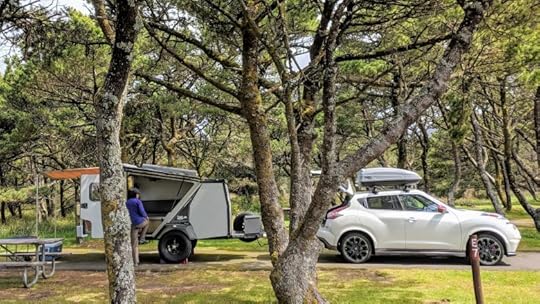
Our trusty Nismo Juke and Taxa Tigermoth along the Oregon coast.
Carts Before Horsepower
We ask a lot of our tow vehicle, a Nismo Juke. You can laugh, it’s okay. We keep the Tigermoth lightly packed for towing, tighten the reins while going over mountain passes, and are mindful of the 4-cylinder’s paucity of towing capacity. We also demand a lot of it when going hiking. Many of the trailheads we seek out are up long, washboard gravel roads, cratered with potholes, loose rocks, and occasional tree branches. The sport-tuned suspension and lower ride height isn’t ideal. But the all-wheel drive turbo is fun to drive, nimble, and allows for “spirited” driving on windy roads.
Still, those travel trailers are heavy. And it sure would be nice to never have to worry about towing capacity again. Kristin and I remain haunted by blowing a transmission shortly after our move across the country 18 years ago.
The majority of SUVs are rated for 3,500 pounds. Many others, boasting third-row seating, are rated for 5,000 pounds. The trailer we were eying for a future purchase weighs in at 4,300 pounds … empty. Throw in mountain passes and gear and, well, we’d need something that can handle 5,500 pounds at minimum.
Wanting neither a pickup truck nor a behemoth like a Chevy Suburban or Toyota Sequoia limited our choices considerably. In short, the list of available vehicles that aren’t too large but can tow 5500+ pounds consists of: Land Rover’s Range Rover, Discovery, and the new Defender 110 (drool), and the Jeep Grand Cherokee. That’s it.
Waking to the Dream
For two weeks, I obsessed over finding a solution to our as-of-now nonexistent tow vehicle dilemma. And I don’t use that word loosely. I built and priced countless vehicles on manufacturer websites, scanned Autotrader and other sites for deals across the country on both new and certified pre-owned options. I hardly got any writing done.
And finally, after accepting that the Defender would have to wait until I write a best seller (a feat packing slightly better odds than winning MegaMillions, but only marginally more under my control), we settled on the Grand Cherokee Trailhawk. It could tow 7,200 pounds (with the V8 Hemi), didn’t have third-row seating, and the off-road capabilities of the Trailhawk model would ensure never again having to worry over which of the paths less traveled we chose.
There was a problem, though. We didn’t love the car.
Every car I’ve owned, even my lunchbox-on-wheels Honda Element, was purchased because I absolutely refused to leave without it. The Grand Cherokee’s capabilities are terrific. It could do everything we’d ever need from a vehicle.
But … sigh.
I walked over to the window and stared, trying to make myself lust after something I found unarousing. It was nice. Fine, even. I could grow to like it, I suppose.
Kristin approached, cautiously, aware I was wrestling with something heavy. She finally asked, “Do we really want to buy something that’s perfect twelve days a year, but a disappointment all the rest?”
And just like that, a trance had been shattered.
No, I didn’t want that.
I love having a car that drives like an over-sized go-kart with a kickass sound system and racing seats that hug me in place. Sure, it’s small, and funny looking, and I need to worry about ride height when going off-road, but so far so good. Knock wood. For all the talents of the Grand Cherokee, short of taking it to Moab, it was never going to be fun to drive. Not like the car we already owned outright.
We’d be giving up too much for the twelve days we go camping each year. Too much driving enjoyment. And way too much money.
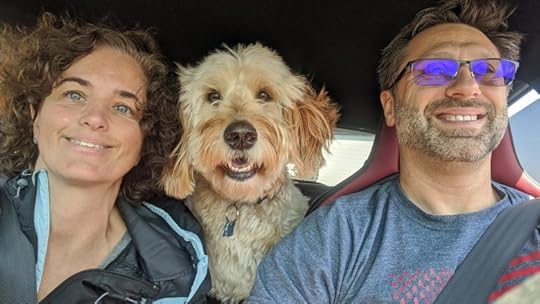
No new car, necessary!
The Promise of a Foreign Tomorrow
No sooner had Kristin posed the question than a stream of math flowed through my mind. I’ll spare you the details. Suffice to say, despite a price well below MSRP, we were looking at spending as much on the Jeep as we did a year’s worth of bicycle touring. The travel trailer we desire retails for nearly as much as we spent during two years of travel.
Twelve days a year.
Are those camping trips the happiest times we’ve ever had? No.
They’re great, but nothing compares to our time spent bicycle touring through Europe and Asia. Those nightly dinner conversations that so often resembled synchronous daydreaming didn’t involve huge car payments and RV loans and camping trips.
They were about living abroad, residing on tourist visas three months here, three months there, continuing until we found a place we couldn’t bear to leave. And now, with Covid having potentially quickened the shift to a distributed workforce, the possibility seems even closer.
It’s easy to get caught up with the rush to acquire. To get tricked into thinking owning cars and RVs like this are normal. At home, four times a day we walk our dog past a parade of houses flanking the seven-figure price point. Every one of them with a BMW, Volvo, or, yes, a Grand Cherokee in the drive. I say this not to suggest that we want for anything. Or are envious. Only that it’s easy to think such luxury purchases are normal when they’re all you see.
The Jeep wasn’t going to be cheap. We could afford it, but it took standing in that showroom to realize it wasn’t what we wanted.
Staying debt-free and growing our savings is. Especially if it means we’ll be able to jump on the live-abroad lifestyle as soon as Kristin no longer has to commute to Seattle for work.
Twelve days a year? No thanks. We’re dreaming of the full 365.
But should that best-seller ever happen, I’ll take the Lexus RC F in ultrasonic blue, thank you kindly.
The post Rediscovering Our Dreams in a Jeep Showroom appeared first on DOUG WALSH.
July 23, 2020
My First Murph
I was eight months into my CrossFit career and on vacation with friends in Florida during May 2019. Wanting to treat my body to a break from the 4x per week sessions I’d kept up throughout the spring, I limited my activity to running, paddle boarding, and some very light yoga on the beach (aka stretching for old folks). I was enjoying having gotten over the hump of my learning period, hitting PRs and ringing the bell on the regular. But my only goal that week was for max reps, twenty-ounce curls. Frozen daiquiri edition.
Still, I was curious what my friends back home in Washington were doing each day. And so, as I always do upon waking, I checked the Beyond the White Board app the morning of Memorial Day … and nearly fell out of bed.
They expect us to do WHAT?

Measuring Benchmarks
For me, the single-most appealing aspect of CrossFit is that it’s measurable. It’s quite literally a sport of competitive fitness. Much like the Ironman triathlon distance sprang from a desire to settle the debate of fitness between swimmers, cyclists, and runners, using the distances from three well-known events in Hawaii (the Waikiki Roughwater Swim, Around-Oahu Bike Race, and Honolulu Marathon), CrossFit sprang from a desire to determine the most fit athlete. Period. Unlike triathlon, it’s not only a test of endurance, but strength and gymnastics as well.
For the geeks among us, think of it as an actual way to see if Superman can beat up Captain America.
To accomplish this, CrossFit utilizes a number of benchmark workouts, allowing athletes around the world to measure themselves against one another, like for like. Many have been given female names: Fran, Barbara, Cindy, etc.
The toughest ones, however, are known as Hero WODs (workouts of the day). These are named for specific members of the military, police, and firefighters who lost their lives in the line of duty. And the most famous of them, done every Memorial Day, is Murph.
What is the Murph WOD?
Murph is named after Navy Lieutenant Michael Murphy, a SEAL killed in action alongside fifteen other soldiers in Afghanistan in June 2005. Their mission was portrayed in the film Lone Survivor, starring Mark Wahlberg, Taylor Kitsch, and Emile Hirsch, who played Michael Murphy.
Prior to his death, one of Murphy’s favorite workouts was dubbed “Body Armor.” This workout, which he completed wearing a 20-pound vest, became known as Murph and is done annually around the world in his honor. It consists of the following:
1-Mile Run
100 Pull-Ups
200 Push-Ups
300 Squats
1-Mile Run
Athletes are encouraged to wear a 20lb vest if possible, as a nod to the original name.
On Memorial Day 2019, I stared slack-jawed at my phone, wondering how that quantity of reps was even possible. I’d never done more than 50 pull-ups in a workout. Never more than a hundred cumulative push-ups, spread across a twenty-minute AMRAP. Three-hundred squats? My thighs pleaded with me to put the phone down. Better yet, for me to toss it out the window.
I showed the workout to a friend and was relieved to see him as speechless as I was. We estimated a finishing time of 50-minutes for someone far fitter than yours truly. Still, I was curious. I knew a nearby park had a pull-up bar. But before I could convince myself to give it a try, I realized it was Florida. The pull-up bar would be scorching hot before long, I had no chalk or gloves, and blah, blah, blah vacation excuses.
My Pandemic Murph*
Fast-forward a year, to the slog that is 2020. When the virus hit in March, I was in the best shape I’d been in a decade. Stronger, fitter, and able to bounce back day after day with less fatigue and soreness than in prior months. I did my best to maintain momentum throughout the shutdown, continuing to work out several days a week, albeit without barbells or access to a pull-up bar. But with limited space and equipment, the scaled down workouts became boring, less productive.
The week of Memorial Day I met up with a few other CrossFitters at a local park and did a modified version of Murph, substituting 100 bent-over dumbbell rows for the pull-ups. Hence, the asterisk. Being that I only had a single 50lb dumbbell meant I had to do a hundred reps with each arm separately.
It was late afternoon and we were on a synthetic turf field. Having never been on such a field before this year, I had no idea how much heat radiates off that material. I’ve got a new appreciation for how grueling it must be for NFL players, in full pads, to be playing on a hot day. I was roasting from the feet up.
Filled with nervous excitement, I knocked out the first mile faster than intended, using my GPS watch to ensure a true mile. I headed into the meat of the workout at 6:35, thirty seconds faster than intended. Oops.
Murph is the only workout (that I know of, at least) that allows you to partition the reps any way you like. That means, instead of doing 100 dumbbell bent over rows all at once, I chose to divvy up the rows, push-ups and squats across 20 sets of 5, 10, and 15, respectively.
Doing the bent over dumbbell rows one arm at a time slowed me down, but quickly proved to be a blessing in disguise. I was already fatigued by the time I was on my 7th round of 10x push-ups. The heat was wearing me out and my arms were fried. I doubted I’d even be able to finish. By the 11th round of 5-10-15, I could no longer complete the 10 push-ups unbroken. I began telling myself to aim for thirteen sets, that I didn’t have to do the whole thing. This was supposed to be fun. I knew I wouldn’t quit, but it felt good to tell myself I could.
By the 14th round, I was down to sets of 5, 3, and 2. It wasn’t fun. But I kept going, thanks in no small part to my mind shifting to the inspiration behind the WOD. Those soldiers didn’t have the option of quitting. So what if I fell on my face after every other push-up? I’d get to shower off when it was done. So, I continued.
The squats weren’t much better. My abs and thighs were tired from the push-ups and what began as the fastest part of the WOD, soon became nearly as difficult as the push-ups. I had to split them into two sets, then three sets, then, on the last two rounds, I was barely able to get through more than 3 at once. I never thought it’d end. And I certainly didn’t care to run another mile, but I eventually swiped my whiteboard for the 20th time, tapped the lap timer on my GPS watch, and went out for the final mile.
I finished the second mile in 8:50, for a total time of 47:32 … and I couldn’t walk for days.
I took the next two weeks off, entirely. I was sick of working out at home.
Independence Day Redux
My local affiliate, SnoRidge CrossFit, reopened to five-person classes in the middle of June and announced they’d be programming Murph on July 4th. For those like me, who’d never done the true version, this was excellent. Despite my May attempt being every bit as difficult as I expected, there was no denying that the 100 bent over dumbbell rows were far easier than 100 pull-ups would have been.
That said, having not touched a pull-up bar since early March, and with only two weeks of limited classes to prepare, it was highly unlikely I’d be able to complete the full hundred. Plans to go hiking with friends the following morning also reduced my interest in doing 300 squats.
Fortunately, one of the options was “Half Murph w/Full Run.” Better still, a friend at the gym suggested I sandwich my push-ups around the squats. So, for each of 10 rounds, I did 5 pull-ups, 5 push-ups, 15 squats, 5 push-ups.
This was a lifesaver. Or at least an arm-saver.
I ran the first mile in 6:44 and got to work. The weather was nicer and we were back inside, enjoying the shade with the bay door open beside me for fresh air. Music and the camaraderie of having multiple coaches and other athletes added to the moment. I managed to do all ten sets unbroken, including each set of 5 pull-ups (kipping). And splitting the push-ups into sets of five was a stroke of genius. I knocked the final mile out at an almost-comfortable 7:45, for a total time of 29:45.
I don’t have a 20lb vest, but hopefully in 2021 I’ll tackle it for real, the way Michael Murphy intended it. If you’re new to CrossFit, know this workout is coming on Memorial Day and prepare. There are a lot of ways to scale it, including quarter and half options with less running. But take your time, partition smartly – I’m considering 50 rounds of 2, 4, 6 if I have a vest for next time – and above all else, DON’T QUIT.
Oh, and if you were wondering how fast the fittest on earth can complete it, the top 20 men on the BTWB app have completed the full Murph in under 28 minutes, the top women in under 33 minutes.
The post My First Murph appeared first on DOUG WALSH.
June 13, 2020
Let’s Talk Travel and Writing
Just because we haven’t been able to travel like we hoped this spring, doesn’t mean I couldn’t spend some quality time discussing two of my favorite things: travel and writing. I’ve said it before, I know, but I’m always thrilled to discuss the Seattle to Singapore bicycle tour we undertook in 2014-15, and more so with each passing year. I never would have believed it years ago, but these interviews are a chance to relive something I honestly sometimes forget we even did.
TMWY Podcast
I had a really fun interview with Cheryl & Ryan at the Take Me With You podcast. We chatted for over an hour about travel philosophy, my top tips, and the inspiration for Tailwinds Past Florence. You can listen to their podcast right here or subscribe at Apple, Spotify, or Google.
Birds of a Feather Interview

Jay Artale of Birds of a Feather Press reached out to interview me earlier this year. She had great questions about my unique variety of travel writing. Namely, how I aim to meld my favorite qualities of travel writing with the wonder of a well-told novel. Jay included plenty of photos from our travels, along with specific questions about my experience as an indie author.
Check out the interview right here.
One More Interview to Come
I’ll be appearing as a guest on one of my favorite travel podcasts later this fall. The interview is scheduled for later this summer. But if you’re a fan of books and travel, then this might be your new favorite podcast.
The post Let’s Talk Travel and Writing appeared first on DOUG WALSH.
No, Seriously. Take Me With You
Cheryl and Ryan are two friends who love to travel and host one of the most easy-listening podcasts I’ve had the pleasure of appearing on.
 Their enthusiasm for travel is infectious, and within minutes of our chat, I felt like I was sitting back, trading stories with old friends I hadn’t seen in a while. This is a fun interview for anyone with a curiosity about bicycle touring, wants to know the ins-and-outs of our route, gear, logistics, and best and worst memories. We also discuss my new famous “travel basket” of ideas.Listen In
The post No, Seriously. Take Me With You appeared first on Doug Walsh.
June 9, 2020
My Interview with Birds of a Feather Press
Jay Artale runs the travel writing press, Birds of a Feather, where she helps guide travel writers and bloggers through the publishing process.
 This was a fun interview that covers travel, the types of books I write, my reasons for embracing independent publishing, and the challenges therein. As someone who shifted from travel memoir to travel-inspired fiction, I’m a bit unlike the other authors she interviews, as my books are fiction. But I never let that stop me from imbuing the magic of the road into the stories.Read the Interview
The post My Interview with Birds of a Feather Press appeared first on Doug Walsh.
May 20, 2020
Step Away From the Laptop – First Draft Breakthrough!
We call them vomit drafts. Gross, I know, but if you ever saw one, you’d understand. Writers like to say the first draft is really just their way of telling themselves the story. A first draft should be spontaneous, hurried, and unpolished. There should be placeholder names streaked with minimal details and chunks of typos and a splattering of grammatical errors.
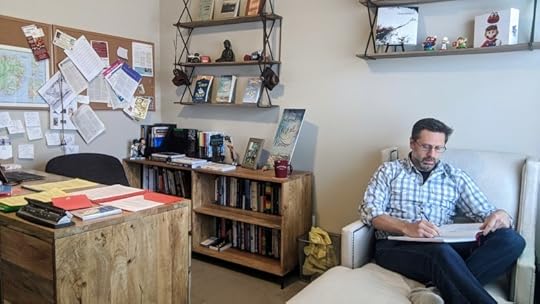
At home in my office, quarantined from my laptop.
It should be a mess nobody in their right mind wants to clean up.
But despite the obvious benefits of simply getting something down – and quick – I struggled. A single scene, just six to ten pages, would often take me five hours to draft. And that’s after spending months building an outline longer than most novellas.
For many, the first draft is the most magical part of the entire writing process. For me, it was a descent into the Pit of Despair.
I’d revise myself into melancholy and alt-tab my way to the pacifying distraction of social media. Did I say pacifying? In this decade? Forgive my foolishness, I was weak.
I blame part of my wheel spinning on the habits I amassed during my strategy guide career, when there was no time for revisions. First drafts would be copy-edited, sent into production, and printed by month’s end. You had to either get it right the first time or you didn’t work.
Last month I jokingly tweeted at the developers of Scrivener, the writing software I use. I requested a new feature called “First Draft Mode” that would disable your keyboard’s backspace, delete, and control keys, making it all but impossible to cut, copy, or revise yourself into a stall. I yearned to be forced into relentless forward progress.
“Oh, like with a pen and paper,” my wife said.
You see, I’d long ago cast aside the notion of ever writing by hand. For one, I could barely read my own penmanship. And writing for any prolonged duration aggravated my comes-and-goes carpal tunnel.
But I was desperate. And I had that lovely pen I bought in Japan last fall, which I’ve used nearly every day since. So I bought myself an oversized, hardback notepad, transcribed my scene notes onto a sticky, and sat down to write. Seventy minutes later, I had a finished scene. 1500 words. The next morning, I did it again. And ninety minutes later I had a draft of a 2200-word scene I know would have taken me nearly two days to draft.
I can only imagine this is what being freed from prison feels like.
The post Step Away From the Laptop – First Draft Breakthrough! appeared first on DOUG WALSH.
May 13, 2020
The Problem in Our Pocket
I was reading a book last week that featured an event so outrageous, so unbelievable, that I nearly threw it across the room in indignation. I probably would have, too, if I hadn’t been reading on my Kindle. Those things aren’t cheap, you know.
Now, I say this fully aware that I wrote a novel about soul mates traveling through time to correct their mistakes from failed relationships of the past. And the book in question, which I’ll not mention to protect the guilty (my Goodreads followers will have no trouble figuring it out), does feature a heavy time travel component.
But that is not the source of my consternation. I will saddle up and ride out with any story, regardless of its unrealistic concepts. Time travel, sewer-dwelling clowns, telekinesis, fire-breathing dragons, and jumps to hyperspace are all fair game in my opinion.
Invent away! Set the ground rules, maintain consistency, and I’ll happily suspend my disbelief.
But what I cannot abide – and should never be asked to as a reader or movie viewer — is unrealistic handling of a character’s smartphone.

She looks how I feel when a book or film handles a phone unrealistically.
Straight to Voicemail
In the book in question, the main character, who inherited a struggling antique business, just returned from a trip into the past and is now in possession of several priceless artifacts in pristine condition. She fired off some emails to Christie’s auction house, complete with photos, and immediately hooked their interest.
One of their curators is going to drive over to “uplift” the items from her, so they can bring them in for closer examination. The items are expected to fetch well into the six- or even seven-figure range at auction. This is a life changing moment for our single, debt-laden protagonist. Not only because it means financial independence, but because we know something she doesn’t: that there’s an effort underway to steal the items from her before she can sell them.
So she goes out to lunch, leaving her phone in the store.
Not because she couldn’t find it after a protracted search. But because she didn’t even think to look for it. And not just a quick bite across the street. No, she and a friend rent a car and go driving off into the countryside to another town.
Without her phone. Knowing a life changing call was due any minute.
Nonsense.
Water, Food, Shelter, and Cell Service
The character could easily have remembered to grab her phone, gotten the car, realized the phone was low battery, and then cursed the car’s lack of a USB port. They could have driven into a tunnel when the call came. She could have muted it during lunch (which, by the way, is correct behavior) only to discover Google flagged the call as “Scam Likely”.
There are a number of ways to not only address the issue of the phone, but to use it to increase tension. Those are three ideas that I thought of in the time it took to type them.
The author instead chose the completely unrealistic option of having the character completely forget the phone’s existence. And, to be fair, that can happen when writing a book.
So I blame the beta readers. They let her down.
(See, folks, we really do rely on you to make us look good.