Doug Walsh's Blog, page 13
March 11, 2016
Friday Links #10
I wrote about overcoming fear earlier this week. Both as a twenty-year old venturing overnight into the woods alone — one who grew up in the sprawling strip-mall hell of central New Jersey mind you — and as a writer focused on his debut novel after a career of semi-technical writing. My post on Tuesday talked about the need to confront those fears and persevere, which is important, but I had forgotten another element of the battle: our training.
One of the reasons I enjoy mountain biking is that, unlike running or bicycle touring, you really have to pay attention to what you’re doing. There’s not a lot of room for daydreaming when its only a matter of inches between you and a tree . . . or worse. I was riding with some friends the other day, at a nearby trail system that I hadn’t ridden since 2013. The trails there are steeper and more technical than the ones I’ve been riding since returning home and I was nervous. Football players returning from injury often talk about the need to just take that first big knock-down tackle to fully feel comfortable back on the field. They need to get hit — hard! — to prove to themselves that they still have what it takes. That’s how I was feeling. I even mentioned, half-seriously, hoping I’d crash so I could just dust myself off and not have to fear that inevitable slam anymore. I needed to rid myself of the doubt that had crept up.
I’d been away from mountain biking for nearly two years — I wasn’t injured, just away — and I’d been riding scared since returning. The group wanted to ride a trail I hadn’t ever ridden before, one I thought was a bit over my head even when my skills and confidence were at their peak. I nervously agreed. I didn’t have to. I could have descended an easier trail, but I wanted to face that fear head-on. Fingers crossed.
Small drops, precarious switchbacks, and blind turns and roll-overs into tangled balls of tree roots made for an exciting ride. I didn’t crash. I didn’t clean the trail without briefly walking two of the more techy bits, but I rode nearly all of it. And I had a lot less fear when I got to the bottom. I realized, thinking back to the blog post, that it’s fine to say to just confront your fears and cast your worries aside, but there’s more to it than that. One needs more than blind faith. We have to have a collection of tools to rely on. As a mountain biker, every trail I rode the past twenty years has helped to build the skills and muscle memory that, even when dormant, could be called upon in a pinch to keep the rubber side down.
I didn’t confront my fears of bears and human assailants that night in the woods alone. I had experience with me. I had all those of the nights backpacking with others and the memories of being in the forest as a child, tagging along on hunting trips with my dad as a young boy. The memories and the experience I had gave me the strength to defeat those fears.
And it’s the same now as I see my manuscript pile up, the story grow in complexity, and worry about plot threads and character arcs and the myriad revisions I’ll need to do. No, I’ve never done this particular task before, but I’ve been writing my whole life. I’ve survived projects I thought would break me; I met deadlines I thought impossible; and I know I could do this. I have the tools. I just need to rely on them. It’s all we have to do. Chances are, you have the tools and experience too. Trust your instincts. Everything we’ve ever written before hand, even if unrelated, is a deposit in the bank. Go ahead and make that withdrawal. Call on your experience. It’s there. Believe it.
Bookish Links
49 Headline Formulas to Skyrocket Your Conversions – A huge part of life as an indie author is marketing, whether we like it or not. This link shares 49 despicable, click-bait, formulaic suggestions that have, unfortunately, been proven to be highly effective in today’s online world. Contained in the link are the headline writing recipes you see employed by such sites as Buzzfeed and Upworthy. I don’t like them, but I can’t argue their effectiveness, though I wish I could.
Why Exclusivity is Bad (Unless You’re Amazon) – Nick Stephenson makes a great case for ditching being exclusive with Amazon’s KDP Select program (which I am a part of) and getting your e-books out there on B&N and Kobo and iTunes. He has a large series of books and a mailing list in the tens of thousands, which certainly helps. If I had multiple, longer books (“One Lousy Pirate” is only 62 pages) I would do the same. But for now, I’m sticking with KDP, especially as the number of people borrowing my book through Amazon Prime grows. This month I’m on pace to earn as much through pages read as I will through sales. And you only get a piece of that pie through KDP.
A Plagiarism Scandal is Unfolding in the Crossword World – A really interesting piece of investigative reporting from FiveThirtyEight, one of my favorite websites. Best of all, this article has been updated this week with a reply from the publishers involved and the actions taken in response to this story.
A Three-Book Deal in Sheep’s Clothing –This is a few month’s old, but still really interesting (and a source of hope). It’s about John and Jennifer Churchman’s journey from being a self-published writer/photographer team of children’s books begging local book stores to stock their book to where they are now: in possession of a three-book deal with a major publisher. If you like sheep or children’s books, don’t miss this.
The Groucho Marx Syndrome – Speaking of fear… this is an interesting, eye-opening story about the fear of acceptance. Shawn Coyne tells a story told to him by an agent friend of his. She was ready to represent a new author who had written a fantastic debut novel, only he was unwilling to work with her. He lost his confidence. The whispers of doubt got the better of him.
Bonus Link!
Cold Case: The Country’s First Urban Bike Park Seeks a Second Coming – The Colonnade Bike Park in Seattle, built a decade ago underneath Interstate 5, was extremely popular . . . until it wasn’t. This story about Colonnade in Bike Magazine tells the cautionary tale about a revolutionary place. I’d been to Colonnade three times: once for a work party, once at the grand opening, and once to ride it.
Post Image by Andy C, used under Creative Commons
The post Friday Links #10 appeared first on Doug Walsh.


March 8, 2016
A Lesson in Fear from the Appalachian Trail
I was sitting on a fallen tree in the central Cascades, several miles down a trail that sees very little use this time of year. It would be raining within the hour. I rummaged through my day-pack for the bag of dried fruit and nuts I had stashed along with my rain jacket, gloves, hat, and miscellaneous essentials. We were six miles into a ten-mile hike and I was ravenous. As I chewed my way through a strip of mango, sitting there beside my wife in silent awe of the myriad shades of mossy, coniferous green, I couldn’t help but notice how absolutely comfortable I was in these woods. I studied and appreciated the beauty of my surroundings without worry about what might be lurking behind the ferns. Stray noises, the sounds of the forest in which we humans are normally not present to hear, went ignored.
It wasn’t always that way.
We began backpacking together while in college. In hindsight, those early trips were disastrous. We humped budget-quality, ill-fitting external-frame packs along overgrown trails and slept in a leaking tent we purchased from Sears. We tossed and turned throughout the night, only partially due to our amateur site selection. Mostly because we were scared. The woods were alive. The snap of every twig and the rustle of every bush signaled the beginning of our demise. It had to be. There could be no other explanation. A hungry bear was making its way straight towards us.
Did we cook too close to the tent?
Did we hang the food upwind instead of down?
Could it smell our fear? Our deodorant? Our socks?
“Hey bear!” I’d yell through my nylon barricade. “Go away bear!” The bear never answered. Why would it? It was trying to eat us, after all.
Alone On the A.T.
The Appalachian Trail stretches roughly 2,200 miles from Georgia to Maine. By the time we were seniors, we had sectioned several hundred miles of the trail up and down the east coast. We cherry-picked the most scenic eighty-mile segments from Vermont to Virginia and tackled them in quick four- and five-night trips. We hiked in the remnants of a hurricane. We went hungry when it was too cold to light the stove. We were bitten by countless mosquitoes and ticks. As far as trip-planning was concerned, I was a masochist. We averaged over 20 miles a day and, not that we had an altimeter back then, but I’m confident we accumulated over 5,000 feet of elevation per day. Up and down, over and over, each and every day.
Little by little we improved our skills, acquired newer, lighter gear, and gained confidence. We even began to sleep through the night without fear of being eaten.
One day, in the autumn of 1996, I decided to head up onto the A.T. for the night. The trail came within thirteen miles of our college campus in eastern Pennsylvania, crossing a highway with a small trailhead I was familiar with. One of the three-sided shelters for which the trail is famous for was just seven miles down the trail. I finally had a car on campus and had no classes the next morning. My girlfriend at the time (now wife) couldn’t come, as she had an exam to study for, which was all the better. I wanted to do this by myself. My own private Into the Wild moment in miniature.
After cross-country practice, I ran back to my room and grabbed my backpack, sleeping bag, and cookware. I tossed in some packets of instant oatmeal and coffee, my five-pound geochemistry textbook, and a flashlight to study by. I may have remembered a clean pair of underwear. Probably not.
This was precisely the type of thing I had always envisioned myself being capable of: a spontaneous overnight trip into the woods—just because. But make no mistake about it, it was also a test. We went backpacking every chance we had, but there was always strength in numbers, even if just with my relatively petite girlfriend by my side. Would I have the same level of confidence alone?
I waited until there weren’t any cars coming then I grabbed my pack and dashed up the rocky trail as it ascended the ridge. The trail climbed steeply from the roadcut, gaining several hundred feet in a half mile. I reached the top and listened. No cars slowed or stopped. I heard no voices coming up the trail. Alone at last.
I hiked swiftly in the fading light, happy to be back on the trail. Within a few miles, I passed a clearcut utility corridor where Kristin and I had once foolishly camped in the open — in winter — and suffered sub-freezing wind chill. That I nervously double- and triple-checked to make sure nobody was following seemed perfectly reasonable. Two women had been murdered hiking the A.T. that same summer. My fear of being spotted, alone, out by the road should have been a warning to me about my suitability for this task, but it wasn’t.
The shelter was empty, just as I had anticipated. It was a weekday in early October in a relatively rural part of Pennsylvania, on a section of the A.T. known more for its annoyingly rocky terrain than its scenery. It was already dark when I arrived so I wasted no time in laying out my sleeping pad and bag, slipping on my thermal underwear and making myself comfortable for the night. I wrote in my journal then climbed into my sleeping bag. My intent was to fall asleep atop my textbook, only sleep never came. Free of tasks and the distracting focus of hiking in the dark across uneven terrain, my mind was able to run wild. Not for the better, entirely for the worse.
My fear of bears and humans kept me awake for most of the night. I jumped at every sound the forest made. I convinced myself I had been followed or that others were no doubt approaching from the other direction. The imagination that dreamed up the story I’m now working on writing was my most fearsome adversary that night. In a dirty wooden shelter, somewhere in the Blue Ridge Mountains, I squeezed my eyes shut and wished sleep would envelop me. It didn’t. So I continued to lay there terrified and wishing I was back in my bed on campus, my soon-to-be fiance by my side.
At one point I climbed out of my sleeping bag and began stuffing my pack. I was going to hike out. My mission was a failure, I had decided. I wasn’t cut out for solo trips. At least not yet, anyway. I was this close to hiking out in the dark, until I decided not to.
I’ve Been Down this Trail Before
I woke up at sunrise the next morning, both proud and ashamed. I was glad I didn’t give in to my fear and proud of myself for staying the night. But I was equally embarrassed that I let my fears get the better of me, and for no good reason. That was the last time I was ever scared in the wild. I spent the morning in that shelter, drinking coffee, studying, and enjoying the sounds of the woods. The forest, whether on foot or on my mountain bike is a a place of comfort for me. It’s my spa. I’m not foolish and I don’t take unnecessary risks, especially when I’m alone, but I’m never afraid. Even when I know there are bears nearby; not even when I saw a mountain lion cross the trail in front of me, just fifty yards past my handlebars. My fear has been replaced with wonder and respect.
I’m roughly 35,000 words into the first draft of my novel — a first draft that, at this rate, will exceed 150,000 words and require heavy pruning. There have been times these past two months in which it has been near-impossible to see any point in the future in which this task will ever become easy. I sit and work and wonder when writing the novel will be performed with the ease at which I wrote the blog posts for Two Far Gone or the strategy guides I wrote for BradyGames. I wait and wish to be immersed with the innate ability to tell this tale. Will the muse ever arrive? Sometimes those wishes are granted and I hammer out paragraph after paragraph, only to be plucked from my reverie just forty-five minutes later. I jerk back to consciousness with the frightening realization that I have so far to go. And so much to learn. If I am immersed in anything, it’s doubt.
Author blogs, how-to books, and social media are filled with similar admissions of a paralyzing fear that grips novelists of all stripes. I’m in good company, but it’s not company I wish to keep. At least not for long.
As with those early worrisome nights we spent in our tent all those years ago, the fear of being destroyed by this project should (will?) ease with each passing chapter. Just as we upgraded our gear little by little with each successive year, so too will my writer’s toolkit improve with every subsequent draft.
I hiked into the woods one night twenty years ago wanting to test myself. I came out, 18 hours later, a different, more confident person. I tore the band-aid of fear straight off. At my lowest point, on the verge of tears, I slammed my backpack down and yelled into the night. I was not going to retreat! It wasn’t pretty, but it worked. And that’s what I need to do now. I need to just keep writing. Keep plowing ahead, facing my doubts and concerns and just get through that first draft. Survive that first draft and embrace the editor’s pen in the morning.
After all, it’s not like it can kill me.
Post Image by Terry Garrison, used under Creative Commons.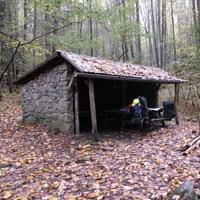
The post A Lesson in Fear from the Appalachian Trail appeared first on Doug Walsh.
March 4, 2016
Friday Links #9
I was in the library the other day, returning some research materials, and decided to browse the DVD selection to see what they had. Ours is a small-town branch of the King County Library System, so while we have the breadth of Washington State’s most populated county’s library at our fingertips, the on-site selections at our given branch are limited. But it’s within walking distance and has a great coffee shop across the street. No, not the Starbuck’s, the one on the other corner. So it has that going for it. I spotted a movie called Author’s Anonymous starring Kaley Cuoco (of Big Bang Theory fame) and, as my wife pointed out when she saw the DVD case, “that guy who did the singing in the American Pie movies.” His name is Chris Klein. The movie had straight-to-DVD written all over it, but still, a movie about a dysfunctional writer’s group that falls apart due to the jealousy of one member’s success sounded like it was worth borrowing for the night.
It was. Kind of, sort of, but not really. Look, this is an objectively bad movie. The first twenty minutes are so cringe-worthy, I almost turned it off. Had I have opened up the IMDB app on my phone and seen that it scored a 7% on Rotten Tomatoes (yes, out of 100), I wouldn’t have bothered checking it out. Roger Ebert gave it 1 star.
Nevertheless, we hung in there, got a few laughs out of it, and ultimately found it a relatively harmless, if not terribly stimulating, way to pass the time. The movie skewers writer’s groups with cliched, shallow characters and it pokes fun at those who misunderstand the self-publishing world. It can be a little hard to watch sometimes as the stereotypes are so on-the-nose and over-the-top that some roles, particularly the one played by Dennis Farina, are more caricature than character. Yet, for all of its problems, I did like enjoy how Chris Klein’s character’s plot line ended. Ultimately, it just seemed odd that a movie about a writer’s group would be so poorly written. Unless that, too, was part of the joke. Here’s the trailer.
Bookish Links
World Book Day: 43 Books To Read Before You Die – In honor of yesterday’s World Book Day (whatever the hell that is) here’s a list of 43 must-read books for a bibliophile’s bucket list. I’ve only read 8 of these, but have read other works by several authors on the list. As far as “must-read” book lists goes, this is one of the best I’ve seen. Any list that manages to include Stephen King, Ernest Hemingway, Jack Kerouac, and Jane Austen without irony has my respect.
Getting Ready for an Edit: How to Help Your Editor and Save Money – There are a couple of things you can do for your career as a writer, but the most important thing I learned in writing strategy guides for thirteen years is this: Make your editor’s life as easy as possible. An editor who finds it easy to work with you will want to work with you again. If you’re hiring a copyeditor independently, the situation is different, but the principal is the same. It’s about the money. The less work you create for the editor, the more money in your pocket. Maybe it will be because you took up less of their time (and were therefore billed less) or because they bumped your work to the top of their pile and helped you get your book on the shelf faster. Either way, this article by Corina Koch Macleod and Carla Douglas has some really useful tips.
Using Third-Person Multiple POV – This is a helpful article about how to effectively write from multiple points-of-view in a third-person story. My current work-in-progress utilizes third-person multiple and I have to admit that it can be tricky at times to ensure I’m not head-hopping or slipping into omniscient. If you want to write from multiple characters points-of-view, then check this article out.
My Year Reading a Book from Every Country in the World –This is a wonderful TED Talk by Ann Morgan about the year she tried reading a book from every country on Earth, roughly a book every 3 days. Simply reading that quickly sounds like quite a challenge, but that paled in comparison to the difficulty of getting a book in English from every country. If you’ve never read a foreign book, I highly recommend doing so as it really give you some insights you might not have had.
Your Query Letter: Writing a Terrific First Line – Got your manuscript finished and ready to start seeking representation? If so, this link has some tips for your query letter, namely how to perfect that opening sentence in your letter. With agents and editors receiving hundreds of queries every week, it’s imperative you get it right from the start.
Bonus Link!
Bicycling Tourists are Older, Wealthier, and in Demand – You’re going on a roadtrip of 350 miles, how many times do you think you’ll stop? Once for gas and maybe a second time for lunch? Do that same trip by bicycle and you’re likely going to take up to a week, depending on terrain. You’re going to sprinkle dollars in towns and stores every 20-30 miles along the way. Hotels, campgrounds, restaurants, and convenience stores, are all going to benefit from you passing by. Small towns across the country are catching on to what a lot of Europeans already know: bicycle tourists are great for business! This article by the Pew Charitable Trusts details how states across the USA are expanding bicycle infrastructure to attract more of these older, wealthier, fitness-minded travelers. Exciting times to travel by bicycle!
Post Image by Bud Ellison, used under Creative Commons
The post Friday Links #9 appeared first on Doug Walsh.
March 1, 2016
Tales From a Foreign Barber Shop
I wandered along the streets of Ottawa on a glorious, long-awaited spring afternoon in search of a barber. We were 3,455 miles into our bicycle tour and I had yet to get a haircut. My newly-acquired beard was scraggly, my bangs eclipsed my eyebrows, and the semi-absorptive pads in my helmet could no longer soak up the sweat I was ringing daily from the mop atop my head. Yes, it was an element of my grooming that was long overdue. Little did I know when I took a seat in a small Dominican-owned barbershop, strategically situated in the heart of the Canadian capital’s university district, that the mundane act of getting a haircut every four to six weeks would eventually become an element of our trip I remembered most.
Ladies First, Espresso Second
The shop was lined with mirrors on both of the walls running perpendicular to the sidewalk outside, mirrors he spent as much time looking at as he did the hair he was cutting. For nearly forty minutes, he methodically clipped and trimmed my hair while regaling me with stories of the myriad co-eds he bedded. Not a woman walked by the shop in which this horndog of a barber didn’t employ both sets of mirrors to follow. He’d see her coming in the reflection facing me then turn and watch her from the mirror behind me. It was as creepy as it was clever. Spring was finally in the air and the shapely legs of Canada’s college cuties were on full display beneath dusted-off sun dresses and skirts. He spoke of an unbelievably imbalanced ratio of female to male students at the university, how the neighboring apartment towers were filled with under-sexed female students craving his attention, and how he had more than once moved in on a lady, left alone at the bar, as her date went outside to smoke a cigarette. The stories continued nonstop as my womanizing barber shaped and trimmed my beard down to a Hollywood-approved 0.5 mm stubble. He was a total character, this skirt-chasing barber, and though only making a cameo appearance, he left a mark on the overall story of my journey.
He charged me $20 CAD and refused to accept a tip. The entertainment was free. Too bad I was married, he said, else he would have introduced me to some girls he knew.
Many months and miles later, we found ourselves in Naples, Italy, on January 2nd, 2015, as the city was slowly coming back to life after the 9-hour party it threw on New Year’s Eve. Walking the narrow stone-paved alleys of the neighborhood in which we were staying, I spotted a barbershop and went inside, my wife trailing behind me. I was seated right away and the young man who I thought was the barber picked up the phone. I soon found out he was calling his father, not because his father spoke better English than he did — the youngsters always know better English than their parents — but because he was only an apprentice. His father lived upstairs and would be down in a minute, he explained through broken English and charades. The son then asked us if we wanted an espresso. Of course, thank you. He opened the door and yelled down the alley, “Due caffè espresso si prega!”
Five minutes later, as the father was cutting my hair with the son leaning over me studying his father’s motions from point-blank range, a silver tray holding two pairs of espresso and water were carried into the shop. I drank the espresso straight, just as I like it, and then, a minute later, reached for the water. I drank half the glass of water and was promptly scolded by father and son. Through a mix of English, Italian and pointing fingers, I was reprimanded for not drinking the water first. To drink the water after the espresso was to strip away the lasting taste of the espresso. Why drink the espresso at all if I wasn’t going to let its taste linger in my mouth? My faux pas had soured the mood of the shop and neither father nor son spoke to me for the remainder of the cut.
Fire and Wax at the Barber Shop
I had gotten my hair cut twice last fall while we were in Turkey and both times the barber dipped a stick into alcohol, lit it on fire, and then proceeded to flick this fiery torch against my ear while quickly swatting any singed hair away with his free hand. Over and over he flicked and swatted, fast enough not to burn my ear or light my head aflame, but with enough vigor and force to be quite bothersome — and mildly horrifying. The second instance, in the city of Konya, the barber preceded this torch-slapping by mixing up a concoction I couldn’t quite see in a small paper cup. After burning away any and all peach fuzz from my ears, he then dipped a Popsicle stick into the cup and proceeded, without warning or permission, to wax my nose. My eyes bulged at the realization of what he was doing and I caught my wife’s eyes in the mirror. She could barely keep from laughing as I gripped the armrests and slowly, painfully, felt the wax strip away every last barely-there hair from the bridge of my nose.
In Morocco, I waited in a tiny two-seat hole-in-the-wall shop, deep within the gauntlet of alleys that comprise the medina in Tangier. Two teenage boys were each receiving a stylish cut mimicking the great soccer player Ronaldo. Or was it Messi? I have no idea. I saw no signs indicating how much a haircut would cost and nobody in the shop, neither employee or patron, spoke any English, which was unusual for Morocco as Moroccans pride themselves on knowing a multitude of languages. So I ignored the 13” tube television perched precariously atop a closet and waited to see how much the boys paid. They both left without paying, unless air kisses was the only currency accepted.
I was soon seated and with a series of gestures and holding 3 fingers out, was able to indicate what size clipper the barber should use and how I liked my hair cut. A half dozen teenage Moroccans milled about the shop talking in Arabic as I got my haircut, all the while I wondered how much I was going to be charged. One of the two Ronaldo lookalikes returned and gave the barber 20 dirham, about $2 USD in today’s money. Whether or not he was paying for both of them, I didn’t know. He then hugged and air-kissed the barber again. It wasn’t very helpful, but at least gave me a floor to how much this would cost. I knew I wasn’t only going to be charged give what a teenage friend had paid, but I was guarding against being taken advantage of too. It was Morocco after all. The barber flicked away the cape, sending a cascade of hair and whiskers — too many of them gray — onto the floor. He motioned for me to stand. I asked him in caveman French how much the cut was and he replied with a shrug and a nonchalant motion of his upturned hand that suggest the payment was entirely up to me.
I gave him 50 dirham, received my two air kisses and a hug, and left. Writing this I recall several of my other transactions in Tangier and feel obligated to point out how fairly we were treated in Tangier, a city that is not too far removed from having a very bad reputation for touts and hustlers. I’m so glad we bookended our month in Morocco with time in this seaside city.
Henry Ford Would Have Approved
One of the best haircuts I had received came in a small town in Japan. It was also one of the most peculiar experiences I had. This shop, filled with a dozen people getting their hair cut and styled simultaneously, moved patrons around the room as if on a conveyor belt. My first stop was in a prepping chair. There, after waiting with a hot towel draped across my face for several minutes, the clipping and beard-trimming was performed. This first barber quickly moved to another chair and a scissor-man arrived, cutting the hair atop my head proficiently and with precision. A few minutes later I was pointed in the direction of a different chair. I moved to the far end of the shop as part of a careful choreography with the other black-caped customers; the J-Pop never stopped, but I took my seat in this unusual game of musical chairs. There I was instructed to lean forward over a sink as someone shampood and conditioned my hair. He washed my beard too — my entire face, to be exact — all while I was leaning forward over the sink. From there I was instructed to move to yet another station where a final worker dried and styled my hair. All total, four different people contributed to my haircut as I moved between three different stations. It was amazingly efficient and incredibly awkward.
Lastly, I experienced a mall-based Korean chain called “K-Cuts” in Singapore. The chain’s promise is all haircuts cost $10 (in Singaporean dollars) and take 10 minutes. The brightly-lit sterile shop had one employee who, upon my arrival, pointed me in the direction of the automated payment machine. I pressed the button for what I wanted — 1 haircut — and slipped my $10 SGD note into the machine (about $7 USD). It spit out a ticket which I then handed to the person waiting to cut my hair. There were no sinks, beard-trims were not possible, and choice of style was minimal at best. The man spoke English, as most Singaporeans do, and, true to the advertisement’s word, I was out the door in under ten minutes with one of the worst haircuts in 20 months of travel.
A Delightful Aftertaste
Like a pinch of saffron or a few well-timed drops of truffle oil, my overseas barbershop encounters not only elevated the flavor of our entire trip, but added an authentic richness I hadn’t expected. I’ll always remember peering out across Paris from atop the Eiffel Tower and descending a snow-covered Continental Divide in Montana, but it was those peculiar, confusing, and sometimes bizarre moments in the barbershops of the world that bridged those major highlights, filling in the spaces in between with colorful characters and experiences. The barbershop turned this tourist into a local, if only for thirty minutes.
This is something I now work to incorporate into my writing. When I look at my outline and scan the sixty-odd scenes I have outlined, my inner eye leaps to the dozen or so major moments. I envision the inciting incident, the key event, the pinch points, the climax, and ultimately the resolution. Those are the pillars which the entire story rests upon. But what about the other fifty or so scenes? How do we not only ensure those other scenes lead in and out of the unavoidable complications and major moments in a story, but become memorable in their own right?
This trip down memory lane holds the answer.
By putting our characters into unexpected, surprisingly authentic moments. That’s how. Actions of necessity — like grooming in this case — can generate subtle traces of spice that flavor the whole stew that is a novel. Whether by adding a memorable character or by sprinkling in some authentic details that speak to a locale (and making sure to describe the sights, scents, and sounds of these places which I intentionally refrained from doing in the stories above), anecdotes such as these can help bring a location to life. I’m not saying these types of moments can prove as memorable over time as a thriller’s action sequence or a love story’s first kiss, but they can certainly keep readers entertained as the story advances through the progressive complications to the next major plot point.
I don’t yet know if any of the characters in my novel will need to get their haircuts “on-stage” as it were, but I do have several scenes in mind that pull from my own bicycle touring experiences. And, when the time comes for you to read them, I hope you see them for the sprinkles of authenticity I aim them to be.
Post Image by Sam Sherratt, used under Creative Commons.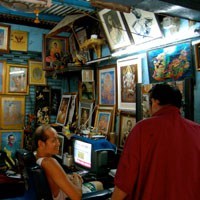
The post Tales From a Foreign Barber Shop appeared first on Doug Walsh.
February 26, 2016
5 Links Fridays
After slightly more than two months of waiting, the last piece of furniture we ordered back in December was delivered yesterday. We’re moved in! Finally and completely (though the walls are still a little bare in spots). And to celebrate, we had friends over for dinner last night, proud that the invitation no longer had to be B.Y.O.C. (Bring Your Own Chair). Little by little, with each passing day, I get more and more comfortable in our new home. People ask if it has been difficult adjusting to being back in America. Yes, it has, but not in the ways we often expect. The hardest part has been accepting that I no longer have to spend my days wondering where we’ll be sleeping that night or where we’ll find food. Domestic life, compared to bicycle travel, is just so simple. The most difficult part in our readjustment to this life — one virtually identical to the one we left — has been accepting the lack of stress and concern that had come to roost inside my brain for nearly two years. I had forgotten what it was like to wake up in the morning, free of concerns for the necessities of food and shelter. The trick is to not backfill this void with needless worries and concerns. I’m getting better at this every day; every morning I wake up more comfortable with the fact that comfort is allowed.
This ease does not extend to my professional endeavors, not yet anyway. When it comes to all-things concerning my novel, I’m as antsy and fearful as ever. Writing a novel is hard. And the further along I get the more I realize how complex the story I’m trying to tell is. Fortunately, I’m finding both inspiration and information everywhere, particularly in my pleasure reading of late. I love stumbling across factoids and anecdotes that I realize I can use in one of my character’s backstories or that help me to narrow down or redirect my research. This has happened a lot this week as I read The Napoleon of Crime: The Life and Times of Adam Worth, Master Thief.
Oh, you wonder how a non-fiction account of one of the greatest 19th century thieves could possibly relate to a story inspired by our bicycle journey? You’ll just have to wait to find out in another post. On to the links…
Bookish Links
Old Spines: Why We Love the Smell of Secondhand Books – A parfumier has crafted a scent designed to evoke the memory of wandering the stacks of a used bookstore. The scent, Paperback by Demeter, is said to fill the sensory vacancy left by our transition to reading on Kindles and other e-readers. Read on for why this might be more sensible than whimsy.
Files I Work With – Steven Pressfield, author of the wonderful Gates of Fire and Legend of Bagger Vance, describes the files he opens on his computer each morning while editing the sixth draft of his upcoming novel. It’s an interesting look into the work process of a successful author. He also devotes a good portion of this blog to the concept of “obligatory scenes and genre conventions” which, if you haven’t read The Story Grid, might be something new for you.
The Long Game: The Missing Chapter – I’m linking here to the second of a series of three outstanding videos by Adam Westbrook. These videos are about creative genius and the long, quiet, part of each historically significant person’s rise to the top that never gets told. I highly recommend watching all three, as they truly are entertaining and insightful, but if you only have 5 minutes to spare, then watch this one I linked to here. Parts 1 and 3 can be seen in the list of related videos on the right.
3 Things I Learned About Writing: Analyzing Stephen King’s IT –Three useful tips for creating suspense and a sense of foreboding by way of IT. It’s a short article by Chuck Sambuchino but one that has some important advice. Better still, it illustrates just how important it is to really pay attention to the techniques being employed by great writers as we try to improve our own abilities.
Booksellers Pick Their Top Early 2016 Picks – A dozen independent booksellers were queried about the books they’ll be promoting during the early months of 2016. Here’s what they come up with, across a number of genres. Which will you be reading?
Bonus Link!
Terriers Were Once the Greatest Dogs in the World – A stats-minded look at the rise and fall in popularity of the terrier group as it relates to the most popular breeds of today. Data covers the hundred-plus years of Westminster Dog Shows and more. The article is quite a bit more fascinating (at least to me) than that description may lead you to believe. If you’re a dog lover, hit the link.
Post Image by montillon.a, used under Creative Commons

The post 5 Links Fridays appeared first on Doug Walsh.
February 23, 2016
Matterhorn’s Dirty-Mouthed Marines
Two hundred days into our trip I had decided that our travels were not producing enough drama to warrant foisting another and-then-we-did-this travel book upon the world. We were in Spain, our eleventh country, and, so far, nothing had happened: there had been no muggings, neither of us were hit by a car, and we hadn’t even caught a cold let alone an exotic illness. Oh, if only one of us had been waylaid by Ebola. Now that would have given me something to write about! Sigh. No, the story would have to be fiction, a novel. Fortunately, the seat of a bicycle is a terrific place to work out a story arc and little by little a plot started to unfold in my mind as I spent the week pedaling the mountains of northern Spain. Countless olive trees, sheep, and cattle streamed past as I sharpened story hooks, filled my plot holes, and unequivocally refused to think about my characters. If they had no face, they had no mouth. And without a mouth they couldn’t speak.
I was terrified of writing dialogue.
Two months later, in a hotel somewhere in Tuscany, I took a peek at the reviews for my friend Jennifer Lesher’s book. I had recently received my first 1-star review for One Lousy Pirate (in which the reviewer said the book was “engagingly- and well-written” . . . go figure) and remembered her joking on Facebook about getting her first. Did she get others? Yes, of course she did, it’s the Internet after all. But to my surprise, right there in the Amazon reviews was a lengthy discussion about her use of profanity in her book, Raising John. It completely took me by surprise. As a forty year-old male with an at-times mouth in need of a case of Orbitz chewing gum, I didn’t even notice it. But, to several of her readers, it made them put the book down (presumably to more easily clutch their pearls). Despite the fact that one of the characters spent a portion of the book in prison (and two others were college lovers involved in an intensely physical relationship), these readers felt the use of F-bombs and explicit sexual language was unnecessary. I, like the author, felt it was authentic.
Karl Marlantes, in his excellent book, Matterhorn: A Novel of the Vietnam War, drops as many fucks as his characters fire bullets. But the cursing takes place within the confines of wholly believable, natural dialogue said to and by teenage Marines under the pressures of war. Such as this exchange:
“Lifer,” Fredrickson retorted.
“Loyal, industrious, freedom-loving, efficient, rugged,” Bass shot back quickly.
“Lazy, ignorant fucker expecting retirement,” Fredrickson replied.
Another example:
Mellas was silent, conscious of what that meant for the wounded. He swallowed. “Who’s going to decide who doesn’t get the IV fluid?”
“It’ll be me,” Fitch said grimly. “No one else.”
Sheller looked at Mellas, then down at Fitch’s hands, which were trembling.
“Fuck, Jim. You don’t get paid enough to make choices like that.”
“Yeah, and I’m too young and inexperienced.” Fitch laughed, on the edge of losing control.
When I originally selected these small excerpts I didn’t even notice the profanity. I highlighted these rapid-fire exchanges because of the pacing, the spare use of dialogue tags (despite there being three characters in the second example), and the tension of the moment. These one-liners being spat out at one another, despite their brevity, do an admirable job of revealing small pieces of the character’s makeup. Fitch is a nervous wreck — he’s going to be deciding life and death — but courageous. He’s not going to back down from doing the right thing. In the prior excerpt, you get a quick taste for what Bass and Fredrickson each think of career military men. As for the meaning of “Lifer”, the reader can decide where on that spectrum they fall, Marlantes isn’t forcing you one way or the other. This is also a great example of writing what you know. Marlantes’ time in the Marines not only gave him material to mine for plot, but also the ability to include jabs like this one that ooze authenticity.
This is the type of dialogue I aspire to write. Not necessarily short exclamations, but dialogue that tells (shows!) as much about who is speaking as it does drive the story forward. War stories are great for studying dialogue. I’ll be including excerpts from Her Privates We by Frederic Manning in a future post; we could do a lot worse than study the conversations in these two books when learning how to better our own dialogue.
But about that profanity… While Matterhorn’s audience likely knew what they were getting themselves into when they bought a book about the Vietnam war, seeing those reviews and comments for Lesher’s book makes me wonder. Matterhorn’s characters are Marines. At war. Who among us really thinks there’s no cursing going on? Who knows of a more versatile battlefield word than fuck? It doesn’t take a soldier to understand this.
I would have thought the same thing about a story partially taking place in an American prison.
I know there’s a demographic out there becoming increasingly repulsed by the crassness of American society and the ease at which people curse, both in public and in print. But I think it’s important for both reader and writer to be able to recognize when certain four-letter words are not only acceptable, but preferred. While Hemingway was able to successfully use placeholder words like obscenity, unprintable, and unnameable in his war story about the Spanish Civil War, For Whom the Bell Tolls, I actually found these polite substitutes to be, at first, distracting. It was only after several chapters that I began subconsciously reading them for the profanity that they were. Hemingway wrote in a different time and to mimic his style now would feel, at best, affected and, at worst, fraudulent.
Another memorable line from Matterhorn:
“…I’m not saying to forget that they’re assholes. I’m just saying when you call someone a name, have some compassion. Label the shit out of them, but who they are and who you are is as much about luck as anything else.”
Of course, genre also matters. There’s a difference between a war story and a mystery; between science fiction and young adult; and between erotic pulp and a thriller. Famed, best-selling author of countless love stories, Nicholas Sparks, in an article he did for Glamour magazine, tells writers how he feels about profanity: “DON’T use excessive profanity. I avoid profanity when possible, but regardless I don’t think excessive swearing dovetails with a love story — it alters and cheapens the mood, and instead of feeling authentic, it often has the opposite effect. Besides, it’s a lazy form of writing — a kind of shorthand to communicate rage, frustration or in some cases, an evil character.”
As someone at work on what I would describe as an adventure-travel love story, I think that’s pretty sage advice.
Marlantes is a Yale grad, a Rhodes Scholar, and highly decorated Vietnam veteran. He reportedly spent 35 years working on Matterhorn (though I’ve seen that number grow since first reading the book in 2010) and it was rejected for publication several times, then went on to earn a spot on the New York Times Best Seller’s list along with numerous awards. No doubt largely due to the rich, believable, profanity-laced dialogue his brave, scared, youthful characters exchange with one another.
Got any thought on the use of profanity in dialogue? Opinions about Matterhorn? Let your effing voice be heard in the space below. Thanks for reading.
Post Image by Stockicide, used under Creative Commons.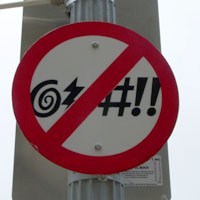
The post Matterhorn’s Dirty-Mouthed Marines appeared first on Doug Walsh.
February 19, 2016
5 Links Fridays
Our return home to life as we left it is now complete: We attended a play at the Taproot Theater last night in Seattle, the theater where we’ve been subscribers for a dozen years. I’ve always enjoyed attending theater for the entertainment, the magic of the set design, and for the chance to sit so close to such talented actors who speak as loudly with their facial contortions and shrugs and sighs as they do their memorized dialogue. The theater makes you think. It provides food for thought and topics to debate on the drive home. Last night it also provided an education. I hadn’t ever heard of Henrietta Leavitt before seeing last night’s play Silent Sky, but Leavitt was one of the most accomplished astronomers of the 20th century, at a time when women weren’t supposed to be making contributions. Hired to work at the Harvard College Observatory for the purpose of doing mind-numbing cataloging work, Leavitt’s passion for astronomy and refusal to see herself as anything but an equal to her male colleagues, led to her uncovering a pattern in the pulsing of a certain kind of stars that, with Hubble’s further work, led to the discovery that the universe extended far beyond the Milky Way galaxy. Layman’s terms: she figured out how we could measure distance to stars, stars that proved to be tens of thousands of light years away.
Well-behaved women seldom make history, as the bumper sticker goes.
Silent Sky is playing at the Taproot Theater through February 27th. I highly recommend it, not just for the performance by Hana Lass, but for anyone with an interest in science or a school-age daughter they could bring along to see it. There is also a book titled Miss Leavitt’s Stars which has good ratings on Goodreads.
Bookish Links
25 Books Guaranteed to Make You a Better Writer – Click-bait title and slideshow formatting aside, this link contains a sizable collection of book recommendations. I’ve only read four of the ones on this list (and had only heard of two or three others) but even the worst writing “how-to” books usually include at least a couple of helpful bits of advice.
It’s Party Time, Facebook Style! – Facebook book launch parties are a thing. If like me, circa 2015, you find yourself wondering how such a thing works, how to host one, and why you should do this, then this is the article for you. Of course, there’s no substitute to attending a couple of virtual book launch parties before you try hosting your own. Learn from others mistakes and successes.
The Obsessively Detailed Map of American Literature’s Most Epic Road Trips – Not only a great collection of road-trip literature (Bryson aside), but a really fun interactive map that you can use to retrace the routes of each story. The author and cartographer had to take a few liberties with some of the locations as not all placenames were traceable, but they mapped over 1500 locations in creating this map. Hat tip to my sister for sending me this link last summer. In one of my favorites on the list, Travels With Charley, Steinbeck likely drove right through my town on I-90 on his way to Seattle.
Subtext: The Most Critical Tool in the Story Teller’s Box – A helpful article on understanding subtext, all of those delicious bits of story that are left untold. The article covers how you may wish to create knowledge gaps between the narrator, characters, and the readers. Perhaps most useful are the tips on taking advantage of the audience’s desire to fill in the gaps by leading them in the wrong direction. Readers get disappointed when they can figure out the story and stay ahead of the narration. Red herrings are your friend.
So You Want to be a Writer… – Hugh Howey is one of the biggest success stories in the world of self-published indie authors. These are his ten (expansive) requirements for what it takes to be a successful writer. Every one of us can adopt these tips and, with practice and skill, find success. But it’s not going to be easy, that’s for sure. This is also a good reminder to finally read Wool.
Bonus Link!
The Cold Hard Facts of Freezing to Death – This week my research has me reading up on the effects of the Black Plague on life in Italy (very positive in the long run!), but two weeks ago I was digging up insights into the process the body undergoes when freezing to death. Oh, the joys of writing fiction! Anyway, this article walks you step by step through a plausible situation in how one bad decision can ultimately lead to your hypothermic death. This is a pretty gripping article that entertainingly camouflages a medical description in a tale of wilderness survival.
Post Image by David Goehring, used under Creative Commons
The post 5 Links Fridays appeared first on Doug Walsh.
February 16, 2016
Leave a Legacy, Be a Legend
Several years ago, in the midst of a summer spent working on-site in Dallas, Texas, during one of too-many sixteen-hour work days designed to expedite my departure from that very same Dallas, Texas, I fell into a conversation about the concept of legacy. I had recently finished reading Chris Guillebeau’s The Art of Nonconformity: Set Your Own Rules, Live the Life You Want, and Change the World. The book, a faster read than its sprawling title suggests, paired well with Timothy Ferris’ The 4-Hour Workweek, another source of inspiration to my 2011 self. Guillebeau’s book posited that we should, and the sooner the better, identify the legacy we hope to leave behind and work toward it without delay. My co-author on the project, a friend who often thinks on a deeper, more philosophical level than I, argued that the concept of leaving a legacy is narcissistic pretension at its very finest. That short of world leaders in critical moments in history; inventors whose creations changed the world; and humanitarians whose accomplishments warranted celebration in elementary school textbooks, that nobody truly leaves a legacy.
In other words: There are over 7 billion people in the world, your meager existence matters not.
I was on the fence about the idea before raising the topic. To be clear, I had no idea what legacy I wanted to leave, if any, and wasn’t sure if I had the desire to devote myself to one. The discussion helped sway me, easing my mind from the burden of trying to attain a greater purpose with my life. I had decided then, and to a certain extent still believe it now, that to simply be remembered — and hopefully missed — would be more than enough. Eddie Vedder sings in the Pearl Jam song Just Breathe: “Oh I’m a lucky man, to count on both hands the ones I love.” To know six people love you back would certainly be comforting in your final moments.
But is that a legacy?
Being Missed is Something Different
Death surrounds the news in these early days of 2016: From David Bowie to Alan Rickman to Glenn Frey and Dave Mirra. And that’s just a few well-known celebrities. Musicians, an actor, and a BMX icon; the latter I fondly recall seeing at the height of his popularity when we lived in the same town. Whenever a celebrity dies, social media explodes with outpourings of grief and hopes that the dead may R.I.P. We remember the songs they sang, the films they made and the entertainment they provided. But we didn’t know them. We only know of their deaths because they were famous people; not because a hole had suddenly appeared in our lives.
This time last year I was sitting at the table with my wife and her father one morning, chatting across empty cereal bowls. Though he was terminally ill, none of us had any reason to think he wouldn’t live another month. Yet there we were, discussing legacy. I, as I had done several times over the decades I’ve been hanging around the family, suggested he get some hobbies. He worked too much, I told him. He said “I want to know from the both of you, right now, what you would do if you could spend your day doing anything you wanted.”
I didn’t hesitate to answer: “I’d wake up early every morning and get three or four hours of writing done, have lunch, then spend my afternoons mountain biking with friends.” He was shocked. How could that be enough? How could I not want to leave more of a legacy than that? What comforted him, he said, was knowing that he had led small businesses that created jobs and gave employment to people who needed it. And, of course, that he was father to three fantastic daughters for whom his hard work provided for so well.
The family misses him dearly, myself included. But I don’t believe being missed is the same as leaving a legacy. That’s not a very high bar to leap, being missed. The people who worked for him still went to work the next morning. They missed him too — who wouldn’t? — but the hole left behind by even someone as successful as my father-in-law is still, in terms of the world at large, very small. It’s a personal, private, narrow-but-deep hole afflicting a small group of people. You can probably count them on two hands.
Changing Lives in Your Wake
I was in Turkey last fall, cycling west along some back roads en route from Cappadocia to Istanbul, and I began thinking about how I got there. For those of you who had never spent all day on a bicycle, let me assure you that the mind wanders in some unpredictable directions when you do. As the relatively empty scenery failed to distract me, I stepped backwards through the past twenty five years and realized that, without need for any complicated Rube Goldberg mechanics of cause-and-effect, I could trace my being on a world bicycle tour back to one man. His name was Arthur Shadell, my high school cross-country and track & field coach. We called him Shades. Over the ensuing miles I realized that my life was infinitely better thanks to his taking an interest in my success as a runner and my well-being as a young teenage boy going through a number of challenges at home. At a time when I needed someone to hold me accountable and inspire me, he stepped up. From the moment I met him in the early days of my freshman year and throughout the four years that followed, he was there. It was because of his dedication to me that I had the discipline, the grades, and the talent to get an athletic grant to Lafayette College. It was there, at Lafayette, where I met another incredible mentor of mine and, even more importantly, where I met my wife. It was she who encouraged me to pursue a writing career. It was that writing career that helped fund our hobbies and adventures. It was our mutual love of travel that had us twenty months into a dream trip: touring the world by bicycle.
An avalanche can only go where the valley below allows it. And though the ultimate size of the slide is a result of myriad factors, it can always be traced back to one moment in time, an incident that got things moving in the right direction. Shades asking me if I was interested in joining the cross country team (to which I replied, “I don’t ski, but I’m hoping to run track.”) was the first domino that fell, the inciting incident of a chain reaction for good.
I started writing a letter to Shades one night in a forgettable Turkish hotel on the Mediterranean Sea. I hadn’t spoken to him or seen him in over a dozen years, not since I flew back to New Jersey for his retirement party. I didn’t know where he lived, but I’d find out. I’d finish the letter and get it to him and hopefully, if he was up for it, I’d pay him a visit the next time I was in New Jersey. After all, we were headed home to the USA in December.
I was on my way into a furniture store a week after returning home to the States when I received a text message from a close friend. Shades had passed away. The letter, two-thirds finished, was still on my laptop.
I mailed it, a week later, to his wife, inside a sympathy card.
Shades, as many teachers do, left a wider hole than most of us can ever hope to. The lucky among us can point to one or two teachers who changed their lives, who will always be remembered. And since so many of us have had this experience I have no choice but to believe that nearly every school has these special teachers and coaches who leave such an impact. Teachers, perhaps by definition, have the capacity to potentially leave a legacy. They can alter and mold lives, dozens each year. Not all of them, and not for every student. But for enough of them. I’m sure there are those who had Shades as a teacher or as a coach but never thought of him again upon graduating. Not every teacher can be all things to every student. Teachers leave an impact, but it’s a personal one. Not unlike that of a family member… they just happen to have a much bigger family.
Legacy Means the Hole Must be Filled
A week into 2016 I attended a memorial bike ride in honor of Len Francies. We were riding the Grand Ridge Trail in Issaquah, where he had passed away on New Year’s Day while riding with one of his best friends. Len was 57 years old and though I had only ridden with him a few times in the past and seen him no more than two or three times over the past five years, I felt a duty to attend this ride. As did the thirty other riders there that chilly morning and the more than two hundred people who attended the memorial service that afternoon, many of whom were merely mountain bike acquaintances like myself.
We stopped halfway through the ride and toasted Len’s life with some beers we carried in our packs. His longtime friends and those who knew him the longest shared stories about the man nicknamed “The Legend”. They spoke of his work in dealing with land managers, his incredible riding prowess, and his tireless efforts in building and maintaining trail. Len was a US Forest Service-certified sawyer and not only took it upon himself to clear fallen trees off of dozens of miles of trails in Western Washington, but he also volunteered to teach chainsaw certification classes to others. He had boundless energy and treated everyone, strangers and acquaintances alike, as if they were a long-lost friend. There aren’t many like him.
The group stopped again on the return leg of the ride, at the spot where he died. There was talk of dedicating a bench, of naming an unfinished trail in his honor, and of other gestures of remembrance. Then it shifted. “Everybody who hikes or bikes trail in Western Washington has benefited from Len’s hard work,” someone said.
I had kept quiet throughout the somber moments and sharing of stories. I didn’t know Len well. I’d occasionally run into him on a trail somewhere and we’d chat for a few minutes, or I’d see him at a trail work party, but that was about it. I wanted to let those closest to him have this time. I had no intention of saying anything, but then I suddenly found my lips moving, my voice loud.
“I used to be one of those guys who felt it wasn’t really possible for average people like us to leave a legacy. But being here today and listening to you all tell stories and, well, just seeing how many of us are here and thinking about how many people it’s going to take to fill the shoes that Len has left behind, I’m starting to reconsider my beliefs. And maybe it’s just that Len wasn’t average, he was special. And I know that, but…” I lost my train of thought at that point and others chimed in and echoed my sentiments. They steered the conversation to the hard work we all needed to do now that Len wasn’t there to do it. That remembering him that day wasn’t what was important, that remembering him in the years to come was what mattered most.
I’ve continued to ponder the concept of legacy since Len’s death, aided in part by the well-publicized deaths I alluded to earlier. And what I’ve come to realize is that a legacy isn’t about being famous, or being loved by family, or even by giving a few people jobs or helping shape a student’s future.
It’s about community. About having a community of people feel the need to collectively gather, not just to mourn your death or retirement, but to ask themselves, “How are we going to make up for this loss?”
It’s not about leaving a deep hole in a family member’s life or leaving a small hole in the lives of fans. It’s about leaving a hole that a community feels an immediate need to fill. It’s not about having your person missed; but having the work you’ve done continue.
That’s what leaving a legacy is.
What I do with this realization remains to be seen. But for now I just thought I’d share it.
Post Image by Alosh Bennett, used under Creative Commons.
The post Leave a Legacy, Be a Legend appeared first on Doug Walsh.
February 12, 2016
5 Links Fridays
I attended a book reading by Yann Martel last night at the Seattle Central Library as he travels to support his new novel The High Mountains of Portugal. Much of the discussion centered on the philosophical/religious symbolism in his works and, of course, Life of Pi was discussed at length. The woman in front of me at the signing had a Life of Pi tattoo on her forearm, which he genuinely seemed excited to see. Photos were taken. I was pleased he was willing to discuss process (and entertained a follow-up question I had during the signing). He was affable and came across as highly intelligent. I now have two first editions of his works, I’m pleased to say. I took some notes and hope to compile a series of anecdotes from other book readings in a future post.
In other news, I had a good week. My first draft continues to grow in size, as does the length of each chapter. I can feel myself overwriting and underwriting simultaneously. I can not be the first to do this. Right? I can see the lack of details in my setting descriptions, the lack of subtle emotion, and the inclusion of too many scenes that may or may not be on-theme. But it’s the first draft. It’s okay. “The first draft of anything is shit,” Ernest Hemingway said in one of his more famous quotes. I learned this past week to not beat myself up over a slower-than-expected pace and lower-than-desired quality. It’s okay for it to be shit. For now. It just has to get written. On to the links…
Bookish Links
How I Went From Writing 2,000 Words a Day to 10,000 Words a Day – The pantsers among you aren’t going to want to hear this, but this is an excellent case study in how knowing what you are writing ahead of time can dramatically boost your efficiency. This article by Rachel Aaron also details how to make the most of limited writing time for those with less-than-ideal time for writing due to other responsibilities.
8 Reasons Jane Austen Fans will Love Pride + Prejudice + Zombies – When I first saw an advertisement for this movie, I thought it was a joke. I had no idea that there was not only a novel by the same name, but this adaptation has been years in the making — and getting Austen fans excited. I try not to ever link to (or read) slideshow “articles” — they’re the scourge of the Internet if you ask me – but this one is user-friendly and informative. And has me looking forward to checking out the movie.
Are You In This for the Long Haul? – I stumbled upon this post by paranormal author Jami Gold earlier this week and, well, it encapsulates my attitude towards my foray into fiction perfectly. My focus is not on cranking out a series of books tailor-made to the tastes of the day, but on writing a story I really want to tell. And then writing the others I also wish to share. I’m not counting on rocketing to the summit of the bestseller’s lists, but on a slow arduous climb up the flank. Gold’s post provides some comfort food for thought to those questioning their approach, their success (or lack thereof), and how it’s impacting their motivation.
8 Best-Sellers Started During National Novel Writing Month – I admit it. I always thought NaNoWriMo was a gimmick. A feel good social event that did little more than clog the e-shelves with unpolished, unpublishable, unedited dreck. That was my attitude years ago, coming entirely from a position of ignorance. Though I don’t imagine myself ever participating in a NaNo unless I just so happen to be coincidentally ready to begin a first draft in November, I do appreciate how helpful this type of event can be for plowing through that (shitty) first draft. As did the authors of these best-sellers. Seems like NaNo is a tool like any other, build with it what you will.
Talking About Your Character; How to Describe Posture – I spent a good amount of time last week studying techniques for describing faces, posture, body types and how to convey emotions through body language. This was one of the more interesting articles I encountered. I felt the article’s tips on avoiding cliches and surprising the reader with unexpected postures were particularly helpful. The articles linked at the end of this post are also worth reading. I’ll share more links of this type in the future.
Bonus Link!
A New Dawn for the Mezzogiorno – My wife and I spent over a month last summer bicycle touring southern Italy, returning to our bikes in Rome and cycling across Abruzzo and south through Puglia. It was one of the highlights of our entire tour. For those who’ve only ever considered Tuscany, Rome, and the northern cities of Milan and Venice for your Italian sojourn, this article (and accompanying slideshow) is for you. The southern portion of Italy, the mezzorgiorno, contains an abundance of natural splendor, enchanting towns and cities, and a wealth of both Roman and Greek history. Not to mention the world’s best olive oil. Sorry Greece.
Post Image by David Schiersner, used under Creative Commons
The post 5 Links Fridays appeared first on Doug Walsh.
February 9, 2016
Your At-Sea Writer’s Retreat
I’ve created a wonderful writing room for myself in our new home, complete with a spacious mango-wood desk, matching bookcase, and a dangerously comfy chaise for reading. Twenty-by-sixteen inch reproductions of some classic book covers, printed on wood, adorn the walls. As does twelve square feet of bulletin board and six more of white-board, each garnished with notes, a timeline, and admonitions-to-self about my work-in-progress. A Post-it bearing chiseled Sharpie ink shouts the theme of my novel in my face, a map to help me in avoiding tangential rabbit holes. A framed copy of the article I wrote for Adventure Cyclist hangs near the window, reminding me that, yes, I can be published outside of the video game genre—and that, yes, my wife and I took one hell of a trip. Yet this sanctuary I’ve created is not perfect, it’s still my home. Beyond the white door lies a house full of temptations and chores—and a kitchen in which I must cook my own meals with food I must go to the store to get. It’s close, but it’s no writer’s retreat.
When one hears the words writer’s retreat, they often think of a cabin in the woods where solitude and nature combine to pump the creative juices in a way unattainable in a modern home. We think of Thoreau and Salinger hammering out manuscripts in their spartan New England isolation chambers. I, too, thought that this was what I needed when I rented a cabin in the Methow Valley years ago, only to discover what I now believe is the most important aspect of a true writer’s retreat. It’s not isolation or nature or a lack of television, though these things can help, but the simple luxury of having all your meals prepared for you. And on a schedule.
My wife and I hit the fast-forward button while cycling around the world and booked passage on a cargo ship from Piraeus, Greece to Tanjung Pelepas, Malaysia. For nineteen days the 333-meter MV Hatsu Crystal was our home. We crossed the Mediterranean Sea, Suez Canal, Red Sea, Gulf of Aden, and the entirety of the Indian Ocean before entering the congested waters of the Strait of Malacca between Sumatra and Malaysia. I wrote over 50,000 words during that trip, an entire NANOWRIMO’s worth of content in two-thirds the time.
A Typical Day
I woke every morning well before six o’clock and would pad my way down to the darkened Officer’s Mess, my sticker-clad travel mug in hand, to secure my first of several mugs of hot water. Back in our cabin a spoon and a large cannister of Nescafe awaited my return. Our cabin, the Purser’s Suite, was far bigger than all but the priciest and most luxurious of berths aboard a cruise ship. With the bedroom door closed to not disturb my sleeping beauty, I took my space at the lengthy desk along the port-side wall of our living room and worked uninterrupted for 90 minutes each morning, pausing only to admire the sunrise. I would soon hear Kristin milling about, but another desk in the bedroom meant we could work in separate rooms. She had recently read Susanna Kearsley’s brilliant novel The Winter Sea and was attuned to the needs of the at-work writer and their hermitic predilections.
Breakfast was at 7:30. Sharp. The four passengers, ourselves and two elderly Europeans traveling separately, had neither choice in what, nor when, we ate. We arrived on time, ate the heavy meal placed before us by the smiling Filipino steward, and left. “The Officer’s Mess is not for socializing,” the burly German Captain instructed us on our first day at sea.
We were back in our cabin by eight o’clock and there, for the next three hours, while my wife read or journaled, I continued to work on the outline for my WIP. My only break was to occasionally walk back down the half-dozen flights of stairs for another batch of hot water or to step outside for a jolt of fresh—but stiflingly hot and humid—air. At 11:25 I would hit pause on whichever of the three classical music playlists I had the foresight to download for offline play, and we would make the journey back to the Officer’s Mess for lunch. By noon each day, I had already ingested a day’s worth of calories and gotten nearly five hours of writing done.
I brought my notepad and pen with me to lunch and, thanks to the two other passengers speaking amongst themselves in German, would continue jotting down ideas and reminders as I ate.
I spent the afternoons reading. I read storycraft books like Story by Robert McKee and over 200 pages of Story Grid blog posts that I copied/pasted into a Word file before boarding the ship. I also read the fascinating Monsoon by Robert D. Kaplan, a geopolitical look at each of the nations along the Indian Ocean’s coast. And several other books and essays as well. Reading books related to storycraft would often trigger an idea and by the end of each day I would often have numerous scraps of notes scattered about the desk, waiting to get incorporated into my outline come morning. I’d punctuate the day’s writing and reading efforts with an occasional dose of video games. Again, pre-installed ahead of time.
Every few days I took a break from working on the novel to write a blog post or two, such as the ones about First Sentences I posted on this site over the last two weeks. Or the more detailed travel-oriented ones I wrote for Two Far Gone about our voyage across the Indian Ocean and brief visit to Sri Lanka.
Dinner was at 5:30, quite early for us, but usually tasty and mercifully less filling than lunch. We’d eat our dinner and chat sparingly with our fellow passengers if the Austrian woman was willing to translate. Otherwise, I’d often stare off into space, dreaming up conflict for my protagonist. We’d be back in our cabin within thirty or forty minutes. Once there, we’d return to our reading and writing until 9 o’clock, at which time we’d usually find a DVD with English sub-titles to watch in our cabin. The ship had a library of hundreds of DVDs, most of them German and poorly labeled, all scratched from lack of care.
A Low-Tech, No-Frills Escape
The biggest advantage and disadvantage of being on a cargo ship is the lack of Internet. On the one hand, this eliminates a major distraction and time-suck from modern life. It is amazing how much more productive we can be when unable to check email and social media. On the other hand, any spur-of-the-moment research, fact-checking, or instinctual alt-tabbing over to Dictionary.com is impossible.
We made our way to Piraeus from Turkey several nights before the planned departure in case there was a change of schedule (we ended up boarding a full day early) and I spent that time downloading complete web pages I might need in my research. Scrivener has the ability to import complete web pages—saved as an MHT file (whatever that is)—right into the project binder. I used this feature extensively to save Wikipedia pages relating to all manner of topics about my characters and settings. Even now, at home, I continue to import any websites I reference in my research, just to have it all in one place.
Additionally, as I alluded to above, it’s also a good idea to pre-load an assortment of music, podcasts, videos, or games onto your computer before you leave.
Passengers and crew are able to purchase snacks and beer & wine, among other beverages and toiletry items from the ship’s store at unbelievably fair prices. We had a case of German beer, two cases of sparkling water, and multiple 2-pound bags of Gummi Bears in our room at all times. Hard liquor was prohibited.
If you’re like me, then you are never far from a mug of coffee or tea. Though the Steward did serve a mid-morning and midday coffee service which we never attended, I wasn’t about to risk being unable to have a mug of coffee whenever I so wanted. My wife and I packed two large cannisters of Nescafe and several boxes of tea for our voyage. It was a smart move. Though hot water was available at all times in the Mess (and the Steward did eventually bring us an electric kettle), the coffee situation was a little bit more complex. It was better to just have our own supply of instant.
As for entertainment, there was the ship’s library of DVDs, the games we brought with us on our laptops, and the card games we had been playing for nearly two years of travel. That’s about it. My wife walked ten laps around the ship’s main deck each day. I would often accompany her for a few laps but would soon get bored and return to my books. I’ll mention that the ship did have a “fitness center” and hope my use of air-quotes says all you need to know about that. My exercise generally consisted of the 112 stairs it took, round trip, from our cabin on F-deck to the Officer’s Mess on B-Deck.
Where To? How Much?
Cargo-cruising is not new, but it is gaining in popularity. That, combined with the limited occupancy aboard each vessel (generally no more than 8 passengers per ship), means you should begin booking your trip no less than six months out. A Google search for “freighter-travel” or “cargo-cruising” will lead you to many booking agencies and helpful websites. A couple of things to keep in mind: not every location allows port-calls (we weren’t allowed off the ship when we stopped to unload cargo in Jeddah, Saudi Arabia) and some routes are round-trip only. Also, the shipping companies are reluctant to allow elderly passengers and those over 65 years old may be required to provide multiple doctor’s notes and sign extra waivers. These ships have no doctor on board, nor are they likely to make an unscheduled stop for a health emergency.
Cargo cruises, including your three meals per day and weekly cabin cleaning (no turn down service here!) generally average 100 Euros per day, per person based on double-occupancy. So, figure $120 per day, per person, including fees and your post-voyage tip to the crew of a case of beer (plus transport to and from the ship). Cost depends on the length of your trip, the shipping company you are sailing with (I recommend sticking to the major European-flagged companies), and the popularity of the route.
Freighter travel is not cheap. It is, as you may have figured, more expensive than a budget accommodation aboard a cruise ship and also lacks the entertainment and quality/abundance of dining options. Don’t compare it to the cost of a cruise. Compared to the price of a writer’s retreat, the cargo ship seems downright cheap. Writer’s retreats featuring workshops and group events generally exceed $120 per day before you even factor in lodging and food. Some lodging-only ones—the romanticized cabin in the woods—are every bit as expensive and you’re still stuck cooking your own meals or dining out.
Still, because the duration of the cargo cruises tend to be between 14 and 60 days in length, the cost can add up. There is also a need to be flexible and be accommodating to last-moment changes of schedule and delays. This is definitely not something for those with tight vacation allotments. But how much is all of that productivity worth to you? 50,000 words in three weeks and three books read was a good chunk of work. And I got to transit the Suez Canal, visit Sri Lanka (briefly), and make my way to Malaysia in the process.
More Information
For more information about freighter-travel, consult the blog posts I wrote here and here for a more detailed summary of our time at sea, how we booked our voyage, and photos of the ship. I hope you enjoyed this post. If you have any other questions about freighter-travel or have a suggestion for other unique writer’s retreats that include meals and lodging, be sure to let me know in the comments.
Lastly, I’m considering organizing a small group writer’s retreat aboard a cargo ship in the future. Leave a comment below if you’re interested.

The post Your At-Sea Writer’s Retreat appeared first on Doug Walsh.