Doug Walsh's Blog, page 10
November 2, 2016
App Review: Runtastic Results
Several weeks ago, back in the good ol’ pre-puppy days of my life, I posted about the Freedom app. Freedom is just one of three premium apps that have improved my life and productivity. Today I’m going to tell you about Runtastic Results, a body-weight-only fitness app.
I’ve never enjoyed strength-training. Not as a kid, not as an NCAA athlete, and certainly not now. This is not to say I wouldn’t enjoy supplementing my mountain biking with the benefits of a steady strength-training regimen. I would (who wouldn’t?). Though programs like Crossfit and Orange Theory certainly appeal to me, I can’t justify their monthly costs. At least not while the word “aspiring” continues to preface my chosen profession.
Dumbbells on Loan
Several years ago, during a 5-week business trip to Dallas, I stumbled upon the Spartacus Workout app. It was a simple timed set of exercises done without rest. The app was little more than a video of a really buff young man calling out the drills. Ten exercises done with dumbbells, a thirty second rest between sets. No variation.
I had a hotel suite with plenty of room so I went across the street to Target, bought a pair of 15- or 20-pound dumbbells and proceeded to do the workout every other day. A month of 14-hour workdays later, with the strategy guide for Borderlands 2 complete, I returned the dumbbells and never did the Spartacus workout again.
Which isn’t the same as having forgotten about it.
Runtastic Results with Body Weight
Body weight is in abundance. You have some. I have too much. In fact, most of the weight I lost bicycling across North America and Europe (and beyond) has tracked me down to the 425 area code. The Runtastic Results fitness app uses this body weight to give you one hell of a workout in 15 to 45 minutes. No weights or equipment needed.
Now, everything I’m about to say refers to the premium plan. The free demo grants you access to a few standalone workouts, but you’ll likely grow bored of them by week’s end.
With a premium membership, you get 150 HD videos showing you correct form, you get a simple nutrition guide (boring), and some other perks. But primarily, you’re paying for a customized 12-week training program. Each week, you can indicate whether you’d like to do 3, 4, or 5 workouts. The app then customizes that week’s workout list based on your initial fitness test and how you rated the difficulty (or lack thereof) of each previous workout.
The first step is the fitness test. Do as many push-ups, sit-ups, squats, and (I think) burpees as you can in a designated time. Based on this, you get a strength rating for core, upper body and lower body. From a scale of 0 (couch potato) to 10 (super hero). If there was any question that cycling, and even mountain biking, doesn’t translate well to these exercises, let me tell you that it does not. I scored just 2 to 3 in each zone. Sure, it had been years since I had done any squats or burpees, but this was way harder and more humbling than I expected.
I told it I wanted to do four workouts a week and for the month of August, I was on the ball. Then we went to Portugal…
Sample Workouts
The workouts vary nicely, with each set utilizing between three to five different exercises (at my fitness level). The app tells you how many reps to do (or duration, if applicable) and calls out with encouragement when you’re struggling. There’s a 4:50 warm-up that I never skip and the workouts are typically three to five sets with brief rest.
Week 1: Workout 3
50x Jumping Jacks
10x Push-Ups
20x Mountain Climbers
30s Wall Sit
10x Up-Downs
60s Pause
Perform this set a total of four times.
Week 3: Workout 3
5x Pike Push-Ups
30s Low Plank
20x High Knees
30s Wall Sit
10x Triceps Dip
45s Pause
Perform this set a total of five times.
Week 6: Workout 3
15x Push-Ups
15x Jump Squats
10x Up Downs
10x Russian Twist Easy
30s Pause
Perform this set a total of five times.
After each workout, you are given the chance to record how you felt that day (various emoji) and asked to rate the workout on a scale of Too Easy, Just Right, Tough But Ok, or Way Too Hard. After completing the week’s workouts, you are asked again to rate the week’s difficulty.
I have resisted using the “Way Too Hard” rating, as I’ve yet to be unable to complete the number of reps. I certainly struggle sometimes once there’s 60 push-ups in the bank and I’ve got another set of 20 to go, but I’ve yet to be unable to finish a set.
That’s probably going to change this week.
The Potential Flaw
If there’s one flaw with the Runtastic Results app, it is that it could be impossible to catch back up once you stumble. Week 4 took place during my first week in Portugal. I told the app I wanted just three workouts and I was able to do get them done while traveling. The following week — still in Portugal — I didn’t get any workouts in. Then I came home and tweaked my back one night while camping and I was out of commission for two weeks. Life got in the way the following week (no excuse, I know, but still…) and before you know it, a month had gone by without doing any of the workouts.
Needless to say, Week 5’s workouts kicked my ass. I struggled through the workouts and ultimately gave the week the “Way Too Hard” rating in hopes that Week 6 would give me an easier re-entry point.
I took another week off, discouraged.
My wife says I should just start a fresh 12-week plan (an option within the settings menu), but I’m stubborn. Instead, I think I’ll start tackling some of the standalone workouts to get back into shape. You see, when I mentioned you’ll get bored of the demo in a week’s time, that’s because it only gives you two or three of these standalone workouts. There are over twenty and trust me when I tell you that they get INTENSE! Some are up to 60 minutes in length.
About Those Results
So? Is it worth it? After all, the app’s called Runtastic Results. In a word, yes. After just three workouts, I was able to see definition in my shoulders, arms, and legs. After a second week, I certainly noticed it in my chest and abs. The app cautions against expecting to lose massive amounts of weight, but you will tone up, burn body fat, and slim down over time. The app integrates with your phone’s camera to help you take before and after progress photos (optional).
For those who enjoy our modern gamified existence, then you’ll be happy to know that Results has some of that baked in as well. In addition to being able to share your workouts with a group or to social media (Pro-Tip: nobody cares), you also get weekly summaries mailed to you. I have to admit to feeling proud when I got an email telling me that I had done nearly 300 push-ups that week. And then there’s the Exercises page. For each of the 150+ exercises, there’s a set of rep/time-based challenges that you can tackle. You’re never going to be plank longer than this guy, but the app will help you build up to five minutes.
*Disclosure: I have no connection with Runtastic, nor did I receive this app for free. I merely stumbled upon it, demoed it, then subscribed for an annual membership at $50. I was not asked to review the app.
Post Image by Fit Approach, used under Creative Commons.
The post App Review: Runtastic Results appeared first on Doug Walsh.


October 28, 2016
Friday Links #21 – My Puppy Partner
We interrupt our normally scheduled programming for a potty break. Please find your preferred plot of grass quickly so we may continue.
After months of doling out pros and deleting cons, my wife and I decided it was time to welcome a new puppy into our home. So last Saturday we drove out to Port Orchard and promptly fell in love with a nine-week-old golden doodle. We named her Juniper and she has ruled my life ever since.
One might think working from home would be ideal for introducing a new dog into the home. One would be mistaken.
She’s a quick learner — we had her sleeping through the night in her crate by weekend’s end — and she’s partially house-broken after six days, but she requires near-constant supervision. Don’t chew on that Juniper. Stay where I can see you Juniper. WHEN DID YOU PEE UNDER MY CHAIR JUNIPER?
Yes, it’s great that I’m home with her. But let’s not fool ourselves into thinking I’m getting much work done.
I’ve temporarily abandoned my wonderful writing room in favor of the kitchen table. The main floor of our townhome isn’t carpeted, aside from the two area rugs she has been kind enough not to poop on. We currently don’t have a yard, so I must walk with her outside when she has to go. It’s not bad: I only have to take her out eighty-one times a day. And it only rains every day this time of year.
But I’m a quick learner too. My favorite days spent writing are those in which I can get lost in my imagination and lose all sense of time. Oh, honey, you’re home early. What do you mean it’s already after six? But now the marathon must wait. With a puppy in the house, it’s about intervals. There’s no time for long slow distance; only wind-sprints. Less novelist, more Tweeter. So I write for an hour, walk her, play with her, and wait for her to return to her puppy slumber so I could write for another hour.
If I’m lucky.
My productivity suffers, but my life soars. She lays motionless in my lap as I read, she’s too cute to focus on the page. She curls at my feet as I write. And she can’t stand to be out of my sight. After dinner — No, don’t eat the jalapeno! — my wife takes over puppy duty, freeing me and my laptop to drink write in peace.
But she’s a good girl. Yes, she is. Yes she is a good girl. BELLY RUB!
Bookish Links
The Alchemy Behind Book Publishing – A link to a podcast on FiveThirtyEight with Reagan Arthur and Miriam Parker, both of Little, Brown and Co., about how a book, well, becomes a book. The first six minutes of the podcast are devoted to a recent poll concerning Boston potentially hosting the 2024 Olympics. Feel free to skip ahead. Hat-tip to my wife for the link.
Writing the Tight Synopsis – One of the members of my critique group is currently revising a requested 10-page synopsis (sounds too long to me) and there was some lively discussion the other night about what that entails and exactly how many details should be included, and whether or not they should be given equal weight. This post by Beth Anderson shed’s some light on a task most writers dread as they enter the querying phase.
Fates and Furies on Twitter – I didn’t actually read the content of this link because I’m currently reading the book it’s based on. Fates and Furies is fantastic and if you haven’t read it, you should. Then, once you’re done, come back to this link which contains a parody Twitter feed from Lotto and Mathilde, the two stars of the book.
Barry Hannah, The Art of Fiction – I haven’t read any of Barry Hannah’s work, but I know I will after reading this interview in The Paris Review. There’s an exchange partway through the interview about first- and third-person point-of-view that I found really fascinating (and strikes close to home). That alone was worth the read.
The 100 Greatest Beach Books Ever – I don’t read at the beach. That’s probably why I only read nine or so of these hundred. But regardless where you do your reading, this is a list I can get behind. It’s got a nice mix of classics, contemporary, literature, and non-fiction, complete with one-sentence blurbs to help you pick what to put on your shelf.
Bonus Link
How an Ad Campaign Made Lesbians Fall in Love with Subaru – We’ve all heard (and even repeated) the stereotypes about Subarus and the gay community, especially those of us who live in the PNW, where it seems every other car is a Subaru. But most of us only sensed a connection between the two without understanding the story behind it. This article by Alex Mayyasi on the Priceonomics site tells the story about how, after firing their prior ad agency in the mid 1990s and watching sales slide, Subaru reinvented themselves… and discovered they were a huge hit with lesbians who they immediately began courting. Fascinating article, especially given the less-than-welcoming attitudes that pervaded our society twenty years ago.
The post Friday Links #21 – My Puppy Partner appeared first on Doug Walsh.
October 19, 2016
Strategy Guide Q&A and a Contest
I recently sat down with sci-fi/fantasy author Michael Munz for an interview about my years authoring videogame strategy guides. I met Michael, a fellow gamer, at the PNWA conference in Seattle earlier this year and sometime between happy hour cocktails and my second third glass of table wine, I agreed to spill the beans on my little niche. Munz is the award-winning author of multiple books, including the recently-released Zeus is Dead: A Monstrously Inconvenient Adventure (Amazon), which, reviewers praise as being hilariously unputdownable. He’s a heck of a nice guy, came up with some great questions, and is deserving of your click. Read the interview here.
Signed Book Giveaway
I also want to take this opportunity to let you know that I’m holding a drawing for signed copies of my strategy guides for Gears of War 4, The Bioshock Collection, and DOOM. Subscribe to the newsletter mailing list (link on the right) to be eligible. An email with contest links will be sent out next week.
That’s it for today. All my blogging efforts went into the Q&A with Munz this week. I’ll be back next Friday with another app recommendation and a fresh batch of bookish links. See you then.
The post Strategy Guide Q&A and a Contest appeared first on Doug Walsh.
October 14, 2016
Friday Links #20 – Freedom From Distractions
Today I’m going to tell you about one of the best purchases I’ve made in quite some time. It wasn’t expensive, nor was it something tangible that I can photograph and show you. Actually, I really wouldn’t even call it a purchase. It’s more like an investment. In myself. In eliminating distractions.
It’s called the Freedom App. And if you work from home, it’s indispensable.
For as long as Man (this one) has had the Internet (social media), he has sought ways to turn it off. And every time Man has unplugged the router (rarely), he quickly discovered he was in need of it (Wikipedia).
And then one day a butterfly fluttered into his life, offering the promise of scheduled block lists, customizable sessions, and even the ability to schedule a complete, irreversible Internet shutdown. Man was smitten.
The Freedom App can be installed on multiple devices and configured to allow different levels of Internet access per device, per time of day, should you choose. It works with Windows, Mac, Android, and iOS. A demo is available which allows you to use the app free of charge for a half-dozen sessions. My suggestion: spread those sessions out over a few days and watch the discount offers flow in. After a week or two of sporadic use, I finally cashed in a 50% off coupon for a lifetime subscription. Best $60 I spent in a long while.
Freedom comes pre-equipped with a basic social media block list. You can either add to the list of blocked sites or make your own separate one. I simply added a half-dozen guilty pleasures to the existing list, including Gmail (no email!), Amazon (no KDP stalking!), Deadspin (the snark can wait!) and FiveThirtyEight (I love you Nate Silver!). I have a 3-hour session go active on the laptop in my writing office every morning at 7am. Freedom leaves me free to access the Internet for research and reference — to work, in other words — but keeps me from falling down the rabbit hole.
I have the app installed on my gaming PC as well, but I only activate it manually as needed. As for my phone, I simply put it on Priority Only whenever I’m working.
Freedom can be deactivated at any time by simply right-clicking the icon in the tray (Windows) and quitting the application. Double-click the icon to launch it again. If this is too convenient for your weak-willed ways, then you can opt to use Locked Mode which makes it impossible to interrupt an active session. I haven’t had to take that drastic of a step. I’ve so far even managed to avoid looking at my phone.
Bookish Links
How to Make Morning Routines A Habit for All-Day Productivity – This quick article from the Freedom App Blog has some nice tips on keeping your productivity rolling throughout the day. Critical decisions first, tough projects next, exercise… it all adds up to getting a lot done, but finishing the day on an upswing, guilt-free and ready to enjoy the evening.
4 Writing Routine Myths That Kill Creativity – Tyler Moss may have been working on his first novel when he wrote this article, but he was wise beyond his experience. I made my original foray into novel writing with many of the same self-imposed rules and beliefs he mentions, only to discard them one by one within a few months. Though, as I alluded to above, I do get my ass-in-seat every morning by 7. That works for me. Your mornings may vary.
Maxims and Mottoes From Masters of One-Liners – A reading list for the true bibliophiles among you. James Geary (TED Talk here) includes a list of books from other authors about the literary life, proverbs, aphorisms, and the art of being quotable. This is probably the headiest of the articles I’ve linked to. You’ve been warned.
Dreamy Illustrations for Book Lovers by Jungho Lee – Colossal never fails to inspire and amaze and it is, by far, my favorite Facebook page to follow. This collection of illustrations by Jungho Lee, winner of the World Illustration Awards, plays wonderful tricks on your mind and imagination using books as props in magical settings.
E-Book Cover Design Awards, August 2016 – Joel Friedlander’s monthly cover design critiques is one of my favorite reads, not only for the winners, but for the examples of designs that just don’t work. Whether it’s with a trad publisher or a hired designer, I want to make sure I can convey the elements I want to see in my covers. There aren’t a lot of opportunities to see professional criticism in bulk, and this is one I rarely miss.
Bonus Link
The Collector: Robin Williams – The link du jour, I hesitated to post it but since many of my readers are cyclists (or fans of) and everyone I know has enjoyed elements of Robin Williams’ career, I decided to include it. As we all know, Robin Williams died not long ago, but we didn’t know was that he was an avid collector of bicycles. His children are auctioning his bicycles to raise money for the Challenged Athletes Foundation and the Christopher & Dana Reeve Foundation. There’s 10 days left to bid on any one of dozens of rare, high-end, and unusual bicycles. There’s one or two I may have raised a paddle for, alas Robin Williams was quite a bit shorter than me and his bikes are too small.
The post Friday Links #20 – Freedom From Distractions appeared first on Doug Walsh.
October 5, 2016
Punk in My Forties
I turned 41 last weekend. Thank you. Earlier in the week, before I could make plans, my wife surprised me with a pair of tickets to see Pennywise. They were kicking off their tour in Seattle with Unwritten Law and Strung Out as the opening acts. The last time I had seen Pennywise play was in 1996, when their About Time album released.
I was thrilled to get the tickets — Pennywise was among my favorites of the 90s punk bands — but I was also apprehensive. Punk shows could get rowdy. And whereas most of the wives I know would tell their hubby to take a friend, mine wanted to come. She wanted to experience her first punk show. I loved her for that, even if it did make me worry. It wasn’t that I was concerned for her safety — though a stray Doc Marten is always a possibility — but rather for her enjoyment. She’s never particularly enjoyed listening to punk.
But that was just an excuse I was telling myself.
Same Old Story
Done with yours,
I’m living my life for me
My reservations had more to do with me, my changing tastes, and lingering insecurities. We don’t go to many shows these days — we prefer to spend our entertainment money on the theater and sporting events — and early in the week, I wasn’t so sure I really wanted to go. Attending the Warped Tour back in the 90s with my closest friends was one thing. Seeing Pennywise twenty years later, with my wife, was another.
I was always the preppiest one in the group, something my friends never missed an opportunity to remind me of. I didn’t do much to alter that. Quite the opposite, actually. While they were all sharing an apartment at a nearby state school, partying together and drawing tighter, I was the one who went away to a private college and joined a frat (ugh). Superficial differences and personal tastes were never a source of division, only friendly taunting. They wouldn’t tease, they’d say, if they didn’t care. But when we all piled into a friend’s restored Volkswagen Beetle to see Pennywise headline the Warped Tour just three short days after their bassist was found dead of a self-inflicted gunshot wound, I felt on the fringe. I didn’t even know all the people in the car, let alone all the bands we’d be seeing.
Truth was, I’d have been just as happy seeing Pearl Jam, R.E.M., or The 10,000 Maniacs back then as I was seeing Pennywise, Down By Law, Civ, and Blink-182.
People who are really into punk, who go all-in with the lifestyle and affect the look, aren’t necessarily into the music any more than the less conspicuous guy in the background, but they can sure make the latter feel like they don’t belong.
It was those feelings of not really having any business going to the show — that I wasn’t punk enough — that had me almost wishing she had gotten me tickets to the ballgame instead.
Almost.
Living For Today
We’re the ones, the only ones, strong ones, proud ones
We’re living for today
On the surface, the day couldn’t have been any less punk. I spent an hour reading, coincidentally making my way through the 1138-page monster, It, the Stephen King novel with the clown named Pennywise that inspired the band’s name. The rest of the day was spent revising a scene I had been working on, sometimes with a nice single malt by my side at the Arctic Club hotel in Seattle. I met my wife at Folio for their first annual book sale and loaded up on a grocery bag filled with hardcovers. I was very happy to nab a first edition of David Guterson’s Snow Falling on Cedars for two dollars, one of my favorites.
Back at the hotel, I pre-gamed with a bottle of wine and my laptop, continuing my edits until we were late for meeting a friend. My wife changed out of her business suit into something not too yuppie, per my recommendation. The Mariners were still in playoff contention, and playing right across the street, but we were content watching on the television over beers and burgers and wings. They were eliminated the following evening.
With Pennywise not going on until 11pm, I figured we’d be fine arriving around 9:30, just in time to see Unwritten Law take the stage. Ten o’clock came and went, the Mariners pulled off the win, and we finally chugged our beers and headed next door to The Showbox.
Perfect People
Went right up and tried to join their party
You oughta seen the look when they saw me
We were late. Strung Out came on second and was already halfway through their set by the time we arrived. I was disappointed we missed Unwritten Law, but the energy of the room washed away any lingering feelings. We weaved through the crowd to a spot halfway between the soundboard and the edge of the pit.
Strung Out was loud, the sound an onslaught of guitar and drums and undecipherable vocals. Volume. People swirled in the pit, others thrashed their way from one side to the other. But many were at the bar, as is often the case with opening acts. We moved a little closer after their last song while the roadies readied the stage for the headliner.
Pennywise played their way through a shuffled order of their About Time album, celebrating it’s twenty-year anniversary. All was right in the world. Thirty-two minutes of unbridled energy meld with surprisingly good sound quality. My wife stayed close and laughed each time the machinations within the pit pierced the edge. Shoved, pushed, bumped, and jostled, she held her ground. Feet in the air, heads rocking to Fletcher’s blistering guitar as we shouted the lyrics to an album I remembered all too well. It was electrifying.
I wanted to thrash around in the pit, the last great vestige of legal violence. What better way to release aggression? My wife thought I should. “Have fun,” she said. I was hesitant. I was nursing a pinched nerve in my back. And, well… 41. A shirtless bruiser of a guy excused himself, grabbing my arm as he went by with such soft hands that I thought he was a woman. “Go on, I’ll be right here.” Maybe the next song, I told her. Three minutes later, that same tatted-up monster came brushing past in the other direction, blood pouring from his nose.
Yeah, I’m good right here.
I looked around while Jim chatted up the crowd. The majority of the people there, like us, were middle-aged, likely having spent their teenage years listening to Pennywise and Bad Religion and NOFX. Most probably had careers and mortgages and kids. Lawyers, teachers, programmers. To the guys in the pit with the green and pink spiked hair, we probably looked lame as hell.
The band launched into Perfect People, one of my favorites from the album, even if the lyrics used to leave me and my more-prep-than-punk veneer feeling a touch self-conscious. But there was no insecurity on this night. Punk, after all, isn’t about how you dress or the music you listen to. It’s about going your own way, saying no to the prescribed one-size-fits-all order of the world, and living your life on your own terms.
That realization got me thinking about how I’ve spent the intervening decades. So many years spent carving out a life self-employed, traveling the world, taking chances, and now back home pursuing an artistic dream. I thought about all of that while Byron’s drumming hammered sound waves off my chest and I realized, finally, that yeah, in my own way, I’m punk as fuck.
The post Punk in My Forties appeared first on Doug Walsh.
September 30, 2016
Friday Links #19 – Writer’s Block
It was the best of weeks, it was the worst of weeks. I experienced some tough sledding right out of the gate on Monday morning thanks to what I can only imagine was a lightly pinched-nerve in my lower back. It flared up late last week and all but left me permanently hunched-over in agony as I pushed back from a restaurant table Friday night. That night’s sleep, in my tent mind you, was tortuous. Every toss, every turn a masochistic test of endurance: how much pain could I stand? Oddly enough, the only time my back didn’t hurt was while mountain biking the next day.
The mornings are still painful — it’s only been 8 days since the flare-up began (originating from an oddly-placed pillow on the chaise in my office) — but the discomfort has mostly subsided. Alas, no more sympathy back rubs.
But even when I was able to bring myself to sit at my desk this week, I struggled. I spent three writing sessions chopping away at a single scene. A scene I’ve yet to finish. It’s shifted, it’s veered away from my initial idea (for the better, I believe) but I just couldn’t ever get the ball rolling. I’d push it inch by inch and sit back, hoping it would retain some momentum, only to watch the action on the page sputter and die.
I don’t believe in the idea of writer’s block, only a lack of preparation. And that’s exactly what happened here. I outran my outline. I had an incredibly detailed outline for the first twenty-something scenes. Some would say it was ridiculous to even call it an outline, as it was more like a free-flowing first draft. And from those pages of brain-vomit, I was able to quickly pick out the chunky bits and arrange them into something far less grotesque.
(Yes, this is a horrible metaphor. I apologize.)
The other thirty-something scenes? The outline consists of just a couple sentences of where I wanted the story to go. I thought it was enough. It wasn’t.
But all wasn’t lost. I also brought my revised opening scene to my new critique group on Wednesday and was pleased to see it met with a very helpful mix of praise and criticism. Better still, the group helped me realize that a critical aspect of my story needed to be at least hinted at in the opening scene. In my efforts to have a slowly-uncovered big reveal, I was running the risk of performing a bait-and-switch on my readers.
Subscribers to my newsletter will learn more about this in this month’s update. On with the links.
Bookish Links
5 Reasons You’re Experiencing Writer’s Block – Susan Reynolds put this excellent article together about the myth of writer’s block. Okay, maybe it’s not completely a myth — I stand by my earlier statement that it’s largely caused by a lack of preparation — but writer’s block may be a symptom of other issues you aren’t even aware of. A great read.
How to Write Multiple Antagonists – I don’t believe I ever linked to this article by K.M. Weiland before, but if I did it’s worth repeating. Using her entertaining novel Storming (a fast read) as an example, she discusses tips and pitfalls for how to structure a story with multiple antagonists. My novel has two, three if you count the environment. Her tips have proved helpful.
If You Use Double Negatives in Your Writing, You’re Not Incorrect – Phrases like “it’s not impossible” can sometimes drive me crazy. Sure, I know what the person is saying, but still. Come on. On the other hand, as Baihley Grandison’s blog shows, there are phrases that, while filled with double negative gymnastics, actually succeed wonderfully in conveying a softer kind of response, particularly in dialogue.
7 Types of Violence You’re Picturing Wrong Thanks to Movies – I want to believe most of us are smart enough to already know this stuff, but it’s still a fun read. If you’ve ever thought landmines behaved like a booby trap in Raiders of the Lost Ark or that a car door can stop a bullet, this article is for you.
For Me, Traditional Publishing Meant Poverty, But Self Publish? No Way – I’m going to link to this article without further comment other than to say I agree with it a lot more than I don’t. Ros Barber has gotten more than enough feedback from this piece, but I think every aspiring novelist should read it. And remember the first two words in the title when you do.
Bonus Link
The Cons of Living on Orcas Island – My wife and I have been visiting Orcas Island 2-3 times a year since moving to the PNW in 2002 and we recently made an offer on a piece of land out there. There’s still some kinks to work out involving the rocky, sloping nature of the property and driveway sight-lines and excavation and septic feasibility and probably a few more things I’m not thinking of (we may change our minds, as we have another 10 days to decide) but in our research, I came across this wonderful article by Marlis Sandwith. And yes, the cons are really pros.
Post Image by Cali4beach, used under Creative Commons.
The post Friday Links #19 – Writer’s Block appeared first on Doug Walsh.
September 28, 2016
Strategy Guide Giveaway
When not working on my novel this year, I was hard at work writing the strategy guides for DOOM, The Bioshock Collection, and a soon-to-be-released title that rhymes with Beers and Gore, More! Which, by the way, sounds like a pretty awesome game. Anyway, the time has come to hold one final video game strategy guide giveaway. I’ve got copies of some great books to give away — The Bioshock Collection weighs in at 560 pages and I’ve got hardcover copies of the guide for DOOM, just for starters.
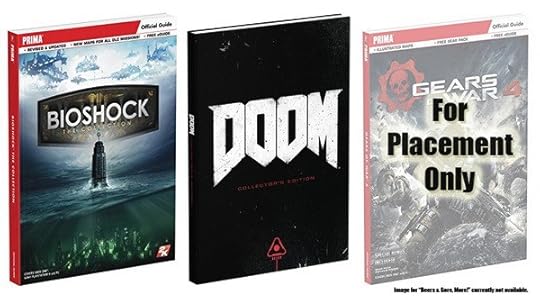
Giveaway Instructions
So here’s how it’s going to work. In order to have a chance at winning, you need to be signed up for my newsletter. So pop your email address into the bar at the top of the page or the box on the right and check your email for the confirmation link. The bonus to this is that you get a free downloadable copy of my short travel memoir, One Lousy Pirate.
As soon as I receive my contributor’s copies for, ahem, Beers and Gore, More!, I will mail the contest entry to my mailing list. There will be three links: one for each book. To be entered in a drawing for any of those books, all you’ll have to do is click the corresponding link. Go ahead and enter all three if you like, but you can only enter for each book once. Duplicate entries will be ignored.
Then, after the contest entry goes out, I’ll hold the drawing and send signed copies of each book out to the winners. I’m expecting to host a drawing for 3 copies of each book, so you’ve got plenty of opportunity to win. Nine to be exact.
This is a good time to mention that if you don’t play video games but know someone who does, you should send them this link. Yes, I know, this is blatant self-promotion. But seriously, these books go for up to $30 each and I’m covering the postage. Why not tell your gaming friends about it?
UPDATE: The contest is open to anyone from anywhere. I’ve mailed free books to Europe in the past. However, given the size/weight of these particular books, I have to ask that winners from outside North America contribute towards shipping costs. This is just something I’m doing on my own, not as part of any corporate promotion. I appreciate your understanding.
About that Newsletter…
I know, right. You don’t want to give your email to another site. I get it, trust me. Well, aside from getting a free copy of One Lousy Pirate and being eligible for the contest, you’ll also receive a monthly mailing from me that includes some updates on the blog, special subscriber-only information about my upcoming novel, and small doses of whimsy. Whimsy being as expensive as it is these days, I only dole it out on special occasions. I appreciate your understanding.
Newsletter subscribers will also be eligible for future offers and giveaways, a chance to read an early copy of my upcoming novel, and more.
And One More Thing…
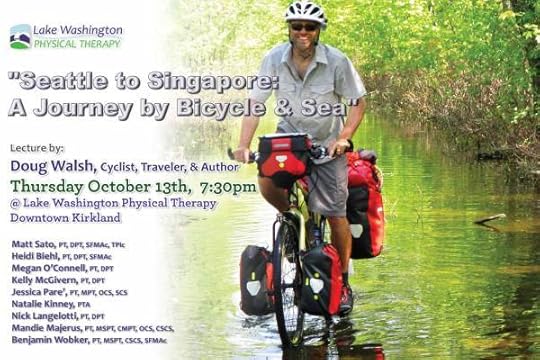
I’ll be giving a lecture on October 13th in Kirkland, Washington about the bike tour my wife and I did. If you’re in the area and can make it, I’d love to see you. Get there early as space is limited.
The post Strategy Guide Giveaway appeared first on Doug Walsh.
September 21, 2016
For Love of Coffee and Words
Like many writers, I’ve come to view the neighborhood coffee shop as a second home (office). There’s something about being out of the house, in a public space, that helps me focus. I never procrastinate, I seldom check email, and if I’m briefly distracted by the other people in the shop, those seconds lost are offset by the pressure I feel to appear busy. Noise-canceling headphones also help.
But it’s not just about getting out of the house that brings me to the shop. It’s the smell of the espresso, the sound of the beans grinding and milk frothing, and the local art on display. It’s the people who remember your name and the way you like your cappuccino — not too wet, not too dry. And at my local joint, Sno Valley Coffee (which also has craft beer on tap), the leather armchair next to the fireplace also brings me in. It’s what keeps me from going to the library across the street.
The Pre-Addiction Years
I didn’t grow up in a coffee drinking house. Oh, sure, my mom made a pot every morning, only to color it beige with so much milk that it ceased to resemble the Maxwell House dripping from the Proctor-Silex. I’d dunk my Oreos and ‘Nilla Wafers into her mug every now and then, but drink the stuff? Yuck! That was for old ladies who played Scrabble and watched General Hospital. She was in her thirties.
The first time I ordered a coffee of my own was during an early morning surf trip with my high school friends. Beverage maturity had struck at sixteen and suddenly, without discussion, it became de rigueur for our group of five to make a Dunkin’ Donuts pit-stop before merging onto the Garden State Parkway. Shore Points exits or bust. We used to surf throughout the winter in New Jersey so the cold may have had something to do with our yearning for scalding liquids. I distinctly recall sitting in the backseat of my friend’s gold Monte Carlo, a car equal parts Bondo and steel, sipping from a too-large, too-hot Styrofoam cup. After holding the damn thing between my legs for an hour, I’d inevitably pour three-fourths of it in a sewer when we reached the beach. Which, if you ask me, is where Dunkin Donuts coffee belongs.
That sound you heard was my east coast readership slamming their laptops closed and throwing their phones in disgust.
Just kidding, everyone knows people who drink Dunkin’ Donuts coffee can’t read.
And now that I’ve firmly established my Left-Coast Liberal Elitist Scum® bona-fides, let’s continue. And don’t worry, Starbucks won’t get off lightly either.
The Taste Has Been Acquired…
I had my first encounter with the wonderful world of independent coffee shops in college. Hill of Beans had opened one block off campus on College Hill in Easton, PA and, despite the owner being a Pittsburgh Steelers fan (a trait I found impossible to reconcile long before 2005), she graciously added 10% in store credit to my monthly deposit. Yes, I was 19 years old and had a “meal plan” at a coffee shop. She brewed Green Mountain Coffee (Rainforest Nut was my go-to) and served up a perfectly toasted-and-buttered spinach bagel. I had two bagels and at least three mugs before morning classes, even more if I had to go in early to study.
I shelved books in the library to pay for my caffeine fix, presumably so I could stay awake to shelve more books, to earn more money, and well, you get the idea.
My first writing breakthrough came, at least intellectually, at The Percolator, a complete dive of a coffee shop in Greenville, NC. It was 1998 and I was taking a Scientific Manuscripts class as part of the Master’s degree I was working toward. The Percolator had three things that stand out: 1) The Red-Eye, a drink boasting five shots of espresso, a splash of hot water, and a dollop of frothed milk, 2) the best damn hot-pepper vegetable cream cheese I’ve ever had (along with really good everything bagels), and 3) a collection of furniture that not even Goodwill would consider appropriate for human usage.
Our final grade in the class was based on how well we revised the abstract, proposal, and whatever portion of our thesis we had completed that semester. I didn’t think my initial abstract submission was that bad, but it came back with a 2:1 ratio of red ink to black. Brevity may be the soul of wit, but it’s also one tough mother of a nut to crack.
Sitting on the torn upholstered chair, notebooks scattered across the scratched, wobbly table, I felt as if I was working my way through every possible combination on a locked briefcase. Inside were untold riches, or at least an A, and, after several hours, I knew I was getting close.
Click!
Everything snapped into place: The understanding of what an abstract was, what it needed to accomplish, and what my thesis was really about, or at least how to describe it. I wrote as fast as my hand could move and didn’t stop, didn’t cross anything out, didn’t fuss over word choice or punctuation. I just wrote. Five paragraphs later I knew it was perfect. I couldn’t believe it happened and never thought it’d happen again. The typed version came back a week later with an A+ and a note, “Would submit to journals as-is.”
…And Refined
The evolution of coffee in America largely parallels my own coming of age. Together, from the 80s to the 00s, we evolved from frail, wimpy, misunderstood beings to posses a state of complex maturity aware of our own histories and, at times, growing too big for our britches. Though I can take responsibility for my own missteps (and successes), the humble mug of coffee owes much of its rise in popularity to he who shan’t be named in these parts.
Like anything that achieves mainstream popularity, the sudden rise is often met with a depressing plummet to meet the tastes of the lowest common denominator. In that, Starbucks is unique. It simultaneously defaces the European coffee tradition in effort to suck more dollars from people who, one can only assume by the things they order, don’t actually like coffee, all the while charging so much for their drinks that they become ridiculed by the people who find nothing wrong with the dishwater being brewed at 7-11.
I try not to go to Starbucks. Not because I have a philosophical argument against their ubiquity — by most accounts it’s a very good company to work for — but because I don’t like the smell of burnt cooking spray. And for some reason, no matter what time of day you walk into a Starbucks, the potent punch of burnt canola oil smacks you dead in the face.
Nevertheless, I like to have a cup of coffee with me wherever I go and that often entails a meeting with the mermaid. Fortunately, you can’t smell the cooking spray from the drive-through.
I have two rules for ordering coffee to-go. For starters, if you can’t order it in less than five words, you’re doing it wrong. Secondly, always order an Americano instead of drip coffee. It’s made on the spot, when you order it, and combines shots of espresso with hot water. The result is a fresh, strong cup of coffee that — and this is key — tastes virtually the same no matter where you buy it.
Americanos in Europe
Popular belief places the origins of the Cafe Americano in Italy, during World War II. American troops wanted something that tasted more like the Folgers they were used to back home and took to asking the Italian baristas to add water to their espresso shots.
I certainly slammed back my fair share of espresso shots at all manner of coffee bars during our bicycle tour, but sometimes I wanted to just sit and spend time journaling or reading. And having ordered Cafe Americanos throughout most of western Europe, I can attest to there being a very big misunderstanding about the drink, and why we order it. In places without a significant cafe culture — Italy, Portugal, and Greece for example — espresso is to be sipped (or slammed) at the bar or in a restaurant following your meal. Ordering an Americano in these places was odd because it often left you feeling like a loiterer. And would undoubtedly get you a disproving look from the barista, a look that said look at the silly American who is too weak to handle our mighty espresso!
But that’s not it at all. France gets it. Austria gets it. Morocco and even some parts of Spain, particularly the Basque region, they get it too. It’s not that we need a weaker drink, but one that can be enjoyed over time. Sometimes the moment calls for a drink that can be savored for thirty minutes, as opposed thirty seconds. And cappuccinos, with their wide-mouthed mugs, often cool too rapidly (don’t get me started on lattes). While other Continental Europeans may not order the drink, it was nice to be somewhere where sitting and enjoying a coffee for hours wasn’t unusual. And if Starbucks is responsible for popularizing that concept in North America, then I’m all the happier for it.
Nevertheless, you’ll be hard-pressed to find anything approaching a 16oz or 20oz drink outside of a Starbucks anywhere in Europe. We really are gluttons, but coffee is one excess I’m not about to apologize for.
I was on my third Cafe Americano, por favor in Pamplona, at the famed Cafe Irunya, working on an article for Adventure Cyclist magazine. The statue of Hemingway loomed in the corner of the handsome, spacious cafe and I was on a tear. I was revising an incomplete draft of an essay about homesickness and while walking back to my table with my third mug, had that same epiphany that I had all those years ago at Percolator.
Click!
My fingers danced across the thirteen inch laptop as I politely tried to ignore the Spaniard flirting with me from the adjacent table. Noise-canceling headphones, where were you? I sipped and I typed and plowed ahead, eyes ahead, except to periodically glance the statue of the young American who loved the bulls of that city nearly as much as he loved the region’s wine.
The article was published virtually unchanged. Thank you coffee, you wonderful, magical bean. Don’t be a stranger.
Post Image by gordonplant, used under Creative Commons.
The post For Love of Coffee and Words appeared first on Doug Walsh.
August 31, 2016
Stepping Out of the Shadow
Last week’s post about attending PNWA almost didn’t happen. Not because I didn’t have time to write the post or because I had forgotten my WordPress login credentials, but because I almost didn’t attend the conference. The professional responsibilities I alluded to in that post consumed my late July and early August. Normally, I would have wiped my calendar, sighed longingly, and hoped for a better next year. Not this time.
This time I prioritized my tomorrow over my yesterday — something that should probably scare me more than it does. But that’s the benefit of having a strong woman by your side: I don’t need to be afraid.
My Shadow Career
In order to say Yes to taking that small step and attending PNWA, I had to say No elsewhere. I flew home from a game developer’s studio in California the night before the conference, risking having not completed my tasks before leaving. Then, a day and an all-nighter after the conference ended, I flew to a different studio in Vancouver, BC several days after I should have arrived.
I was completely miserable and sick with stress. And I wasn’t living my dream.
Steven Pressfield (War of Art, Gates of Fire) writes the following in his book Turning Pro:
Sometimes, when we’re terrified of embracing our true calling, we’ll pursue a shadow calling instead. That shadow career is a metaphor for our real career. Its shape is similar, its contours feel tantalizingly the same. But a shadow career entails no real risk. If we fail at a shadow career, the consequences are meaningless to us.
Are you pursuing a shadow career?
Are you getting your Ph.D in Elizabethan studies because you ’re afraid to write the tragedies and comedies that you know you have inside you? Are you living the drugs-and-booze half of the musician’s life, without actually writing the music? Are you working in a support capacity for an innovator because you’re afraid to risk becoming an innovator yourself?
If you ’re dissatisfied with your current life, ask yourself what your current life is a metaphor for?
My shadow career was writing video game strategy guides. It wasn’t always. For thirteen years it was an absolute dream job, the only thing I ever wanted to do. And I was damn good at it. For thirteen years I spent my days writing thousands of words about pre-release blockbuster titles — everything from Mario to Halo and Diablo to Zelda. It scratched so many itches: my desire to write, my love of gaming, and my need for Photoshop-as-therapy. And to top it all off, I had an annual contract that paid very nicely.
I tried my hand at fiction during those years, but never gained traction. I couldn’t bring myself to work on a novel when I was perpetually on-call, often starting months-long projects on very short notice. Feast or famine; I either worked zero hours a week or ninety (or so it seemed), most often being busiest in the summer and fall. So much dust piled atop my mountain bike.
In the excellent reality game show Strip Search, Penny Arcade’s Jerry Holkins and Mike Krahulik memorably (to me, at least) told a contestant that their graphic design day job shouldn’t have kept them from pursuing their comic book dreams at night. I have tremendous respect for Jerry and Mike and for the empire they’ve created, but I have to call bullshit on that. After spending all day writing strategy guides, the very last thing I wanted to do in the evening was do more writing.
And so writing fiction was put on hold.
Situations Changed
We never expected to return to our old jobs after our two years of travel were over. And even once we knew my wife would be doing just that, that wasn’t exactly the plan for me. I was going to finally take a chance on writing the novel I always dreamed of. And so I got to work on my first draft and assembled a tentative four-year plan, complete with milestones, that would hopefully result in my having at least two novels published by 2020. And if not, then I’d at least know I tried.
But I wanted the money.
I called my old publisher (who had since merged with their number one competitor) and before I knew it, I was writing the multiplayer section of the guide for this year’s DOOM — a two-week fire-drill that allowed me to compartmentalize the strategy guide gig then dive back into fiction before my characters forgot who I was. And the game was phenomenal, which certainly helped (I still play it nightly after dinner).
Other projects were offered… and accepted. One, an update/collection to three books I had written over the prior nine years. Another, the next installment in one of my favorite franchises. Seemingly perfect, they were anything but. Things had changed. The job was never easy and it always demanded flexibility on the part of everyone involved, but that’s a lot easier to swallow when you’re under contract and happy with your compensation.
In the two years I was away the industry shifted away from fully supporting these books; the merger reduced competition; the headaches doubled; and author pay was cut in half.
As the spring turned to summer and the frustrations mounted — not the least of which was over the fact that I hadn’t written any new scenes for my book since April — my wife finally asked me sometime in July what my reason for taking on more strategy guides was. I told her it was the money, citing the tremendous housing costs of the Seattle area.
She didn’t believe me. Not entirely.
“Are you sure you’re not just doing this because you’re scared of working on your novel?”
A First Step Into the Light
Barring any short-term projects of the fire-drill variety, I don’t see myself taking on any more strategy guides. I had a good run and wish everyone involved the best. It’s just no longer the right thing for me.
In Pressfield’s words, it contained no real risk. It provided me the feeling like I was a writer — and I was, technically — but not the type the little boy in me still dreams of becoming.
So I prioritized attending the conference over being the good little worker bee. And, for the first and last time, I managed to do both. It was uncomfortable.
That decision has already paid off. Last week I mentioned one of the highlights for me at PNWA was attending the panel on writing groups. I didn’t only share my critique group envy on this blog, but also to the six members in the panel. We chatted, we drank, we had a great time. I let them know they were everything I imagined the ideal writing group to be. They had formed out of a ten-week writing class, they were all serious about craft and writing professionally, and had each enjoyed a successful pitch session. They let me know they weren’t expanding. I jokingly asked to be placed on a waiting list.
Two days later, they invited me to audition. Sociably, I was a good fit. They had to make sure I could write.
So I picked out a lengthy scene I hadn’t even laid eyes on since first writing it in February and spent a full day revising it.
A week later, they invited me to join their group.
It’s a small step, but it’s a step out of the shadows all the same.
The post Stepping Out of the Shadow appeared first on Doug Walsh.
August 24, 2016
Random Thoughts from PNWA 2016
My spontaneous appearance at the 2015 Singapore Writer’s Festival aside, last month’s Pacific Northwest Writer’s Conference (PNWA) was the first such conference I ever attended. And now that I’ve had time to study my notes and reflect on the dozen-plus panels and lectures I witnessed, I truly believe that this was an important step forward in my career as a novelist.
PNWA offered the gift of immersion. Twelve hours a day, from morning coffee through after-dinner cocktails, we attendees surrounded ourselves with writers and agents and editors. For three consecutive days, we solitary creatures convened at the Sea-Tac DoubleTree and bathed in a font of passion, inspiration and creativity. And after three days I returned home in a freshly banged-up Nissan and watched, helplessly, as professional commitments conspired to nearly snuff out the flames lit by PNWA.
But that’s a story for next week. Today, to quote keynote speaker Robert Dugoni’s repurposing of the famous Braveheart speech, TODAY WE WRITE… about attending PNWA.
Why I Attended
Despite wearing badges around our necks that display our name and genre, everyone asks everyone what they write. It’s the most common icebreaker at PNWA. And no matter the answer, whether it be non-fiction, historical, fantasy, or erotic robot westerns, the follow-up is always the same: Are you pitching?
Most attendees are there to pitch, whether to an agent or an editor, it seldom matters. For many, the conference is merely the package in which their 90-minute pitch session leaves the factory. The request to submit, a glimmer of hope that shines brighter with length, is the goal. Some agents request a synopsis, many request three chapters while others ask for fifty pages, and a few request a full manuscript. The size of the submission request, a sign of the gatekeeper’s interest in your story, is both directly and inversely related to the amount of drinks ordered at the hotel bar.
I was not there to pitch. Despite countless assurances from other writers that it doesn’t matter if you’ve yet to complete a first draft, it matters to me. The last thing I wanted was to prematurely get an agent or editor excited about my story, knowing I was only 45,000 words into a first draft. That’s not how I operate.
No, I was there to attend the sessions, to meet fellow Seattle-area writers, and to hopefully join a critique group. And if through the natural course of small talk while waiting in line for coffee, or for a panel to begin, or for the banquet hall to open for dinner (I spent a lot of time standing around waiting, now that I think about it) my story attracted some interest, then all the better. No, I wasn’t there to pitch. But I will be next year, that’s a fact.
Top Takeaways From PNWA
Rather than try to provide a summary of each of the sessions I attended, as I did for SWF, I’m going to simply go over a few of my favorite pieces of newfound knowledge, comments, and anecdotes from the conference. Presented in no particular order:
Travel Memoir Is Dead: Those who read this blog regularly, who know me personally, or who may have followed our journey on Two Far Gone know I was planning on writing a travel memoir, but shelved the idea in favor of fiction. Andy Ross, in his introduction during the Agent Forum, listed off the types of books he’s currently looking to acquire and ended by saying, “And sometimes, when I feel like taking on a book I can’t sell [to a publisher] I’ll accept a travel memoir.” Ouch. Another agent added, “Telling me you’ve written the next Eat, Pray, Love is a great way to have me delete your query.” A quick glance at the best-selling travel memoirs reveals largely the same names it has for decades: Theroux, Krakauer, Bryson, and Steinbeck. Yes, that Steinbeck. Unless you’ve truly written this decade’s cross-over hit, don’t expect any major interest.
I Alone Haven’t Finished Harry Potter: In a presentation about crafting anti-heroes and villains, the presenter matter-of-factly divulged a major spoiler from the Harry Potter series. I whispered to my neighbor that I had only recently begun reading the fifth book in the seven-book series. Some snickering and murmuring ensued, the presenter asked what it was about, and I spoke up. The room burst into shocked laughter, and it was generally agreed upon that I must be the only person at a writer’s conference anywhere who hadn’t finished Harry Potter. I acknowledged that the statute-of-limitations on spoiling the book had run out; that I wasn’t upset, and no spoiler-alerts were needed. Between being known as the guy who rear-ended another attendee or the one who hadn’t finished Harry Potter, I’d prefer the former.
Donald Maas is Brilliant: My favorite session of all (and it’s not even close) was the First Page analysis. A moderator chose an anonymously-submitted first page and began reading. Four agents listened attentively, raising their hand when they would choose to stop reading and pass on the submission. Once two agents had raised their hands, the moderator stopped reading and a discussion ensued. I could have listened to them do this for hours. The quality of the insight and criticism the agents displayed after hearing as little as a paragraph was truly enlightening. Donald Maas and Chip MacGregor were particularly impressive. As were some of the submissions. A few pages were read through to completion, receiving applause from the hundred-plus attendees in the room and no doubt giving the authors a feeling of tremendous satisfaction. Yet this is not for the thin-skinned. One submission’s opening line was essentially a gussied-up version of a dark and stormy night and two hands shot up instantly. It was politely ripped to shreds in a matter of seconds, sending a woman fleeing through a door I’m fairly certain led to a closet. I didn’t have a first page submission of my own to share on account of those professional obligations getting in the way, but I can say with certainty that the first page residing on my laptop, in its current form, is not up to standard. It’s only a first draft, yet I have my work cut out for me. I came away impressed by my peers and inspired by the knowledge on display.
I Need a Critique Group: I’ve always been leery of joining a writer’s group for a number of reasons stemming from so many horror stories I’ve heard (and from the so-bad-it’s-almost-good movie Author’s Anonymous). But after attending a panel presented by six members of, what appeared to be, a group functioning at a very high level I have reconsidered (one of the members commutes nearly 90 minutes to attend — how’s that for a testimonial?). Listening to how this group was run and how their meetings were conducted gave me instant critique group envy. It also taught me how to spot a bad group, what to look for in other writers, and, more importantly, it made me really think about how I work best with others and what I could bring to the table. I hope to be a contributing member of a critique group in the next few weeks. PNWA was great for making contacts looking for the same.
That Guy is Everywhere: It can’t be helped, it can only be ignored. Every conference has that guy. You know the one. The one who thinks the panel is a private presentation for his ears alone; the one who considers any request to hold his questions to the end a violation of his Constitutional rights; the guy who believes his meandering rant masquerading as a question is nothing if not a knowledge bomb dropped for the benefit of all within earshot. Yes, that guy was in Singapore, he was in Seattle, and I can recall other similar events where he’d shown up. He’s easy to spot, given the ever-present disheveled look and the sexist, ageist way he condescends to the largely female collection of presenters and attendees. Yes, the past-his-prime, perpetual victim will be there, and the sound of him grinding his axe will echo in your sleep for days to come.
Don’t Sweat the Genre Thing: I typically don’t read so-called genre fiction. Not because I’m elitist scum, but because I never fell in love with any one of the individual styles. I’ve sampled from the buffet of horror, fantasy, westerns, and even some romance, but always gravitate to the fusion that is upmarket, mainstream fiction. Literary-light, as I like to think of it. I read (and aspire to write) stories in which the characters are more important than plot, yet aren’t so loaded with the former, they skimp on the latter. Yet, so much advice and books on craft command you to focus on genre. Singular. Agent Sarah LaPolla put my mind at ease when she explained that it is perfectly acceptable to describe your book as mainstream/upmarket/contemporary fiction with elements of genres X, Y, and Z. In her eyes, she explained, genre is primarily about marketing. Yes, it’s about setting expectations for readers and obliging certain conventions of a genre, but its also about figuring out where to shelve your book in the store. Genre fiction is in the rear; I typically read from the front, books on the shelves that simply say “Fiction” over them. That’s where I want to be.
The conference was an excellent opportunity to learn, to network, and to be inspired. There were so many other takeaways I could list, but I had to stop somewhere. Provided I haven’t secured representation by this time next year, I’ll be back again to pitch. But I hope to not need to attend a third time. Writer’s conferences like this seem to be great for those just starting out or for those pitching a finished manuscript. But there’s a reason the bulk of the attendees are unpublished: the published ones don’t need this anymore. They’ve moved on to expos and fan-friendly conferences or are at home prepping another novel to send to their editor. In short, they’re working.
Have you ever attended a writer’s conference? Were you at PNWA? Did I buy you a drink? Let me hear your thoughts below!
The post Random Thoughts from PNWA 2016 appeared first on Doug Walsh.