Peter Behrens's Blog, page 393
October 3, 2015
Agnes Martin at Tate Modern, the grid, Saskatchewan
 Geometry has nothing to do with it. It’s all about finding perfection and perfection can’t be found in something so rigid as geometry. You have to go elsewhere for that, in between the lines. — Agnes Martin

"Agnes Martin’s lifelong dedication to simplicity of mind was perhaps made easier (it was certainly not impeded) by the faint trace of simple-mindedness in her nature. Had she not had about her a touch of the holy fool, the strange and specialised soul of a secular saint, her life and work would not have attained its compelling singularity. She famously said that the artist should paint with her back to the world. The world, meanwhile, was always ready to embrace her, and in the 1960s she was a successful member of the New York avant garde. But her centre of gravity lay way outside the bright metropolitan circle, and her renunciation of the urban scene, her turning away so decisively from social living, was only a matter of time in coming. Perhaps she had no choice but to follow her lodestar, but nothing should diminish her extraordinary courage in doing so. In 1967, with her reputation at its zenith, she lay down her brushes, gave away her painting materials, bought a pick-up truck and headed out West, telling a friend that she did not intend to speak to anyone for three years. After eighteen months, she came to rest on a remote mesa in New Mexico, twenty miles from the nearest outpost, with neither running water nor power, and built herself an adobe house, where she lived for the next ten years. She was 57. In 1971 she began painting again and continued without interruption until she died in 2004, aged 92..."
from Nicolas Spice's piece in the London Review of Books on the Agnes Martin show at Tate Modern:
Martin was born in Saskatchewan. I wonder to what extent was influenced by the starkness of her native landscape, not to mention the dominant grid pattern of settlement there? Life lived in between the lines.


1950 International L-110 on the Road to Banff

from Colin Washburn, in the Canadian Rockies: "Spotted this cherry old cornbinder while driving through Exshaw on the 1A road. Sign on the door says REID's REPAIR AND RESURRECTIONS!"--CRW


October 2, 2015
The Bow Tie Ride, the Bike that Runs Like a Deere, and...Donald Trump on a bicycle?

We're back in bikeville. After our stay in the Netherlands we badly missed the biking life. Maine is more or less a bike-free zone. Oh, there are dedicated bikers in the Pine Tree State, and some great routes, but life is not organized spatially to make bikes viable, even in urban centers. Cambridge, Mass., where we're spending the year, is a different story. It's probably halfway between Maine and Holland on the continuum of bikeability. We're on our bikes every day. Sometimes it is hard not to feel that biking is the answer to almost everything: fitness, air quality, human interaction, community building, sprawl. Are bikes the best response to The Way We Live Now? Read Basha Burwell's post on The Oog about a wonderful biking event in our fair city last weekend.
I guess you'll never see Donald Trump biking. If you google Donald Trump + bike, this is what comes up. The Trump Tower of choppers.
 I can imagine Hilary biking, if she thought she had the time--but she'd probably never believe she had the time.
See below. Can you believe that John Deere once sold bicycles? From their website:
" In 1894 Deere responded to the popularity of bicycles by offering three models – the Deere Leader, the Deere Roadster, and the Moline Special. The bicycle fad fizzled in a
few years. In the 1970s, the company returned briefly to the bicycle business..."


Robert Rooney, Holden Park

from Artblart:
Robert ROONEY
b. Melb 1937
"Robert Rooney’s Holden Park 1 & 2, May 1970 is one of the key works of postwar Australian photography. The work comprises a grid of photographs depicting Rooney’s Holden car parked at 19 different sites around the artist’s East Hawthorn home, locations which Rooney chose at random from a street directory. Holden Park draws on a range of influences that include the photographic books of American conceptualist Ed Ruscha, the absurd topographies of the Swiss conceptualist Daniel Spoerri, and the American composer John Cage’s interest in chance as a creative principle. However, and while the work is very ‘literate’ in relation to these influences, Holden Park is very much a product of postwar Melbourne. Rooney has always maintained a strong interest in the suburban experience and the way that Melbourne has developed around this experience. While it would be disingenuous to say that Holden Park is a product of social history, it was certainly informed by and reflects the sensation of driving around Melbourne’s suburbs on a Sunday afternoon..."
October 1, 2015
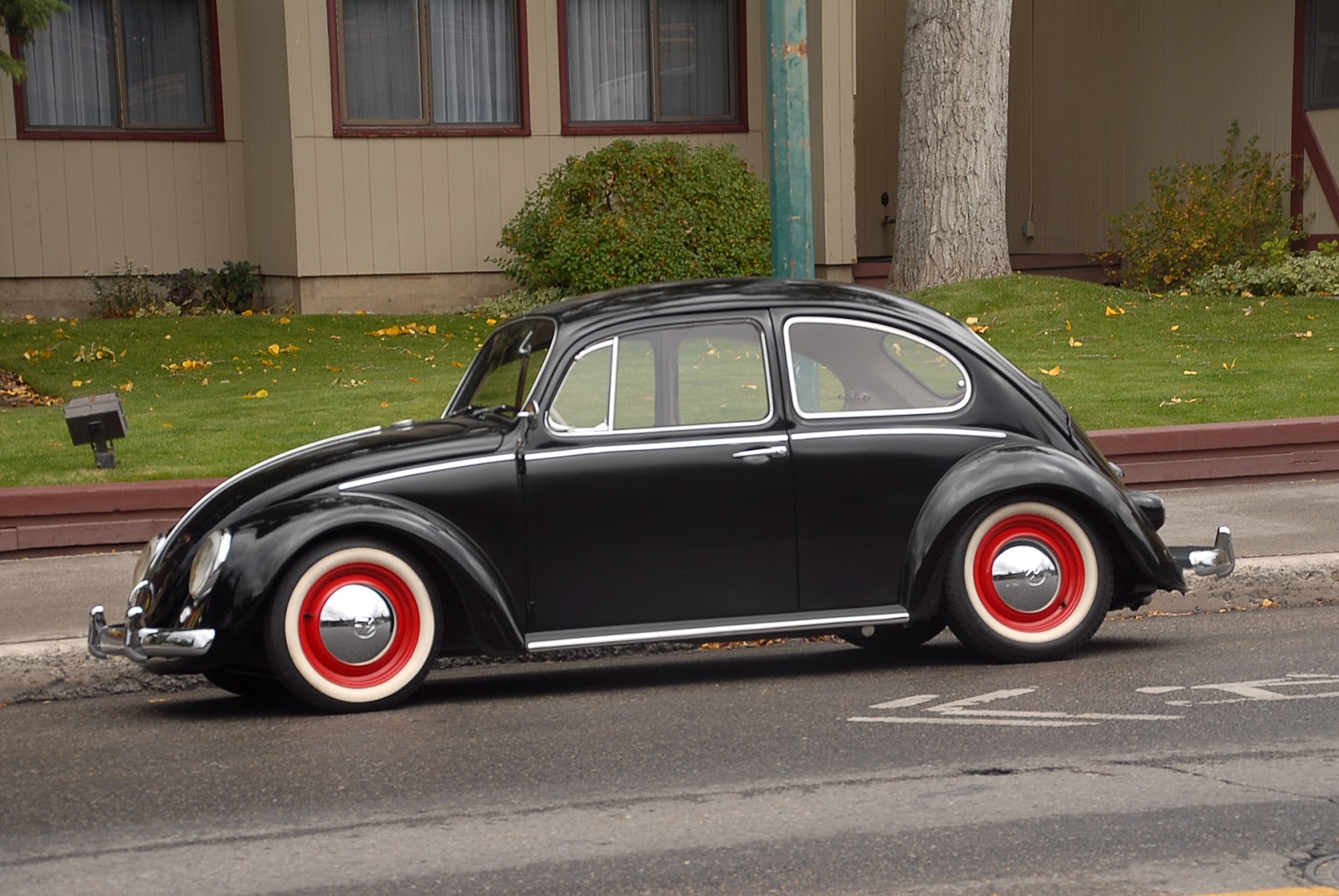
Banff Bug
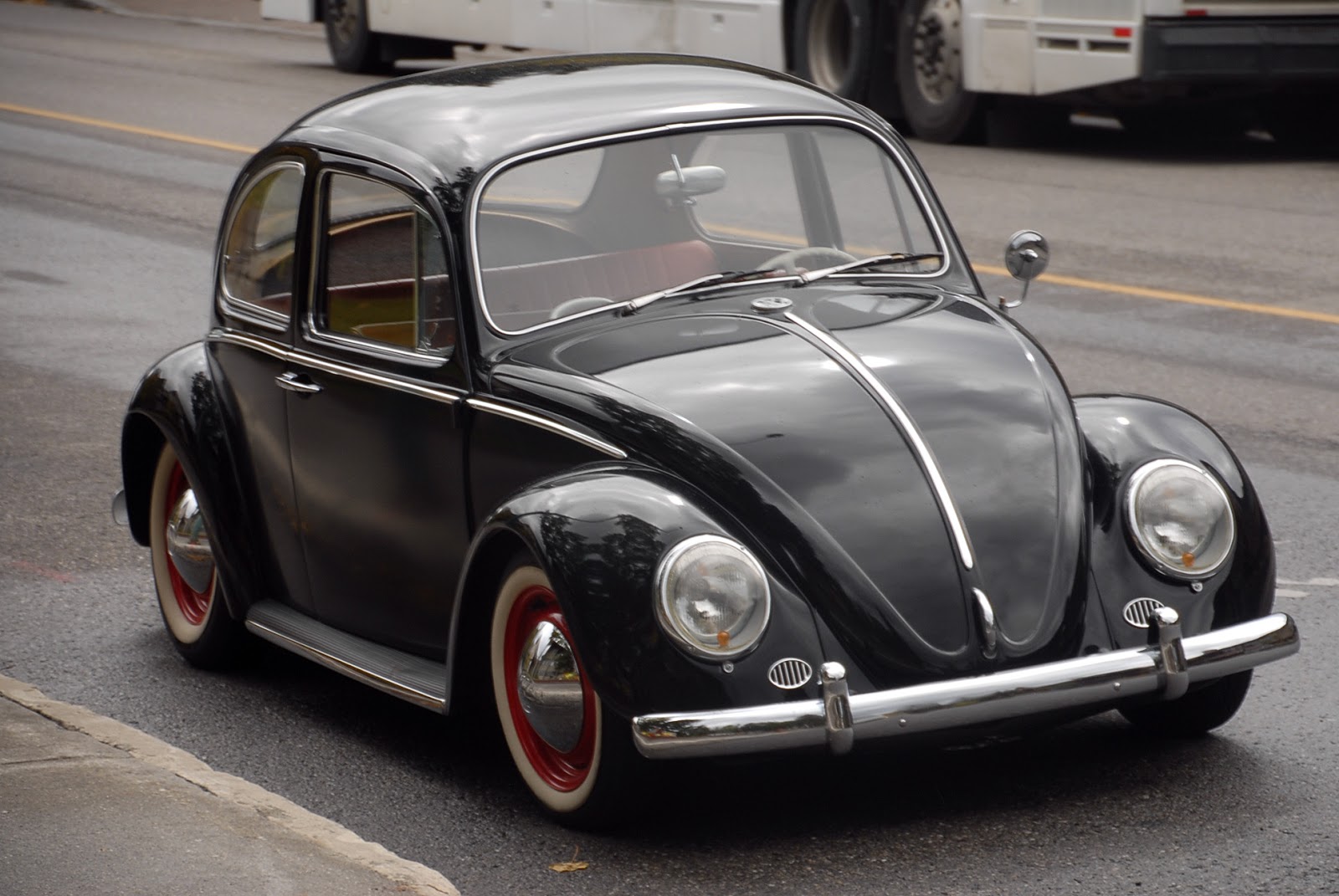 from Alex Emond: "Here's a little bug that was parked in Banff this morning. 1960 is my guess. This is in excellent condition for a 55 year old machine. Pampered. The newest VW beetles are pumped up, compared to this one."--AE


September 30, 2015
Stephen Shore, the Valiant
 from Stephen Shore Uncommon Place: The Complete Works. The book has powerful images from Shore's cross-country trips in the 1970s and 1980s. He has an eye for color and for the ragged, scattered edges of the American built environment.
September 29, 2015
1949 Dodge Power Wagon for sale, apparently.

Alec Emond sent me link to the site where a 1949 Dodge Power Wagon is being auctioned. Bidding closes in mid-October. There are photographs. (But the photo you see here is not that truck; it's the Maine Warden Service truck we saw at the Sedgwick VFD show a couple years back).
from the site:
"1949 Dodge Power Wagon 4 X 4. Vin # 83913250. Mileage reads 26,464. Powered by the original flat head 6 cylinder gas engine. 4 speed manual transmission with 2 speed transfer case and PTO winch. The Dodge starts easily and runs good, the transmission works as it should and it has very good brakes. This Truck has been partially restored. The cab has minor surface rust and overall the Truck is very solid. Tires are in good condition. Comes with many spare parts. Built for wartime use, Mopar invented the modern four-wheel-drive pickup and created a legend. The 94hp, 230-cu.in. flathead-6 powered truck was never going to win any speed contests, but for the municipalities, fire companies, ranchers, farmers and others who ordered them, speed was never the issue. They were tough as rocks, cheap to fix, and lasted forever. To watch the video, click on the Video tab next to the Photo Tab above. Please contact Doug at 530-333-3399 with any questions or to make an appointment to preview the 1949 Dodge Power Wagon 4X4. For information on how to create an account and/or how to bid on Government Liquidation, please call 480-367-1300. We encourage you to come out and see the vehicle at the location. Bidding closes at 2:00 pm Pacific time. California buyers will be registered at the site. Out of state buyers will receive a clear North Dakota title to complete transfer in their home state. An onsite shipping coordinator can assist you after the purchase of your trailer at no charge. Please call (530) 820-3348 for any shipping related questions."
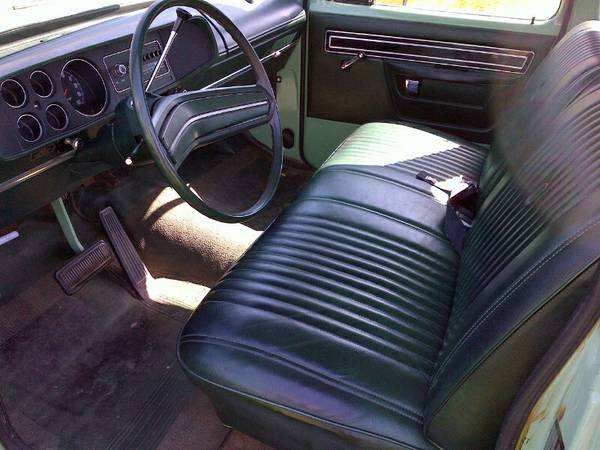
1975 Dodge 200 3/4 ton Club Cab
 Always liked this era Dodge trucks. This is a 2WD, not a Power Wagon, but it looks very clean, and the seller claims 56k miles. Hard to beat the Slant Six for reliability. Find out more on B-A-T.
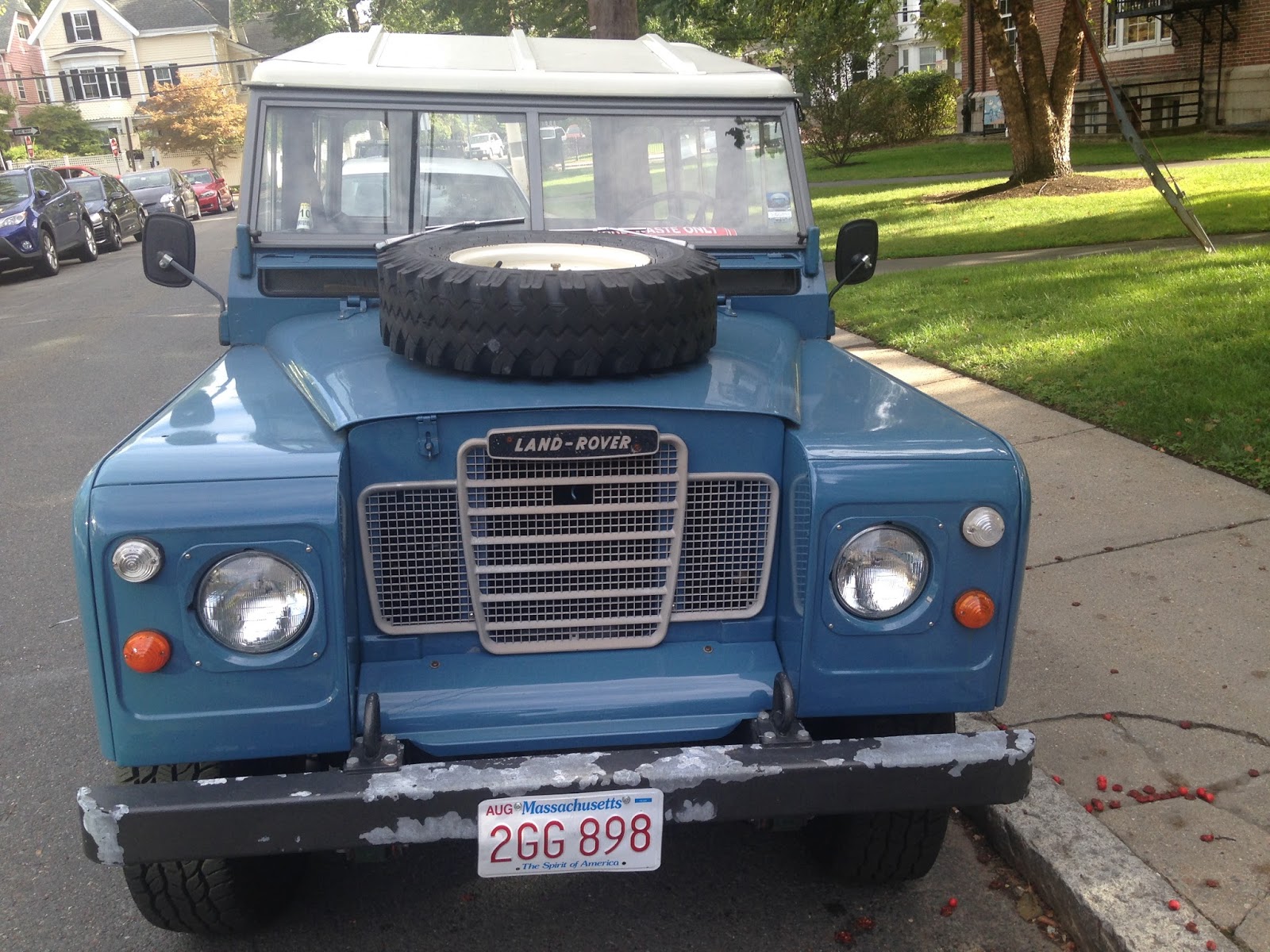
Cambridge Safari & the Urban Land Rover
 Cambridge is not a great habitat for old trucks. On the ride to school HBB did point out this nimble and neatly configured SWB Land Rover. One of my favorites. Were you following AL a few years back when we were reporting from the Netherlands you might have noted our interest in the Dutch obsession with Land Rovers. L-R's play 2 different roles in the NL, from what we can tell. They are very high-status personal vehicles, which cost the owner a lot of euros in license tax before they're allowed on the road. Since commercial vehicles are taxed differently L-R's are also quite common as commercial/service vehicles, farm trucks, etc. But was strange in such an urbanized, civilzed and densely populated corner of Europe to see so many L-R's rumbling about.