Michael J. Gelb's Blog, page 7
May 27, 2011
Learning Leadership Lessons of the Past

Interview with Michael J. Gelb
by Natalie Morera – 5/27/11
C.L.O.'s can draw lessons from historical leaders to better themselves and their employees.
The great leaders of the past are more than just history — they can serve as an invaluable template for leadership development today.
Michael J. Gelb, author of How to Think Like Leonardo da Vinci: Seven Steps to Genius Every Day, has studied historical figures such as Leonardo da Vinci, Abraham Lincoln and Thomas Edison to impart the lessons they hold for today's leaders. For example, Gelb said the notion of freedom, something Abraham Lincoln "championed in a universal way," applies to organizations today, but that many just pay lip service to it.
"How do you genuinely support an environment that encourages the freedom of ideas, that encourages people to really think for themselves?" Gelb asked. "One of the problems that leaders often have is … an unconscious shadowy fear that if they really listen to everybody, and really get everybody to express all their opinions, that means they'll have to actually listen to them. They won't have the freedom to make their own decisions."
The decisions a leader makes will be far more intelligent because of the diverse opinions and points of view expressed, Gelb said. "It takes a very secure leader to genuinely encourage this democracy of ideas, but it is one of the powerful elements of a truly innovative culture."
An organizational culture of innovation and creativity has always been important, but because of the accelerated pace of change, analytical types now are being pushed to be creative and creative types are being pushed to be analytical. "A half a brain is a terrible thing to waste," Gelb said. "The new working world requires whole-brain thinking."
If leaders want whole-brained employees they have to embody it, since people will pay more attention to what is done rather than what is talked about. "Actually being creative is a good place for any CLO to start," Gelb said. "Then, it's recognizing that creative thinking is a skill. It's a competency that can be developed and it needs to be developed hand-in-hand with critical thinking."
Gelb cites Leonardo da Vinci as a model for a CLO. "He's probably the human being who utilized the most potential of anyone ever," Gelb said. "If you're interested in developing human potential, which is part of what I think being a CLO is all about, Leonardo da Vinci is a very powerful role model."
Da Vinci gave practical advice to his students to quicken the "spirit of invention," Gelb said.
"He says the secret is that you should look at abstract patterns like clouds in the sky or smoke emitted from fire," Gelb said. "Let your mind go free and you will see in these an infinity of things — divine landscapes that you may then reduce to their complete and proper forms. He's saying generate first, use the right hemisphere, get way out of the box, then step back and think about how it fits together and how it really applies to your practical situation."
Ron Felber, president and CEO of chemical supply company Chemetall, and author of Presidential Lessons in Leadership, said President Lincoln can be very influential to business leaders.
"He thinks about what he does, he ponders it, he goes to his advisers and then he acts," Felber said. "There's an analysis phase, a collaborative phase and an action phase — it's not necessarily a burst of action. It's a strategized approach to action that unfolds over time. That kind of measured, thoughtful response — there'd be a lot fewer mistakes made in hiring, firing and execution of business strategy if people were more deliberate."
Decision making and creative thinking are just some of the lessons to be learned. Felber pointed out that learning from failure is another important ability demonstrated by past leaders. "We should look at failures as learning opportunities, make sure they don't happen again and learn lessons from them," Felber said.
He cited the definition of a birdbrain. "Birds keep repeating the same things over and over again," Felber said. "They apparently don't have the power to learn. That's obviously not what we want to do. We want to build on our cultural achievements, but to build on them you have to know what they are."
Natalie Morera is associate editor of Chief Learning Officer magazine.


April 11, 2011
Forbes Feature: Leonardo & Edison on Investing

Investing Lessons From Da Vinci And Edison
Forbes Interview with JASON APOLLO VOSS, CFA
As I discuss in my book The Intuitive Investor: A Radical Guide for Manifesting Wealth in my almost two decades as a successful investor I have discovered that the most important investing skill is: understanding information. This is because information is the basis for investment evaluation and investment decisions.
Understanding information well equips investors to recognize when they don't have enough information; to rapidly sift through unimportant information; to see what other investors miss; to more artfully respond to crisis or panic as it affects investments; to properly evaluate the management team of a business to know when it is time to either buy or sell an investment; to uncover hidden risks; and to avoid herd mentality.
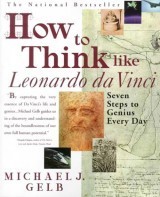 In keeping with this important theme I interviewed Michael J. Gelb, author of the New York Times Business best seller How to Think Like Leonardo da Vinci: Seven Steps to Genius Every Day (Bantam Doubleday Dell, 1998) who specializes in applying lessons from geniuses like Da Vinci to improve our thinking. Hopefully this leads to a greater understanding of information so that we can accomplish great things as investors. Mr. Gelb is also renowned for his seminars and consulting for a number of global investment firms based on his research.
Jason Apollo Voss (JAV): Which of Da Vinci's principles do you feel are important for investors to know about to improve their understanding of information? How may someone apply these principles to make better investment decisions?
Michael J. Gelb (MJG): All of the principles are important. Each one sets the stage for the one that follows and together they form a system for thinking like Leonardo.
The Da Vinci principles are:
Curiosità – An insatiable quest for knowledge and continuous improvement. The best investors I've met are unrelenting in their questioning about a company's balance sheet, valuation, management, culture and competitive position, among many other things.
JAV: I would definitely agree that the best investors I have known have been insatiably curious. In fact, I have said to many investor groups and brokers whom I've spoken to over the years that to be good at investing you have to be a Renaissance man; knowledgeable about many things, and especially about how things interconnect.
MJG: In the mid 90s, I co-directed a series of 3-week residential Leadership Development programs for the senior leaders of a global investment firm (LGT). The aim of the program was to guide them to become "Uomo Universale" aka Renaissance Men and Women. The program included lessons in poetry with the former Poet Laureate of Great Britain, Ted Hughes and chess/strategy lessons from Grand Master Raymond Keene, along with guidance in How to Think Like Leonardo from Yours Truly. I guess it worked because the firm was sold shortly after our programs were completed for a substantial profit.
Dimostrazione – Learning from experience/Independent thinking. Why do we have bubbles followed by crashes, followed by bubbles and crashes? One reason is that too many investors follow the herd rather than thinking independently.
JAV: It seems that human beings are wired in our DNA to be social creatures and to align ourselves to the movements of the group, what are some simple steps we can we can take to become more independent thinkers?
MJG: Leonardo counseled that we discipline ourselves to consider multiple perspectives, especially those that are in disagreement with our opinions. As he noted: "The greatest delusion men suffer is from their own opinions."
Sensazione – Sharpening the senses. Investors need to pay attention! It's critically important to listen carefully and see what's actually going on around you. Investors need to be sharp (a sensory term-the opposite is "dull").
JAV: Would you include instinct and intuition in this category? How did Da Vinci feel about using his instincts and intuition to make better decisions?
MJG: Leonardo believed that sensory awareness and refinement served to nurture intuition. As he stated it: "The five senses are the ministers of the soul."
Sfumato – Managing ambiguity and change. The ability to maintain composure in the face of uncertainty may be the most important quality for a successful investor. When greed dominates prices are high, when fear dominates things go on sale, but to discern what's really going on investors must stay centered and free from greed and fear. Easy to say, hard to do!
JAV: I totally agree. To be a successful investor, you have to gain comfort with uncertainty and change.
Arte/Scienza – Whole-brain thinking. Too many investors use only half their brains. Left-brain investors crunch the numbers and do it all by charts and graphs, Right-brain investors go by feeling but aren't rigorous quantitatively. Whole-brain investors analyze data comprehensively and then consult their intuition.
JAV: Well said. In our culture it seems that there is an over-emphasis on analytical thinking, so what are some things that people can do to increase their whole-brain thinking?
MJG: One of the best things people can do is practice Mind-Mapping, the whole-brain idea generation and organization method developed by my good friend Tony Buzan. Mind Mapping engages the left hemisphere through the discipline of selecting relevant key words and the right hemisphere through the use of color, imagery and pattern generation. If you ask Buzan about his inspiration for creating Mind maps he will tell you that he was particularly inspired by studying the notebooks of Leonardo Da Vinci.
Corporalità – Body-mind fitness. Psycho-physical fitness allows investors to manage the stress associated with risk.
JAV: When I was a portfolio manager I found that I had to exercise in order to do my best thinking. For one, it was a source of stress-relief, but also often resulted in some of my best ideas as my left brain would relax and allow my right brain some space to do its work. Is that another way to think of corporalità?
MJG: Yes, many people report that they get their best ideas during or just after exercise. And, although the brain is just over 2% of the average persons body weight it utilizes more than 25% of our oxygen intake. Exercise helps to keep your brain oxygenated and the result is clearer thinking.
Connessione – Systems thinking. A great genius like Leonardo makes connections that other people don't see. Leonardo invented the parachute before anyone could fly – That's thinking ahead! This type of thinking is especially important in the investment world.
JAV: How is this different from the whole brain thinking we were talking about before?
MJG: Connessione is the product of all the principles for thinking like the Maestro. If you are unrelentingly curious, cultivate independent, rigorous thinking, sharpen your senses, embrace uncertainty, use your whole brain and keep it oxygenated then you are much more likely to discover new connections.
JAV: In your more than three decades of teaching some of the world's largest corporations about applying principles to increase genius, what obstacles to empowered thinking do most people face? How can individual investors overcome these?
MJG: Many people have been conditioned to do the opposite of the Da Vinci principles. Instead of being encouraged to ask challenging questions they just try to get the answer that they think the teacher, professor or boss wants. A recent headline in The Onion proclaimed "LOWEST COMMON DENOMINATOR PLUMMETS." It's funny, but I'm afraid it's true. Education has been geared toward test results rather than independent thinking for the past few decades and the result is that Dimostrazione (independent thinking) is rare. And, many people work in environments that dull down the senses. If you are confined to work in a cubicle then it's harder to think out of the box. In the last 30 years the pernicious trend toward short-term thinking has atrophied the ability of many to embrace the uncertainty that inevitably accompanies innovative breakthroughs. Despite lip service to the notion of whole-brain thinking and work-life balance, many folks work in situations that are dominated by half-witted approaches and a disregard for wellness. And, big-picture, systems thinking, remains elusive.
JAV: Well said. In my investment career one of my most important screens for an investment was the way in which management thought about time. That is, where was their mental focus and energy? Was it on long-term wealth creation, or on satisfying the Wall Street consensus for the next quarter's earnings report?
So Michael, if executives have a hard time with this how can folks overcome these obstacles?
MJG: All of my books are devoted to helping people find practical tools that will allow them to embody the principles of genius thinking. Keeping a notebook like Leonardo did and learning to Mind Map, are, for example, powerful means to overcome these obstacles.
JAV: Leonardo was always learning new things. How can investors learn to learn?
MJG: One of the myths about great geniuses is that they don't make mistakes, but, of course, this is nonsense. Leonardo made some doozies – like his faulty attempt to divert the flow of the Arno River for the Florentine government, (he caused a flood!), and his experiment to dry the paint for his masterpiece entitled the Battle of Anghiari, (he melted it!), but Leonardo always reflects on the lessons learned and used the knowledge to avoid making the same mistake again. And, he was continuously exploring to learn more about everything. So the simple answer is that investors must use mistakes as learning opportunities and continue looking for new opportunities and connections.
JAV: You've also written about Thomas Edison (Innovate Like Edison, Penguin 2007). Why Edison?
MJG: Leonardo was probably the most creative person who ever lived but Thomas Edison is history's greatest practical innovator. Beyond his invention of the phonograph, motion pictures and a system to light the world, Thomas Edison invented the rigorous, disciplined process of innovation. He established the world's first Industrial Research and Development laboratory.
Although Leonardo's principles are profoundly relevant for the development of human potential and organizational creativity the Maestro was concerned with pure truth, beauty and goodness, whereas Edison was more focused on applying creativity to generate wealth. Edison noted, " Anything that won't sell I don't want to invent. Sales are proof of utility and utility is success."
JAV: What are the Edison principles and which ones are most relevant to investors?
MJG: In the case of Edison we (Gelb's co-author is Sarah Miller Caldicott, the great grand-niece of Thomas Edison) refer to "Competencies" rather than principles, and they are all important. Each one sets the stage for the one that follows and together they form a system for innovating like Edison.
Edison's Five Competencies of Innovation™ are:
Solution-Centered Mindset. Investors must maintain a primary focus on solving problems rather than being dragged down by them.
JAV: Can you give an example of a problem Edison encountered where he applied this competency? Then, can you describe a common investor problem where this competency would help a solution to form?
MJG: Edison's investors approached him to question why he hadn't yet generated any results in his quest to invent an effective electric storage battery. Edison replied, "Results. I've gotten lots of results. I know thousands of things that don't work." This response demonstrates Edison's continual focus on finding solutions and learning from things that didn't work. (His optimism in the face of this challenge was so compelling that his investors gave him more money and, eventually, he succeeded, generating huge profits for all involved.) The lesson for individual investors is simple: Avoid getting bogged down by dwelling on your past mistakes, and focus instead on applying the lessons learned.
Kaleidoscopic Thinking. Edison's strategies for generating new ideas and finding powerful business opportunities are especially relevant for investors.
JAV: As an investor I think that the hardest thing is to generate good investment ideas, that is, things worth investigating further in the first place. How did Edison come up with new ideas? Is there any way to utilize these same techniques as an individual trying to improve investment returns to apply these methods?
MJG: Edison said: "If you want to get a good idea, get a lot of ideas!" Open your mind to consider a broad and expansive range of possibilities, then focus in on the most compelling ideas.
JAV: I like that; very simple. Best of all, I think it takes advantage of the right brain's ability to make interconnections, or Connessione in Da Vinci speak.
Full-Spectrum Engagement. This competency focuses on the ability to manage complexity. A skill that is even more important now than it was in Edison's time.
JAV: Because understanding information, especially complex information, is one of the most difficult things for investors, could you please give us a tip on how Edison managed complexity?
MJG: Edison always sought to find simplicity in the midst of complexity. He believed in Occam's Razor, also known as the "law of economy." This is the principle that guides us to seek the simplest plausible explanation, the one that makes the fewest assumptions. Einstein said " Things should be made as simple as possible, not simpler." Edison honed his instinct for optimal simplicity. In the complicated world of investing this is a valuable instinct to cultivate. For example, if you can't understand what a company does or why it's valuable, don't buy it!
Master Mind Collaboration. Strategies for leveraging diverse viewpoints.
JAV: You said that each of Edison's competencies are important for investors to apply, but I am unclear how to apply this competency to improve my investment returns. Could you please expound a bit more on this point?
MJG: Edison assembled a team of brilliant people from diverse and complementary backgrounds in order to create his amazing innovations. As an individual investor one of the best things you can do is to create your own Mastermind group of advisors from diverse backgrounds.
JAV: Or perhaps you just confer with your friends or join an investment club.
Super-Value Creation. The holy grail of investing: how to discern opportunities for value that are outstanding in a competitive marketplace.
JAV: Undoubtedly. The term "super-value" implies a way of measuring value, how did Edison measure value creation? How as investors can we do the same?
MJG: Edison measured value creation through a combination of customer satisfaction and profit. As investors we need reliable formulae for determining when an investment is cheap. A company can be very well run and have a great market position but if it's over-priced then it's not a good value. This assessment must blend quantitative analysis with intuitive awareness.
JAV: You, like me, consider yourself to be a conscious capitalist; something that is both a mindset and a movement. Talk to us about what being a conscious capitalist means to you?
MJG: Corporations are the most powerful force in the world today. If we want a better world, we need better companies. In the course of my career I've aimed to help my clients think positively and creatively about all stakeholders, not just shareholders. Recently, my friend Professor Raj Sisodia released a benchmark book entitled Firms of Endearment. Raj, a professor at Bentley Business School, makes a compelling case that organizations that focus on the welfare of their employees, customers, vendors and communities, as well as their shareholders, outperform those who focus exclusively on financial return.
JAV: For me, social consciousness does lead to good long-term investment results. Would you agree?
MJG: Yes. And, it's good to have the research that supports this more altruistic ideal.
I serve as director of Creativity and Innovation Leadership for the Conscious Capitalism Institute.
JAV: How important do you feel reflection, contemplation and meditation were to Da Vinci's and Edison's successes? Did they have an intentional practice of such things? How important do you feel these modes of consciousness are to ultimate investment success?
MJG: Da Vinci and Edison both took their inspiration from Nature. Leonardo writes poetically about the Earth as a living being and Edison wrote that his purpose was to "bring out the secrets of nature for the happiness of humanity." They didn't sit in the Lotus position and repeat mantras but they were both deeply contemplative. Leonardo stated that "Men of genius sometimes work best when they work least!" Here he is expressing the importance of receptivity and deep relaxation in the process of creation. Edison would go fishing in the middle of a workday at a nearby pond, and he would fish with a baitless hook. Why? Because he was really "fishing" for breakthrough ideas and he knew that relaxation made him more receptive to intuitive insight. These modes of consciousness are critically important to investment success (and success of any kind). The key is to find your own natural rhythm-balancing intense focus and concentrated work with reflection and receptivity.
JAV: What a great answer; I completely agree. Do you feel that Da Vinci and Edison would be investors in financial markets if they were alive today? If not, why not? If so, how do you think that they would go about investing? That is, what would their process look like?
MJG: Leonardo wouldn't bother with investing. He would outsource his portfolio to a good Intuitive Investment Manager. Edison would plow all of his capital into his next business scheme and we'd be scrambling to buy shares!
JAV: How can people learn more about your work?
MJG: www.michaelgelb.com
JAV: I know you do most of your work for Fortune 500 companies. Besides reading your books and listening to your audio programs is there a way that individuals can learn from you directly?
MJG: I will be speaking at a few public events in 2011 including:
5/16-19 Boston: Keynote at the Conscious Capitalism Institute Conference at Bentley U.
6/13-17 Brisbane, Australia : Keynote and Workshop at Happiness and It's Causes
9/23-5 Las Vegas: Keynote and Workshop at The International Coach Federation Global Conference
JAV: Thanks Michael, this has been very valuable. Best of success to you!
MJG: Thank you!
March 25, 2011
Michael Gelb to Speak on Good Vibrations Radio Teleseminar, March 29, 2011
 Are you seeing that the old ways of doing things are just not working anymore?
 Do you ask yourself:
How can I live my life with ease and grace?
How can I activate all of my gifts and abilities?
How can I turn my dreams into reality?
How can I feel fulfilled in my life?
How can I be love, joy, and peace now?
For answers to these questions click here.
Please join me in an enlightening teleseminar series that I'm in that will help you answer your most important questions – and the best part is, it's FREE!
It's called Good Vibrations Radio and it's produced by Solarzar & Kyralani the hosts of Good Vibrations Radio. Solarzar and Kyralani are agents of transformation in business, government and personal empowerment. Additionally they are experts in the areas of Leadership, Communication and as well as experts in a variety of metaphysical disciplines, including Biofeedback, Reiki, Vibrational healing, Chakra systems, numerology, palmistry, astrology and tarot. Solarzar and Kyralani are ordained ministers in the Universal Life Church who infuse spirituality in all they do. Together they offer one of kind events.
Watch Solarzar & Kyralani's video for more information…
Solarzar & Kyralani will be interviewing me and 23 other of the world's top thought leaders about how to achieve the success you've always dreamed of having.
You can hear me on Tuesday, March 29, 2011, 9:00 PM Eastern, (8:00 PM Central, 6:00 PM Pacific).
Here is a sampling of the amazing experts who will be a part of this series…
Bernie Siegel, M.D., is a retired general/pediatric surgeon who is now involved in humanizing medical care and medical education. He originated Exceptional Cancer Patients (ECaP), a specific form of individual and group therapy. Dr. Siegel has dedicated himself to humanizing the medical establishment's interactions with patients and empowering individuals to play a greater role in the healing process. He is an active speaker, traveling around the world to address patient and caregiver groups. Bernie and his wife, Bobbie, live in Connecticut and have five children and eight grandchildren.
Dr. Eric Pearl – As a doctor, Eric ran a successful chiropractic practice. One day patients reported receiving miraculous healings from cancers, AIDS-related diseases, epilepsy, birth disfigurements, cerebral palsy and other serious afflictions. His patients' healings have been documented in six books to date, including Eric's own international bestseller, The Reconnection: Heal Others, Heal Yourself, now in more than 36 languages. Eric and Reconnective Healing elicit great interest from top doctors and medical researchers at hospitals, colleges and universities worldwide. He travels the globe throughout the year bringing the light and information of Reconnective Healing onto the planet. He teaches you how to activate and utilize this all-inclusive spectrum of healing frequencies that allow you to completely transcend "energy healing" to access a level of healing beyond anything anyone has been able to access prior to now!
Marilyn Schlitz, PhD. , is President and CEO of the Institute of Noetic Sciences. She has pioneered clinical, laboratory, and field-based research in the areas of consciousness, human transformation and healing. A researcher, speaker, change consultant, and writer. She has conducted research at Stanford University, Science Applications International Corporation, the Institute for Parapsychology, and the Mind Science Foundation, has taught at Trinity University, Stanford University and Harvard Medical School, and has lectured widely at sites including the United Nations and the Smithsonian Institution Marilyn has co-authored "Living Deeply: The Art and Science of Transformation in Everyday Life" and "Consciousness and Healing: Integral Approaches to Mind Body Medicine".
Swami Kriyananda - World-renowned spiritual teacher and internationally regarded author and speaker, Swami Kriyananda refers to himself simply as "a humble disciple" of the great spiritual leader Paramhansa Yogananda. And, indeed, that humility is the most striking aspect of a man who is the last disciple of Paramhansa Yogananda still teaching in public life. At Yogananda's request, Swami Kriyananda has devoted his life to lecturing and writing, helping others to experience the joy and living presence of God within. He has taught on four continents in seven languages over the course of nearly 60 years. In addition, Swami Kriyananda has taken the ancient teachings of Raja Yoga and made them intensely practical and immediately useful. Swami Kriyananda is widely recognized as one of the world's foremost wisdom teachers and authorities on meditation and yoga.
Bishop Carlton Pearson is blazing a new trail of spiritual leadership. He is an esteemed, articulate, and leading authority of a modern Christianity. With the release of his books, "The Gospel of Inclusion", and "God is Not a Christian, Jew, Muslim, Hindu… God Dwells With Us, In Us, Around Us, As Us" he is quickly becoming known as "a voice of reason in a world of religious extremes." Carlton Pearson offers a fresh perspective on a variety of current topics on the hearts and minds of the people. He continues to pioneer and provoke with his remarkable views on a wide range of issues inspiring a genuine spiritual conversation. Declared a modern-day heretic by mainstream Christian leadership, he continues to preach his Gospel of Inclusion which offers room for all.
There are 24 speakers in all including: Rich German, DavidPaul Doyle, Syndee Eartheart, Kaitlyn Keyt, Elizabeth Diamond, Chaney Weiner, Mabel Katz, Allison Maslan, Petey Silveira, Jean Slatter, Mahendra Kumar Trivedi, Lara & Johnny Fernandez, Norma T. Hollis, Mark Romero, Rev. Dr. Christine Breese, Rev. Dr. Kimberly Marooney, Janet Conner, Jacqueline Joy, and more.
We'll be sharing the best of the best strategies, tactics and processes we know to help you get from where you are to where you want to be faster and easier than ever before.
This three month weekly training is completely free!
All I ask is that you help us help millions of people by telling your friends and family about it and talk about it on your Facebook, Twitter and blog if you have one.
Please take advantage of this and grab your seat before it fills up… Register here.
After you register, keep an eye out for Solarzar & Kyralani's email for specific details on accessing the interviews.
Also, be sure to click on the Bonus Gifts link in Solarzar & Kyralani's email and grab your Bonus Gifts. They're all yours just for enrolling in this free series.
P.S. These interviews will be recorded and will be available at no charge after each show for a limited time so you won't miss a thing. We'll send you the web address of each replay recording as soon as it's posted on our website. Sign up right now, while it's fresh on your mind… And let your friends and family know.
http://www.GoodVibrationsRadio.com/Michael/invite
March 22, 2011
Upcoming: The Coaching Show & 2011 ICF Annual International Conference
Michael J Gelb began serving as a coach to senior executives in the late-1970s. Share his insights developed over the last 30 years through these 2 upcoming opportunities.
The Coaching Show
with your host Christopher McAuliffe, MCC
Listen Live tomorrow, Wednesday March 23 2011, 8AM Pacific Time
The Coaching Show, an Internet radio show on wsradio.com, hosted by Christopher McAuliffe, a Master Certified Coach, Past President of the local ICF & CoachVille chapter.
This show is designed to provide support in growing and improving your business, whether you are a coach, entrepreneur, manager, consultant, or business owner. The Coaching Show, where leaders in the field of coaching come to share their wealth of information and experience; Stay Current – Stay tuned.
Find out more and listen to the show here.
The Coaching Show is also available as a free podcast via iTunes. Just search the iTunes Store for "the coaching show."
The 2011 ICF Annual International Conference
Michael Gelb: Genius Thinking
Michael Gelb will offer 2 special presentations at the 2011 ICF Annual International Conference.
Reception program: Saturday evening, September 24
Breakfast Keynote: "How to Think Like Leonardo da Vinci"
7:30 a.m. – 10 a.m., Sunday, September 25
The 2011 ICF Annual International Conference will be held in Las Vegas, Nevada, USA from September 24-27. Make plans to join your global coaching peers for this premier professional development and networking event.
March 16, 2011
Conscious Leadership: Integrating the Masculine and Feminine
 Please mark your calendar for a fabulous event: The 3rd Annual International Conference on Conscious Capitalism.
May 17-18, 2011 at Bentley University in Waltham, Mass.
Featured speakers include Marianne Williamson, Rosabeth Moss Kanter, Raj Sisodia and Yours Truly!
Over the past thirty years organizations have increasingly recognized the importance of leadership values such as collaboration, compassion, nurturing and valuing relationships. An era of partnership between men and women in leading and shaping human society and culture is finally at hand as well as the rise to prominence of female leaders in multiple sectors.
As the conference overview states: "Our speakers will address the significance and implications of these changes on business and society, including the impact of women in the marketplace, in managerial ranks and in the corporate boardroom."
I will be giving the penultimate keynote on the topic of "Integrating the Masculine and Feminine." I will lead participants in an exploration of this question: "What changes can we can make in our habitual ways of thinking and behaving in order to more fully embrace this more balanced new paradigm of leadership?"
And, when I'm not presenting, I will be in the audience taking notes.
Hope to see you there!
February 23, 2011
Glory & Refreshment!!
 I'm thrilled to announce the release of my wife Deborah's first CD entitled "Arias and Songs."
The 15 tracks include magnificent pieces by Handel, Mozart, Rossini and more.
Deborah expresses her inspiration through the words of Johannes Sebastian Bach: "The aim and final end of all music should be none other than the glory of God and the refreshment of the soul."
This glorious, refreshing, divine music will uplift, engage and inspire you.
If everyone in the world could listen to this every day there would be Harmony and Joy on Earth!!
Listen to samples here!
I have been fortunate as a life long opera goer to have been present in the audience to hear some of the world's greatest mezzos — Rise Stevens, Marilyn Horne, Frederica von Stade, Regina Resnick. And after hearing Deborah sing, I have to conclude that she belongs in this circle of genius. The texture and brilliance of her voice, its extraordinary range and ornamentation, its beauty, power and resonance are of the same order that I heard in the luminous mezzos of the past. And also there is her personality–physical beauty matched with charm and evocative presence. Indeed she is an artist of the highest degree. – Feedback from Jean Houston, Ph.D., author of The Possible Human and The Hero and the Goddess
January 25, 2011
Wine, Beauty and Genius!
Last night I had the privilege of making dinner for Nobel Laureate (Physics), Murray Gell-Man.
Renowned for his elegant theory of subatomic particles (Quarks*), Murray is, at age 81, vital, incisive, witty and charming.
We discussed the history of genius; (great to do this with a bonafide genius!). I gave him the criteria described in Discover Your Genius and he did a pretty good job of guessing the members of my Dream Team. (He's one of the few people to ever get Brunelleschi.)
We enjoyed a Pierre Peters Champagne with our Lobster and Green Chile Pasta, a 1998 Borgogno Riserva Barolo with our Dijon-Sage Chicken and a Daniel Bouju "Empereur" Cognac with our comparative tasting of dark chocolates. Yum!
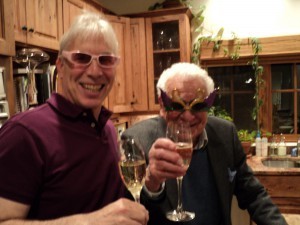
Like his former colleague Albert Einstein, Murray is insatiably curious, passionate about learning, and wonderfully playful; (don't you love the specs we are wearing in the photo?). Einstein said, "Things should be made as simple as possible, not simpler." Murray's work is an example of this optimal simplicity. And, at the heart of the simplicity, (in the midst of complexity,) is the quest for Truth and Beauty. Check out his TED talk on Beauty and Truth in Physics.
December 20, 2010
How can we lead a happier, more meaningful life?
 Come to Australia in June to discover the answers to this compelling question! I'm honored to be offering a keynote and workshop on a program that includes His Holiness the Dalai Lama, President of East Timor His Excellency Dr Jose Ramos-Horta, acclaimed primatologist Dr Jane Goodall, and pioneering emotions researcher Dr Paul Ekman.
Since the first Happiness & Its Causes conference in 2006, over 8,000 people have been moved and inspired at what is now the world's most important forum on human happiness. Join the brightest minds in philosophy, psychology, science, religion and the arts to explore the age-old question – "How can we lead a happier, more meaningful life?".
December 17, 2010
Wine Drinking for Inspired Thinking: Holiday Gift Idea
Brighten this Christmas, Hanukah, Kwanza, Diwali, New Years with an 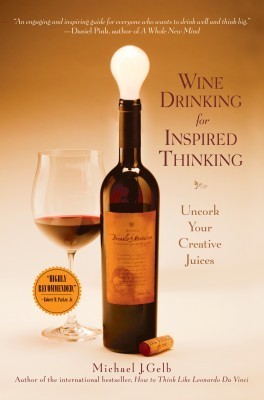 Autographed First edition copy of WINE DRINKING for INSPIRED THINKING: Uncork Your Creative Juices!
Here's what some of the world's leading wine writers say about this book:
Wine Drinking for Inspired Thinking: Uncork Your Creative Juices is one of the most practical and useful books about a consumer's experience in dealing with the subject of wine that I have ever read. There is an enormous amount of terrific, and more importantly, reliable and useful information in this book by Michael Gelb. Highly recommended. Robert Parker Jr. The Wine Advocate
There are more books on wine available now than ever before, but this one is special. In Wine Drinking for Inspired Thinking: Uncork Your Creative Juices, Michael Gelb has taken a totally different approach to understanding and having fun with wine by combining poetry, philosophy, art, music, and science. This is not a book just about wine but the many people who have enjoyed the pleasures of wine throughout history. It is also filled with valuable information on buying, storing, and serving wine, along with his ultimate wine and food combinations. In the process, Gelb inspires us to enjoy a more creative approach to the art of living and drinking. Kevin Zraly, Author of The Complete Windows on the World Wine Course
Michael Gelb takes a mind-altering, life-changing approach to wine and the mind in this wonderful book. Drink deeply from his delightful perspective and savor life fully lived. Natalie MacLean, four-time James Beard award-winning author of Red, White and Drunk All Over
If you cannot imagine having Socrates, Shakespeare and Da Vinci over to laugh at your jokes, weep at your poetry and beg for your advice on wine, then your work/play balance might need serious adjustment. Your only hope is to go immerse yourself in Michael Gelb's delightful new book, and discover why the best things in the world to open together are a bottle of wine and your mind. Jennifer Rosen, author of The Cork Jester's Guide to Wine and winner of the 2005 James Beard Award for Internet Wine Writing
SALE:

Buy a Wine Drinking for Inspired Thinking: Uncork Your Creative Juices T-shirt for 50% off this holiday season! Original price $24 on sale now for only $12, (price includes shipping in the U.S.).