Rebecca Stonehill's Blog, page 68
February 18, 2015
A First Book of Nature

I do so love this book. Written by Nicola Davies and illustrated by Mark Hearld, A First Book of Nature is a celebration of nature and all the colours, textures and beauty of the British countryside and the changing seasons. Hearld’s stunning papercut, collage and watercolour pictures combine perfectly with Davies’ poetic and whimsical descriptions to make this book both a visual and visceral treat that guides us through the year, causing us to look more closely at the nature that surrounds us everywhere in both city and countrside, from noticing ‘patchwork pigeons’ to the art of making berry crumble during the autumn months, to how to observe the quiet, important work of worms.

I think one of the reasons I love this book so much is because it makes me feel nostalgic for my native Britain. It makes me want to bring Mark Hearld and Nicola Davies to Kenya to record the beauty of this land with as much perception and warmth as they have done in this beautiful book.

Every bit as much a treat for adults as it is for children, it is impossible not to fall spellbound whilst turning the pages of A First Book of Nature, produced by Walker Books. I really cannot recommend it enough. It’s one of those books that will be revisited time and again and grow with both child and adult.


How to make compost
The post A First Book of Nature appeared first on Rebecca Stonehill.


January 27, 2015
Why Granada?
The Spanish Civil War raged the length and breadth of the country between 1936 and 1939, so why Granada? Why did I chose to focus my narrative around this one place? (And, to a lesser degree, Barcelona – a city I’ve never been to, but long to). Well, I’ll tell you a little story.
Back in 2002 I was living and working in Seville. My father (who was American but lived in Malaga) had recently died and I decided to spend the two months of my summer holidays travelling around Spain before returning to Seville in September, making sense of this sudden lack of a father in my life and exploring some of Spain’s diverse towns, cities and small pueblos (how I never made it to Barcelona is beyond me).
The final place I visited was Granada. I booked me and my rucksack into a cheap pensión, then spent a few days pounding the city streets. I say ‘city’ streets, but this seemed to me a city that spilled effortlessly into the countryside. You see the hill in the top right of this photo?

Well, I sat on this hill in Granada’s Sacromonte districts (where Luisa & Eduardo meet in my novel), stared out at the ochre-roofed city below me and realised I’d fallen hook, line and sinker in love with this place. So I went back to Seville, packed up my belongings, quit my job and hot-footed it back to Granada.
It didn’t take long before I found myself somewhere to live and another job. I was teaching English as a foreign language and a great thing about this is there is never, ever a shortage of work. Plus my working hours were from 2-9pm which, for a non-morning person like me, was as good as it gets. I lived in a fourth floor apartment on Calle Molinos with a mad old dueña (landlady) with wild, white hair and crooked spectacles who often carried a leg of ham over her shoulder she’d just picked up from the butcher. We called ourselves La Casa del Locos, the house of the crazies, because the five of us were from England, Portugal, Austria, France and Spain and we spoke a distorted, scrambled, multi-lingual kind of Spanish with the only Spaniard among us (who smoked and swore like a trooper) having such a thick Andaluz accent, liberally peppered with slang and obscenities, that is was often unintelligible. But somehow, we all managed to understand one another and it was a year and a half of delicious fun: listening to live music galore, exploring Granada and its surroundings, eating tapas and trying to dance flamenco in the flat whilst the neighbours below us banged a broom on their ceiling to tell us to pack it in.

Four out of the five of La Casa del Locos. And for those of you who know me now, yes I did use to dye my hair blond 

We would often walk to the other side of the valley to the Albaicín district and it was here that I first discovered the beauty and wonder of what lay beyond those inconspicuous wooden doors. I was blown away by these Carmen’s as they’re known (houses set around courtyards) which served as the inspiration for my house in the novel, Carmen de las Estrellas (Carmen of the stars).
 Wherever you look in Granada, there is art, often painted on to the sides of buildings.

Walking down one of the narrow alleys in the Albaicín.

The Albaicín, where the Torres Ramirez family from the novel lived. The church at the top is La Iglesia San Nicolas. There is a square in front of the church with fabulous views where I used to spend a lot of time city gazing and thinking. In The Poet’s Wife, this square is where Aurelia goes with Isabel and Henry towards the end of her life and tells them she won’t be around much longer.
You know, I nearly stayed in Granada. But I do believe all things happen for a reason and, after 18 months, it was my time to leave. But I vowed I would be back and, more importantly, that one day I would write a novel set there.
The post Why Granada? appeared first on Rebecca Stonehill.
January 20, 2015
The Girl with a Brave Heart
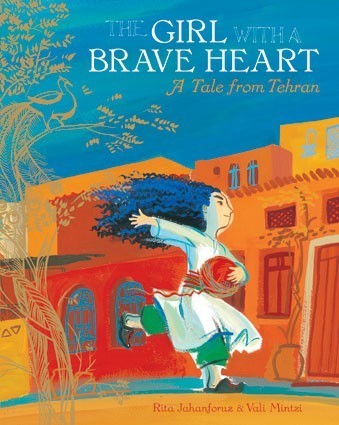
The Girl with a Brave Heart is an Iranian folk tale, penned by Israeli singer and writer Rita Jahanforuz and illustrated in bold, evocative shades by Vali Mintzi (who has been influenced by Bonnard, Hockney & Matisse.)
Its opening is reminiscent of Cindarella (a girl whose father dies and is left with an unkind stepmother and stepsister, slaving day and night to keep the house clean), but goes on to be so much more than that. In the heart of Tehran, one young girl by the name of Shiraz is knitting when a gust of wind blows her ball of wool over the balcony and into the courtyard of a neighbour’s house.

Afraid to go and recover the wool from this strange and unsettling old woman, Shiraz nonetheless summons the courage to go and knock on her door. The house is filthy and un-loved and the old lady with wild and dirty long hair tells her she may have her wool back upon the condition that she destroys everything in the kitchen and the garden as well as cut off her long, unkempt hair.
‘The old lady gave Shiraz a heavy hammer. ‘I want you to smash all the dishes, and the draining board and the sink. Smash everything,’ she said.’

Shiraz listens to the old woman’s words, but cannot find it in her heart to carry out her request. Instead, she scrubs the sink and mops the floor; she prunes and trims the plants in the sad, overgrown garden and she washes the old lady’s hair and brushes it so that it hung gleaming and silver down her thin back.

When Shiraz eventually returns home, neither her stepmother or stepsister recognise her because she has become so beautiful. Determined for her own daughter, Monir, to become as beautiful as Shiraz, the following day they throw another ball of wool into the old lady’s courtyard. Monir hurries to the house impatiently and is asked to do the same three things as Shiraz and readily smashes up the kitchen with the hammer, hacks down all the flowers and shrubs in the garden and cuts off all her hair, quickly and carelessly.

Upon returning home, the girl’s mother is horrified to see how ugly Monir has become, for her hair hung limply around her ears, her eyes were mean and small and her skin was grey and rough.
Immediately, they turn upon Shiraz, furious with her for keeping back what they believe to be the real secret of her beauty. ‘I did exactly what she asked,’ Monir cries. ‘She told me to destroy the kitchen, and I destroyed it. She told me to destroy the garden, and I destroyed it. She asked me to cut her hair, and I cut it.’ It is only then that Shiraz realises what has happened, the tale finishing on a note of startling clarity and wisdom as Shiraz grows to become a person remembered by everyone:
‘The girl with a brave heart, who had listened and had understood that when people are sad, they do not always know how to ask for what they need.’
My children absolutely love this story, in particular my six year old daughter. This gentle tale of bravery and compassion, coupled with Mintzi’s vivid illustrations ensure that it will be asked for again and again. Click here to buy the book for yourself, typing the name of the book into the top right search engine.
The post The Girl with a Brave Heart appeared first on Rebecca Stonehill.
December 18, 2014
Christmas Books for Children
We have a big Christmas box that we pull out of the attic at the start of each December which includes several Christmas books. There is something really lovely about only reading these books in the run up to Christmas and I really enjoy seeing my children remember little bits of them and grow into and out of the different tales. There are so many wonderful Christmas books, but I wanted to give a very small taste of three of them that I’d highly recommend to anybody looking for seasonal stories for their children for this time of year.
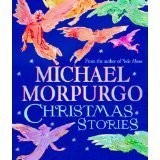
First of all we have a selection of four different stories from the master of storytelling, Michael Morpurgo, in his Christmas Stories. Illustrated by Sophie Allsop, Emma Chichester Clark, Michael Foreman and Quentin Blake, these four tales range from a young boy’s quest to save the goose that he is meant to be helping fatten for Christmas dinner to a a fictionalised account of the infamous football match that brought together warring men in the trenches of the First World War. The illustrations are all beautiful and unique and there is something in this book for all ages.
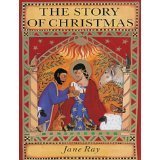
I love Jane Ray’s illustrations, laced with gold and filled with exquisite details which are sure to enchant any child. This Story of Christmas is the Nativity narrative for those who want a traditional Christmas tale, charting the movements of all those who converge on Bethlehem but also filled with the darker threat of King Herod…
‘…Now King Herod was troubled when he heard of this other kind, more powerful than himself. And he sent for the wise men, saying, “Go and search for the child and return to me once you have found him, so that I too may come and worship him.” But the King meant to do him harm…’
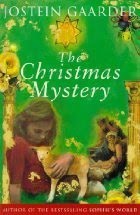
I bought The Christmas Mystery before I even had children as I was such a big fan of Norweigan writer’s philosophy masterpiece ‘Sophie’s World.’ Apparently the Norweigan version of The Christmas Mystery is far more of an aesthetic treat as the book is designed just like an advent calendar. Despite that (because I certainly can’t read Norweigan!), I love this book and so do my children. We read one chapter each day of advent and it is a multi-layered tale of a young boy named Joachim who is given a magic advent calendar and finds himself reading about a girl called Elisabet Hansen who travels backwards through time to the birth of Christ from a small town in Norway to Bethlehem. But then Joachim discovers that a young girl by that name really did go missing from that town in the 1940′s. But it’s only a story….or is it?
The post Christmas Books for Children appeared first on Rebecca Stonehill.
December 9, 2014
Phantom Tollbooth Word Market
Imagine you go to a marketplace and instead of buying fruit and vegetables you buy words. Well, this is what Milo, hero of The Phantom Tollbooth does on one of his adventures in the land of Dictionopolis.
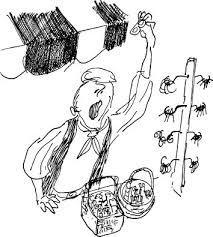
“Get your fresh-picked ifs, ands and buts.”
“Hey-yaa, hey-yaa, hey-yaa, nice ripe wheres and whens.”
“Juicy, tempting words for sale.”
So many words and so many people!
Could I resist playing with this idea for my Magic Pencil after school club? No, I could not. So I made a little sign reading WORD SELLER and hung it round my neck (the children thought I was an incy bit mad) and set up a word market in the garden. First of all, as a group they created their own currency and then I scattered some challenging words they may not know (written out on cardboard) around the garden, with varying prices on them, depending on the length. I gave them the same amount of ‘money’ each and then off they went shopping to buy six words each that they liked the sound of, stressing that it didn’t matter whether they understood the meaning or not.
Once their words had been bought, I allowed them to do a little trading with one another so they had at least two words they understood in their pile and then both verbally and in written form the children wrote a definition of a couple of words plus a sentence with the word in context. This threw up some wonderful sentences with words such as flabbergasted, scuffled and disdainful and proved a pretty fun way to learn some new vocabulary.
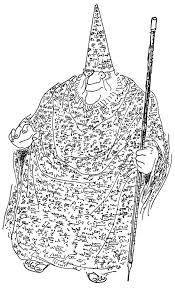
The Mathemagician
A quick note about this book, this needs to be on the must-read of every child’s bookshelf (and adults). As Milo journeys across the lands of both Dictionopolis and Digitopolis to try and rescue Rhyme and Reason, two banished princesses, he encounters a huge cast of wise, wonderful, wicked and zany characters such as the Dodecahedron, (a mathematical being with twelve faces), Faintly Macabre (the not-so-wicked Which who chooses the best words for the kingdom) and my own personal favourite, Chroma the conductor who controls and conducts all the colour in the world through his orchestra and hands his baton over to Milo early one morning to conduct the sunrise in.
At heart, The Phantom Tollbooth is a fabulous, intelligent celebration of our world filled with words and numbers and is sure to delight both young and old.
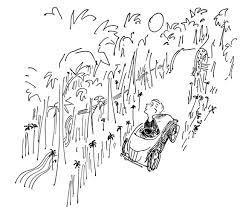
“Ah, the open road!” exclaimed the Humbug, breathing deeply, for he now seemed happily resigned to the trip. “The spirit of adventure, the lure of the unknown, the thrill of a gallant quest. How very grand indeed.”
The post Phantom Tollbooth Word Market appeared first on Rebecca Stonehill.
December 3, 2014
Book Review: The Boy who Grew Flowers
I sell Barefoot Books, a collection of beautifully illustrated children’s books which celebrate art and story and and aim to open young hearts and minds. One of my own kids’ favourite books from this publisher is ‘The Boy who grew flowers’, written by Jen Wojtowicz and lovingly illustrated by Steve Adams.  This is a story of a shy boy, Rink Bowagon, who lives at the top of Lonesome Mountain with his family who doesn’t want people to know that each and every full moon, he sprouts sweet-smelling flowers all over his body, for fear that he will be teased. So Rink keeps to himself and the other children stay away from him. That is, until one day a girl called Angelina Quiz comes to his school. She is always surrounded by friends yet ignores the unkind teasing of Rink by the other children. But Angelina has a secret of her own, and Rink is the only one with the imagination and compassion to help her.
  At heart, this is a tender story of loneliness, the healing power of friendship and how being different is not such a bad thing. Go to my Barefoot Books marketplace and type ‘The boy who grew flowers’ into the search engine on the top right side to buy this wonderful book or browse Barefoot’s huge, inspiring selection.
‘When Angelina heard a knock at the door,
her heart flipped. There stood Rink, with a
bunch of wild pink roses in his left hand and
a pair of snakeskin slippers in his right.’
The post Book Review: The Boy who Grew Flowers appeared first on Rebecca Stonehill.
November 27, 2014
The power of reading out loud whilst editing

Yesterday, the wonderful Bookouture turned two, my publisher who had (and continues to have) faith in me. That’s two years of publishing 22 female authors and building their publishing business into this melting-pot of international creativity and talent. I will always be hugely grateful to Bookouture as it was these guys who rescued me from my non-stop mind whispering I wish I wish I wish to being able to stand aside, point my finger at my mind and say Enough! I did it!
A couple of blogs ago I talked about rejection and how to not let the buggers get you down and I also mentioned that I would write about a couple of things that happened not long before being signed up by Bookouture that I’m certain contributed to finally getting noticed.
I’ll write about the second one in my next blog but here goes for the first one…Now this may sound a little strange, but I read somewhere (I can’t remember for the life of me where, though I have a hunch this may be Stephen King’s advice?) that it’s a good idea when you think you have finished your manuscript to sit down and read the entire thing out loud, start to finish. So that’s exactly what I did. When the children were at school, I drew the curtains of my room, closed the door, made my little cave and then I started reading out loud My daughter Isabel is born on a day of fire-breathing wind…
You know when you have recorded your voice on a tape and you play it back and it sounds odd? Well, it sounded odd listening to myself. And often I didn’t like it and there were days I didn’t want to do it. But I cannot express how strongly worth it this was. What happened was that I’d be reading along, thinking what’s the point of this? But then suddenly, my voice would catch on a word or a phrase and I wasn’t entirely sure why, but I would go back and read it again once, twice, three times and just like that, I knew I had to change it. Sometimes this would just involve a tweak of one or two words, but at other times my reading-out-loud made me realise that a greater change was needed. And I always listened to it, my physical voice, those crucial moments when I tripped over the words or my mouth couldn’t quite form what I’d written.
Thinking about it, it makes so much sense now. Our ancestors told stories in the oral tradition and whilst this has largely been lost for adults (far less so for children), when all’s said and done, that blueprint of spinning an oral yarn remains with us all and if we allow it to be released, we can refine and embolden our work.
The post The power of reading out loud whilst editing appeared first on Rebecca Stonehill.
November 1, 2014
For you are a Kenyan child
For you are a Kenyan Child is a children’s book not written by a Kenyan adult, but an American writer by the name of Kelly Cunnane and illustrated by a Spaniard, Ana Juan. As far as I’m concerned (and my own children I read it to), the prose and the illustrations are pretty special. However, I’m not Kenyan and I was curious to know what the Kenyan kids I do creative writing workshops with made of it. So I designed a writing workshop around the book and, with some trepidation, took the book in.

As I read it to them, you could have heard a pin drop in the room. All twenty-five children barely shifted in their seats and they enthusiastically told me afterwards it was realistic and they particularly loved the phrases in Kiswahili. Clearly Kelly Cunnane and Ana Juan’s passion for Kenya shines through in their prose and illustration and at the end of the class, they all crowded round the desk to have a look at the book, something I’ve not seen them do before.
‘Roosters crow,
and you wake one morning
in the green hills of Africa,
sun lemon bright
over eucalyptus trees
full of doves.’

What I did was ask the children to brainstorm their Kenya. What would they tell my friend who has never been to their country before what it is like here? We then played around with descriptive sentences and writing in the second person (i.e. YOU, which is surprisingly tricky.) I asked them to think about their walk to school, for example, pressing them to expand a simple ‘You walk to school’ with prompts such as What do you walk past? Who do you see? What do you experience with your senses?
It is SO important to give children the opportunities to write their own stories, not just the stories we’d like them to write.

‘The lions are roaring on the green hills.
You play on the way to school with a paper ball
then you see your Muslim neighbour Suma eating biryani.
You drink some sour milk with a piece of mahanti.’
Written by Kevin


‘Up the tall eucalyptus tree, you see birds fluffing their feathers,
to keep warm from the chilly morning.
You see a koisk. You smell fresh, baked mandazi.
‘Hodi?’ ‘Karibu!’
‘Unatake mandazi?’ Do you want mandazi?
‘Ndio!’ Yes!
You are given a mandazi, freshly baked, out of the oven.’
Written by Doris.
The post For you are a Kenyan child appeared first on Rebecca Stonehill.
October 27, 2014
And we can read a book. The book. Calming object.
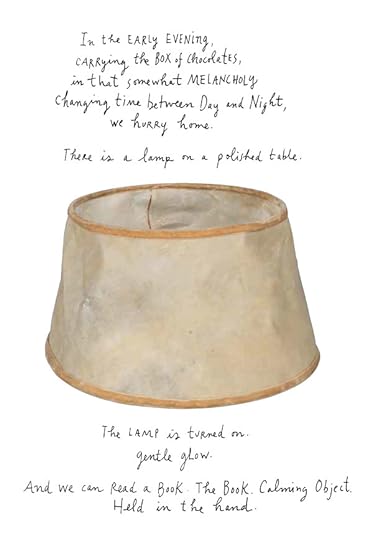
From Maira Kalman’s My Favourite Things
The post And we can read a book. The book. Calming object. appeared first on Rebecca Stonehill.
October 24, 2014
A few thoughts on Rejection
I have been meaning to do this for some time, but finally I sat down this morning and counted up how many times my manuscript of The Poet’s Wife was rejected before being taken on by Bookouture.
Ok, are you ready for this?
83 times. Eighty-three times. Eighty. Three. No matter which way I write it, it’s still 83.
That’s 83 cover letters, 83 times of pouring hope into each letter I sealed and sent out. There is a photo I remember well that my husband Andy took of me about nine years ago. I am on my bicycle, next to a bright-red letterbox in Cambridge, about to post my first tranche of manuscripts out to agents. I have a huge smile on my face and I wonder if I knew then, what I know now, that I was to be rejected 83 times if I would have continued. Possibly not.
Of the eighty-three times, about five literary agents asked for the full manuscript. This, of course, intensified my hopes as I tried not to, yet couldn’t help but play out possible scenarios and what-if’s in my mind, only serving to make their ultimate rejection more crushing.
Here’s where The Poet’s Wife started, ideas and pictures and family trees and notes stuffed into this little book I carried around with me whilst the characters and story began to come alive:


I lived and breathed Spain and as I raked up leaves in the garden of my uncle’s house I was looking after in rural Suffolk, I turned conversations of the characters round and round in my head. One child, a second, a third, my writing was an anchor and a refuge and I kept getting rejected. Yet I kept coming back to it, time and again.
Why?
I’ve asked myself this question so many times. I put my manuscript aside so many times, to work on short stories, to start another novel, to develop Magic Pencil (creative writing for kids). But I couldn’t let it go. Here’s the reason why:
Ultimately, no matter what people told me: that there was no market for this, that it wasn’t good enough, that I needed to write something else, I just didn’t believe them. Each time I went back to the manuscript, I knew it still needed work and yet I did believe there was a market for it and I did believe it was good enough. I think this is the crux of this whole thing, that you have to believe in your writing till you are blue in the face. You have to fight your corner. If you don’t believe in your art, whatever it is that you have created, then how can you expect anybody else to?
It’s a cliche, I know it is, but the cream always rises to the top in the end, doesn’t it. Make it as good as it possibly can be, don’t send it out too soon (a mistake I think I made many times) and be brazen. BELIEVE in it.
Next blog, I’ll write about two things I did in the final year before submitting to Bookouture that I am almost certain contributed towards my publishing deal.
The post A few thoughts on Rejection appeared first on Rebecca Stonehill.