Rebecca Stonehill's Blog, page 64
December 4, 2015
A mini-bookworm’s TOP TEN reads from 2015
A couple of weeks ago I blogged about my top ten reads of 2015 and now I’d like to share with you my nine year old’s top ten reads of this year as it draws to a close. I often bring my children into my blogs in one way or another and this time I’m going to focus on my eldest’s bookwormery and bring you some fantastic books that she has not lifted her nose from, some of them devouring in a single sitting.
For those of you who often read my blog, you’ll know that I’m not a fan of age-banding for children’s books (click here to read why), so let’s very loosely say that the below list would appeal to kids between the ages of 7 and 13 and as my daughter’s quite a tomboy, I’d say that many of these would appeal to both boys and girls.
Like my previous list, these books come in no particular order. Enjoy!

Look into my eyes (Ruby Redfort, Book 1)
By Lauren Child
It makes me smile to think that Lauren Child, so beloved of Charlie and Lola fame, is still making my daughter smile. When she was 3, she was literally obsessed with Charlie and Lola (click here for more on this) to the point of driving me to distraction. Then there was Clarice Bean, another of Child’s creations and now, fast forward six years and my daughter’s eagerly reading the Ruby Redfort series, all about a girl in her early teens and her code-cracking, gadget-laden adventures as a young detective. Exciting stuff.

Percy Jackson & The Olympians – The Lightning Thief
By Rick Riordan
I would say that this year Percy Jackson has replaced my daughter’s obsession with Harry Potter. Don’t get me wrong, she’s still a big Rowling fan but these books have literally rocked her world. When she finished reading The Lightning Thief this summer, she went back to the beginning and started again, and then did the same thing again. I have never known her to do this. Think Greek mythology, time travel, a troubled kid, demi-gods and half-bloods, all delivered in a slick, fast-paced adventure.

By Jacqueline Wilson
My daughter is a big fan in general of Jacqueline Wilson books and has a great many of them. But none, perhaps, have captured her attention as much as the Hetty Feather series. This is the fifth of the series (the first is simply called Hetty Feather, and I would say these are worth reading it order). Little Stars has been her favourite of the series – they are big-hearted romps through Victorian England, travelling circuses and the bright lights of the London theatre world, all with Nick Sharatt’s characterful drawings.

By Willard Price
These adventure books (there are many of them, with various creatures) were written some time ago, in the 1960’s, following brothers Hal and Roger as they travel the globe, investigating rare and/or dangerous animals for their father. These are the books that Anthony Horowitz, acclaimed children’s writer, got him reading and my daughter has certainly enjoyed many of them this year, Tiger Adventure in particular which takes the boys on a dangerous quest to the Himalayas on the trail of the rare white tiger. Geography, natural history & adventure all rolled into one. Brilliant.

By John Matthews
With beautiful illustrations by Pavel Tatarnikov, this is a wonderful re-telling of the infamous King Arthur. Filled with captivating details of the knights and quests, this is a fantastic introduction to Arthurian legend for any child.

By Jenny Nimmo
This fantasy series has been an enormous hit for my daughter this year. Based around a boy who can hear photographs speak, it is perhaps a lighter version of Harry Potter with Charlie Bone being sent to Bloor’s Academy, a school for the magically gifted, where a great battle is coming…That being said, it is certainly not a Harry Potter spin-off and every bit as enticing and unique.

Sammy Feral’s Diaries of Weird
By Eleanor Hawken
A fun and quirky story about Sammy and his family zoo – but hanging out with all kind of weird and wonderful animals isn’t quite so much fun when his family get infected with a werewolf virus and start trying to infect their own son! My daughter has only read the first in the series but there are definitely a few of them and she’s keen to read more.

By Michael Molloy
This wonderful trilogy has very few reviews on amazon which, I must say, amazes me as my daughter absolutely loved these books, filled with captive children, lost parents, magical powers and battles with dark enemies.

By Helen Moss
A modern day Famous Five, these are quick, fun and easy reads. They are also very well written though and probably more appealing to children of today with their up-to-date references to events, clever plots and compelling narratives. Highly recommended for children who enjoy mystery books with some fast-paced action. We are also excited to see that Moss’s latest series take in archaeology, tombs & Ancient Egypt and look fantastic, so we’ll definitely get hold of these at some point.

By Rick Riordan
Yes, another Rick Riordan book that my daughter insisted I include in her top ten of 2015. This is how it’s described: ONE FATAL PROPHECY…SEVEN BRAVE DEMIGODS…A QUEST TO FIND – AND CLOSE – THE DOORS OF DEATH. Sounds pretty heavy to me for a little nine year old girl; however, she is well and truly hooked and Rick Riordan must be doing something right to be reeling all these readers in. Plus it’s got my daughter hugely interested in Greek mythology which is pretty cool.

Here’s the little bookworm herself last year outside our home in Nairobi
Let me know if you buy any of these books for your kids and what they make of them!
The post A mini-bookworm’s TOP TEN reads from 2015 appeared first on Rebecca Stonehill.


November 27, 2015
Guest post from Indie Author Alex Martin
Firstly, thanks to Rebecca Stonehill for letting me chat to her followers. Nice to meet everybody!
My name is Alex Martin and I’m happy to call myself an indie writer. I’ve written four novels to date, something I never thought I’d achieve. Writing books has been a life-long dream and self-publishing has given me the opportunity to get my work out there and even be paid for it. I write in my ‘Plotting Shed’, built from a kit, at the bottom of my garden on the Gower Peninsula in South Wales, UK.
I’ve learned that writing isn’t about playing God, standing back and orchestrating the characters. It’s about living the story, being there submersed in that world and becoming those fictitious people. So, believe me, I feel their pain, their anger, and their hopes and dreams become very real. To achieve this surreal state, I need a few rituals. I trudge up the garden path, laptop in hand, dog at my heels, and unlock my den. Inside smells creative.

I light the gas fire if I need to, and a candle always, and do a little meditation. I get rid of any personal angst in my journal and clear my mind. Then, comes the moment of truth, the delicious few seconds of the blank page, willing me to cover it in potential. Hours can fly by without me noticing, until my canine muse gets bored, or we both get hungry and mundane matters puncture the bubble.

My first book, The Twisted Vine, (click here for US Amazon and here for UK) is set deep in rural France and is based on my own adventure of picking grapes back in the 1980s, before mobile phones and the internet were even invented, hard to imagine now! Like the narrator of the story, Roxanne Rudge, I was escaping a relationship that had gone disastrously wrong. Like her, I was trying to rediscover who I was while getting a suntan and deepening my love of this beautiful country. I too drove all over the French countryside, often lost (in more ways than one), bruised my knees and grazed my hands toiling away on steeply sloping vineyards. Luckily for me, I did not meet a sinister man like Armand le Clair or uncover the dark secret within a the elegant walls of a Burgundian Chateau, though I did drink plenty of the resulting wine!

My second book, Daffodils, (US & UK) is quite a different tale. When my two children were born, we lived in a tiny village in Wiltshire which retained an almost feudal link to the past. Fascinated by this, I decided to write a story about it. What I hadn’t reckoned on was that setting it just at the time when the old order was disintegrating meant that I had to research the First World War, which took ten years, off and on. I hadn’t set out to write about this event but, like the naive inhabitants of those villages, I was drawn into its all-encompassing conflict. The research humbled and saddened me and I was appalled at some of the facts I discovered. I have a whole shelf of books about the war and they made for sobering reading. I was particularly shocked at the way the British Army treated their troops, some of whom were ridiculously young and of course, how women stepped into masculine roles previously barred to them. This feminist theme became the backbone of the story and is carried through the next two books.
For fans of historical fiction, Daffodils is part one of a trilogy, called The Katherine Wheel Series. It starts slowly. Life changes little in Cheadle. Petty scandals, gossip and the huge gap between the haves and those who serve them continue to dominate their small world. Daffodils drags Katy and Jem out of their narrow lives and catapults them into the wider arena of a global war. But in essence, Daffodils is a love story, whose tender heart is almost torn apart through this tumultuous time.

I found I couldn’t leave the characters where I had left them and Peace Lily (US & UK) takes up their story in 1919, in the aftermath of the war, when they return to their lives to find that peace is elusive and presents new challenges they had never expected. They even cross the Atlantic to try and resolve them. All this took yet more research – I found myself trawling through passenger lists of ocean liners, dismayed to find that a great many were still in dock after their wartime roles had stripped out all the luxuries. I studied many maps of Boston, both then and now, researched the tram system and the brownstone terraced houses and even had to find a church that would suit a certain type of wedding. Luckily my Wiltshire studies provided a rich and detailed archive to plunder for the scenes back home.

A third book completes the trilogy… for now…called Speedwell, which follows the thread into the 1920’s andthe rapid changes of the modern age. I visited the British Motor Museum at Beaulieu and Brooklands Racing Circuit in Weybridge, where much of the story takes place. I learned more about petrol pumps and oil cans than I thought possible! Katy’s war experiences changed her life forever and she takes her new skills into an enterprise that breaks all gender boundaries and propels her, and her family, into the exciting world of motor racing. The 1920’s were a stark contrast of continuing poverty but also massive opportunities for new businesses, especially ones involved in the burgeoning industry of the motor car.
I have many more stories and projects stacked up begging to be given life in the back of my clogged up head and I can’t wait to start each and every one. My current work-in-progress is a ghost story that dips into the English Civil War – and, yes, I’m reading a whole load more books about another major conflict, one which sets brother against brother. It gives me the shivers just thinking about it and hopefully will do the same to readers. The Rose Trail should be out in 2016.
Hopefully I’ll keep writing until the marbles stop rolling.
You can keep up to date with my work on my blog at Alex Martin, Author at The Plotting Shed.
The post Guest post from Indie Author Alex Martin appeared first on Rebecca Stonehill.
November 21, 2015
Looking for books for Christmas gifts? My top 10 fiction reads of the year
As Christmas is fast approaching, I thought I’d blog this week on my favourite ten books I’ve read this year. This doesn’t mean they were written this year, in fact the oldest amongst my choice (The Go Between) dates back to 1953. It was a hard choice to narrow my list down to ten, bookworm that I am with always about two or three books on the go. But I hope you’re inspired to read some of these or buy them as Christmas gifts. All ten of the below come highly recommended (they are in no particular order).
[image error]
This is the story of the inhabitants of Longbourn, home of the infamous Bennett Family from Jane Austen’s Pride and Prejudice, told from the perspective of the servants; if you like, a Downton Abbey in novel form with none of Downton’s clunkiness. Even if you have never read Pride and Prejudice (or, like me, you read it many years ago), in its own right, this is a fine novel with beautifully drawn, memorable characters and some of the best writing I have had the fortune to read recently.
2) SMALL ISLAND by Andrea Levy
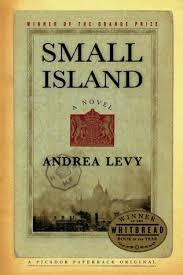
How could I not have read this before? It is one of those books that had been sitting on my shelf for years and, for whatever reason, I hadn’t got round to reading it till recently. The tale of Jamaican immigrants to London in the 1950’s (Levy herself is the daughter of Jamaican immigrants) through four varying perspectives, this book made me both laugh out loud and moved me to tears. It deservingly won the Costa Novel award for Fiction in 2005 and is definitely one I shall re-read in the future.
[image error]
A large group of people celebrating a birthday party in an unnamed South American city are taken hostage one evening by a group of gun-wielding guerillas, seeking the release from prison of their comrades. What begins as a violent encounter, slowly transforms into the most unexpected exchange of ideas and mutual respect, but as the days pass, how can the guerillas release the hostages after all that has passed between them? I was blown away by this book: the intricate workings of relationship that Patchett builds between the characters and the unusual but highly compelling setting.
4) ELIZABETH IS MISSING by Emma Healey
[image error]
The author of this novel was young when she wrote it, still only in her twenties, and she penned it over five years during lunch breaks from working in a London gallery. Yet what she has created in this impressive debut it an accomplished, exciting and moving story of dementia, displacement and mystery. The protagonist, an 82 year old woman is confused. She doesn’t know where her friend Elizabeth has gone and, as the action jumps back and forth between the 1950’s and the present day, she is also unsure what happened to her older sister many years ago when she vanished from her family’s life. Part mystery detective story and part moving elegy to the ravages of dementia, I enjoyed this book hugely.
6) THE GO-BETWEEN by LP Hartley
[image error]
Set in 1900, this is the story of one summer that a young boy spends at the house of a friend in rural Norfolk. Dazzled by the friend’s elder sister, she takes advantage of his admiration and naivite to use him to carry messages between herself and the man she secretly loves, with ultimately devastating consequences. A heart-breakingly poignant story of one boy’s loss of innocence and its far-reaching consequences.
[image error]
The friend who gave me this book, upon asking her what it was about, she replied that it was the story of a man and his quiet life, with not a great deal happening to him. How dull did that sound? However, this tuned out to be one of the least dull books I have ever read. With great warmth, intelligence, subtle wit and insight, John Williams charts the everyday joys, frustrations, sadnesses and triumphs that make up each and every human existence. This book is a subtle masterpiece and I would highly recommend it to anyone, particularly for those wishing to experience beautifully-crafted writing.
8) THE READER by Bernhard Schlink
[image error]
Thought you’d read everything there was to read about the well-document period of the Holocaust? Think again. Even if you have watched the Kate Winslet movie adaptation, this book is well worth reading. Charting an intense relationship between a teenage boy and an older woman in post-war Berlin, the only way she seems really at ease is when he is reading to her. Fast forward several years to the Nuremberg Trials which the boy, as law student, is observing. Only then does he realise the truth about his former lover, raising the questions of accountability not only for those who persecuted the Jews, but for humanity itself. A fascinating psychological read which digs far deeper than the film, well-made though it is, is able.
[image error]
Apparently this has been the year for discovering surprisingly good books set in the bleak WW2 period of Germany. I’d read a number of Ben Elton edgy pop-culture books before, but this is his most personal novel. It is based on a fascinating premise: twins are born in 1920’s Berlin to a Jewish family. When one of the twins dies at birth, at the same time in the hospital ward a mother without family dies in childbirth. Her baby is handed to the grieving mother and the boys are raised as twins. But it is only when anti-Semitism spreads its steely grip across Berlin that the family must cash in one of their son’s Aryan roots as they all begin the fight of their lives for survival. Addictive reading.
10) NORTHERN LIGHTS by Philip Pullman
[image error]
After reading this book, I decided that Lyra, the novel’s feisty protagonist, surely must be one of the strongest female characters in literature I have come across for some time. Fearless and cunning, Lyra lives in a parallel-world Oxford, in which every human being is accompanied by a ‘daemon’, almost a part of their soul, that goes everywhere with them and changes form between different animals until they reach adulthood and the daemon settles on a single form. When Lyra’s powerful Uncle Asriel visits, Lyra overhears him speak of a frozen northern world, witches that never die, the power of ‘dust’ particles and a quest that she is determined to join at any cost. Fantasy as its very best, this book is the first in the Dark Materials trilogy but Northern Lights (or Golden Compass as it’s known in the US), to my mind is the most exciting.
10) LOST GIRLS by Angie Marsons
[image error]
This was my surprise read of the year; surprise because (save for the occasional Kate Atkinson) I very rarely read crime fiction, particularly not crime fiction in which a detective is trying to trace the abductors of two nine year old girls (I have a nine year old myself, so it felt a little close for comfort). However, I can’t deny this was compulsive reading with a tightly executed, intelligent plot full of twists and turns, building towards a dramatic, highly satisfying conclusion. Although this was the first of Marsons books I have read in the DI Kim Stone series and it is able to stand alone, it would probably be beneficial to read the first two books beforehand, Silent Scream & Evil Games.
I would love to know if anybody reads any of these books or, if you give them for gifts, what the recipients think of them. Happy buying / reading!
The post Looking for books for Christmas gifts? My top 10 fiction reads of the year appeared first on Rebecca Stonehill.
November 12, 2015
9 Tips for putting the ‘child’ back into childhood
In light of the terrorist attacks yesterday in Paris, what I wanted to write about today pales into insignificance. Sometimes I truly feel that the world is so environmentally, morally and ideologically broken that all I would like to do is re-boot it and start afresh, just as we re-boot a computer; provide a clean palate for our future generations to paint their own stories on.
But as France mourns and grieves its dead, just as we grieve with them, we have to keep acknowledging courage, inspiration and resilience – we must, otherwise, as a race there is no hope for us. I would like anyone reading this to take a moment to say their own kind of prayer for the dead and suffering of Paris. And not just France, but also Lebanon, Indonesia, Burundi, Russia and the countless others across our planet who grieve.
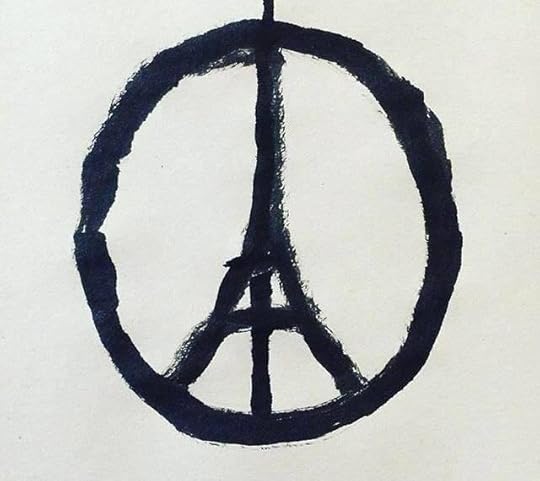
#PeaceForParis Jean Jullien
And here is my own story of hope I’d like to share: Over the past few months, I have watched a miracle take place. When we think of miraculous events, we think of something big and bold, something that shakes us to the very core of our being. But there are also the smaller, quieter miracles that take place each day that if we are not mindful and present, we could very well miss. What I have been witnessing is watching my child learn to read. Big deal, right? All kids learn to read. But my daughter isn’t four (the age in the UK when the reading and writing journey begins), she’s seven and a half years of age. Yes, seven and a half and she has only just learnt to read. But here’s the thing: it hasn’t taken three years, it’s taken three months.
There has been a furore recently in British education circles as Nicky Morgan, the education secretary, announces that seven year olds need to undergo ‘robust testing’ in schools to ensure that they are given fair opportunities. And let’s not forget that she is also clamouring for testing for 4 year old’s at the very start of their school journey, not to mention the overwhelming panoply of exams that children are subjected to in their final year of primary school. What does all this mean for teachers, and even more importantly, for the children themselves?
When we left the UK for Kenya with my husband’s work, I was relieved to take my seven year old (then four) out of reception (1st year of UK primary school). She simply wasn’t ready for phonics and key words and all that it entailed, protesting against it with all of her four year old might. We opted for a Waldorf School in Nairobi (also known as Steiner), a holistic educational system in which, amongst other things, children don’t start reading till they’re seven. I’m not going to start writing about Waldorf here. There’s a fair amount of hysteria around this system, mostly from people who have never set foot near a Waldorf School. (Despite the fact that in Finland, Europe’s beacon for successful education, kids don’t learn to read and write until age seven.) My daughter will have no homework till she’s eight, and every single day she returns home from school and plays until dinner time. Suffice it to say that she wasn’t ready to start reading at the age of four, but she is ready age seven and has completely missed out the early readers to go straight on to more challenging books. Why, I wonder, do we spend all this time in the UK (and other countries) preparing children for reading when it can be utterly painless if we just leave it for a couple of years?
[image error]
I’m not saying this approach is right for all children. My elder daughter is a case in point who was raring to go as soon as she started reception in the UK. What I am saying is that I believe in Britain we (I say “we” because although I live in Kenya we will, at some stage, be returning to the British state system) are slipping dangerously towards a one-glove-fits-all autocratic educational system. Even the simple, powerful act of a teacher reading a story to a classroom of eager, attentive little people is in danger of being sidelined and drastically reduced in the current climate of SAT’s, increased pressure on teachers and arts-related subjects being removed from the curriculum. Grammar is often taught drill-style, entirely out of context, to the detriment of natural and everyday speech, creative writing and poetry (for more on this, read Michael Rosen’s brilliant blog….)
What can you do if you believe your child, age 4, is not ready for reading and writing?
– First and foremost, don’t panic. Although you may believe you are alone, particularly in a high-achieving school, you most certainly are not. Parents the length and breadth of the country are going through the exact same thing as you.
– If you do not have high competition for school places in your area, consider keeping your child out of school for a further year. Children in the UK are not legally required to go to school until the age of 5.
– I know it’s difficult, because if you’re in the system, you have to work with the system. But don’t push key words and early reader books. Your child will get it, just allow them to do it at their own pace. And whatever you do, don’t compare your child to others in their class. There are plenty of pushy parents out there.
What you can do if you have a 7 year old
7 is the ‘age of wonder’. A teacher on sabbatical, Jethro Shirley-Smith, who writes for the Guardian Educational supplement makes the following brilliant point:
‘…It is no secret that the number seven has repeated significance in our society – the seven wonders of the ancient world, the seven day week, the seven golden tripods offered to Achilles, the seven dwarves. Let us not make seven years old the age at which children begin to be deterred from learning. As parents, let them cherish their childhood. As teachers, let them stay feeling safe and secure at school. As a society, let the youth of tomorrow enjoy their learning today. Your child will never be 7 again. As parents, teachers, educators, we have a responsibility to keep this wonder alive.’
– Ensure your child is getting enough ‘down time’ each day, even in a busy school day. Seven year old’s need to time and space to explore, create and imagine possibilities. A parent’s role in this is simple: don’t overburden them with after-school activities and rushing here, there and everywhere.
– Let them be bored. Out of boredom comes the most wonderful, unexpected creations and situations.
– Look up the National Trust’s wonderful list of 50 things to do before you’re 11 and 3/4….’ It doesn’t matter if you’re not National Trust members – these activities, ranging from stargazing to rock pooling can be done in so many places.
– Buy and read Michael Rosen’s ‘How to be your child’s (and your own) best teacher,’ my non-fiction book of the year. It would make a fabulous Christmas present for yourself or a parent you know. (Yes, clearly I am a Michael Rosen fan).
– Think about your happiest memories from when you were around this age. Was it climbing trees? Traipsing across meadows? Going for bike rides? Watching Grange Hill cross-legged, munching on Kelloggs pop tarts? Whatever it is – dig deep, be truthful and emulate some of this truth for your child.
Let’s put the child back into childhood.

My seven year old exploring a book
The post 9 Tips for putting the ‘child’ back into childhood appeared first on Rebecca Stonehill.
November 5, 2015
Guest Post by Louise Beech, Author of How to be Brave
[image error]
During Remembrance Week we do just that – we remember. We honour the bravery of serviceman and women during the two World Wars, and later conflicts, by wearing our poppies, holding ceremonies across the UK, ringing half-muffled church bells and holding respectful silences on the eleventh hour. Many of us think of our own family. Of ancestors long gone, perhaps never met.
I think of both my grandfathers, men who died long before I was born, whose DNA courses through my veins, whose stories dance in my head. One of them – merchant seaman Colin Armitage – has been in my thoughts for a long time. Since I sensed his ghostly presence as a child. Since I told his heroic true sea survival tale to my ten-year-old-daughter Katy when she refused her life-saving insulin injections during a horribly difficult time with her Type 1 Diabetes.
Katy had been diagnosed aged seven and done very well. But one day she decided she ‘didn’t want diabetes anymore.’ The only way I could get her to eventually have her injections was by telling her a story in exchange for one. And so I told her about Grandad Colin’s ship being torpedoed during World War 2, how he and thirteen other men managed to get to a tiny lifeboat, how they struggled there to survive on minimal rations, surrounded by sharks, under a blazing sun.

I began to think this huge story should be a novel. That the two narratives so beautifully complemented one another. A little girl learning how to be brave via her long-gone ancestor. And so, in How to be Brave, I fictionalised a mum and daughter coping with a new diabetes diagnosis by sharing a sea survival story, but I tried to stick as closely to the facts as possible when writing about my grandfather, Colin. I read newspaper clippings about his heroism, talked to family members, read letters, and watched documentaries.
But most of all I remembered – because his story is in my DNA. I just had to open up to it. I dreamt of him often while writing the book, so vividly that his words became some of the lines in my chapters. He was at my side, this I knew.
The brave men and women who fought so valiantly during the wars never die if we remember them. In How to be Brave I wrote – “And by sharing his story he never died; he lived on in my words, in Rose’s captivated face, in the sparkle of the lights, in the darkness, in the ocean, in the sky, forever.” And so it should always be that bravery of those now gone should teach us still here how to live.

Louise Beech is an East Yorkshire author who has always been haunted by the sea. She regularly writes travel pieces for the Hull Daily Mail, where she was a columnist for ten years. Her short fiction has won the Glass Woman Prize, the Eric Hoffer Award for Prose, and the Aesthetica Creative Works competition, as well as shortlisting for the Bridport Prize twice and being published in a variety of UK magazines. Louise lives with her husband and children on the outskirts of Hull – the UK’s 2017 City of Culture – and loves her job as a Front of House Usher at Hull Truck Theatre, where her first play was performed in 2012. She is also part of the Mums’ Army on Lizzie and Carl’s BBC Radio Humberside Breakfast Show.
How to be Brave , her debut novel, is out now in paperback, on Kindle and as an audiobook.
Follow Louise on Twitter – @LouiseWriter
The post Guest Post by Louise Beech, Author of How to be Brave appeared first on Rebecca Stonehill.
October 30, 2015
Why scary reading for kids is a good thing and 5 of the Best
“Fear is a wonderful thing. In small doses. You ride the ghost train into the darkness, knowing that eventually the doors will open and you will step out into the daylight once again.” Neil Gaiman
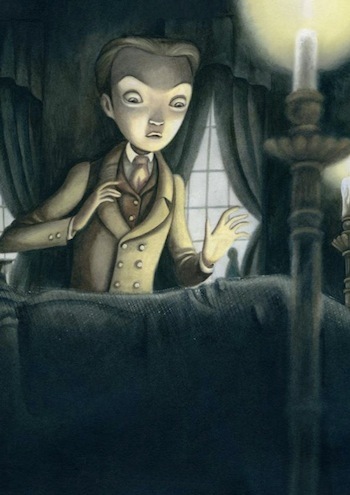
Illustration of Edgar Allan Poe’s ‘Tales of the Macabre‘ by Benjamin Lacombe
Halloween. Even here in Kenya there’s no getting away from it, despite the fact it is most definitely not a part of this country’s cultural calendar of customs. Like many children from the UK, my kids love Halloween. No, more than love, they adore it and excitement levels reach possibly beyond that of Christmas. Last year at a party we threw, the highlight of the event was Old Man Joe, a story I remember my mother telling me at our Halloween parties when I was young. Whilst I’d forgotten the actual tale, I remembered the ‘feeling’ part of it. So I made a story up about an old man who died in a dark cave and then in small groups I brought the children into a darkened room and got them to feel (not look) in plastic bags Old Man Joe’s intestines (cooked spaghetti), eyeballs (peeled kiwi), teeth (popcorn kernels) and heart (peeled tomato).
Utterly revolting, right? Despite the screams that emanated from a number of children and the fact that I was informed by the parents that a few of the kids were unable to sleep that night (eeeek), it was the highlight of the party and people haven’t stopped talking about it since. Even the adults wanted a go and for the joint party we’re holding tomorrow night, Old Man Joe came at the top of the list of requests from the children.
This got me thinking. What is about scaring ourselves we love so much, and how much scariness really is OK for children? Let me give you another example. My nine year old recently read The Whitby Witches by Robin Jarvis. She kept telling me how ‘completely terrifying’ it was and giving little whoops of fear from the sofa where she was reading it. And yet she couldn’t drag herself away from it. As for me, I’m currently reading a book by fellow Bookouture author Angela Marsons called Lost Girls which is utterly horrifying in so many ways. Yet despite this, I’m hooked.
Neil Gaiman, author of books for both adults and children (perhaps, most famously, the unsettling Coraline), as his quote above attests, believes that stories must have an element of fear in them, in order for this fear to be triumphed over. In his words,
In order for stories to work — for kids and for adults — they should scare. And you should triumph. There’s no point in triumphing over evil if the evil isn’t scary.
I am not saying that we should let our children watch Nightmare on Elm Street. What I am saying is that so much has been dumbed down and deemed inappropriate in children’s literature to purposely keep fear at bay. I hate with a passion those insipid re-writings of the fairy tales of Hans Christian Andersen & the Brothers Grimm (click here for a stunningly illustrated original version of the latter) created for children, especially as early readers. For example, in The Little Mermaid she stays alive and marries her prince rather than disappearing into the sea foam for evermore after her refusal to kill the man she loves.
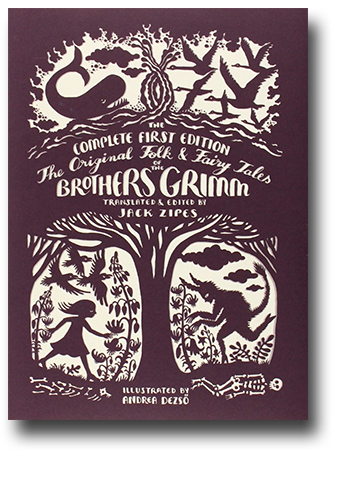
There is obviously a fine balance here and if you know your child is particularly sensitive or susceptible to being scared, perhaps don’t read them the original quite yet of Sleeping Beauty. It’s natural to want to protect our kids, not traumatise them. But also, don’t let your own fear stand in the way (i.e. you being scared that your children will be scared) and don’t underestimate the far-reaching subliminal workings in a child’s mind of good triumphing over evil.
What we want to do is help provide children with the emotional intelligence to understand perfectly normal ‘negative’ emotions such as fear, sadness, jealousy and grief. If their stories are constantly dumbed down, they cannot go through the process of natural dualities that exist in each and every human being. Rather a child is presented with a series of vapid, entirely unrealistic scenarios and resulting emotions, if indeed the emotional state is conveyed at all.

Harry Clarke’s Illustrations for Goethe’s Faust (1925)
There are some brilliant writers out there who have created multi-layered characters and fictional, sometimes terrifying worlds that give children the freedom to explore, feel unsettled, and then come back to the safety of their armchairs and their homes.
Here are five of the best.
Coraline by Neil Gaiman – When Coraline moves into a new house, she finds a secret door to another eery, parallel world.
The Whitby Witches by Robin Jarvis – A gothic tale set in the atmospheric town of Whitby where two children are sent to live with a 92 year old woman who is not all she seems….
The Witches by Roald Dahl – Needs little introduction. The witches are plotting to get rid of all the world’s revolting children, but one boy and his grandmother plan to stop them.
A Monster Calls by Patrick Ness – A young boy’s mother is battling with cancer and as he struggles to come to terms with this, a monster appears in the form of a yew tree…
The Original Folk & Fairytales of The Brothers Grimm – The unabridged and darker versions of these well-loved tales.
Happy Reading and Happy Halloween!
The post Why scary reading for kids is a good thing and 5 of the Best appeared first on Rebecca Stonehill.
October 23, 2015
Guest post: Debbie Rix, Author of Secrets of the Tower

I was recently invited to be the guest speaker at a week-long conference on ‘creativity’ at a very trendy advertising agency in London. In the course of their week of activities on subjects as diverse as ‘the importance of curiosity’ and the use of new technology, their final guest ‘spot’, and the one I was invited to fill on ‘The art of storytelling’.
It was hoped that I might have something relevant to say because I have written an historical novel called Secrets of the Tower. Set in medieval Pisa, it explores the real life characters behind the Leaning Tower of Pisa.
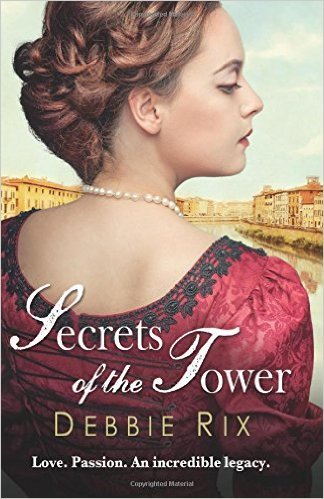
In the course of writing my speech for the agency, I did a lot of thinking about the essence of storytelling. I likened it to the making of sourdough. You begin with a starter … an idea, a nugget of information – perhaps a story in a newspaper, or maybe a real-life experience. Then you have to let it grow… to allow it to develop until it becomes a separate entity, a force of its own – something that is both inside and outside its creator.
The starter, or inspiration for my own novel was a real experience. My husband, who is a documentary filmmaker and writer, was making a film about the Leaning Tower and its extraordinary rescue from imminent collapse, back in the late 1990s. As he arrived in Pisa, climbing out his researchers’ car, he collapsed. It turned out that he had suffered a stroke and was taken to the hospital of Santa Chiara, just two minutes walk from the Piazza del Duomo – surely the most spectacular location for any hospital in the world! I rushed out from the UK, leaving my two tiny children behind with my mother and spent the next few weeks caring for him – bringing in food, bed bathing him… everything. Once we were back home in the UK, it took us quite a while to get our lives back on an even keel, but he has made a great recovery. Several years later, I woke up from a dream that was so vivid I had to get out of bed and write it down. It was a fully formed ‘scene’ in which a woman is being crushed against the wall of a tall tower house in Pisa by a horse and rider in medieval dress, taking part in the annual Ferragosto celebrations.
Slowly the idea for a novel about the creation of the Tower took hold. I needed to understand as much as possible about the history of this remarkable building. I read everything I could lay my hands on. As the daughter of two architects I was familiar with the building techniques and terms, and fascinated by the building process. But the heart of any story is the human beings who inhabit it, with all their frailties, emotions and flaws; that is the essence of storytelling. It was only when my husband introduced to me the professor of Medieval History at Pisa university – Professor Piero Pierotti – on a subsequent holiday in Italy, that I found the central character of my novel. Prof Pierotti mentioned the ‘widow’ who had left the money for the Tower to be built.
I was curious. Who was this woman and why had she left the money? It appeared that little was known about her. The professor had a copy of her will – written in Latin and dictated by her in 1172. It is a remarkable document. The witnesses to her will were a fascinating quartet and indicated that she was clearly a well connected woman: The notary of the Emperor Frederico; Archbishop Villani (The Archbishop of Pisa); the Operaio of the Piazza – the man who oversaw all activities on the Piazza site and ran all the building works of the Duomo, the Baptistery and the Tower. And finally a master mason named Gerardo di Gerardo. He was known to have worked on the tower and some have even suggested that he might have designed it, although the professor thought it unlikely – he was not well educated enough. So why was he at her bedside as she wrote her will in such august company? He was clearly important to her in some way.
And so I had found my heroine and hero – Berta and Gerardo – and the story began to take shape. I developed Berta’s ‘backstory’ – her life up until the point when she made her will and passed away – the year before the tower itself began to be built. I researched and studied and checked. It was important that the story was set in as accurate and historical context as possible. The ‘old story’ would be juxtaposed with a modern story – in part to simply provide a ‘change of scene’ but also to enable the reader to make the journey back to the unfamiliar twelfth century through the eyes of my modern ‘heroine’ Sam Campbell. The twentieth century story was based loosely on my own experience of caring for my husband. But inevitably, and quite rightly, the characters of Sam and her husband Michael grew and changed until they no longer resembled either me, or my own husband Tony.
My new novel will be released next spring and is set in the canal cities of Europe – Venice, Bruges, and Amsterdam. Once again, the main heroine is a ‘real person’ – the daughter of a fifteenth century merchant explorer named Niccolo dei Conti who travelled across the Middle and Far East for over twenty-five years, taking his wife and four children with him. I have studied his diary and it makes fascinating reading. My story concentrates on what happened to him and his family once they returned to Venice. Once again this ‘old’ story is juxtaposed with a modern storyline. On this occasion, there is an element of the thriller about it.
Throughout my early career as a journalist in television, then as a producer creating big events for corporations and charities – I have concentrated on telling stories. ‘What’s the story?’ is the first question I ask of a new client. Storytelling is central to journalism. No one remembers the facts and statistics that journalists reveal in their reports, but they do remember the human story – the tiny child lying dead, washed up on a beach in Greece – the victim of human traffickers and a bloody war in Syria. Or the tens of thousands of starving people revealed behind Michael Buerk in his memorable report from Ethiopia – thirty-one years ago to this very day. The image of those starving people will stay with me, and everyone who saw it, forever.
I realise that I have been telling stories all my life. Since childhood – when TV was either non-existent, or at least limited, we children inhabited a world of our own imagination. I would sit surrounded by teddies and dolls playing out some complicated replica of home life in a ‘house’ made from an old wooden laundry airer covered in a sheet, at the bottom of our garden.
I have come full circle… I am down at the bottom of the garden once again – in another tiny house of my own creation – a converted summer house that has become my writing retreat; the place where I can escape the demands of my normal life – with its emails, work deadlines, housework, child-rearing – to the world of my imagination, where the stories get told.
Debbie Rix’s novel: Secrets of the Tower is available now from Kobo, Barnes and Noble, Waterstones and Amazon
Website: www.debbierix.com
Twitter: @debbierix
Facebook: Debbie Rix Author
The post Guest post: Debbie Rix, Author of Secrets of the Tower appeared first on Rebecca Stonehill.
October 16, 2015
5 Top Tips for Journalling with Kids
‘I’m tired of glossy, re-touched, plastic, overdubbed, laughtracked, advertised experience. I want crude – straight from the soul.’
Hannah Hichman
What is journalling, if not straight from the soul? That experience of one person and a blank page and the liberty to fill it in any way whatsoever. I don’t know how long I’ve been journalling for. As long as I can remember, that much is sure. I have boxes filled to bursting with my childhood enthusiasms, teenage travails, travelling in my twenties and motherhood ponderings and more in my thirties. And yes, I still write a diary – though considerably less these days, it can’t be denied, what with blogging and all 
October 10, 2015
How to find inspiration for a new novel
My working title for The Poet’s Wife was something entirely different, a title that I see now had to change for various reasons. Originally, it was ‘In the shade of the orange tree’ and I still think of my first novel in terms of two titles: the one that evolved alongside the creation of my story and the other, almost ‘grown-up’, fully formed name.
I’m not yet sure what my second novel’s title will be as this has yet to be discussed. But, as my first book, the working title will always feel important and significant to me with a single overriding image encapsulating it. Here it is: Iris and the Sunbird.
So who is Iris and why is there a sunbird in my title? Today I’d like to give you a very tiny peek into my second novel which will be published in 2016. Many people have asked if I have written a sequel to The Poet’s Wife or set my next book in Spain. But it’s ‘no’ to both. I have lived in Kenya since 2013 (we moved here with my family for my husband’s work) and so it made sense to set my novel here, particularly as this country, its landscapes and people have slowly crept beneath my skin as the months have passed. But haven’t there been hundreds of fictional novels already set in Kenya?, people have asked me. Well, yes. But there have also been hundreds of fictional accounts of the Spanish civil war. And nobody else has written my book, my story in my voice. So as far as I’m concerned this is not a reason to not write something.
As any writer will attest to their craft, I’ve come to know my characters well. I admire Iris greatly. She has great capacity for learning and for love, yet she is a woman of her generation (born in the latter part of Queen Victoria’s reign), raised by a kind but weak provincial father and critical, frustrated social-climber mother. At the age of eighteen, Iris finds herself married off to a man she does not know in a far flung colonial outpost, Nairobi, in British East Africa. There was virtually nothing in Nairobi in those days, one colonist in 1902 describing it as a rat-infested, swampy cesspit, devoid of trees, utterly uninhabitable. Imagine it: a young girl thousands of miles from home in a dusty land plagued by biting ants, torrential downpours and the prowling calls of wild animals. But Iris must survive somehow and whilst her distant, disapproving husband is at work she begins exploring her environment.The friendships she develops will have unexpected, devastating consequences.
And the sunbird? When I was writing this novel, I would sit at a table by the window in my home in a Nairobi suburb and watch as small birds flitted around from branch to tree, sometimes alighting on the windowsill as I sat in enraptured silence watching them. There was one in particular I wanted to know the name of with its sheen of irridescent feathers and black, curved beak. It wasn’t hard to find out. It was a sunbird, the very music of its name matching its beauty. Rewind to 1903, and Iris is fascinated by all the birds of this strange land she finds herself in. Time and again, she sees the tiny sunbird feeding from the nectar of a plant outside her bungalow and longs to identify it. It is Iris’s search that propels her on a journey she can never return from, bringing her into contact with people who will utterly transform her life. It results in a relationship with one man in particular, the sunbird rooting itself in his identity as he becomes the symbolic winged creature, epitomising the beauty and transience of life itself.

Picture of sunbirds, courtesy of Nani Croze from Kitengela Glass, from her stunning book ‘Common Birds’
The Poet’s Wife was my first novel and one that I am enormously proud of. It took such a long time to write (and publish!) and Iris and the Sunbird feels very different in its scope. Yet these characters too have come to inhabit my mind. I can hear Iris’s voice; see the way she smiles; what she wears and the way she bravely strides out across the barren, rain, sun and windswept terrain of early Nairobi in search of friendship and understanding.
Here are a few photos I have taken in Kenya since being here that go a very small way to showing the unparalleled light,diversity and beauty of this land that Iris comes to love, as have I.

I don’t know what this is called (can anybody help me?) but it is vast in proportion and soft to the touch, a delicate web of crimson surrounding a golden heart

The sun descending and casting its early evening light across the Olorgesailie Plains

Will these noble creatures of the African plains, who use their memories to survive, be around for my grandchildren to see in the wild?

This is where it all started, the idea for Iris and the Sunbird, at Nairobi Railway Station. Known as the “Lunatic Line”, it stretched from Mombasa to Lake Victoria, took several years to construct and cost many hundreds of lives.

Low tide in Malindi washes up secrets from the sea

This is where our vegetables come from, the fertile terraced fields of Mlango Farm in Limuru

This isn’t an oversized wild guinea pig, it’s a rock hyrax which, believe it or not, is the elephant’s closest living relative

A Kenyan sunset
But seriously? You don’t need to live in Kenya to get inspired. Stories are everywhere, all around us: in a few words of a conversation you overhear standing in the post office queue; in a warm wind that unexpectedly ripples over you on a winter’s day; in a scrap of fabric that brings up an old, forgotten memory. Get out there, don’t put it off any longer and get writing.
The post How to find inspiration for a new novel appeared first on Rebecca Stonehill.
A peek into my next novel
My working title for The Poet’s Wife was something entirely different, a title that I see now had to change for various reasons. Originally, it was ‘In the shade of the orange tree’ and I still think of my first novel in terms of two titles: the one that evolved alongside the creation of my story and the other, almost ‘grown-up’, fully formed name.
I’m not yet sure what my second novel’s title will be as this has yet to be discussed. But, as my first book, the working title will always feel important and significant to me with a single overriding image encapsulating it. Here it is: Iris and the sunbird.
So who is Iris and why is there a sunbird in my title? Today I’d like to give you a very tiny peek into my second novel which will be published in 2016. Many people have asked if I have written a sequel to The Poet’s Wife or set my next book in Spain. But it’s ‘no’ to both. I have lived in Kenya since 2014 (we moved here with my family for my husband’s work) and so it made sense to set my novel here, particularly as this country, its landscapes and people have slowly crept beneath my skin as the months have passed. But haven’t there been hundreds of fictional novels already set in Kenya?, people have asked me. Well, yes. But there have also been hundreds of fictional accounts of the Spanish civil war. And nobody else has written my book, my story in my voice. So as far as I’m concerned this is not a reason to not write something.
As any writer will attest to their craft, I’ve come to know my characters well. I admire Iris greatly. She has great capacity for learning and for love, yet she is a woman of her generation (born in the latter part of Queen Victoria’s reign), raised by a kind but weak provincial father and critical, frustrated social-climber mother. At the age of eighteen, Iris finds herself married off to a man she does not know in a far flung colonial outpost, Nairobi, in British East Africa. There was virtually nothing in Nairobi in those days, one colonist in 1902 describing it as a rat-infested, swampy cesspit, devoid of trees, utterly uninhabitable. Imagine it: a young girl thousands of miles from home in a dusty land plagued by biting ants, torrential downpours and the prowling calls of wild animals. But Iris must survive somehow and whilst her distant, disapproving husband is at work she begins exploring her environment.The friendships she develops will have unexpected, devastating consequences.
And the sunbird? When I was writing this novel, I would sit at a table by the window in my home in a Nairobi suburb and watch as small birds flitted around from branch to tree, sometimes alighting on the windowsill as I sat in enraptured silence watching them. There was one in particular I wanted to know the name of with its sheen of irridescent feathers and black, curved beak. It wasn’t hard to find out. It was a sunbird, the very music of its name matching its beauty. Rewind to 1903, and Iris is fascinated by all the birds of this strange land she finds herself in. Time and again, she sees the tiny sunbird feeding from the nectar of a plant outside her bungalow and longs to identify it. It is Iris’s search that propels her on a journey she can never return from, bringing her into contact with people who will utterly transform her life. It results in a relationship with one man in particular, the sunbird rooting itself in his identity as he becomes the symbolic winged creature, epitomising the beauty and transience of life itself.
Picture of sunbirds, courtesy of Nani Croze from Kitengela Glass, from her stunning book ‘Common Birds’
The Poet’s Wife was my first novel and one that I am enormously proud of. It took such a long time to write (and publish!) and Iris and the Sunbird feels very different in its scope. Yet these characters too have come to inhabit my mind. I can hear Iris’s voice; see the way she smiles; what she wears and the way she bravely strides out across the barren, rain, sun and windswept terrain of early Nairobi in search of friendship and understanding.
Here are a few photos I have taken in Kenya since being here that go a very small way to showing the unparalleled light,diversity and beauty of this land that Iris comes to love, as have I.
I don’t know what this is called (can anybody help me?) but it is vast in proportion and soft to the touch, a delicate web of crimson surrounding a golden heart
The sun descending and casting its early evening light across the Olorgesailie Plains
Will these noble creatures of the African plains, who use their memories to survive, be around for my grandchildren to see in the wild?
This is where it all started, the idea for Iris and the Sunbird, at Nairobi Railway Station. Known as the “Lunatic Line”, it stretched from Mombasa to Lake Victoria, took several years to construct and cost many hundreds of lives.
Low tide in Malindi washes up secrets from the sea
This is where our vegetables come from, the fertile terraced fields of Mlango Farm in Limuru
This isn’t an oversized wild guinea pig, it’s a rock hyrax which, believe it or not, is the elephant’s closest living relative
A Kenyan sunset
The post A peek into my next novel appeared first on Rebecca Stonehill.