Rebecca Stonehill's Blog, page 62
May 8, 2016
How do we create a new narrative of hope?
‘It’s important to say what hope is not: it is not the belief that everything was, is, or will be fine. The evidence is all around us of tremendous suffering and tremendous destruction. The hope I’m interested in is about broad perspectives with specific possibilities, ones that invite or demand that we act. It’s also not a sunny everything-is-getting-better narrative, though it may be a counter to the everything-is-getting-worse narrative. You could call it an account of complexities and uncertainties, with openings.’
Rebecca Solnit
I was really struck by these words I read last week. I’ve always thought of myself as an optimist, but it’s too black and white to be labelled as either optimistic or pessimistic. In light of what Solnit has to say, we can be optimistic about the future, which is all good and well, but then we never lift a finger to change anything; to create small ripples of goodness and growth and well-being. And conversely, we can view the world through a black, stormy lens and yet still give a damn; still help, somehow, to make other peoples lives better.
I think Rebecca Solnit has hit the nail on the head; that this new narrative of hope is what the world needs above all else. And by hope, she doesn’t mean just optimism, she means ACTION.

This is not meant to be about giving anyone a guilt trip. We are all busy people and we can be overwhelmed with the demands of our own lives, let alone trying to solve everybody else’s. But it doesn’t have to be about solving anything. As Rebecca Solnit so succinctly puts it, things will not always be fine.
It’s more about baby steps. Small actions that we can weave into the fabric of our everyday lives. Doing things rather than just thinking about them, or taking solace that there are enough people out there already putting thoughts into action. Yep, we’ve all heard this a thousand times before, but Gandhi might have just had a point when he said Be the change you want to see in the world.
So, what is it we can do? And where on earth do we begin?
Think about what inspires, excites and moves you and this is a good place to start. A quick online search will throw up a myriad of opportunities. If time is an issue for you, you can be an armchair activist, sending emails, joining campaigns and helping to raise awareness.
There is so much grimness coming out of the news on a daily basis. But this, of course, is only part of the story. Do we hear about all those people exhibiting hope through decisive action? Not enough.
I am a writer. We all have a ‘thing’ (yes, even if you don’t know what it is – you just haven’t found yours yet) and writing and books are mine. With that in mind, here are a couple of incredible organisations that are filled with the kind of active hope that Rebecca Solnit talks about. Hats off to them.
IBBY is the International Board on Books for Young People. It has a number of mission statements, but at heart aims to foster international understanding through children’s books and provide access to books to young people the world over.
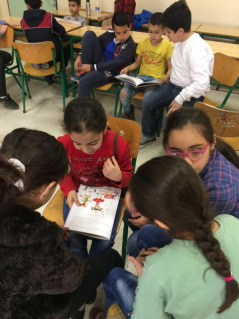
Ibby functions across the globe and I read recently about a project that Ibby Lebanon (LBBY) are involved in. As the flow of Syrian refugees into Lebanon becomes steadily greater, a bibliotherapy* project has been initiated in two public schools that Syrian children attend. To date, nearly 45,000 US$ has been sent to support this project whereby children give up their free hours on saturday’s to attend sessions at school using books as a way in to talk about feelings and what they have been through.
Julinda Abu Nasr leads the project and, in her words, ‘ There is no doubt in my mind that the work we are doing with these children is lighting a candle in the dark tunnel they have had to cross too early in life… This program is helping them deal with their hate and anger by trying to channel these negative destructive feelings into more positive venues rather than directing it towards self or others.’
To read the full report and support Ibby’s work click here.
PEN promotes literature and freedom of expression through the written word. Founded in 1921, it has grown to span over 100 countries, defending ‘…unhampered transmission of thought within each nation and between all nations.’ Numerous campaigns exist across the globe at all times to help persecuted writers, ranging from campaigning to freeing imprisoned journalists to providing creative workshops for refugees and asylum seekers.
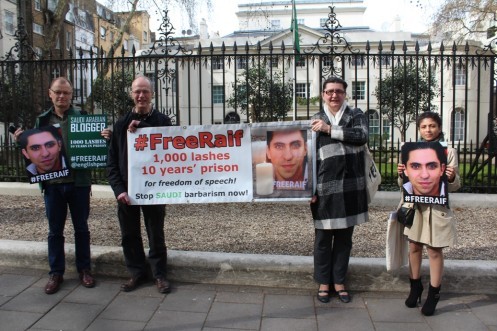
One of the hundreds of campaigns taking place, #FreeRaif is fighting to release imprisoned Saudi writer and founder of website Free Saudi Liberals, Raif Badawi, for expressing opinions on his blog unacceptable to the Saudi state. For more on this click here. So many of us (me included) take freedom of expression for granted, but when you start to do a little digging, the persecution of thousands of writers the world over for expressing opinions is sobering.
I have briefly mentioned two of thousands of amazing acts of hope that are taking place. There is never a better time than the present moment to add our own candle of hope to the world.

* If Bibliotherapy is a new term for you, it promotes healing through the medium of reading books, stories and poetry.
The post How do we create a new narrative of hope? appeared first on Rebecca Stonehill.


May 2, 2016
The curious truth about book covers
So here’s a curious thing I’ve learnt about the covers of novels since becoming a published author: They don’t have to (and often don’t) have anything to do with the book’s contents.
Seems peculiar, doesn’t it? Counter-intuitive? Downright odd, because surely the cover of a book needs to give a potential reader a decent idea about what they are about to read, right?
Well, wrong actually.
The cover of a book lures in a reader, modelling itself on other successful cover designs of novels of its genre. This has caused a fair degree of controversy over the years and in 2014 Buzzfeed‘s Luke Lewis ran a feature referred to as ‘cover cliche’s’, in other words concept images that appear again and again. So what exactly are these cover cliche’s?
Here are a few examples:
Faceless woman (literary, for female readership)
Small figure of either gender dwarfed by blurred background (mystery)
Urban fog (historical)
Acacia tree at sunset (Africa)
Female legs, bright pastels (contemporary romance)
And whilst publishers and designers have been criticised for their lack of creativity, according to Debbie Taylor, novelist and creator of the fantastic Mslexia Magazine, “…such criticisms miss the point entirely. Because cover cliche’s sell books. We might not like them; we might think we are too literature and discerning to be influenced by a foggy background, say, or an edgy font – but cover cliche’s work.’
So does this say less, perhaps about the publishers and designers and more about us, the readers? Either way, it’s food for thought.
I’ll let you into a little secret. When I was shown the cover for my first novel, The Poet’s Wife, I was devastated. Who was this glamorous, lipsticked woman they had conjured up and why was her dress falling off her shoulder? I was concerned it would look like a erotic, historical romp and begged for her to look a little less alluring and wealthy and for her dress to be v-necked at the back instead. I was humoured for a while as different images were played with but the truth was, the cover was far less appealing once the changes were made. I just couldn’t deny it.
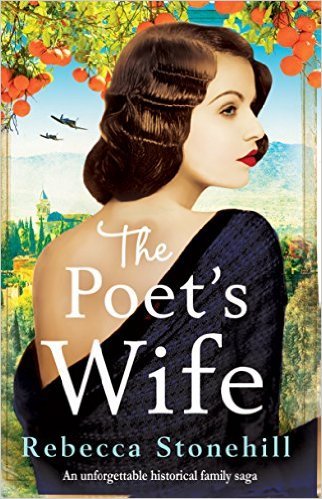
Then with my second novel, The Girl and the Sunbird (coming out June 2016) I was extremely anxious as I waited for my cover image. I think I had good reason to feel nervous about it. Just take a look at these book covers below:
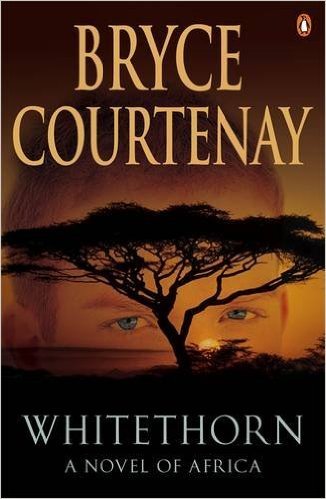
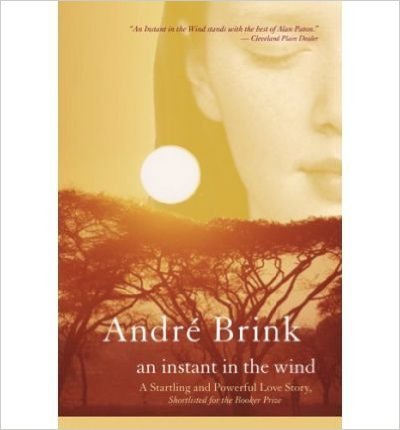 [image error]
For this blog, I chose four images out of hundreds with the ubiquitous acacia tree and sinking sun. Whether it’s South Africa or Malawi, Kenya or Nigeria (where you don’t even get acacia trees), this crude image appears time and again. No doubt this is for the same aforementioned reason: that this image sells. Yet does falling back on this tried and tested visual only serve to reinforce stereotypes about the vast and varied continent of Africa? Surely it is time to rise beyond cliche and be brave enough to stop following this well-trodden path? (To read more about this from the fantastic website Africa is a Country, click here.)
Imagine my surprise, then, and my utter delight when I was given this cover:
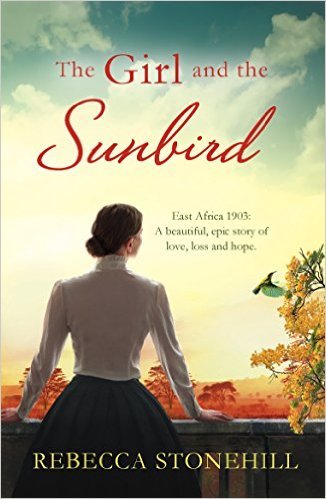
Alright, there may be a few acacia trees blended into the background and alright, it looks like it could be at sunset. Yet the focus of the image is clearly the girl…and the sunbird. I was over the moon; still am. The only thing I requested to change this time around was the colour of the girl’s hair to reflect that of my protagonist, and my publisher willingly acquiesced.
Cliche’s can be cliche’s for good reason, but just because something works and sells, it doesn’t mean that something else doesn’t. Come on, we’re an imaginative race – let’s stop recycling these crude visual stereotypes and try something new. Who knows, this originality might even pay off and set a new trend.
The post The curious truth about book covers appeared first on Rebecca Stonehill.
April 24, 2016
How can we help introduce Shakespeare to our children?
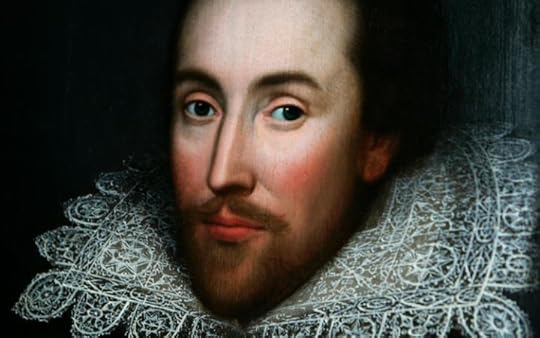
We’d all love our children to ingest a little bit of the Bard in one way or another, right?
As the world celebrates 400 years since the death of William Shakespeare, the best-known playwright to ever walk the earth, Bard fever has been spreading the globe. His plays have been translated into over 80 languages (the most obscure, arguably, being Star Trek’s constructed language, Klingon) and the Royal Shakespeare Company introduces 50,000 new people a year to their first Shakespeare play.
But how do we get our children enthused about his plays? Of course, there is school, and a great many teachers do a fantastic job of bringing his plays alive. But for other teachers’ who aren’t particularly passionate about Shakespeare, many youngsters are turned off him from the word ‘go’, failing to see how a long-dead playwright can be relevant in modern life.
This is Maya.
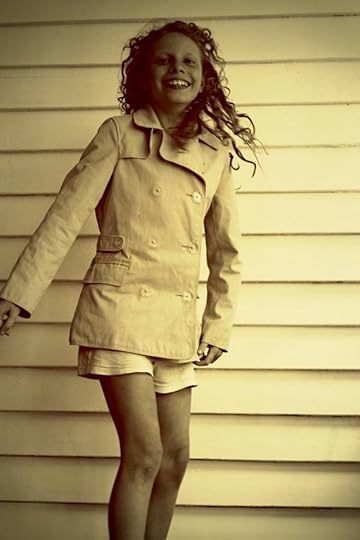
She is nearly ten years old and 98% of the time she has her nose in a book. She likes horse riding, playing the piano and violin, baking and doing handstands.
Maya didn’t know anything about Shakespeare until she read Shakespeare’s Storybook: Folk Tales that inspired the Bard by Patrick Ryan and she really, really rates it.
In her own words, “the stories are interesting, action-packed and full of humour and I love the pictures.” Does it make you want to read Shakespeare’s actual plays one day? “Yes, I can’t wait!”
THE BEST OF THE REST
Leon Garfield’s Shakespeare Stories
This is the book that I worked with simultaneously to the original plays when I was younger. Remaining true to the spirit of the originals, these stories are engaging, clear and beautifully illustrated by Michael Foreman.
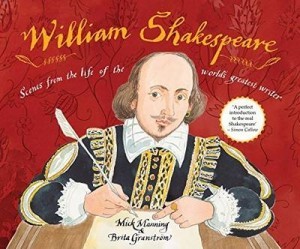
William Shakespeare: Scenes from the life of the world’s greatest writer
Mick Manning & Brita Granström
This is a wonderful introduction to Shakespeare’s world and Elizabethan England. There is some fascinating information on his life before he became a playwright and the speech bubble format keeps it fun and interactive.
Classics Unfolded: Romeo and Juliet by William Shakespeare
retold in pictures by Yelena Bryksenkova
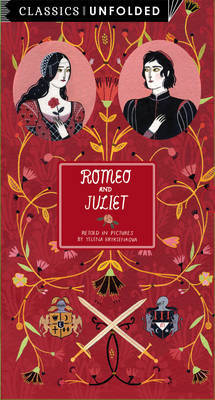
The fourteen key scenes of Romeo and Juliet are depicted in fold-out, concertina style, a real visual treat. Not only does each scene contain a quote from the original text, but a wonderful summary in ’30 seconds’ and also in ‘5 words’ is also included, making it accessible to all ages.
For older readers:
To be or not to be – A choosable path adventure by Ryan North
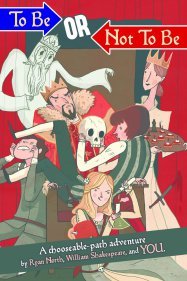
Experience Shakespeare classic ‘Hamlet’ through the perspective of various characters and alter their fates as you see fit. Graphic artistry at its most inventive, this highly engaging and original book was crowd-funded in 2012 through Kickstarter, deviating from the plot in such a creative way that the Bard himself would no doubt have been impressed.
To finish, a few interesting little facts you might not know about Shakespeare:
Shakespeare’s plays feature the first written terms for hundreds of words and expressions familiar today, for e.g. fashionable, wild goose chase & one fell swoop
Shakespeare’s father held many different jobs, one of them being beer taster. In 1552 he became Stratford-upon-Avon’s official ale-taster.
The moons of Uranus are named after Shakespearian characters
He caused great controversy when he married a much older woman, Anne Hathaway in 1582, who was already three months pregnant.
His authorship is being called into question more and more. Did William Shakespeare truly pen all those poems and plays? For more on this, click here.
#Shakespeare400
The post How can we help introduce Shakespeare to our children? appeared first on Rebecca Stonehill.
April 16, 2016
Carving a path for our children through written & oral landscapes
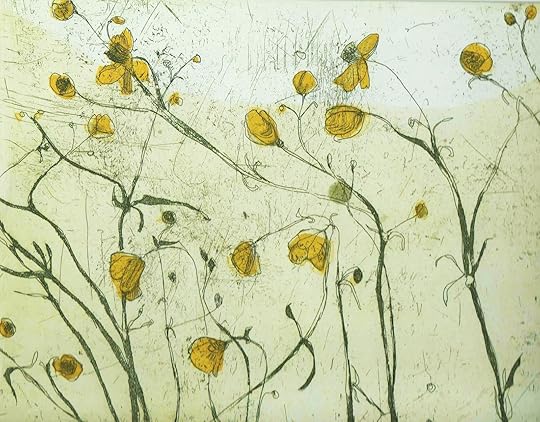
Illustration by Thomas James
Words are like water. They ebb and flow, transforming as the years pass to camouflage themselves in their surroundings. Language shapes and moulds our identities, providing a emotional anchor for our pasts and a compass for our presents. Unsurprisingly, our written and oral landscape has altered significantly over the past decades. Those separated by two generations speak to one another with increasing disunion between words spoken and understanding rendered.
Yet nowhere has language changed so considerably than in our natural and technological environments. As species of plants, animals, trees and birds go into decline and even teeter precariously on the brink of extinction, and two year old children become conversant in the terminology of hand held devices, new generations part with the written and oral landscape of their predecessors, carving paths through shiny, new worlds.
When a new edition of the Oxford Junior Dictionary was published in 2007, it was decided that, amongst many others, the following words should be removed:
acorn
bluebell
buttercup
conker
cygnet
dandelion
kingfisher
mistletoe
otter
pasture
willow
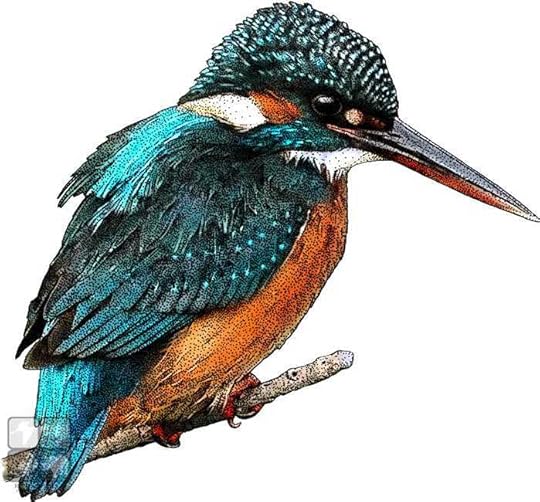
Illustration by Roger Hall
The above words were no longer deemed relevant to modern childhoods. In turn, the following words were added to the Oxford Junior Dictionary:
attachment
blog
broadband
celebrity
chatroom
cut-and-paste
MP3
voicemail *
Our job is not to judge, but to observe. Yet we would be wise to ask ourselves what this loss of language means for our future generations. It is important, of course, that we view what surrounds our children with realism. But we also have a choice. The question is a simple one: whether we as parents, grandparents, educators, aunties etc want the children in our lives to exist without knowing that if you place a buttercup beneath your chins, you can see how much you love butter or that you can steal a kiss beneath a sprig of mistletoe at Christmas time; that kingfisher’s are the most extraordinarily beautiful little birds with sharp pointed pills adapted to their environments, and that walking through a wood filled with bluebells offers up one of nature’s most magical experiences imaginable.
Of course we don’t ignore attachments, blogs and MP3’s – that would be pointless. But we make an active choice whether or not we want to keep the dialogue of a rapidly changing natural world alive for our children through poetry, through song, through stories, but most importantly of all, through visceral, tactile experience. The aforementioned words may be extinct in the Oxford Junior Dictionary, but in the world we inhabit they still live, breathe and very often thrive. In celebration of the natural world we have a choice to still embrace, I’m including a lovely poem. Enjoy 
The Poem That Got Away
By Elisa Maria Argiro
Somewhere between the dream of what it could be
and what it wanted to be, this poem hightailed it
out of town. Down the road it went, careening into
hedgerows, jostling small birds from their resting
time. Running for all it’s worth, out to the sea cliffs
then arrested, stock still, before all that immensity.
Chagrined by such a rash attempt at escape, even
blushing a bit, it wondered about strange things:
What would it be like to be a badger? To always be
dressed in all those lovely stripes? Never have bad
wardrobe days…. Or what about an otter, with such
strong muscles, and an utter delight for swimming?
To never really feel the cold? These are the things a
poem can wonder about, when it isn’t quite sure, just
right then, in the present moment, how to be a poem.
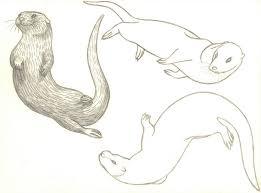
Illustration by Emma Cowley
*My thanks to Natasha Breed for providing me with the relevant information from Robert Macfarlane’s ‘Landmarks‘
The post Carving a path for our children through written & oral landscapes appeared first on Rebecca Stonehill.
April 8, 2016
Confessions of a Writer and / or Parent
You think that you are ‘there’ with your novel. You have worked on it tirelessly, stretching out plot, characterisation, setting etc for everything it’s worth. You send it to your editor, crack open a drink and breathe out a huge, deep sigh of relief.
But then…what’s this? After a week of being lulled into a false sense of security; that it will only be a case of a little polishing here and there, your manuscript is returned to you followed with three filled pages outlining changes still to be made. Too much internal narration, more emphasis on the growing relationship between the protagonists, part two must be re-written. This needs to all be dealt with and back within three weeks.
Three weeks? Ah. Trouble is, you are about to move house. Your children have a month of holiday. Your husband is away with work. So, you see, it’s not really possible. But… what’s that you say? If you still want a summer publication, it needs to be back in three weeks. Your panic tips you over into a bout of insomnia which leaves you groggy eyed, constant headaches knocking at your temples and snappy retorts at the tip of your tongue. You already had one extension first time around so it’s tricky to request another.
Only one thing for it then: rise to the challenge. Pull out all the stops and get editing.
Here’s what can happen en-route to achieving the seemingly impossible:
You drink way too much coffee during the daytime.
You drink way too much alcohol during the evenings.
You move into the new house but it remains in cluttered chaos and you constantly trip over boxes, cursing at them and uttering all kinds of words you’re trying to prevent (in vain) your children from repeating.
You only have so many friends you can ask for your children to go to during the day, and in desperation to get some peace to work, bribery becomes more and more commonplace: day-time movies, multiple biscuits, computer games galore. The bribery you are least proud of is this: ‘If you let me work, the better my book will be. Which means the more money I will get from it. Which means the more ice-cream I can buy for you.’ Five year-old does not look convinced.
Speaking of your five-year old, these admonishments often ring around your house from him: Why won’t you play with me? I’m hungry! I have nothing to do. And, the little tike’s piece de resistance: It’s always all about you, isn’t it? You consider placing an apron over said 5 year old’s head and inviting him to cook all the family meals, but fear the irony may be lost on him.
What else happens on this fraught journey? You have been asking the children to put themselves to bed more and more often, with varying degrees of success. You are uncertain when they last had a decent wash (you live in Kenya where a great deal of time is spent outside, barefoot, and feet are of the muddy variety) and the curls of your girls’ have morphed slowly into dreadlocks.
You wake in the dead of a Nairobi night to the frenzied sound of your dog barking, sniffing an intruder (or possibly just a male dog next door), but by then you’re too wired to drop off again.
You tell yourself one thousand times a day that it is never going to be perfect or completely polished, just as you blogged about not so long ago. Yet despite that you oscillate between pure terror, projecting yourself several months into the future when a reviewer picks you up on a poorly expressed sentence or – worse – theme, and weary acceptance: that it IS on track, that everything WILL be alright.
When it’s all over, you look at your grubby cheeked, black-footed, matted-haired children, hug them tight to you, apologise for your recent sub-parenting skills and take them out for ice cream. And then you buy a bloody whopping one for yourself and gollop it down before your kids have barely taken their first lick.
#parentauthorsjourney

The post Confessions of a Writer and / or Parent appeared first on Rebecca Stonehill.
April 2, 2016
Five celebratory online spaces to inspire curiosity & creativty
Do you ever find yourself browsing through the internet, searching for calming spaces, free from clutter, hyperbole & advertising, places that leave you feeling inspired, a little bit wiser or just plain happy? Such sites are surprisingly difficult to find and whilst, of course, these tastes are entirely subjective, I’ve found over the years several sites that get top marks from me in website aesthetics, creative vision and all, in their different ways, give me something to think about.
I’d love to know: what are your ‘go-to’ clutter-less, inspiring + brilliant sites / podcasts?
C U L T U R E
Maria Popova, editor of the altogether fantastic Brain Pickings, describes herself as a curator of interestingness. Just over thirty years of age, what Popova has created online is nothing short of extraordinary. She spends 450 hours a month working on her website (yes, that really is 15 hours a day) and you feel the passion for her interests & craft jumping out from her writing. Delving into everything from philosophy to literature to psychology to design, Popova collates a great deal of her ‘interestingness’ from offline sources, challenging the ‘temporal bias of the web’ i.e. that just because something is more recent, does that really mean it’s more relevant? The common thread running through all her intelligently researched and beautifully written articles are their very timelessness, often curating inspirational voices and thinkers from the past with an equal relevance to our lives today.
F O O D
Created by a wife & husband team, this great website focuses on nutritious, delicious recipes with a) no more than ten ingredients b) that involve just one pot or c) take less than half an hour to prepare. You can find a combination of starters, main courses, drinks and desserts and the photography is fabulous and mouth-watering. I am not vegan or gluten free and whilst a number of their recipes experiment with this, don’t let this put you off – their predominantly plant-based recipes are innovative, simple and truly tasty. Even my kids give them the thumbs up and, as anyone with young children will know, it’s often not east pleasing little eaters.
F A S H I O N
Unfancy

I discovered Unfancy about a year ago and have been hooked ever since. Caroline’s down-to-earth but also philosophical approach to clothes and how they make us feel about ourselves makes so much sense. As a result of her great site, I now have a ‘capsule-wardrobe’ (click here to read more about that), rotating clothes and having far fewer items in my wardrobe. I have also consciously cut down on buying, spending more on good quality but less often. Whilst my style is not that similar to Caroline’s, it really doesn’t matter – this is a fantastic website & blog for anyone who enjoys thinking about personal style & contentment.
S C I E N C E
Written by Joe Hanson, a Ph.D. biologist and science writer, this is a really fun site filled with engaging you tube videos that he features in himself, clearly explaining some of life’s great scientific questions that will appeal to even those (or especially those?) who were utterly disengaged from science at school. Hanson wants science to be accessible to each and every one of us and through his blog and you tube show, makes it every bit as fascinating as it deserves to be. In his own words:
We must teach science as more than facts. It’s a creative process, it’s an instant injection of wonderment, it’s the excitement we feel at the edge of knowledge. It’s for everyone.
C R A F T
Melissa Wastney
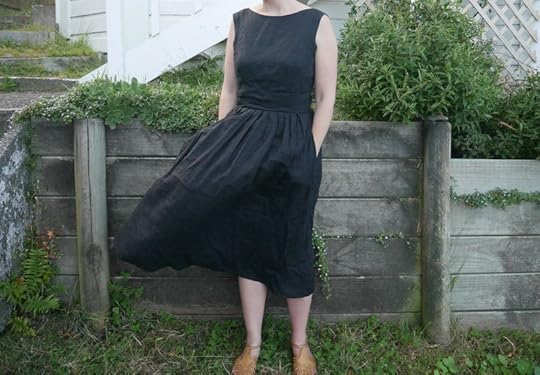
This is a lovely crafty website that comes out of New Zealand. I love looking through what Melissa Wastney makes and although I enjoy making things myself, I’d be unlikely to go to these lengths. But it doesn’t matter. This is a feel-good space in which I can enjoy a crafter’s words, photos and creations vicariously and dream about what I could make one day 
March 24, 2016
The Power of Public Space Poetry
Have you ever been walking through a public space when you’re stopped, suddenly, in your tracks by the most uplifting, unexpected sight?
Public Poetry.
Perhaps humanity needs this more than ever.
Words to make us stop and think.
Words to encourage us to make the right choices.
Words to inspire
to uplift
to nurture
to remind us
of our shared humanity,
of the little things that, essentially, are the big things
and that we only get one shot at this.
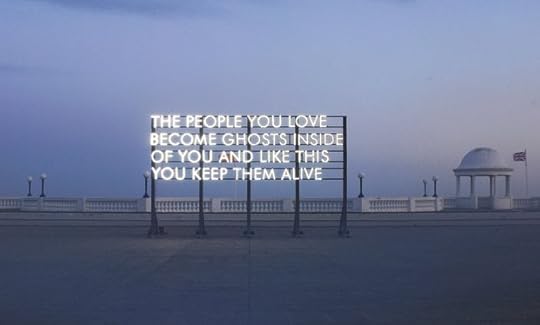
Robert Montgomery, Bexhill-On-Sea (UK)
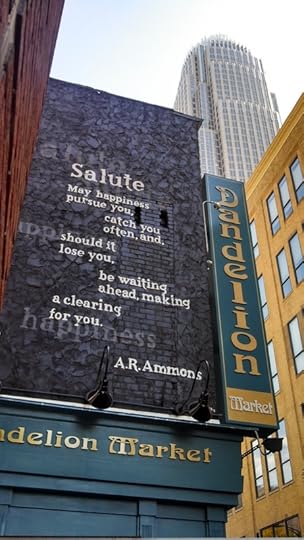
A.R.Ammons, Charlotte, North Carolina (USA)
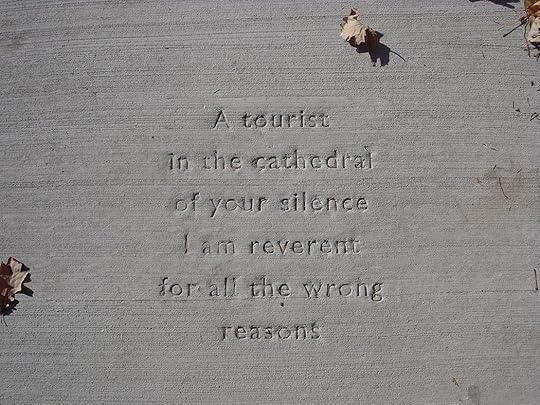
Sidewalk Poetry Project, Cambridge, Massachusetts (USA)
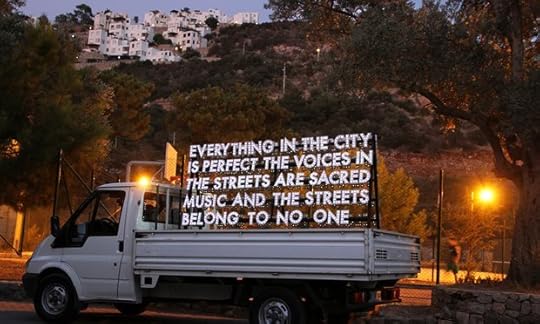
Robert Montgomery, Istanbul (Turkey)
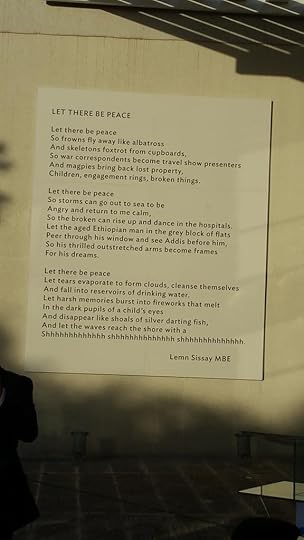
Lemn Sissay, Huddersfield (UK)
A few words can change just about everything.
Who’s up for a public outpouring of public poetry?
#hatewarlovepoetry
The post The Power of Public Space Poetry appeared first on Rebecca Stonehill.
March 20, 2016
An Open Letter from a Writer to the General Public
To whom it may concern,
It’s often said that everybody has a book in them. Perhaps there’s an element of truth to this because each and every one of us haves stories woven into our DNA’s, wanting to be told in one form or another. But a question I’d like to pose is this: How many of us have the patience; the staying power to bring these books to the surface of the vast ocean of our imaginations?
The reason I ask this is because I have observed, over the years of my writing life (and through comments made by other writers), that a great gulf exists between a writer seeing a book through to fruition and the perceived work that goes into such a project by others. It may sound like I have a chip the size of the Empire State building on my shoulder – the woe-is-me persecuted writer. But I would suggest that few other professions exist in which individuals are so lambasted (either intentionally or otherwise), and so misunderstood.
Here are a few questions and comments that fellow writers and I commonly hear:
When are you going to get a proper job?
Why aren’t your books in all the bookshops?
Are you going to be the next JK Rowling?
Will you ever go back to work?
I’ve always wanted to write a book. Maybe I will now you’ve done it.
Can I have a freebie?
I’ve got a brilliant idea for a book. Listen to this . . .
How much money do you make being a writer?
Will I have heard of you?
Are you enjoying it while it lasts?
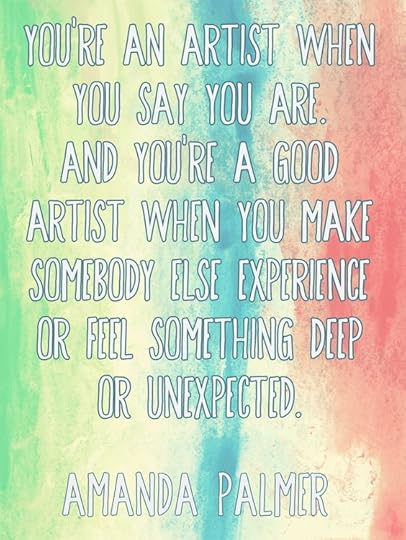
These questions may be laughable and sometimes meant in jest. But they call into question the dedication to our craft, the months and years of our hard work and our belief in ourselves as writers. Amanda Palmer (artist, musician, writer and all-round creative) once said that “You’re an artist when you say you are. And you’re a good artist when you make somebody else experience or feel something deep or unexpected.” But don’t, dear reader, underestimate just how long it can take to craft this emotion tied up in the written word which does make you feel something. It can take hours, days, sometimes even months.
So, to return to the notion at the beginning of this letter: do we all have a book in us? Perhaps, yes. But can we all write a book? Definitively and categorically, no. To write a book is an epic labour of love and hard work; a feat of patience, perseverance, the art of agonising over single words and single sentences to get it just right; editing and re-editing, again and again, and again. We may often work at home, but in many ways, this can make our jobs all the more difficult because we are required to juggle the various, numerous demands of our home lives.
We love what we do. And yes, maybe we wouldn’t do anything else. But it’s no stroll in the park.
It’s a demanding, fraught journey littered with obstacles + heartbreak.
And sometimes it can even feel demeaning (especially when we find ourselves hit with a number of the above questions on a regular basis.)
Imagine asking a lawyer or a doctor when they’re going to get a proper job, or if you could have a freebie.
You wouldn’t, would you?
Just something to think about.
Thank you for reading this.
Yours sincerely,
A Writer.
The post An Open Letter from a Writer to the General Public appeared first on Rebecca Stonehill.
March 11, 2016
Guest Post from Author Angela Marsons
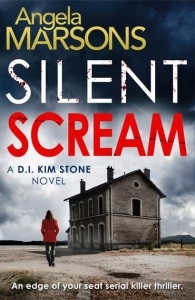
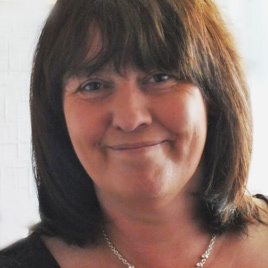
Angela Marsons’s momentous journey from unknown author to best-selling crime writer since signing with Bookouture in September 2014 has been nothing short of astonishing. Her crime series, revolving around the nail-biting cases of D.I. Kim Stone have regularly topped the charts and thus far her books have been translated into fourteen language. Her books are fast-paced, gritty, filled with clever plot twists and turns and are compulsive page turners.
I wanted to find out a little more about the woman behind the writer, the creator of the enigmatic D.I.Kim Stone and how she made it as best-selling author (whose novel Silent Scream has been the fifth best-selling Amazon item EVER) within an extraordinarily short space of time. Here she is, in her own words.
What were you like as a child?
As I answer this I wonder if my response would be the same as my Mum’s! I was a bossy little thing that had her nose in everyone else’s business. My school report card constantly stated that I minded other people’s business better than I minded my own. I was incredibly outspoken and involved myself in every school activity available. I look back at my answer and realise that yes, my mum would probably agree.
When did you know you wanted to become a writer?
I loved reading early on but I remember being asked to write an essay on my recent holiday. We hadn’t been on holiday so I didn’t know what to write. Eventually I did a piece on the relationship between the rocks and the sea. I got marked an A and received my first and only ever Merit Point. The teacher asked if she could bring me some books that were above my reading age and from that moment I was hooked. The books she brought were exploring complex human relationships and as I read I knew that I wanted to write these stories as well as read them.
Why did you choose to write in your particular genre or field?
I began by writing dramas that were character driven but always enjoyed reading crime. I never thought I could write a crime book but after many years of rejection I knew I had to give it a try. I finally began writing the book that I wanted to write with the character who had been chirping in my head for years and set in my local area. I fully expected to hit a wall at around 20,000 words but at least I would have known I’d tried. It was at this point that my pencil took on a life of its own and the story began to write itself.
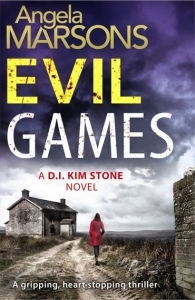
Can you tell us something about your journey to publication?
I have been trying to share my work for 25 years. Many of the rejections said ‘we like it but we just don’t love it’. During this time I secured a top London agent who tried to sell my Kim Stone books but failed. When we parted ways it left me crippled with self-doubt and I could not pick up a pencil. If he couldn’t sell my work then no-one could. I’d had my chance and the dream of writing for a living was gone. But, I didn’t know then that I had a fairy godmother named Keshini. We had worked together on the Kim Stone books while she was employed by the agency and she had never forgotten them. Out of the blue I received a message from her that she had submitted Silent Scream to a young and dynamic digital publisher called Bookouture. My response was extremely low key as I couldn’t even dare to hope again. A couple of weeks later I was asked to sign with them for 4 Kim Stone books which increased to 8 following the publication of Silent Scream.
If you had to choose one or two of your favourite books or authors of all time, what /who would they be?
From my childhood my favourite author would have to be Andrea Newman. It was her books that explored the frailty of human relationships that lit the fire in my stomach. My favourite book of all time is Disclosure by Michael Crichton. It was the only book that ever caused me to call in sick for work as I literally could not put it down. I had to re-read it to understand how he had managed to captivate me so completely.
Before you were a writer, what were you doing?
Immediately before becoming a writer I was working 12 hour night shifts in an alarm receiving centre. I have worked within the Security Industry for many years and managed a team of 70+ officers at my local shopping centre.
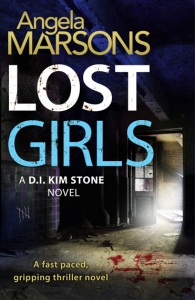
What advice would you give to aspiring writers out there?
My first piece of advice is to never stop writing. It can be hard to maintain the passion in the face of constant rejection but never forget what made you start writing in the first place. I would also say never to share your first draft with anyone until you’ve reached the end. First draft is your own time in the sandpit and the only time you are free do do exactly what you want. Any comments, positive or negative can affect the way you feel and think before you’ve even fell in love with the story yourself.
When you’re not writing, what do you do to relax?
I love to read and I am addicted to Pet Rescue. I will admit to loving a bit of reality television and watch many of the Real Housewives franchise. Other than that I love to find new places to visit and landscapes to admire. If I’m not in front of my computer I can normally be found at the top of a big hill.
Is there anything you find particularly challenging in your writing?
Personally, I struggle to write romance in my books. There is a distinct lack of romantic involvement for my main character as when I am reading crime I want to read about crime and not what sometimes seems like the inevitable pairing of main characters.
For an author set to become the UK’s next biggest voice in crime fiction, follow Angela Marsons on twitter, like her Facebook page and visit her website
The post Guest Post from Author Angela Marsons appeared first on Rebecca Stonehill.
March 4, 2016
The Art of Letting Go For Writers
So, you have finished what you are working on. You have been over it and over it. And over it again. And you may not feel as though it is truly finished (is anything ever finished?), but nevertheless you need to send it off and the truth is it’s unlikely to get any ‘better.’
And yet…you just can’t let it go.
Why?
Us writers are notoriously sensitive beings. We create entire worlds, characters and scenarios out of dust. We spend months, sometimes years with these fictional people and places, keeping them close to us and only allowing small glimpses of them to slip out now and again.

This week, I sent my ‘finished’ novel to my editor. We have done the structural edit and I have worked on these changes. I have poured my heart and soul into this novel and yet I, like so many hundreds of thousands of writers out there, no matter what they are writing, have hovered over the SEND button for an interminably long time.
A fine line exists between writing for ourselves and writing for others. But I think this also goes deeper than simply sending off our writing to the various, necessary portals. After all, as American Author Annie Dillard said, How we spend our days is, of course, how we spend our lives. In other words, if we have difficulty in letting go of our work, it would follow that some difficulty also exists in holding on to emotions and ideas in other areas of our lives that we need to give flight to.
How can we be helped to let go of our work?
[image error]
TRUST in your innate abilities. You are a writer. Some days it may not feel like that. Some days you may literally stare at the screen and the blank page and not feel that fuse of energy. It doesn’t matter, we all have these days and it doesn’t make us any less writers. We have put the work in, now send it out there. Nothing ventured, nothing gained and all that jazz.

Beloved children’s author E.B White once said that he felt a great responsibility in his chosen profession. A writer, he said, should ‘...tend to lift people up, not lower them down. Writers do not merely reflect and interpret life, they inform and shape life.’
If we take heed of his words, we must not underestimate the importance of them. As writers, we have a moral obligation to SHARE our work. Be custodian for your authorship and ask yourself the question (because we are, after all, not writing into a void): What am I giving people through my writing? Again, don’t belittle this. For each and every person out there who feels something, anything, as a result of reading what we have written, we have been triumphant. Our world is made up of an intricate spiderweb of cause and effect. Art reflects life itself and the ripple effects of feeling something from what one has read can travel far and wide.

Focus on exactly what it is that you are gaining by letting go. Remain mindful of the fact that when one door closes another door opens and new opportunities present themselves. It could be that an important piece of writing is coming close to being given new life or entering a new phase; that we suddenly find ourselves with time for projects we had been neglecting or simply re-focusing on the important and precious things in our lives. Ask yourself the question, by letting go, exactly how I am going to BENEFIT?
Trust + Share + Benefit
3 such small, simple words.
But believe in their power.
‘Precision, gentleness, and the ability to let go … are not something that we have to gain, but something that we could bring out, cultivate, rediscover in ourselves.’
Pema Chödrön
How do you as writers accept that something is finished and allow it to be released to the world? I’d love to hear.
The post The Art of Letting Go For Writers appeared first on Rebecca Stonehill.