Rebecca Stonehill's Blog, page 60
October 28, 2016
When is a good age to stop reading stories aloud to chil...

When is a good age to stop reading stories aloud to children?
How about never?
Alright, so what are the chances really of being tucked up beside our seventeen year old reading a bedtime story. But many believe that once children have gained the skills to read for themselves, we can take a step back and let kids plough their reading fields alone. Which, of course, they can and should to an extent. After all, it’s an exciting process to allow children more independence; to observe their book choices and reading interests.
My eldest child decided a couple of years ago that she didn’t want to be read to anymore. I accepted this and encouraged her independence. But then I had a conversation with a friend who has been a teacher in her native Finland for many years (we all know by now about Finland’s well-documented academic excellence, but click here for more on this). She told me that she was read to by her parents until she was fifteen and was surprised to find that I wasn’t still reading to my children (aged 10, 8 and 6). In her words, ***
Since then, we’ve resurrected the tradition of family reading time and it’s been brilliant. It’s not always easy finding something that will suit all three of my children. There have been a couple of hits and misses, but on the whole it’s been a wonderful experience, not just for my children but also for me. It feels like important time with my children and it is very rewarding when they all become immersed and involved in a story, asking questions and talking about the book at other times. Not only can it hugely improve recall and listening skills, but by listening to a s
Here are the books I have read to my children in the past eighteen months to give you a few ideas. I’ve put them in the order of when they were first published rather than the order I read them.
The Jungle Book by Rudyard Kipling (1894)
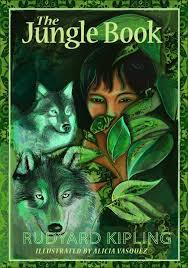
We are reading this at the moment. There are lots of thee’s and thou’s which threw the children initially but they’ve got into the swing of it now. Beautiful, atmospheric prose. My kids have already watched the movie (both versions), but that’s no reason not to go back to the book now.
The Wonderful Wizard of Oz by L. Frank Baum (1900)
This classic tale needs no introduction. Like The Jungle Book, because of the era this was written, there is some olde-worlde language. But the tale of Dorothy and her friends is easy to follow, even for my son who was five at the time.
Swallows and Amazons by Arthur Ransome (1930)
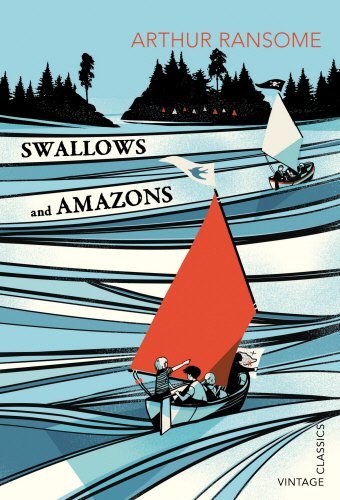
This is a long book, and proved a challenging one. My youngest’s attention drifted in and out of the story; I lost him when Ransome got carried away with nautical terms and more detailed passages of sailing, but his ears pricked up again when there was any talk of pirates! It took some time to read this but I’m glad we persevered and it made it all the more rewarding watching the fun new film version of the book this summer.
Thimble Summer by Elizabeth Enright (1938)
This is a sweet and tender tale of a young girl’s adventures one hot summer in small town 1930’s America. Not an enormous amount ‘happens’ but the descriptions and beautiful and engaging and all my children really enjoyed it. (As an aside, I am fairly horrified to discover that Enright is the single female author I have read so far to my children. I aim to start redressing that balance after finishing The Jungle Book!)
Stuart Little by EB White (1945)
This is a gorgeous little gem of a book. It won’t take long to read and Stuart’s adventures are heart-warming and captivating. EB White’s prose is full of intelligent humour and he allows the reader to answer some questions for themselves.
Mrs Frisby and the Rats of Nimh by Robert C O’Brien (1971)
This is the tale of Mrs Frisby, a widowed mouse and her four children who enlists the help of a community of highly intelligent rats when faced with a terrifying dilemma. My kids loved this book and became deeply involved in Mrs Frisby’s plight and the safety of her children.
Noah Barleywater Runs Away by John Boyne (2010)
This is a curious, haunting book. I was a little uncertain about reading it as Boyne is also the author of The Boy in the Striped Pyjamas which I definitely don’t feel my younger two would be ready for. However, I liked the sound of it and am also a big fan of Oliver Jeffers who did the illustrations for this book. In a similar way to – for example – The Little Prince, Noah Barleywater will need some time to digest. It deals with some quite difficult themes, namely the serious illness of a parent and a child trying to cope with this. But it raised some important questions amongst my children and I’m glad we read it.
This is a beautiful book trailer for Noah Barleywater with Oliver Jeffer’s gorgeous illustrations:
In Their Shoes: Fairy Tales & Folktales (2015)
Selected by Julia Nicholson & Anne-Laure Mercier
A collection of tales from around the world by a number of different authors. All connected to shoes, some of these stories were greeted with great enthusiasm whilst others were not so popular. I can’t deny I fell under the spell of the stunning cover of the collection and, on the whole, this is a worthwhile book which my eight year old is now re-reading alone and enjoying.
TIPS FOR READING ALOUD TO CHILDREN
Find a routine with reading, just like meals, and stick to this so that your children come to expect it. I read to my three after our evening meal whilst they are eating ‘pudding’ and most likely to be quiet and calm! If you’re unsure of what time will work best, play around a bit with it and see when the kids are most responsive.
If you have more than one child, aim for a book that pitches at the average age of your children. Either too advanced or too simple and your kids will lose interest.
Involve your children in the decision-making process of what to read next. If they are resistant to being read to, find a film they’ve enjoyed and read the original book if there is one. (NB It’s definitely more rewarding to read the book first, BUT this could be a way in for you, then you can go on to discuss the differences between the book and film.)
When you start reading each day, have a very brief discussion about what happened on the previous day to ‘place’ the children back into the story.
Look for books that have reasonable-length chapters or lots of natural breaks
We never grow out of pictures (at least, I don’t.) If possible, find a book that has some illustrations in it and share them with your children as you read.
ENJOY it! It is feeling like a drag or you and/or your kids are not enjoying the book, don’t beat yourself up about it and plough through it. Put the book aside and chose another one. Learn from what works and what doesn’t and be guided by the reaction of your children. Have fun!
Compliment this post with The 9 year old who read one hundred books in a year, Why engaging in poetry is a way into writing for kids & Carving a path for our children through written and oral landscapes.

The post appeared first on Rebecca Stonehill.


October 16, 2016
Notes from the Calais ‘Jungle’ – How can WE help?
The ‘Jungle’ migrant camp in Calais is now recorded as being home to well over 10,000 people, a vast patchwork of people from the world over seeking a better life. As we are faced with an escalating number of disturbing images coming out of Syria as well as the calls to dismantle the camp before the end of the year, we need a narrative of hope more than ever. As members of the public, it is so hard to know what we can do on a practical level to help. I urge you to read these words written by my friend, Helen Allen, and share them. Because this is practical action and it does make a difference.

Helen Allen
Helen Allen is a Homeopath, working locally but also in Calais in the ‘Jungle’ and previously in Africa. She is mother to two beautiful daughters. She has recently been told she is ‘an activist’ and she’s ok with that; seeing that direct action is the only way at times to connect and make a difference. She loves to read and to walk in her local countryside with her kids and hear her husband sing; they love festivals and live music. She enjoys a blessed life and has become more aware of this of late with her involvement with displaced people in need of asylum.
There is as much to be celebrated here as there is to feel desperate; this place where somehow, through endless acts of humanity, a shifting demographic of up to 10,000 people have survived, on the brink of life at times; with no way forward and certainly no way back. With no proper sanitation, no infrastructure, no formal medical care, just a few portable toilets and a handful of standpipes. It is because of volunteers and direct action that they have had food and clothes and shelter. There are no big charities here and the trauma and hell of this place hits you hard as soon as you arrive.
In a different time and in another context, it could be seen as an incredible story of resilience tolerance and community. Here, Sudanese, Afghani, Eritrean. Syrian, Somali and Kurdish women men and children ‘live’ in a weird upcycled tapestry of makeshift huts tents and tarpaulin shelters. Here, you could be anywhere, as you hear Farsi, Arabic, Pashto, Dari, French and then the lilting sounds of predominantly British volunteers. Here, where churches and places of worship have been built with wooden pallets and scrap metal, where the call to prayer lives somehow alongside the gospel choir coming from the Christian church. Where music rises above and somehow a beautiful album is produced.
People with a heart donate old army tents and yurts and fleets of vehicles bringing endless life-saving aid come every single day. Teachers come and make a school out of nothing and give their time to the kids, unwanted caravans are towed over or under the Channel to house families, or become first aid points run by volunteer medics. People come and chop kilos of vegetables every day to make the endless dahl to feed thousands… “We are just trying to make hell a bit more bearable” a volunteer says. The most common gesture I see is people holding their heart and nodding compassionately. “We are where we are,” the burned out, long-term volunteers mantra. Nothing is certain and everything is temporary. This is not the place to unpick all that that has been witnessed and I can see it in the haunted eyes that seem to be everywhere. Especially the children.
Here, chopping onions and garlic, I meet some of the young people who are now somehow etched on my psyche and in my heart forever. A child of 14 who lost his family in the chaos of the Syrian border. He hasn’t seen them in over a year and has no idea if they are alive or dead. Still, he stayed for a while on the Greek shores helping the medics to translate. I often think how he must have watched the horizon and longed to see them being hauled to safety off one of the boats. We chop more onions and talk about our favourite music.
A 12 year old who becomes our translator when we go to camp with natural medicine. His brother made it to the UK in a truck. He is now in the camp alone. He is polite, respectful. He has a stutter and a nervous tic, I am not surprised; I cannot begin to imagine what he has seen and experienced. We give him some fresh fruit and he immediately hands it out to the younger kids. I had to turn away and compose myself at that point.
Children play football on the south part of the camp that was bulldozed in February, and for a moment it looks pretty normal…until you see the line of CRS security vans on the perimeter of the camp… they use tear gas regularly.
We took our daughters to the camp in the summer. They were greeted with smiles and welcomes. Chai and food. They could not understand why people are living in these conditions in France.
The entire camp of 10,000 will be demolished imminently and the French Government has said it will process claims for asylum and deport anyone who is not eligible; the exact plan is not yet clear but we do know that a considerable number of people in the camp have reunification rights to be in the UK , of which over 300 are children. So far the UK government has not taken in any children under the DUBS amendment that was passed earlier this year.
After the last demolition in the Calais camp 129 CHILDREN WENT MISSING. You can help keep them safe and in contact with volunteers that they trust by topping up their phones
Or by texting CALA85 to 70070
You can express your solidarity by signing here.
You can donate to this link to provide sleeping bags rucksacks and emergency food.
Thank you so much Helen for sharing these words with us. People reading this: please, don’t just flick on to the next website. Share this post on all your social media sites, donate and tell people about this. This could so easily be us in this situation.
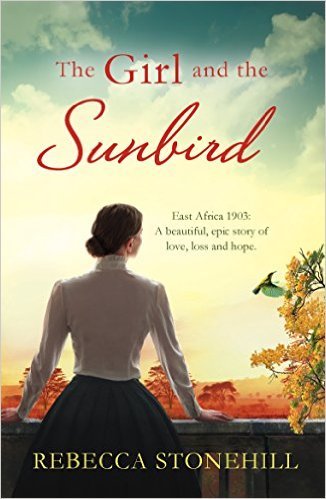
My second novel, The Girl and the Sunbird, is now available. Please click here to take a look at the reviews.
The post Notes from the Calais ‘Jungle’ – How can WE help? appeared first on Rebecca Stonehill.
October 2, 2016
The 9 year old who read 100 books in a year

This is Lola Sanchez Farmar. She is the nine year old daughter of my great friends, Rebecca and Pablo. I recently discovered that between July 2015 and July 2016 Lola read a whopping 100 Books. I couldn’t quite believe my ears. 100? Really?
Lola’s situation is a little (or a lot) unusual. Let me rewind a little and give you some background.
For a very long time, Rebecca and Pablo dreamt of taking their three kids out of school and having a home-schooling adventure (or un-schooling as it turned out to be) for a year. There was considerable debate around what they would do and where they would go. But in the end, over the course of a year, the five of them travelled to the following countries:
Iceland
Canada
USA
Costa Rica
Nicaragua
Cuba
Ecuador
Peru
Bolivia
Spain

Hearing about their experiences has been awe-inspiring. They stayed with the last remaining head-shrinking tribe in the Amazon in Ecuador, kayaked across volcano crater lakes, surfed in Nicaragua, had dance and drumming lessons in Cuba, bathed in hots springs at midnight, threw themselves into a turtle conservation project in Costa Rica and so, so much more.
Being the book and children’s literacy enthusiast that I am, I was astonished when I heard that Lola, their eldest child had chomped her way through one hundred books (both paperbacks and on a kindle) whilst she was away. I caught up with Lola over the summer at Shambala Festival, shortly after her return from their epic adventure and asked her some questions.

Have you always loved reading?
Yes, for as long as I can remember!
What kind of books did you like reading before your trip?
I liked the Biff and Chip and Magic Key books I got from school. I also remember reading The Iron Man by
Ted Hughes, Rainbow Magic and Magic Animal Friends.
And whilst you were away, what kind of books did you read?
I loved the Jack Brenin Fantasy series (Catherine Cooper) and also read a lot of Michael Morpurgo. My favourite book of his is King of the Cloud Forests. David Walliams made me laugh so much. He is really funny.

What is is that you love about reading?
I just go into the book and don’t hear anything going on around me. I’m one of the characters and I feel sad when it’s sad, or cross, or excited. Sometimes I was so into the book that I didn’t want to even do the activity of that day!
Which characters have you become?
Dickon in The Secret Garden, Tommo in Private Peaceful, Stella in Awful Auntie, both Eleanor and the Raven in the Jack Brenin series, Karli in The Elephant in the Garden and Harry in Harry Potter.
Lola, your mother told me that you spent a whole month reading books set in wartime. Can you tell me about this?
I just loved the descriptions of how people felt at these times. My favourite of all of the books I read set in war was Elephant in the Garden by Michael Morpurgo. Actually, I think this is my favourite book ever. It make me feel sad, then happy, then excited…before feeling sad then happy again. Of all the authors I’ve read, I go into Michael Morpurgo’s characters most deeply.
(Ed’s note: Lola was VERY enthusiastic about Elephant in the Garden and proceeded to tell me the whole story.)

What would you say to children who aren’t keen on reading historical fiction?
Give them a go and you might be amazed.
Do you ever re-read books?
Yes, the ones I read a long time ago and enjoyed, I will definitely repeat them.
Do you like writing?
Yes! I like writing books! Well…I write thirty sentences but then I run out of ideas  I don’t plan a lot. I love writing stories that come from my imagination and also illustrating my stories. My two favourite things are reading and drawing and then writing comes next.
Do you like poetry?
Yes. When I was away, I loved The Christmas Truce poem. I learnt the whole poem by heart. (This comes from the poetry book What are we fighting for? By Brian Moses and Roger Stevens.)
Any ideas about what you’d like to be when you grow up?
An actress, vet or maybe an author or illustrator.
Lola, WELL DONE! This is fabulous and inspiring. As well as having all these adventures over the course of your year out from school, you have inhabited so many more worlds in these books. Keep reading and keep us updated!
Please do share this blog post with your social media networks so that more children can discover some of this fantastic children’s literature that Lola finds so special ♥︎
Have you read my latest novel, The Girl and the Sunbird? On recent reviewer said ‘It’s the best book I’ve read in a very long time.’ Click here if you’re in the UK, here if you’re in the US and if you’re in neither place, just go to your local Amazon page

The post The 9 year old who read 100 books in a year appeared first on Rebecca Stonehill.
September 18, 2016
Hey you Baby Boomers out there….I need your help!
[image error]
The year is 1967, Summer of Love. US troops are multiplying in Vietnam and anti-war protestors are taking to the streets in larger numbers than ever before. Skirt lengths are shortening and tensions heightening in Israel with the explosion of the 6 Day War. Young people are listening to The Byrds, The Grateful Dead and Jefferson Airplane and the first edition of The Rolling Stone magazine is produced. Elvis marries Priscilla and the world’s first ATM is installed in Barclays Bank, London.
[image error]
Twiggy
Work is underway for my third novel as I mentioned in my last blog. A significant chunk of the new novel is set in the Summer of Love of 1967. But here’s the thing: I was born ten years later in 1977. So all of the above I’ve either been told about or I’ve read. As much as I adore researching older periods for my novels, I am loving the fact that the generation of my next novel’s protagonist are around to help me, to fill in those gaps and share their valuable memories with me.
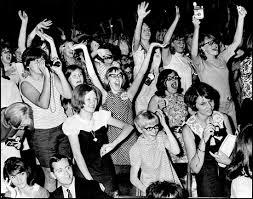
Monkees fans
So, will you help be a part of my next novel?
Here’s what I want to know:
What were you up to in 1967? What books were you reading? What brand of cigarettes were you smoking? What beer were you drinking? What was your favourite magazine? Band? Food? Clothes? What swear words were you using? What was going on across the world that made you angry? That made you smile? What films were you watching at the cinema? I’m setting the novel (or part of it, at least) during the summer of ’67, but anything you can think of from that whole year would be wonderful.
I also have another question for you, and this one may be a little trickier to answer. One of the themes I’m exploring in my novel is the relationship that existed between the baby boomer generation and their parents. I’m interested to know how the events and trauma of WW2 impacted on the way your parents interacted with you. I don’t want to pose any examples here or put words in your mouth, so I’ll leave this question very open and see what you come up with.
Don’t hold back! Mine those memories – I’d LOVE to hear them and for you to journey back in time with me. Anything you can think of to help me build a fuller, more authentic picture of 1967…
[image error]
[image error]
Thank you! I’m really looking forward to hearing from you. You can either respond to me as a comment on this blog, via my twitter or facebook page or just drop me a line through my contact page on my website.
The post Hey you Baby Boomers out there….I need your help! appeared first on Rebecca Stonehill.
September 2, 2016
Novel Number Three: The cave men and women from the 1960’s
There are experiences in our young lives we look back upon with a fervent fondness that the passing of time does nothing to dampen. These experiences can last for mere days, perhaps several weeks, months or even years. I’m talking about those times normally before the responsibilities of children, mortgages and stable jobs. We often look back upon them with a large helping of rose-tinted nostalgia, but I don’t think that matters; these are irreplaceable memories, a time when we were young and free and life felt intensely lived.
For me, it was aged eighteen, working on a kibbutz in Israel with a good friend. Rising at dawn, picking avocados, drinking far more than was good for me and meeting other young people from the world over. Then sleeping on a night ferry to Piraeas in Greece and weaving slowly back to England across Europe’s rich and diverse landscapes. Sometimes I catch a scent of this time on the wind or a long forgotten memory is stirred and recollections come tumbling back at me through the years as though they took place only yesterday.
The time for my mother, Elizabeth, was when she was in her early twenties. After hitchhiking to Greece, she lived in Kifisia in the hills outside Athens looking after a young boy and teaching him English. After six months of this, she made her way to Matala, a small bay on the southern coast of Crete with an American girl she met in Kifisia and went on to live in some caves for a couple of months, along with a number of young travellers fleeing from conformity and seeking simple living.
There was next to nothing there – a tiny bakery ran by ‘Mama’, a small shop selling provisions, the Mermaid Cafe and a number of fishermen and shepherds herding their flocks on the rugged Cretian terrain. This was uncomplicated, ‘hippy’ living: throwing a few tomatoes in a communal pot for dinner, sitting around a guitar on the beach in the evening, making necklaces from pieces of string and shell, putting the world to rights.
I am writing this from Matala. I have wanted to come here for a very long time, ever since I was a little girl and slowly turned the crisp pages of my mother’s old photograph albums. Finally I’ve made it here. Why? Because this is where my next novel is set.
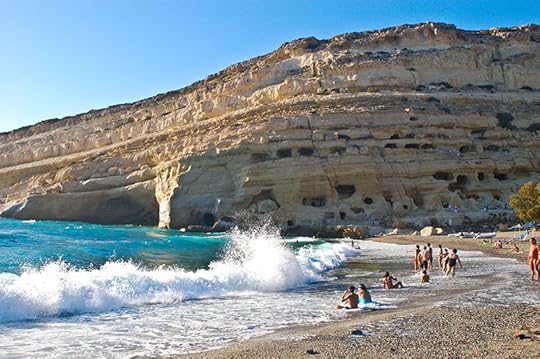
Modren Matala Beach and the caves which were used as tombs in the neolithic period

From left to right, my mother Elizabeth, my auntie Susie and their friend Pam who came to the caves three summers running
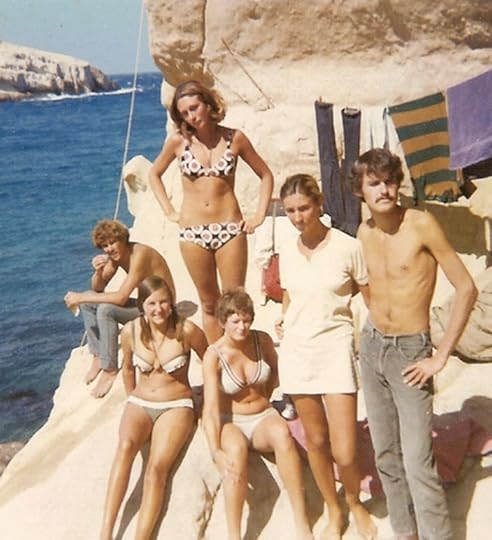
In this photo taken in 1967 outside the caves, my mother is standing in the spotted bikini, Susie is seated in the centre with the cropped dark hair and Pam is seated to the left of her
What was this ‘time’ for you? Where were you and what were you doing? I’d love to hear about it.
(Click below to listen to Joni Mitchell’s beautiful song, Carey, inspired by her own spell living in Matala’s caves.)
The post Novel Number Three: The cave men and women from the 1960’s appeared first on Rebecca Stonehill.
August 21, 2016
Ignite your Fiction Fire: 5 Tips for Aspiring Writers
Sometimes, trying to write and get our work out there can feel like flailing around in the dark. It can be a fraught journey, littered with the skeletons of defeated writers: I’m not good enough. I don’t have time. I need to stop living in my head and inhabit reality. Writing is not for the faint-hearted. But, at the same time, for anybody who has experienced that quickening of the pulse; that moment when your breath catches and you just have to get those words down, writing can arguably hold up the most insightful and satisfying mirror to the soul and life itself.
Here are a few tips for the aspiring writers amongst you. I still aspire, each and every day. It doesn’t matter what stage we are at with our writing, we all need to hone our craft and that’s the magic of it – we never, ever stop getting better.
✮ Tip Number One ✮
You may have heard this a thousand times before, but there’s probably a good reason for this:
Buy a notebook you really like and carry it around with you. Fill it with things that inspire you, snatches of stolen conversation and fascinating or shocking little facts. Be a magpie. Steal ideas relentlessly. Nothing is truly original.
I spent a large portion of my childhood sitting up trees and in cupboards spying on people, fabulous fodder for future stories. I’m not suggesting this is quite as socially acceptable for adults, but there are plenty of grown-up ways this can be done.
Call me positively prehistoric, but I don’t believe your i-phone will do. Your phone has a gazillion other things going on in it. Plus, there’s always the danger you’ll get sidetracked on your phone instagram or facebook or, god forbid, a blog-ha!
Your notebook, on the other hand, is for you to jot down gems of interestingness, and that alone, which you can draw upon for future stories and books.

Photo taken from a book my children are reading at the moment, Little Red Writing by Joan Holub. And really? It doesn’t need to be a big notebook. Any notebook will suffice.
✮ Tip Number Two ✮
Don’t let the bastards get you down. Anyone who’s been following my blog for a while will know I was rejected 83 times before I found a publisher for The Poet’s Wife (click here to read about that).
I fervently believe that there is an awful lot of utter crap out there being published. Conversely, there is so, SO much of value and merit and worth that is unknown, typical of the arts. I’ve said it before and I’ve said it again: If you truly believe in what you have written (and I mean really believe in it – don’t expect to get anyone fighting your corner if you don’t believe in it), do NOT give up. You will get there.

✮ Tip Number Three ✮
Read. Read. Read. Read. Read.
I am always amazed when I hear that people stop reading to devote themselves to writing. I feel that as writers we almost need to be reading more when we are working on a writing project, not less. Why? Because we don’t just read for pleasure (though that, of course, is very important.) We are discerning readers – we ask ourselves why something does or does not work and we weave that into our own writing.
I believe we need to read widely, out of our comfort zones. Sure, if we want to write psychological thrillers, we go ahead and read lots of books in that genre. But we also read Dickens and chick lit and Tolstoy and crime. It can teach us about characterisation and dialogue and drip feed fantastic techniques into us without us even realising this is happening.

Illustration by Penelope Dullaghan
✮ Tip Number Four ✮
As we all know, writing is a solitary pursuit and can be lonely.
I can’t emphasise this enough: link up with other writers. I fought this, quite literally, for years. I thought that it would detract from precious writing time. And besides, I knew what I wanted to do with my writing….right?
Well, maybe not. In the past year, I have become part of a small group of writers (of all different genres) in Nairobi. Now I wonder how I ever managed without them. We meet only once a month but I look forward to it enormously. We give respectful feedback on each others work and share opportunities and ideas. I come away each and every time feeling inspired and energised.
Click here to read my blog on how writing groups can be transformative.
✮ Tip Number Five ✮
[image error]
If you are a female writer, subscribe to Mslexia, a magazine geared for ‘Women who write.’ Even if you are a male writer (but supporter of feminism), read Mslexia. Jam-pack full of fantastic, intelligent advice for writers, this has been a lifeline for me for over a decade. It includes quality short fiction and poetry, delves into the nitty gritty of writing in various genres, charts current trends and finishes off with several invaluable resource pages of courses, grants, competitions and submission opportunities. In fact, it was within the pages of Mslexia that I first heard Bookouture (my publisher) were looking for submissions.
Every time I close a copy of Mslexia I feel motivated. I love this magazine so much that it wings its way every three months to me all the way from Newcastle to Nairobi. It quite literally rocks my writing world.
I’d love to hear anyone else’s thoughts on tips for aspiring writers. What are your ideas or encouraging aspiring writers?
Thanks for reading this and if you enjoyed it, please do share on your social media networks ♥︎
The post Ignite your Fiction Fire: 5 Tips for Aspiring Writers appeared first on Rebecca Stonehill.
August 13, 2016
How Kenya, land of contradictions, can inspire a novel
Kenya: land of contrasts and contradictions.
Of startling beauty and crippling poverty. Of sincere kindness and rotten politics. Of a thousand-hued landscapes and unyielding poaching.
I’ve lost count of the number of times I’ve been caught up in the sheer joy of the moment. Marvelling at the golden light slanting on the grass after a heavy downpour. And then, seconds later, an elderly woman staggers past, bent over beneath her crippling load of firewood, her face contorted in concentration and burden.
But this is Kenya: One moment it makes you feel intensely, gratifyingly alive. The next, it breaks your heart.
I’ve always been interested in that intersection at which the dark and light merges. I wanted to write a story in which naivety encounters, on one hand, something awe-inspiring: the yet-undeveloped plains of Nairobi in all its boundless, barren beauty. But, on other hand, my protagonist is exposed to the unfettered cruelty and neglect of the man she has been betrothed to, a man she has never met before. The plot is driven by such a dichotomy and my second novel, The Girl and the Sunbird, slowly emerged from this.

I have had the great privilege of living in Kenya for the past three and a half years with my husband and three children. With my family, we have made the most of our time here – because it certainly won’t be forever. We have rumbled across rough terrain in a 4×4 with the red dust churning up behind us. We have camped in remote spots and woken in the night to the sound of wild animals prowling around our tents. We have skimmed over the waves of the Indian Ocean and held our fingertips out to playful dolphins. We have barely scratched the surface of this incredible country.
But how lucky are we?
Very, very, VERY.
I’d like to share a few photos with you I’ve taken since living in Kenya, accompanied with some lines from The Girl and the Sunbird. Enjoy
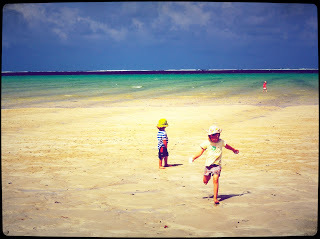
Two of my children enjoying the Indian Ocean for the first time
‘I cast my eyes around desperately, following her wiry, outstretched finger and take a sharp intake of breath. I cannot deny it: it is an astonishing sight. Mombasa Island drips with flowering shrubs of colours so bright and so brilliant I could never have imagined such shades truly existed.’
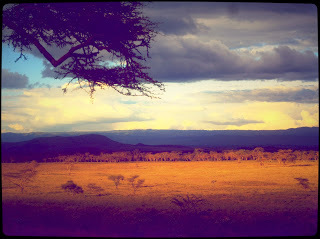
The glowing plains of Kenya that can be found the length and breath of the country.
‘What I see, early that morning, I know I shall never see again. At least, not with such intensity. The wakening dawn is splashed with gold, painting everything it touches in gentle, glowing hues. Across the wild scrub sharp, thorny, hostile looking trees are dotted, their shadows defined against the rolling plains.’

As much as I would love to show you a photo I have taken of a sunbird, I take my hat off to anyone who manages to catch it. They are tiny and very, very quick. This is a superb starling I snapped.
‘Whilst we are sitting there, Mrs Lawrence lets out a startling and sudden cry, hastily jumping to her feet and, as she does so, upsetting her teacup and a brown stain of liquid fans out around her feet. I jump to my feet to assist her with the fallen cup, but she is paying not the least attention to that. She stands, in rapt attention, both hands clasped to her chest. I look in the direction she is gazing and see that in front of the verandah gate, where a potted plant sits, is a small, colourful bird partially hidden amongst its leaves.’
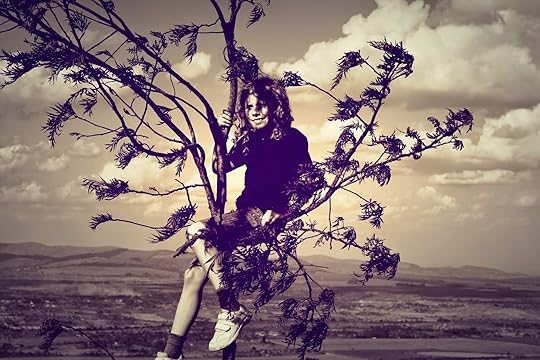
My eldest child
‘The colours are brighter, the trees taller, the forests more alive and the air sharper, mingled with woodsmoke and tropical flowers. Could I ever live here again, I wonder? Could I find peace back in this place that brought me so much pain?’

A beautiful Masaai lady we met a few months ago and talked to (well, tried to…)
‘We stand, the two of us, ankle-deep in mud and simply stare at one another. I notice the large, multiple-looped earrings that pass through every discernible part of her ear, from the lobe all the way to the top. How foreign we are to one another. What is she looking at as she sees me? How does my presence here affect her? And then, something I least expect: she parts her full, rounded lips and smiles at me.’

Mount Kenya. The name Kenya actually derives from Kirinyaga which in turn is taken from the tallest mountain in the country.
‘A compass runs along my veins, for it is does not matter what fancy clothes I wear, nor what fancy figures of speech I adopt, my Kikuyu blood flows as freely as the rivers that stream from Mount Kirinyaga’s summit.’
Ooooh, I have so many more photos I could share with you but I think I’ll stop there. How could I fail to be inspired by sights such as these? Inspiration can manifest itself in so many different ways. Each and every one of us have the ability to turn what inspires us into something precious and lasting. For me, it is writing stories.
To read about the landscape and circumstances that inspired my first novel, The Poet’s Wife, click here.
Enjoyed reading this blog? Please share on your social media networks. Thank you ♥︎
The post How Kenya, land of contradictions, can inspire a novel appeared first on Rebecca Stonehill.
August 7, 2016
Mau Mau: The Kenyan Terrorists of the 1950’s…Or were they?
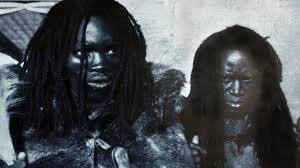
The Mau Mau terrorised Kenya in the 1950’s, their long, dreadlocked hair and wild eyes sending citizens up and down the country and far beyond into a frenzy of fear. Medieval-style oathing ceremonies took place, enlisting the support of the Kikuyu, Kenya’s predominant ethnic group. Meanwhile, settlers across the British colony were hounded down and brutally murdered as the guerrillas demanded that their colonisers leave and return their land.
A character in my second novel, The Girl and the Sunbird, gets caught up in the horror of the Mau Mau so I had to read around this subject. Initially, I subscribed to the theory that the Mau Mau were the perpetrators of unspeakable evil. The stories of their crimes are well documented: innocent children slaughtered in their beds, whole villages burnt to the ground, ‘loyal’ staff who had been with their employers for decades only to take the oath and slaughter them.
I am not disputing that this happened and it is important to state that horrific crimes were undoubtedly committed by a number of radicalised Kikuyu. But if we fast forward more than half a century, 41,000 Kenyans, many of them who took the Mau Mau oath, have been demanding apologies and financial compensation from the British government. And what’s more, not only are large numbers of them winning their cases but huge sums to the heady combined figure of 19.9 million GBP are being meted out to the claimants.
So what is this all about? Were the Mau Mau not really terrorists? And why is Britain, all these years later. accepting the need to publicly apologise to vast numbers of elderly Kenyans?
Let’s take a quick look at some figures.
Number of European settlers killed during the 8 year period of Mau Mau unrest: 32
Number of Kenyans killed during the same period: 25,000 (According to David Anderson, professor of African Politics at Oxford University.)
Also:
In 1948, 1.5 million Kikuyu owned 2,000 square miles of land in Kenya.
In the same year, 30,000 settlers owned 12,000 square miles of land.
It is disingenuous to dwell on these figures for too long, for it lends nothing to the argument of whether the Mau Mau were truly terrorists. What is clear from the above figures is that Kenyans, not settlers were the overwhelming victims during the insurgency and the local populace had been slowly stripped of their land and rights over a number of years.
Colonialism is a sensitive subject and Britain, land of hope and glory, etiquette, good manners and fair play surely behaved in a dignified manner towards their subjects. One person I interviewed claimed that the British ‘never laid a finger on a Kikuyu’ during the uprising. But why is it that, over half a century after these events, we have William Hague acknowledging that Kenyans were subjected to horrific torture and a catalogue of other abuse (castration and rape to name just two) at the hands of the colonial administration if this didn’t really happen?
Judging by the elderly Kikuyu claimants who are winning their cases in courts of law, we need to really question just how honourably the British behaved in Kenya.
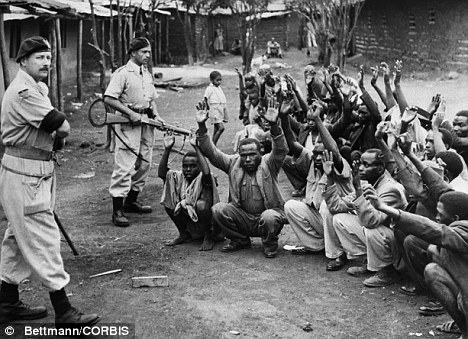
I don’t want to get too deeply into what exactly happened to the Kikuyu during Kenya’s period of intense unrest; it makes very unpalatable reading. But what is known is that over a million were herded into detention facilities, which Kenya’s attorney general at the time, Eric Griffith-Jones, described as ‘distressingly reminiscent of conditions in Nazi Germany or communist Russia.’ Of course some were rebels, intent on causing harm, but a vast many more were civilians, simply caught up in the nightmare of collective Kikuyu punishment. Simon Myerson, QC for the claimants, states that cabinet ministers in London at the time were well aware of what was going on. ‘When the beaters and the torturers went to work,’ he said, ‘a collective blind eye was turned.’ Not only that, but by the time of decolonisation (Kenya became an independent nation in 19 63), important records were destroyed.
One such man who spent over two years in a detention camp was celebrated Kikuyu sculptor, Edward Njenga. I interviewed him and whilst he painted a less than pleasant picture of his incarceration, he insisted he bears no grudge against the British and ‘regrets nothing’.
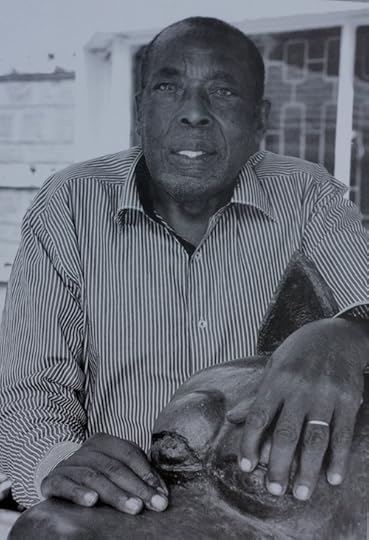
Edward Njenga
This may be so, but Edward is now well over 90 years of age (significantly less when the above photo was taken) and time, as we all know, can soften the edges of trauma. His below sculpture speaks louder than any words possibly could.
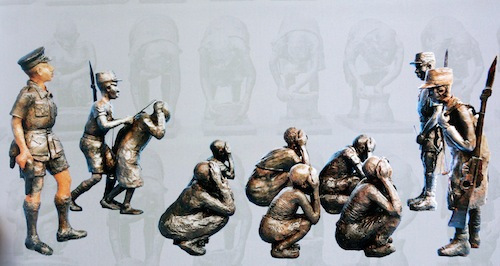
Langata Mau Mau Detention Camp, sculpted in 1970, from what Edward describes as his photographic memory.
I am not a historian, I am a historical fiction writer. I read books and articles and I speak to people and my characters are born from my findings, following the path they want to take. All I can do is follow them. My character Maitho from The Girl and the Sunbird is subjected to horrific abuse both at the hands of radicalised Kikuyu and the British. It wasn’t easy to write about, but it was necessary.
So, were the Mau Mau really terrorists of 1950’s Kenya, those same kind of terrorists we fear today? Perhaps, yes. Many of their actions and crimes were abhorrent. But it is vital we remember that vast numbers were forced into oathing ceremonies: become a Mau Mau or be killed. What kind of a choice is that? And hundreds of thousands of Kikuyu were made scapegoats for a minority: men, women and children. They were herded indiscriminately into vast camps where they were subject to gross mistreatment and left to perish. All at the hands of the British.
Myerson, the aforementioned QC has said that ‘This is not a moral crusade … but that does not prevent anyone drawing the conclusion that what we – the United Kingdom and its government – did in Kenya during the emergency was wrong.’
This needs to give us pause for thought. As a race, we often say we must learn from history. But how many more communities continue to suffer collectively at our hands for the actions of a minority? How do we truly learn from this and change this narrative?
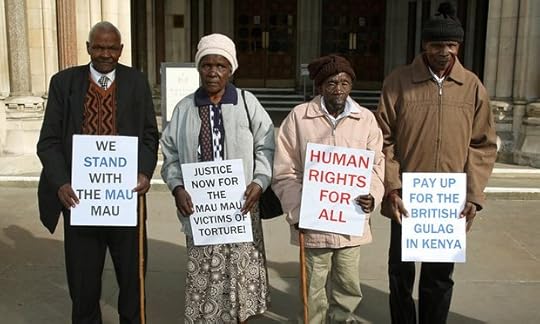
Kenyan campaigners outside the Royal Courts of Justice, London. Photograph: Dominic Lipinski/PA
Please tweet me any pictures or stories you may have on the Mau Mau to @bexstonehill and share this article through your social media networks.
The post Mau Mau: The Kenyan Terrorists of the 1950’s…Or were they? appeared first on Rebecca Stonehill.
July 29, 2016
“If God had meant whites and blacks to mix, he would not have placed them on different continents.” What some mixed race couples faced to be together.
One of the major themes of my second novel, The Girl and the Sunbird, is forbidden love. Mixed race relationships were once an enormous taboo and, in some parts of the world, remain so. I wanted to explore the repercussions of this in a colonial setting where a strict etiquette governs social structures, going to great lengths to segregate the colonisers and indigenous population. Iris and Kamau, the protagonists of my novel, are taken on a journey whereby they desperately try to curtail their growing feelings for one another and, upon failing to do so, attempt to navigate a path through the deeply divided British East Africa of 1903. They are painfully aware of the risks they are taking but as their relationship is conducted completely in secret, for most of the story they do not face direct judgement from the outside.
I wanted to delve a little into a couple of fascinating mixed race relationships from the past in which quite the opposite happens: the relationships are not kept hidden, and the bravery and conviction of those involved results in unions that are loving and yet, unsurprisingly, fraught with obstacles.
THE STORY OR RICHARD LOVING & MILDRED JETER
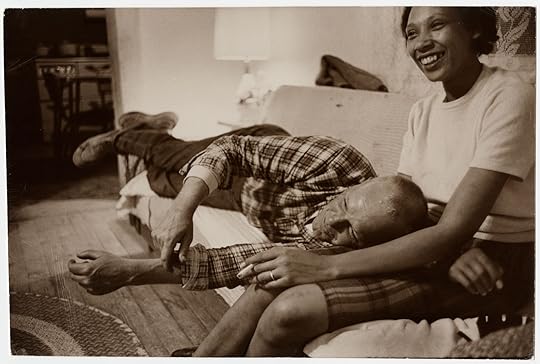
Photograph taken by LIFE magazine, 1966
Just weeks following Richard and Mildred’s marriage in 1958 in Washington DC, police officers burst into their house in the middle of the night in their home in Virginia, a state where mixed race marriage was not recognised. Initially, they pled guilty to violating the state’s Racial Integrity Act and they were told by a judge that “… if God had meant whites and blacks to mix, he would not have placed them on different continents.”
zcInspired by the civil rights movement and with the support of Attorney General Robert F.Kennedy, the Lovings’ case was taken on by the American Civil Liberties Union, finally winging its way to the Supreme Court in 1967. Quiet, private people who only wanted a peaceful life with their children, this was not to be as they were hurled out of their comfort zone into the public eye. The judges voted unanimously in favour of Richard and Mildred’s right to be married (a case known as Loving Vs Virginia), resulting in the landmark decision to find all laws prohibiting mixed race marriage across the country unconstitutional.
A film, based on the incredible story of this couple is due to be released in late 2016. Click here to see the trailer.
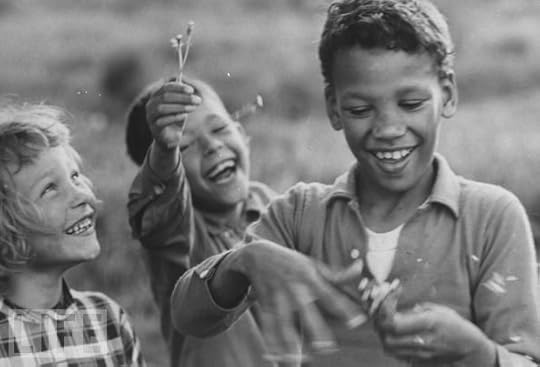
Richard & Mildred’s three children
THE STORY OF SAMUEL COLERIDGE-TAYLOR & JESSIE WALMISLEY
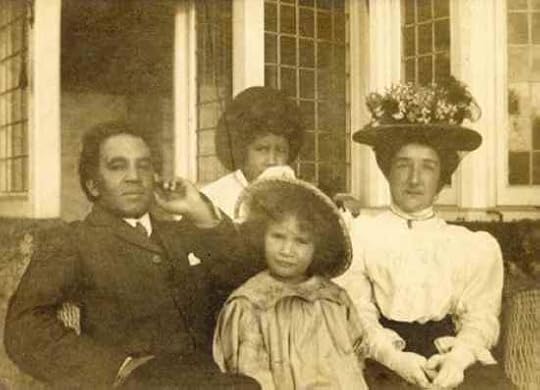
Samuel Coleridge-Taylor (not to be confused with the poet Samuel Taylor Coleridge, after whom he was named) was a British composer and musician whose musical prowess resulted in being dubbed as the ‘African Mahler.’ Born to an English woman and a Creole from Sierra Leone, Coleridge-Taylor suffered considerable racial abuse as a youngster. He was called ‘Coaley’ at school and at one point, his hair was even set alight.
Samuel’s wife Jessie Walmisley hailed from a middle class Victorian family, firmly rooted in the imperialist traditional. The youngest of eight, all of her siblings and both her parents were vehemently opposed to her growing friendship with the musician, whom she met at the Royal College of Music where she was studying voice and piano. Despite that, the pair married in 1899 in Croydon, much to the horror of Jessie’s family. Samuel himself once said that her parents were ‘…bitterly opposed to their daughter becoming the wife of a ‘Blackie’ and they ‘tearfully warned their Jessie that if she married him…he would…take her to the ‘Dark Continent,’ compel her to live amongst his naked relations and wear no clothes.’
Jessie went on to become the target of harrassment. Their daughter Gwendolen once said that when her father saw a gang of local youths approaching them on the street who often flung verbal slurs at both her parents, “…he held my hand more tightly, gripping it until it almost hurt.”

Samuel’s wife Jessie with their two children
Coleridge-Taylor is best known for The Song of Hiawatha, his trilogy of cantatas, but he also composed a vast number of other pieces of music during his tragically short lifetime. Click here to listen to one of his beautiful piano compositions.
Had Iris and Kamau from The Girl and the Sunbird been born in another time, another place, they may have chosen to live out their love for one another quite differently. The two tales I’ve highlighted above are just two amongst countless inspiring stories of interracial unions that have survived the odds.
Do you know any other stories of interracial relationships that have either faced disapproval or been unopposed from the outset? I’d love to hear them.
Like this story? ♥︎ Please share it either by clicking on the share button at the top of the post or via twitter or facebook.
The post “If God had meant whites and blacks to mix, he would not have placed them on different continents.” What some mixed race couples faced to be together. appeared first on Rebecca Stonehill.
July 23, 2016
Win a small treasure: The Gifts of Reading

‘This story, like so many stories, begins with a gift. The gift, like so many gifts, was a book…’
So begins Robert Macfarlane’s masterful and luminous essay, on the gift and power of giving and receiving books. This small, beautifully bound treasure was given to me by one of my oldest, dearest friends a little over a week ago in a cafe as sunlight slanted through the windows. It took about an hour to read and once I had finished it, I went straight back to the beginning and read it again.
My instinct was to keep it; to re-read it every so often. A special little book for life. It certainly deserves to be.
And yet…
This is a book that needs to be read, imbibed and then passed on. No doubt about it. He discusses books that have been gifted to him over the years and books that he has passed on to others. The most significant book he has ever been given is A Time of Gifts by Patrick Leigh Fermor, which tells the story of the author’s legendary walk from the Hook of Holland to Constantinople in the early 1930’s at the age of only 18 – the original ‘gap year’ and now firmly on my reading list. This book so inspired Macfarlane that it led him to walk thousands of miles himself and to reflect upon ‘…what types of kindness might stand outside the reciprocal binds of the cash economy.’
Reading Macfarlane’s essay brought home to me afresh the tremendous power imbued with gift giving; that passing something on, if we allow it to be, can be an adventure in generosity, creativity and integrity. In Macfarlane’s words, ‘…unlike commodities, gifts…possess an exceptional power to transform, to heal and to inspire.’
And what better gift to give than a book? To be honest, I’m now wondering if all these books I’ve hoarded over the years (I only keep books I’m fond of) might have been better passed on, into the right hands. Might it be time to change the habit of a lifetime? Macfarlane’s essay has certainly made me wonder. He states that ‘…the gift is kept moving, given onwards in a new form.’ Why a new form? Because although the book may physically look the same, it can never be the same once it has been read. In the reciprocal relationship between reader and book, something has been imparted and the book (and reader) can never be the same again. This may sound like batty bookworm talk, but book lovers out there will know what I’m talking about.
In light of this, I may just get one more sneaky read in of Robert Macfarlane’s altogether sublime The Gifts of Reading. Then I would like to pas it on. If you are interested in receiving this (UK readers only I’m afraid), please leave a comment on this blog with your email address. In one week today (7pm Saturday 30th July) I will draw a name from a hat and send you this book. All I ask is this: Keep sending it on. When you have drunk your fill of this special little book, please keep it moving.
The post Win a small treasure: The Gifts of Reading appeared first on Rebecca Stonehill.