
Rebecca Stonehill's Blog, page 59
February 26, 2017
New Adventures in Self-Publishing
I’ll confess something straight off: I’m nervous about this. Well, let’s say nervous excited. It’s a new challenge for me and I’m not quite sure what to expect. I’ve never self-published anything in my life and the truth is, I never imagined I ever would. After all, self-publishing is for people who can’t get published traditionally, right? Well, wrong actually. Completely wrong.
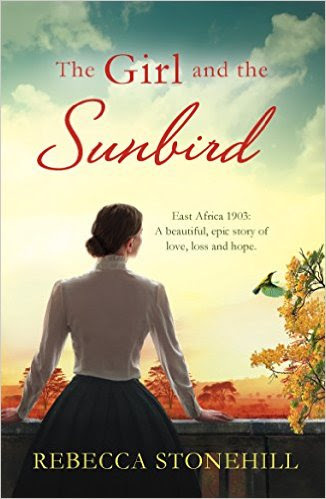
To give you a little background: my first two novels, The Poet’s Wife and The Girl and the Sunbird were trade published and did just fine. I don’t want to go into the reasons here why I am not sticking with my publisher for my third novel, but suffice it to say I’ve decided to take the plunge. There’s never been a better time to be a writer: opportunities and publishing platforms abound, and if we make sure we write a cracking good book in the first place, there’s no reason why we can’t make a success of it.
We’ve all heard the stories of how dramatically the publishing landscape has changed in the past twenty odd years. All kinds of studies have been published on how readers absorb less whilst reading kindles than paper. But even so, nobody can deny that sales of e-readers have gone through the roof. Perhaps they’ll plateau, perhaps they won’t, but either way, reading digitally is here to stay.
But how to go about self-publishing? Where to start? What can we as authors do ourselves and where is it absolutely necessary to employ the right people to help us create a product of the highest quality?
Even if you’ve never published anything before, but are just thinking of self-publishing, you’re at no disadvantage. As I said before, we need to begin by writing a fantastic story. This means a tight plot, strong characterisation and a compelling narrative. There are no short-cuts to this.
Personally, I’m not there yet. I’m at the stage with my novel (that I think all writers go through at some point) that I actually can’t stand it and believe it should never see light of day. Well, that’s because at this stage, it can never see light of day. A considerable amount of work is still needed on plot, characterisation and narrative and I just have to put in the hours and the work.

Matala, Crete – the setting for my third novel
But once I’ve done that and I believe the story is as polished as it possibly can be, what’s next? Well, I’ve had conversations with a few people who have self published and have read Let’s Get Digital by David Gaughran (an informative, encouraging account of how & why we should self publish) and this is what I’ve discovered:
STEP ONE
We need to find somebody to read through our work. Call them a beta-reader, call them a trusted-reader, call them what you wish. But the important thing here is to identify a person whose opinion you value, someone who reads a lot and who won’t mind doing this for you. Make sure they are your ideal reader you are targeting with your book.
I have somebody in mind, but haven’t asked them yet. But here’s what I’ll be asking them to look for:
– Holes in the plot
– Weak characters
– How well the whole novel hangs together.
Yes, this is a big ask, but it’s going to be worth it’s weight in gold. Essentially, your trusted reader will help you to minimise costs at a later stage with the editor we WILL be paying for.
I’m on the very start of my self-publishing journey and I’d love your input, thoughts and suggestions. I’m going to be blogging now and again about the steps I am taking towards self publishing my third novel, but by the time I post my next blog on this subject, I will have asked my trusted reader my BIG REQUEST and hoped that they will say yes! I will also have edged ever so slightly closer to the stage where I feel confident enough to send it to them.
How about you? How did you find your trusted reader or did you skip this stage altogether? What are your thoughts about self-publishing and do you know anyone for whom it’s been a huge flop or a huge success? I’d love to hear from you.
Thanks for reading!

If you enjoyed this blog post, complement it with Ignite your Fiction Fire: 5 Tips .for Aspiring Writers; What makes writers write & The Art of Letting Go for Writers.

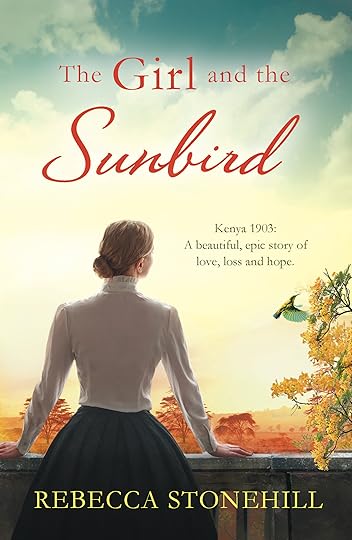
Not read my latest novel yet, The Girl and the Sunbird? Here’s what some reviews from Amazon are saying about it:
‘This is a poignant, heart-wrenching, impactful story that I won’t soon forget.’
‘I envy anyone who is still to read this.’
‘It’s one of those books that weaves itself into your soul and stays with you long after you reluctantly read the last page.’
‘A brilliant book, an epic story, this book deserves to be read by everyone.’
The post New Adventures in Self-Publishing appeared first on Rebecca Stonehill.


February 10, 2017
Move over Valentines, International Book Giving Day, here we come!

We all know that February 14th is Valentine’s Day, but probably far less of us are aware that it’s also International Book Giving Day. Never heard of it? Well, despite being in its *****year, I put my hands up and say that neither had I until a few weeks ago. And it’s music to my ears. Having never been a big fan of Valentine’s Day (why we need a special day each year for a global outpouring of love and affection has always been beyond me), I salute the organisers of Book Giving Day for transferring the sentiment over to books. After
Interested in getting involved? Ok, so here’s the deal in a nutshell:
The post Move over Valentines, International Book Giving Day, here we come! appeared first on Rebecca Stonehill.
January 27, 2017
You HAVE to read this book!
‘You HAVE to read this book!”
These were the words uttered by both my eight and ten year old daughters, independently of one another and approximately six months apart. To quantify: my children never say this to me about books that they read, which is why I really sat up and took notice when they did, and made a point of reading them for myself.
The interesting thing about these books is that they’re not necessarily their most favourite reads, but they are books that touched them deeply on a secret, subtle level and they wanted to share this with me.
So, without further ado, I present you with the two books in question, The Naming of Tishkin Silk by Glenda Millard (read by my 8 year old) and The Boy who Sailed the Ocean in an Armchair by Lara Williamson (read by my 10 year old.)
The Naming of Tishkin Silk

Right, I hold my hands up here: by the end of this book, I was in tears. It was just so, so beautiful. I honestly cannot remember the last time I cried reading a children’s book (probably when I was a child.) The issues covered in this little gem unfold gently and respectfully. All we know is that Griffin Silk and his big sisters are waiting for their mother to come home (from where? It is hinted at throughout but we are not sure until the end) as well as their little sister.
The language is breathtakingly magical: although the setting is a normal, semi-rural Australian village, I found myself moved again and again by Millard’s lyrical prose and most certainly enhanced by Caroline Magerl’s tender illustrations. Here are two of my favourite lines from the book:
‘Griffin wondered how it was that small boys and mothers and fathers could sometimes read the feelings in each other’s hearts, even when the words that came out didn’t match them, and sometimes without a word being spoken at all.’
‘Inside, he felt something swell like the tiny flare of a match in the darkness. Layla smiled and squeezed his hand and the feeling grew stronger. And though Griffin didn’t realise it, the feeling had a name. It was courage.’
Even better news, Glenda Millard has written a whole series of these books (The Naming of Tishkin Silk is the first in The Kingdom of Silk series.) I have already ordered more for my daughter and I, for one, will be waiting in the sidelines to read them after her.
(As an aside, I first heard about Glenda Millard’s books through the wonderful Playing by the Book. Click here to read her post on The Kingdom of Silk series.)
The Boy who Sailed the Ocean in an Armchair

My daughter’s grandmother gave this book to her for her 10th birthday. I’d not heard of it before but was immediately impressed by the beautifully designed & striking cover, arresting title and instructions at the back of the book on how to make a paper crane. (My daughter, since reading it, has become one pro paper crane maker.)
Similarly to The Naming of Tishkin Silk, there exist a number of unknowns in this book; tensions that simmer between the lines, inviting young readers to ask a number of Why’s, the most significant being Why has the father of Becket Rumsey (our protagonist) run off with him and his younger brother Billy away from Pearl, their ‘almost-mother’? And like all good books, the strands of this mystery are slowly and cleverly tied together as the plot progresses, with the help of a pet snail named Brian for good measure.
A couple of my favourite extracts from this book:
‘ I stare out towards heaven and the moonbeams wash my face in silver. One star is brighter than all the others and I press my fingertip to the glass. It leaves a tiny planet of heat. “I am calling this star “Mum”, I whisper. “Goodbye, Mum.” My eyes prickle as I realize that the star is still bright and it’s going to be there for ever and Mum isn’t and it feels all wrong.’
‘Like a pebble I plunge down into the water. It feels like some unseen giant has found me and covered my head in a cold blanket and no matter how much I try to shake it free it won’t leave me. Worse still, I don’t even know where I’m going, but wherever it is I can’t leave Billy behind when I get there. Not my Billy. Not the baby who came home when Mum didn’t.’
Lara Williamson is also the author of the wonderfully-titled A Boy Called Hope which we haven’t read, but certainly intend to. If anyone reading this has read this book, we’d love to hear your thoughts on it.
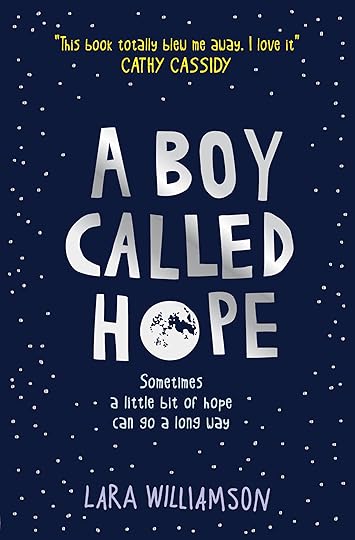
I would wholeheartedly recommend both of these fantastic books. The protagonists of both books are boys (and lovable, engaging boys at that,) but they would suit both girls and boys of around the ages of my girls’. But of course, younger and older children could definitely enjoy them too, and I’m generally not a fan of age banding on books. YA author Malorie Blackman once said that ‘Reading is an exercise in empathy; an exercise in waling in someone else’s shoes for a while.’ How right she is, and I can think of no better books to sow that vital seed of empathy into the souls of the young people in our lives.
Compliment this blog post with Why reading aloud to older kids is not just special, it’s vital; The nine year old who read one hundred books in a year & Carving a path for our children through written and oral landscapes.
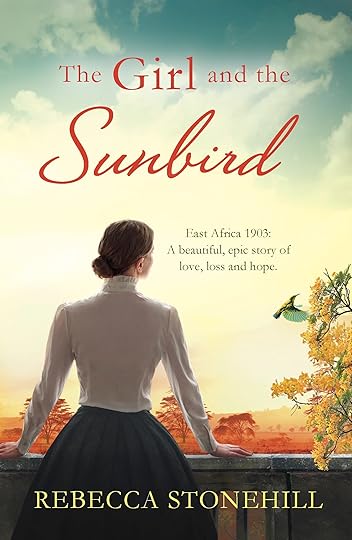
Not read my latest book, The Girl and the Sunbird yet? Click here to read some of the reviews and buy 
The post You HAVE to read this book! appeared first on Rebecca Stonehill.
January 15, 2017
Use this powerful tool to choose your next holiday read
Travelling and Reading: Two of my favourite things in the world. Imagine my delight, then, when I discovered TripFiction.com, a website devoted to location-based fiction. There are so many of us who, when we go on holiday, would love to delve into a novel actually set in the place we are visiting to add an extra satisfying dimension to our trip. But of course, amidst the flurry of packing and organising, it’s not necessarily easy to pinpoint the relevant books.
Step in Trip Fiction – founder Tina Hartas makes it incredibly staightforward for us lovers of books and travel with simple search engines plus a whole medley of other fascinating pages including a blog, discussion board and ‘backpack’ reading lists.
Tina kindly hosted me on her blog at the end of 2016 talking about my home of Nairobi (location of The Girl and the Sunbird) and top traveller tips to this city. Before I give you the link for this, I’m delighted to have Tina on my blog today talking about how TripFiction came into being. Welcome Tina!

Thank you so much for inviting us to share a little about TripFiction and how we came to build up the website.
When travelling I have always enjoyed reading novels that are set in the location to which I am going. The idea for a website started to crystalise when I was in Bangkok, reading by the hotel pool, high above the city. The action in the novel, as it happened, was actually taking place just in the next street below and it was an amazing experience to plunge into life at street level, on the very street that appeared in my novel; it was as though I had just walked out of the book. I could imagine the characters behind the doors and in the bars, enhanced by the smells of cooking, the many sounds of daily life, and all echoed in the book.
Fast forward to a trip to Vienna and I had real difficulty finding a book set in the city. I now know that there are many, many books set in Vienna! TripFiction was thus born one evening over a glass of wine. I felt that if I was actively looking for books set in a given location, then other readers probably were too!
One of the pleasures of managing the site is meeting the people behind the books – the authors first and foremost, but also the people within an industry that brings to life the written word. There is a huge community of book lovers out there, people who work tirelessly to bring good fiction to the reader. At TripFiction we enjoy doing our little bit to help authors, who perhaps do not have the publicity machines and finance behind them, to get their work out there. And of course vicariously we have such fun travelling the globe with our featured authors!
Rebecca has given us such wonderful background to her book and now I am longing to visit Kenya and see just a little of what she has brought to life in her novel The Girl and the Sunbird.
As TripFiction grows, we are seeing more and more community members actively adding books that are strong on location, and adding reviews too. In this way we can all build the site so it is a fabulous resource for both actual and armchair travellers.
Tina, THANK YOU! Now, is this site or is it not one of the best ideas ever?
Find my guest blog on TripFiction here.
It’s easy to keep in touch with all TripFiction’s exciting offerings through its facebook page, twitter, pinterest and instagram.
Come and join the travel + book revolution!
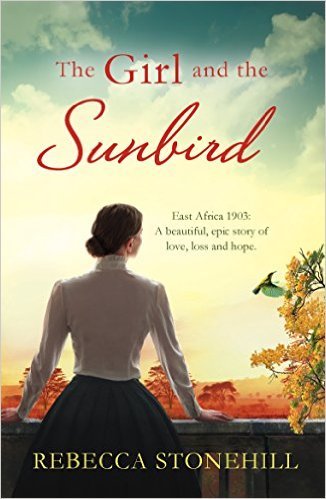
To compliment this blog post, read How Kenya, land of contradictions, can help inspire a novel; an exploration of my novel’s main theme of cross-cultural love and historically, what couples had to face to be together & the fascinating backdrop of Guyana in author Sharon Maas’s recent novels.
The post Use this powerful tool to choose your next holiday read appeared first on Rebecca Stonehill.
December 6, 2016
Stuck for last minute Christmas gifts? How about one of my top 5 reads of 2016?
I am delighted to unwittingly discover that my top 5 reads of 2016 have all been written by women. I have absolutely nothing against fiction by men; I have also read many books written by men this year and have always been fairly gender-blind when it comes to choosing books. But, feminist that I am and the fact that women are still under-represented in literary prizes and the publishing industry, I was pleasantly surprised to discover that my favourite reads of the past year have all been penned by talented women.
In no particular order, here they are:
by Anne Marie Macdonald

This book was an enormous surprise. I picked it up from a local book swap and although the cover looked unpromising (different from the above cover), the blurb on the back was interesting. What I wasn’t expecting was to be swept into a searing historical saga of the redoubtable Piper Family in Nova Scotia. The ending was shocking but satisfying, though I never did understand the relevance of the title! But I loved this book and would heartily recommend it.
By Maya Angelou
[image error]
I truly do not know how I had managed to go this long without reading any of Maya Angelou’s prose. I had previously read bits and bobs of her poetry, but for some reason had never broken into her autobiography. This is not the first in her series of her autobiographies, but it didn’t matter. She tells her stories with wry, intelligent humour and blurs the line between fiction and auto-biography compellingly.
By Tracy Rees
This is a beautiful, meticulously researched historical fiction from novelist Tracy Rees that doubles as mystery detective novel. The indomitable protagonist is sent on a curious treasure hunt the length and breadth of Great Britain by her deceased benefactor as we slowly piece together the stories of two strong, memorable women. (I recently interviewed the author and on her journey to Richard & Judy ‘Search for a bestseller’ stardom – Click here to read it.)
By Lucinda Riley
Lucinda Riley is an author who had been on my radar for some time but…*sigh*…time. You know how it is. Anyway, the first book of hers that I read did not disappoint. I was less keen on the modern day sections set on Lake Geneva, but this was all important explanatory material and this book is the first in a series that will trace the heritage of seven adopted sisters, fascinatingly modelled on the Seven Sisters constellations. The section set in 1920’s Rio de Janeiro was captivating and I really look forward to reading more in the series.
By Frances Hardinge
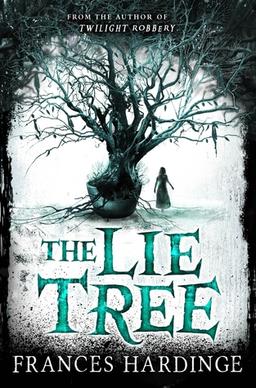
Last, but by no means least, if you haven’t yet read The Lie Tree, you are in for a serious treat. I next to never read YA fiction, but my ten year old daughter insisted I read it and wow, I was blown away by Frances Hardinge’s unique style and the magic she has woven with this tale. In this genre-bending story, she has seamlessly blended history, science, fantasy, morality, theology and a whole lot more. I can’t wait to read more of her novels.
Happy Reading and wishing you a VERY Happy Christmas. I’ll see you back in the New Year!

What readers are saying about The Girl and the Sunbird:
‘This is a poignant, heart-wrenching, impactful story that I won’t soon forget.’
‘I envy anyone who is still to read this.’
‘It’s one of those books that weaves itself into your soul and stays with you long after you reluctantly read the last page.’
‘A brilliant book, an epic story, this book deserves to be read by everyone.’
The post Stuck for last minute Christmas gifts? How about one of my top 5 reads of 2016? appeared first on Rebecca Stonehill.
Tracy Rees: Catching a dream and soaring to Richard & Judy bestseller heights

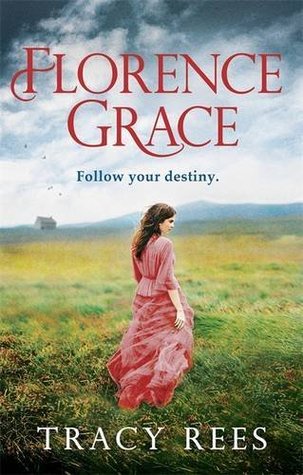
I am absolutely delighted to welcome historical fiction author Tracy Rees on to my blog today. In 2015, Tracy won Richard and Judy’s highly competitive Search for a Bestseller competition with her debut novel, Amy Snow and won hearts the world over with her engaging, memorable heroine. Since then, it has been quite a whirlwind for Tracy as her second novel Florence Grace came out this year and her third, The Hourglass, will be published in May 2017 by Quercus Books (available now for pre-order.)
Read about Tracy’s inspiring story and writing journey below.
What were you like as a child?
I think child Tracy was very much like adult Tracy! Extremely dreamy and extremely gregarious by turns. Shy, but always happy in good company doing fun things. I was a real bookworm and did very well in school and I was also very ready to believe in magic. A creature of contradictions really – I think it’s my Pisces nature! I was also horse mad and ballet mad!
How would you like to envisage yourself in old age?
I guess the biggest thing is, I’d like to be surrounded by people I love and who love me. What could be more important than that? I’d also like to be wise – I think the whole point in life is to learn and grow as you go along and I like to think I’ve acquired a bit of common sense and perspective compared to how I was in my twenties and thirties! But of course there’s still so much more to do and learn and be. I want to enjoy good health, of course, and I want to be writing still; working creatively, hopefully collaboratively, fulfilling all my dreams and ambitions, of which there are many!
At what stage in your life did you realise you wanted to be a writer?
I’ve always known it. Always, always, always! My mother was a nurse and used to work night shifts while Dad looked after me. She would come home from work when I was three and find scraps of paper littered about covered in bits of poetry I’d written (mostly about flowers!). I wrote my first ‘novel’ at the age of five. I cut out the bits of paper and used string to tie them between two sheets of brown cardboard! It was called The Adventures of Princess Tulip and Her Friends.
When you entered the Richard and Judy ‘Search for a Bestseller’ competition, how confident did you feel in your abilities?
Well at that point, I knew I could write. I’d been longing to be a writer for so long and I knew that nothing else was going to make me happy. I’d had some great feedback from agents I’d approached with a different book, not Amy Snow – although that particular book didn’t get taken on. It was very frustrating yet I knew enough about the industry to know that feedback wasn’t given lightly, so it was frustrating and encouraging! My emotions didn’t know what to do with themselves at that time! So I had confidence that I could write, but that I could write a saleable book that would convince an agent to take me on, well that was looking harder. As for confidence that I would get anywhere in the competition, I had zero! I genuinely never expected that. I knew there would be great numbers of people entering and I entered very much in the spirit of ‘putting it out there’ and making a gesture to the universe that I was serious about my writing. When I received the email to say I’d made it onto the shortlist of seven people I couldn’t believe it. I had flu at the time and thought I was hallucinating!

When you got the phone call to say you’d won, what was your reaction?
Wow! That was some moment! During the phone call, I guess the best word is ‘stupefaction’! The first thing I said to the lovely people at Quercus when they told me was, ‘are you serious????’ Like they’d joke about something like that! After the phone call I literally fell to my knees and cried. It may sound melodramatic but I’d gambled everything to get Amy Snow written in time for the deadline and I had about £40 left in the bank. I’ve never been one to do things by halves. Relief is a beautiful emotion, especially when mixed in with joy.
Do you know what it is that attracts you so much to the Victorian era?
Yes I think so! I believe it’s the romance of the period – I adore the clothes, the wide-skirted dresses and beribboned bonnets! Ringlets!! I also love the language, its formality and elegance, its chivalrous flourishes. For someone who loves language it’s just a dream. I love fairytales for the same reason. Also, because the Victorian era was a more formal time, there were so many taboos on what could be said and discussed. Therefore the strongest emotions and most dicey issues had to be conveyed in the most understated language – I love the intrigue of there always being more going on than is allowed to meet the eye.
If you had to describe yourself in three words, what would they be?
Determined. Questing. Dreamer.
What is the proudest moment of your life?
I guess it has to be winning the Richard and Judy competition, because of what that signified for me. It wasn’t so much that it was a wonderful achievement, that was just the tip of the iceberg really, but that I had really given up a lot by that point to prioritise my writing. I was forty, I think, when I entered it. I’d had SO many disappointments and discouragements with my writing (and life in general!) along the way and honestly I felt like giving up about a million times. But something in me wouldn’t let me and eventually I noticed a pattern. Whenever I was writing, whatever else was or wasn’t going on, I was happy. When I stopped writing, even for supposedly unarguable reasons like ‘get another job and earn money,’ I wasn’t. Eventually, feeling terrified of what I was doing, I decided to follow that. I gave up a really excellent career and started waitressing so that I could keep my head clear for writing. My friends and family thought I was crazy but I knew there was nothing else I could do with integrity at that point in my life. So winning the competition said something incredible about the book I’d written, yes, but it also validated my decision to trust my intuition and follow my heart. That has made the biggest different imaginable to my life.
Where is your favourite place in the world?
Home of course. I love to travel and I’ve seen some wonderful places. California, Mexico, Israel to name but a few. I’ve also lived in two other cities in the UK, London and York. I love both and spend as much time in London as I possibly can for all the obvious reasons! But there truly is no place like home. It gives me a warm, rich feeling. My parents are here and lots of friends. I live near the sea and love going for long walks on the cliffs or just sitting in a beachside café staring at the sea and courting inspiration. The Swansea vibe is very laid-back (some might say horizontal!) so that’s a lovely contrast for me to my London time. I love the clean air and the silence in my house and the beautiful hills for walking… it’s a very grounding place for me, yet it’s also a special place to sit and dream…
Can you give us a peek into what you are working on right now?
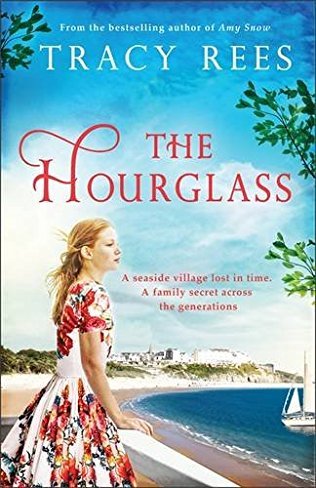
I think this is the most exciting period in my writing career to date since furiously writing Amy Snow for the competition. My third novel, The Hourglass, is with Quercus, being edited as we speak. So in a couple of days I’ll be working on those edits. It’s quite different from my first two as it’s a dual narrative, set partly in the 1950s and partly in the present day. It’s set in Tenby, a beautiful seaside town in West Wales that I’m totally in love with. So I can’t wait for that to be published in May. I’m also taking a bit of time to work on a Secret Project before starting my fourth book for Quercus next year. OK, it’s not that secret. It’s a book I wrote years ago, a fairytale, and very much the book of my heart. I have a bit of rewriting I want to do in the hope that now is the time for it to be published at last. Returning to that as a published writer feels very much like a fairytale itself.
If you could share your top writing tip, what would it be?
Trust the process. If writing truly makes you happy, if you love it and want to do it, don’t let anything put you off or convince you that it can’t happen. If you write something that you judge to be poor, don’t conclude that you have no talent. Remember that anything you write can be improved upon, but you can’t improve anything you haven’t written! And if that rough, embarrassing first draft contains even the smallest seeds of a good story, or one detail that you take with you to your second draft, it was meant to be.
Follow Tracy Rees on twitter here.
What readers are saying about The Girl and the Sunbird:
‘This is a poignant, heart-wrenching, impactful story that I won’t soon forget.’
‘I envy anyone who is still to read this.’
‘It’s one of those books that weaves itself into your soul and stays with you long after you reluctantly read the last page.’
‘A brilliant book, an epic story, this book deserves to be read by everyone.’
The post Tracy Rees: Catching a dream and soaring to Richard & Judy bestseller heights appeared first on Rebecca Stonehill.
November 26, 2016
The importance of scribbling ideas down & the musical backdrop to my third novel
Back in 2012, I wrote a very short piece for the London Literature Project. The idea was to create a fictional snapshot in exactly 60 words, focusing on a place in London at an exact time. I was living in Twickenham, a suburb of London next to the Thames. I knew I wanted to set a novel that started there, on Eel Pie Island to be more precise, a tiny island that once played host to musical legends The Rolling Stones and even Bob Dylan. I had no idea , however, where my novel was going back then. So I just penned a few lines:
EEL PIE ISLAND, TWICKENHAM
23:30 Island of Memory
I’m walking over the bridge to Eel Pie Island, a tiny smudge of green and grey when it rises from the Thames, unbidden, a memory from my youth: the pre-bridge clash of wooden oar against the riverbank, clambering desperation as the music beckons and ensnares us with no hope or need for escape from dusk till dawn; the lost generation.
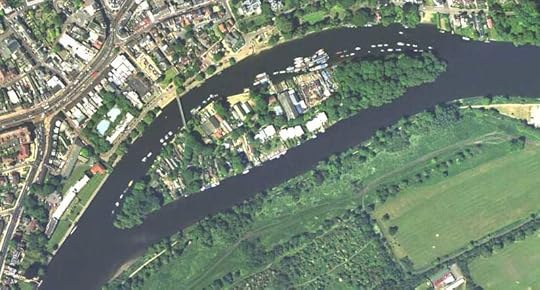
Eel Pie Island
Strange thing is, I had completely forgotten about these few lines until yesterday. Now immersed in my third novel, they came back to me suddenly when my character walked over the bridge to Eel Pie Island, many years after he danced on the sprung floorboards as a teenager to the beats of the Eel Pie bands.
It occurred to me that we never know what will happen with these ideas we have, which is why we have to write them, even if they are just a few lines, or even a few words. Back in 2012, publication was still a dream. But I never felt anything other than a writer, for as long as I can remember. So I kept writing flash fiction, longer stories, poems, haiku, even the odd play here and there. And now, four and a half years later, my protagonist Jim is walking over the bridge and remembering this intensely lived time from his youth. At the same time, these few lines are stretching out their hand over four and a half years saying to me, See? This is why you had to write those words in 2012.
But my postscript to all this is that if you write, I’d really encourage you to keep scribbling those ideas down, no matter how small – you never, ever know when and how they are going to resurface.
A couple of weeks ago, I put a call out to the baby boomer generation amongst family and also through the facebook book groups I’m part of, asking what songs they were listening to in 1967. I thought it would be really interesting to hear the songs that would have been the back drop to Jim’s life in Twickenham in ’67. Of course, I could just have looked this up myself, but it’s been much more fun involving people.
I put the results on this youtube playlist – do have a listen if you feel like having a little trip down memory lane. And if you want to add another song, drop me a line and I can keep adding to the playlist!
Thanks for reading this. To compliment this blog post, read about Music as a creative force in writing, How to get kids writing with jazz & A call out to all you baby boomers for 1967 memories. ♥︎
What readers are saying about The Girl and the Sunbird:
‘This is a poignant, heart-wrenching, impactful story that I won’t soon forget.’
‘I envy anyone who is still to read this.’
‘It’s one of those books that weaves itself into your soul and stays with you long after you reluctantly read the last page.’
‘A brilliant book, an epic story, this book deserves to be read by everyone.’

The post The importance of scribbling ideas down & the musical backdrop to my third novel appeared first on Rebecca Stonehill.
November 17, 2016
Behind the scenes: Bestselling author Louise Jensen & chronic pain

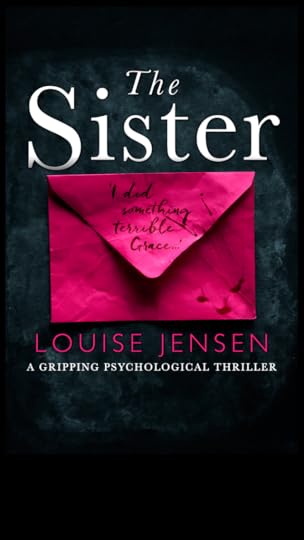
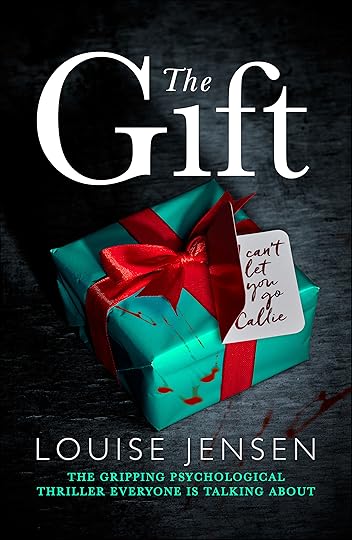
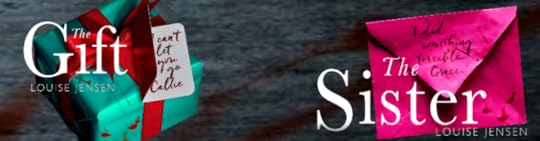
Today I extend a huge welcome to Louise Jensen, bestselling author of psychological thriller, The Sister. Her second novel, The Gift, will be published on 16 December 2016 (It is available now for pre-order). Louise’s journey to publication has not been straightforward. Read her inspiring story below of how she has suffered with chronic pain for many years. Despite this, she has never given up, learning to be kind to herself and know when to put her work aside and engage in the equally important activity of reading.
Thanks so much Louise for joining me.
How long have you been writing?
As a child I was forever scribbling stories and was desperate to become an author but that seemed so far out of reach, and I had no idea how to achieve it. My writing tapered off when the careers advisor at school told me no-one makes a living from writing and to become a secretary so that’s what I did. After acquiring a disability in my 30’s I started writing non-fiction articles for magazines on chronic pain and mindfulness. When I hit 40 I thought ‘it’s now or never’ with regards to writing a novel and I took the plunge.
What were you like as a child?
Exactly the same as I am now I think, quiet, slightly insular and always reading.
Can you name one or two of your favourite novels of all time? Why do you love it / them so much?
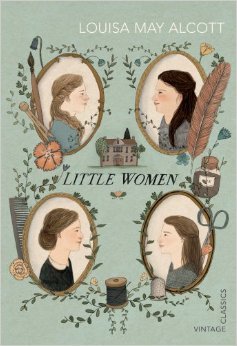
Little Women is my favourite book. I read it at a very young age. I had been devouring Enid Blyton loving the mystery and the suspense and suddenly there was this story that made me cry, feel empowered and moved me in so many ways. I wanted to create characters to make people feel a mixture of those two things. The mystery, the sense of unease and the tugging at the heart. The Sister and The Gift are both a bit of a genre blend.
How has your health affected your writing?
I have chronic pain and restricted mobility and with writing I had thought I had found something I could do, but I have found the staying in one position for prolonged periods has really increased my pain levels. Also the inflammation I suffer in my joints has been greatly exacerbated in my fingers from typing. When you have a health condition it’s all about finding ways to manage it. I’m currently playing around with dictation software. I never give up!
Your debut novel The Sister has stormed the charts. How far has this been from what you expected from it?
It sounds silly I know, but even when I was signing a contract with a publisher I never really thought about actual people reading my story. I remember when it went up for preorder I counted the friends and family that said they would buy it that day and I knew I had sold 17 copies. Never in my wildest dreams did I ever think my debut would reach number one. The loveliest thing has been all the emails I received from readers who have really engaged with Grace’s story. To know somebody has spent time with my characters makes me feel very humble and very grateful.
If you had to describe yourself in three words, what would they be?
Loyal. Funny. Creative.
What is the proudest moment of your life?
I have three boys, and seeing the young men they have grown in to makes me feel so proud. There are all kind, funny, generous and bright and sometimes I catch a glimpse of them and I feel overcome with emotion. I can’t believe how lucky I am.
Where is your favourite place in the world?
My dining table with all my family around it. Now the boys are growing it can be hard to coordinate getting everybody in the same place at the same time but sharing a meal with the people I love is one of my most favourite things to do.
What advice would you give to people who wish to write with chronic health issues?
To listen to your body and not push yourself too hard. Chronic pain generally fluctuates to a degree and there will be days you can sit and write for hours and there will be days the pain is overwhelming you can barely remember your own name. Those are the days it’s really important to love yourself, and never feel like a failure. When I have particularly bad flare ups I read instead, and reading is essential if you want to be a writer. Don’t give up and be proud of every single step on your writing journey, no matter how small.
Louise, thank you so much. For anybody out there reading this who wants to write but feels hindered by physical pain or disability, I hope this is an inspiration to you.
Visit Louise’s website where she blogs and also writes fantastic flash fiction, like her on facebook and follow her on twitter.
Compliment this post with other inspiring stories: how writer Sara Alexi has worked with her dyslexia to become a bestselling author, how crime author Angela Marsons was rejected for 25 years before breaking into the industry & author Sharon Maas’s fantastic advice on being true to yourself as a writer.
What readers are saying about The Girl and the Sunbird:
‘This is a poignant, heart-wrenching, impactful story that I won’t soon forget.’
‘I envy anyone who is still to read this.’
‘It’s one of those books that weaves itself into your soul and stays with you long after you reluctantly read the last page.’
‘A brilliant book, an epic story, this book deserves to be read by everyone.’
The post Behind the scenes: Bestselling author Louise Jensen & chronic pain appeared first on Rebecca Stonehill.
November 11, 2016
How a dyslexic child turned into a best selling author
I am delighted this week to invite author Sara Alexi onto my blog. Author of The Greek Village series, Sara’s journey from child ‘misfit’ to bestselling author is astonishing, moving and deeply inspiring.

What were you like as a child?
As an undiagnosed dyslexic, my childhood was tough – I didn’t quite ‘get’ the world and I was labelled stupid.
I didn’t feel stupid, but there were simple things that involved left and right, for example, that I just couldn’t do. For some reason, even though my parents were not Catholic, they sent me to a convent school from the age of four and I was daily humiliated by the nuns as they tried to teach us to cross ourselves and they found that I could not follow a simple instruction about which hand to begin with and which shoulder to touch first.
As I got older and classes were more academic words became a mystery, the black board Chinese hieroglyphics. I was classified as either thick or purposely disruptive by the teachers and weird by my peers. If I said something bright my teachers were shocked, and looked at me if I was the spawn of the devil. It only got worse as I got older and by the time I was a teenager, I was classed as odd by both teacher and peers and spent as much time as I could in nature, walking and drawing, away from people. I was called to the head of year to explain how I achieved my GCSE results and asked if I had been taking the mickey out of the teachers for the two preceding years?
This crippled my self-worth and I found myself floundering. One of the reasons I moved to Greece was to give myself relief from this focus; being in Greece changed how people saw me. Instead of ‘strange dyslexic’ I was just ‘displaced ex-pat’.
How would you like to envisage yourself in old age?
I hope, and I am working towards, my old age being pretty much like life is now. With that in mind I intend to live to at least one hundred and between now and then I will travel a great deal, write a good many more books and challenge myself to do things I have never done before – whatever those things may be. I hope with age I will grow ever kinder and in a better position to be of use to other people
At what stage in life did you realise you wanted to be a writer?
I never aspired to being a writer, nor did I ever intend to be a writer. Dyslexia ruled that sort of thing out of my world and it never entered my mind. At quite a young age I do remember being asked for an essay on ‘What I Did In My Holidays’ for school and the joy and excitement I experienced in the writing was second to none. I handed it in with such enthusiasm and energy. I wrote about spending a week in a holiday cottage, the owner of which was German. Every morning she would greet us with a cheery ‘Goodmornink.’ Well, this thrilled me and this was the way I told it and spelt it. My homework came back with red pen through all the spelling mistakes and every Goodmornink was corrected, and I was made to write out ‘good morning’ ten times. I was about seven or eight I think. That killed my new-found joy of writing dead for the next forty-three years.
How did dyslexia affect your confidence in your abilities and when was it diagnosed?
Having never been diagnosed (My father thought if I was diagnosed I might use such a diagnosis as an excuse not to perform as well as school.) I have never known anything other than growing up with dyslexia, thinking I was stupid and different and generally not fitting in. As I did not understand what was going on when certain subjects where being discussed I became very good at reading body language and facial expressions – every tiny nuance. This was so I could work out the right way to react to what was being said, and I became very good at covering up my struggle. I felt crushingly different from my school acquaintances and when they did show that they liked me I wondered why as it was such a remarkably different response to that of the teachers. I doubted their sincerity. I definitely felt there was something I was not being told or something I was missing. I had very low confidence as a child and this left me struggling as an adult.
You have published a large number of novels with great success. Can you tell us something about your initial journey to publication?
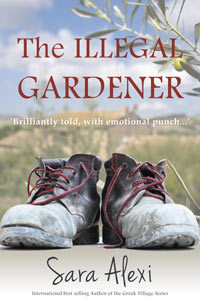
I have sold over a million copies now of The Greek Village Series, which is tremendous. But back when I started and was about to publish the first novel I was terrified. I self-published it on Amazon and waited to see how many copies would sell. Amazon have a tracking system that updates every hour. I sat for the first day and sold precisely none, zero, not even one. So the next morning I had very little hope but just in case I checked and I found I had sold over three hundred copies of The Illegal Gardener! Soon the reviews and emails came and I was so thrilled I immediately started writing a second book. This was in 2012 and Amazon was tweaking its system almost daily, it felt.
The second book started selling well, and then suddenly my sales were halved overnight, for no clear reason. I guess Amazon had altered their algorithms. I could have given up then but I thought to myself that if I had four books instead of two then I would have enough income to call it a job. Ideas were just spilling out of my head so I wrote two more. Amazon must have tweaked again as sales took off again and I was approached by the first of three traditional publishers who wanted to take on my books.
We looked into the process and we did the maths. It seemed I would still do all the marketing and the media work but with only a 20% royalty, compared to the 70% Amazon pays. A couple of the publishers told me straight out to stick to what I was doing – I would be worse off if I went with them.
So I stuck with self-publishing and over the years Amazon have tweaked and re-tweaked their algorithms and the sales have gone up and down.
I have tried other platforms but from what I would lose on Amazon for not being exclusive to them I would not make up on other platforms. So all in all Amazon and I seem to work well together. They have noticed me now and they have pushed the books and made them more visible and they often write to me asking if I want to be included in their promotions. At the moment we are working well together so as they say, if it’s not broken don’t fix it!
If you had to describe yourself in three words, what would they be?
Passionate, motivated and inquisitive.
How did you fall in love with Greece?
Two friends booked a holiday to Crete and asked if I wanted to come too. It meant sleeping on the floor of their apartment but what the heck! So I went and the moment my feet touched Greek soil it was love. I loved the people, I loved the pace of life, I loved the countryside, the towns, the villages. It was only a two week holiday for me, three for my friends, so I waved them goodbye and flew back to the UK where it was raining so hard, the bus from the airport was travelling at about thirty miles an hour on the motorway. When I landed in my hometown I went straight to the travel agent’s, bought a ticket back out for the next day, cleared out my back account and flew straight back. My friends were somewhat surprised to see me, but even more surprised that at the end of their third week I was waving them off and I stayed until I ran out of money.
But I was enraptured by Greece and when I did finally have to leave, my whole life was about how I could go back and live permanently.
What is the proudest moment of your life?
When my daughter spoke out against injustice aged 14 I thought to myself: good job. I have raised someone with integrity.
What is your favourite place in the world?
I have two: The real Greek village where I live so much of the time and the virtual Greek Village. Not that they are so very dissimilar. But then again put me any place where nature is thriving and people are kind and it will quickly become my favourite place.
What is your favourite one (or two) books of all time and why?
I never struggle with this question.
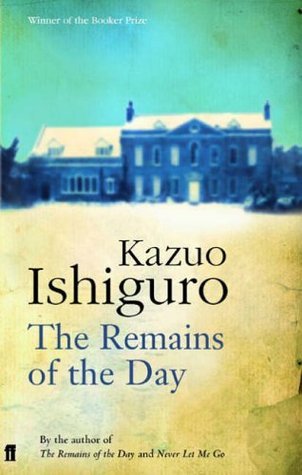
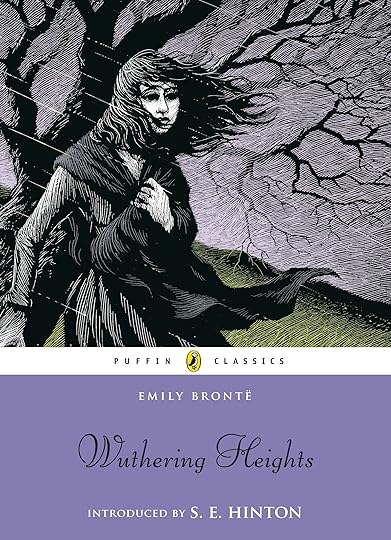
Remains of the Day by Kazuo Ishiguro and Wuthering Heights by Emily Bronte.
At first sight they look like very different books, but both explore the divided mind. In Remains of the Day, Stevens the butler fights with his natural desire for the house keeper and his sense of duty.
In Wuthering Heights Cathy fights between her natural self that loves Heathcliff and her learnt, refined self that loves Linton. We have all been in places where our thoughts and hearts are divided and indeed Eric Berne based his psychotherapy theory, ‘Transactional Analysis’ on such divisions and how these cause impasses.
The whole area of study fascinates me; it is the conflict between nature and nurture, the natural self and the social self, the very essence of what keeps society working and indeed breaks it apart.
What advice would you give people with dyslexia who love writing?
I have three suggestions.
a) I have just uploaded the Siri app onto my computer. What an amazing aid! Dictionaries are fine if you know the order of the letters in a word and Google does its best to guess what the word is that I am trying to write but with Siri I can just say the word and Siri writes it. It is making my world so easy.
b) Get someone you are close to to read through what you have written. If they understand you they will know what you want to write when it all comes out backwards and be able to correct it.
c) Remember that you see the world in a unique way, that your learning and coping strategies are unique and give a view no-one else holds. So when your dyslexia gets you down turn it on its head and celebrate, this uniqueness might just be what makes your writing exceptional.
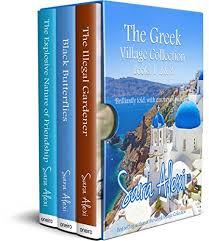
Sara, thank you so much for joining me. For more on Sara, visit her website here, follow her on twitter here and join her in her virtual Greek village on facebook here, a highly engaging and interactive experience.
Complement this blog post with the incredible story of how it took bestselling author Angela Marsons twenty years to get published (click here) and 5 top tips for aspiring writers (click here).
The post How a dyslexic child turned into a best selling author appeared first on Rebecca Stonehill.
October 28, 2016
Why reading aloud to older kids is not just special, it’s vital

When is a good age to stop reading stories aloud to children?
Well, how about never?
Alright, so what are the chances really of being tucked up beside our seventeen year old reading a bedtime story. But many believe that once children have gained the skills to read for themselves, we can take a step back and let kids plough their reading fields alone. Which, of course, they can and should to an extent. After all, it’s an exciting process to allow children more independence; to observe their book choices and reading interests.
My eldest child decided a couple of years ago that she didn’t want to be read to anymore. I accepted this and encouraged her independence. But then I had a conversation with a friend who has been a teacher in her native Finland for many years (we all know by now about Finland’s well-documented academic excellence, but click here for more on this). She told me that she was read to by her parents until she was fifteen and was surprised to find that I wasn’t still reading to my children (aged 10, 8 and 6).
“Reading to a child helps to develop the child’s reading skills as well as language skills, vocabulary, imagination, analytical and communication skills, empathy, morality, ethics, concentration and memory.”
Piia Ukura
Since this conversation, we’ve resurrected the tradition of family reading time and it’s been brilliant. It’s not always easy finding something that will suit all three of my children. There have been a couple of hits and misses, but on the whole it’s been a wonderful experience, not just for my children but also for me. It feels like important time with my kids and it is very rewarding when they all become immersed and involved in a story, asking questions and talking about the book at other times.
TIPS FOR READING ALOUD TO CHILDREN
Find a routine with reading, just like meals, and stick to this so that your children come to expect it. I read to my three after our evening meal whilst they are eating ‘pudding’ and most likely to be quiet and calm! If you’re unsure of what time will work best, play around a bit with it and see when the kids are most responsive.
If you have more than one child, aim for a book that pitches at the average age of your children. Either too advanced or too simple and your kids will lose interest.
Involve your children in the decision-making process of what to read next. If they are resistant to being read to, find a film they’ve enjoyed and read the original book if there is one. (NB It’s definitely more rewarding to read the book first, BUT this could be a way in for you, then you can go on to discuss the differences between the book and film.)
When you start reading each day, have a very brief discussion about what happened on the previous day to ‘place’ the children back into the story.
Look for books that have reasonable-length chapters or lots of natural breaks.
We never grow out of pictures (at least, I don’t.) If possible, find a book that has some illustrations in it and share them with your children as you read.
ENJOY it! It is feeling like a drag or you and/or your kids are not enjoying the book, don’t beat yourself up about it and plough through it. Put the book aside and chose another one. Learn from what works and what doesn’t and be guided by the reaction of your children. Have fun!
Here are the books I have read to my children in the past eighteen months to give you a few ideas. I’ve put them in the order of when they were first published rather than the order I read them.
The Jungle Book by Rudyard Kipling (1894)
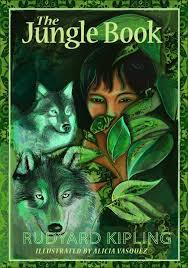
We are reading this at the moment. There are lots of thee’s and thou’s which threw the children initially but they’ve got into the swing of it now. Beautiful, atmospheric prose. My kids have already watched the movie (both versions), but that’s no reason not to go back to the book now.
The Wonderful Wizard of Oz by L. Frank Baum (1900)
This classic tale needs no introduction. Like The Jungle Book, because of the era this was written, there is some olde-worlde language. But the tale of Dorothy and her friends is easy to follow, even for my son who was five at the time.
Swallows and Amazons by Arthur Ransome (1930)
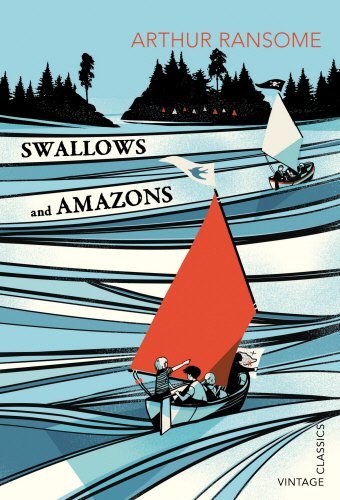
This is a long book, and proved a challenging one. My youngest’s attention drifted in and out of the story; I lost him when Ransome got carried away with nautical terms and more detailed passages of sailing, but his ears pricked up again when there was any talk of pirates! It took some time to read this but I’m glad we persevered and it made it all the more rewarding watching the fun new film version of the book this summer.
Thimble Summer by Elizabeth Enright (1938)
This is a sweet and tender tale of a young girl’s adventures one hot summer in small town 1930’s America. Not an enormous amount ‘happens’ but the descriptions and beautiful and engaging and all my children really enjoyed it. (As an aside, I am fairly horrified to discover that Enright is the single female author I have read so far to my children. I aim to start redressing that balance after finishing The Jungle Book!)
Stuart Little by EB White (1945)
This is a gorgeous little gem of a book. It won’t take long to read and Stuart’s adventures are heart-warming and captivating. EB White’s prose is full of intelligent humour and he allows the reader to answer some questions for themselves.
Mrs Frisby and the Rats of Nimh by Robert C O’Brien (1971)
This is the tale of Mrs Frisby, a widowed mouse and her four children who enlist the help of a community of highly intelligent rats when faced with a terrifying dilemma. My kids loved this book and became deeply involved in Mrs Frisby’s plight and the safety of her children.
Noah Barleywater Runs Away by John Boyne (2010)
This is a curious, haunting book. I was a little uncertain about reading it as Boyne is also the author of The Boy in the Striped Pyjamas which I definitely don’t feel my younger two would be ready for. However, I liked the sound of it and am also a big fan of Oliver Jeffers who did the illustrations for this book. In a similar way to – for example – The Little Prince, Noah Barleywater will need some time to digest. It deals with some quite difficult themes, namely the serious illness of a parent and a child trying to cope with this. But it raised some important questions amongst my children and I’m glad we read it.
This is a beautiful book trailer for Noah Barleywater with Oliver Jeffer’s gorgeous illustrations:
In Their Shoes: Fairy Tales & Folktales (2015)
Selected by Julia Nicholson & Anne-Laure Mercier
A collection of tales from around the world by a number of different authors. All connected to shoes, some of these stories were greeted with great enthusiasm whilst others were not so popular. I can’t deny I fell under the spell of the stunning cover of the collection and, on the whole, this is a worthwhile book which my eight year old is now re-reading alone and enjoying.
(FYI, I asked my three children which book we’ve read they liked the best. My ten year old daughter said Mrs Frisby and the Rats of Nimh, my eight year old daughter said Noah Barleywater Runs Away and my six year old son said Stuart Little.)
Compliment this post with The 9 year old who read one hundred books in a year, Why engaging in poetry is a way into writing for kids & Carving a path for our children through written and oral landscapes.
The post Why reading aloud to older kids is not just special, it’s vital appeared first on Rebecca Stonehill.


![[image error]](http://rebeccastonehill.com/wp-content/uploads/2016/10/girl-and-sunbird_1.jpg)