
Doug Lewars's Blog, page 63
May 25, 2017
One Pulse: Cradle to Grave
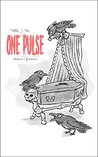 One Pulse: Cradle 2 Grave by Tetiana Aleksina
My rating: 3 of 5 stars
*** Possible Spoilers ***
-- Review at request of the author --
This is a book of poetry and I have to confess that my knowledge of poetry is nil. In general it’s something I stay far away from so my ability to review this book is particularly limited. That said I’ll touch upon a few things that I enjoyed and some that I didn’t.
First, full disclosure: When I was in high school and university I wrote a LOT of poetry and, over time, I came to understand just how easy it was for me to write some really bad poetry that fosters the illusion of being deep and insightful when, in fact, it was merely pretentious self-indulgence. Once I figured that out I decided that for me, poetry was best left to other people. So I’m rating this book as a three because I don’t have a clue how to analyze it. It may be brilliant and it may be garbage. I figure it’s probably in between so a three makes sense.
The blurb suggests that this is a poetry battle on themes of life, love and death. I’m not too keen on the death part. I’ve come to that stage in life where Death keeps his spare scythe in my broom closet so this is a theme that’s becoming a little too real with every passing day. Still, for those still sufficiently young to regard the subject strictly in the abstract, I think they might enjoy the poetry.
My favourite poem in the collection was Lines. It is doggerel plain and simple and doggerel is something to which I can relate. Sometimes it has meaning and sometimes not so much; but it is usually irreverent and lively. True, in this case the poet seems to allude to some dark feelings but I can ignore that. There are two, four-line stanzas with a nice rhythm. That’s enough.
I’m not good with meanings but I rather like the sound of poetry and I read these poems with that in mind. As a result, a poem like Phronesis was enjoyable but slightly missed the mark. The last line is ‘Look up! Swallow keys…’ Both receive one beat so there are two half beats followed by a triplet and every time I read it I found myself reading ‘Lock up! And swallow keys…’ The two half beats followed by the triplet may add to the dramatic impact – I don’t know about that - but I don’t like it. For me the rhythm becomes too choppy.
I quite enjoyed Headlanded but once again, there was a break in the rhythm that I found disconcerting. When I read the line, ‘She forgets own name’, I think I automatically inserted the word ‘her’ before ‘own’. For me, the extra syllable smoothes the rhythm and without it the line is too rough. But that’s just me. Other readers may quite like it and it should be noted that my ear for rhythm is probably archaic.
Succumbed was a poem I didn’t like because the images seemed contrived. ‘Vermicelli red’, ‘charnel frame’ – is the poet suggesting that this is the scene of a homicide? If so then maybe it works but frankly I didn’t receive that overall impression.
Zion’s lullaby I found much too choppy for my taste.
I did appreciate some self-deprecating humour in ‘gustave doré’s divine comedy’. Also this poem had a really nice cadence. Culling was another poem I quite enjoyed. It had a nice brave tone to it.
In general, I think this book is worth a look by those readers who are sufficiently young to ‘get’ modern poetry. It may not be quite my thing, but I’m still pretty much back at Robert Service and Edgar Allen Poe so my taste is far from representative. I’m cannot claim to fully understand the work – or even come close to understanding it for that matter; but I think the authors have provided something pleasant to read on a rainy afternoon. Also I really enjoyed the drawings and I think other people will like them as well.
View all my reviews


May 23, 2017
Mooreeffoc
 Mooreeffoc by Tetiana Aleksina
My rating: 4 of 5 stars
*** Possible Spoilers ***
-- Review at the request of the author --
This was a remarkably well-crafted book from a technical perspective. It was a short story - one incident described from three separate perspectives. Basically two Egyptian deities are incarnated into humans - one via a cat and the other via a tattoo. However neither seems to have much power over the human in question. A third supernatural entity makes use of the body of a waiter to separate the deities from their human hosts and trap them in a box. That's pretty much the basic plot.
The humans in this story have little relevance. One is busy seducing the other but the interest lies in the thoughts and feelings of the deities as they observe the proceedings. The deities in question appear to have a love-hate relationship that goes back thousands of years. In addition, a quick check of Wikipedia suggests that they may have been one deity given different names by different Egyptian religious groups. Whatever the case they wind up being free to love or hate as they choose - if being trapped in a box can be considered freedom. In any event the third entity appears to believe that they are free and takes satisfaction from that.
One thing that I particularly liked about this story was the author's use of vocabulary. Tetiana Aleksina notes in her description that English is not her first language. I believe that I have a pretty good vocabulary but she sent me off to the dictionary roughly a half-dozen times over the course of nine pages which was fairly impressive.
I don't believe that this story is for everyone. It is NOT something to be read on a cell-phone. It isn't the kind of story that you might want to read while commuting to work. It reminds me of spun crystal - beautiful, technically precise, but not something for everyday use. I think it would appeal to a more mature reader - one who is willing to invest some time contemplating what he or she has read. It doesn't have a traditional climax and I never felt myself really involved in the story. Like a work of fine art, it was something to observe as being of unique interest but not something to carry around for day-to-day use. It reminded me of something that might be crafted as an academic exercise. It might make a fairly good concept for a longer story - one that fleshed out the deities - and in particular the supernatural agent at the end about which we learn next to nothing - to a greater extent.
The author did provide me with an inadvertent chuckle - one that was unrelated to the story. In her day-to-day life it appears that she is involved in a software company that is pretty leading edge. By presenting one scene from three separate viewpoints the dialog remains the same thereby indicating that she understands the importance of driving efficiency by reusing code.
Overall I'm rating the story four stars because it is so well crafted. However it loses a point because the characters are not really that interesting and the plot is a little bit thin so a bit more character development and interaction might be in order.
View all my reviews
May 21, 2017
New Book Published!
Darkness of the Hunt
A soul divided – one half in the child of a woman who pledged her allegiance to the Dark Lord and the other half … somewhere. Agents of darkness track the child with orders to kill. The Guardians work to protect the one sought by The Dark. With three Earth years to find and kill the child, will the Dark Lord’s agents succeed in their quest or will the family so pursued, escape the net that draws ever closer?
The Dark Lord’s agents may have been reincarnated on Earth in human form, but they have exceptionally powerful magic at their disposal. The problem is, magic isn’t much good if you don’t know how to use it and both Mike and Peter have grown up without ever having received an assignment from their master – until now. And they find themselves woefully unprepared.
Just beyond a building that might have been used as a saloon or possibly as the sheriff’s office, there was a wall about eight feet in height that had probably once been part of another building that had been lost in time. All that remained was the wall itself - its dirty beige- brownish bricks pitted from the dust that had been blown into them - standing alone without any other walls for support. Perhaps, because he was trying to detect anyone or anything that might be alive, Peter’s senses were more highly receptive than usual - but afterwards he couldn’t have said for certain what he perceived. He know only that he sensed something dangerous that was about to strike.
“Down! Flat!” he yelled pushing both Tom and Mike so that the three hit the dirt behind the wall even as a cloud of small stones, quartz in nature with razor sharp edges whizzed through the air where they had been standing. Some of the struck the wall and caused little flecks of stone to fly in all directions.
“What is it?”
“Someone’s shooting at us!”
That wasn’t entirely correct. The word ‘shoot’ normally refers to a firearm of some description and what was being ‘shot’ in this case were tiny stones. Peter didn’t trouble himself with the distinction. Any one of those shards could be fatal if it connected with a vital area or disabling if it merely connected.
“Why?” yelled Tom.
“Don’t know but stay down if you want to live!”
Tom didn’t need any additional instruction and did his best to melt into the desert floor.
“Did you see where it was coming from?” asked Mike.
“No and I’m not about to put my head up for a look,” said Peter.
There was another blast of quartz shards and the wall shuddered under the impact.
“Will this thing hold?” asked Mike.
“I sure hope so,” replied Peter, “Or we’re all dead!”
“But why would someone be wanting to kill us?” wailed Tom.
Neither Peter nor Mike answered but they looked at each other. Guardian!
----------
They escape purely by accident and their boss is not pleased.
----------
Listion had no material form - nothing that could said to be a body - but the concept of ‘body’ is easier to understand than that of a dense series of matrices in a complex series. Still, if he had a body, if he had arms and legs and a torso and head, if, in fact he had two eyes and a mouth to form a voice, he might very well have wept in frustration. Here were his two principle agents - the ones chosen to stop the wraith - cowering behind a stone wall from a Guardian whose lack of confidence had caused him to flee and they were relying on the quavering voice of a lunatic for protection. Had the agents of darkness really descended so low? Yes, Listion would have wept if he could.
A soul divided – one half in the child of a woman who pledged her allegiance to the Dark Lord and the other half … somewhere. Agents of darkness track the child with orders to kill. The Guardians work to protect the one sought by The Dark. With three Earth years to find and kill the child, will the Dark Lord’s agents succeed in their quest or will the family so pursued, escape the net that draws ever closer?
The Dark Lord’s agents may have been reincarnated on Earth in human form, but they have exceptionally powerful magic at their disposal. The problem is, magic isn’t much good if you don’t know how to use it and both Mike and Peter have grown up without ever having received an assignment from their master – until now. And they find themselves woefully unprepared.
Just beyond a building that might have been used as a saloon or possibly as the sheriff’s office, there was a wall about eight feet in height that had probably once been part of another building that had been lost in time. All that remained was the wall itself - its dirty beige- brownish bricks pitted from the dust that had been blown into them - standing alone without any other walls for support. Perhaps, because he was trying to detect anyone or anything that might be alive, Peter’s senses were more highly receptive than usual - but afterwards he couldn’t have said for certain what he perceived. He know only that he sensed something dangerous that was about to strike.
“Down! Flat!” he yelled pushing both Tom and Mike so that the three hit the dirt behind the wall even as a cloud of small stones, quartz in nature with razor sharp edges whizzed through the air where they had been standing. Some of the struck the wall and caused little flecks of stone to fly in all directions.
“What is it?”
“Someone’s shooting at us!”
That wasn’t entirely correct. The word ‘shoot’ normally refers to a firearm of some description and what was being ‘shot’ in this case were tiny stones. Peter didn’t trouble himself with the distinction. Any one of those shards could be fatal if it connected with a vital area or disabling if it merely connected.
“Why?” yelled Tom.
“Don’t know but stay down if you want to live!”
Tom didn’t need any additional instruction and did his best to melt into the desert floor.
“Did you see where it was coming from?” asked Mike.
“No and I’m not about to put my head up for a look,” said Peter.
There was another blast of quartz shards and the wall shuddered under the impact.
“Will this thing hold?” asked Mike.
“I sure hope so,” replied Peter, “Or we’re all dead!”
“But why would someone be wanting to kill us?” wailed Tom.
Neither Peter nor Mike answered but they looked at each other. Guardian!
----------
They escape purely by accident and their boss is not pleased.
----------
Listion had no material form - nothing that could said to be a body - but the concept of ‘body’ is easier to understand than that of a dense series of matrices in a complex series. Still, if he had a body, if he had arms and legs and a torso and head, if, in fact he had two eyes and a mouth to form a voice, he might very well have wept in frustration. Here were his two principle agents - the ones chosen to stop the wraith - cowering behind a stone wall from a Guardian whose lack of confidence had caused him to flee and they were relying on the quavering voice of a lunatic for protection. Had the agents of darkness really descended so low? Yes, Listion would have wept if he could.
May 18, 2017
The Age of Diversity
 The Age of Diversity: The New Cultural Map by Jean-Louis Roy
My rating: 4 of 5 stars
*** Possible Spoilers ***
The author's theses is that certain 'engines' operating in the world today will drive trends that will alter the world's cultural map where culture is defined not only as might be expected - art, literature- music etc - but also as the means of production that drive the world's economy. There are six chapters but, really, there are three principle sections. In the first the author defines the engines. They are, the internet, population growth, the shift in capital from North America elsewhere and the massive increase in the credit-worthy middle class. Within these engines he defines a large number of other factors but they are subordinate to the big four. Therefore the first part of the book is spent on defining the engines, elaborating on their sub-characteristics, and illustrating the point that they constitute the major factors that will drive future trends. In the second section, he illustrates how each of the engines plays out in various global regions and how, in particular, they affect culture. He builds on this in the third section to make predictions going forward as to how the world's cultural map will evolve. He ties all this up in a conclusion at the end.
I found the book interesting but there were a few things I didn't care for. This author appears determined, that, if he is to face criticism for anything, it will not be for a lack of verbosity. He appears convinced that if a point is worth making it is worth making innumerable times until the reader either agrees or throws the book across the room in frustration. Still, if one can get beyond the teeth-gritting repetition, some interesting points are made.
The Age of Diversity was first published in 2014. An English translation was published in 2016. Some editing may have been performed at the time of translation but there are a few things such as Brexit and the rise of the right in the United States and to a lesser extent in Canada are not considered. In addition, there is not any mention of global warming which may alter any number of future economic factors. Therefore I think the timing of the authors prediction may be questionable; nevertheless he has raised a plausible scenario.
The internet is world-wide and growing. This will facilitate a cross-pollination of culture. In addition, it also facilitates a huge shift in capital away from North America. On the other hand, this shift is not happening for altruistic reasons. Money is moving to wherever the ROI seems greatest and Asian markets are HUGE. Along with the money is moving a wealth of North American know-how and, as a result, an impressive amount of R&D has shifted away from the west. The author, however, completely ignores the fact that this has already started to result in considerable push-back from those so displaced by the movement of capital and attendant jobs. He is probably correct that the cat is out of the bag and there is no going back; but the current political climate that leans towards isolation may continue for a protracted period.
I believe that this book is well worth reading even if all its conclusions may not be spot on. The trends so identified are accurate and important. How they play out might be up for grabs but the identification of the trends is useful information. For example, if I was the parent of a small child today, I would want that child exposed to, and educated in as many languages as possible. That, combined with a solid degree in business would position him or her to take advantage of these economic and cultural shifts.
It appears that outside of a cataclysmic event - and there may be one - that globalization will continue to evolve and become a reality whether we like it or not.
View all my reviews
May 16, 2017
The Alchemist
 The Alchemist by Paulo Coelho
My rating: 4 of 5 stars
This was a pleasant book to read but there wasn't much to it. A young man goes on a quest to find a treasure, has a number of learning experiences, comes to an understanding of the world, himself and his spirituality, and eventually does find the treasure. Ironically, the treasure isn't part of the spiritual quest but is, in fact, gold, jewels and so forth. Along the way he finds his true love, leaves his true love to continue his quest and, at the end, plans to return to his true love. The true love, by the way, is perfectly content to wait. Reading this book reminded me a bit of meditation. It slows the mind and let's you relax. I think reading this type of book is a good way to relieve stress. The message, insofar as there is one, is to pay attention to the world around you and take delight in the present because the past is gone and the future is unclear.
View all my reviews
May 10, 2017
Brave New World
 Brave New World by Aldous Huxley
My rating: 4 of 5 stars
*** Possible Spoilers ***
I first read this book when I was in high school. We had been studying 1984 and the teacher suggested that reading Brave New World might give us a different perspective on the presentation of a dystopian future. At the time I couldn't relate. I could understand 1984 and how Winston was struggling against a totalitarian regime that took away all freedoms but Brave New World perplexed me. I read it again because i wanted to understand whether it might have some bearing on our modern world.
According to Wikipedia Huxley was born in 1894. That means he would have been 20 when World War I started. Although he wasn't accepted into the army he must have understood the magnitude of the conflict. Likewise his teenage years would have been spent during the decade leading up to the war.
Brave New World was published in 1932. Given his publishing schedule it was probably started in 1929 or 1930 and was likely influenced by the decade of the '20s. This was a period of economic growth and also cultural experimentation - much of which might be considered banal - such as the flappers. It is quite possible that his viewing of the trivialities of the '20s, combined with the horrors of WW1, led him to imagine a world in which the 1920's mentality is extrapolated throughout society. Whatever the case, we encounter in Brave New World, a society in which infantilism provides the cohesion that holds it together.
In terms of technology he made some mistakes but attempting to extrapolate technology is a very difficult thing to do. He hypothesized a population of two billion. We have between seven and eight billion. He made use of genetic engineering to reduce people close to the levels of machines in order to facilitate an economy of that magnitude. We use artificial intelligence to raise machines close to the level of people in order to make our economy possible. Whatever the technology, life continues.
I had a problem with using Bernard as a foil to illustrate the problems of the society. Bernard was a flawed individual. He was on the outside of society and he desperately wanted acceptance. True, he had managed to remove himself from some of the all-pervasive conditioning but then so had Helmholtz Watson and the latter was accepted within the society. Therefore I thought he might have been a better choice through which we might understand things. Likewise, John the savage, is also deeply flawed - to the point of being insane. Unable to be accepted into the Native American society and unwilling to assimilate into the mainstream world he espouses the virtues of 'truth', 'beauty' and 'God'. However all three are pretty much undefined. He rejects infantalism and mass conformity but pretty much replaces them with the most fundamentalist of religious practices - made slightly ironic seeing as he has no religious training and winds up combining bits of Christianity with tribal practices.
There are a few things to note in this book. We don't have SOMA. Instead we have Marijuana, Ecstasy, Cocaine, Valium, Prozac and a host of others. Mind you ours are illegal for the most part whereas SOMA was distributed as a form of payment but the use of drugs as a means of escape are similar. We don't have 'feelies' but we are making inroads on virtual reality at least in the gaming environment. Our population is not genetically engineered to be dumb. We use the internet and Social Media to achieve that sort of collective group think. Still it can be seen that Huxley did succeed in identifying social issues that might be considered relevant today. In Brave New World, the populous largely supports a society of mass conformity. They want their SOMA. They want their feelies and they want the vapid dramas which are presented to them. Today we have a large demographic that would prioritize social cohesiveness over freedom of speech. We have a large demographic that demands 'safe spaces' in centers for education. The desire for inclusiveness has approached near religious proportions among certain elements of the population. So while Brave New World may be antiquated in some respects it doesn't totally miss the mark and is still very relevant in today's society.
View all my reviews
May 9, 2017
Finders Keepers
 Finders Keepers by Russ Colchamiro
My rating: 3 of 5 stars
*** Possible Spoilers ***
I agreed to act as a reviewer for this book. So, first things first – the advertisement for this book suggests that it’s imbued with the spirit of Terry Pratchett and Douglas Adams. It isn’t.
The author appears to be targeting a demographic of males aged eighteen to twenty-five. Since I’m not in this demographic or even close, it will be difficult for me to fully evaluate the book; however, I think he succeeded in producing a story and characters that will appeal to those individuals.
The plot is fairly simple. An artifact – one containing a substance that can create or destroy universes – has gone missing. Attempting to retrieve it is a collection of aliens – beings from another dimension – one that the author labels Eternity. It has been found by a human for whom it has strong hallucinogenic properties. He decides to take a trip to Europe in the hope of finding someone who can provide insight into what he has found. So we have a race by competing aliens to track down and collect the artifact and we have a road trip. This is the first volume of a trilogy so a resolution is not to be expected and there really isn’t one.
In my opinion this book is okay – not great – not terrible – just okay. It’s the sort of book one might read while sitting in an airport waiting room or while riding transit. It’s supposed to be a comedy but throughout the 339 pages I found myself chuckling exactly four times – hardly a knee-slapper but not awful either. Of course if I was in the 18 to 25 age bracket I might have found it far more humorous.
The writing is rather inconsistent. There are parts where it flowed beautifully and others where it was disjointed and difficult to read. Overall I think it was mostly pretty good but the not-so-good parts were decidedly jarring. In addition the author had a tendency to belabor some of his points. One of the rules of fiction is ‘don’t tell, dramatize’ but there was quite a bit of telling in Finders Keepers.
If you choose to read this book be aware that the first dozen or so pages are pretty tough sledding. The text seemed disjointed, the grammar questionable and the overall effect was one of – Who is this Jason character and why do I care when I so obviously don’t? After that things improved considerably.
I’ve rated this book a three and I’m not likely to continue with volumes two and three but to be fair, I don’t believe it was intended for someone like myself and I think that if I was 20 all over again I might rate it quite a bit higher.
View all my reviews
May 3, 2017
A Murder of Magpies
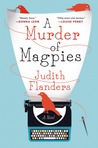 A Murder of Magpies by Judith Flanders
My rating: 5 of 5 stars
*** Possible Spoilers ***
This was a first rate detective novel. Frankly I wasn't expecting much. From the cover and the cover blurb, I was expecting a novel that was cute but trite. As it turned out, there were some elements of cuteness to it but it was definitely not trite. The protagonist works in a publishing company and so the mystery is interspersed with the trials and tribulations of dealing with authors, deadlines and books that are not what they seem at first glance. The characters were quirky. The settings were well described and overall the story was plausible. I was a little disappointed with the ending but at least it wasn't expected so I can't accuse the author of telegraphing her material. Overall I enjoyed the book and I can recommended it as a pretty good example of the detective genre.
View all my reviews
April 30, 2017
The Wisdom of Psychopaths by Dr. Kevin Dutton
 The Wisdom of Psychopaths: What Saints, Spies, and Serial Killers Can Teach Us About Success by Kevin Dutton
My rating: 4 of 5 stars
Much of this book is involved with determining how psychopaths can be differentiated from the rest of society. Basically it all comes down to five personality factors. The author uses the analogy of levers. If all five are set at the max then the psychopath will not function very well in society and will almost certainly wind up in prison. However if they're set at more reasonable levels the individual may very well prosper. Examples of successful psychopaths are found in the ranks of CEOs or senior executives in general, medicine - specifically neurosurgeons, and the military - special forces operators.
One means of identifying psychopaths is via the PCL-R test. At least one example of the test can be found online. I tried it and flunked miserably so I'll never get a job that favors psychopaths. Interestingly, while common belief has it that individuals with these characteristics lack empathy, the author makes the case that they have even more empathy then most people. They merely use it to exploit rather than for compassion.
Psychopaths experience very little fear. In fact, in extreme cases, they feel none at all. As a result, some individuals can become very successful or very dead. So, for example, psychopaths in Special Forces units can undertake missions that would make most people head in the opposite direction and they may accomplish extraordinary results.
They need a great deal of stimulus. Sitting around on a Sunday afternoon writing a book review is not something that would appeal to them. Therefore they need to be active and, in severe cases, that means rootless. As a result, serial killers frequently travel a lot - not only because they need to absent themselves from the crime scene but because they have an innate desire to travel from place to place.
Psychopaths are absolutely ruthless. This can be detrimental to society when they happen to like killing but it can be useful if they're directed towards an enemy. In addition it can also be useful if they manage a large corporation - useful for the shareholders at least - maybe not so much for the employees.
The author traces many of the psychopathic characteristics to abnormality in certain neural functions and, through personal experience, determined that technology exists that, for a very short period of time, can, in many respects, turn one into a psychopath - at least insofar as experiencing a complete absence of fear and becoming totally focused on a task at hand.
Overall, I thought this book was very well done and I found it easy to read. The only thing I found lacking was any explanation as to how someone with manageable psychopathic tendencies could then exploit them to their fullest - as in the example of the CEO above. An ability to balance total fearlessness with prudence and caution would seem to be an asset but how such a balance is achieved is not stated. Perhaps it occurs naturally or perhaps it is a fine-tuned attribute but the book didn't go into those sorts of details for any of the attributes that define psychopathy.
View all my reviews
April 29, 2017
The Gates - by John Connolly
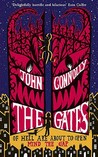 The Gates by John Connolly
My rating: 3 of 5 stars
*** Possible Spoilers ***
It's not clear what demographic the author was targeting with this book. It's clearly written for a young audience but anyone over the age of 12 would probably find the tone patronizing and anyone under the age of 8 would likely find the science and the footnotes frustrating. In addition, I doubt that very many parents would be willing to read this to children who were as yet unable to read for themselves. An audience of children 8 to 12 might be viable but it seems limiting. For an adult reader the book is mediocre at best. There is little in the way of a subplot and the characters are flat. There is a bit of humour but it struck me as being forced. One does have to give this author full marks for his ability to create imaginative monsters.
In general this book is okay to read but it's nothing special.
View all my reviews


